
REVIEW · KATHMANDU VALLEY TOURS
Temples and Stupas Tour in Kathmandu Valley
Kathmandu’s sacred core comes into focus on this compact day out: Pashupatinath’s cremation ghats, Patan’s carved palace courtyards, and Boudhanath’s great Buddhist dome. I like that you get three very different sides of Nepal in one trip, with a guide to explain the rituals, symbols, and royal past. I also like the small maximum of 10 people and the air-conditioned vehicle, a real help in Kathmandu traffic.
The catch is that the tour covers the sights, not every minute between them. One passenger found the guide and driver spoke Nepali during the drives, leaving little explanation on the road. Entrance fees are extra, and the tour does not include hotel pickup, drop-off, food, or drinks.
Key points to know before you book
- Three UNESCO World Heritage sights: See a Hindu temple complex, a former royal square, and one of Nepal’s most important Buddhist stupas in one day.
- Pashupatinath can be intense: Hindu funerals and cremations may take place along the river, so this is a serious religious site, not simply a monument.
- Patan means architecture: Patan Durbar Square rewards close attention to Newari woodcarving, brickwork, courtyards, and palace details.
- Boudhanath invites a slower visit: The huge stupa and surrounding Buddhist setting offer a calmer counterpoint to Pashupatinath.
- Small-group format: The maximum is 10 people, with an English-speaking guide and an air-conditioned vehicle suited to the group size.
- Budget for extras: The $34 price covers guiding and transport, but not entrance tickets, meals, drinks, or hotel transfers.
Three major sights, three different Nepali traditions
This tour works because the stops do not repeat one another. Pashupatinath introduces you to living Hindu worship and funeral customs. Patan shows the artistic and political world of the Malla kings. Boudhanath brings you into a major Tibetan Buddhist setting, where the stupa is still a focus of prayer.
You spend about two hours at each main stop, making the day easier to follow than a rushed checklist. The remaining time is used for transport around Kathmandu Valley, where traffic can be slow and the roads are rarely predictable. At roughly seven hours, this is a full morning and afternoon, but it does not try to squeeze in every temple in the valley.
The meeting point is Royal Mountain Travel on Lal Durbar Marg. You start at 9:00 a.m. and return to the same meeting point at the end. The company provides an air-conditioned vehicle based on the group size, which gives you a more organized day than arranging separate taxis between the three sites.
More of the Kathmandu Valley:
- Kathmandu Valley City Day Tour
★ 5.0 · 40 reviews - 1 Day Kathmandu Valley Sightseeing Tour
★ 5.0 · 37 reviews - Kathmandu Valley Rim Hike
★ 5.0 · 21 reviews
Pashupatinath, where worship and mourning share the river
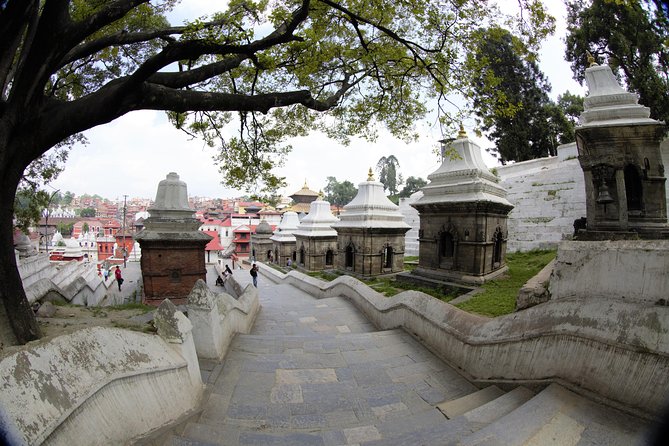
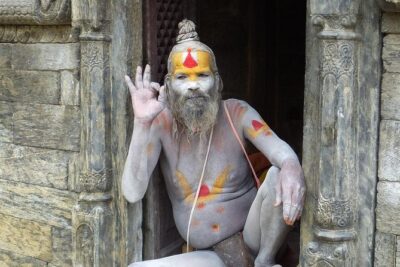
Pashupatinath Temple is dedicated to Shiva, known here as Pashupatinath, or Lord of Animals. For Hindu devotees, it is one of the most important religious places in Nepal. The complex is not just a single temple building. It includes shrines, riverfront platforms, courtyards, holy men, and places connected with death and final rites.
Your guide can help you understand the difference between an ordinary historic monument and a place that is still fully active as a religious center. You may see Hindu holy men, known as sadhus, and you might witness a cremation along the river. That possibility makes the visit memorable, but it also asks for tact. Keep your distance, follow your guide’s instructions, and treat ceremonies as private religious events rather than performances.
The main temple has restrictions for non-Hindu visitors, so the visit focuses on the wider complex and the views available to you. The two-hour allocation gives you time to take in the riverfront and the surrounding shrines without treating the site as a quick photo stop.
This is likely the most emotionally demanding part of the day. If you want only palaces and pretty buildings, Pashupatinath may feel confronting. If you want to understand how religion shapes daily life and death in Kathmandu, it is essential.
Patan Durbar Square and the Malla kings
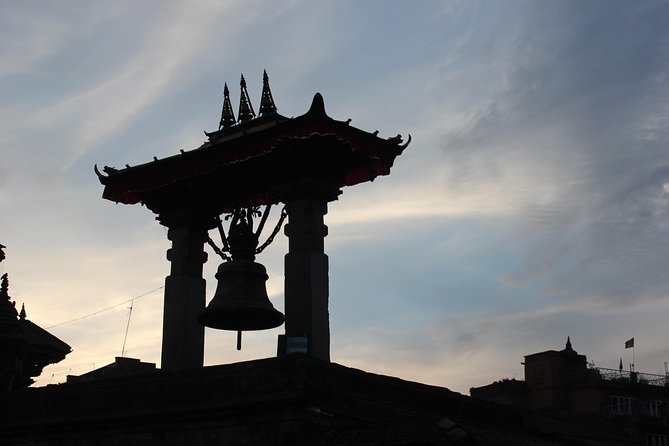
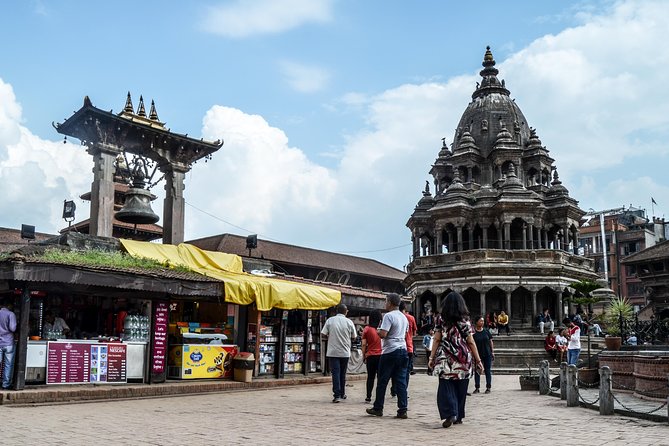
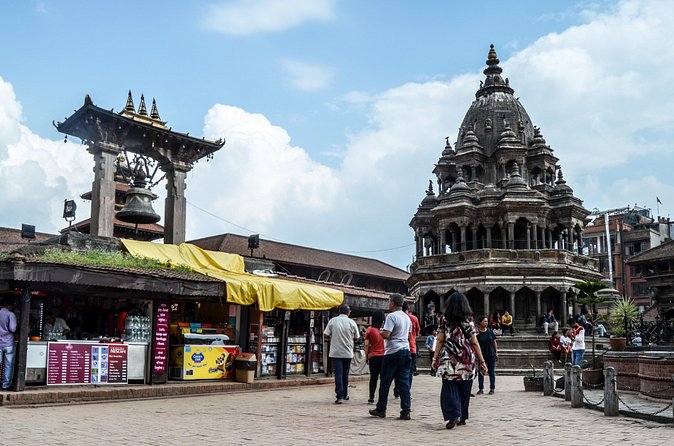
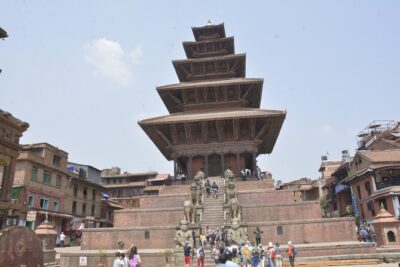
The second stop is Patan Durbar Square in Lalitpur, often called simply Durbar Square in tour descriptions. This was once the royal center of the Malla kings, and it remains one of the best places in the valley to see Newari design in one concentrated setting.
Expect a collection of palace buildings, temples, courtyards, and detailed woodwork rather than one single attraction. Look closely at the carved windows, struts, doorways, and rooflines. The square rewards patience. A quick glance gives you an impressive old city setting, but a guide can point out how the buildings were used and why the architecture matters.
Patan is also the stop where historical explanation can make the biggest difference. Without context, a row of temples can blur together. With a good guide, the square becomes a record of royal power, craftsmanship, devotion, and urban life.
Two hours is a sensible amount of time here. It lets you see the central sights and hear the story without turning the visit into an exhausting architectural survey. You should still expect walking and uneven surfaces in historic areas, so practical shoes are the right choice.
The entrance charge is not included. One past passenger reported paying 2,000 Nepalese rupees in total for entrance fees at two stops, with 1,000 rupees at each. Fees can change, so treat that figure as a useful budget guide rather than a guaranteed current rate.
Boudhanath Stupa and the rhythm of Buddhist worship
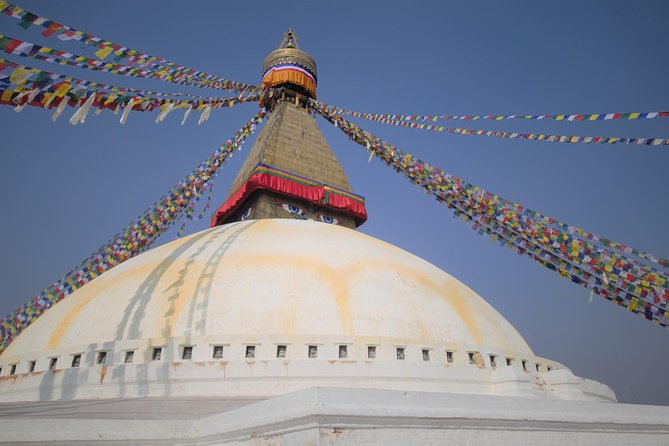
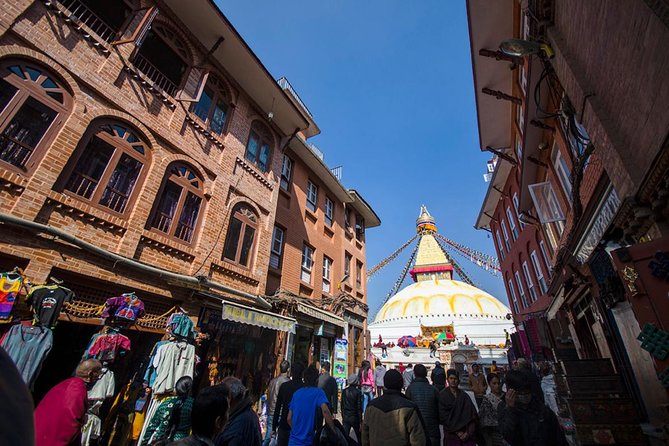
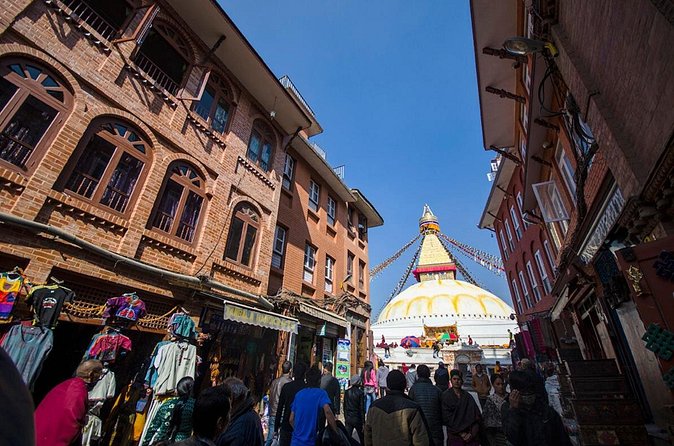
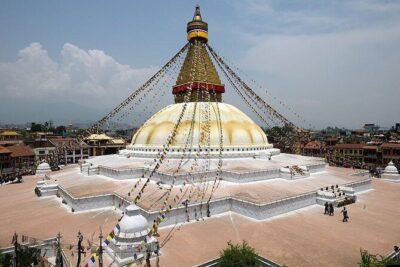
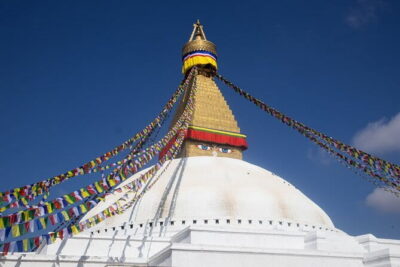
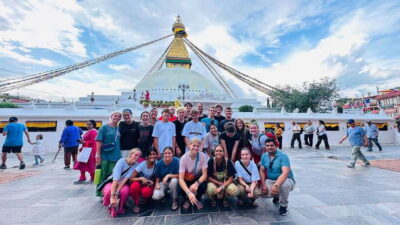
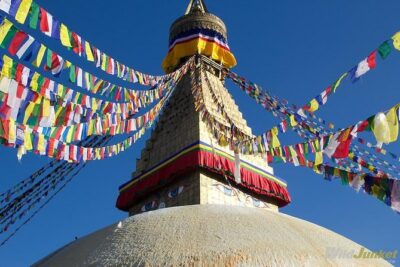
Boudhanath Stupa gives the day a different mood. This large white dome, topped with the familiar painted eyes, is one of Nepal’s holiest Buddhist places. It is also respected by Hindu worshippers, a useful reminder that religious life in Nepal does not always fit into neat categories.
The stupa is designed for movement and repetition. You can walk around it, observe the prayer wheels, and watch people make their circuit in a clockwise direction. Your guide can explain the symbols on the structure and the place of the stupa within Buddhist practice.
After the solemnity of Pashupatinath and the royal detail of Patan, Boudhanath often feels like a natural pause. The two-hour visit gives you room to look upward at the dome, examine the surrounding religious buildings, and take in the atmosphere without rushing straight back to the vehicle.
The tour’s written details do not promise a meal or a specific café stop, so plan on buying food and drinks separately if you need them. Keep your expectations focused on the religious site itself and the explanation provided by the guide.
A few more Kathmandu days to weigh up
- Everest Base Camp Trek – 14 Days
★ 5.0 · 1,499 reviews - Private Kathmandu Sightseeing Tour | UNESCO World Heritage sites
★ 5.0 · 756 reviews - Everest Base Camp Helicopter Tour landing at Everest View Hotel
★ 5.0 · 668 reviews - Half day cooking class in Thamel kathmandu
★ 5.0 · 607 reviews
The guide makes or breaks the day
The tour includes an English-speaking guide, and the strongest experiences depend on how actively that guide explains the sites. Deepa and Kalpana are two guides associated with especially strong experiences on this tour. Kalpana is noted for her detailed understanding of local culture and for answering questions, while Deepa is associated with a well-organized day and clear explanations.
You are not guaranteed either guide, so I would treat their names as useful examples rather than a promise. What matters is the standard you should expect: clear interpretation at each site, answers to questions, and some explanation during the drives.
This point deserves attention because the transport time is part of the day. One less successful outing included little information between stops, with the guide and driver speaking to each other in Nepali. That does not ruin the monuments, but it reduces the value of a guided tour. If you care about the historical links between the sites, ask questions during the drive and at the start of each visit.
The strongest account of the experience involved a guide who kept answering questions even during lunch and helped with a hotel drop-off afterward, although hotel transfer is not part of the stated service. That kind of extra care may happen, but you should not count on it. The official arrangement ends back at the Royal Mountain Travel meeting point.
What the $34 price really covers
At $34 per person, this is a practical price for a seven-hour guided outing covering three major locations. You are paying mainly for the vehicle, the English-speaking guide, and the convenience of moving between sites without negotiating with taxi drivers.
That convenience matters in Kathmandu Valley. The sights are spread across different parts of the urban area, and arranging three separate rides can cost time as well as money. A small group also gives you a better chance to ask questions than a large coach tour.
The price is not an all-inclusive day. You need to pay entrance fees separately and cover your own food and drinks. Hotel pickup and drop-off are also excluded, so you must reach Lal Durbar Marg for the 9:00 a.m. start and return there after the tour.
For a solo visitor or first-time arrival, the value is strongest. You get structure, transport, and cultural background without paying for a private guide. For two or more people who are comfortable arranging taxis and researching the sights, the price comparison is less straightforward. The tour’s main benefit is not luxury. It is saved effort and a planned route.
Timing, transport, and group size
The advertised duration is about seven hours, with roughly two hours at each sight. That leaves time for traffic and transfers, which is important in Kathmandu. A schedule that promises three stops in a much shorter period would likely leave you looking at temple gates from a vehicle window.
The group maximum is 10 people. That is small enough to keep the day manageable, though it is not the same as a private tour. If the vehicle is full, you may have less freedom to linger or change the route.
The air-conditioned vehicle is a welcome practical feature. Kathmandu can be dusty, crowded, and tiring, and a cooled vehicle gives you a break between walking sections. The transport is arranged according to group size, so the exact vehicle is not specified.
The tour begins and ends at the same central meeting point. This makes the plan clear, but it also means you need to add your own travel time to reach the start. Confirmation is sent when you book, and the activity is near public transportation.
Most people can take part, according to the provided information. Still, you should expect walking around religious and historic complexes, with some areas that may not be smooth or level. No special accessibility details are provided, so ask the operator before booking if you need specific assistance.
How to prepare for a respectful visit
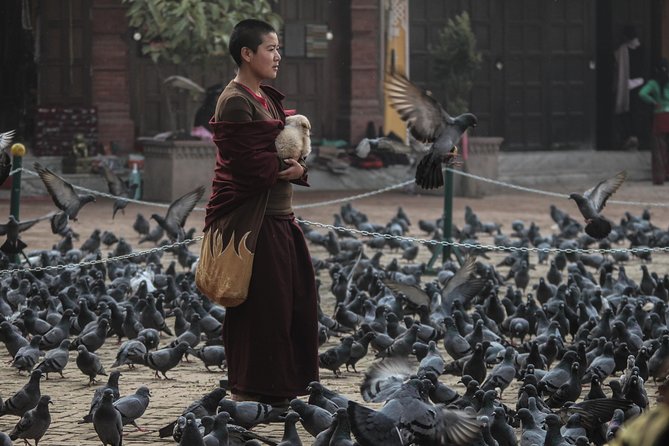
Dress with religious sites in mind. The tour includes active Hindu and Buddhist places, not only historic buildings. Modest clothing is the sensible choice, and you should follow the guide’s instructions about where you may enter, stand, and take photographs.
Pashupatinath requires the most sensitivity because cremation ceremonies may be visible. Do not treat the riverfront as a spectacle. If you are uncomfortable with funerary settings, be honest with yourself before booking.
Bring money for entrance fees and personal purchases. Food and drinks are not included, and no lunch arrangement is specified. A mobile ticket is provided, which makes the booking easy to carry on your phone.
I would also keep the day’s questions in mind before you start. Ask about Shiva at Pashupatinath, the Malla royal period at Patan, and the meaning of Boudhanath’s eyes and prayer circuit. A guide can add much more value when you give the conversation a direction.
Who should book this Kathmandu day tour?
I would choose this tour if you are in Kathmandu for a short stay and want the valley’s major religious and royal sights handled in one day. It is also a good fit if you dislike haggling with taxi drivers, want an English-speaking guide, or prefer a small group to a large bus.
It suits first-time visitors particularly well because the three stops offer useful contrast. You will see worship, death rituals, royal architecture, and Buddhist practice rather than spending the whole day in one historic square.
I would hesitate if you want a deeply customized tour, long unscheduled visits, or guaranteed commentary during every transfer. You should also think carefully about Pashupatinath if cremation scenes would be distressing.
The cancellation terms are friendly: you can receive a full refund if you cancel at least 24 hours before the local start time. Changes or cancellations inside that window are not accepted for a refund.
Should you book it?
Book this tour if you want an efficient introduction to Kathmandu Valley and value transport plus cultural explanation more than complete flexibility. The three-stop route is well chosen, the small group limit is sensible, and the $34 price is fair once you understand that entrance tickets and meals are extra.
Before paying, make sure the meeting point on Lal Durbar Marg works for you and budget separately for site fees. I would also contact Royal Mountain Travel if having a particular guide, such as Deepa or Kalpana, matters to you. With a strong guide, this can be a very useful first look at Kathmandu’s sacred and royal traditions. Without steady commentary between stops, it becomes mainly a convenient sightseeing transfer.
FAQ
How long does the Temples and Stupas Tour in Kathmandu Valley last?
The tour lasts approximately seven hours, beginning at 9:00 a.m. and ending back at the Royal Mountain Travel meeting point.
Which sights does the tour visit?
It visits Pashupatinath Temple, Patan Durbar Square in Lalitpur, and Boudhanath Stupa. All three are listed as UNESCO World Heritage sights.
Are entrance fees included?
No. Entrance fees are not included in the tour price. One passenger reported paying 2,000 Nepalese rupees in total for two entrances, but fees may change.
Is hotel pickup included?
No. Hotel pickup and drop-off are not included. You meet at Royal Mountain Travel on Lal Durbar Marg in Kathmandu, and the activity ends at that meeting point.
What transport is provided?
Transport is provided in an air-conditioned vehicle selected according to the group size.
Is a guide included?
Yes. An English-speaking tour guide is included. Guides who have led this experience include Deepa and Kalpana, but a specific guide is not guaranteed.
How many people can join the tour?
The activity has a maximum of 10 participants.
Can I cancel for a refund?
Yes. You can cancel at least 24 hours before the local start time for a full refund. Cancellations or changes made less than 24 hours before the start are not accepted for a refund.
Recently added around Kathmandu
- Kathmandu Airport Pickup and Drop-off Services★ 5.0 · 3 reviews
- Kathmandu Paragliding★ 5.0 · 3 reviews
- Kathmandu Chandragiri Cable Car and Swayambhunath Private Tour★ 5.0 · 3 reviews
- Explore The Beauty Of Langtang Valley In 8-Days Trek★ 5.0 · 3 reviews
- Kathmandu: Nightlife and Pub Crawl Tour★ 5.0 · 3 reviews
- Kathmandu: Momo Making Class with a Local Chef★ 5.0 · 3 reviews
- Mountain Flight Experience in Nepal★ 4.5 · 3 reviews
- Everest Base Camp Trek★ 5.0 · 3 reviews
Other Kathmandu Valley Tours worth a look
Kathmandu City Tour: TOP Highlights of the Kathmandu Valley
Read our review →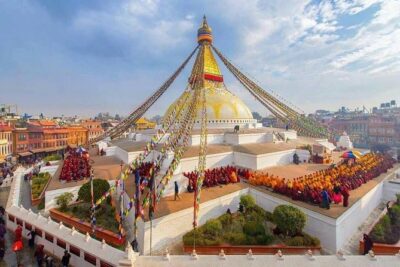
Private Kathmandu Valley Sightseeing Tour Including Lunch
Read our review →This tour also appears in