
REVIEW · BOUDHANATH STUPA TOURS
The Boudhanath Yoga Experience in Nepal
Boudhanath Yoga Experience Review
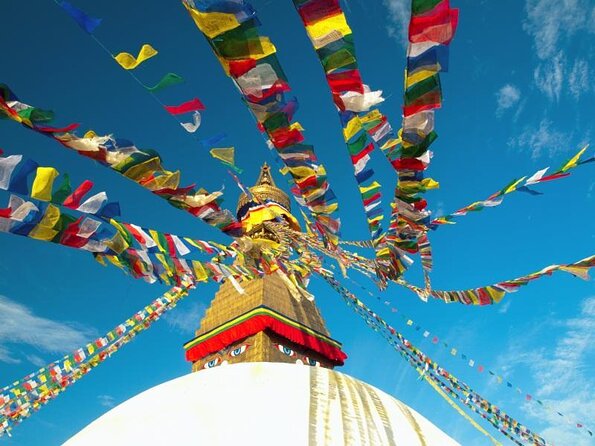
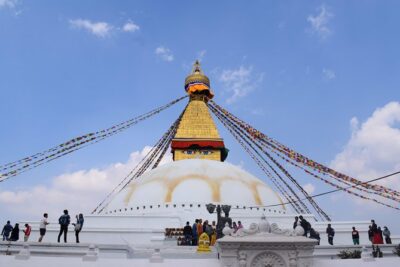
The striking part of this four-hour outing is the setting: you practice yoga near Boudhanath Stupa, one of Kathmandu’s great Buddhist pilgrimage sites, with the enormous white dome and watchful Buddha eyes close by. The class links physical postures with breathing, hand gestures, concentration, and meditation rather than treating yoga as simple stretching.
I like the hotel pickup and private vehicle, which saves you from sorting out Kathmandu traffic before a morning class. I also like the way the instructor explains each movement step by step, creating a calm class even though Boudha is an active part of the city. The main consideration is price: at $110 per person, this is not a budget yoga class, though the cost includes transport, entry to Boudhanath Stupa, and about two and a half hours of instruction.
Key points to know before booking
- Yoga beside Boudhanath Stupa: The class takes place near the world’s largest Buddhist stupa, giving the session a clear spiritual setting.
- Five parts of the practice: You work with asanas, mudras, pranayama, Dharana, and Dhyana, covering posture, gestures, breathing, mental focus, and meditation.
- 9:00 am start: The morning schedule gives the outing a clear shape and leaves part of your day free afterward.
- Private hotel transfers: Pickup and drop-off are included, with transport by private vehicle.
- Small group size: The class accepts a maximum of 14 people, large enough for company but limited enough for personal questions.
- Loose clothing matters: Wear comfortable clothes that let you bend and sit without restriction.
Beginning the morning with a hotel pickup
The outing starts at 9:00 am, with pickup from your Kathmandu hotel. That detail matters more than it might seem. Kathmandu traffic can make short journeys feel slow, and Boudha is not a place where you want to spend your morning figuring out a taxi, directions, or the exact entrance to a yoga center.
Your transport is by private vehicle, and the same arrangement brings you back after the class and stupa visit. The ride is practical rather than part of the sightseeing program, but it removes a layer of hassle. The tour is also near public transportation, though the included pickup means you do not need to rely on it.
The total outing lasts about four hours. The yoga class itself takes roughly two and a half hours, leaving the balance of the time for transfers, arrival, orientation, and the Boudhanath Stupa portion. Exact timing can vary with Kathmandu traffic, so you should avoid booking a tight appointment immediately afterward.
The group limit is 14 people. That is not a one-on-one lesson, but it is still a manageable size for a class that includes questions and movement correction. If you want a completely private yoga session, this is not that product. If you like some company but do not want a large studio crowd, the limit is sensible.
More Boudhanath stupa visits:
- Sacred Pashupatinath: Aarati,Cremation Rites & Boudha Stupa
★ 5.0 · 18 reviews - PashupatiNath and BoudhaNath – Private/Small Group
★ 5.0 · 18 reviews - Private Half-Day Tour of Boudhanath and Pashupatinath Temples in Kathmandu
★ 4.5 · 9 reviews
Seeing Boudhanath before settling onto the mat
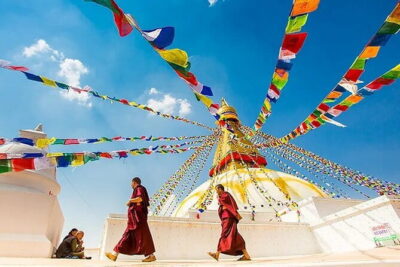
Boudhanath Stupa gives the class its character. The stupa is the world’s largest Buddhist stupa, and the yoga center sits right across from it. You are not practicing in an isolated retreat far from city life. You are close to a major sacred site and a thriving Tibetan community in Kathmandu.
That setting helps explain the workshop’s approach. The teaching presents yoga as a whole way of living, not just a series of athletic positions. The practice connects the body, breath, gestures, attention, and meditation, with ideas linked to Buddhist teachings and the Eight-Fold Path.
The location also comes with a small tradeoff. Boudha is an active urban area, so you should not expect mountain silence or a sealed-off wellness resort. The class can still feel peaceful, but outside activity remains part of the setting. For me, that is more useful than a polished retreat atmosphere because it shows how a contemplative practice can happen in the middle of ordinary city life.
The stupa entry fee is included. That gives you a chance to see the site as part of the morning rather than paying separately for a major Kathmandu sight. The available details do not set out a detailed sightseeing route or a formal stupa tour, so you should think of the monument as an important setting and included visit, not a long guided history lecture.
What the two-and-a-half-hour yoga class covers
The class is built around several parts of yoga and Buddhist-inspired practice. You should expect a hands-on workshop rather than a talk about yoga from a distance.
Asanas: working with posture
Asanas are the physical postures. The instructor guides you through body positions and explains the movements step by step. This is useful if you are new to yoga because you are not expected to know the sequence in advance.
The class is not described as an advanced athletic session. Most people can participate, and the teaching covers basic body positioning as part of a broader program. Still, you should tell the instructor about any physical limits before practice begins. The supplied information does not promise modified poses or medical supervision, so you should listen to your body and avoid forcing a movement.
More Yoga and Ayurveda Retreats in Kathmandu:
- 200 Hours Yoga Teacher Training at Nepal Yoga Home (starts on 1st of everymonth)
★ 5.0 · 125 reviews - 3 night 4 Day Yoga & Ayurveda Retreat to Detox the Body & Mind, Nepal
★ 5.0 · 37 reviews - 10 Days Ayurveda & Yoga Retreat in Kathmandu, Nepal
★ 5.0 · 24 reviews - 21 Day Ayurveda & Yoga Retreat in the Himalayan country, Nepal
★ 5.0 · 19 reviews
Mudras: adding hand gestures
Mudras are hand gestures used to increase the flow of energy. This may feel unfamiliar if your yoga experience has focused only on stretching and balance. Here, the gestures provide a link between the physical practice and the spiritual ideas behind it.
You will not simply move from one pose to another. The class asks you to pay attention to how your hands, body, breath, and mind work together. That broader focus is one reason this outing suits someone curious about Himalayan spirituality, not only someone seeking exercise.
Pranayama: giving the breath a job
Pranayama refers to breathing techniques used to relax and purify the body and energy. This section can be especially useful after a busy morning in Kathmandu, when traffic, noise, and constant movement may leave you tense.
The class treats breathing as an active skill. You learn how to control and direct the breath rather than taking it for granted during physical poses. The available information does not name each breathing exercise, so you should not expect a fixed list of techniques in advance.
Dharana: training concentration
Dharana focuses on controlling the mind for positive energy. In plain terms, it is about holding attention instead of letting every sound, thought, or distraction pull you away.
That goal may be tested by the location. Boudha is not cut off from city life, and the area can remain active around you. The practice therefore has a practical quality: you work on concentration in a real setting, not only in perfect quiet.
Dhyana: moving toward meditation
Dhyana is presented as a technique for divine meditation and liberation of the mind. The class includes meditation as a core part of the session, not as a quick closing moment after exercise.
If you want a fast workout, this part may feel slow. If you want time to settle your attention and understand the spiritual side of yoga, it adds purpose to the physical poses. The strongest part of this program is the way the pieces fit together: posture prepares the body, breathing steadies you, gestures give the practice form, concentration gathers the mind, and meditation brings the session inward.
A class that keeps the spiritual focus
The teaching is described as a Buddhism-inspired approach based on ancient practices associated with Buddha’s teachings. It also refers to the Eight-Fold Path and Seven Disciplines as part of a holistic path toward wellness.
You should understand this as a spiritual workshop with physical movement, not as a standard hotel yoga class. The aim is not only flexibility. The instructor presents yoga as a way to address body and mind together.
That approach will suit you if you want context for the Buddhist setting around Boudhanath. It may suit you less if you want a purely fitness-based class, a vigorous workout, or a session built around modern exercise goals. The program’s language is traditional and spiritual, so your expectations should match that tone.
One useful detail is the instructor’s teaching style. The class explains each move carefully, and questions are welcome. That makes the workshop more approachable for beginners or for anyone who has tried yoga but does not know much about mudras, pranayama, concentration, or meditation.
What the Boudha setting adds, and what it cannot provide
Practicing across from Boudhanath Stupa gives you a strong sense of place. The stupa is not a decorative backdrop added to a generic class. It is the reason this particular workshop exists in Boudha, and it connects the practice to a living Buddhist pilgrimage site and Tibetan community.
At the same time, you should keep the setting in perspective. This is a four-hour Kathmandu activity, not a multi-day Himalayan retreat. You will not receive a long course in Buddhist philosophy, and the information does not promise a private meditation room, mountain view, meals, or a silent retreat environment.
The class can remain peaceful despite the active area. That balance is part of its appeal. You get a focused period on the mat while still being close to one of Kathmandu’s most important religious sights. I would choose this setting over a generic studio if you want your yoga session to connect with the place you are visiting.
Is $110 a fair price?
The $110 price per person needs to be judged as a package, not against the cost of a drop-in yoga class. You receive hotel pickup and drop-off, a private vehicle, a qualified and trained instructor, about 2.5 hours of yoga, and entry to Boudhanath Stupa.
For a solo visitor who values convenience, those inclusions make the price easier to justify. Private transport in Kathmandu, a substantial guided class, and a major sightseeing stop can add up when arranged separately. You also avoid losing time finding the venue.
The value is weaker if you already have transport, plan to visit Boudhanath on your own, or want only a short yoga session. You would be paying for services you may not need. Group discounts are offered, so the cost may work better if you are traveling with companions.
Food and drinks are not included. Plan to eat before pickup or arrange your own refreshment afterward. The supplied details do not promise a meal or snack, so do not treat this as a wellness brunch outing.
Who will get the most from this outing?
I would recommend it to you if you want three things in one morning: a meaningful Kathmandu setting, guided yoga, and easy transport. It is especially suitable for beginners who appreciate clear instruction and for people interested in the connection between Buddhist ideas and traditional yoga practice.
It is also a good fit if Boudhanath is already on your Kathmandu list. The included stupa entry gives the morning more substance than a class held in an anonymous room.
You may want another option if you are an experienced yoga student seeking demanding physical training. The description centers on a holistic practice, breathing, focus, and meditation rather than advanced poses or a high-intensity workout.
You should also think about comfort. Loose-fitting clothing is advised, and you need to be ready to sit, breathe, move, and meditate for a long class. Most people can participate, but the experience details do not provide a list of accessibility adaptations or specific injury modifications.
Booking, cancellation, and practical details
Confirmation is provided at the time of booking. Free cancellation is available if you cancel at least 24 hours before the 9:00 am start. Cancellations or changes made less than 24 hours ahead are not accepted for a refund, and cut-off times follow local Kathmandu time.
The experience is operated by Himalayan Advisor Pvt. Ltd. Food and drinks are excluded, and the group can reach 14 people. Wear clothes that allow comfortable movement, and leave enough time after the outing in case traffic affects the return journey.
Should you book the Boudhanath Yoga Experience?
Book it if you want yoga tied to a real Buddhist place rather than a routine class in a hotel. The stupa setting, private pickup, included entry, and long class create a useful half-day introduction to Boudha’s spiritual side.
Skip it if your main goal is cheap exercise, a private teacher, or a strenuous physical session. At $110, the value comes from the complete package and the setting, not from the yoga class alone. For a first visit to Kathmandu, I like the way this outing brings together movement, breath, meditation, and one of the city’s essential sights without making you handle the transport yourself.
FAQ
Where does the Boudhanath Yoga Experience take place?
It takes place near Boudhanath Stupa in Boudha, Kathmandu, with the stupa located right across from the yoga center.
What time does the experience start?
The start time is 9:00 am.
How long does the experience last?
The full outing lasts about four hours. The yoga class itself lasts approximately two and a half hours.
Is hotel pickup included?
Yes. Hotel pickup and drop-off are included, along with transport by private vehicle.
Is entry to Boudhanath Stupa included?
Yes, the entry fee for Boudhanath Stupa is included.
How many people can join the class?
The maximum group size is 14 people.
What does the yoga class cover?
The class covers asanas, mudras, pranayama, Dharana, and Dhyana. These relate to body postures, hand gestures, breathing, concentration, and meditation.
What should I wear?
Loose-fitting clothing is advised so you can move and practice comfortably.
Can I cancel for a full refund?
Yes, you can receive a full refund if you cancel at least 24 hours before the experience start time. Cancellations and changes made less than 24 hours before the start are not accepted for a refund.
Recently added around Kathmandu
- Kathmandu Paragliding★ 5.0 · 3 reviews
- Kathmandu Airport Pickup and Drop-off Services★ 5.0 · 3 reviews
- Explore The Beauty Of Langtang Valley In 8-Days Trek★ 5.0 · 3 reviews
- Kathmandu Chandragiri Cable Car and Swayambhunath Private Tour★ 5.0 · 3 reviews
- Kathmandu: Nightlife and Pub Crawl Tour★ 5.0 · 3 reviews
- Mountain Flight Experience in Nepal★ 4.5 · 3 reviews
- Kathmandu: Momo Making Class with a Local Chef★ 5.0 · 3 reviews
- Everest Base Camp Trek★ 5.0 · 3 reviews
Other Boudhanath Stupa Tours worth a look
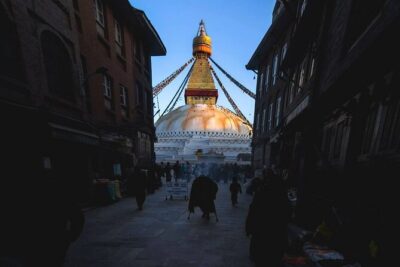
PashupatiNath and BoudhaNath – Private/Small Group
Read our review →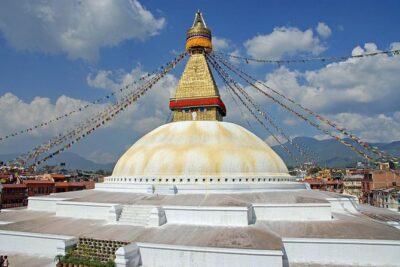
Private Half-Day Tour of Boudhanath and Pashupatinath Temples in Kathmandu
Read our review →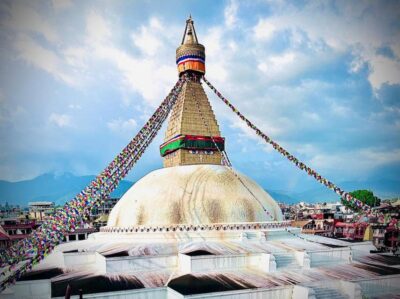
Kopan Monastery, Swayambhu and Boudha Nath Stupa Tour
Read our review →This tour also appears in