
REVIEW · UNESCO HERITAGE SITE TOURS
Kathmandu: Full-Day 7 UNESCO Tour with Lunch – Private/Group
Kathmandu Valley’s seven UNESCO sites pack Nepal’s royal, Hindu, and Buddhist traditions into one ambitious day. You’ll climb to Swayambhunath, study carved Newari courtyards in three old cities, watch the Bagmati River rituals at Pashupatinath, and finish beneath the painted eyes of Boudhanath. I like the sheer coverage and the chance to see places such as Changu Narayan, which is easy to miss without a vehicle and guide.
I also like the practical setup: hotel pickup, an air-conditioned vehicle, and a local guide take the strain out of Kathmandu’s traffic. Guides including Sumit, Asmita, Sajina, Ram, and Anon have been praised for clear explanations, patience, humor, and help with photographs. The catch is simple: this is a long, packed day, and the standard option does not include monument fees. Carry about NPR 5,800, or choose all-inclusive and avoid the repeated ticket stops.
Key points before you book
- Seven major sites in one day: Swayambhunath, Kathmandu Durbar Square, Patan Durbar Square, Bhaktapur Durbar Square, Changu Narayan, Pashupatinath, and Boudhanath.
- Best for a short Kathmandu stay: You get a fast introduction to the valley’s royal architecture, Hindu worship, Buddhist practice, and Newari art.
- A serious full-day outing: Expect plenty of walking, repeated vehicle transfers, and a late finish if the group needs extra time.
- Entrance fees matter: The combined cost is about USD 43, or NPR 5,800, for most visitors. SAARC nationals pay about USD 22.
- Guide quality is central: Sumit, Asmita, Sajina, Ram, Anon, and others have been singled out for strong English, local insight, patience, and thoughtful care.
- Two ways to pay: The all-inclusive package covers monument fees and food. The standard option leaves monument fees to you.
Seven UNESCO sites, one very full day
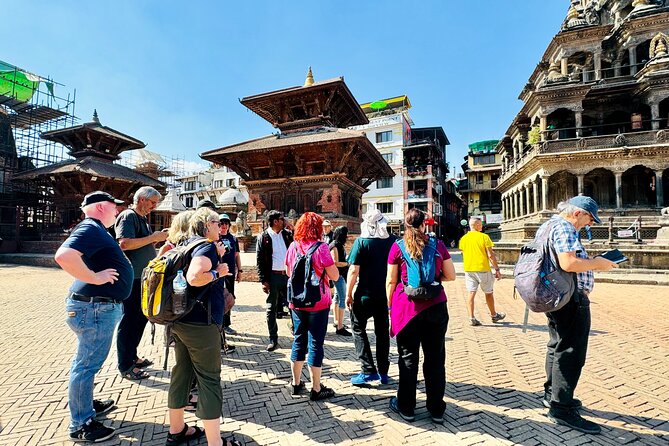
The appeal here is not a slow, scholarly tour of one palace square. It is a broad survey of Kathmandu Valley, where seven separate heritage areas reveal different parts of Nepal’s past and present.
You move between three old royal cities, major Hindu and Buddhist centers, and one hilltop shrine. That range gives you useful context. A carved wooden window in Patan means more after you have seen royal courtyards in Kathmandu and Bhaktapur. Buddhist symbols at Boudhanath make more sense after Swayambhunath. Pashupatinath shows you a living religious center rather than a preserved monument.
The trade-off is pace. Several people have found the day rewarding but intense, and one practical way to think about it is this: the tour gives you a strong first look, not a complete visit to every site. Bhaktapur alone deserves more time if you want to wander every lane and courtyard.
More UNESCO Heritage Site Tours in Kathmandu:
- Private Kathmandu Sightseeing Tour | UNESCO World Heritage sites
★ 5.0 · 756 reviews - Kathmandu: Full Day 7 UNESCO Tour with Lunch – Private/Group
★ 5.0 · 415 reviews - Kathmandu: Full Day Top 4 UNESCO Tour with Lunch – Private/Group
★ 5.0 · 269 reviews
Swayambhunath, the hilltop opening
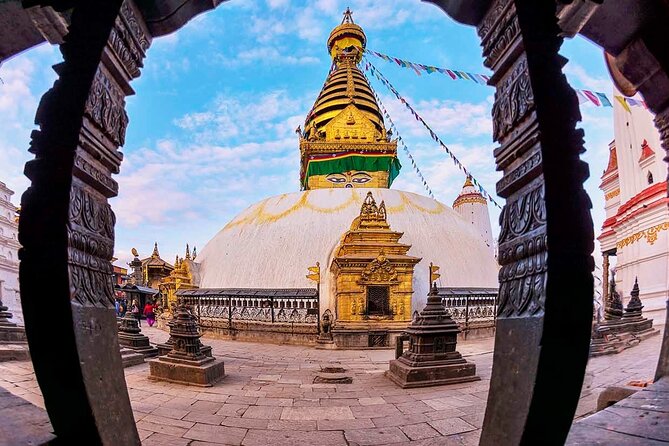
Swayambhunath, often called the Monkey Temple, is a striking first stop. The shrine sits on a hill above Kathmandu, with broad city views and a large Buddhist stupa surrounded by prayer wheels, shrines, and devotional activity.
The climb and uneven surfaces make this stop more physical than a quick roadside photo. Take your time with the steps, watch where you place your feet, and keep your camera ready for the stupa, the valley, and the small details around the main monument.
Your guide can help separate Buddhist symbolism from the many Hindu elements found around the complex. That matters here. Swayambhunath is not just a scenic lookout or a single temple. It is a working place of worship, and an explanation of the images, offerings, and rituals helps you read the site respectfully.
The hilltop setting also gives you an early sense of Kathmandu’s scale. The city spreads in every direction, while the shrine feels older and quieter above it. If the air is clear, this can be one of the most rewarding views of the day.
Kathmandu Durbar Square and Nepal’s royal past
Kathmandu Durbar Square brings you into the former royal center of the city. Its palaces, temple fronts, courtyards, and carved wooden details show how political power and religious life once shared the same tight urban space.
This is a place where a guide earns the fee. Without context, you may see a busy collection of old buildings. With the right explanation, the square becomes a record of kings, ceremonies, deities, Newari craftsmanship, and the changing role of the royal court.
Look closely rather than simply counting temples. Doorways, roof supports, balconies, and window screens carry much of the visual interest. The square is also part of present-day Kathmandu, so you are likely to see ordinary city life alongside important monuments.
The visit can feel short because there is so much ground to cover. If you have only one day, that is the point of this tour. If you have several days in the valley, you may prefer to return here later and explore at a slower pace.
Patan Durbar Square, where detail takes over
Patan Durbar Square is especially rewarding for architecture lovers. Its Newari design is full of precise brickwork, carved timber, metal ornament, temple roofs, and layered courtyards.
I would not rush this stop. Even when the schedule is tight, pause to examine the wood carving around doors and windows. The work is easy to miss when you are focused on moving from one major structure to the next.
Your guide can explain how Patan’s artistic traditions connect to religious practice and royal patronage. This is one of the places where a good storyteller makes the difference between looking at decoration and understanding why it matters.
The drawback is the same as elsewhere: one day cannot give each square the attention it deserves. Patan rewards a return visit, especially if your interests run toward architecture, craft, or photography.
More lunch stops around Kathmandu:
- Kathmandu: Nagarkot Sunrise View & Morning Hike with Lunch
★ 4.9 · 188 reviews - Kathmandu: Top 4 UNESCO Tour with Lunch – Private/Group
★ 4.9 · 181 reviews - Kathmandu: Nagarkot Sunrise & Hike with Lunch -Private/Group
★ 4.9 · 122 reviews - Kathmandu: Full Day 7 UNESCO Tour with Lunch – Private/Group
★ 5.0 · 101 reviews
Bhaktapur, the grandest square on the route
Bhaktapur Durbar Square is often the most visually powerful of the three royal squares. Its brick lanes, palace spaces, carved buildings, and temple architecture create a strong sense of an old city rather than a single monument compound.
This stop also brings the clearest time question. The entrance fee alone is about NPR 1,800, roughly USD 13, and the square deserves time to explore beyond the main viewpoint. On a seven-site day, you will see the major areas, but you may not have enough time to follow every lane or linger over every carved facade.
That is not a reason to skip it. Bhaktapur gives the tour scale and atmosphere. It shows how Newari urban design works across streets, squares, shrines, and living neighborhoods.
Bring comfortable shoes and keep your daypack light. The surfaces are historic, the walking is real, and the schedule has several more stops after this one.
Changu Narayan, an ancient temple outside the city
Changu Narayan is dedicated to Vishnu and is described as Nepal’s oldest Hindu temple. Its carved stone and wood details are the main attraction, and the setting provides a contrast to the larger urban squares.
This stop is valuable because it is less obvious than the famous names. Without transport, it is not the easiest site to fit into a short Kathmandu visit. With a driver, it becomes part of a much wider picture of the valley.
Pay attention to the carvings and ask your guide about the temple’s Vishnu connection. Changu Narayan is not about grand scale. Its appeal lies in age, detail, and the sense that you have reached a place many rushed city tours leave out.
By this stage, the full-day pace may begin to show. The tour is designed for coverage, so enjoy the stop for what it offers rather than expecting a long, quiet temple visit.
Pashupatinath and the Bagmati River
Pashupatinath Temple is one of the world’s most important Hindu temples and one of the day’s most powerful cultural stops. Set beside the Bagmati River, the complex has a strong spiritual presence and a constant flow of worship, ritual, and temple activity.
Non-Hindu visitors cannot enter the central temple, but the wider complex still offers much to see. Your guide can explain what is happening and help you understand the religious meaning of the site without treating it as a spectacle.
This is a place to act with care. Dress modestly, follow instructions about photography, and listen before taking pictures. The Bagmati River and the rituals along its banks can be emotionally difficult or moving, depending on what you encounter.
Pashupatinath also helps correct a common misunderstanding about heritage sightseeing. These are not empty ruins arranged for tourists. They remain part of daily religious life, and that makes the visit more meaningful, but it also calls for restraint and respect.
Boudhanath, a calm final circle
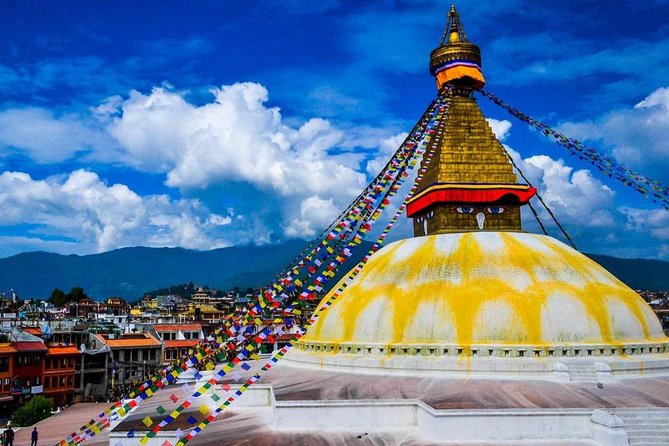
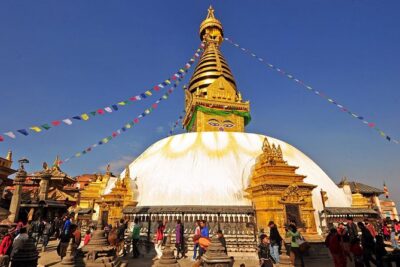
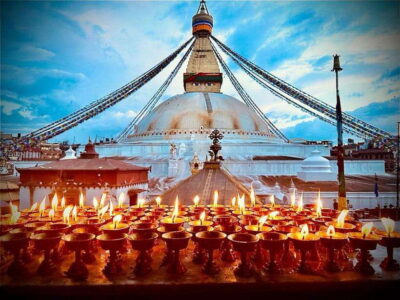
The tour ends at Boudhanath Stupa, one of Kathmandu’s most recognizable Buddhist monuments. Its large white dome, square tower, painted eyes, prayer flags, and surrounding Tibetan Buddhist community make it a fitting final stop.
Walk around the stupa in the traditional clockwise direction, if your guide confirms the local practice, and notice how worshippers use the space. Prayer wheels, incense, offerings, and shopfronts all form part of the setting.
Boudhanath often feels like a change of pace after the royal squares and Pashupatinath. The circular layout gives you a clear way to move through the site, while the monument’s scale makes it easy to appreciate even during a relatively short visit.
The end of the day is a good time to ask questions. By now, you have seen Hindu and Buddhist sites, royal centers, and Newari craftsmanship. A final conversation with your guide can connect those pieces into a clearer picture of Nepal.
Guides who make the long day work
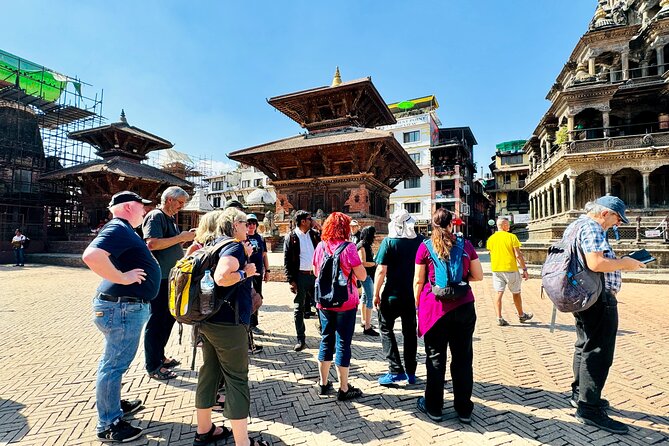
The guide is the heart of this tour. The strongest feedback centers on clear English, strong local knowledge, good humor, patience, and attention to individual needs.
Sumit Kharel is repeatedly praised for explaining history, culture, architecture, politics, and religion in a lively way while keeping the group moving. Asmita is noted for clear explanations, warmth, humor, excellent communication, and care for solo visitors and small groups. Sajina has been praised for answering questions fully, taking photographs, and adjusting the day to the visitor.
Other named guides include Anon, Ram, Ananta, Dipesh, Surita, Seemu, Rajan, and Summit. The exact guide is not guaranteed in the information provided, but these names give you a sense of the human side of the operation.
A good guide matters because the sites can blur together after several hours. Ask questions early, say when you need a short pause, and tell your guide what interests you most. The experience works best as a conversation, not a series of hurried facts.
Transport, pickup, and the reality of Kathmandu traffic
Hotel pickup and drop-off remove one of the day’s biggest hassles. Group pickups begin around 8:00 AM in the Thamel area, and the exact time is sent one day ahead. A three to five minute delay can occur because of traffic or coordination, so do not panic if the vehicle is slightly late.
The air-conditioned private vehicle is more than a comfort detail. Kathmandu traffic can be tiring, and the chance to sit between sites gives your feet a break. Drivers such as Krishna and Amik have been praised for safe, careful driving and reliable meeting points after visits.
Private and group options serve different needs. A private tour is better if you want to ask many questions, spend longer at a favorite site, or travel at your own rhythm. A group tour can cost less and offers company, but the pace is shaped by everyone, including anyone who returns late to the vehicle.
Allow for the possibility of finishing later than planned. One guide extended the day to cover the sites in a more meaningful way, while another group finished late because some people did not keep to meeting times. The schedule works best when everyone respects pickup times.
Lunch, water, and what to carry
The included lunch box contains a 500 ml bottle of water, muffin, donut, banana, seasonal fruit, and juice. The all-inclusive package also provides food, soft drinks, a khana set, or a choice of dishes at a local restaurant.
The food element is worth checking when you book. One person found the meal disappointing for the price, while another private-tour visitor enjoyed a filling rice, chicken, and vegetable lunch. Expectations should match the package: the meal is useful fuel during a long day, but it may not be the culinary highlight.
Carry cash even if you choose the all-inclusive option. It helps with personal purchases, snacks, drinks, or any small need along the way. A camera, daypack, passport or ID copy, and sunscreen are sensible additions. One practical bathroom tip is to carry a little toilet paper, just in case.
Wear shoes you can walk in for hours. The sites involve steps, courtyards, uneven surfaces, and repeated walking. The activity is not suitable for wheelchair users or people with visual impairments.
The real price: attractive base fare, costly add-ons
The advertised price of $5 per person looks remarkably low, but it does not tell the whole story. Monument fees are separate in the standard package and total about USD 43, or NPR 5,800, for most visitors. SAARC nationals pay about USD 22 in total entrance fees.
That changes the value calculation. If you compare only the starting fare, the tour looks almost too cheap. If you add the standard entrance charges, you are paying for transport, a guide, pickup, water, tax, and a full day of coverage at a still reasonable overall cost.
The all-inclusive option is the easiest choice if you dislike handling cash at several entrances. It covers monument fees and food, and it lets you concentrate on the sites. The standard option can make sense if you want to control your meal and already have local currency, but budget carefully.
At this price, the strongest value is the logistics. Arranging seven separate heritage visits on your own would mean sorting transport, entrances, directions, and timing across the valley. The tour does that work for you.
Who should book this Kathmandu day tour?
I recommend it most strongly if you have one or two days in Kathmandu and want a broad first look. It is also a good fit for solo visitors, first-time visitors, and anyone who would rather not negotiate Kathmandu traffic and site locations alone.
It suits people who want context, not just photographs. The guides explain religion, architecture, local customs, food, and the city’s past, and the private option gives you more room for questions and personal interests.
I would hesitate if you dislike full schedules or prefer slow museum-style sightseeing. Bhaktapur, Patan, and the Durbar Squares can all reward longer visits, and seven major sites inevitably means some stops are introductions rather than complete explorations.
The tour is also not a good match if walking is difficult. There is no accessibility suitability for wheelchair users or people with visual impairments, and the day includes steps and uneven heritage areas.
FAQ
What sites are included in the tour?
The tour visits Swayambhunath, Kathmandu Durbar Square, Patan Durbar Square, Bhaktapur Durbar Square, Changu Narayan Temple, Pashupatinath Temple, and Boudhanath Stupa.
Are monument entrance fees included?
They are included only with the all-inclusive package. In the standard package, you pay separately. The total is approximately USD 43, or NPR 5,800, per person, while SAARC nationals pay about USD 22.
What time does pickup begin?
Group-tour pickups begin around 8:00 AM within the Thamel area. You receive the exact pickup time one day before the tour.
Is lunch included?
A lunch box with water, a muffin, donut, banana, seasonal fruit, and juice is included. The all-inclusive option also includes food, soft drinks, a khana set, or a choice of dishes.
Is transportation private and air-conditioned?
The tour includes air-conditioned private transportation. You can choose between a private tour and a group tour.
Which languages are available?
The tour is offered in English and Hindi.
What should I bring?
Bring a camera, cash, a daypack, and your passport or an accepted copy of your passport or ID card. Sunscreen and a small amount of toilet paper may also be useful during the long day.
Should you book it?
Book this tour if your priority is maximum coverage in minimum time. You will see all seven UNESCO sites, travel with a guide who can explain what you are looking at, and avoid much of the transport hassle.
Choose the all-inclusive package if the extra monument fees fit your budget and you want a simpler day. Choose private if you value flexibility or have special interests. If you have four or more days in Kathmandu, consider splitting the sites across several days instead. For a short stay, though, this is an efficient and worthwhile first pass through the valley, provided you arrive ready for a long walk and a very full day.
More Full-Day in Kathmandu
- Kathmandu: Full Day Private Top 4 UNESCO Heritage Tour W/Lunch.
★ 5.0 · 86 reviews - Kathmandu: Full Day Top 4 UNESCO Tour with Lunch – Private/Group
★ 5.0 · 67 reviews - Kathmandu Heritage Tour (Full Day)
★ 5.0 · 63 reviews - Full Day Guided Tour in Kathmandu
★ 5.0 · 61 reviews
Recently added around Kathmandu
- Kathmandu Airport Pickup and Drop-off Services★ 5.0 · 3 reviews
- Kathmandu Paragliding★ 5.0 · 3 reviews
- Kathmandu Chandragiri Cable Car and Swayambhunath Private Tour★ 5.0 · 3 reviews
- Explore The Beauty Of Langtang Valley In 8-Days Trek★ 5.0 · 3 reviews
- Kathmandu: Nightlife and Pub Crawl Tour★ 5.0 · 3 reviews
- Kathmandu: Momo Making Class with a Local Chef★ 5.0 · 3 reviews
- Mountain Flight Experience in Nepal★ 4.5 · 3 reviews
- Thangka Painting Workshop★ 5.0 · 3 reviews
Other UNESCO Heritage Site Tours worth a look
Private Kathmandu Sightseeing Tour | UNESCO World Heritage sites
Read our review →
Full Day 7 UNESCO Tour with Lunch – Private/Group
Read our review →
Full Day Top 4 UNESCO Tour with Lunch – Private/Group
Read our review →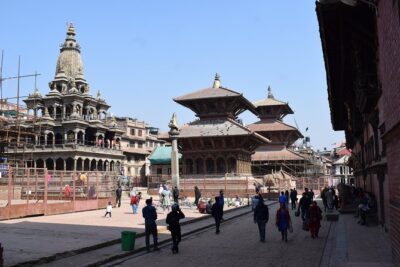
Kathmandu Private Sightseeing Tour | UNESCO World Heritage Sites
Read our review →Full Day 7 UNESCO Tour with Lunch – Private/Group
Read our review →This tour also appears in