
REVIEW · UNESCO HERITAGE SITE TOURS
Kathmandu: Top 4 UNESCO Tour with Lunch – Private/Group
Kathmandu packs Buddhist stupas, Hindu shrines, royal courtyards, prayer wheels, funeral rites, and fine Newari carving into a surprisingly small area. This tour links Swayambhunath, Patan Durbar Square, Pashupatinath, and Boudhanath in one carefully planned outing, giving you a strong first look at the city’s religious and artistic character.
I like the way a local guide gives meaning to places that can otherwise feel confusing, and I like having an air-conditioned electric car between stops. The main consideration is pace: with four major sites, city traffic, and plenty of walking and steps, this can feel like a full day rather than a gentle half-day outing.
Key points at a glance
- Four major heritage sites: Cover Kathmandu’s best-known Buddhist and Hindu sights without arranging separate taxis or guides.
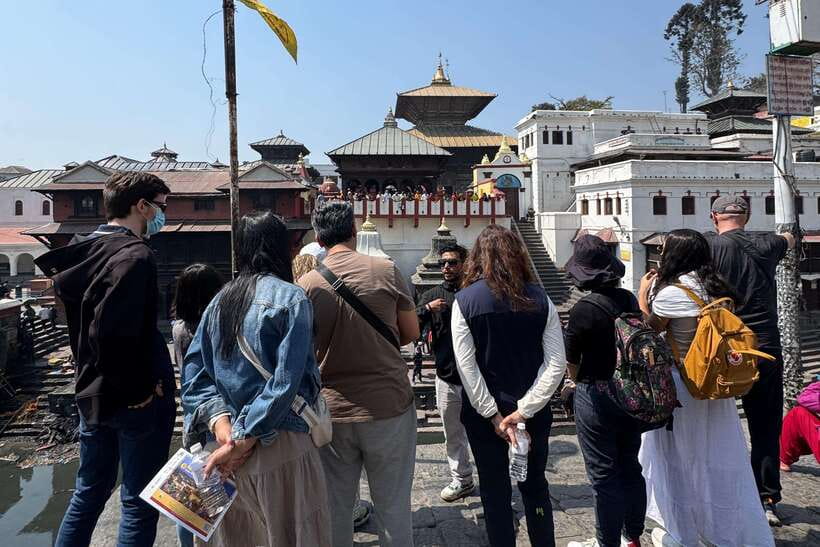
- Strong local guiding: Guides including Sajina, Sumit, Punam, Sujan, Asmita, and Hemraj are praised for clear explanations, patience, humor, and help with photographs.
- Comfort between stops: A private air-conditioned vehicle, often an electric car, handles the longer road sections and busy Kathmandu traffic.
- Useful food package: You receive bottled water and a snack box, with lunch, soft drinks, and entrance fees included in the all-inclusive option.
- Flexible private format: Private and small-group departures are available, and guides may adjust the timing to suit your interests.
- Good value for a short stay: The low advertised fare can be attractive, but you must check whether monument fees and the full lunch are included.
Why this makes sense on a first day
Kathmandu is not a city where four major sights fall neatly along one simple walking route. The sites are spread across different parts of the Kathmandu Valley, and road conditions can turn a short distance into a slow ride. This tour solves that problem with hotel pickup, a driver, and a guide who handles the order of stops.
You begin at your hotel in Kathmandu Valley, with pickup locations listed in Kathmandu and Thamel. You should be ready about 10 minutes before the scheduled time. If you join a small group, allow some extra patience during pickup, since the car may collect other people along the way.
The advertised duration is three to six hours, but the detailed route includes about 45 minutes at Swayambhunath, an hour at Patan, an hour at Pashupatinath, and 40 minutes at Boudhanath. Add the listed driving time and you can see why traffic and lunch may push the outing toward the longer end.
That timing is useful to understand before booking. I would choose this tour if you have one free day in Kathmandu and want an organized introduction. If you prefer to sit for long periods at one temple, photograph every corner, or explore at a slow museum pace, separate visits may suit you better.
More UNESCO Heritage Site Tours in Kathmandu:
- Private Kathmandu Sightseeing Tour | UNESCO World Heritage sites
★ 5.0 · 756 reviews - Kathmandu: Full Day 7 UNESCO Tour with Lunch – Private/Group
★ 5.0 · 415 reviews - Kathmandu: Full Day Top 4 UNESCO Tour with Lunch – Private/Group
★ 5.0 · 269 reviews
Swayambhunath: hilltop views and prayer wheels
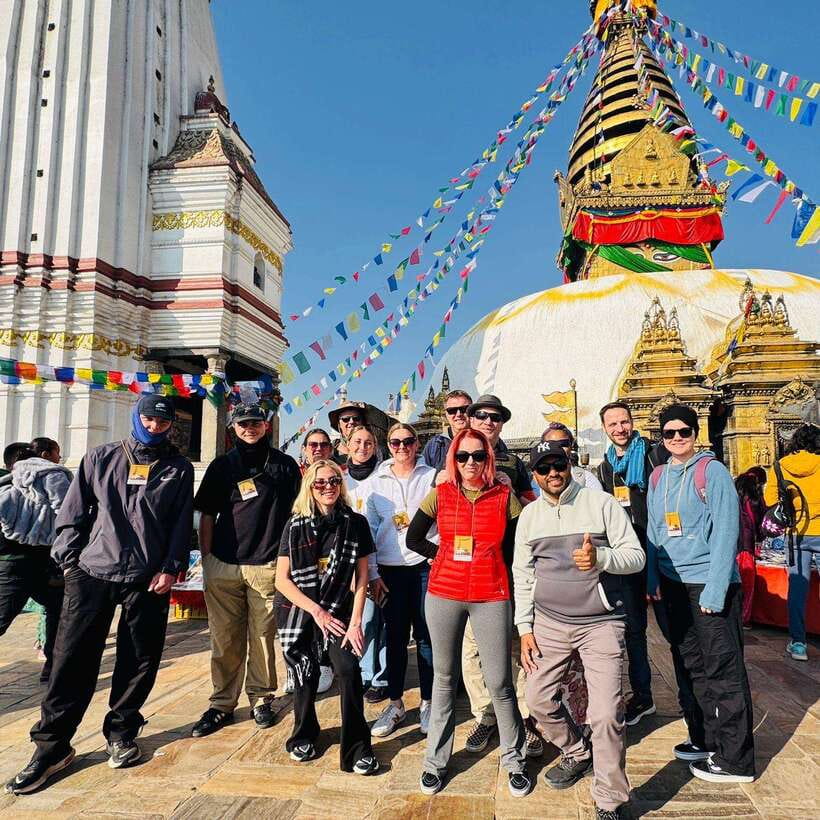
Your first stop is Swayambhunath, often called the Monkey Temple. The white stupa and golden spire sit on a hill above Kathmandu, giving you broad views across the valley when the air is clear.
The site brings together Buddhist symbols, shrines, prayer wheels, chanting, and the steady movement of worshippers. Your guide can explain what you are seeing instead of leaving you to guess why people walk around the stupa or turn the prayer wheels.
The hilltop setting is part of the appeal, but it also means steps and uneven walking. One person specifically advised bringing a face mask, which is sensible in Kathmandu’s dusty traffic and during a busy day outdoors. Comfortable footwear matters here and at every later stop.
I would try to start early if possible. A morning arrival can give you quieter views and better photo opportunities. One couple reached the temple around 8 a.m. and found very few foreign visitors at first. That early timing also gives you more breathing room before the city roads become slower.
Do not rush the viewpoint. Swayambhunath is the quickest stop on the route, but it may be the place where you first understand Kathmandu’s mix of sacred practice and everyday city life.
Patan Durbar Square: Newari detail at royal scale
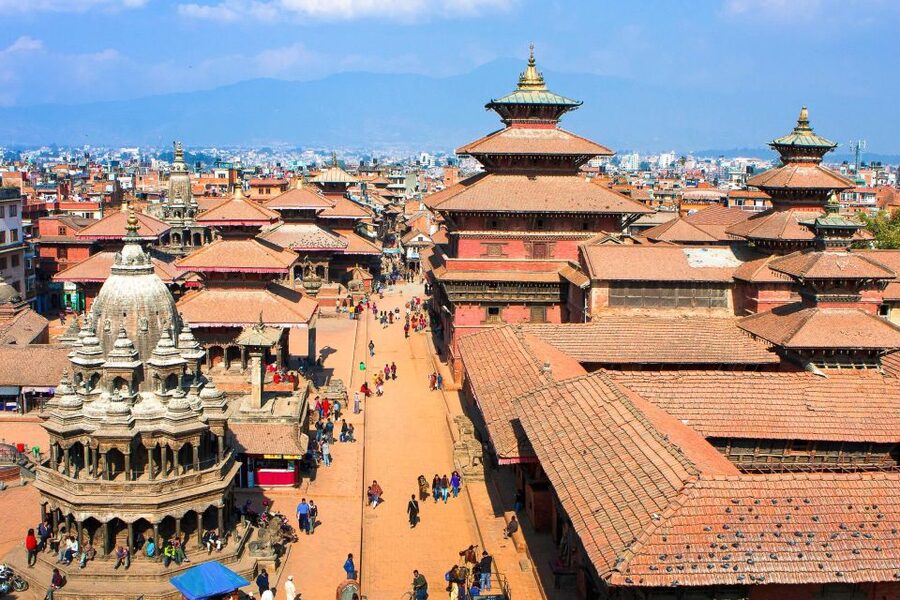
From Swayambhunath, the car takes you toward Patan Durbar Square. The listed drive is about 35 minutes, though Kathmandu traffic can change that. At Patan, you get roughly an hour to walk among temples, courtyards, statues, and palace remains.
Patan is the architectural highlight for many people. Its Newari woodcarving and brick-and-stone temple design reward close attention. Look at the carved windows, roof supports, metal figures, and small details around the courtyards. Your guide can connect these objects to the city’s royal past and local craft traditions.
This is where a good guide earns the fee. Without context, Patan can become a long sequence of attractive buildings. With someone like Punam, Sajina, Sumit, or Asmi explaining the stories and symbols, you can better understand why the square matters to Nepalese culture.
The hour listed here is enough for the main sights, but not for every corner. Some private groups were allowed to linger longer and set their own rhythm. If you care most about architecture, tell your guide early. A private tour gives you a better chance of shifting time away from a less important stop.
Patan also offers a useful contrast with Swayambhunath. The hilltop stupa feels open and contemplative, while Patan asks you to look closely at human workmanship. The two together provide a strong start to the day.
Pashupatinath: sacred Hindu rites by the Bagmati
Next comes Pashupatinath Temple, about 30 minutes away by the stated route. This is one of Nepal’s most important Hindu religious sites, dedicated to Lord Shiva and set beside the Bagmati River.
The complex is active and serious. Pilgrims come to worship, priests perform rituals, and rites take place along the river. You should treat the area with respect and follow your guide’s instructions about where to stand, what to photograph, and how to behave.
Non-Hindu visitors cannot enter the main temple building, but the wider complex still offers much to see and understand. Your guide provides the religious background and helps you read the activity around the river without turning a living place of worship into a simple sightseeing stop.
Several guides receive special praise for explaining Hindu and Buddhist beliefs in clear terms. Sumit, for example, is noted for giving detailed explanations of Pashupatinath. Some outings also include evening aarti, a ritual ceremony by the river, but you should not assume that this standard daytime itinerary includes it. Ask before booking if the ceremony is important to you.
Pashupatinath may be the most emotionally intense stop. It is not polished for easy tourism, and that is precisely why it can leave a strong impression. At the same time, visitors who dislike seeing funeral rites or sacred ceremonies should think carefully before choosing this route.
More lunch stops around Kathmandu:
- Kathmandu: Full-Day 7 UNESCO Tour with Lunch – Private/Group
★ 4.9 · 247 reviews - Kathmandu: Nagarkot Sunrise View & Morning Hike with Lunch
★ 4.9 · 188 reviews - Kathmandu: Nagarkot Sunrise & Hike with Lunch -Private/Group
★ 4.9 · 122 reviews - Kathmandu: Full Day 7 UNESCO Tour with Lunch – Private/Group
★ 5.0 · 101 reviews
Boudhanath: a calm final stop
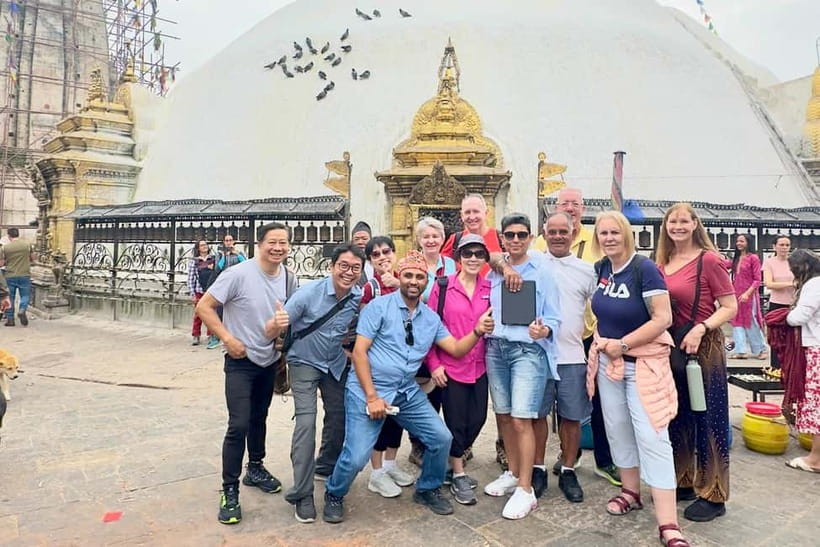
The final major visit is Boudhanath Stupa, reached after about 20 minutes in the car. You receive around 40 minutes to walk around this enormous white dome, with its watchful Buddha eyes and golden details.
Boudhanath is a center of Tibetan Buddhism. You will see monks, pilgrims, prayer wheels, and people walking clockwise around the stupa. Follow that direction yourself, keeping to the rhythm of the people making their religious circuit.
I like ending here because the stop offers a calmer mood after Pashupatinath and the traffic between sites. The circular path makes it easy to slow down, look up at the dome, and notice the small shrines and shops around the square.
Forty minutes is enough for one circuit and an explanation of the site. It is less generous if you want to browse, take many photographs, or pause for tea. A private group can ask to adjust the timing, though the day still has to account for the return drive.
Boudhanath also completes the tour’s religious balance. Swayambhunath and Boudhanath introduce two important Buddhist centers, while Pashupatinath shows Hindu practice on a much more immediate scale. Patan adds the artistic and royal layer.
The car matters more than you might expect
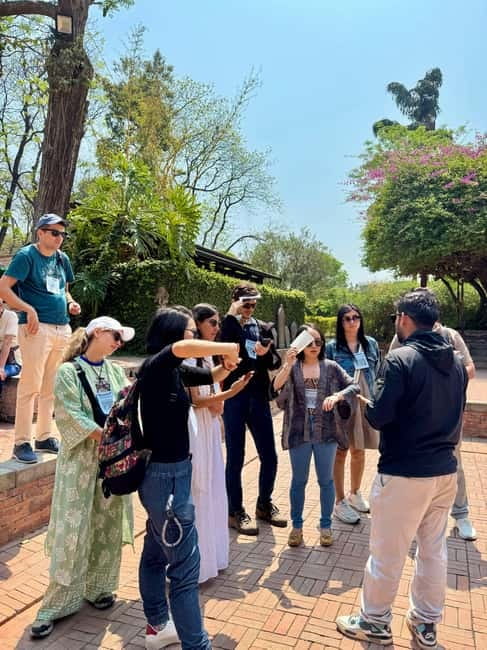
The route includes several road sections: about 30 minutes to Swayambhunath, 35 minutes to Patan, 30 minutes to Pashupatinath, 20 minutes to Boudhanath, and around 40 minutes back to your hotel. In Kathmandu, that vehicle time is not wasted time. It saves you from negotiating separate fares, directions, parking, and crowded roads.
The included vehicle is private, air-conditioned, and described as electric. A number of bookings used comfortable BYD cars, and transport received a 93 percent perfect score. Drivers such as Biren, Rudra, Dipen, and others are praised for safe, calm driving through difficult traffic.
That praise is important. Kathmandu roads can be tiring, especially after walking around stone courtyards and temple grounds. A cool car, bottled water, and a careful driver make the difference between arriving at the last stupa alert or simply counting the minutes.
The vehicle is not a sightseeing feature, so do not expect every drive to be scenic. Its value is practical: reliable movement, shade, air conditioning, and a place to rest your feet.
Lunch, snacks, and the real price
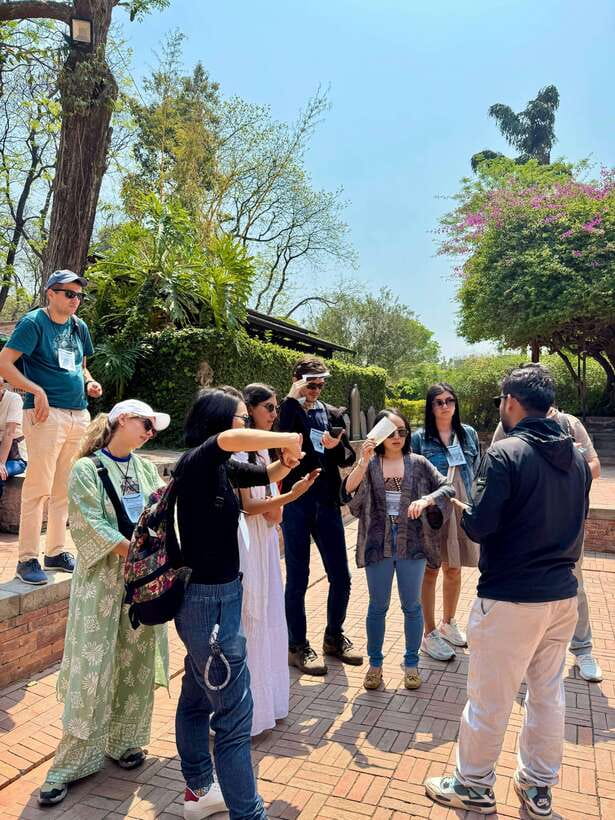
The advertised price is $5 per person, which looks exceptionally low for hotel transport, a guide, a private vehicle, and four heritage sites. Read the package details closely before treating that as the final cost.
The standard inclusions list a snack box with a muffin, donut, banana, seasonal fruit, and 200 ml of juice, plus a 500 ml bottle of water. The all-inclusive option adds a proper lunch set, soft drinks, and entrance fees. The lunch may be a Nepali khana set or a continental dish.
Monument fees are otherwise about $20, or NPR 2,600, per person. SAARC nationals pay about $12 in total. Since entrance fees are the biggest extra expense, the all-inclusive package may offer better value and a simpler day, even if its headline price is higher.
I would compare the total price rather than the starting figure. If you choose the basic option, carry cash for the entry fees, personal snacks, and souvenirs. If you want a proper lunch and do not want to handle tickets at each location, pay for the all-inclusive version.
Lunch is also a timing issue. The food helps keep the day moving, but this is not designed as a long restaurant break. If you need a special diet or have specific food needs, contact the provider before departure rather than relying on the standard box.
What the guides add to the day
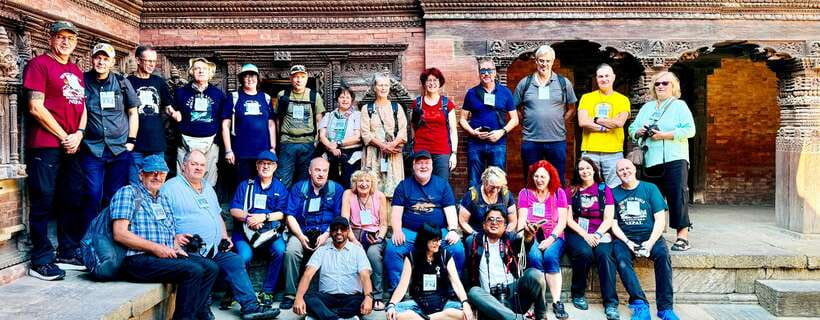
The strongest part of this tour is the human explanation. Names that appear often in the guide roster include Sajina, Sumit, Punam Prajapati, Sujan, Asmita, Asmi, Hemraj, Suresh, and Anon. The individual guide can vary, but the experience depends heavily on who leads your group.
The best guides do more than repeat dates. They explain Hindu and Buddhist customs, answer questions, help you cross busy roads, sort out tickets, and suggest good places for photographs. Several guides are also praised for giving couples and solo visitors useful photos, a small service that matters when you are sightseeing alone.
Some guides have adjusted the pace for private groups, allowing more time at sites or changing the order to match interests. Tell your guide if you care most about temples, architecture, photography, religious practice, or a particular ceremony.
English is the listed guiding language. One guide was also praised for excellent German, but you should not book assuming another language is available. Ask in advance if language is a major concern.
Walking, crowds, and how to prepare
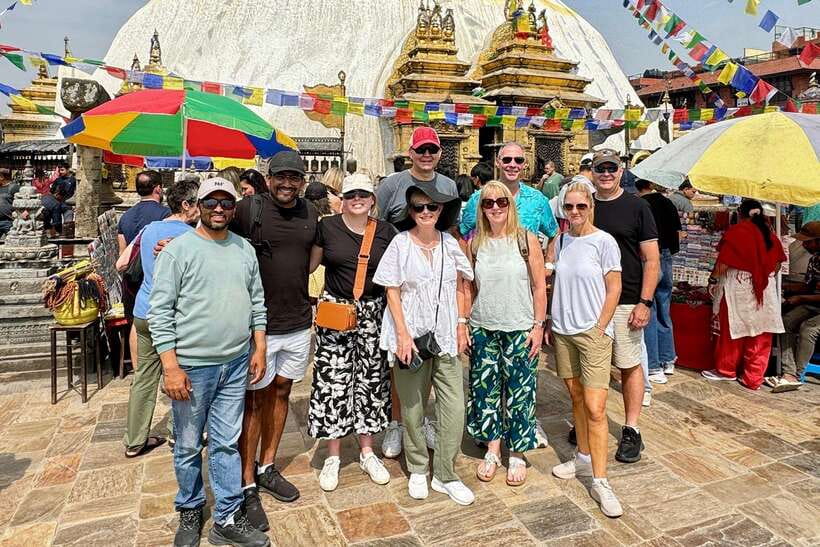
This is a walking tour with transport between stops, not a vehicle-only city circuit. You will walk around temple grounds, palace courtyards, river areas, and the stupa paths. Steps are part of the day, especially at Swayambhunath.
Bring:
- Comfortable shoes with good grip
- A small daypack
- Cash for fees if you choose the basic package
- A camera
- Biodegradable sunscreen
- A face mask for dusty roads or personal comfort
- A valid photo ID, since it may be requested at some entrances
The tour is not suitable for pregnant women, wheelchair users, or people over 95 years old. The walking, steps, and site conditions make that restriction worth taking seriously.
Traffic is the other variable. The schedule may be smooth, or it may stretch toward six hours. The driver and guide can reduce the hassle, but they cannot remove Kathmandu’s road delays. Keep later plans flexible.
Private or small group?
The private option is best if you want control over the pace, need help with photographs, or have a strong interest in one site. Couples and solo visitors can get more direct attention, and a guide may let you stay longer at Patan or Boudhanath.
A small group costs less and can still work well. One booking that began as a group became a private outing because demand was low, while another group of four found the setup easy and harmonious. Group size and the exact pace can vary, so do not assume every departure will feel private.
The tour is especially useful for a first visit, a short stopover, or the final day of a Nepal trip when you want the major Kathmandu sights without planning each transfer. It is less suited to someone who has already visited the four sites and wants obscure neighborhoods or extended time inside museums.
Should you book it?
I would book this tour if you have limited time and want a clear introduction to Kathmandu’s main sacred and historic places. The combination of Swayambhunath’s views, Patan’s carving, Pashupatinath’s Hindu rituals, and Boudhanath’s Buddhist calm gives you a broad sense of the city in one organized outing.
Choose the all-inclusive package if you want entry fees, soft drinks, and a proper lunch covered. Choose private touring if you value flexibility, photography, or extra time at a favorite site. If the $5 base fare is the attraction, confirm the final price and added monument charges first.
Skip it if you need wheelchair access, cannot manage steps, or prefer a slow, single-site visit. For most first-time visitors with one open day, though, the tour offers a practical way to see a great deal while leaving the cultural explanations and traffic management to a local guide.
FAQ
How long does the Kathmandu UNESCO tour take?
The advertised duration is three to six hours. The exact length depends on the starting time, traffic, pickup arrangements, lunch, and how long you spend at each site.
Which four UNESCO sites are included?
The route visits Swayambhunath Temple, Patan Durbar Square, Pashupatinath Temple, and Boudhanath Stupa.
Is hotel pickup included?
Yes. Pickup and drop-off are provided from locations within Kathmandu Valley. You should confirm your hotel location and be ready 10 minutes before pickup.
Are entrance fees included?
Entrance fees are included in the all-inclusive package. In the standard private and group options, they cost about USD 20 or NPR 2,600 per person. SAARC nationals pay about USD 12 total.
What food and drinks are provided?
The standard package includes bottled water and a snack box with a muffin, donut, banana, seasonal fruit, and 200 ml of juice. The all-inclusive option adds lunch, soft drinks, and the choice of a Nepali khana set or continental food.
Is the tour private or shared?
Both private and small-group options are available. Group departures can sometimes become private if few people book, but you should select the format that best matches your needs.
What should I bring?
Bring comfortable footwear, a camera, biodegradable sunscreen, cash, a daypack, and a valid photo ID. A face mask may also be useful because Kathmandu’s roads can be dusty.
Recently added around Kathmandu
- Kathmandu Airport Pickup and Drop-off Services★ 5.0 · 3 reviews
- Kathmandu Paragliding★ 5.0 · 3 reviews
- Kathmandu Chandragiri Cable Car and Swayambhunath Private Tour★ 5.0 · 3 reviews
- Explore The Beauty Of Langtang Valley In 8-Days Trek★ 5.0 · 3 reviews
- Kathmandu: Nightlife and Pub Crawl Tour★ 5.0 · 3 reviews
- Mountain Flight Experience in Nepal★ 4.5 · 3 reviews
- Kathmandu: Momo Making Class with a Local Chef★ 5.0 · 3 reviews
- Everest Base Camp Trek★ 5.0 · 3 reviews
Other UNESCO Heritage Site Tours worth a look
Private Kathmandu Sightseeing Tour | UNESCO World Heritage sites
Read our review →
Full Day 7 UNESCO Tour with Lunch – Private/Group
Read our review →
Full Day Top 4 UNESCO Tour with Lunch – Private/Group
Read our review →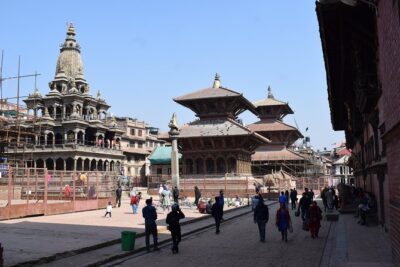
Full-Day 7 UNESCO Tour with Lunch – Private/Group
Read our review →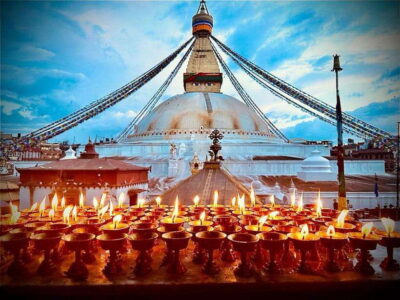
Kathmandu Private Sightseeing Tour | UNESCO World Heritage Sites
Read our review →Full Day 7 UNESCO Tour with Lunch – Private/Group
Read our review →This tour also appears in