
REVIEW · UNESCO HERITAGE SITE TOURS
UNESCO Seven World Heritage Tour in Kathmandu
Kathmandu’s seven UNESCO World Heritage sites are scattered across the valley, and seeing them all in one day takes careful timing. This tour handles the long transfers by private car, then brings you into hilltop stupas, royal squares, Hindu temples, and old Newar neighborhoods. It is a fast but useful introduction to Kathmandu.
I like the private vehicle and hotel pickup, which spare you the work of arranging taxis in heavy traffic. I also like the guides’ flexible approach. Shanti, Pankaj, Kabita, and Sarita are specifically praised for clear explanations, help with photographs, shopping stops, and adjusting the pace. The catch is simple: 12 hours is a long day, with plenty of stairs, uneven paving, and information to absorb.
Seven UNESCO sites in one demanding day
- 365 steps to Swayambhunath: Climb to a hilltop stupa for broad views over Kathmandu and a lively mix of Buddhist and Hindu shrines.
- Three historic city centers: Kathmandu, Patan, and Bhaktapur each show a different side of Newar architecture, palace life, temples, and urban traditions.
- Changu Narayan’s remote hilltop setting: Reach one of the valley’s oldest temples, known for detailed stone and wood carving.
- Pashupatinath and Boudhanath: See two major sacred centers, one Hindu and one Buddhist, with time allotted at each.
- Private touring that saves time: A driver and guide take care of transfers, entry fees, and the day’s complicated route.
- Good for a short Kathmandu stay: You get a broad first look, then can return later to the places that deserve more time.
What the $180 price really covers
The price is $180 per person. That is not a budget sightseeing outing, but it covers several costs that add up quickly: a private vehicle, hotel pickup and drop-off, an English-speaking guide, and entrance fees at all seven heritage sites.
The value depends on how many people are in your group. Since this is a private activity, only your group participates. A couple pays more per person than a larger party, but you gain a car, a guide focused on your interests, and more control over the pace. Group discounts are offered, so it is worth checking the final price if you are booking with friends or family.
I see the strongest value here as time saved. Kathmandu traffic can make short distances surprisingly slow, and the sites are spread from the western hilltop of Swayambhunath to the eastern edge of the valley at Changu Narayan. You are paying for a coordinated day rather than seven disconnected visits.
Lunch is not included. The tour allows a lunch stop in Bhaktapur, where you can choose from several eateries. That is a sensible arrangement, since it gives you some control over cost and food choice. Tips and gratuities are also separate.
More UNESCO Heritage Site Tours in Kathmandu:
- Private Kathmandu Sightseeing Tour | UNESCO World Heritage sites
★ 5.0 · 756 reviews - Kathmandu: Full Day 7 UNESCO Tour with Lunch – Private/Group
★ 5.0 · 415 reviews - Kathmandu: Full Day Top 4 UNESCO Tour with Lunch – Private/Group
★ 5.0 · 269 reviews
Swayambhunath begins with 365 steps
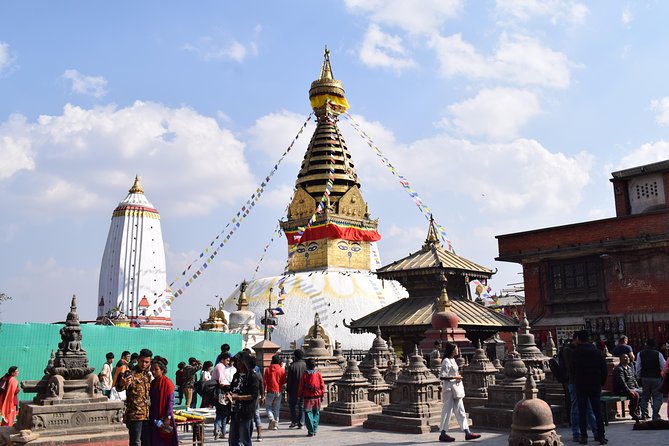
The day starts at Swayambhunath, often called the Monkey Temple, on a hill above Kathmandu. The main climb has 365 steps. That is the first clear warning about the physical side of this tour: comfortable shoes are not optional, and the opening stop can feel strenuous if you are not used to walking uphill.
At the top, the stupa gives you a fine view over Kathmandu. Walk around it by turning the prayer wheels, then look beyond the central Buddhist monument. Hindu shrines and deities share this sacred hill, a useful early lesson in how Buddhist and Hindu practice overlap throughout the Kathmandu Valley.
The stated visit is brief, about 15 minutes, although the climb and movement around the site take longer in practical terms. You will want time to look at the smaller shrines and carvings, not just reach the top, take a photograph, and leave. If you have mobility concerns, ask about the route before booking, since the listed information says most participants can take part but does not promise a step-free visit.
At the far side of the hill, Amideva Buddha Park provides a short second stop. Three large Buddha statues are the focus here, and the visit lasts about 10 minutes. It is a compact stop, but it rounds out the Swayambhunath visit and is easy to miss if you explore the hill on your own.
Kathmandu Durbar Square and the living goddess
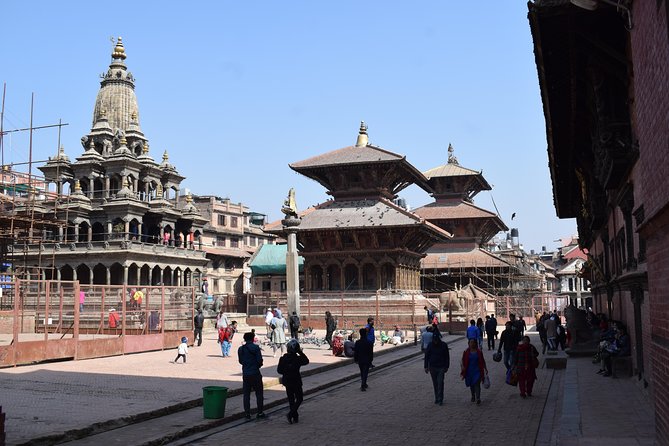
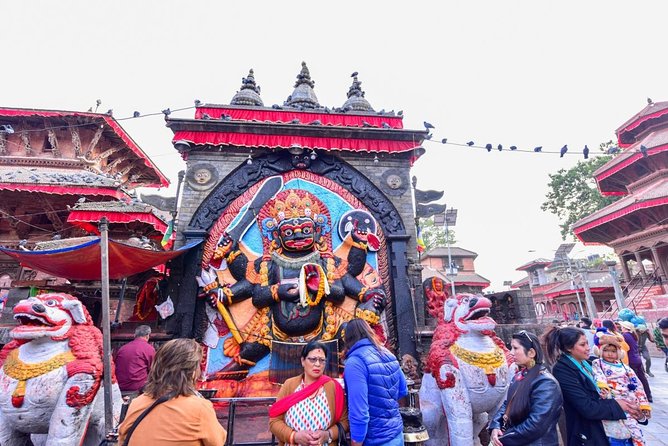
The route continues to Kathmandu Durbar Square, the old royal center of the capital. Earthquakes and ongoing restoration mean some structures remain under repair, so do not expect every building to look untouched. Even so, the square contains plenty to see, with old religious buildings, courtyards, carved timber, and palace architecture packed into a walkable area.
The Kumari Chowk is one of the most unusual stops. This red-brick, three-level building contains a courtyard once associated with the Kumari, the living goddess of Kathmandu. A girl is selected for the role and remains Kumari until puberty, after which she returns to ordinary life.
The visit to Kumari Chowk is listed at about 10 minutes. That is enough to understand the tradition and see the courtyard, but it may not allow much lingering. The Kumari may not appear, and you should treat the site as a place of worship rather than a performance. Your guide can help explain the religious meaning without reducing it to a quick photo stop.
Kathmandu Durbar Square is also a good place to ask questions about restoration. A guide can help you distinguish old elements from repaired or rebuilt sections, something that is difficult to judge while walking alone.
Patan’s stone Krishna Temple and Golden Temple
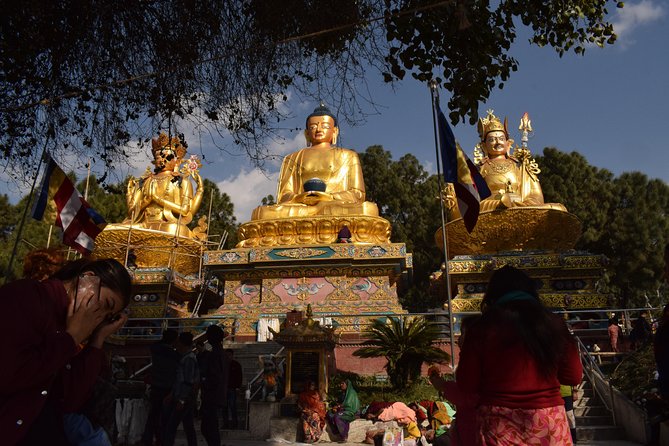
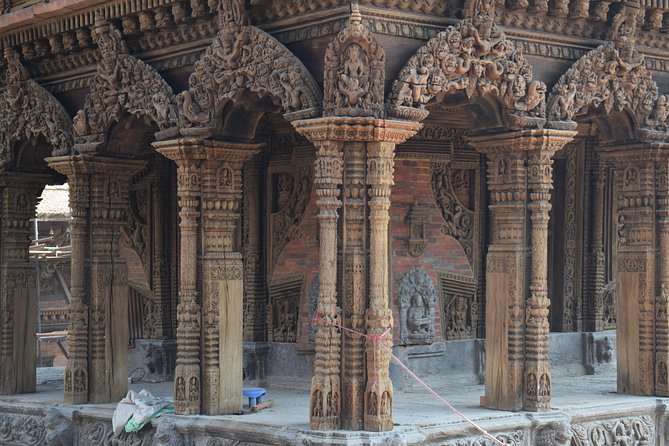
Patan Durbar Square lies in Lalitpur, a separate city within the Kathmandu Valley. Its old palace courtyard is known for Newar design, red brick, carved wood, and detailed metalwork. The central square visit is listed at about 25 minutes, giving you a short but useful look at the former royal center.
The Krishna Temple is a highlight. Built entirely from stone, it has 21 shrines and a different appearance from the brick and timber pagodas nearby. The stone construction and carved details make it worth slowing down for, even on a tightly scheduled day.
The Golden Temple, formally Hiranya Varna Mahavihar, adds another layer to Patan. This 12th-century pagoda-style temple contains bronze statues, silver details, and a more enclosed, intimate setting than the main palace square. The visit is scheduled for about 10 minutes.
Patan Museum follows, with about 15 minutes inside Keshav Narayan Chowk. The museum helps put the objects, religious art, and architectural details you have already seen into context. The time is short, so you should not expect a full museum visit. Still, it is a useful pause from the outdoor heat and a chance to connect sculpture and ritual with Nepalese history and culture.
More Historical Tours in Kathmandu:
- Kathmandu Private Sightseeing Tour | UNESCO World Heritage Sites
★ 5.0 · 109 reviews - Kathmandu: Full Day Private Top 4 UNESCO Heritage Tour W/Lunch.
★ 5.0 · 86 reviews - Kathmandu World Heritage Tour
★ 5.0 · 74 reviews - Nagarkot Sunrise & Bhaktapur UNESCO Heritage Private Tour
★ 5.0 · 66 reviews
Bhaktapur rewards the walking
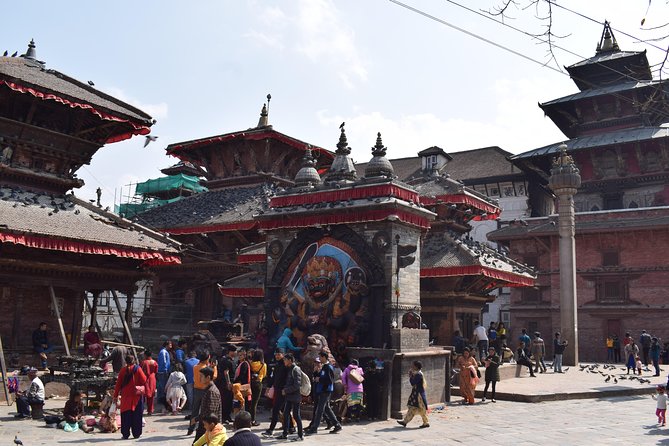
Bhaktapur is often the most satisfying section of the day because much of its old urban fabric remains intact. The city is known as the City of Devotees, and its brick homes, temple squares, carved windows, and traditional streets give the visit a strong sense of place.
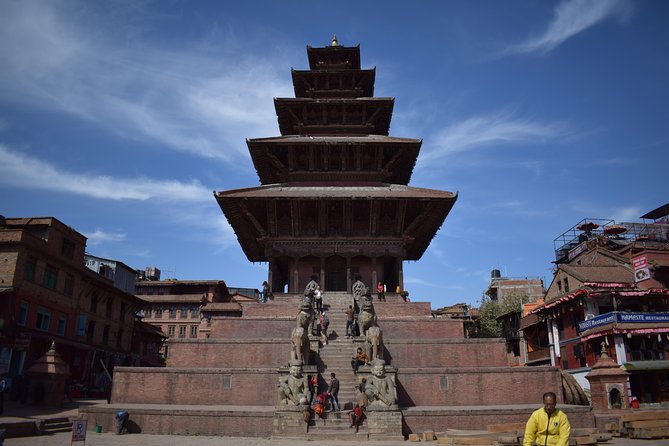
Nyatapola Temple is a five-level pagoda and one of the tallest pagodas in the valley. Its staircase is lined with sculpted figures, and the building shows how much care went into Newar temple design. The listed visit lasts about 10 minutes, but the temple is best appreciated from several angles as you approach and climb.
Dattatreya Temple sits in Dattatreya Square. It is traditionally said to have been built from the trunk of a single tree, an unusual detail that your guide can explain alongside the temple’s religious role and carved decoration. Again, the scheduled stop is about 10 minutes.
The Palace of Fifty-Five Windows is one of Bhaktapur Durbar Square’s major structures. Its name comes from the carved windows set into the palace facade. The visit is also listed at roughly 10 minutes, which means your guide will need to keep the explanation focused.
Siddha Pokhari is a man-made pond near the old city gate. It is described as 171 meters long and three meters deep, and it offers a brief change from temple courtyards and narrow streets. Only five minutes are allotted, so treat it as a quick viewpoint rather than a long rest.
Bhaktapur is the planned lunch location. I would use the break wisely. Twelve hours of sightseeing is easier if you sit down, drink water, and eat before the final eastern and southern stops. Lunch is at your own expense, and the tour gives you a choice of local eateries rather than forcing a fixed meal.
Changu Narayan reaches back to the Licchavi period
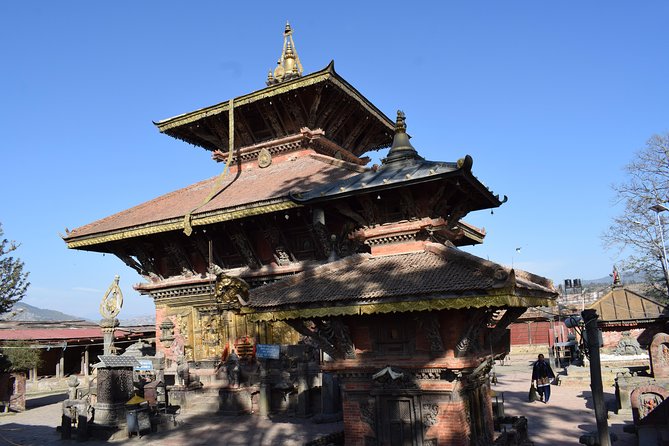
Changu Narayan is the day’s more remote stop, on a hilltop outside Bhaktapur. The temple dates to the Licchavi period, making it one of the oldest temples in the Kathmandu Valley. Stone and wood carvings are the main reason to make the trip.
The scheduled visit is one hour, longer than most earlier stops. That extra time matters. Changu Narayan is not simply another square with several buildings packed close together. Its setting and carved details reward a slower look, and the guide can explain the temple’s age, design, and place in Nepalese religious history.
The hilltop location also helps break up the urban feel of Kathmandu, Patan, and Bhaktapur. Still, the road transfer adds to an already long day. If traffic has delayed the morning, the exact time at Changu Narayan may need to be managed carefully.
Pashupatinath shows Kathmandu’s Hindu heart
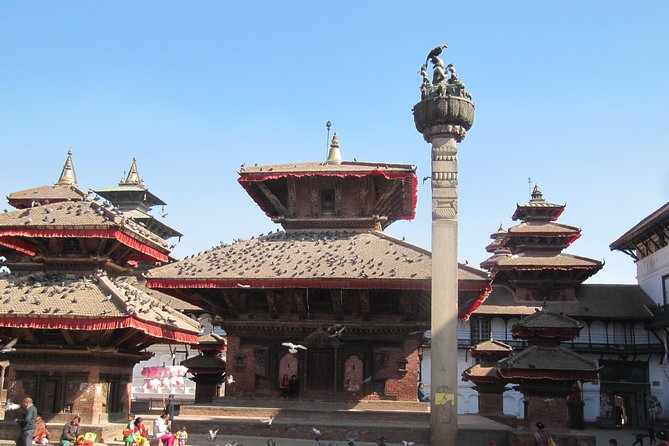
Pashupatinath is one of Nepal’s largest temple complexes, covering about 0.64 hectares and containing more than 500 temples and shrines. The main temple is sacred to Hindus, and access to certain areas may depend on religious rules. Your guide helps you understand what you can see and how to behave respectfully.
The complex is scheduled for one hour. That gives you time to take in the riverside setting, shrines, temple structures, and the activity around this major pilgrimage center. One account of the day included seeing Hindu cremation activity in the evening, but the exact timing and what you encounter can vary. Treat any cremation area with quiet respect. This is a working religious site, not a staged attraction.
Dress matters here. The requested dress code is smart casual, and modest clothing is the safest choice for a day that includes both Hindu and Buddhist sacred places. Avoid treating the temples as photo backdrops, and follow your guide’s directions about where photography is appropriate.
Boudhanath closes the circuit
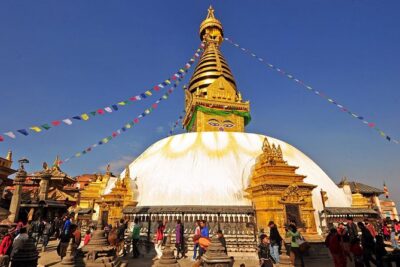
Boudhanath Stupa is the final listed stop, with about one hour set aside. At 36 meters high, it is one of the great Buddhist pilgrimage sites in Nepal. More than 50 gompas, or Tibetan Buddhist monasteries, surround the stupa, giving the area a strong religious focus as well as an impressive architectural scale.
Walk around the stupa in the traditional clockwise direction, turning prayer wheels as you go. Look up at the painted eyes and the layers of the structure, then notice the smaller monasteries around the open area. The hour allows more than a quick photograph and gives you room to watch pilgrims and worshippers carry out their rituals.
Ending at Boudhanath makes sense. After a day of royal squares and Hindu temples, the stupa provides a calmer final setting for thinking about the valley’s shared religious traditions. It is also a good place to ask your guide any remaining questions about Buddhism, Hinduism, or daily life in Kathmandu.
The guide and driver shape the day
The route only works well when the guide and driver cooperate. The strongest part of the service is not just having transportation. It is having someone who can explain the temples, adjust the order or timing, and help you move through Kathmandu’s difficult traffic.
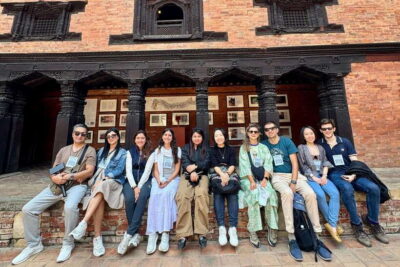
Shanti is repeatedly identified as friendly, well prepared, flexible, and helpful with photographs. She has adjusted time for shopping and personal interests, helped solo visitors take pictures, and answered questions about Nepal beyond the individual monuments. Pankaj is praised for explaining both Hinduism and Buddhism and for helping first-time visitors get their bearings in an intimidating city. Kabita is noted for allowing couples to set a comfortable pace and explaining mythology, culture, and history. Sarita is described as patient, professional, and clear at each site.
Those individual guides are not guaranteed, so you should not book on the assumption that one particular person will lead your tour. But the repeated pattern is useful: ask questions, explain your priorities early, and tell the guide if you want time for shopping, photographs, or a slower visit.
The driver matters just as much. The roads can be hectic, and the itinerary covers a lot of ground. A clean, comfortable private car and hotel pickup reduce the day’s friction. Several guests specifically appreciated safe driving and punctual pickup.
The main drawback is the pace
The tour is advertised at about 12 hours, and the schedule is genuinely ambitious. The individual visit times add up to several hours, before traffic, parking, meals, walking between monuments, and hotel transfers are counted.
You may feel that some stops are too short. Ten minutes at the Golden Temple or the Palace of Fifty-Five Windows gives you an introduction, not a full study. Bhaktapur and Patan alone could each fill half a day for someone interested in architecture, photography, or religious art.
The tour also creates information overload. You will see palace squares in the morning, Buddhist and Hindu sanctuaries throughout the day, and dozens of names, dates, legends, and building styles. I suggest carrying a small notebook or using your phone to record the sites you want to revisit. The purpose of this day is orientation, not mastery.
Bring comfortable walking shoes, water, and sun protection. The route includes 365 stairs at Swayambhunath, long periods on foot, and old paving that may be uneven. Smart casual clothing is appropriate, with modest dress especially important at religious sites.
Who should book this Kathmandu tour?
I would choose this tour if you have only one sightseeing day in Kathmandu, are visiting before or after a trek, or want a strong first look before exploring independently. It is also a good choice for solo visitors who want a private guide and help with photographs, directions, and local customs.
It suits people who prefer history, architecture, religion, and culture over a slow cafe day. Families and small groups may also find the private format useful, since the guide can respond to your pace and interests.
I would think twice if you dislike early starts, long drives, stairs, or tightly packed schedules. If you have several days in the valley, separate visits to Kathmandu Durbar Square, Patan, Bhaktapur, and the major religious sites would offer more time and less rushing.
Confirmation is received at booking. Pickup and drop-off at your hotel are included, as are entry fees at the seven heritage sites. Free cancellation is available up to 24 hours before the start time. Cancellations or changes made within 24 hours are not refunded or accepted.
Should you book it?
Book this UNESCO Seven World Heritage Tour if your priority is seeing the full set of Kathmandu Valley highlights in one coordinated day. At $180 per person, it offers solid value for a private car, guide, hotel transfers, and entrance fees, especially for a group sharing the experience.
Go in with the right expectations. You will not fully explore seven heritage areas in 12 hours, but you will understand where they are, why they matter, and which ones deserve a return visit. Wear good shoes, protect yourself from the sun, plan on buying lunch in Bhaktapur, and tell your guide what matters most. For a short stay, this is an efficient and culturally serious introduction to Kathmandu.
FAQ
How long does the UNESCO Seven World Heritage Tour last?
The tour lasts approximately 12 hours. The day includes travel between sites, sightseeing, walking, and a lunch stop in Bhaktapur.
Which UNESCO sites are included?
The tour includes Swayambhunath, Kathmandu Durbar Square, Patan Durbar Square, Bhaktapur, Changu Narayan Temple, Pashupatinath Temple, and Boudhanath Stupa.
Is transportation included?
Yes. A private vehicle is included, along with hotel pickup and drop-off.
Are entrance fees included?
Yes. Entry fees for all seven heritage sites are included in the tour price.
Is lunch included?
No. Lunch is not included, but the itinerary provides a stop in Bhaktapur where you can choose from several eateries.
Is this a group tour?
No. This is a private activity, so only your group participates. Group discounts are offered.
What is the cancellation policy?
You can cancel at least 24 hours before the start time for a full refund. Cancellations or changes made less than 24 hours before the experience are not accepted, and the amount paid is not refunded.
Recently added around Kathmandu
- Kathmandu Airport Pickup and Drop-off Services★ 5.0 · 3 reviews
- Kathmandu Paragliding★ 5.0 · 3 reviews
- Kathmandu Chandragiri Cable Car and Swayambhunath Private Tour★ 5.0 · 3 reviews
- Explore The Beauty Of Langtang Valley In 8-Days Trek★ 5.0 · 3 reviews
- Kathmandu: Nightlife and Pub Crawl Tour★ 5.0 · 3 reviews
- Mountain Flight Experience in Nepal★ 4.5 · 3 reviews
- Kathmandu: Momo Making Class with a Local Chef★ 5.0 · 3 reviews
- Everest Base Camp Trek★ 5.0 · 3 reviews
Other UNESCO Heritage Site Tours worth a look
Private Kathmandu Sightseeing Tour | UNESCO World Heritage sites
Read our review →
Full Day 7 UNESCO Tour with Lunch – Private/Group
Read our review →
Full Day Top 4 UNESCO Tour with Lunch – Private/Group
Read our review →Full-Day 7 UNESCO Tour with Lunch – Private/Group
Read our review →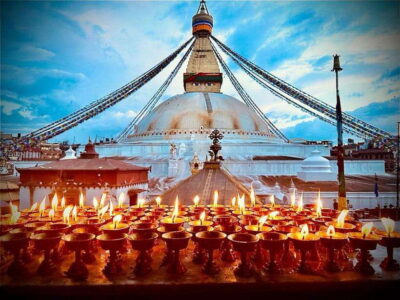
Kathmandu Private Sightseeing Tour | UNESCO World Heritage Sites
Read our review →Full Day 7 UNESCO Tour with Lunch – Private/Group
Read our review →This tour also appears in