
REVIEW · MANASLU CIRCUIT TREKS
10 Days Manaslu Circuit Trek in Larke La Pass
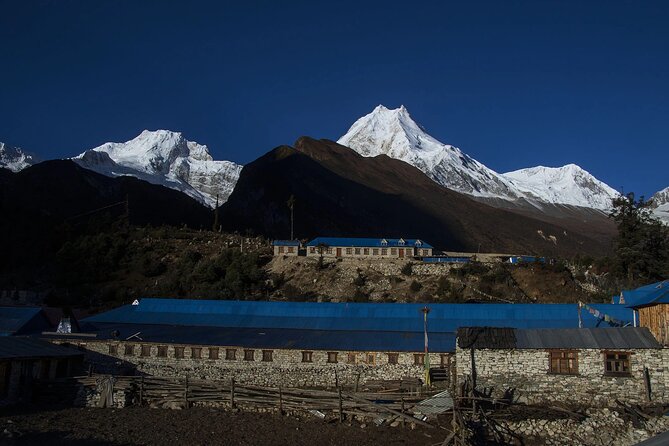
The big draw here is Larke La Pass at 5,160 meters, reached after a steady climb through the Manaslu region. In ten days, you move from a long road ride out of Kathmandu to river valleys, Gurung villages, high yak country, and a snowbound mountain crossing.
I like the built-in acclimatization day at Sama Gaon, and I like that the price includes permits, tea-house lodging, meals, a licensed guide, a porter for every two trekkers, and an oximeter check twice daily. The catch is simple: this is a fast, demanding schedule, with several six-to-nine-hour walking days and no spare day for illness, weather, or road trouble.
Key points before you book
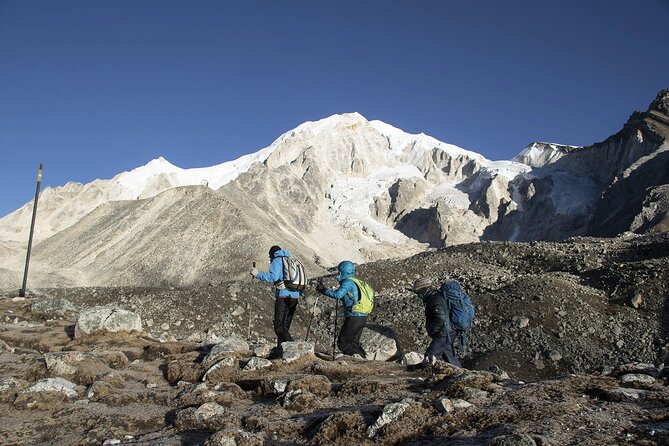
- 5,160-meter Larke La Pass: The high point is the main prize, with broad mountain views if conditions cooperate.
- A genuine tea-house trek: You sleep in shared lodge rooms, eat included breakfasts, lunches, and dinners, and travel through local villages.
- One useful acclimatization day: Sama Gaon gives you time for a five-hour outing to Pungyen Gompa or Manaslu Base Camp.
- Strong practical support: A government-licensed guide, one porter for two trekkers, permits, a medical kit, and severe-case evacuation management are included.
- A very full ten days: The route is efficient, but the schedule leaves little room to recover if you struggle at altitude.
- Guides with a good track record: Narayan and Gopal are specifically praised for patience, motivation, organization, and care with different fitness levels.
What the $1,049 price really covers
At $1,049 per person, this is not a bare-bones walk where you pay for every useful service along the way. The cost includes tea-house accommodation, three meals on most trekking days, the required ACAP, MCAP, and restricted-area permits, shared road transport, a licensed guide, and porter service.
That package matters in Manaslu. The route enters a restricted area, so permits are not a minor detail. You also avoid arranging staff transport, guide insurance, porter accommodation, and permit paperwork on your own. A porter is assigned at a ratio of one for two trekkers, which lets you walk with a lighter daypack.
The price also includes a trekking map, trekking hat, duffel bag, trip certificate, medical kit, and an oximeter. The oximeter is used twice daily to check pulse, oxygen saturation, and heart rate. It is not a substitute for good judgment, but regular checks show that altitude safety is part of the operating plan.
You still need to budget for Nepal’s entry visa, listed at $15 to $125, along with Kathmandu hotels and meals, drinks, hot showers, internet, battery charging, personal purchases, and tips. Private road transport is also outside the listed package. If you choose a private vehicle instead of the shared option on the first day, confirm the extra cost before setting out.
More Hiking Tours in Kathmandu
- Everest Base Camp Trek – 14 Days
★ 5.0 · 1,499 reviews - Everest Base Camp Trekking
★ 5.0 · 485 reviews - Nagarkot Sunrise View and Day Hiking from Kathmandu
★ 5.0 · 471 reviews
Day 1: Kathmandu to Machha Khola
The first day is mostly a road day, and a long one. The ride from Kathmandu to Machha Khola takes about eight to nine hours, using either shared or private transport.
This is not a gentle sightseeing transfer. The value is that you reach the actual trailhead quickly, but the drawback is fatigue before your boots have done any serious work. Shared transport keeps the package price down, while private transport gives you more control and is an added expense.
Machha Khola is your starting point for the walking section. Since admission is included in the tour package and there is no separate attraction ticket, your main task is to settle into the lodge and be ready for the next morning.
Day 2: The Budi Gandaki River to Jagat
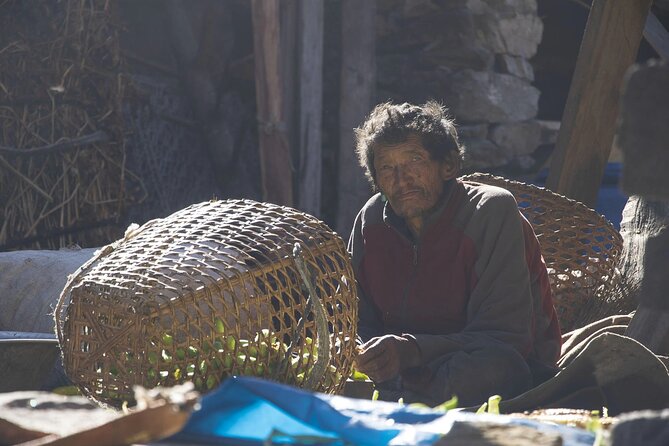
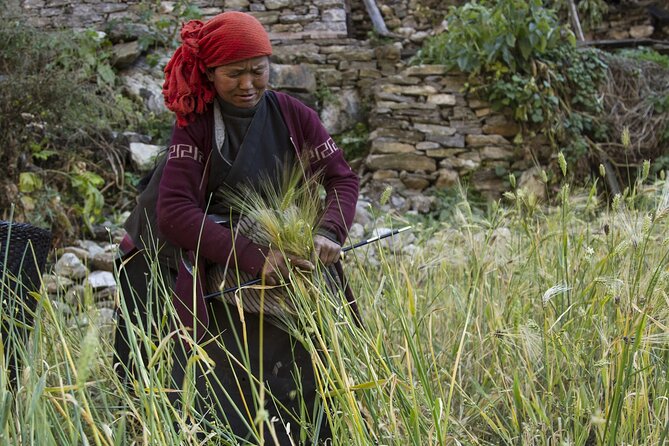
The walk from Machha Khola to Jagat takes about six hours. The route follows the Budi Gandaki river, with Gurung villages and lower valley scenery providing the first real sense of place.
This is where the trek begins to feel like more than a mountain crossing. You pass through settlements rather than simply marching from one viewpoint to another. The local culture, village life, and river corridor are a central part of the experience.
The day is still demanding enough to require a moderate fitness level. You should expect uneven ground and a full walking day, even though six hours sounds manageable on paper.
Day 3: Jagat to Deng through Philim
The seven-hour walk to Deng brings more varied terrain. You cross a river and continue toward Philim, with the trail moving through villages and along the Budi Gandaki valley.
The route gains interest as it goes. The changing path gives you a better feel for the scale of the Manaslu region, while the village stops keep the day connected to local life. A guide is especially useful here because the route includes river crossings and changing trail conditions.
You should not treat this as a casual hike. Three consecutive walking days can catch up with you, particularly if you are new to high-altitude trekking. Keep your pace steady rather than trying to save the day by walking quickly.
More Manaslu Circuit Treks in Kathmandu:
- Manaslu Circuit Trek (15 Days)
★ 5.0 · 50 reviews - 16 Day Private Manaslu Circuit Trek from Kathmandu
★ 5.0 · 42 reviews - Manaslu Circuit Trek 13 Days
★ 5.0 · 30 reviews - Manaslu Circuit Trek 8th Highest in the World
★ 5.0 · 14 reviews
Day 4: Deng to Namrung, 7 to 8 hours
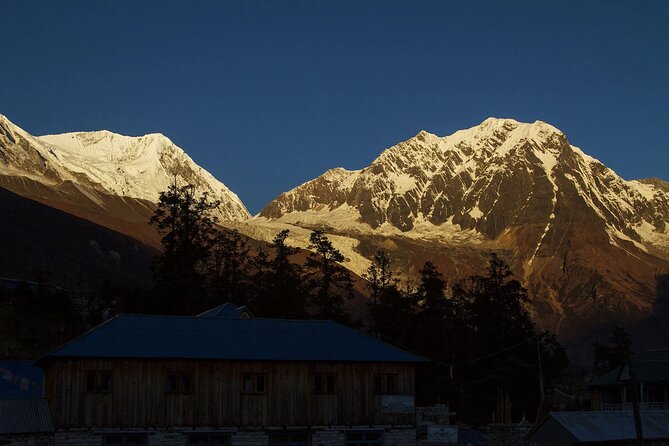
From Deng, you cross a suspension bridge and climb toward Rana and Bihi Phedi before continuing to Namrung. The walking time is about seven to eight hours.
This is one of the longer days early in the trip, and it begins to test your legs. The suspension bridge and rising trail add variety, but they also remind you that the route is not flat valley walking.
Namrung is an important point in the route because you are moving farther into the high Manaslu region. The day’s steady ascent makes careful pacing worthwhile. If your guide is Narayan or Gopal, the company’s past arrangements indicate a style that pays attention to fitness differences and keeps the group moving together.
Day 5: Namrung to Sama Gaon
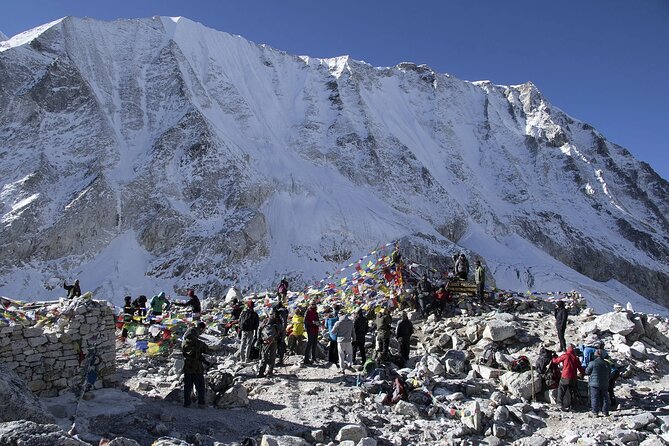
The walk from Namrung to Sama Gaon covers about 15.5 kilometers and takes six to seven hours. You continue upward through increasingly high terrain, with the Manaslu region opening around you.
Sama Gaon is more than a sleeping stop. It is the base for the following acclimatization day, and reaching it marks a major stage in the trek. You have already completed several long walks, so this is a good point to slow down, eat well, and take the next day seriously.
The fixed schedule is efficient, but it also means you cannot assume your body will adjust simply because the program says it should. Tell your guide early if you feel unwell. The included oximeter checks give the staff another useful reading, but your symptoms and pace matter just as much.
Day 6: Acclimatization around Sama Gaon
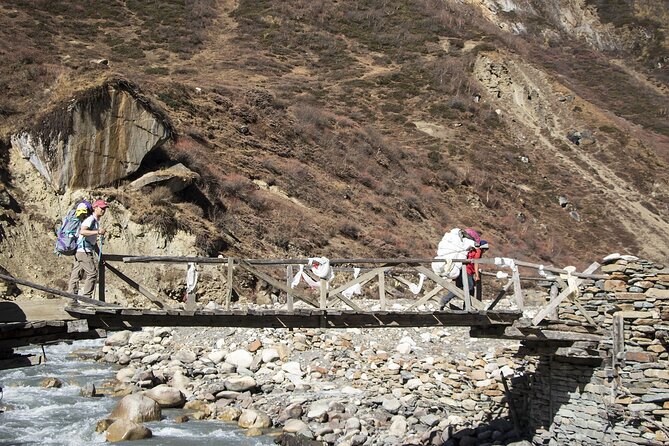
The acclimatization day lasts about five hours and offers two possible outings: Pungyen Gompa, east of the Nubri Valley, or Manaslu Base Camp.
This is one of the best features of the program. A rest day with no walking would be less useful for altitude adjustment than a moderate outing followed by a return to the same lodge. You gain height during the day, then sleep again at Sama Gaon instead of moving higher immediately.
The two choices also let you match the day to your energy and conditions. Pungyen Gompa offers a cultural and scenic goal, while Manaslu Base Camp provides a stronger mountain objective. Ask your guide which option fits the group’s condition and the day’s weather.
The schedule says the admission ticket is included for this day. Other personal costs, such as drinks, charging, internet, and hot showers, remain yours.
Day 7: Sama Gaon to Dharamsala
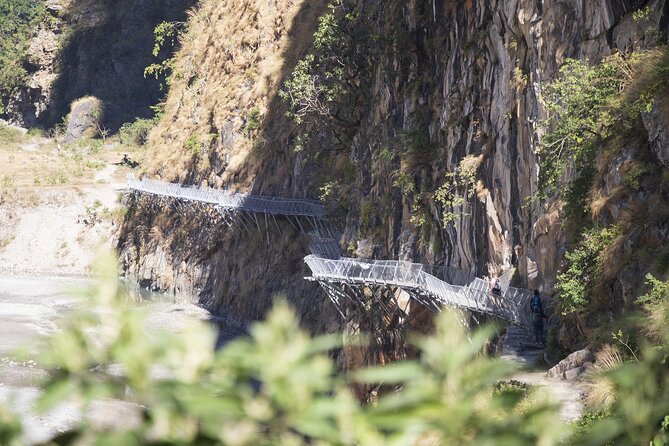
The six-to-seven-hour walk to Dharamsala takes you into yak country. The route feels more remote and more exposed as you leave the larger settlement behind.
Dharamsala is the staging point for the pass crossing. This is not the night to spend all your energy sightseeing or walking farther than planned. You need to protect your strength for the hardest day of the trip.
The name appears in several forms in the program, including Dharamsala and Dharmasala. That is worth knowing when you read signs or compare maps. It refers to the same stop in this trek plan.
Day 8: Dharamsala over Larke La Pass to Bhimtang
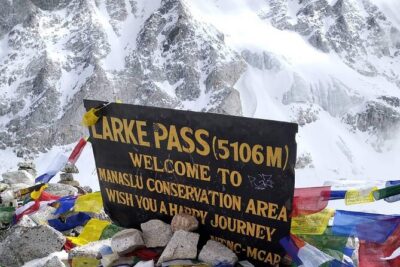
This is the trek’s hardest and longest day, listed at eight to nine hours. You climb toward Larke La Pass, cross at 5,160 meters, and then continue toward Bhimtang.
The pass is the reason many people choose this route. On a clear day, the high point gives you wide Himalayan views, but the experience is not only about taking a photograph at the summit. At this elevation, cold, wind, thin air, and fatigue can turn a beautiful crossing into a serious physical test.
You need to start this day ready, not merely hopeful. Follow the guide’s pace, keep drinking, and do not hide symptoms to stay with the group. The included guide support, staff accident insurance, first-aid kit, and severe-case evacuation management are valuable here, though they cannot remove the basic risks of high altitude.
Bhimtang is the reward at the end of the crossing, but do not expect the descent to feel easy. Eight or nine hours at altitude is a full day for a fit hiker.
Day 9: Bhimtang to Dharapani
The walk to Dharapani takes about eight hours. The trail descends through the village of Karche, and the surroundings begin to open as you move away from the highest section.
After Larke La Pass, the descent may feel welcome, but eight hours is still a serious day. Descending can be hard on knees and ankles, especially after the previous day’s climb and crossing. Trekking poles, if you use them, would be practical, though they are not listed among the included items.
Dharapani marks the close of the high pass section. You are still walking, but the rhythm changes as the route drops toward the road connection.
Day 10: Dharapani to Besisahar, then Kathmandu
The final day has two parts. The transfer from Dharapani to Besisahar is listed at about one hour, followed by an eight-to-nine-hour drive to Kathmandu. You may also have the option to continue to Pokhara, depending on your travel plans.
This makes the last day another very long transport day. It is useful for getting you back to Kathmandu within the ten-day format, but it is not a relaxed ending. Road conditions and weather can affect the actual timing, so avoid scheduling an important flight immediately after the return unless you have a buffer.
The shared vehicle is included from Dharapani back to Kathmandu. Private transport is not included, so clarify the vehicle arrangement if you want a more flexible departure.
Tea houses, meals, and what comfort means here
Accommodation is in trekking lodges, usually called tea houses, with rooms shared with other trekkers. This is a practical way to complete the circuit without carrying camping equipment, but you should not confuse it with hotel comfort.
Breakfast is included for all ten days. Lunch and dinner are included for nine days each, which covers the walking portion and road transfers as described. Alcoholic and non-alcoholic drinks are extra, as are hot showers, internet, and battery charging.
The shared-room setup is part of the social side of the route, but it reduces privacy. Bring only what you need, use the provided duffel bag wisely, and keep personal essentials in your daypack. The porter system helps, but one porter is assigned to two trekkers, so pack with that limit in mind.
Guide and porter support
The strongest practical value comes from the staff structure. Your government-licensed guide receives salary, food, lodging, transport, and insurance through the package. Porters receive the same basic support, with one porter assigned for every two trekkers.
Specific guides named in past trips include Narayan and Gopal. Narayan is described as friendly, dependable, and careful with different fitness levels. Gopal is noted for motivation during high-altitude walking, which can matter greatly on the approach to Larke La Pass. Naresh handles Kathmandu arrangements and is described as helpful and pleasant to deal with.
You should still ask at the start of the trek how the group will handle pace, symptoms, and a possible change of plan. The package includes a medical kit and evacuation management for severe cases, but you remain responsible for being honest about your condition.
How difficult is this ten-day trek?
The official guidance calls for moderate physical fitness. In practical terms, this is a demanding moderate trek because the schedule includes repeated six-to-eight-hour walks, one eight-to-nine-hour pass day, and a long road trip at both ends.
The high point is 5,160 meters, and the route gives you only one acclimatization day at Sama Gaon. That makes the trip better suited to someone who already enjoys long uphill walks or has completed a comparable trek.
The main concern is compression. A longer Manaslu program could offer more recovery time, but this ten-day version is designed for people who want to complete the circuit quickly. If you need extra days for altitude adjustment, build them into your wider Nepal plans and discuss that before booking.
Group size, timing, and cancellation
The maximum group size is 20 people. That is large enough for varied walking speeds, so ask how the guide keeps the group together on the longest days.
The experience is booked, on average, about 20 days ahead. That gives you a useful planning target, especially because permits, staff, and transport must be arranged. Pickup is offered, and you receive confirmation at booking.
You can cancel up to 24 hours before the start time for a full refund. Cancellations or changes made less than 24 hours before the local start time are not accepted for a refund.
Who should choose this Manaslu trek?
You should consider it if you want a guided Himalayan circuit with strong logistical support, local village contact, and a clear high-pass goal. It suits hikers who value a lower package cost and do not mind shared tea-house rooms or long transport days.
It is also a reasonable choice for a first Nepal trek if you are physically prepared and willing to follow the guide’s advice. Several of the named guides are praised for helping newcomers, explaining the days, organizing changes caused by roads or weather, and keeping morale up.
I would be more cautious if you want a slow, spacious mountain holiday. The route is not built around leisurely mornings, luxury lodging, or extra rest days. It is a focused ten-day crossing with a major altitude challenge in the middle.
Should you book it?
Book this trek if Larke La Pass is your main goal and you want permits, meals, staff, lodges, and transport arranged in one package. The $1,049 cost is good value for the included support, especially with a guide, porter, safety equipment, and restricted-area permits covered.
Think twice if you are untested at altitude, need private rooms, or cannot tolerate a long road journey at the start and finish. Before paying, confirm the guide assigned to your group, the shared transport plan, the private vehicle supplement, and how the company handles an illness or weather delay.
For a fit hiker who wants a direct Manaslu experience, this is a practical and exciting choice. Just respect the schedule. The mountain will not care how optimistic your booking form sounded.
FAQ
How long is the Manaslu Circuit Trek?
The experience lasts approximately 10 days, beginning in Kathmandu and ending with transport back toward Kathmandu or, depending on arrangements, Pokhara.
What is the highest point of the trek?
The highest point is Larke La Pass at 5,160 meters.
Is transportation included?
Shared vehicle transportation from Kathmandu to Machha Khola and from Dharapani back to Kathmandu is included. Private transportation is not included.
Are meals included?
Breakfast is included for all 10 days. Lunch and dinner are included for nine days each. Alcoholic and non-alcoholic drinks are not included.
What kind of accommodation is provided?
You stay in trekking lodges, also called tea houses. Rooms are shared with other trekkers.
Is a guide included?
Yes. A government-licensed guide is included, along with the guide’s salary, food, accommodation, transport, and insurance.
Is porter service included?
Yes. One porter is provided for every two trekkers, with the porter’s salary, food, accommodation, transport, and insurance included.
Is there an acclimatization day?
Yes. Day 6 is an acclimatization day in Sama Gaon, with a five-hour option to Pungyen Gompa or Manaslu Base Camp.
Recently added around Kathmandu
- Kathmandu Airport Pickup and Drop-off Services★ 5.0 · 3 reviews
- Kathmandu Paragliding★ 5.0 · 3 reviews
- Kathmandu Chandragiri Cable Car and Swayambhunath Private Tour★ 5.0 · 3 reviews
- Explore The Beauty Of Langtang Valley In 8-Days Trek★ 5.0 · 3 reviews
- Kathmandu: Nightlife and Pub Crawl Tour★ 5.0 · 3 reviews
- Kathmandu: Momo Making Class with a Local Chef★ 5.0 · 3 reviews
- Mountain Flight Experience in Nepal★ 4.5 · 3 reviews
- Everest Base Camp Trek★ 5.0 · 3 reviews
Other Manaslu Circuit Treks worth a look
16 Day Private Manaslu Circuit Trek from Kathmandu
Read our review →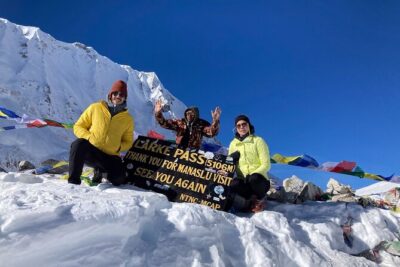
Manaslu Circuit Trek 8th Highest in the World
Read our review →
Manaslu Circuit Trek to the Beauty of 8th Highest Mountain
Read our review →
This tour also appears in