
REVIEW · MANASLU CIRCUIT TREKS
Dancing in the Manaslu Circuit Trek
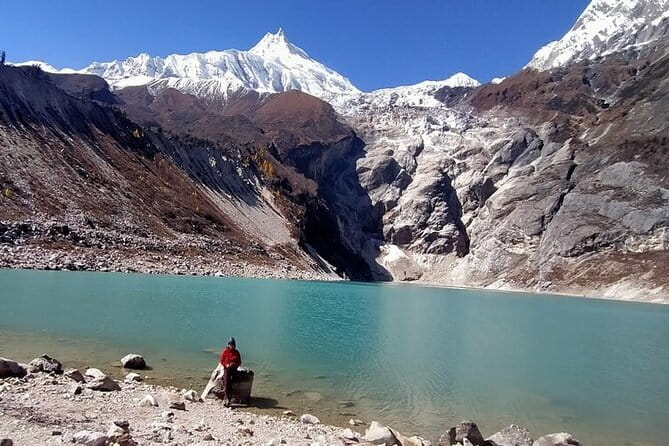
The best part of the Manaslu Circuit is the sharp change in scenery. You begin beside warm, green river valleys and finish among glaciers, icy passes, and Tibetan-style villages. Along the way, prayer flags, Mani walls, monasteries, and local music give the trek a cultural pulse that is hard to find on busier Himalayan routes.
I like the small private-group format, because your pace and daily decisions stay with your own guide. I also like the clear package: meals, permits, transport, a first-aid kit, and twin-sharing rooms are covered. The catch is stamina. Several days are listed as 12-hour outings, and the 5,100-meter Larkya La crossing is a serious mountain day, not a casual walk.
Key points at a glance
- Larkya La at 5,100 meters: The high point is a demanding crossing with views toward Cho Danda, Larkya Peak, glaciers, and frozen lakes.
- A quieter Himalayan route: Restricted access keeps the Manaslu area less crowded than Nepal’s most famous trekking corridors.
- Full-board trekking: Breakfast, lunch, and dinner are included for the 12 days, along with permits and government taxes.
- Private guiding: Only your group participates, with a government-certified English-speaking guide.
- Real village contact: Jagat, Prok, Namrung, Shyala, and Samagaun bring stone houses, Mani walls, monasteries, and local customs into the walk.
- Transport is partly included: A deluxe bus covers Kathmandu to Soti Khola and Besisahar to Kathmandu, while a shared jeep runs from Dharapani to Besisahar.
Why the Manaslu Circuit feels different
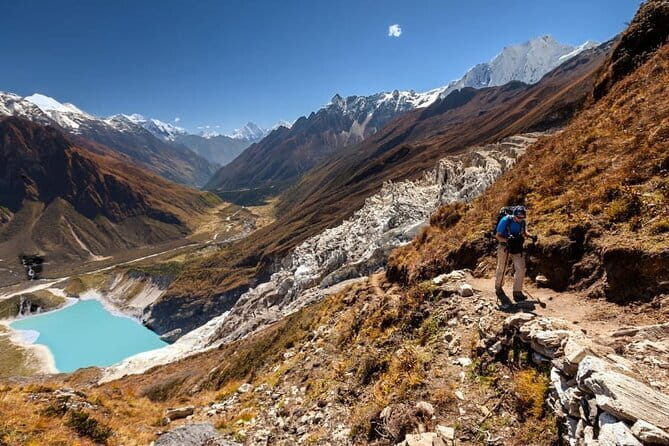
Mount Manaslu is Nepal’s eighth-highest peak, and this route circles it through a restricted region with fewer people on the trail. That restriction matters. You are not walking through a nonstop chain of large trekking settlements. Instead, the route moves through small villages where stone buildings, prayer flags, farm paths, and monasteries remain central to daily life.
The scenery changes almost by the day. The Budhi Gandaki River leads you through forest and steep gorges first. Higher up, the hills open into broad mountain valleys, with views of Manaslu and the Larkya Glacier. By the pass, the trail is icy, exposed, and demanding.
The title includes dancing, and the experience may include local music and dance, but this is still primarily a strenuous trekking trip. Do not book it expecting a cultural performance every evening. The strongest cultural moments come through village life, religious details, shared meals, and conversations with your guide and lodge families.
More Hiking Tours in Kathmandu
- Everest Base Camp Trek – 14 Days
★ 5.0 · 1,499 reviews - Everest Base Camp Trekking
★ 5.0 · 485 reviews - Nagarkot Sunrise View and Day Hiking from Kathmandu
★ 5.0 · 471 reviews
Day 1: The long road to Maccha Khola
Your journey starts in Kathmandu at P897+443, with pickup offered. The drive toward Maccha Khola takes about 12 hours and passes rural villages, green hillsides, and rougher mountain roads.
The transport plan includes a deluxe bus toward Soti Khola, with a possible vehicle change before continuing to Maccha Khola. That change is worth expecting rather than treating it as a problem. Mountain roads often require smaller vehicles as the route narrows.
This is a travel day, not a sightseeing day. You will spend much of it seated, and the road can feel tiring before the walking even begins. Pack snacks, water, and anything you need close at hand. Personal drinks, mineral water, phone charging, and similar costs are not included.
Day 2: Tatopani and stone-built Jagat
After breakfast in Maccha Khola, you follow the Budhi Gandaki River toward Jagat. The route includes the natural hot spring at Tatopani, a welcome stop after the first long road journey and an early sign that the trail is about to become more remote.
Jagat has a rural feel, with stone houses and a compact village setting. From here, you enter the restricted Manaslu region. Permits and government taxes are included in the price, which makes this section easier to manage, but you still need to carry the identification and documents your operator requests.
The day is listed at about 12 hours, which is a substantial amount of time on the move. The exact walking time can vary with road conditions, group pace, and stops. Ask your guide at breakfast how the day will be divided so you can judge your energy sensibly.
Day 3: From Jagat toward Deng
The trek continues along the Budhi Gandaki from Jagat toward Deng, passing through steep river country and changing forests. The route remains physically demanding, but it also gives you the gradual transition that makes a circuit trek satisfying.
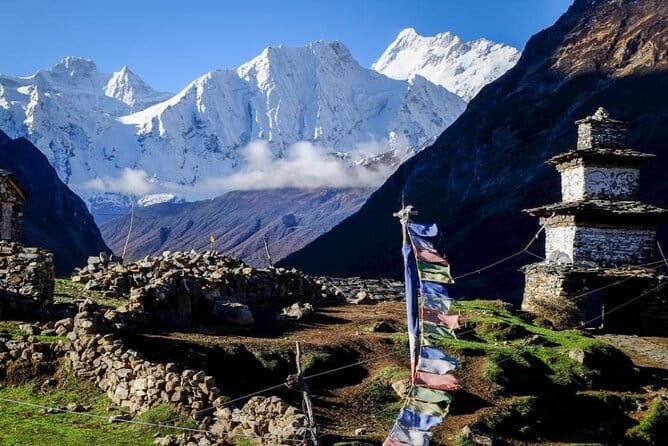
Deng is one of the first places where the valley begins to feel more strongly shaped by Himalayan and Tibetan traditions. You may see prayer flags and Mani walls becoming more common as you gain height. This is a good day to settle into the walking rhythm: eat regularly, keep your layers handy, and tell the guide early if you feel unusually tired.
The itinerary names Salleri as the stop heading into Deng, which suggests a route point or overnight stage rather than a separate sightseeing stop. Confirm the exact overnight village before departure, since the supplied schedule has a few place names that do not line up neatly with the daily descriptions.
More Manaslu Circuit Treks in Kathmandu:
- Manaslu Circuit Trek (15 Days)
★ 5.0 · 50 reviews - 16 Day Private Manaslu Circuit Trek from Kathmandu
★ 5.0 · 42 reviews - Manaslu Circuit Trek 13 Days
★ 5.0 · 30 reviews - 10 Days Manaslu Circuit Trek in Larke La Pass
★ 5.0 · 30 reviews
Day 4: Prok village and Namrung
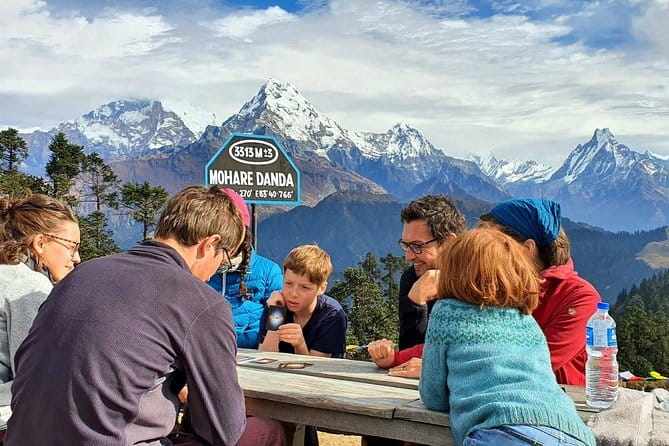
The route toward Namrung brings a strong cultural change. You spend time around Prok village, Mani walls, and forest, with the trail moving farther into the mountain world.
Mani walls are built from stones carved with Buddhist prayers. Give yourself time to notice them rather than treating them as trail furniture. Walk around them in the respectful direction indicated by local custom, and let your guide explain the symbols.
Namrung is an important overnight point before the higher villages. The accommodation is in twin-sharing private rooms throughout the trek, but mountain lodges are simple. Personal costs such as hot water, laundry, phone charging, and mineral water are extra, so keep some Nepalese currency available.
Day 5: The open views around Shyala
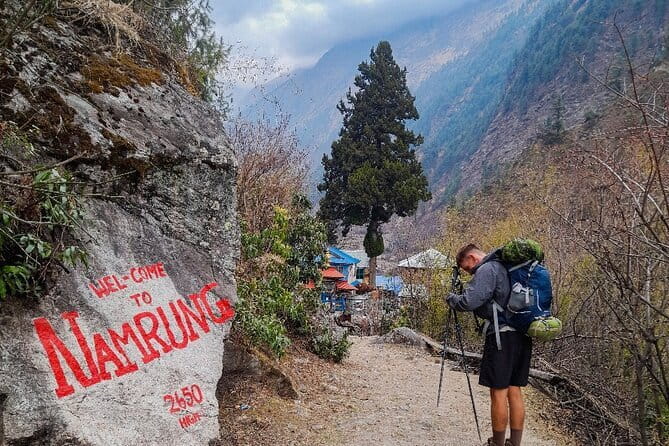
The walk from Namrung to Shyala takes you higher and brings wider mountain views. Forest gives way to more open ground, and the peaks around Manaslu begin to feel closer.
Shyala is a strong scenic stop because the valley opens around the village. You will want a camera ready, but do not let the view distract you from the altitude. This is the point where walking too fast can catch up with you later.
The plan again assigns about 12 hours to the day. That may include long pauses, meals, and a slow group pace, but you should still prepare for a full day. A private trip helps here. Your guide can respond to how your group is moving instead of matching a large fixed party.
Day 6: Samagaun and Pungeyn Gompa
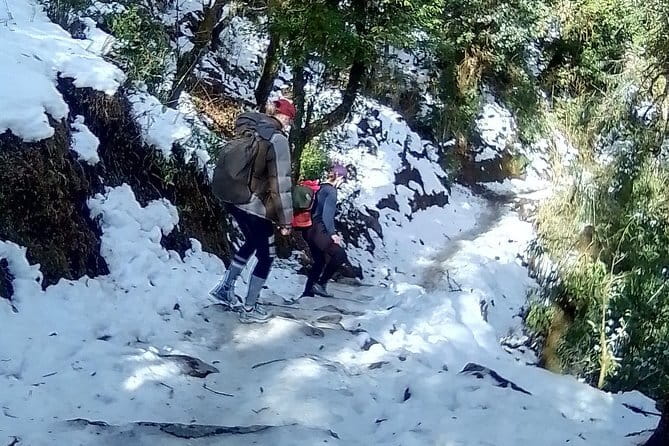
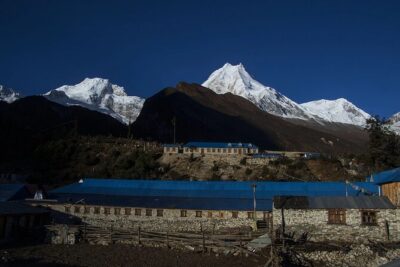
From Shyala, you trek to Samagaun and hike toward Pungeyn Gompa. Samagaun is one of the major villages on the circuit, with a strong Tibetan influence and a setting surrounded by high peaks.
The hike to Pungeyn Gompa adds a cultural and scenic layer to the day. Monasteries here are not staged attractions. They are working religious places, so dress modestly and follow your guide’s advice about entering, taking photographs, and walking around sacred objects.
This is also a key point for watching your body. Headache, nausea, poor sleep, or unusual breathlessness should be reported promptly. The package includes a first-aid kit, but it does not replace travel insurance or proper medical planning.
Day 7: Acclimatization near Manaslu
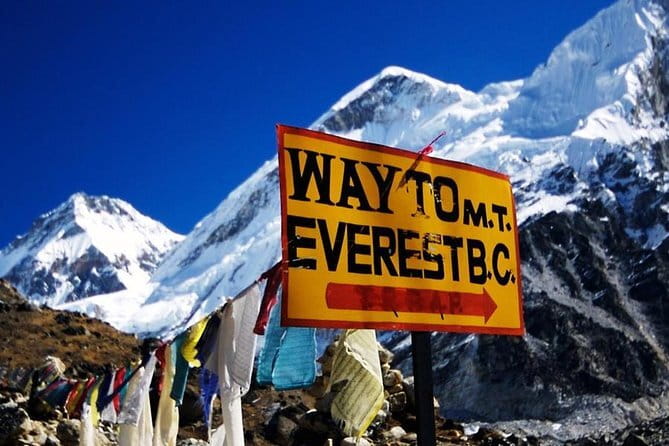
The seventh day is set aside for acclimatization, which is one of the best features of the schedule. You can use it to rest around Samagaun or take the optional hike to Manaslu Base Camp and Birendra Lake.
The optional hike gives you a chance to see more of the high mountain setting without moving your overnight base. It may also help your body adjust before the pass section. Your guide should help decide if it is sensible for your group on the day.
Do not feel pressured to take the optional hike just because it appears in the program. Rest can be the wiser choice if you are tired or feeling the altitude. The aim is to arrive at the pass healthy, not to collect every possible viewpoint.
Days 8 and 9: Toward Dharamsala and Larkya Glacier
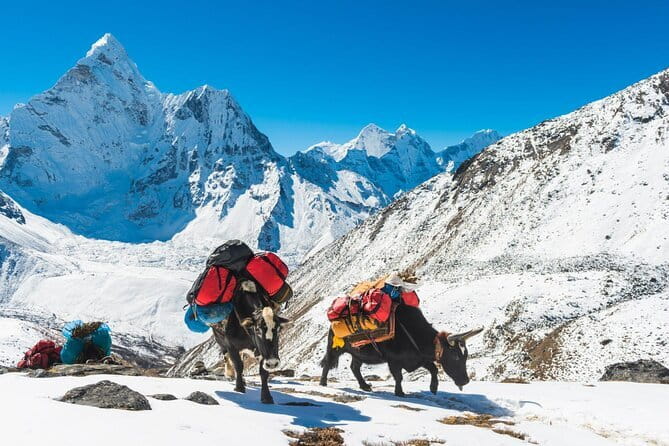
The schedule places the Larkya La section across Days 8 to 10, though the descriptions appear slightly out of order. Day 8 mentions descending to the Budhi Gandaki, crossing a wooden bridge, and seeing the Larkya Glacier. Day 9 describes icy streams, Larke Bazaar, monasteries, Mani walls, and the climb toward Dharamsala.
Read these days as the approach to the pass. The ground becomes colder and rougher, and the scenery shifts from forested valley to open high-altitude terrain. Dharamsala is the staging point before the pass, and the overnight stop can feel basic compared with lower lodges.
The glacier views and frozen stream crossings are memorable, but this section is not comfortable walking. Keep your gloves, warm layer, water, and snacks easy to reach. The guide’s role becomes especially important here, both for pacing and for choosing the safest route across icy or exposed ground.
Day 10: Crossing Larkya La at 5,100 meters
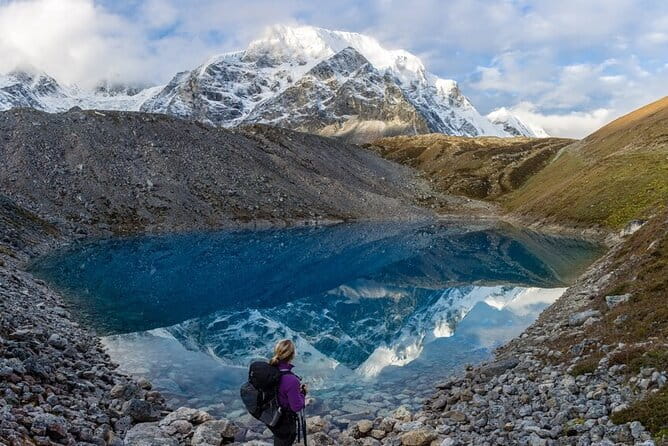
The Larkya La crossing is the physical and emotional center of the trek. The trail climbs through difficult terrain to 5,100 meters, with views of Cho Danda, Larkya Peak, and four frozen lakes.
This is a long mountain day. Weather can change quickly, and the high altitude makes every uphill section slower. You should expect the pass to test your legs and lungs, even if you are fit at home.
The reward is not only the summit point. It is the feeling of crossing from one high valley to another, with ice, rock, prayer flags, and wide mountain views around you. Your guide will set the pace, but you still need to speak up about symptoms or fatigue.
The itinerary places admission fees on this high-pass section, while the rest of the trek is largely covered through permits and included services. Ask the operator before departure exactly what those listed admission items refer to, since the description does not name separate attractions.
Day 11: Forest, Karche, and Dharapani
After the pass, the trail descends through greener country toward Dharapani. You cross the Dudh Khola and pass through Karche Village before reaching the overnight stop.
This descent is easier on your breathing but can be hard on knees and ankles. Trekking poles are useful, particularly on loose or uneven ground. The return of trees and warmer air feels welcome after the exposed pass.
Dharapani marks the end of the high mountain section for this itinerary. It is also where the transport plan changes. A shared jeep takes you from Dharapani to Besisahar, so expect less control over departure timing than you have during the private walking portion.
Day 12: Jeep to Besisahar, bus to Kathmandu
The final day combines a jeep ride from Dharapani to Besisahar with a roughly five-hour drive from Besisahar to Kathmandu. The total day is listed at about eight hours, though mountain transport can be affected by road conditions.
The deluxe bus transfer back to Kathmandu is included. The trip ends at the original meeting point, and a farewell dinner is also included to mark the end of the trek.
This final day is not glamorous, but it is practical. Having the return transport arranged removes a major piece of planning after a tiring descent. Still, do not schedule a critical flight immediately after the trek without checking the operator’s timing carefully.
What the $1,390 price really covers
At $1,390 per person, the value depends on how much support you want arranged in advance. The package includes three meals each day, permits, government taxes, transport from Kathmandu to Soti Khola, transport from Besisahar back to Kathmandu, the shared jeep to Besisahar, a government-certified English-speaking guide, twin-sharing rooms, a first-aid kit, and a farewell dinner.
That is a useful bundle for a restricted-area trek with complicated road transfers. You are not paying only for walking. You are also paying for permits, route planning, local transport, and a guide who can manage changes on the trail.
The main extra cost is a porter. The package does not include one, but you can hire a porter in Kathmandu or at Soti Khola. You also pay for personal expenses, including phone charging, laundry, mineral water, hot water, and tips.
Ask before booking how luggage will be handled if you do not hire a porter. The guide is there to lead and support the group, not to carry all your equipment. Travel insurance is your responsibility and should cover trekking at the relevant altitude.
The guide can shape the whole experience
The company has used guides named Bijaya, Tenji, Lakpa, Krishna, and Laajin on Manaslu trips. The most useful qualities reported across these outings are attentiveness, clear explanations, local knowledge, and care with pacing.
Bijaya is described as someone who shared information about the Himalayas and took close care of a solo participant. Tenji and porter Nema were praised for creating a friendly atmosphere, even helping one family enjoy Nepali language practice along the way. Lakpa was noted for explaining his country and life with warmth, while Krishna was singled out as a strong guide on a two-person trek.
Your assigned guide may differ, so ask for the name and experience of your guide before setting out. Because this is a private activity, you have a better chance of discussing pace, rest days, optional hikes, and daily concerns directly rather than being lost in a large group.
Who should book this trek
I would choose this trek if you want a quieter route, strong village contact, and a serious high-pass challenge in one trip. It suits people with moderate fitness who are ready for repeated long days and basic lodge conditions.
It is less suitable if you want short walking days, polished hotels, or guaranteed comfort at high altitude. The schedule’s repeated 12-hour entries deserve attention, even if some of that time includes breaks and meals.
Families and mixed-age groups can make it work if everyone understands the physical demands. One previous group included a parent and adult children, supported by a guide and porter. The private format gives a family more room to adjust, but the Larkya La crossing still requires honest preparation.
Practical details before you commit
Pickup is offered from the Kathmandu meeting point at P897+443. Confirmation is normally issued at booking, though a booking made within one day of departure is subject to availability.
The trip requires good weather and a minimum number of participants. If poor weather or an insufficient number of participants causes cancellation, you are offered another date or experience, or a full refund.
You can cancel for a full refund up to 24 hours before the start time. Inside 24 hours, the payment is not refunded, and changes are not accepted. The cut-off uses local Nepal time.
Should you book the Manaslu Circuit?
Book it if you want a demanding but well-organized Himalayan circuit with fewer people, strong cultural contact, and a clear package of meals, permits, guiding, and transport. The combination of Prok, Namrung, Shyala, Samagaun, Pungeyn Gompa, glaciers, and Larkya La gives you far more than a single mountain viewpoint.
Before paying, confirm the exact day-by-day overnight stops, the guide assigned to your group, the luggage plan, and what the listed admission fees cover. Also budget for a porter, personal hot water and charging costs, tips, and suitable insurance.
If you can handle long walking days and basic mountain accommodation, this is a strong choice for an authentic Manaslu experience. If you prefer an easier trek, choose a lower-altitude route instead.
FAQ
Where does the Manaslu Circuit trek start?
The activity starts at P897+443 in Kathmandu, Nepal. Pickup is offered, and the experience ends back at the same meeting point.
How long does the trek last?
The trek lasts approximately 12 days. The schedule includes road transfers on the first and final days, with the walking section passing through the Manaslu region and over Larkya La.
What is the highest point on the route?
The highest point is Larkya La Pass at approximately 5,100 meters.
Is a guide included?
Yes. The package includes a government-certified, fluent English-speaking guide. This is a private activity, so only your group participates.
Are meals included?
Yes. Breakfast, lunch, and dinner are included throughout the trek. The package lists 11 breakfasts, 12 lunches, and 12 dinners.
Is accommodation included?
Yes. Twin-sharing private rooms are included throughout the trek.
Is a porter included?
No. A porter is not included in the price. You can hire one in Kathmandu or at Soti Khola.
What happens if bad weather cancels the trek?
If the experience is canceled because of poor weather, you are offered a different date or a full refund. The same applies if the minimum number of participants is not met.
Recently added around Kathmandu
- Kathmandu Airport Pickup and Drop-off Services★ 5.0 · 3 reviews
- Kathmandu Paragliding★ 5.0 · 3 reviews
- Kathmandu Chandragiri Cable Car and Swayambhunath Private Tour★ 5.0 · 3 reviews
- Explore The Beauty Of Langtang Valley In 8-Days Trek★ 5.0 · 3 reviews
- Kathmandu: Nightlife and Pub Crawl Tour★ 5.0 · 3 reviews
- Kathmandu: Momo Making Class with a Local Chef★ 5.0 · 3 reviews
- Mountain Flight Experience in Nepal★ 4.5 · 3 reviews
- Everest Base Camp Trek★ 5.0 · 3 reviews
Other Manaslu Circuit Treks worth a look
16 Day Private Manaslu Circuit Trek from Kathmandu
Read our review →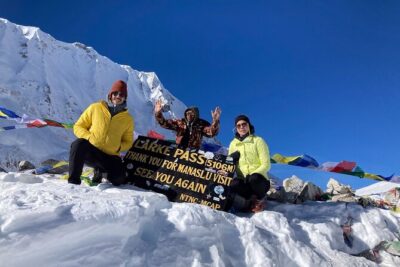
10 Days Manaslu Circuit Trek in Larke La Pass
Read our review →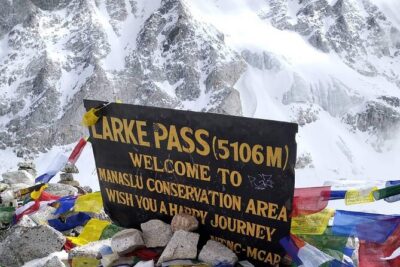
Manaslu Circuit Trek 8th Highest in the World
Read our review →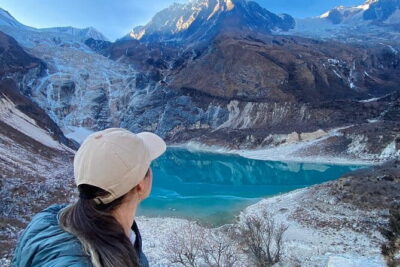
Manaslu Circuit Trek to the Beauty of 8th Highest Mountain
Read our review →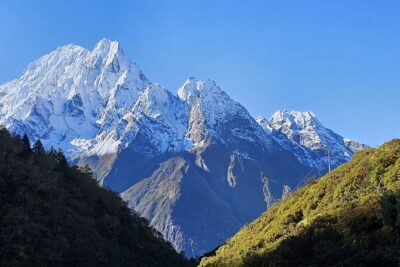
This tour also appears in