
REVIEW · MANASLU CIRCUIT TREKS
Manaslu Circuit Trek 13 Days
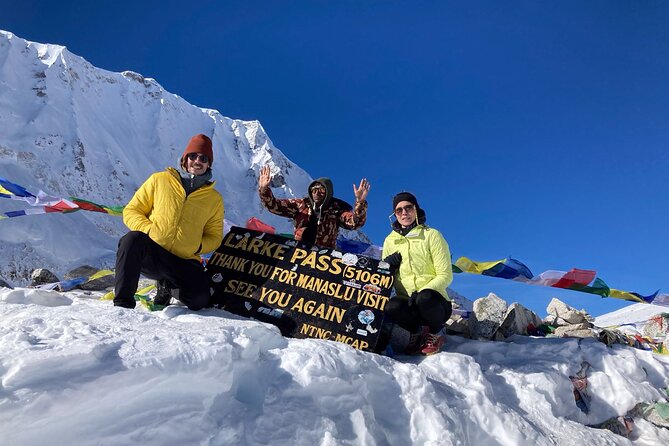
The great prize here is Larkya La Pass, reached after days of walking through river gorges, pine forests, Tibetan-style villages, monasteries, and high mountain country. You get Manaslu views without following the busier feel of Nepal’s best-known trekking routes.
I like the cultural range and the steady change in scenery. You move from subtropical forest and suspension bridges to yak trails, chortens, glacial lakes, and snowfields. I also like that the package includes the important permits, a licensed English-speaking guide, a first-aid kit, and public transport. The catch is the pace: 13 days is tight, with several 10 to 12-hour days and meals, lodging, porters, insurance, and rescue costs left for you to arrange or pay separately.
Key points to know before booking
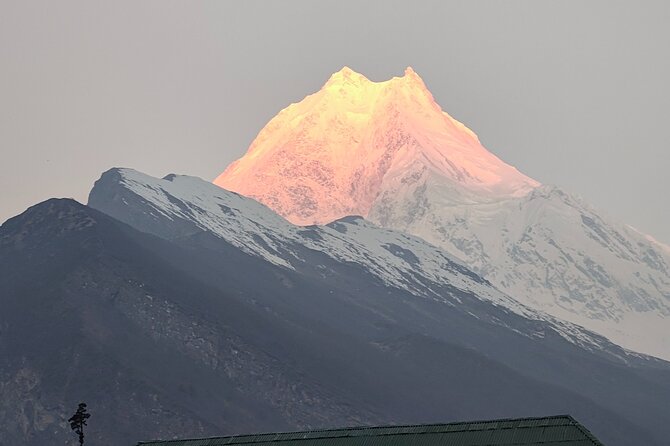
- Larkya La is the main test: The pass is the trek’s high point, with views of glaciers and the Manaslu range, but the approach includes steep climbs at high altitude.
- The cultural shift is gradual: Gurung and Tamang communities give way to villages with strong Tibetan customs, prayer wheels, monasteries, and mani walls.
- The road transfers are long: Day 1 and the final return to Kathmandu each involve roughly 12 hours of travel.
- The package is guide-led, not all-inclusive: Permits, public transport, a guide, map, duffel bag, and farewell dinner are included. Food and accommodation are not.
- This is a private trip: Only your own group takes part, which gives you more control than a large fixed group.
- Altitude planning matters: The itinerary includes time around Samagaon, but you should still take symptoms seriously and carry suitable insurance.
What the $1,400 price really covers
At $1,400 per person, this trek can be a fair value if you want a licensed guide and the paperwork handled, but it is not a complete, pay-once trekking package.
The price includes public transportation, a government-licensed English-speaking guide, Manaslu Conservation Area fees, the Manaslu Special Permit for seven days, the Annapurna Conservation Permit, and a TIMS card. You also receive a first-aid medical box, a company T-shirt, a duffel bag, a trekking map, taxes, and a farewell dinner.
Those permits matter. Manaslu is a controlled trekking area, and the paperwork is not a small afterthought. Having the operator manage it saves time and reduces the risk of arriving without the documents needed for the route.
The important budget warning is the list of exclusions. All meals and accommodation during the trek are extra, as are porters, drinks, laundry, electronic charging, personal expenses, tips, travel insurance, rescue operations, visa costs, and international flights. Ask for a realistic daily estimate before you commit. A low headline price can grow once food, tea-house rooms, porter support, and insurance are added.
The description of the experience includes comfortable public transport, including a deluxe bus for the first drive. Still, this is mountain transport in Nepal, not a quick airport shuttle. Day 1 takes about 12 hours to reach Machha Khola, and the return from Besisahar to Kathmandu is also long. If road travel wears you down, that may be the least enjoyable part of the trip.
More Hiking Tours in Kathmandu
- Everest Base Camp Trek – 14 Days
★ 5.0 · 1,499 reviews - Everest Base Camp Trekking
★ 5.0 · 485 reviews - Nagarkot Sunrise View and Day Hiking from Kathmandu
★ 5.0 · 471 reviews
Day 1: The long road to Machha Khola
Your trek begins before the walking does. The drive from Kathmandu follows the Trishuli and Budhi Gandaki Rivers toward Machha Khola, with views of rolling hills and river valleys along the way.
This is a necessary transfer day, but it is also a demanding one. Twelve hours on the road leaves little energy for anything else. Pack snacks, water, and something warm for the bus. The attraction is the gradual shift from Kathmandu’s urban setting to the narrow valleys and small settlements of the trekking region.
Day 2: River gorges and the trail to Jagat
From Machha Khola, the route passes through Khorlabesi and follows the Budhi Gandaki gorge toward Jagat. The path includes forest, river crossings, steep sections, and old foot trails cut into the hillsides.
The route is described as easier at the start of the day, but the total walking period is still around 12 hours. Do not read easier as easy. The gorge gives you a strong first taste of the Manaslu Circuit, with the river often close by and the trail changing from open paths to tighter sections.
A notable detail is the path lined with wild marijuana plants. The setting is rural and untamed, with plant life changing as you gain height. Jagat is an important early stop because the route begins to feel more like a true highland trek than a road journey.
Day 3: Sirdibas, Philim, and Deng
This is a full walking day with several worthwhile stops. After crossing a rocky ridge, you reach Salleri and continue along the west bank of the Budhi Gandaki, with views toward Shringi Himal and Langju Himal.
Sirdibas is a quiet village and a good place to notice the early cultural character of the route. After crossing the Ghatte Khola, the trail passes chortens and monasteries before reaching Philim. Terraced fields and well-kept village surroundings give Philim a more settled feel than the rough gorge sections.
Ekle Bhatti means one house, which tells you something about the remoteness ahead. It is a simple rest point rather than a major attraction. From there, you cross a suspension bridge and walk through subtropical forest toward Pewa, then enter Deng through a painted Kani gate.
That entrance is more than decoration. Kani gates mark a cultural change and signal the stronger Buddhist and Tibetan influence that becomes clearer in the days ahead. The day is listed at roughly 12 hours, so your stops will be short and useful rather than leisurely.
More Manaslu Circuit Treks in Kathmandu:
- Manaslu Circuit Trek (15 Days)
★ 5.0 · 50 reviews - 16 Day Private Manaslu Circuit Trek from Kathmandu
★ 5.0 · 42 reviews - 10 Days Manaslu Circuit Trek in Larke La Pass
★ 5.0 · 30 reviews - Manaslu Circuit Trek 8th Highest in the World
★ 5.0 · 14 reviews
Day 4: Serang Monastery and Tibetan-style Namrung
The route passes Rana before reaching Bihi Phedi, a small settlement split into three clusters of houses. The climb is steep, and the scattered homes give you a close look at how people live on difficult hillside terrain.
The trail then descends by zigzagging paths toward Ghap. Along the way, you pass Serang Monastery, decorated with colorful paintings and carved Buddhist figures, including Guru Rinpoche. This is one of the places where the journey feels cultural as well as physical.
Namrung is the day’s main destination. It is often called a Nepali version of Tibet, and you can expect stronger Tibetan customs, language, and architecture here. Pine and lichen-covered forests frame the approach.
The day takes around 12 hours, so do not count on spending a long time at every stop. If monasteries matter to you, tell your guide early that you want enough time to look carefully rather than simply pass through.
Day 5: Chortens, monasteries, and the views from Lho
The route continues through Banjam, a farming village surrounded by terraces and views toward Ganesh Himal and nearby glaciers. Banjam shows how agriculture continues at altitude, with fields shaped into the slopes.
At Lihi, a small monastery and a three-tiered chorten decorated with Buddhist figures provide two strong cultural details. You then pass Hinang Monastery before reaching Sho, known for its large prayer wheel and a river crossing.
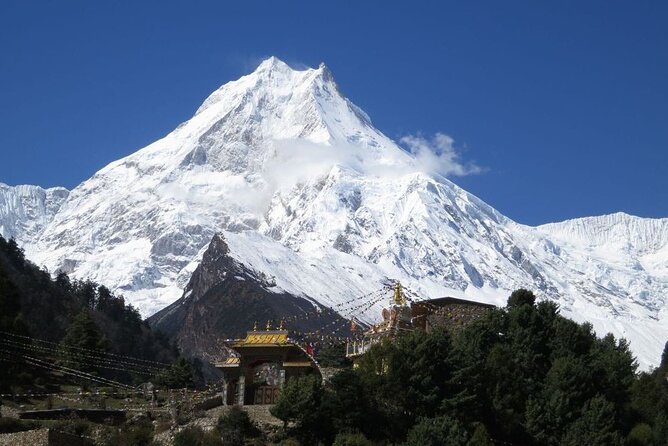
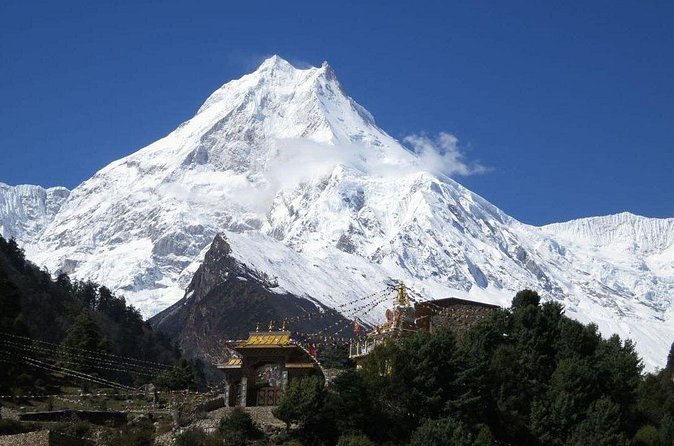
Lho is the highlight of the day. The village has grand monasteries and wide views of the Manaslu range. If you want a memorable mountain photograph, this is one of the best places to keep your camera ready.
The day is again about 12 hours. That repeated length is the central weakness of the itinerary. It lets you complete the circuit in 13 days, but it leaves less spare time for weather delays, slow walking, or a relaxed look around the villages.
Day 6: Shyala and spiritual Samagaon
From Lho, the trail enters alpine vegetation and follows a route once used by yak caravans trading timber with Tibet. The old trade connection adds meaning to what might otherwise seem like a simple forest walk.
You may catch views of Ngadi Chuli and other high peaks before reaching Shyala. From there, the route descends toward Samagaon, a peaceful village surrounded by dramatic mountain country.
Samagaon is one of the most important stops for the body as well as the mind. You are now high enough that altitude deserves serious attention. Walk slowly, drink regularly, and tell your guide about headaches, nausea, unusual tiredness, or poor sleep.
The day is listed at about 12 hours, which makes the schedule feel ambitious at exactly the point where you may need more recovery time. The included guide and first-aid kit are useful here, but neither replaces travel insurance or a sensible response to altitude symptoms.
Day 7: Pungyen Gompa as a worthwhile side trip
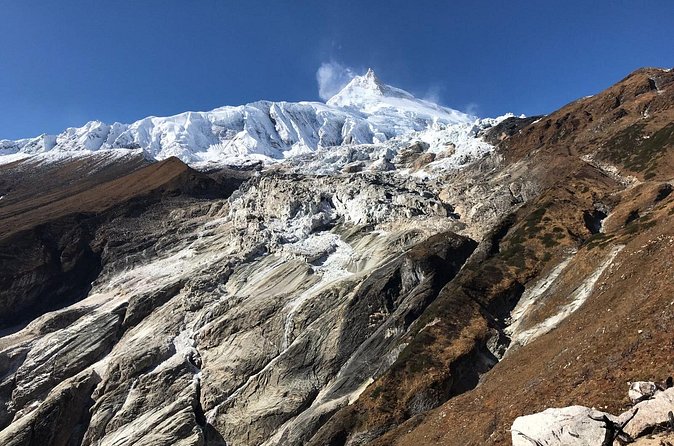
The walk to Pungyen Gompa begins by retracing part of the trail to a junction, then turning northwest. Two small chortens mark the way as you climb toward the gompa.
This is a good example of why a private trek can be valuable. Your group can spend more time at a spiritual site that interests you, rather than treating it as a quick photo stop. Pungyen Gompa also gives you another angle on the surrounding mountain country.
The itinerary does not give a full-day walking duration for this section, so treat it as an acclimatization and exploration day rather than assuming it will be effortless. The altitude is high, and even a short uphill route can feel strenuous.
Day 8: Birendra Taal and the route toward Samdo
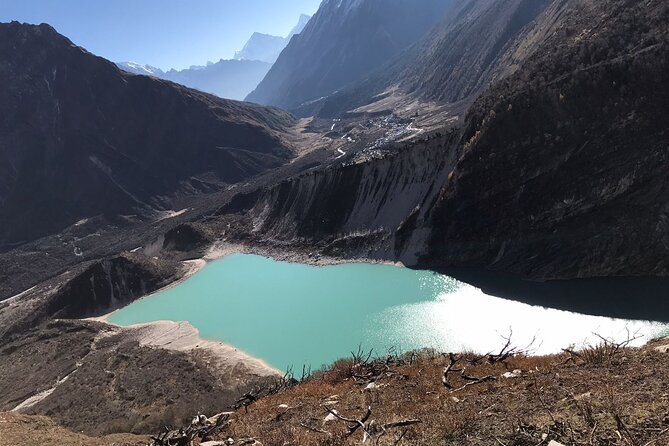
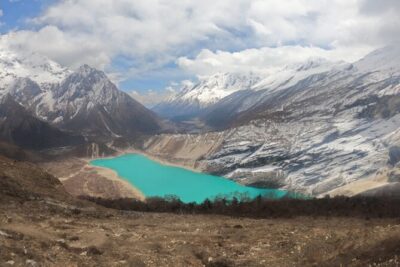
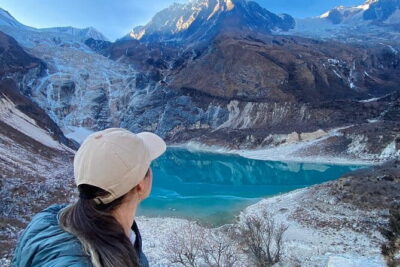
Birendra Taal is a turquoise glacial lake named for King Birendra Bir Bikram Shah Dev. Its color comes from glacial material at the lake bottom, giving the stop a striking, almost unreal appearance.
The day also includes views connected with Manaslu Base Camp, though the main base camp trail is bypassed on this journey. That distinction matters. You get mountain scenery, mani walls, and views toward Samdo Peak, but you should not assume this itinerary takes you fully to the base camp itself.
The route continues toward Samdo, a quiet village used as a rest point before the final high section. Samdo’s position near the Tibetan border area gives the village a strong highland character.
The itinerary places Birendra Taal, the Manaslu Base Camp viewpoint area, and Samdo within a 12-hour day. That is a lot of ground at altitude. This is another place where a private group and a careful guide can help with pacing, but the schedule remains demanding.
Day 9: Larkya Bazaar and Dharamsala
Larkya Bazaar is an old trading settlement on the way to Larkya Phedi, also called Dharamsala. Its importance comes from its position on the historic trade route, and the traditional market setting gives you a glimpse of the region’s earlier connections.
The climb to Dharamsala is steep. Breathing becomes harder as the air thins, and the trail passes chortens, mani walls, glaciers, and juniper bushes.
This is not a day for racing ahead. Keep your pace steady and save energy for the pass crossing. Dharamsala is the staging point for Larkya La, so the main goal is to arrive ready for the next morning.
Day 10: Larkya La and the descent to Bimthang
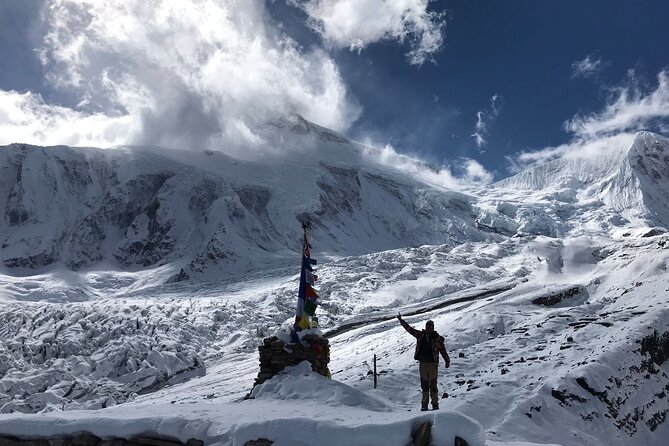
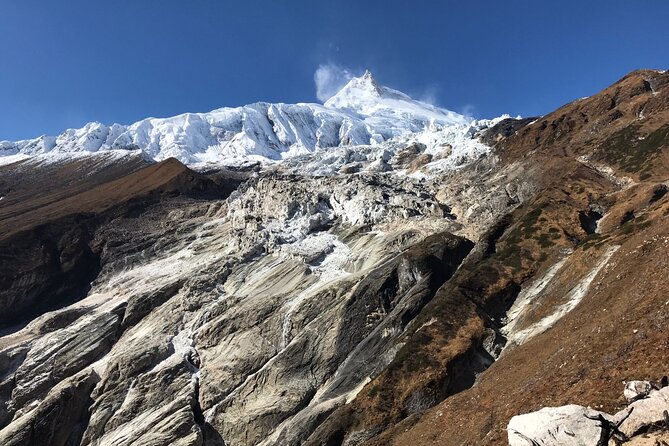
Larkya La is the trek’s defining day. The ascent passes glaciers, chortens, and snow-covered peaks, with views toward the Manaslu range and Syacha Glacier.
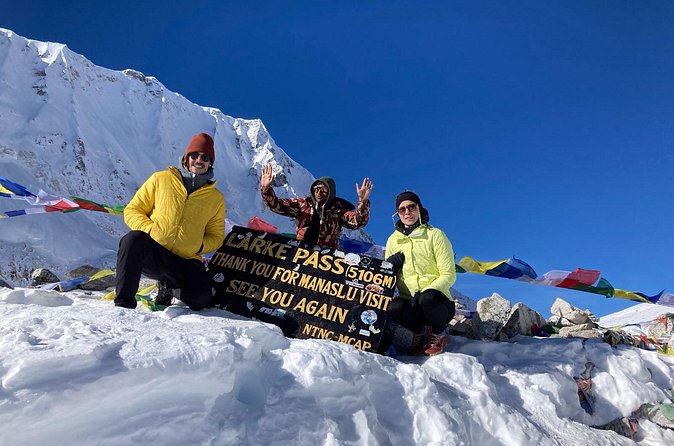
The pass reaches about 5,106 meters. The altitude, steep approach, and weather make this the most serious physical section of the route. A clear day can bring extraordinary views, but mountain conditions can change quickly. The experience provider notes that poor weather can lead to a changed date or a full refund if the activity is canceled.
After the pass, the descent to Bimthang brings relief. Bimthang is a scenic place to rest after the crossing, surrounded by mountain views and open country.
This is a roughly 12-hour day, and the length includes the pass effort and descent. You need good physical fitness, proper layers, sturdy footwear, and enough patience to walk slowly when the altitude demands it.
Day 11: Forests and the descent to Tilche
After Larkya La, the mountains remain close, sometimes appearing even more impressive as you descend. The route passes through rhododendron, pine, and oak forest toward Tilche.
This section changes the mood of the trek. The high, exposed country gives way to woodland and more settled villages. It is still a long day, listed at around 12 hours, but the lower altitude may make the walking feel more manageable.
Tilche marks the beginning of the return to warmer, denser country. After several days of stone villages and sparse highland vegetation, the forests provide welcome variety.
Day 12: From Tilche to Tal
The walk to Tal brings another clear change in vegetation. Alpine plant life gives way to subtropical growth, and villages become more frequent.
You should not expect the biggest mountain views on this section. Its value is the transition itself, as the trail shifts from high pass country to greener valleys and livelier settlements.
The day still takes around 12 hours, so it is not a simple stroll. Your legs will already have worked hard on the pass and descent. This is the point where good pacing and comfortable accommodation, which you must arrange separately, matter most.
Day 13: Besisahar and the long return to Kathmandu
The final day begins with the descent from Tal to Besisahar, followed by a long drive back to Kathmandu. The route partly repeats the roads used earlier in the trip.
The walking portion is listed at about 30 minutes, but the full day takes roughly 12 hours because of the road journey. Once back in Kathmandu, you return to your hotel to rest.
A farewell dinner is included, giving the trip a clear ending. Still, do not schedule an international flight immediately after this return unless you have confirmed the road timing and allowed a proper buffer.
Guides, group size, and the human side of the trek
This is a private activity, so only your group participates. That can make a real difference on long days. You can ask for a slower pace, pause at a monastery, or discuss how you are feeling without being tied to a large group’s timetable.
The guide is a government-licensed, English-speaking trekking guide. Past guide teams connected with this experience include Hem, Kumar, Pradip, Rajesh, and porters such as Deepak. Hem has been praised for being organized, caring, and fun, while Kumar has been described as warm and attentive. Pradip and Rajesh have also led groups through the circuit.
Guide assignments can change, so ask who will lead your departure and whether a porter is included. It is not included in the published price. You should also budget tips separately.
Who should book the Manaslu Circuit
I would choose this trek if you want a demanding Himalayan route with strong village culture, Buddhist sites, remote scenery, and one major high pass. It suits hikers with a moderate to strong level of fitness who can handle repeated 10 to 12-hour days.
I would be cautious if you want a relaxed holiday, dislike long bus rides, or expect meals and lodgings to be covered. The 13-day schedule is efficient, but it leaves little room for delays or extra rest.
Before booking, ask for a written breakdown of the expected costs for food, rooms, porter service, insurance, and transport. Confirm how the itinerary handles bad weather at Larkya La and clarify the Manaslu Base Camp section, since the main trail is bypassed.
Should you book it?
Book this Manaslu Circuit Trek if the high pass, changing scenery, and Tibetan-influenced villages are your main goals and you are comfortable managing the extra costs. The included permits and licensed guide remove important complications, and the private format is a useful advantage.
Skip it, or request a slower version, if 13 days feels rushed. The route is rewarding, but the schedule is not gentle. With realistic budgeting, good insurance, and careful attention to altitude, it offers a strong introduction to one of Nepal’s most varied mountain circuits.
FAQ
How long is the Manaslu Circuit Trek?
The trek lasts approximately 13 days, beginning and ending in Kathmandu.
What is the highest point on the trek?
The highest point is Larkya La Pass, at approximately 5,106 meters.
Is hotel pickup available?
Pickup is offered, but the provided information does not specify the exact pickup location or time. Confirm these details before departure.
Is this a private trek?
Yes. Only your own group participates in this private tour or activity.
Are meals included?
No. All meals during the trek are excluded from the listed price.
Is accommodation included?
No. Accommodation during the trek is not included and must be arranged or paid for separately.
What permits are included?
The package includes Manaslu Conservation Area fees, a Manaslu Special Permit for seven days, the Annapurna Conservation Permit, and a TIMS card.
What happens if bad weather cancels the trek?
If poor weather causes cancellation, you will be offered a different date or a full refund.
Recently added around Kathmandu
- Kathmandu Airport Pickup and Drop-off Services★ 5.0 · 3 reviews
- Kathmandu Paragliding★ 5.0 · 3 reviews
- Kathmandu Chandragiri Cable Car and Swayambhunath Private Tour★ 5.0 · 3 reviews
- Explore The Beauty Of Langtang Valley In 8-Days Trek★ 5.0 · 3 reviews
- Kathmandu: Nightlife and Pub Crawl Tour★ 5.0 · 3 reviews
- Mountain Flight Experience in Nepal★ 4.5 · 3 reviews
- Kathmandu: Momo Making Class with a Local Chef★ 5.0 · 3 reviews
- Everest Base Camp Trek★ 5.0 · 3 reviews
Other Manaslu Circuit Treks worth a look
16 Day Private Manaslu Circuit Trek from Kathmandu
Read our review →
10 Days Manaslu Circuit Trek in Larke La Pass
Read our review →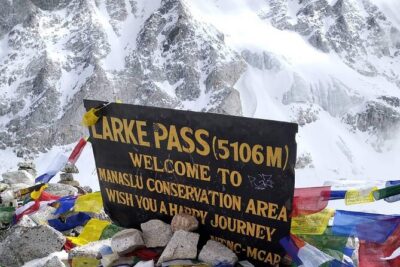
Manaslu Circuit Trek 8th Highest in the World
Read our review →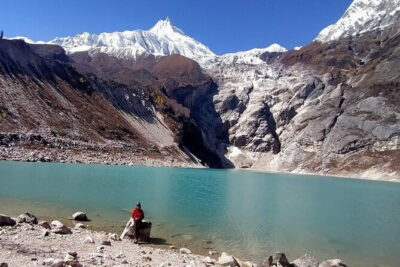
Manaslu Circuit Trek to the Beauty of 8th Highest Mountain
Read our review →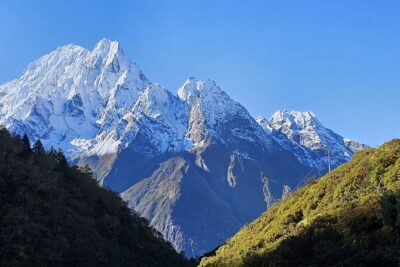
This tour also appears in