
REVIEW · MANASLU CIRCUIT TREKS
Manaslu Trekking
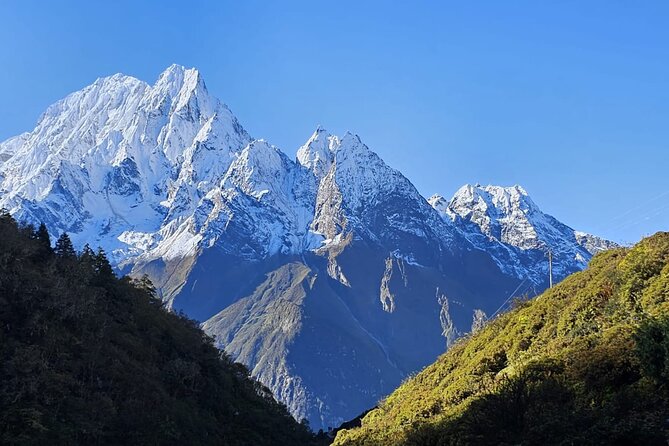
The Manaslu Circuit takes you around Mount Manaslu, the world’s eighth-highest mountain, on a route that feels far less built for mass tourism than the better-known Annapurna and Everest trails. You move from humid river valleys and rice terraces to high Buddhist villages, then cross Larkya Pass before descending toward Besisahar.
I like two things right away: the trek includes full-board meals, permits, guides, porters, and airport transfers, so you are not assembling the trip piece by piece, and the route includes a proper acclimatization day in Samagaun. I also like the mix of scenery and culture, from Kathmandu’s major shrines to Gurung villages, monasteries, suspension bridges, and wide mountain views.
The main consideration is the physical demand. Six-hour walking days are common, the trail includes steep stone steps and rough river paths, and the Larkya Pass crossing is the hardest section. The itinerary also uses basic teahouse or mountain lodge accommodation outside Kathmandu, so comfort becomes simpler as altitude increases.
Key points to know before booking
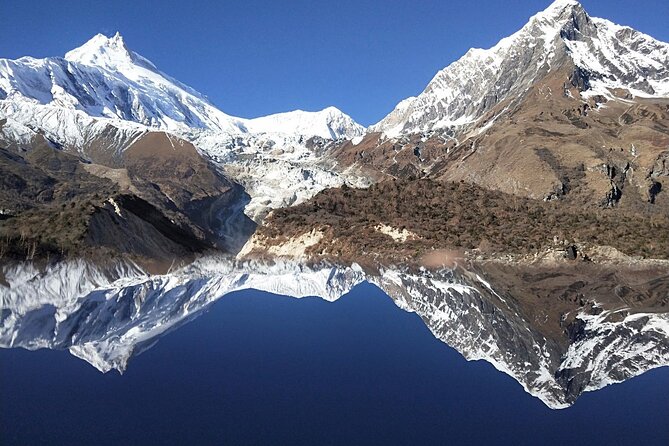
- Mount Manaslu at 8,163 meters: The circuit gives you repeated mountain views without the heavy commercial feel of Nepal’s most famous trekking corridors.
- Larkya Pass is the test: The route climbs through tundra and juniper before reaching the pass and descending to Bimthang.
- One full day in Samagaun: You have time to explore the village and monastery rather than climbing higher every day.
- Private group format: Only your own group participates, with one porter assigned for every two people.
- A substantial package: Kathmandu hotels, sightseeing, meals, permits, porters, trekking equipment for porters, and medical supplies are included.
- Seventeen days door to door: The walking route is paired with arrival, Kathmandu sightseeing, a return drive, rest time, and airport transfer.
Why the Manaslu Circuit feels different
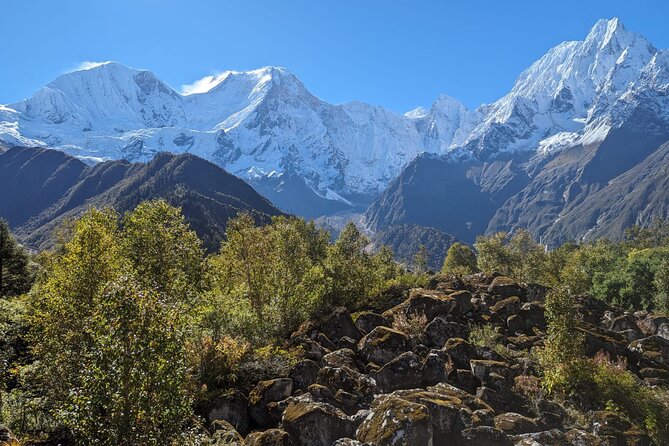
The Manaslu region is a good choice if you want a serious Himalayan trek with fewer signs of large-scale tourism. You still use teahouses and established villages, but the route passes through narrow gorges, bamboo forest, high mountain settlements, and Tibetan-influenced country rather than one continuous chain of busy lodges.
The route circles Manaslu instead of simply walking toward a base camp and returning the same way. That gives each section a different character. Early days are warm and river-bound. The middle section becomes more strongly Buddhist, with mountain walls rising around the trail. Near Samdo and Larkya Pass, the trees thin out and the air feels much more severe.
At $1,900 per person, the price is not a budget independent trek. It does, however, cover many costs that can quickly add up in Nepal: airport pickup and drop-off, three-star twin-share lodging in Kathmandu, a city guide, full-board trekking meals, permits, national park fees, TIMS, an experienced guide, porters, porter insurance and gear, a duffel bag, a T-shirt, and a first-aid kit.
You still pay for drinks, personal expenses, tips, travel insurance, and similar extras. The value is strongest if you want one company to handle the moving parts and you appreciate having porters and meals arranged. If you already have trekking equipment, know the region well, and prefer to plan independently, the package may feel less attractive.
More Hiking Tours in Kathmandu
- Everest Base Camp Trek – 14 Days
★ 5.0 · 1,499 reviews - Everest Base Camp Trekking
★ 5.0 · 485 reviews - Nagarkot Sunrise View and Day Hiking from Kathmandu
★ 5.0 · 471 reviews
Kathmandu begins with temples, food, and preparation
Day 1 is intentionally easy. You are met at Tribhuvan International Airport, transferred to your hotel, given time to recover, and taken to a welcome dinner in a typical Nepalese restaurant. A trip briefing follows, which is useful because the next several days involve changing accommodation, mountain conditions, and long walks.
Day 2 focuses on Kathmandu Valley. Pashupatinath Temple gives you a first look at one of Nepal’s major Hindu religious sites. Boudhanath Stupa brings a quieter Buddhist setting, with its large white dome and prayer-focused atmosphere. Swayambhunath, often called the Monkey Temple, sits on a hill and combines a stupa, temples, city views, and its famous resident monkeys.
The day also includes trek preparation and a meeting with the trekking staff. That matters more than it sounds. Use this time to check the duffel bag, confirm what your porter will carry, and ask practical questions about the walking schedule and meals.
Days 3 and 4: river gorges and rough early miles
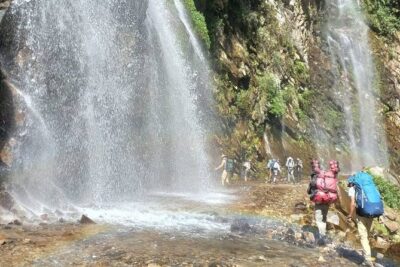
The walking begins around the Budhi Gandaki corridor. From the early trail, you pass through Sal forest, climb above strong river rapids, and follow a rocky route toward Khursane. The path rises and falls beside waterfalls and cliff edges before reaching rice terraces and the Gurung village of Labubesi.
The day ends at Machha Khola after another suspension bridge and a rough riverbed section. Plan on about six hours of walking. This is not a gentle warm-up on a broad road. The terrain introduces you to uneven footing, steep sections, bridges, and the repeated rhythm of climbing away from the river before dropping back toward it.
Day 4 continues to Jagat. You pass Khorlabesi and the small hot spring at Tatopani, then cross suspension bridges and tackle long stone staircases. Landslide areas, ridges, and more steps lead toward Dobhan and Tharo Bharyang before the trail climbs into Jagat.
These first days show why moderate physical fitness is listed as a requirement. The altitude is not yet the main issue, but the trail can be tiring because of its constant ups and downs. Trekking poles would be useful, though the package information does not say they are provided.
Days 5 and 6: Gurung villages and a change in culture
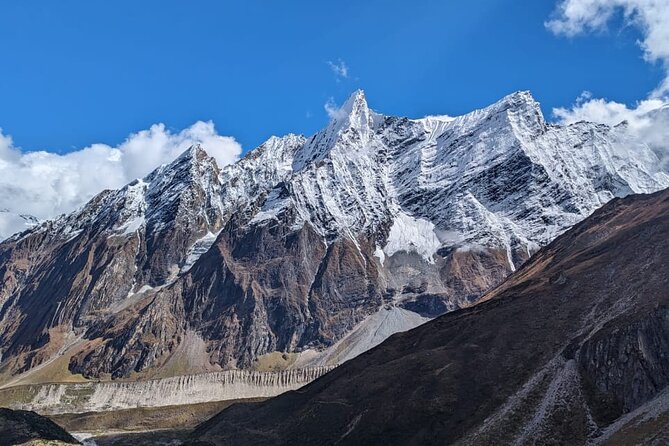
From Jagat, the route climbs over a rocky ridge toward Salleri and descends to Sirdibas. You then follow the river upstream to Philim, a larger Gurung settlement, before crossing millet fields and entering a narrow, less inhabited gorge.
The trail crosses the Budhi Gandaki several times and passes through bamboo forest before reaching Deng. This is a particularly varied day, with farmland, river crossings, forest, and a tighter gorge in about five hours of walking.
From Deng, you move farther into the Buddhist-influenced part of the region. The route reaches Ghap and continues toward Namrung, with forest sections that include bamboo and rhododendron. The supplied schedule uses slightly different place labels for these two days, so I would ask the operator to confirm the exact overnight village before departure. That small check prevents confusion when you are following the daily plan on the ground.
More Manaslu Circuit Treks in Kathmandu:
- Manaslu Circuit Trek (15 Days)
★ 5.0 · 50 reviews - 16 Day Private Manaslu Circuit Trek from Kathmandu
★ 5.0 · 42 reviews - 10 Days Manaslu Circuit Trek in Larke La Pass
★ 5.0 · 30 reviews - Manaslu Circuit Trek 13 Days
★ 5.0 · 30 reviews
Days 7 and 8: Namrung, Nupri, and first major Manaslu views
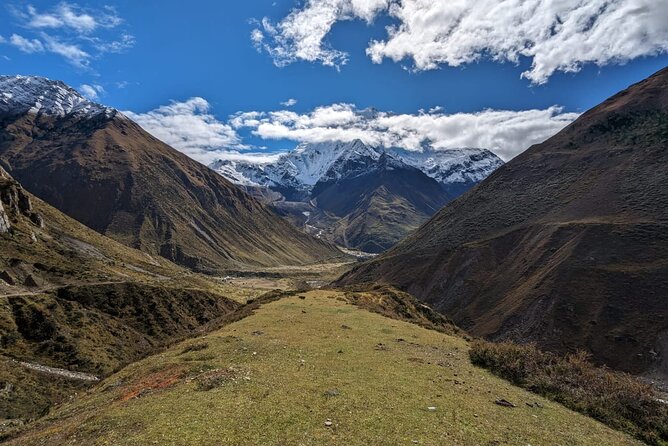
The route enters the Nupri region around Namrung. Here the architecture, religious setting, and village life feel more closely linked to the high Buddhist country ahead. Forest trails lead toward larger mountain views, and the walk becomes more about altitude and steady pacing than about rushing from one settlement to another.
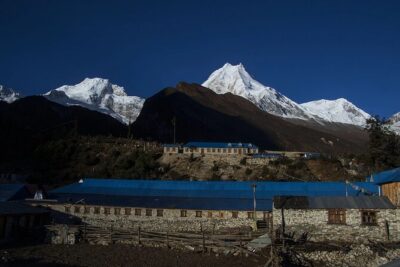
The next section follows the river toward Samagaun, with views of Peak 29 and then Manaslu itself. Samagaun is one of the major stops on the circuit, and the setting gives you a clear sense of why this trek is built around the mountain.
The plan describes a six-hour day into Samagaun and teahouse or camp-style accommodation. In practice, you should expect basic mountain lodging rather than hotel comforts. Full-board meals are included, which keeps the daily routine simple: walk, eat, rest, and prepare for the next climb.
Day 9: the Samagaun acclimatization day
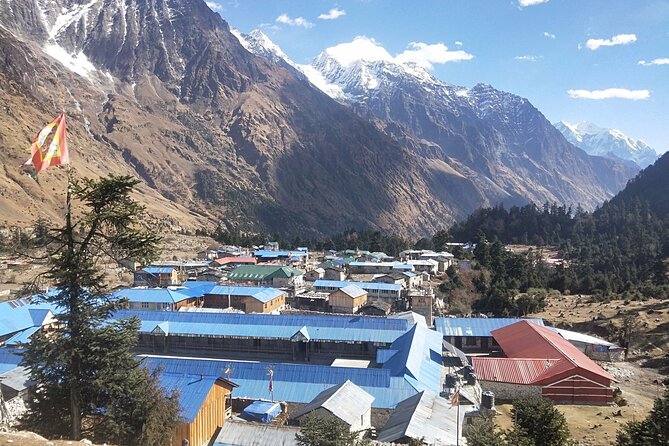
The rest day in Samagaun is one of the best features of the schedule. You explore the village and monastery, take in the views, and give your body time to adjust before the route moves higher.
This is not a wasted day. At altitude, a slower schedule is safer and more enjoyable than forcing another long climb. The exact activity level is not specified, so follow the guide’s advice and keep the day moderate.
Samagaun also gives the itinerary a cultural pause. The trek is not only a series of mountain photographs. Monasteries, village paths, local fields, and the shift from Gurung settlements to Tibetan-influenced communities are central to the experience.
Days 10 and 11: Samdo and the approach to Larkya Pass
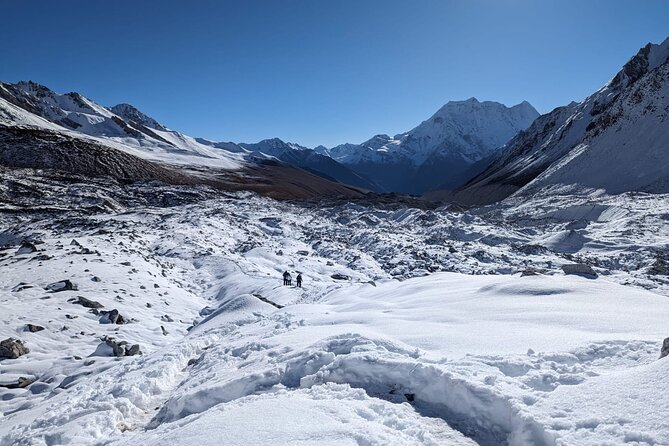
Leaving Samagaun, you follow the Budhi Gandaki toward Samdo. The route becomes more open and exposed, and the villages are farther apart. This is a six-hour walking day, so an early start and careful water planning are sensible.
Day 11 begins the approach to Larkya Bhanjyang, the high pass section. The trail climbs through tundra and juniper, with less forest cover and more open mountain terrain. This is where the trek feels properly high and remote.
The route description lists another six-hour day, but walking time in the mountains can vary with pace, weather, trail conditions, and stops. You should not treat six hours as a guarantee. Your guide sets the practical rhythm, and the included guide service is especially valuable here.
Day 12: crossing Larkya Pass and descending to Bimthang
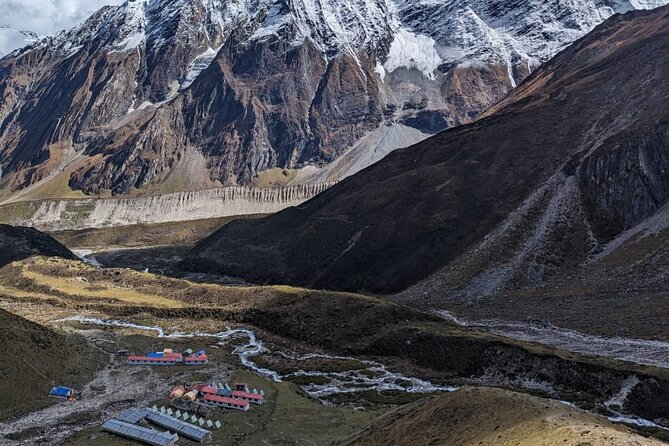
This is the key day of the circuit. You reach the summit of Larkya Pass, then descend to Bimthang. The pass provides panoramic mountain views, but it also demands the most from your legs and lungs.
The schedule gives about six hours, yet this should be treated as the hardest day rather than an ordinary one. The combination of ascent, altitude, cold conditions, and a long descent can make the day feel much longer than its clock time suggests.
The reward is the change in scenery after the pass. The trail no longer feels like an approach to a barrier. You have crossed the high point and begun the descent toward lower forests and villages. Bimthang is an important overnight stop because it breaks up that demanding pass day.
Days 13 and 14: forests, a lake viewpoint, and the return to lower country
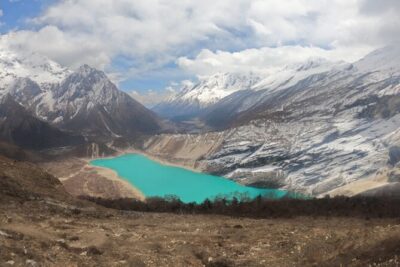
From Bimthang, the route descends through forest toward Tilje. A viewpoint near Bhimtang Lake is listed as a stop, giving the day a scenic target beyond simply losing altitude.
The itinerary contains a duplicated phrase in the description of this day, but the route itself is clear: descend through forest and continue to Tilje. After the exposed terrain around the pass, trees and village paths provide a welcome change.
Day 14 follows scrub forest toward Chamje. It is another six-hour walking day, and the gradual return to lower elevations should feel easier than the pass crossing, though tired knees may disagree. Accommodation remains in teahouses or mountain lodges, with meals included.
Days 15 to 17: road return and Kathmandu breathing space
Day 15 is a five-hour drive back to Kathmandu through the countryside. Road travel in Nepal can be tiring, so the value of this day is not sightseeing. It gives you a clear end to the circuit and returns you to a comfortable three-star hotel.
Day 16 is free for rest or time in Thamel. After two weeks of walking, this is useful for laundry, a proper shower, shopping, or simply doing very little. The schedule allows about six hours for leisure, but you can use the day at your own pace.
Day 17 includes free time for last-minute shopping or activities, followed by airport transfer. The package includes both pickup and drop-off, which removes one common source of stress at the beginning and end of a Nepal trip.
What the $1,900 package covers
The package is built for someone who wants support rather than a stripped-down trek. Kathmandu accommodation is three-star deluxe on a twin-share basis, while the mountain nights use teahouses or lodges described as neat and clean.
During the trek, breakfast, lunch, and dinner are included. Drinks are not, so budget separately for beverages and personal purchases. The package also includes the necessary trekking permits, national park entry fees, and TIMS card.
A guide and porters are provided, with one porter for every two people. Porter insurance and porter equipment are included, along with trekking boots and a jacket for porters as required. You receive a duffel bag and T-shirt, and a medical kit is carried during the trip.
Tips are accepted and not included. Travel insurance is also your responsibility, and it is specifically important on a high-altitude trek. The supplied information does not state the insurance coverage details for the operator’s staff beyond the listed porter insurance, so ask what the guide service covers and arrange your own policy before departure.
Who should book this Manaslu trek?
I would recommend this trek to you if you have solid walking fitness, can manage repeated six-hour days, and want a quieter route with strong cultural content. It suits people who prefer mountain scenery, villages, monasteries, and changing terrain over nightlife or polished resort facilities.
It is also a good fit if you want a private trip. Only your group participates, and group discounts are available, though the exact discount is not stated. A private format gives your party a more direct relationship with the guide and avoids being placed with strangers.
I would be more cautious if you have limited hiking experience, dislike steep stone steps, or expect comfortable hotels every night. The route is demanding, and the simple mountain accommodation is part of the deal, not an accidental inconvenience.
The tour has a 4.8 out of 5 rating from five submitted ratings, which is a strong signal, though the sample is small. I would give more weight to the practical inclusions and the route design: a private group, full-board meals, a rest day in Samagaun, and organized support through the pass.
Final booking advice
Book this Manaslu Circuit Trek if you want a 17-day, fully supported Himalayan route that combines serious walking with Kathmandu sightseeing and village culture. The best value comes from the broad package and the reduced planning burden, not from luxury.
Before paying, confirm the precise day-by-day overnight villages, what is meant by Manaslu Base Camp in the schedule, and the arrangements for high-altitude conditions. If you are fit, patient, and comfortable with basic lodges, this route offers a strong balance of remote scenery, mountain views, and cultural variety.
FAQ
How long is the Manaslu Trekking experience?
The full experience lasts approximately 17 days. It includes arrival and departure days, two days of Kathmandu sightseeing or free time, the trekking section, and the drive back to Kathmandu.
What is the price per person?
The listed price is $1,900 per person.
Is airport pickup and drop-off included?
Yes. Airport pickup and drop-off are included in the package.
Are meals included during the trek?
Yes. Breakfast, lunch, and dinner are included during the trekking portion. Beverages are not included.
What accommodation is provided?
You stay in three-star deluxe twin-share accommodation in Kathmandu. During the trek, accommodation is provided in teahouses or mountain lodges.
Are trekking permits included?
Yes. Necessary trekking permits, national park entry fees, and the TIMS card are included.
Is this a private tour?
Yes. Only your own group participates in the activity. Group discounts are also available, although the exact discount is not specified.
Recently added around Kathmandu
- Kathmandu Airport Pickup and Drop-off Services★ 5.0 · 3 reviews
- Kathmandu Paragliding★ 5.0 · 3 reviews
- Kathmandu Chandragiri Cable Car and Swayambhunath Private Tour★ 5.0 · 3 reviews
- Explore The Beauty Of Langtang Valley In 8-Days Trek★ 5.0 · 3 reviews
- Kathmandu: Nightlife and Pub Crawl Tour★ 5.0 · 3 reviews
- Mountain Flight Experience in Nepal★ 4.5 · 3 reviews
- Kathmandu: Momo Making Class with a Local Chef★ 5.0 · 3 reviews
- Everest Base Camp Trek★ 5.0 · 3 reviews
Other Manaslu Circuit Treks worth a look
16 Day Private Manaslu Circuit Trek from Kathmandu
Read our review →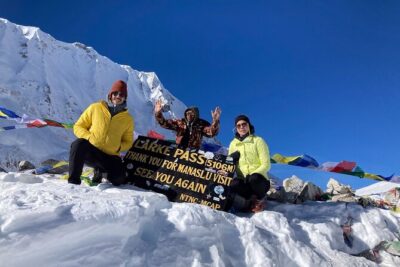
10 Days Manaslu Circuit Trek in Larke La Pass
Read our review →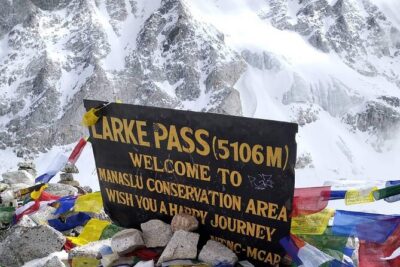
Manaslu Circuit Trek 8th Highest in the World
Read our review →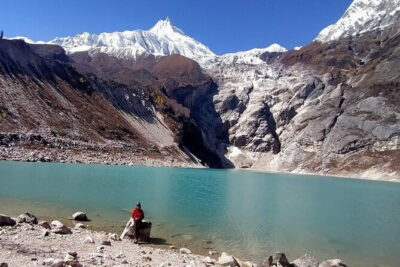
Manaslu Circuit Trek to the Beauty of 8th Highest Mountain
Read our review →This tour also appears in