
REVIEW · EVEREST BASE CAMP TREKS
Everest Base Camp Trekking
Everest Base Camp is reached the old-fashioned way here: one steady step after another through pine forests, Sherpa villages, glacier valleys, and high mountain passes. I like the small maximum group of 10, which gives your guide room to watch your pace and help when altitude or fatigue starts to bite. I also like that flights, local transport, meals, teahouse lodging, and route planning are bundled together.
The main caution is simple: this is a serious mountain trek, not a sightseeing stroll. You need strong physical fitness, must accept changing weather, and should be ready for basic accommodation and long days on rocky trails. The Lukla flight and high-altitude sections also mean the schedule can feel demanding.
Key points to know before booking
- Small groups capped at 10: You get more direct help from your guide than on a large hiking departure.
- A full Himalayan route: The trek passes Namche Bazaar, Phorse, Dingboche, Pangboche, Duglha, Everest Base Camp, and Kala Patthar.
- Sunrise at Kala Patthar: The early climb is timed for morning views of Mount Everest and the surrounding peaks.
- Logistics are handled: Airport pickup, domestic flights, local transport, meals, and teahouse accommodation are included.
- Guides are a major part of the experience: Biru, Ambar, Ramesh, and other Green Valley staff are praised for safety, care, and practical help.
- A 14-day commitment: You need enough time for the trek, acclimatization, return to Kathmandu, and the final airport transfer.
Why this trek works for first-time Everest visitors
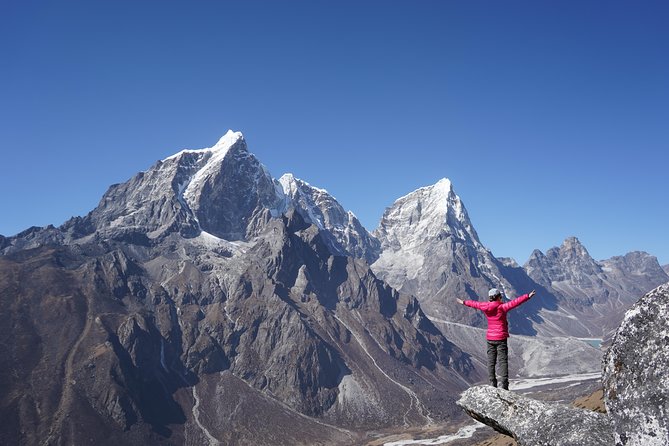
The clever part of this itinerary is that you do not have to manage the route alone. A guide leads the way, handles the daily logistics, and helps you focus on walking, breathing, and noticing the mountains instead of worrying about every turn.
That matters in the Khumbu region. Trails pass through settlements, forests, river crossings, open mountain country, and glacier terrain. A guide also gives you a local point of contact for questions about Nepali culture, Sherpa communities, Buddhist sites, and life in the high valleys.
The group limit of 10 is a useful middle ground. You still get the social feel of a shared trek, but the group is not so large that every stop becomes slow and impersonal. If you are trekking alone, this setup can also make the route feel less isolated. Several guides are named in the supplied feedback, including Biru, Ambar, Ramesh, and porter Kanchar. The repeated praise centers on kindness, safety, responsiveness, and help when someone feels unwell.
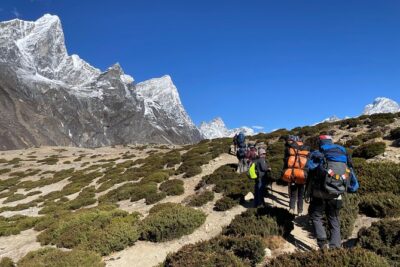
You should still understand what guided means here. It does not mean easy. You will walk for many days on uneven ground, including steep sections and rocky descents. The tour is described as suitable for active, moderately fit people, with strong physical fitness required. I would take that wording seriously.
More Hiking Tours in Kathmandu
- Everest Base Camp Trek – 14 Days
★ 5.0 · 1,499 reviews - Nagarkot Sunrise View and Day Hiking from Kathmandu
★ 5.0 · 471 reviews - Annapurna Circuit Trek with Tilicho Lake
★ 5.0 · 368 reviews
Day 1: Kathmandu arrival and a useful soft landing
Your trip begins at Tribhuvan International Airport, where an airport representative meets you and arranges a private tourist vehicle to your hotel. You can rest or visit the company office to go over the trek details.
This first day is not filler. Kathmandu can be a noisy, tiring arrival point, and a planned pickup saves you from sorting out transport immediately after your flight. Use the day to settle in, check your gear, and ask practical questions before heading into the mountains.
The itinerary does not promise a full Kathmandu sightseeing program on arrival. Think of Day 1 as an organized start and a chance to recover. If your flight arrives late, the built-in rest time is especially useful.
Day 2: The Lukla flight and the first trail to Phakding
After breakfast, you leave early for the domestic airport terminal. The flight to Lukla offers morning views of snowcapped peaks, then lands at Tenzing-Hillary Airport, the mountain gateway for the trek.
From Lukla, the route begins on foot. The day takes you through pine forest, along the Dudh Koshi River, and past views of Mount Thamserku. You also pass settlements and the checkpoint at the entrance to Sagarmatha National Park.
This is an excellent opening day because it introduces several features that define the route: mountain villages, river valleys, forest trails, and high peaks appearing between the trees. The early flight does create a demanding start, though. You have a transfer, a flight, and a walk all packed into one morning and afternoon.
Day 3: Forest trails, rivers, and the approach to Namche Bazaar
The route continues toward Namche Bazaar. Pine forest and the Dudh Koshi remain part of the setting, while the trail gradually feels more like a route into the high Khumbu rather than a simple village walk.
Namche is the largest settlement in the region and serves as an important stopping point. You will find ATMs, internet cafes, restaurants, and bakeries there. That does not make Namche a city, but it does give you a welcome chance to handle small practical needs before the route becomes more remote.
The approach to Namche is also where the trek begins to feel more physically serious. Your guide’s role becomes increasingly useful as the walking pace, rest stops, and response to altitude matter more.
More Everest Base Camp Treks in Kathmandu:
- Everest Base Camp Helicopter Tour landing at Everest View Hotel
★ 5.0 · 668 reviews - Everest Base Camp Trekking – 13 Day
★ 5.0 · 365 reviews - Everest Base Camp Trek -14 Days
★ 5.0 · 321 reviews - Everest Base Camp Helicopter Tour landing at Hotel Everest View
★ 5.0 · 218 reviews
Day 4: Acclimatization above Namche Bazaar
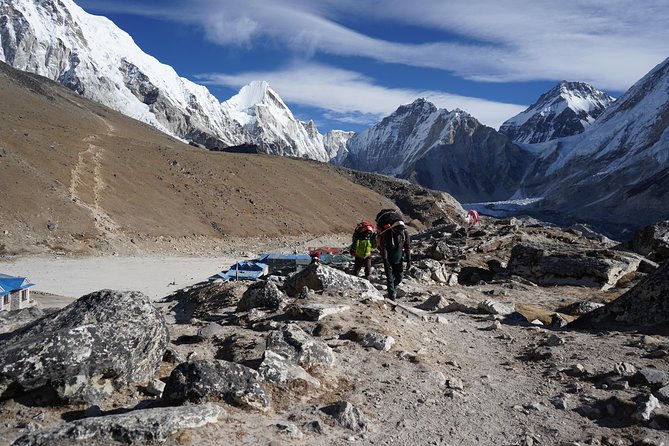
Day 4 is set aside for acclimatization, but you do not simply stay indoors. After breakfast, you take a short hike to a nearby viewpoint, including the area around Thyangboche according to the itinerary.
The point is to walk higher and return to Namche rather than rush onward. This gives you mountain views while allowing your body more time to adjust. The day also lets you enjoy Namche’s bakeries, restaurants, and services without treating the town as just a place to sleep.
I like this pause because it adds breathing room to the schedule. The drawback is that some fit hikers may feel impatient on a short day. That is the wrong reason to skip it. The itinerary is built around reaching Base Camp safely, not simply covering maximum distance each day.
Day 5: Namche to Phorse, with Ama Dablam views
After breakfast, the trail leaves Namche for Phorse. The route reaches Mugla Pass, where you can see Mount Ama Dablam, Mount Khumbu, and Mount Thamserku.
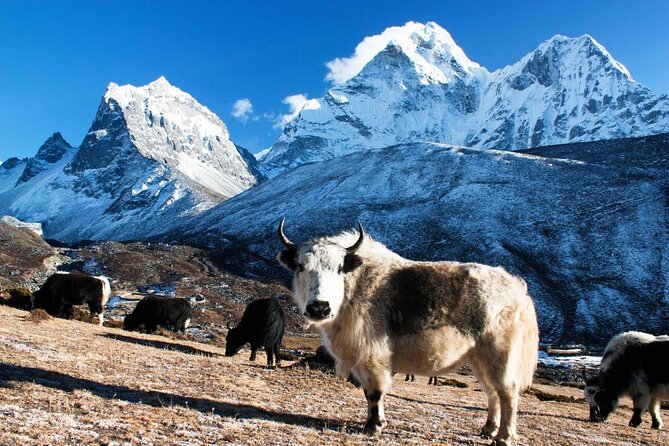
The trail then descends toward the Dudh Koshi and crosses the river before continuing through the mountain settlements. Phorse gives you a different stop from Namche. Namche has shops and services, while Phorse is part of the quieter village rhythm that becomes more common as you move higher.
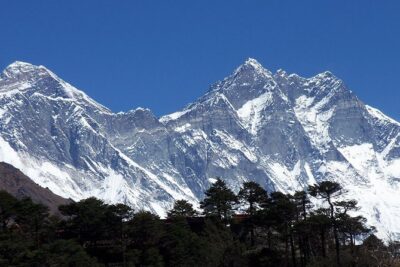
Ama Dablam is one of the memorable peaks on this route, and the views from this section help explain why the trek is about far more than standing at Base Camp. You get changing angles on the mountains as the trail bends through the valleys.
Day 6: Phorse to Dingboche through villages and Buddhist country
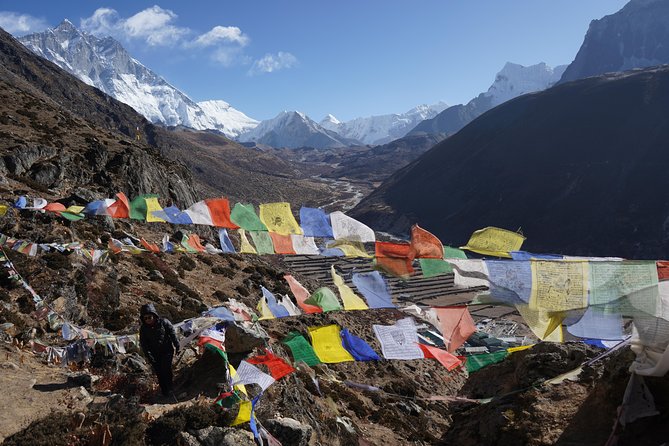
The walk from Phorse to Dingboche continues through alpine forest and upper Pangboche. Along the way, the route includes a visit to the largest Buddhist monastery in the region, then passes through villages including Shomare.
This is one of the best days for seeing the human side of the Khumbu. The trail is not only a line toward Everest. It links villages, religious sites, and high pasture areas, and your guide can add context about the people who live in these mountain communities.
Dingboche is an important point in the itinerary because the surroundings feel higher and more open than the forested sections below. The route becomes more exposed, and the physical demands become clearer. Keep your pace controlled rather than trying to match the fastest person in the group.
Day 7: Duglha, the Khumbu Khola, and expedition history
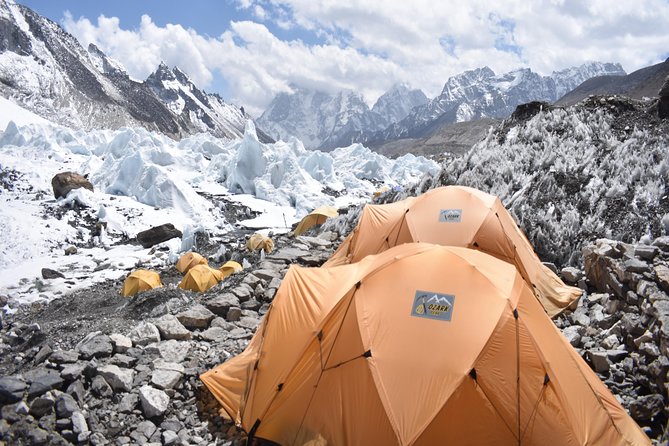
The climb from Duglha follows the Khumbu Khola valley. You pass Dusa, described as a place used by yak herders, and Phulong Karp, associated with the camp of the first successful Everest expedition in 1953.
The itinerary also refers to Chola Lake and mountain views along this portion. The exact flow of stops can depend on local trail conditions and the guide’s daily planning, but the character of the day is clear: high valley walking, glacier country, and reminders of earlier Everest expeditions.
This is a day when the route’s history feels close to the trail. You are not simply looking at a famous mountain from a comfortable viewpoint. You are walking through the same broad region that has served climbers, porters, yak herders, and local communities for generations.
Day 8: Prayer flags and the terminal moraine
The trail continues over the steep terminal moraine of the Khumbu Glacier. From there, the ascent to Chupki Lhara leads across slopes scattered with boulders.
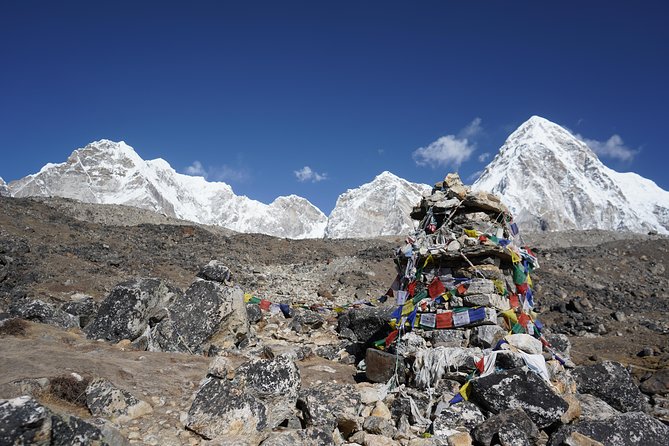
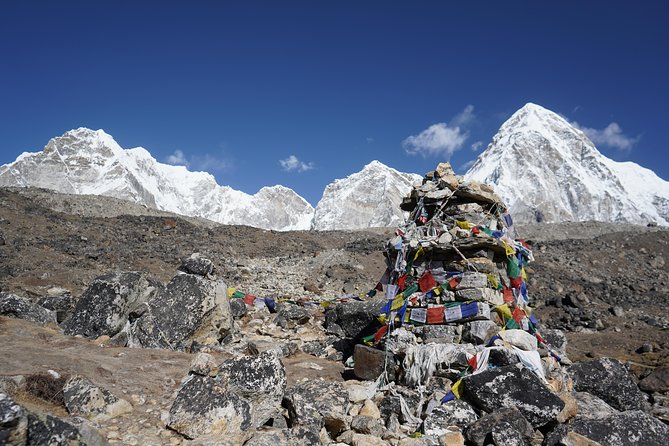
You also pass collections of stones decorated with prayer flags. These memorials give the route a solemn side. The Everest region is beautiful, but it is not a theme park, and the high mountain environment has real risks. The prayer flags and stone markers make that clear.
The footing can be rough here. You should expect to walk slowly, watch where you place your feet, and follow the guide’s instructions. The reward is a stronger sense of entering the high mountain zone, where glaciers, moraine, and enormous peaks shape the route.
Day 9: Everest Base Camp at the heart of the trek
Day 9 is the central goal: the walk to Everest Base Camp. The route includes Thangma Riju, where the itinerary describes a 360-degree view of snowcapped mountains.
One important detail is easy to miss: Mount Everest itself is not seen from every viewpoint on the Base Camp route. At Thangma Riju, the appeal is the broad panorama rather than a perfect Everest view. Your guide can help you understand which peaks you are seeing and how the route fits into the surrounding valleys.
At Everest Base Camp, you reach the world’s highest mountain by foot, with the stop lasting about 30 minutes. The site is a major personal milestone, but it is not the best sunrise viewpoint for Everest. The next morning’s Kala Patthar climb is designed for that.
The approach can be tiring. By this point, you have spent many days walking and are in high mountain terrain. Give yourself permission to move slowly and enjoy the achievement without trying to turn the stop into a rushed photo session.
Day 10: Kala Patthar for the sunrise view
The day begins very early so you can watch darkness give way to morning light from Kala Patthar. The itinerary identifies this as a sunrise viewpoint and allows about 30 minutes at the stop.
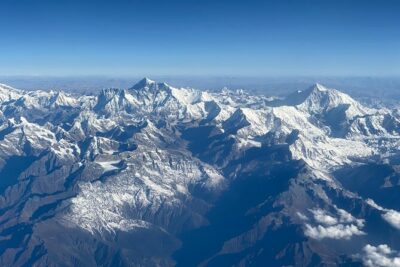
This is likely to be the visual high point of the trek. The early start is uncomfortable, but morning light on Everest and the nearby peaks is the reason many people accept the cold and the pre-dawn walk.
You may see peaks including Lingtr… The supplied itinerary cuts off the full mountain name, so the dependable point is the sunrise setting and the broad Himalayan view. Do not confuse this day with the Base Camp visit. Base Camp is the symbolic destination, while Kala Patthar is the stronger viewpoint for seeing Everest.
Day 11: Returning through Pheriche and Pangboche
The descent follows the route back toward Duglha. You pass through Pheriche, Orsho, and Shomare before reaching Pangboche.
Descending is not automatically easy. The trail can be steep and rocky, and tired legs often make downhill walking awkward. The itinerary specifically calls for controlled movement on later steep sections, so use trekking poles if you have them and follow your guide’s pace.
Pangboche also offers another chance to explore an old Buddhist monastery. That stop gives the return journey some character instead of making it feel like a simple retreat from the mountains.
Day 12: A careful descent to the Dudh Koshi
The trail continues downward through the Khumbu villages. This is described as a steep descent, and you must walk slowly and stay balanced on the rocky terrain.
The route eventually reaches a suspension bridge over the Dudh Koshi. Crossing it is a fitting return to the river system you encountered near the start of the trek. You are moving from high glacier country back toward forest and lower settlements.
This day can be harder than expected because fatigue has accumulated. You may feel eager to finish, but rushing is exactly what the terrain does not reward. Keep your attention on each step.
Day 13: Lukla to Kathmandu and a city evening
The mountain flight from Lukla returns you to Kathmandu. Once back in the city, you have time for shopping and walking around before an evening celebration for completing the trek.
The return flight is an important logistical point. Mountain flights are part of the route, and the schedule is tied to weather conditions. The tour operates in all weather, but that does not mean mountain flying feels predictable. Dress appropriately and keep the day’s expectations flexible.
Kathmandu makes a sharp contrast with the quiet trails. After nearly two weeks of walking, a hot shower, city food, and a casual stroll can feel like part of the reward.
Day 14: Final Kathmandu time and airport transfer
The final day gives you time for shopping and sightseeing around Kathmandu Valley before your scheduled flight from Tribhuvan International Airport.
This is a useful buffer rather than an overloaded sightseeing day. The itinerary promises time in the cultural city, but it does not list specific temples or monuments. Use it for last-minute purchases, a relaxed walk, or any Kathmandu sights you did not manage earlier.
What the $1,350 price really covers
At $1,350 per person, the value depends on how much planning you want to hand over. This is not simply a guided walk. The package includes airport pickup, domestic flights to and from Lukla, local transportation, meals, teahouse accommodation, a guide, and porter support within the organized trek.
Those pieces add up. Arranging the route, finding accommodation each night, coordinating flights, and navigating the trail independently would take time and local familiarity. A guide also helps you avoid getting lost and gives you a direct person to turn to when you need help.
Still, you should read the price carefully. The supplied information does not list every possible personal expense, equipment rental, drinks, shopping, or insurance detail. Ask what is excluded before paying, especially for a high-altitude trip.
The small group is part of the value. If the departure fills to 10 people, you are not paying for a private trek, but you are also not joining a huge procession. Solo trekkers may find the arrangement particularly useful because they get companionship without having to organize a private itinerary.
What the strongest guide feedback means for you
The most consistent positive point is the human support. Biru is praised for excellent guidance and company. Ambar and porter Kanchar are praised for helping a trekker feel safe, while Ramesh is singled out for making a solo trek feel well supported. Green Valley staff Arjun and Raj are also described as responsive with questions and logistical coordination.
That does not guarantee a particular guide on your departure. It does tell you what to ask for before you go: who will lead your group, how many people will be with you, what porter support is included, and how the team handles altitude concerns.
One especially useful detail comes from a trekker who changed plans after feeling unwell before a high pass. The guide adjusted the route rather than treating the original plan as more important than the person’s condition. That is the right attitude in the Himalaya. Your Base Camp goal matters, but your health matters more.
Who should book this Everest Base Camp trek
I would recommend this trip to an active person who wants the classic Everest route but prefers local support and organized logistics. It suits you if you can commit to 14 days, accept teahouse accommodation, handle long walks, and stay patient when weather or fatigue changes the rhythm.
It is also a good fit for a solo trekker who wants a small group and a guide. The route has social contact, cultural interest, famous views, and plenty of quiet walking.
I would hesitate if you want luxury, a relaxed holiday pace, or a schedule that cannot tolerate change. The tour requires strong physical fitness and operates in all weather conditions. You should be comfortable with basic mountain accommodation and demanding terrain.
Cancellation is flexible up to 24 hours before the local start time for a full refund. After that point, the amount paid is not refunded, and changes made within 24 hours are not accepted. A current passport is required, and passport name, number, expiry date, and country are needed for everyone at booking.
Should you book it?
Book this trek if your priority is reaching Everest Base Camp with a guide, a manageable group size, and the major logistics arranged. The route offers much more than a final photograph: Namche’s mountain-town services, Buddhist monasteries, yak-herding country, glacier moraine, prayer flags, Ama Dablam views, and the dawn climb to Kala Patthar.
Skip it if you are not ready for demanding mountain walking or if you need a tightly predictable schedule. For the right person, $1,350 is a sensible price for a supported 14-day route, but the real value lies in the guide’s care and in not having to solve every mountain problem alone.
FAQ
Where does the Everest Base Camp trek begin?
The experience begins with pickup at Tribhuvan International Airport in Kathmandu, Nepal.
How long does the trek last?
The full experience lasts approximately 14 days.
How many people can join the group?
The group has a maximum of 10 participants.
Is airport pickup included?
Yes. An airport representative meets you at Tribhuvan International Airport, and a private tourist vehicle takes you to the hotel.
Are flights to and from Lukla included?
The itinerary includes a flight from Kathmandu to Lukla on Day 2 and a return mountain flight from Lukla to Kathmandu on Day 13.
What accommodation is included?
Teahouse accommodation is included during the trek.
Are meals included?
Yes. Meals are included as part of the organized trek.
Is the trek suitable for all fitness levels?
No. The tour is intended for active and moderately fit people, and the additional information says you should have a strong physical fitness level.
What are the main highlights of the route?
The main highlights include views of several high Himalayan peaks, Namche Bazaar, Buddhist monasteries, Everest Base Camp, and sunrise at Kala Patthar.
Do I need a passport to join?
Yes. You need a current valid passport on the day of travel, and passport details for every participant are required when booking.
Recently added around Kathmandu
- Kathmandu Airport Pickup and Drop-off Services★ 5.0 · 3 reviews
- Kathmandu Paragliding★ 5.0 · 3 reviews
- Kathmandu Chandragiri Cable Car and Swayambhunath Private Tour★ 5.0 · 3 reviews
- Explore The Beauty Of Langtang Valley In 8-Days Trek★ 5.0 · 3 reviews
- Kathmandu: Nightlife and Pub Crawl Tour★ 5.0 · 3 reviews
- Mountain Flight Experience in Nepal★ 4.5 · 3 reviews
- Kathmandu: Momo Making Class with a Local Chef★ 5.0 · 3 reviews
- Everest Base Camp Trek★ 5.0 · 3 reviews
Other Everest Base Camp Treks worth a look
Everest Base Camp Helicopter Tour landing at Everest View Hotel
Read our review →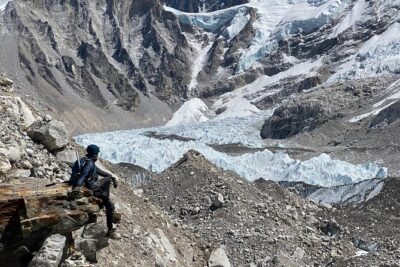
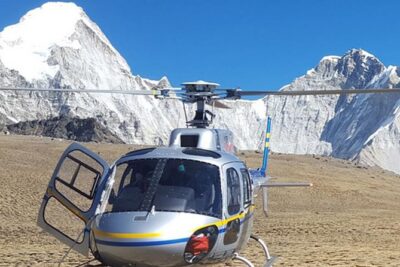
Everest Base Camp Helicopter Tour landing at Hotel Everest View
Read our review →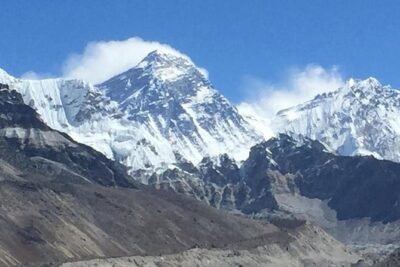
Everest Base Camp Trek with Helicopter Return from Gorakshep to Lukla
Read our review →This tour also appears in