
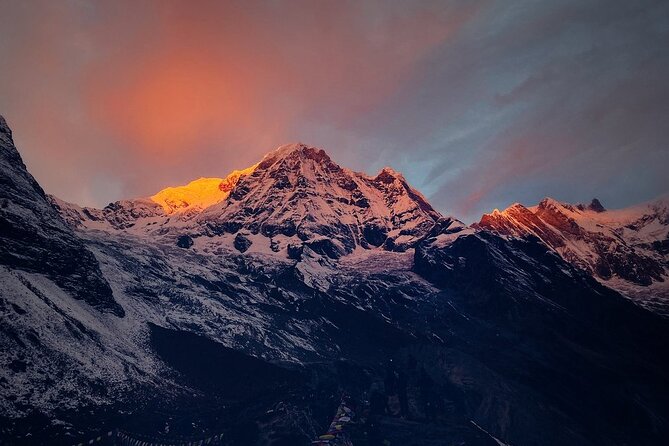
REVIEW · ANNAPURNA CIRCUIT TREKS
Annapurna Circuit Trek with Tilicho Lake
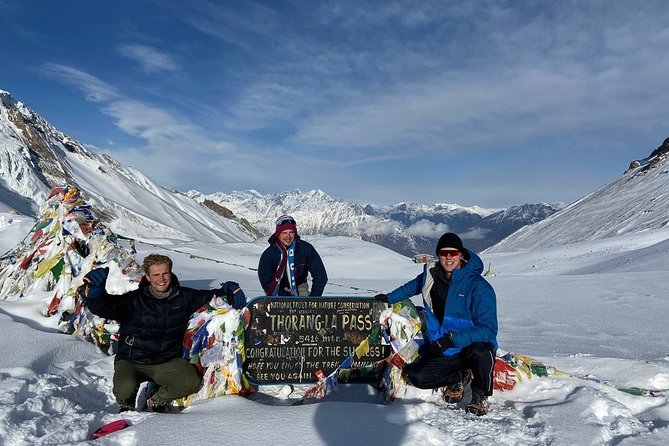
Tilicho Lake is the star of this 16-day Annapurna Circuit trek, but it is only one part of the story. You will pass through pine forests, dry high valleys, Tibetan-influenced villages, the 5,416-meter Thorong La, Muktinath, hot springs, and Poon Hill’s sunrise viewpoint.
I like the practical setup: lodging, meals, permits, guides, and porters are included, and local transport takes care of the awkward gaps. I also like the human side of the trip. Guides such as Hari Gurung, Dev, and Suresh have been praised for steady support, mountain explanations, and good humor. The main caution is simple: this is a hard trek, not a gentle walking holiday. Altitude, cold, early starts, basic tea houses, and long road rides all come with the deal.
Key points to know before you book
- Tilicho Lake adds a demanding high-altitude detour to the classic Annapurna Circuit.
- Thorong La is the hardest day, with a very early start and a high point of 5,416 meters.
- Three daily meals, tea house lodging, permits, and guide support are included, which simplifies planning.
- Transport covers the rough beginning and end sections, including Kathmandu to the trailhead, Muktinath to Tatopani, and Pokhara to Kathmandu.
- Poon Hill gives you a final sunrise reward, with views toward Annapurna, Dhaulagiri, Machhapuchhre, and Manaslu.
- A group of up to 15 people keeps the price manageable, but walking speed and comfort levels may vary.
Why Tilicho Lake changes the Annapurna Circuit
The standard Annapurna Circuit already gives you a powerful mix of mountain scenery and village life. Adding Tilicho Lake makes the route more demanding, but it also gives you a quieter and more dramatic high-altitude goal before the main pass.
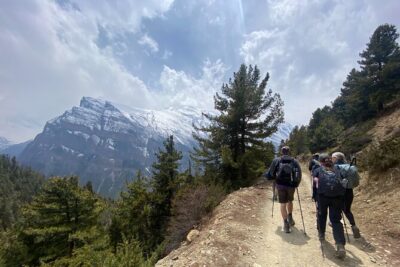
The trail moves from river valleys and farmland into colder, drier country. You see waterfalls near Tal, thick stands of pine, fir, oak, maple, rhododendron, birch, and magnolia, then open mountain country where the air feels thin and dry. That change happens over several days, giving you time to adjust.
Tilicho Lake sits at about 4,919 meters. The walk to it includes a steady two to three-hour climb from base camp, and the group starts early to avoid the stronger afternoon wind. The lake is known locally as the Great Ice Lake, and the high setting gives it a stark beauty rather than the easy-access feel of a sightseeing stop.
You should see this detour as a serious mountain day, not a bonus photo stop. The route includes steep sections and landslide areas. A guide helps with the trail and timing, but no guide can remove the need for fitness and careful pacing.
More Annapurna Circuit Treks in Kathmandu
- Annapurna Circuit Trek
★ 5.0 · 94 reviews - Annapurna Circuit Trek
★ 5.0 · 35 reviews - Annapurna Circuit Trek
★ 5.0 · 34 reviews
Days 1 to 4: From Kathmandu to the upper Marsyangdi Valley
Day 1: Kathmandu to Besishar or Syange
The first day is mostly a road day. You drive for roughly six to seven hours, covering about 190 kilometers toward Besishar, with the included route also described as continuing to Syange. Expect views of villages, farms, rivers, and distant mountain ranges rather than a full day on foot.
The transport matters here. The road transfer saves your legs for the trek, though mountain roads can make a long ride feel longer than the mileage suggests. An air-conditioned vehicle is included for the relevant transfers, while local road transport is used later in the trip.
Day 2: Tal and the entrance to Manang
After breakfast, you cross a suspension bridge and climb toward Tal, a village associated with the Manang region. Waterfalls tumble into the river, and sandy riverbanks give the valley a different feel from the forested sections ahead.
This is your first real walking day, and the steep climb is a useful reminder that the route gains altitude quickly. Take it slowly. The goal is not to arrive first, but to keep your breathing controlled and your legs fresh for the week ahead.
More Hiking Tours in Kathmandu
- Everest Base Camp Trek – 14 Days
★ 5.0 · 1,499 reviews - Everest Base Camp Trekking
★ 5.0 · 485 reviews - Nagarkot Sunrise View and Day Hiking from Kathmandu
★ 5.0 · 471 reviews - Everest Base Camp Trekking – 13 Day
★ 5.0 · 365 reviews
Day 3: Forests and Chame
The trail follows a river through pine, fir, oak, and maple forest toward Chame, the administrative center of Manang District. Lamjung and other mountain views begin to open above the trees.
I like this part because it gives you shade and changing scenery before the route turns more exposed. Chame is not just a bed for the night. It marks a shift from lower valley walking to the more dramatic country that follows.
Day 4: Paungda Danda and Pisang
The path enters a steep, narrow valley and brings you to the huge Paungda Danda rock face, which rises about 1,500 meters above the river. You also get views of Annapurna II and Pisang Peak.
This is one of the route’s memorable geological moments. The rock wall makes the valley feel enclosed, while the peaks above it remind you how quickly the scale of the trek is changing. The day is active, but the scenery does much of the work of keeping you interested.
Days 5 and 6: Pisang views and a vital rest day in Manang
Day 5: Upper Pisang to Manang
The upper trail through Geru is the better choice for views. As you climb, you can see Annapurna II, Annapurna III, Annapurna IV, Gangapurna, Tilicho, and Pisang Peak.
You will notice the air becoming colder, drier, and harsher. That is exactly why this day should not be rushed. The high route gives you more mountain scenery, but it also adds climbing. Your guide sets the pace, and you should speak up early if you feel headache, nausea, unusual fatigue, or other altitude symptoms.
Day 6: Manang acclimatization
This is an important day without a full relocation. You explore Manang, visit the monastery, and hike toward Gangapurna Lake and Base Camp. The surrounding views include Annapurna III, Tilicho, Pisang, and Chulu peaks.
I consider this rest day one of the package’s strongest features. You are still active, but sleeping at the same altitude gives your body time to adjust before Tilicho Lake and Thorong La. Many rushed itineraries cut rest days first. That may make a trip look shorter, but it is not a smart bargain in high country.
Days 7 to 9: Khangsar and the walk to Tilicho Lake
Day 7: Manang to Khangsar
The upper route descends toward a river, crosses it, and continues through conifer forest to the Tibetan-influenced settlement of Khangsar. The walk takes about three hours to the village, followed by more walking afterward according to the route plan.
The setting becomes more remote and spare. Khangsar is the staging point for the Tilicho section, and the change in village style and surrounding terrain helps you feel that you are leaving the main valley behind.
One itinerary entry labels this day Mardi Himal, which does not fit the Annapurna Circuit route described elsewhere. Treat the detailed Khangsar and Tilicho plan as the useful guide, and confirm the final day-by-day schedule with Discovery World Trekking before departure.
Day 8: Khangsar to Tilicho Base Camp
The path crosses a landslide area and passes striking rock formations before reaching Tilicho Base Camp. The walk itself is described as relatively easy, but the terrain can still feel exposed and rough.
You should expect simple accommodation at or near the base camp. The point of this night is position, not comfort. It lets you start the lake walk early, when the wind is usually more manageable.
Day 9: Tilicho Lake
You leave early for the lake. The climb is steep and consistent, taking about two to three hours, and the payoff is a broad high-altitude lake surrounded by snow-covered mountains and Tilicho Peak.
This is a demanding out-and-back style day in practical terms, so energy management matters. Carry water, dress in layers, and keep your pace steady. The weather can change fast at this height, and the early departure is not just a scheduling quirk.
Tilicho Lake is likely to be the emotional high point for many people on the route. It is a remote natural goal, reached on foot, and it gives the trek a stronger sense of achievement than a circuit that simply follows the main valley.
Days 10 to 12: Thorong Phedi and the famous high pass
Day 10: Across Khangsar and toward Yak Kharka
You descend toward Khangsar, pass Tare Gumba, an old monastery, and follow a rock wall toward the Thorong Khola valley. The trail crosses a bridge, climbs to a plateau, and continues toward Yak Kharka.
After the Tilicho detour, this day reconnects you with the main circuit. It is a useful transition, though the combination of descent, exposed trail, and renewed climbing can leave your legs tired.
Day 11: Yak Kharka to Thorong Phedi
The route climbs to Thorong Phedi, a small and busy settlement below the pass. Mountain views include Gundang, Syagang, Thorung Peak, and Khatungkan.
The short list of accommodation at high points means tea houses can feel basic and busy. That is part of the tradeoff for trekking without carrying camping equipment. You get a bed, meals, and a guided route, but not hotel comfort.
Day 12: Thorong La to Muktinath
This is the trek’s toughest day. You wake around 3 a.m. to cross Thorong La, reaching 5,416 meters, one of the world’s highest trekking passes.
The early start helps you reach the pass before afternoon weather and wind become worse. The climb is slow and physically taxing. You need patience more than speed. Once you reach the top, the descent to Muktinath is a major relief, though downhill walking can be hard on tired knees.
Muktinath is both a mountain destination and an important religious site. Visiting the temple after crossing the pass gives the day a strong sense of arrival. You have moved from the wet, forested side of the Annapurna range into the drier Mustang side.
Days 13 to 16: Muktinath, hot springs, and Poon Hill
Day 13: Muktinath to Tatopani
You visit Muktinath, then take public transport toward Tatopani. This vehicle section saves a great deal of time and avoids extending an already long trek.
Tatopani is known for its natural hot springs. Soaking there is a welcome change after the high pass and long descent. It is one of the trip’s best comfort stops because the activity is simple, local, and directly tied to the physical demands of the route.
Day 14: Tatopani to Ghorepani
You climb through Sikha and Chitre, villages associated with the Thakali people. Terraced farmland and mountain views accompany the route, while the vegetation becomes greener again, with rhododendron, birch, and magnolia forests.
This day shows how sharply Nepal’s ecology changes across the circuit. You have gone from high, dry valleys back into forest and cultivated hillsides. The climb to Ghorepani is still substantial, so do not mistake the lower altitude for an easy finish.
Day 15: Poon Hill sunrise
You climb to Poon Hill at 3,210 meters before sunrise. From the viewpoint, you can see the Annapurna and Dhaulagiri massifs, Machhapuchhre, Manaslu, and surrounding rice terraces.
Poon Hill is a popular viewpoint, but popularity has a reason. It gives you a wide final view after days of close valley walking and high-pass effort. Photographers will appreciate the changing light, while everyone else gets a clear visual reminder of the distance covered.
Day 16: Return to Kathmandu
After breakfast, you take a tourist bus back to Kathmandu. The package also offers a 225-minute flight option, but that flight is not included in the price.
The bus keeps the listed cost lower, though it makes the final day a long travel day. If you value time more than price, ask about the flight before booking and budget for it separately.
What the $1,093 price really covers
At $1,093, this is not simply a guided walking route. The package includes tea house or lodge accommodation, breakfast, lunch, and dinner during the trek, plus a hotel night in Pokhara with breakfast. It also covers the Annapurna Conservation Area Permit and TIMS card.
You also receive a licensed guide, porters, and their wages, meals, insurance, lodging, and transport. That is a meaningful part of the value. Hiring support independently can leave you sorting out permits, road transfers, food, and staffing on your own.
The included transport covers Kathmandu to the trailhead area, Muktinath to Tatopani, and Pokhara to Kathmandu by tourist bus. Government and local taxes, rescue assistance for a complicated health condition, extra dietary requirements, a farewell dinner, and a completion certificate are also listed.
The weak point is the vague exclusion wording. Anything not specifically listed as included is extra, so you should confirm personal expenses, drinks, equipment, tips, insurance, and the optional flight before paying. Do not assume every cost in Nepal is covered just because the main package is broad.
Guides, porters, and the group setup
The group can include up to 15 people. That is small enough for shared support, but large enough that walking speeds and preferred rest times may differ.
The guide is especially valuable on the Tilicho and Thorong La sections. You are not just paying for directions. You are paying for route judgment, pacing, altitude awareness, and help with daily logistics. Guides named in the supplied trip details include Hari Gurung, Dev, Suresh, and Kersing, while porter support has included Damar, Sangkar, Bikesh, Asis, Monis, Rupesh, and Surya. Your assigned team may be different.
A recurring strength is the personal care built into the service. Guides have helped explain local culture and mountain names, while porters have been praised for warmth, support, and small thoughtful touches such as preparing fruit plates. That matters on a 16-day trip, when good spirits can be as useful as strong legs.
Food, beds, permits, and practical comfort
Three meals a day are included, listed as 16 breakfasts, 16 lunches, and 16 dinners. Extra dietary requirements are catered for, but you should state those needs clearly before the trek.
Tea house accommodation is practical rather than luxurious. You get a place to sleep along the route without carrying camping gear, but standards can vary at high altitude. The included Pokhara hotel night offers a more settled stop before the final bus ride.
Mobile tickets and pickup are offered, and the route is near public transportation. Confirmation is sent within 48 hours, subject to availability. The activity requires moderate physical fitness, although the route itself is best suited to fit, active hikers.
The operator also lists assistance arranging rescue if a serious health condition develops. You still need suitable personal travel insurance, and you should understand what your policy covers at high altitude before you go.
Who should book this Annapurna trek?
You should consider this trip if you want the classic Annapurna Circuit with a major side trip, prefer a guided group, and like having meals, permits, lodging, and road transfers arranged in advance.
It fits hikers who can handle long walking days, steep climbs, early starts, basic accommodation, and changing weather. It also suits people who want a mix of mountain scenery and village life instead of a trip focused only on reaching a base camp.
I would think twice if you dislike shared rooms, rough roads, simple meals, or group pacing. I would also avoid booking it on impulse if you have no recent hiking experience. The 5,416-meter pass and the Tilicho climb are not forgiving places to discover that your fitness plan was too optimistic.
The non-refundable policy is another serious point. Once booked, the experience cannot be changed or refunded for personal reasons. If poor weather cancels the trip, you are offered another date or a full refund. The same applies if the minimum group size is not reached.
Should you book it?
I would book this trek if your priority is a well-organized, high-altitude Annapurna route with Tilicho Lake included. The strongest value comes from the practical bundle: permits, meals, tea houses, guides, porters, road transport, and a rest day in Manang.
Before you pay, confirm the trailhead wording, the exact guide and porter arrangement, personal expenses, and the flight option from Pokhara. If you are fit, patient, and ready for a demanding mountain journey, this itinerary gives you an impressive amount of Nepal in 16 days. If you want comfort or flexibility, choose a shorter and less strenuous route instead.
FAQ
How long does the Annapurna Circuit with Tilicho Lake take?
The trek lasts approximately 16 days, beginning and ending in Kathmandu.
What is the highest point on the trek?
The highest point is Thorong La Pass at 5,416 meters.
How difficult is this trek?
The experience requires a moderate level of physical fitness and is best suited to fit, active people. The Tilicho Lake climb and Thorong La crossing are the most demanding sections.
Is Tilicho Lake included?
Yes. The itinerary includes a walk to Tilicho Lake after an overnight stay near Tilicho Base Camp.
Are meals included?
Yes. Breakfast, lunch, and dinner are included during the trek, listed as 16 breakfasts, 16 lunches, and 16 dinners.
Is accommodation included?
Yes. Tea house or lodge accommodation with meals is included during the trek. One night in a selected Pokhara hotel with breakfast is also included.
Are permits included?
Yes. The Annapurna Conservation Area Permit and Trekkers Information Management System card fee are included.
Is transportation included?
Yes. Included transport covers the journey from Kathmandu to the trailhead area, public transportation from Muktinath to Tatopani, and a tourist bus from Pokhara to Kathmandu. A 225-minute flight from Pokhara to Kathmandu is available as an option but is not included.
What happens if the trek is canceled because of bad weather?
You are offered a different date or a full refund if poor weather causes the experience to be canceled. The same choice applies if the minimum number of participants is not reached.
Recently added around Kathmandu
- Kathmandu Paragliding★ 5.0 · 3 reviews
- Kathmandu Airport Pickup and Drop-off Services★ 5.0 · 3 reviews
- Kathmandu Chandragiri Cable Car and Swayambhunath Private Tour★ 5.0 · 3 reviews
- Explore The Beauty Of Langtang Valley In 8-Days Trek★ 5.0 · 3 reviews
- Kathmandu: Nightlife and Pub Crawl Tour★ 5.0 · 3 reviews
- Mountain Flight Experience in Nepal★ 4.5 · 3 reviews
- Kathmandu: Momo Making Class with a Local Chef★ 5.0 · 3 reviews
- Everest Base Camp Trek★ 5.0 · 3 reviews
Other Annapurna Circuit Treks worth a look
15-Day Private Annapurna Circuit Trek from Kathmandu
Read our review →
Annapurna Circuit Trek with Tilicho Lake (16 Days)
Read our review →This tour also appears in