
REVIEW · ANNAPURNA CIRCUIT TREKS
Annapurna Circuit Trek
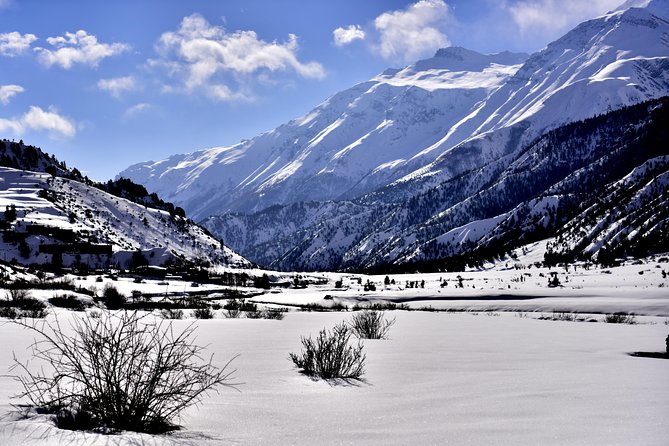
The big draw here is the Annapurna Circuit, a 14-day walk from humid river valleys to cold, high Himalayan passes and the dry country beyond. You cross Thorong La at 5,416 meters, sleep in simple teahouses, visit Muktinath, soak at Tatopani, and finish with Poon Hill before returning to Kathmandu.
I like the route’s changing scenery and the fact that permits, meals, transport, lodging, and a licensed guide are arranged for you. I also like the private format, which gives your group more say over pace and daily needs. The catch is serious: this is a demanding high-altitude trek, with long walking days, basic rooms, cold nights, and a particularly tough pass-crossing day.
Key points to know before booking
- Thorong La is the physical high point: The pass reaches 5,416 meters, and the climb from Thorong Phedi to Muktinath takes about seven to eight hours.
- The route changes character every few days: You move from forest and waterfalls near Jagat to dry, open valleys around Manang and Muktinath.
- Your guide matters: Guides named in past trips include Santosh, Ganesh, Rabin, Sandip, Chakra, and Ganesh Ji, though your assigned guide may differ.
- Accommodation is practical, not luxurious: You stay in teahouses, with three standard meals each trekking day.
- Some days use road transport: The itinerary includes long drives from Kathmandu to Jagat, Jomsom to Tatopani, Nayapul to Pokhara, and Pokhara to Kathmandu.
- Extra costs add up: Insurance, water, showers, charging, laundry, tips, and a porter are not included.
Why this Annapurna route remains such a big deal
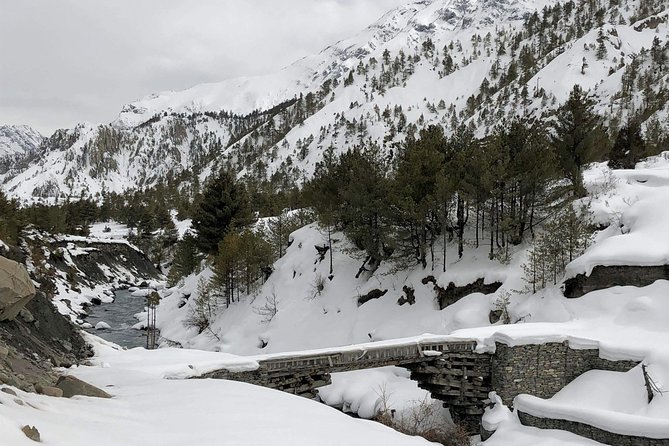
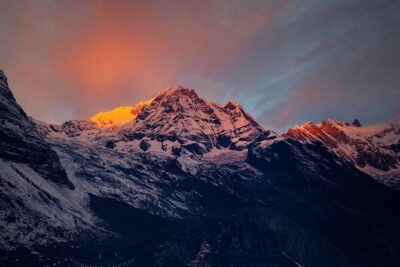
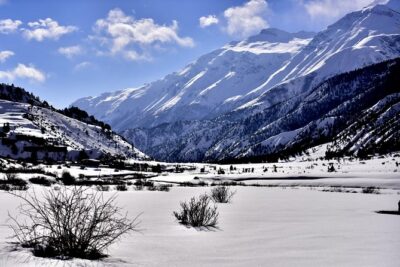
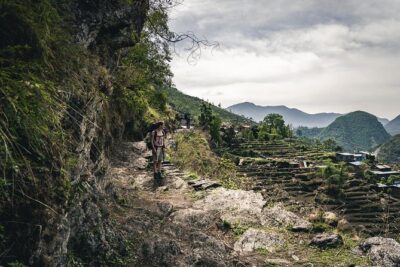
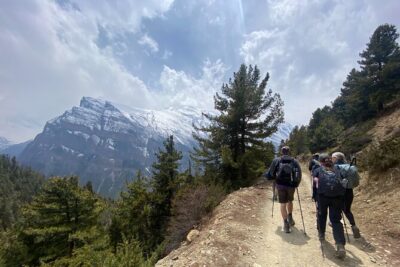
I like the Annapurna Circuit because it does not give you the same view for two weeks. The route rises through green hills, pine forest, waterfalls, and river valleys before reaching the high, dry country around Manang. After Thorong La, the scenery changes again, with Muktinath and Jomsom leading toward warmer valleys and hot springs.
That variety is the main value of the trip. You are not simply walking toward one viewpoint. You are crossing a large slice of Nepal, passing through villages and communities with different traditions, climates, and daily rhythms.
The guided format removes much of the organizing work. Your guide handles the route, permits, timing, and basic logistics while you concentrate on walking. The operator provides Annapurna Conservation Area permits, TIMS registration, a trekking map, a first aid kit, transport on the listed road sections, and teahouse accommodation.
At $1,175, the price is reasonable for a private 14-day package that includes lodging, meals, guide services, permits, and several transfers. It is not an all-inclusive holiday. You still need to budget for insurance with high-altitude rescue cover, drinks, bottled or boiled water, showers, laundry, phone use, battery charging, tips, and possibly a porter.
More Annapurna Circuit Treks in Kathmandu
- Annapurna Circuit Trek with Tilicho Lake
★ 5.0 · 368 reviews - Annapurna Circuit Trek
★ 5.0 · 35 reviews - Annapurna Circuit Trek
★ 5.0 · 34 reviews
Days 1 and 2: Kathmandu to Jagat, then into the hills
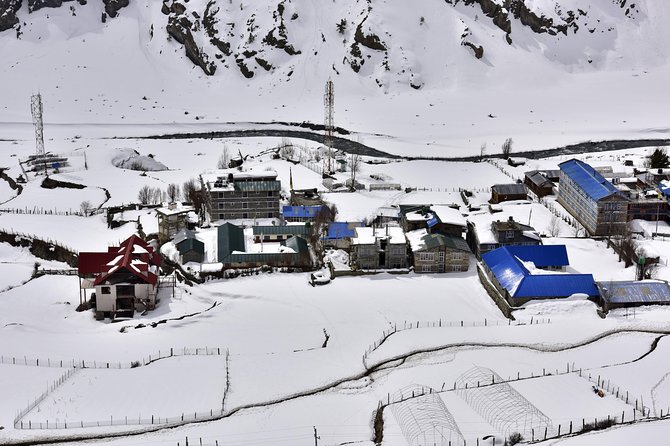
Day 1 begins with a long road journey from Kathmandu to Jagat via Besisahar. Allow eight to nine hours. This is not a scenic train ride or a quick airport transfer. It is a full travel day, and road conditions can affect the feel of the journey.
Jagat sits at about 1,100 meters and is the starting point for the walk. On Day 2, you trek to Dharapani at 1,960 meters, taking roughly six to seven hours. This first walking day introduces the rhythm of the circuit: steady uphill sections, river valleys, village paths, and simple overnight accommodation.
The jump in altitude is noticeable but still moderate compared with what comes later. Use this day to settle into your boots, walking pace, and meal schedule. A private group helps here because you can discuss breaks and pace with your guide instead of being tied to a large group.
Days 3 and 4: Dharapani to Chame and Pisang
From Dharapani, the route continues to Chame on Day 3. Chame sits at 2,710 meters, and the walk takes about five to six hours. You are now gaining height at a steady rate, so do not treat this as a race.
The next day brings another five to six hours of walking to Pisang at about 3,300 meters. The route is becoming colder and more mountainous, and the surrounding peaks begin to feel much closer. Forested sections still appear, but the overall setting is more open and rugged than it was near Jagat.
Your accommodation is in teahouses, which means you should expect a basic place to sleep rather than hotel-style comfort. The practical advantage is that rooms and meals are handled along the route. The tradeoff is that personal expenses, hot showers, drinks, and charging are extra.
Day 5: Pisang to Manang, a key change in scenery
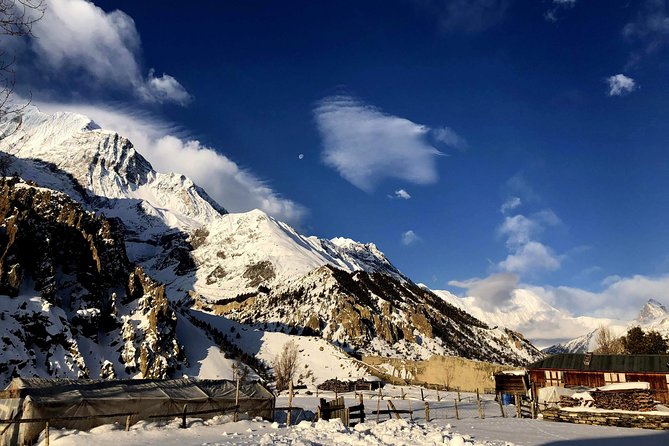
Day 5 takes six to seven hours to reach Manang at 3,540 meters. This is one of the most important days for adjusting to the altitude and the high-country setting.
Manang is used as the base for an acclimatization day, so you have time to slow down. The itinerary does not list a specific side hike, but your guide can help shape the day around walking, rest, and adjusting to the thinner air.
I consider this rest day essential rather than wasted time. The next stages rise above 4,000 meters, and the pass day reaches 5,416 meters. You will get more from the trek if you use Manang to recover instead of treating every available hour as a chance to push farther.
More Hiking Tours in Kathmandu
- Everest Base Camp Trek – 14 Days
★ 5.0 · 1,499 reviews - Everest Base Camp Trekking
★ 5.0 · 485 reviews - Nagarkot Sunrise View and Day Hiking from Kathmandu
★ 5.0 · 471 reviews - Everest Base Camp Trekking – 13 Day
★ 5.0 · 365 reviews
Days 6 to 8: Acclimatization and the high country
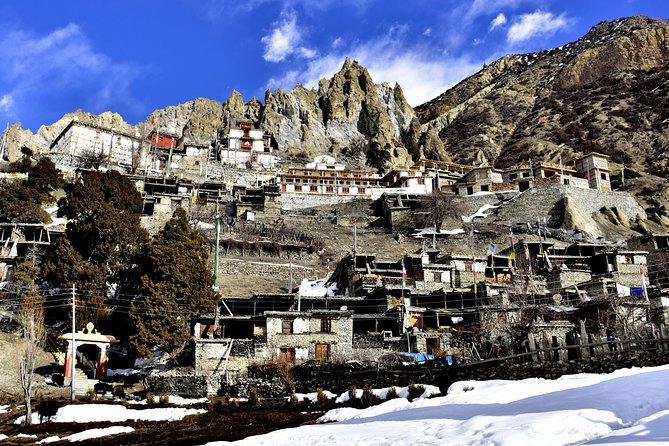
Day 6 is spent in Manang. The details of the day are flexible, but the purpose is clear: give your body time at altitude before continuing higher.
On Day 7, you trek from Manang to Yak Kharka, reaching about 4,120 meters after four to five hours. The walking time is shorter than earlier days, but the altitude makes the day demanding. You may find the pace feels slow, and that is exactly how it should be.
Day 8 continues from Yak Kharka to Thorong Phedi at roughly 4,450 meters. This takes another four to five hours. Thorong Phedi is the staging point for the pass crossing, so the day is less about distance than preparation.
Cold is a real concern here. One account describes nighttime temperatures dropping to around minus 20 degrees Celsius, with water freezing in a normal bottle. That detail is a useful warning, even though conditions vary. Bring genuinely warm clothing, protect water from freezing, and do not assume that a standard city winter jacket will be enough.
Day 9: Crossing Thorong La to Muktinath
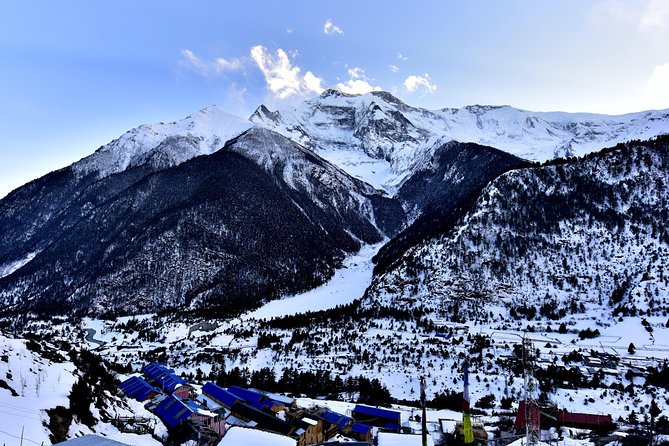
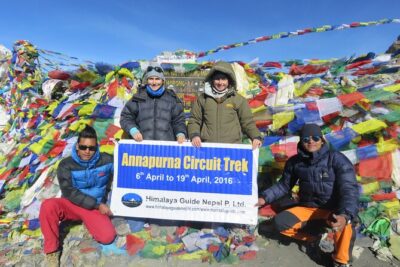
This is the trek’s hardest and most memorable day. You leave Thorong Phedi, climb to Thorong La at 5,416 meters, then descend to Muktinath at 3,802 meters. The full day takes about seven to eight hours.
The challenge is not just the distance. You are walking at extreme altitude, often in cold and wind, and then descending a large amount afterward. Your guide’s pacing and judgment matter greatly here. Past trips have singled out guides including Ganesh Ji for encouragement during the pass crossing, while guides such as Santosh and Rabin have been praised for keeping trekkers informed and well supported.
You should approach this day with patience. Small steps, regular rests, warm layers, and careful attention to how you feel are more useful than trying to prove anything. The included first aid kit is helpful, but it is not a substitute for travel and rescue insurance.
Muktinath gives you a strong change of mood after the pass. It is an important pilgrimage site, and its location at the meeting point of Himalayan and lower-elevation environments makes it a memorable stop even for people who are not visiting for religious reasons.
Days 10 and 11: Muktinath, Jomsom, and Tatopani
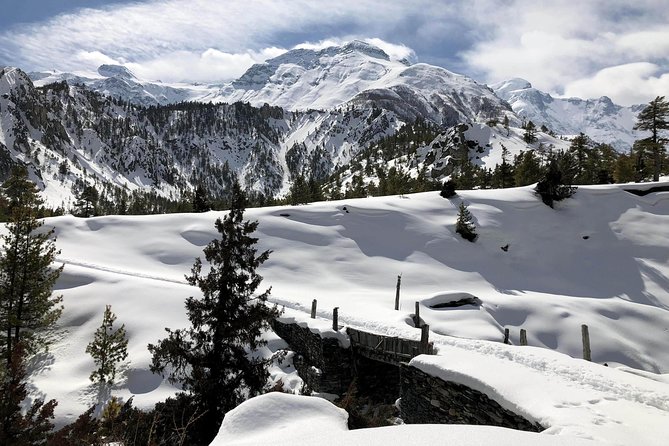
Day 10 takes five to six hours from Muktinath to Jomsom at 2,743 meters. The route continues the descent and leads into a drier part of the Annapurna region.
On Day 11, you drive from Jomsom to Tatopani, a journey of about four to five hours. The road section is included in the package, which saves you from arranging another local transfer. It also means the trip is not a pure walking expedition. If you want every mile to be on foot, this itinerary will not match that preference.
Tatopani sits at 1,290 meters and is known for its natural hot spring. After the cold of the pass, this is a welcome lower-altitude pause. The spring is one of the route’s simple pleasures, though you should remember that any personal extras, including showers or other services, are generally your responsibility.
Days 12 and 13: Tatopani to Ghorepani and Poon Hill
Day 12 is a long seven to eight-hour climb from Tatopani to Ghorepani at 2,750 meters. After the previous day’s drive and hot spring, your legs return to the trail quickly.
Ghorepani is the base for the early hike to Poon Hill. On Day 13, you start early, climb to Poon Hill at 3,210 meters, then descend to Nayapul before taking a taxi to Pokhara. The walking portion takes about seven to eight hours in total.
Poon Hill gives the trek a strong final viewpoint and a sunrise start. It also makes the route feel complete: after the severe height of Thorong La, you finish with a more accessible mountain panorama before descending toward Pokhara.
The day is still long. An early start, a climb, a long descent, and a taxi transfer require energy. Keep breakfast plans and clothing ready the night before so you are not sorting gear in the dark.
Day 14: Pokhara back to Kathmandu
The final day is a drive from Pokhara, at about 822 meters, to Kathmandu, at roughly 1,400 meters. The itinerary gives no exact travel time, so plan for this to be another substantial road day rather than a quick finish.
This return transfer is useful because it completes the package without asking you to arrange your own onward travel. It also means your 14 days include several transport-heavy sections. I would choose this trip for the complete circuit experience, not for a nonstop walking schedule.
Guides, group style, and the human side of the trek
This is a private activity, so only your group participates. That is a meaningful advantage on a route where fitness, altitude response, and pace can vary from person to person.
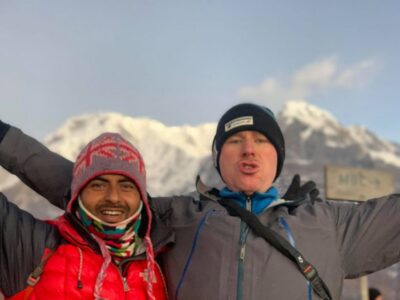
The guide is not just there to point at the trail. You need someone who can help with timing, altitude concerns, route decisions, and communication at teahouses. Several named guides have received strong praise for patience and care, including Santosh, Ganesh, Rabin, Sandip, and Chakra, also called CK. Chakra has been especially appreciated for explaining local traditions, mountain culture, and some Nepali language.
You should not assume you will receive one of those exact guides, but the pattern gives you a useful question to ask before booking: who will lead your departure, and how much experience does that person have above Thorong La?
Porters are not included. You can request one, but the cost is extra. If you are not used to carrying a pack for six to eight hours at altitude, I would seriously consider arranging porter support rather than waiting until the trek has begun.
Meals, lodging, and what the $1,175 price really covers
Three standard meals are included on trekking days: breakfast, lunch, and dinner. That takes care of the main food budget, but drinks and extras are not covered.
Teahouse lodging is included. These are simple mountain accommodations, chosen for location and practicality. At higher elevations, comfort and facilities can be basic, and cold nights are part of the deal.
The package also includes bus transport from Kathmandu to Jagat and from Jomsom to Tatopani, private transport from Nayapul to Pokhara, permits, TIMS fees, a guide, a map, a first aid kit, and government tax. That is a solid bundle for the price.
The costs left outside the package are important. Plan for travel and rescue insurance, phone calls, laundry, bar bills, battery charging, showers, bottled or boiled water, guide and porter tips, and any porter service. The overall value is good if you want one company to handle the main structure, but you should not arrive with only $1,175 and expect no further spending.
Who should book this trek
You should consider this trek if you want a classic Nepal route with strong scenery, village contact, a major high pass, and a guide managing the practical details. It suits people with moderate physical fitness who are prepared for repeated walking days and high altitude.
It is also a good match for solo visitors who prefer not to organize a major trek alone. The private format gives you a smaller setting, while the guide provides support and local context.
I would hesitate to recommend it to anyone seeking comfort, short walks, or a fixed low-risk schedule. The cold can be severe, the pass crossing is strenuous, and several transport days are long. Anyone booking should carry proper insurance that includes rescue and check that their fitness and equipment match the route.
Should you book the Annapurna Circuit Trek?
Book it if you want a carefully arranged route through Nepal’s changing mountain country and are willing to work for the views. The best parts are the variety of the scenery, the cultural stops, the private guide support, and the dramatic crossing of Thorong La.
Before paying, confirm the assigned guide, ask about porter arrangements, and budget for all excluded costs. If you are fit, prepared for basic teahouses and cold nights, and interested in a full circuit rather than a luxury holiday, the $1,175 price offers good value.
Cancellation is flexible only with early notice: a full refund requires cancellation at least six full days before the start time. A cancellation two to six days ahead receives 50 percent, while cancellations less than two days ahead are nonrefundable.
FAQ
How long does the Annapurna Circuit Trek take?
The advertised duration is approximately 14 days, beginning and ending with transport between Kathmandu and the Annapurna region.
What is the highest point on the route?
The highest point is Thorong La, at 5,416 meters or about 17,769 feet.
Is transportation included?
Yes. Bus transportation from Kathmandu to Jagat and from Jomsom to Tatopani is included. Private transportation from Nayapul to Pokhara is also included, followed by the listed drive from Pokhara to Kathmandu.
Where do you stay during the trek?
Teahouse accommodation is included during the trekking portion of the trip.
Are meals included?
Three standard meals are included during the trek: breakfast, lunch, and dinner.
Is a guide included?
Yes. The package includes a government-licensed, experienced guide. The activity is private, so only your group participates.
What is not included in the price?
Travel and rescue insurance, personal expenses, phone calls, laundry, bar bills, battery charging, bottled or boiled water, showers, tips, and porter services are not included.
Recently added around Kathmandu
- Kathmandu Airport Pickup and Drop-off Services★ 5.0 · 3 reviews
- Kathmandu Paragliding★ 5.0 · 3 reviews
- Explore The Beauty Of Langtang Valley In 8-Days Trek★ 5.0 · 3 reviews
- Kathmandu Chandragiri Cable Car and Swayambhunath Private Tour★ 5.0 · 3 reviews
- Kathmandu: Nightlife and Pub Crawl Tour★ 5.0 · 3 reviews
- Kathmandu: Momo Making Class with a Local Chef★ 5.0 · 3 reviews
- Mountain Flight Experience in Nepal★ 4.5 · 3 reviews
- Everest Base Camp Trek★ 5.0 · 3 reviews
Other Annapurna Circuit Treks worth a look
15-Day Private Annapurna Circuit Trek from Kathmandu
Read our review →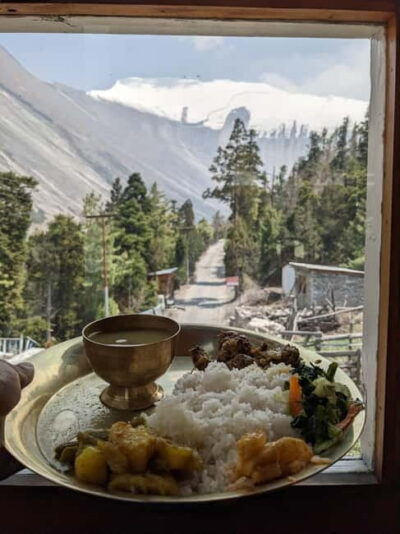
Annapurna Circuit Trek with Tilicho Lake (16 Days)
Read our review →This tour also appears in