
REVIEW · ANNAPURNA CIRCUIT TREKS
Kathmandu: 10-Day Adventurous Annapurna Circuit Trek
Thorong La Pass is the big prize here: at 5,416 meters, it gives you a real Himalayan challenge in a compact 10-day route. I like the way the trek builds slowly through forests, villages, and high pastures before the pass, and I like the careful support from guides such as Keshab, Prakash, Mahesh, and Milani.
You also get a useful mix of Nepalese culture, basic tea houses, sacred Muktinath, and the dry Mustang region. The drawback is the final pass day, which lasts up to 12 hours, while the long road transfers on Days 1 and 10 can be tiring and rough.
Key points to know before you book
- Thorong La Pass at 5,416 meters: The hardest and most memorable day comes after several days of steady ascent.
- A gradual altitude plan: Manang gets a full acclimatization day before the route climbs above 4,000 meters.
- A real change of scenery: You move from forest and river valleys to alpine pasture, then dry Mustang terrain.
- Guide-led private group: An English-speaking guide handles permits, tea houses, meals, route decisions, and transport arrangements.
- Nine nights on trek, one night in Pokhara: Basic guesthouses come first, followed by a tourist-standard hotel and farewell dinner.
- Good support for practical problems: Luggage can be stored, and the organizers have helped arrange sleeping bag returns and bag transfers between Kathmandu and Pokhara.
Why this Annapurna Circuit route is worth your time
The Annapurna Circuit works because it keeps changing. You do not spend 10 days looking at the same kind of mountain view. The route begins with a long road journey, then moves through river valleys and pine forests before reaching Manang’s broad high valley. After that, the trees thin out, the air gets colder, and the route turns into a serious high-altitude trek.
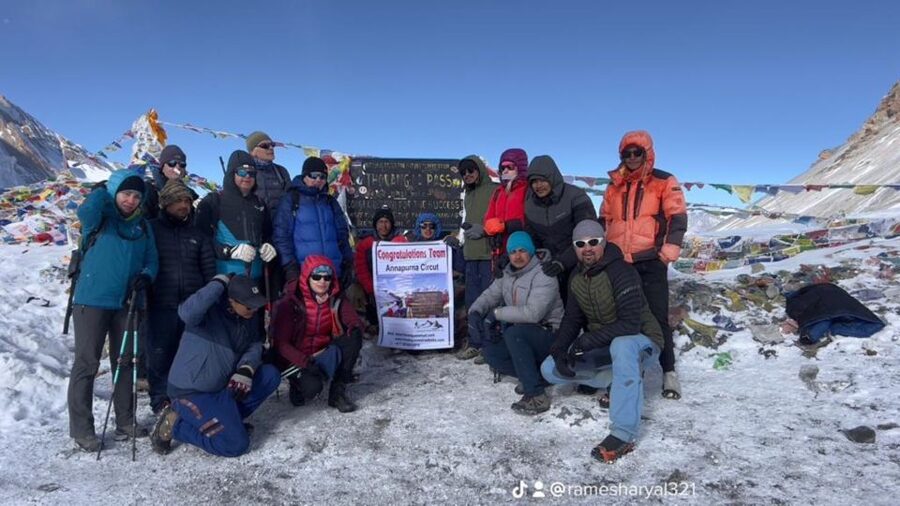
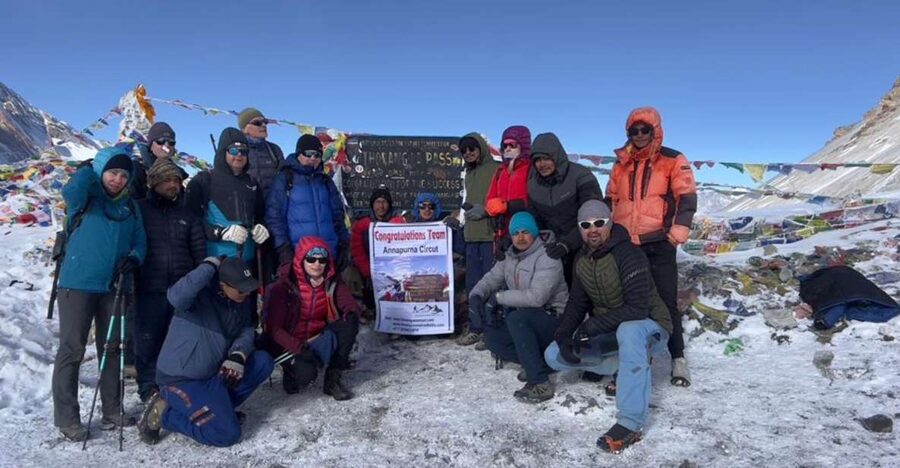
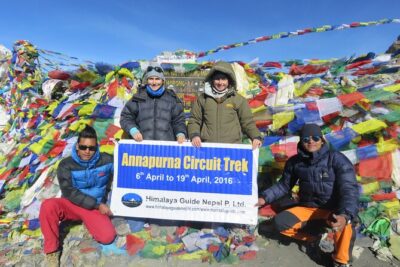
The emotional center is Thorong La Pass. You earn it over several days rather than reaching it by vehicle or taking a short walk from a nearby road. At the top, you get sweeping mountain views, but the bigger reward is the feeling that you have crossed a major Himalayan route under your own power.
At $467 per person, the price is attractive for a guided 10-day trip, especially because it includes permits, government taxes, nine trek nights, staff costs, scheduled transport, a guide, and the last night at Hotel Orchid in Pokhara. Full-package guests also receive breakfast, lunch, and dinner during the trek.
You should check exactly which booking option you are choosing, since meals are specified for the Full Package only. Drinks, bottled or boiled water, showers, laundry, charging, extra porters, rescue insurance, and personal spending are not included. The low price is useful, but you still need a sensible extra budget.
More Annapurna Circuit Treks in Kathmandu
- Annapurna Circuit Trek with Tilicho Lake
★ 5.0 · 368 reviews - Annapurna Circuit Trek
★ 5.0 · 94 reviews - Annapurna Circuit Trek
★ 5.0 · 35 reviews
Day 1: Kathmandu to Dharapani by bus and shared Jeep
The first day is mostly about reaching the trail. You take a bus from Kathmandu to Besisahar, then continue by shared Jeep to Dharapani. The total drive is listed at about 10 hours, so this is not a gentle sightseeing transfer.
Still, the road gives you an early look at the countryside and helps place the trek in context. Once you reach Dharapani at 1,800 meters, you are in the mountain region and ready for the walking days ahead.
The shared Jeep keeps costs down, but it also means less personal space and less control over departure timing than a private vehicle. A private vehicle is available at extra cost. For most people, the included option makes sense if value matters more than comfort.
You sleep in Dharapani. This first night is useful because the walking begins at a moderate altitude rather than immediately at a high pass.
Day 2: Forests and suspension bridges on the way to Chame
The trek from Dharapani to Chame takes about six hours and reaches 2,670 meters. This is where the trip begins to feel like a proper trek rather than a road tour.
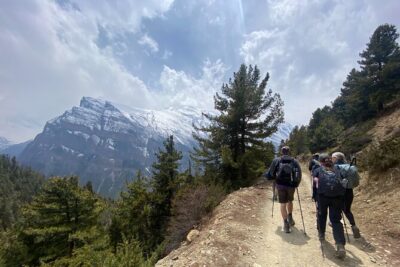
You climb through lush forest, cross suspension bridges, and watch the scenery change as the route gains height. The day has enough uphill work to test your legs, but it is still far below the altitude of the pass.
Your guide matters here. Prakash, Keshab, Mahesh, and other guides assigned by the company have been praised for explaining route conditions, arranging rooms, and keeping a steady pace. That is important on a private trip, since the best pace is the one that keeps you comfortable without wasting energy.
Chame is your overnight stop. Accommodation is in tea houses or basic guesthouses, so think clean and practical rather than polished. You should expect simple comforts and local meals, not hotel-style facilities.
Day 3: Chame to Upper Pisang and the first big mountain views
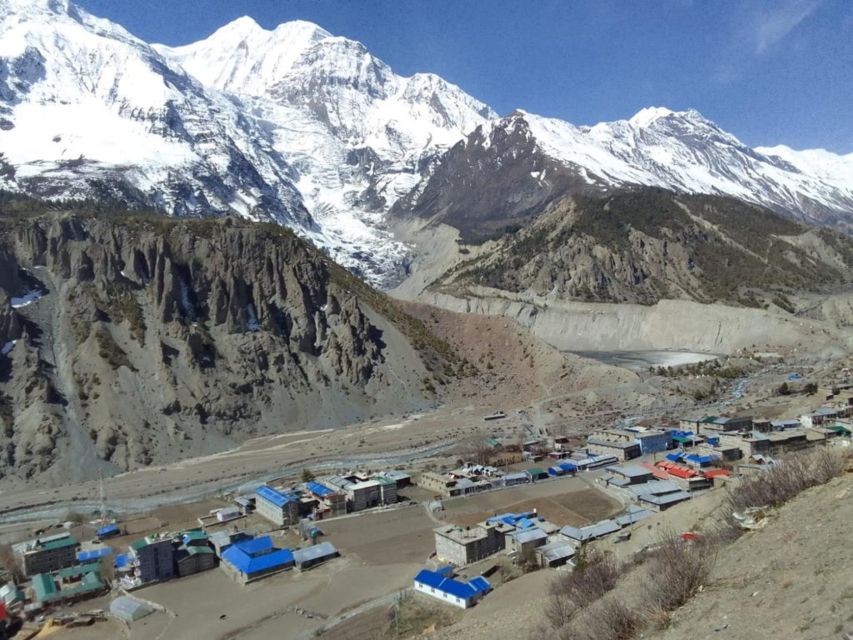
The six-hour walk to Upper Pisang reaches 3,300 meters. The route continues through changing mountain scenery, and Upper Pisang gives you a strong first taste of the high villages and wide views that make this circuit special.
This is also a good day to pay attention to how your body handles altitude. You may feel fine at 2,670 meters and notice the difference by 3,300 meters. Walk slowly, drink regularly, and tell your guide about headaches, unusual tiredness, or other concerns.
Upper Pisang is more than a place to sleep. You have time to look around the village and observe local customs and daily life. The experience is not built around staged entertainment. Much of its appeal comes from walking into settlements where mountain life remains tied to the route, the weather, and the short growing season.
More Hiking Tours in Kathmandu
- Everest Base Camp Trek – 14 Days
★ 5.0 · 1,499 reviews - Everest Base Camp Trekking
★ 5.0 · 485 reviews - Nagarkot Sunrise View and Day Hiking from Kathmandu
★ 5.0 · 471 reviews - Everest Base Camp Trekking – 13 Day
★ 5.0 · 365 reviews
Day 4: Upper Pisang to Manang beneath Annapurna peaks
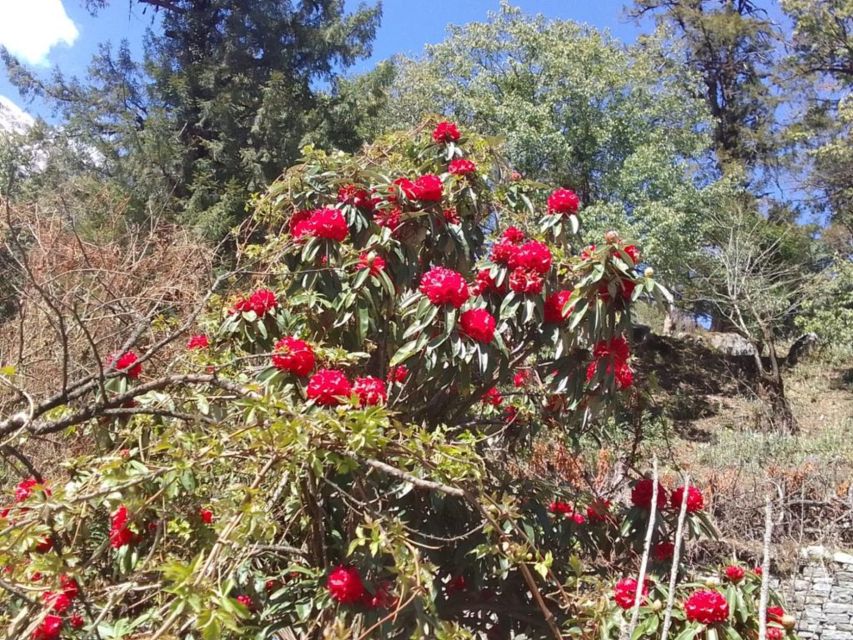
The route to Manang takes about six hours and rises to 3,540 meters. This is one of the most rewarding days because the mountains become a constant part of the view, including Annapurna II, Annapurna III, and Gangapurna.
Manang sits in a broad valley, which gives the stop a more open feel than the earlier forest sections. You can explore the village, enjoy the mountain views, and begin to adjust to the thinner air before the route turns much higher.
The accommodation remains basic, but Manang is an important pause point. Your guide can help arrange the night, meals, and next day’s plan, while you focus on rest and acclimatization.
Day 5: A full acclimatization day in Manang
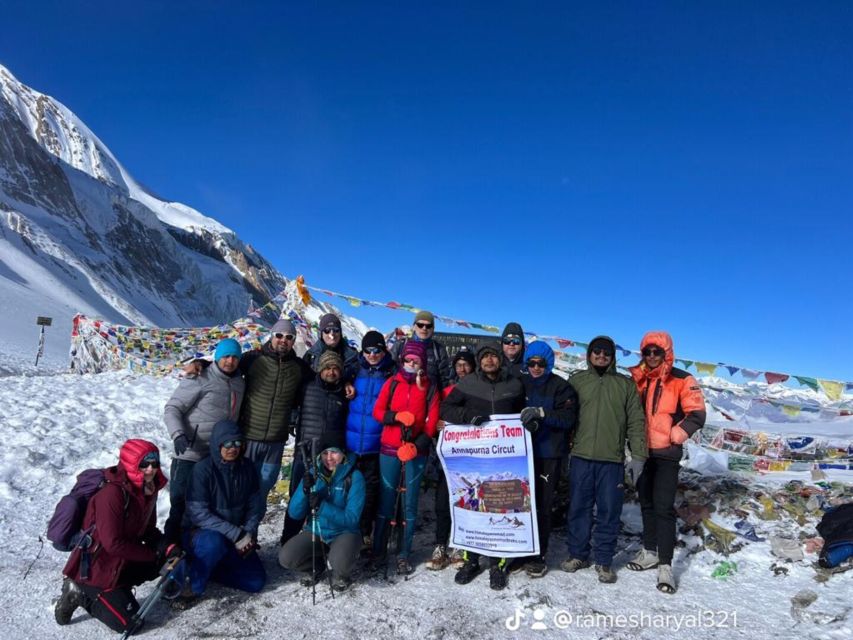
A rest day at Manang is not wasted time. It is one of the most important parts of the schedule. The next three days take you to Yak Kharka, Thorong Phedi, and then over the 5,416-meter pass.
You can explore Manang and enjoy the views without adding another full trekking day. The supplied guidance stresses the risk of altitude sickness, and several guides, including Milani and Keshab, have been praised for paying close attention to pace and comfort.
This is also the day to check your equipment. Make sure your boots are comfortable, your warm layers are easy to reach, and your headlamp works. A sleeping bag is required, though sleeping bags can be rented in Kathmandu. If you rent one, ask the organizer about return arrangements. The company has handled returns to Kathmandu after trekkers finished in Pokhara.
Day 6: Manang to Yak Kharka above the tree line
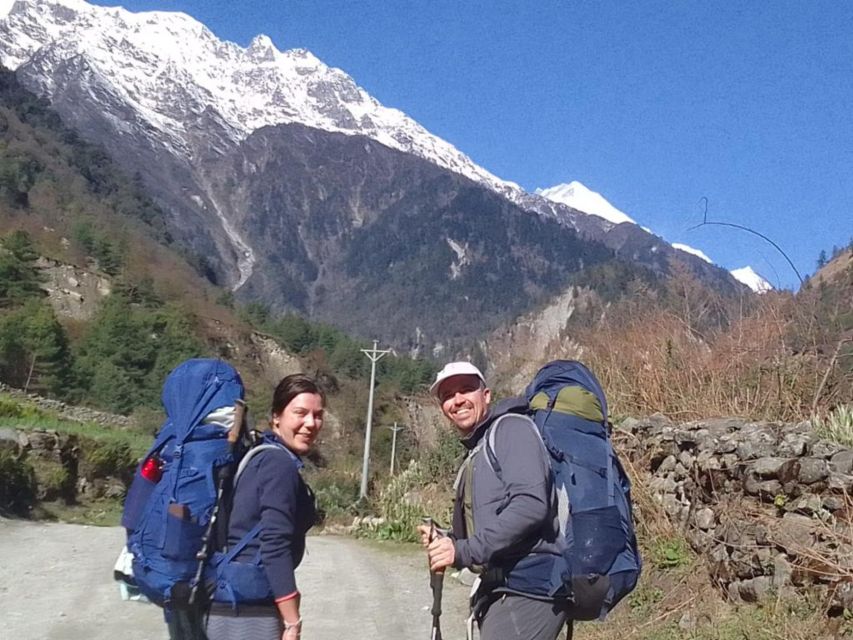
The six-hour trek to Yak Kharka reaches 4,050 meters. By now, the forest has given way to alpine country, open grazing areas, and a quieter feeling in the high Himalayas.
Yak Kharka is a pasture surrounded by mountains. The scenery is broad and spare, and the lack of trees makes the altitude more obvious. You may walk more slowly here, especially on uphill sections.
This is where fitness pays off. You do not need to be an elite athlete, but you should be comfortable walking for several hours and climbing steadily. The activity is not suitable for pregnant women, and you need travel insurance that covers high-altitude trekking and rescue.
Day 7: Reaching Thorong Phedi, the pass base
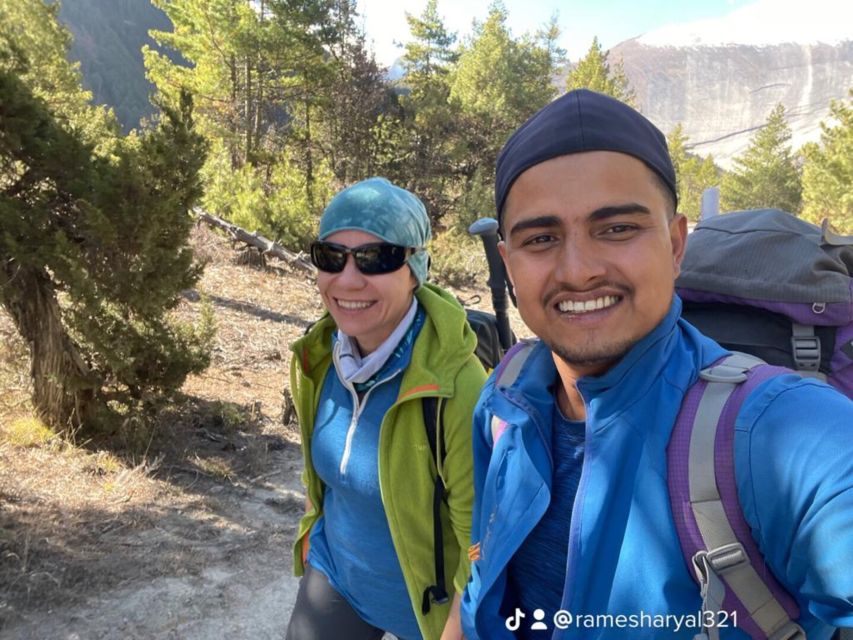
The route from Yak Kharka to Thorong Phedi takes about six hours and reaches 4,450 meters. This is a serious day even though it is shorter than the pass crossing that follows.
Thorong Phedi is the staging point for the early start over Thorong La. The main job here is to rest, eat, prepare your daypack, and keep your clothing ready for cold and changing weather.
Mountain weather can shift quickly. The packing advice is sensible: bring a warm jacket, hat, gloves or warm layers, sunglasses, sunscreen, water, trekking poles, and a flashlight or headlamp. Rain or snow is possible, even when the forecast looks calm.
Because the next day can last 12 hours, you should not treat Thorong Phedi as just another overnight stop. Keep your evening simple and conserve energy.
Day 8: Thorong La Pass and the descent to Muktinath
This is the hardest day of the trek. You leave early from Thorong Phedi, climb to Thorong La at 5,416 meters, then descend to Muktinath at 3,800 meters. The full day is listed at up to 12 hours.
The ascent can feel slow and demanding. At this height, even a modest incline takes effort. Your guide will be especially important here, both for route decisions and for watching how you are coping with the altitude.
At the pass, the reward is not only the view. You have crossed one of the world’s high mountain passes on foot, after building up to it over a week of walking. The descent to Muktinath is a relief, though it still takes time and can be hard on tired knees.
Muktinath adds a cultural layer to the day. It is a sacred pilgrimage site for Hindus and Buddhists, and you can explore the temple area and the village after arriving. Please dress and behave respectfully around religious sites. This is a place to observe, not simply another photo stop.
Day 9: Muktinath to windy Jomsom
The five-hour trek to Jomsom drops to 2,720 meters. The change in scenery is dramatic. You leave the high pass behind and enter the drier, desert-like Mustang region.
Jomsom is known here as a windy town, and the route gives you a strong sense that you have crossed into a different part of Nepal. The mountain views remain, but the colors, air, and ground feel much less like the forested valleys near Dharapani.
This descent is a welcome change after the pass, but do not assume it is effortless. You have already completed the hardest day, and fatigue can affect balance and patience. Take the afternoon in Jomsom at a calm pace and enjoy the town before the long transfer to Pokhara.
Day 10: Jomsom to Pokhara by bus
The final day uses a bus for the roughly eight-hour journey from Jomsom to Pokhara. It is another long road day, but it connects the high mountain route with one of Nepal’s most popular lower-altitude bases.
You can watch the scenery change again as the dry Mustang region gives way to greener country. On arrival, you stay at tourist-standard Hotel Orchid in Pokhara and receive a typical Nepalese farewell dinner in Lakeside Pokhara.
This finish is a smart touch. After basic tea houses and long trekking days, a proper hotel room gives you space to shower, sort your bags, and rest. The included luggage storage also helps if you want to leave nonessential items in Kathmandu and collect them later in Pokhara.
The package includes a luxury sofa-seater tourist air-conditioned bus from Pokhara to Kathmandu, but that transfer is separate from the listed Jomsom to Pokhara bus ride. Confirm your onward plan before booking flights or other fixed arrangements.
Guides, organization, and what support really means
The strongest part of this trip is the human support. The guide names attached to particularly strong experiences include Keshab, Bipin, Suresh, Prakash, Mahesh, Milani, Jeet, Silwal, and porter Sagar.
The useful pattern is clear: the guide is expected to explain route conditions, set a sensible pace, arrange tea houses and meals, manage permits, and help when conditions change. Milani handled landslide affected sections carefully, while Bipin was praised for timely changes to plans. Keshab also adjusted the schedule for personal requests without making the trek feel rushed.
You should understand the porter arrangement before paying. The authorized English-speaking guide is included, but porter charges are extra. If you want help carrying your main bag, budget for that separately and ask how much luggage the porter can carry.
The company also covers staff meals, accommodation, salary, equipment, insurance, and transportation. That matters because it indicates the $467 price is not simply a guide fee with many hidden staff costs added later.
Food, rooms, and daily comfort
The trek uses tea houses and guesthouses with basic comforts. You should expect a simple room and shared facilities may be part of the experience, though the exact room setup can vary by stop and availability.
Full-package meals include breakfast, lunch, and dinner during the trek. Dal bhat, lentils with rice, is a sensible choice for long walking days, and other food options are available.
Drinks are not included. You pay separately for soft drinks, hard drinks, bottled or boiled water, showers, phone calls, laundry, battery charging, and bar bills. Carry cash, since personal expenses in mountain areas can add up quickly.
Pack a sleeping bag, warm layers, socks, a water bottle, sunscreen, sunglasses, a hat, a first aid kit, hiking shoes, trekking gear, and a daypack. A camera is welcome, but keep your daypack practical. You want easy access to water and extra layers, not a heavy load.
Who should book this 10-day Annapurna trek?
I would point this trip toward a reasonably fit first-time Himalayan trekker who wants a guide and a clear plan. It offers a strong introduction to Nepal because you get village culture, changing scenery, a high pass, a sacred site, and a comfortable Pokhara finish in one trip.
It is also a good fit if you value a private group. You have more room to set the walking pace and ask for adjustments than you would in a large fixed group. The schedule can be customized around individual preferences and trekking speed, though changing the route may affect extra nights or transport costs.
I would not choose it if you want short walking days, private luxury rooms throughout, or a relaxed holiday with little physical effort. The 12-hour pass day and two long road transfers are real commitments.
Book only with high-altitude travel and rescue insurance. Bring cash and expect to pay for water and other personal needs. Most of all, allow some flexibility: mountain weather, road conditions, and trail issues can affect timing.
Should you book it?
Book this trek if crossing Thorong La is your main goal and you want the logistics handled by a local agency at a low base price. The full route gives you a genuine sense of progression, and the guides have a strong record of being caring, organized, and alert to altitude concerns.
The best reason to choose it is the combination of challenge and support. You still do the hard walking, but your guide handles permits, lodging, meals, route details, and transport. If you can manage the altitude and accept basic tea houses, this is a very good-value way to experience the Annapurna Circuit.
FAQ
How high is Thorong La Pass?
Thorong La Pass reaches 5,416 meters, or 17,769 feet.
How long is the trek?
The experience lasts 10 days. The longest trekking day is Day 8, from Thorong Phedi over Thorong La Pass to Muktinath, and it can take up to 12 hours.
Is an acclimatization day included?
Yes. Day 5 is a full acclimatization and rest day in Manang at 3,540 meters.
Are meals included?
Breakfast, lunch, and dinner during the trek are included with the Full Package. Soft drinks, alcoholic drinks, bottled or boiled water, and other personal food and drink costs are not included.
Is a porter included?
The English-speaking guide is included, but porter charges are extra.
What accommodation is included?
The package includes nine nights of accommodation during the trek and one final night at tourist-standard Hotel Orchid in Pokhara. Trek accommodation is in basic tea houses or guesthouses.
Recently added around Kathmandu
- Kathmandu Airport Pickup and Drop-off Services★ 5.0 · 3 reviews
- Kathmandu Paragliding★ 5.0 · 3 reviews
- Kathmandu Chandragiri Cable Car and Swayambhunath Private Tour★ 5.0 · 3 reviews
- Explore The Beauty Of Langtang Valley In 8-Days Trek★ 5.0 · 3 reviews
- Kathmandu: Nightlife and Pub Crawl Tour★ 5.0 · 3 reviews
- Mountain Flight Experience in Nepal★ 4.5 · 3 reviews
- Kathmandu: Momo Making Class with a Local Chef★ 5.0 · 3 reviews
- Everest Base Camp Trek★ 5.0 · 3 reviews
Other Annapurna Circuit Treks worth a look
15-Day Private Annapurna Circuit Trek from Kathmandu
Read our review →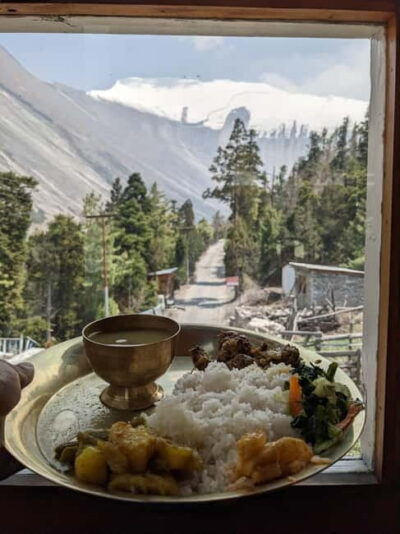
Annapurna Circuit Trek with Tilicho Lake (16 Days)
Read our review →This tour also appears in