
REVIEW · EVEREST BASE CAMP TREKS
Everest Base Camp Trek with Helicopter Return from Gorakshep to Lukla
The clever feature here is the helicopter return from Gorakshep to Lukla. You still earn Everest Base Camp on foot, but you avoid retracing several long days down the Khumbu Valley. I like the two planned acclimatization hikes, at Namche Bazaar and Nangkartshang Peak, and I like that a guide, porter team, permits, meals, and mountain flights are bundled into one price.
The main caution is altitude, not comfort. You reach 5,365 meters at Base Camp and 5,555 meters at Kala Patthar, so moderate fitness is only the starting point. Also, the supplied schedule uses slightly unclear wording around the final flight, so confirm that the Gorakshep to Lukla helicopter and the onward Lukla to Kathmandu flight are both arranged as you expect.
Key points before you book
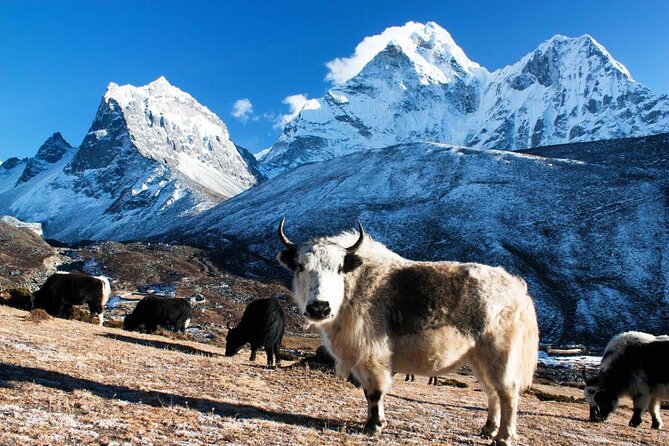
- The route earns its big moments: You walk from Lukla through Namche, Tengboche, Dingboche, Lobuche, and Gorakshep before reaching Everest Base Camp.
- Two acclimatization days matter: A Namche outing and the Nangkartshang Peak hike give your body time to adjust instead of rushing uphill.
- Kala Patthar is the high point: At 5,555 meters, it brings some of the finest mountain views, but it is also one of the hardest mornings.
- The return saves your knees: A shared helicopter flight takes about 20 minutes from Gorakshep to Lukla, replacing the usual long descent.
- The price covers much of the costly work: At $3,000 per person, you get domestic air travel, the helicopter segment, staff, permits, meals, lodging, and Kathmandu transfers.
- The group stays fairly small: The maximum is 14 people, with a minimum booking of two.
What the $3,000 price really buys
At first glance, $3,000 is a serious price for a 12-day trek. It makes more sense once you look at the moving parts. The package includes the Kathmandu airport transfer, two nights in a three-star hotel with breakfast, domestic airfare from Kathmandu to Lukla and back, trekking permits, a licensed English-speaking guide, porters, mountain lodging, all standard trek meals, and the shared helicopter flight.
The helicopter is the big value item. A standard Everest Base Camp trek normally returns on foot, so this itinerary replaces several downhill days with a short scenic flight. You are paying more than you would for a basic walking route, but you also get a faster finish and a different view of the Khumbu from the air.
The package includes one porter for every two people. Staff costs, insurance, equipment, medicine, and salaries are covered for the trekking team. You also receive a duffel bag, trekking map, sun hat, filtered trail water, seasonal fruit, and a first-aid kit with an oximeter for checking oxygen saturation.
You still need to budget for Nepal’s entry visa, international flights, insurance with emergency rescue and evacuation cover, drinks, personal trekking gear, Kathmandu lunches and dinners, and tips. Tipping is expected, so do not treat the listed price as your complete trip budget.
More Hiking Tours in Kathmandu
- Everest Base Camp Trek – 14 Days
★ 5.0 · 1,499 reviews - Everest Base Camp Trekking
★ 5.0 · 485 reviews - Nagarkot Sunrise View and Day Hiking from Kathmandu
★ 5.0 · 471 reviews
Day 1: A soft landing in Kathmandu
Your arrival day is simple and useful. An official meets you at Tribhuvan International Airport and takes you to your Kathmandu hotel in a private tourist vehicle. There is also a pre-trip meeting with your guide.
This is the right kind of first day for a high-altitude trek. You are not asked to walk, climb, or rush straight into the mountains. Use the meeting to ask about the flight to Lukla, porter luggage limits, meals, weather plans, and the helicopter return.
Day 2: Lukla to Phakding by trail
The morning begins with a flight from Kathmandu to Lukla, taking about 35 minutes. Tenzing and Hillary Airport sits at 2,804 meters, so you start gaining altitude almost at once.
From Lukla, you walk to Phakding. The route introduces the rhythm of the trek without throwing you into its hardest hours. You begin along paths and through forest, with the Dudh Koshi River nearby. Phakding is your first mountain lodging stop.
The Lukla flight is weather-sensitive. The package includes the airfare, but no mountain flight can ignore conditions. Build patience into your plans, especially if you have a tight international connection at the end.
Day 3: Suspension bridges and Namche Bazaar
The walk from Phakding to Namche takes about six hours. You follow the Dudh Koshi, crossing the river several times on suspension bridges hung with prayer flags.
Namche Bazaar is the main settlement of the Khumbu route and an important staging point for the higher trail. It is also your first serious altitude check. The climb is not only about distance. The air feels thinner, and the trail gains height in a steady way.
Your accommodation is twin-sharing in the trek, with attached toilets listed for Lukla, Phakding, and Namche. That is a useful comfort at this stage, though you should not expect hotel-level facilities throughout the route. Lodging becomes more basic as you climb.
More Everest Base Camp Treks in Kathmandu:
- Everest Base Camp Helicopter Tour landing at Everest View Hotel
★ 5.0 · 668 reviews - Everest Base Camp Trekking – 13 Day
★ 5.0 · 365 reviews - Everest Base Camp Trek -14 Days
★ 5.0 · 321 reviews - Everest Base Camp Helicopter Tour landing at Hotel Everest View
★ 5.0 · 218 reviews
Day 4: Acclimatizing around Namche
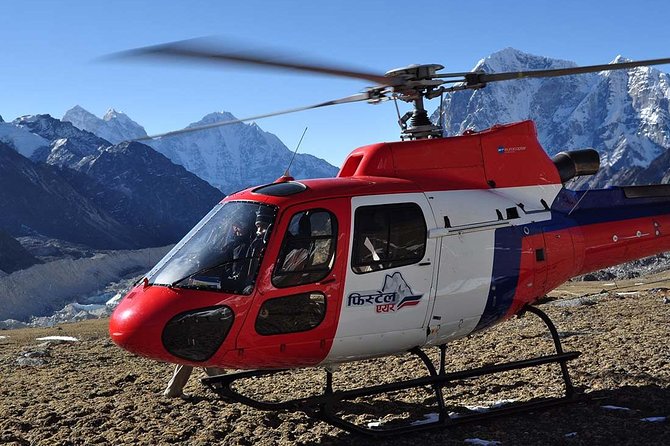
You do not simply rest in Namche. The plan calls for a short hike around town to help your body adjust, including an Everest View Point outing. The listed visit is brief, but the day itself is set aside for acclimatization.
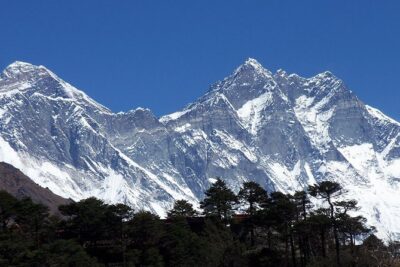
This is one of the best features of the route. You gain height during the day, then return to Namche rather than sleeping immediately at a much higher elevation. The schedule also promises Himalayan views and a sunrise outing, giving you a useful first look at the peaks without spending another night higher up.
If you are tempted to skip this hike and sleep late, resist. At altitude, a moderate acclimatization day is more useful than saving your legs for later.
Day 5: Tengboche and its monastery
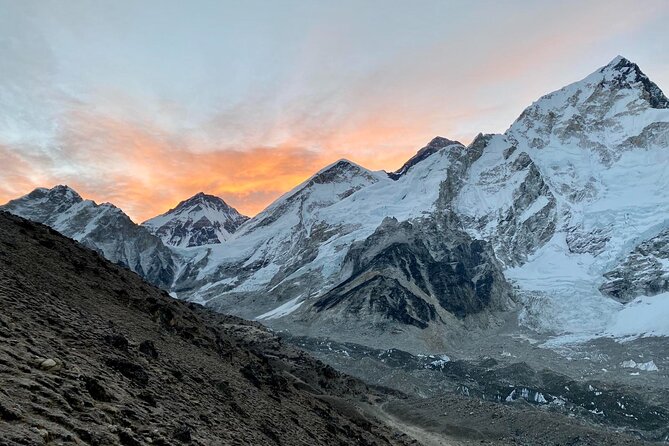
The trail follows the Dudh Koshi toward Tengboche, reaching about 3,860 meters. The route includes more mountain views, a river valley, and the climb toward the monastery settlement.
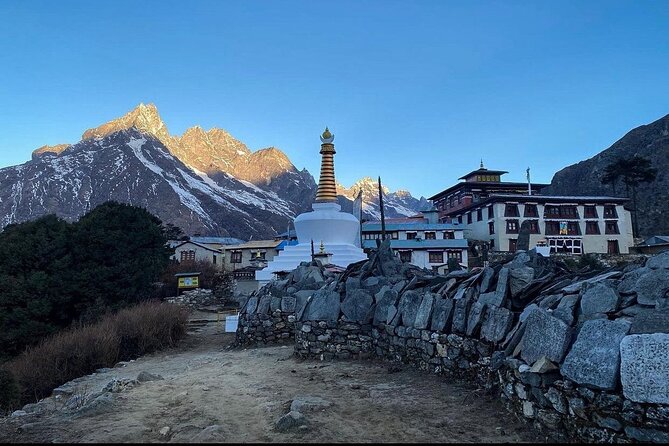
Tengboche is not just a place to sleep. Its monastery gives the trek a strong cultural stop between the lower forests and the stark upper valley. The route description includes time inside the monastery, so you have a chance to see a place tied to Sherpa Buddhist life rather than walking past another row of lodges.
This is also where the trek begins to feel more demanding. You have already walked several days, and each uphill section costs more effort. Keep your pace steady and let the guide set a rhythm that protects your energy.
Day 6: Pangboche to Dingboche
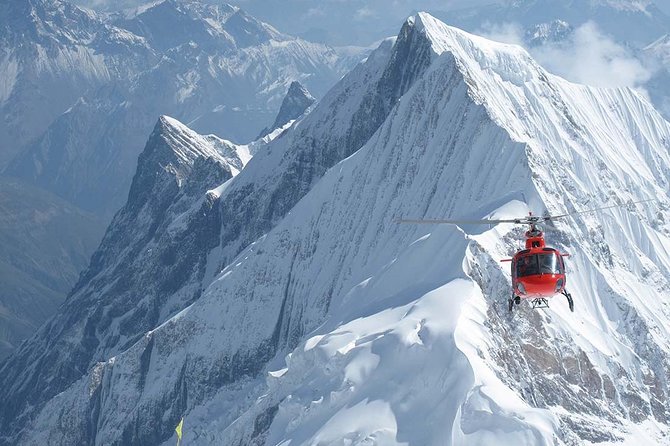
From Tengboche, the trail drops to Debuche, crosses the Imja Khola, and climbs toward Pangboche. Mani stones line parts of the route, adding another reminder that this is a lived-in cultural corridor, not only a mountain challenge.
The final climb leads to Dingboche. At this point, the trees thin and the surrounding peaks feel closer. The day is listed as a long trekking day, so you should expect fatigue even if the mileage does not look extreme on paper.
Dingboche is an important overnight stop because it positions you for the upper Khumbu while giving you another acclimatization day next. The itinerary does not try to force a nonstop push toward Base Camp.
Day 7: Nangkartshang Peak for altitude practice
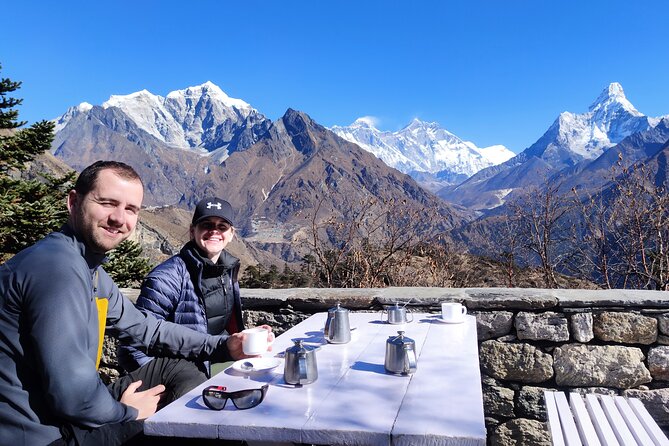
This is another day without forward progress toward Everest Base Camp. Instead, you hike above Dingboche to Nangkartshang Peak, a viewpoint over the surrounding mountains.
The climb is optional only in the broad sense that your body has the final say. The itinerary treats it as part of acclimatization, and that is sensible. You gain altitude during the day, test your breathing, and return to Dingboche for the night.
Nangkartshang is also a fine place to appreciate the scale of the route. The trail ahead is not just a line to Base Camp. It is a high valley, a glacier corridor, and a series of exposed settlements where weather and altitude shape every decision.
Day 8: Memorial stones and Lobuche
The trail from Dingboche continues beside the lateral moraine of the Khumbu Glacier. It passes stone memorials for climbers who died on nearby peaks before continuing toward Lobuche.
This section has a different mood from the forested approach to Namche. The greenery fades, the air is thinner, and the memorials bring a sober edge to the adventure. Everest is not a simple sightseeing stop. The mountain has a real cost, and these stones make that clear.
Lobuche is your overnight base before the Base Camp push. The day is listed as a long one, so keep your lunch and water routine steady. The included meals help here, since you do not need to arrange food at the end of a tiring day.
Day 9: Everest Base Camp at 5,365 meters
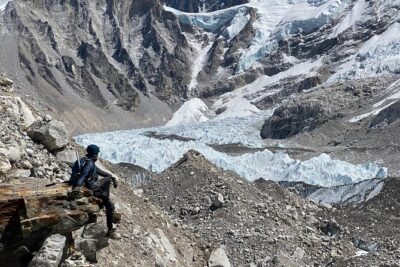
This is the goal, and it is a difficult one. You walk along the Khumbu Glacier and continue upward to Everest Base Camp at 5,365 meters, the highest point on the route to that stage.
Base Camp is not a permanent city, and the setting changes by season. In spring, the route may include a working climbing camp, while at other times the area can feel quieter. The important point is that you arrive on foot after a gradual approach through the Khumbu.
Do not judge the day by the number of photographs you take. At this elevation, walking can be slow and uneven. Your guide carries a first-aid kit and oximeter, but safety still depends on telling the guide when you feel unwell. The trek requires moderate physical fitness, yet high altitude affects strong hikers too.
Day 10: Kala Patthar, the hardest reward
Kala Patthar rises to about 5,555 meters and is often the most demanding day of the route. The climb is short compared with the full trek, but the altitude makes every step more expensive.
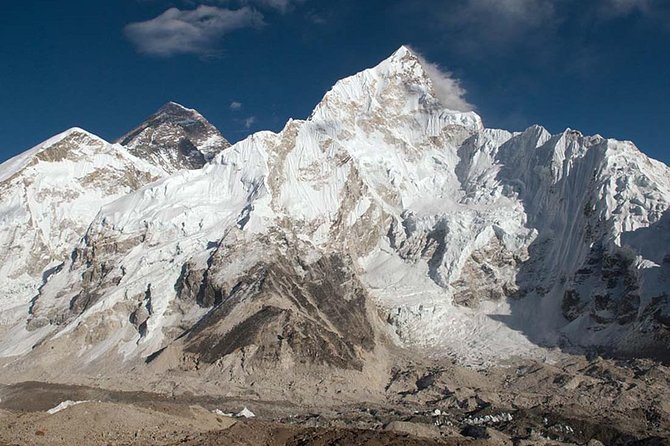
The reward is a broad mountain view and a close look toward Everest. This is the point where the itinerary gives you the strongest visual payoff, but it is not a casual viewpoint walk. Cold, thin air and early-morning fatigue can make the ascent slow.
You should treat Kala Patthar as a goal, not a test of pride. If the guide advises you to turn back, that is a sensible safety call. Reaching Base Camp is already a major achievement, and the helicopter plan means you are not required to descend the entire route on foot afterward.
The Gorakshep helicopter return
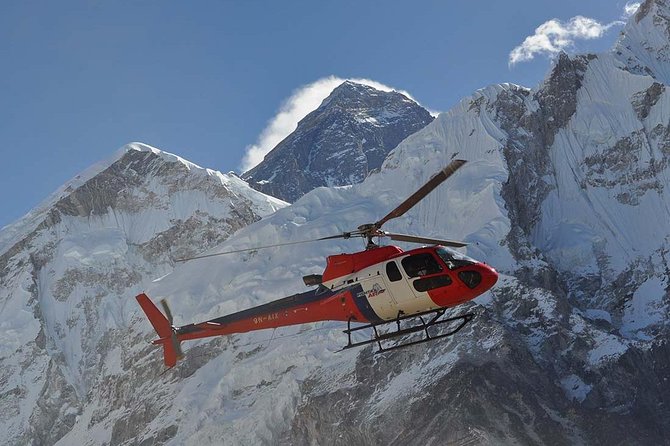
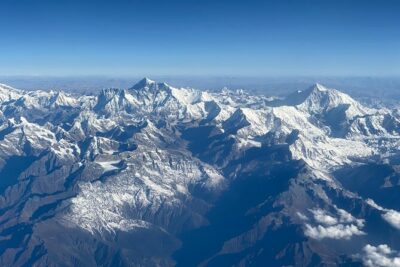
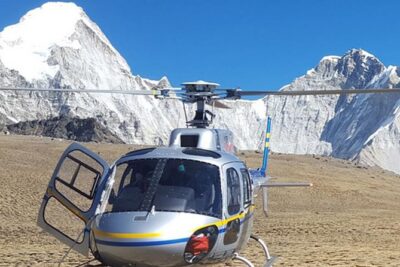
The tour’s special feature is a shared helicopter ride from Gorakshep to Lukla, described as taking about 20 minutes. It gives you a fast exit from the high valley and replaces the long walk back through Lobuche, Dingboche, Namche, and Phakding.
That changes the character of the trip. You still do the full approach, the acclimatization work, Base Camp, and Kala Patthar, but you do not spend another week reversing your steps. For anyone concerned about repeated downhill walking, this is a meaningful advantage.
Weather matters. The experience requires suitable conditions, and poor weather can lead to a different date or a full refund under the stated policy. Because the final transport is split between a helicopter and a Lukla flight, ask the operator to explain the exact sequence before departure. The schedule says Day 11 includes a scenic flight to Kathmandu, while the tour description specifies Gorakshep to Lukla first. The package includes both air components, but the wording should be clarified.
Day 11: Lukla and the flight onward
The supplied schedule labels Day 11 as Lukla and describes a 35-minute scenic flight back to Kathmandu, followed by a hotel transfer. Read alongside the helicopter-return plan, the practical interpretation is that you fly from Gorakshep to Lukla, then continue by fixed-wing aircraft from Lukla to Kathmandu.
This is the day to keep flexible. Lukla flights depend on conditions, and the itinerary provides only a short listed activity period. If your international departure is soon after this day, confirm whether an extra buffer night is wise. The package includes the Kathmandu transfer and hotel arrangements listed for the tour, but it does not include your international airfare.
Day 12: Departure from Kathmandu
The final day takes you to Tribhuvan International Airport. Airport drop-off is included in a private tourist vehicle.
The tour is designed to finish in Kathmandu rather than at a remote mountain lodge. That makes the airport transfer straightforward, but you should still keep your departure plans practical because mountain transport can be delayed by weather.
Guides, porters, and group size
The trek uses an Ace the Himalaya licensed, English-speaking guide who has first-aid training. The team also includes porters, with one assigned for every two people. Staff costs, insurance, gear, and medicine are included, so you are not expected to manage those arrangements in the Khumbu.
Several guide and porter names appear in the supplied feedback, including Raj, Ram, Madan, Rajendra, Bishal, Krishna, Probin, Saman, Jit, Sher, Girija, and Pesal. That does not mean you will receive one particular person, but it shows the company uses a wider field team rather than one fixed guide.
The maximum group size is 14, and at least two people must book. A group of this size can make meals, walking pace, and helicopter seating less private, but it also gives you a structured support system. If you want a private trek, confirm that option before paying.
Food, water, and mountain comforts
Breakfast, lunch, and dinner are included during the trek, along with seasonal fruit. Filtered water is provided on the trail using a Katadyn Pocket Water Filter. That reduces the need to buy bottled water and cuts down on plastic waste.
Alcoholic drinks and hot and cold drinks are not included. Kathmandu lunches and dinners are also yours to pay for, apart from the farewell dinner listed in the package.
The accommodation is twin-sharing. Attached toilets are specifically included in Lukla, Phakding, and Namche, but the package does not promise that same setup at every higher stop. Pack for basic mountain lodging, even though the lower villages offer a little more comfort.
Who should book this trek?
This route suits you if reaching Everest Base Camp is the main goal, but you would rather not walk all the way back to Lukla. It is also a strong fit if you value an organized support team and want permits, meals, porters, domestic flights, and airport transfers arranged together.
You need to be ready for long trekking days, steep climbs, suspension bridges, thin air, and nights at high altitude. The operator asks for moderate physical fitness, but I would view that as a minimum. You should also have travel insurance that covers emergency rescue and evacuation.
This is not the right choice if you want a relaxed mountain holiday, private luxury, or a fixed schedule that cannot shift for weather. The helicopter and Lukla flights add speed, but they also make the final transport plan weather-sensitive.
Should you book it?
Book this trek if you want the full walking approach to Everest Base Camp, two useful acclimatization hikes, strong logistical support, and a quick helicopter exit. The $3,000 price is high, but the included flights, staff, permits, meals, lodging, equipment support, and transfers give it real value.
Before booking, ask for written confirmation of the Gorakshep to Lukla helicopter, the Lukla to Kathmandu flight, luggage arrangements, and the plan if weather interrupts either flight. If those details suit you, this is a well-rounded way to reach Base Camp without spending another long week retracing the trail.
FAQ
How long does the Everest Base Camp trek with helicopter return take?
The experience lasts approximately 12 days, including arrival and departure arrangements in Kathmandu.
Where does the trek begin?
The walking route begins in Lukla after a scenic flight from Kathmandu to Tenzing and Hillary Airport, located at 2,804 meters.
How long is the helicopter flight?
The helicopter ride from Gorakshep to Lukla takes about 20 minutes and is shared with other people on the tour.
Does the tour include the flight from Kathmandu to Lukla?
Yes. Airfare from Kathmandu to Lukla and the return airfare are included in the package.
Is accommodation included?
Yes. The package includes two nights in a twin-sharing three-star Kathmandu hotel with breakfast and twin-sharing guesthouse accommodation during the trek. Attached toilets are listed for lodging in Lukla, Phakding, and Namche.
Are meals included?
Breakfast, lunch, and dinner are included during the trek, along with a farewell dinner. Lunch and dinner in Kathmandu, as well as alcoholic and hot and cold drinks, are not included.
Are permits included?
Yes. Everest National Park permits and the TIMS permit are included.
What happens if bad weather cancels the experience?
The experience requires good weather. If poor weather causes cancellation, you are offered a different date or a full refund. For voluntary cancellations, a full refund requires cancellation at least six full days before the start time.
More Helicopter Tours in Kathmandu
- Everest Base Camp helicopter tour with landing
★ 5.0 · 61 reviews - Everest Base Camp Helicopter Tour with Hotel Everest View Landing
★ 5.0 · 52 reviews - Guaranteed Landing at Everest Base Camp Kalapathar by Helicopter
★ 5.0 · 38 reviews - Everest Base Camp Trek with Helicopter Return to Lukla – 10 Days
★ 5.0 · 34 reviews
Recently added around Kathmandu
- Kathmandu Airport Pickup and Drop-off Services★ 5.0 · 3 reviews
- Kathmandu Paragliding★ 5.0 · 3 reviews
- Explore The Beauty Of Langtang Valley In 8-Days Trek★ 5.0 · 3 reviews
- Kathmandu Chandragiri Cable Car and Swayambhunath Private Tour★ 5.0 · 3 reviews
- Kathmandu: Nightlife and Pub Crawl Tour★ 5.0 · 3 reviews
- Kathmandu: Momo Making Class with a Local Chef★ 5.0 · 3 reviews
- Mountain Flight Experience in Nepal★ 4.5 · 3 reviews
- Everest Base Camp Trek★ 5.0 · 3 reviews
Other Everest Base Camp Treks worth a look
Everest Base Camp Helicopter Tour landing at Everest View Hotel
Read our review →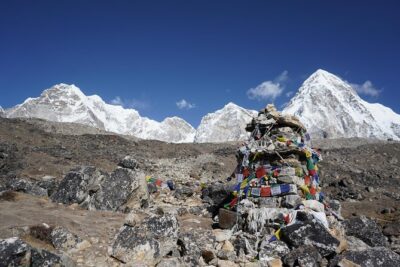
Everest Base Camp Helicopter Tour landing at Hotel Everest View
Read our review →
This tour also appears in