
REVIEW · KATHMANDU TOURS
Everest Three Pass Trek
The Everest Three Pass Trek is the Khumbu’s serious challenge: three high crossings, each above 5,300 meters, linked with Everest views, glacier country, Sherpa villages, Gokyo Lakes, and the sunrise climb to Kala Patthar. This is not simply an Everest Base Camp walk with a few extra miles. It is a demanding circuit over Kongma La, Cho La, and Renjo La.
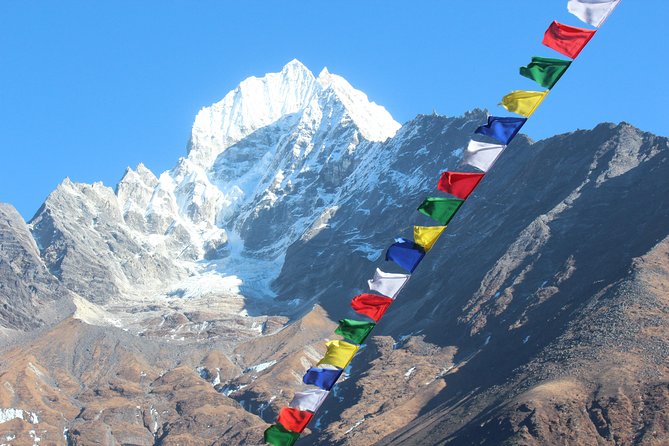
I like the route’s variety. You get the prayer-flag bridges and forest trails near Lukla, the Sherpa culture of Namche and Tengboche, the stark high country around Gorakshep, and the blue lakes near Gokyo. I also like the private format, since your group can move with its own licensed guide rather than being tied to a large departure.
The catch is clear: this trek requires strong physical fitness. The highest point is Kongma La at 5,535 meters, and some days involve steep, rough, or icy ground. Weather can also disrupt the Lukla flights, so you need patience and a flexible attitude.
Key points to know before you book
- Three major passes: Kongma La, Cho La, and Renjo La make this one of the toughest routes in the Everest region.
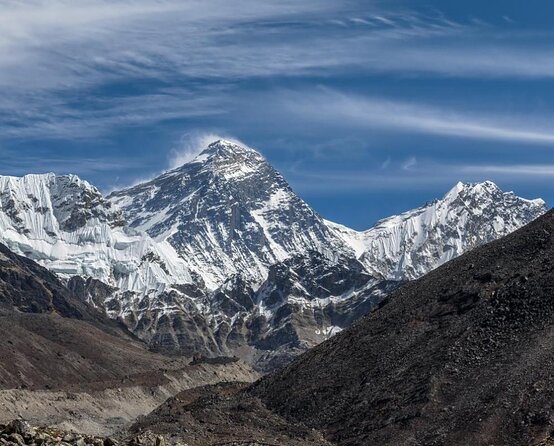
- Kala Patthar sunrise: The early climb gives you one of the best close views of Everest and the surrounding peaks.
- Gokyo adds a different side of Khumbu: Lakes, glaciers, and the climb to Gokyo Ri break up the familiar Everest approach.
- A private 15-day plan: Only your own group participates, with a local English-speaking guide and porters.
- A useful package: Lukla flights, permits, meals, accommodation, porters, staff costs, a sleeping bag, down jacket, and duffel bag are included.
- The main trade-off: At $1,800 per person, the price covers a lot, but drinks, personal gear, tips, and international airfare remain your responsibility.
Three high passes, one demanding Himalayan circuit
Most people first hear about Everest Base Camp. This route goes further in a different direction. You still reach the classic Everest region, but the real goal is the high circuit linking the valleys around the Khumbu.
Kongma La, Cho La, and Renjo La each offer a different test. Kongma La is the highest at 5,535 meters. Cho La, at 5,420 meters, is known for a steep approach and an ice-covered trail in places. Renjo La reaches 5,360 meters and finishes the pass sequence with broad mountain views toward Cho Oyu and other Himalayan peaks.
The route is physically demanding because altitude is only part of the problem. You will also deal with loose stone, steep uphill sections, suspension bridges, cold mornings, and long walking days. The itinerary includes acclimatization stops, but no schedule can remove the need to walk steadily and manage your energy.
I would choose this trip only if you want a harder route and are comfortable with basic mountain lodging. If your main goal is a gentle introduction to Nepal, the standard Everest Base Camp route is the better fit.
More Hiking Tours in Kathmandu
- Everest Base Camp Trek – 14 Days
★ 5.0 · 1,499 reviews - Everest Base Camp Trekking
★ 5.0 · 485 reviews - Nagarkot Sunrise View and Day Hiking from Kathmandu
★ 5.0 · 471 reviews
Day 1: Flying from Kathmandu to Lukla
The trek begins with an early flight from Kathmandu to Lukla. The flight passes over green hills and snow-covered Himalayan peaks before landing at Tenzing-Hillary Airport, one of the best-known mountain airstrips in the world.
At Lukla, you meet the guide and porter team and begin walking toward the lower Khumbu trail. The first day is important for setting the pace. You are not yet at extreme altitude, but the trip starts with a full sense of movement, changing from city travel to a footpath through mountain villages.
The package includes the Kathmandu to Lukla and Lukla to Kathmandu flights, airport tax, and land transport listed for the tour. Flights are weather dependent. If poor weather causes the experience to be canceled, you are offered a different date or a full refund. A delay is still something you should be ready to handle with patience.
Days 2 and 3: Suspension bridges and Namche acclimatization
The trail follows the Dudh Koshi River, crossing it several times on suspension bridges decorated with prayer flags. These crossings are a memorable early feature of the route, though they may feel exposed if you dislike heights.
After entering Sagarmatha National Park, the path climbs toward Namche Bazaar. Namche is the main Sherpa trading town in the area, and the scheduled acclimatization day gives your body time to adjust before the route rises higher.
The planned outing goes uphill to the Everest View Hotel. From there, you can see peaks including Nuptse, Thamserku, and Everest, according to the itinerary. This is not a day off in the usual sense. You still walk uphill, but the shorter excursion helps prepare you for the altitude ahead.
The stop in Namche is one of the smartest parts of the schedule. Rushing higher can turn a great trek into a miserable one. Use this day to walk slowly, drink what you need, and pay attention to how you feel.
Day 4: Tengboche and a famous mountain monastery
From Namche, the route follows the Dudh Koshi upstream. It passes the water-driven prayer wheels near Phunke Tenga before climbing above the Imja Khola toward Tengboche.
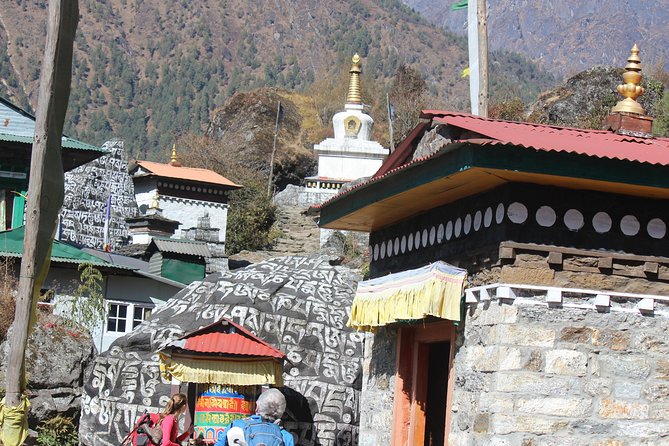
Tengboche is known for its monastery and its mountain setting. The itinerary includes a brief stop there, giving you time to take in the religious character of the place as well as the surrounding peaks. This section also includes forested trail, a welcome change from the exposed ground found higher up.
I like this part because the trip is not only a mountain endurance test. The prayer wheels, bridges, villages, and monastery connect the scenery with daily life and local Buddhist practice. The walk remains substantial, but it has more texture than a simple march toward a viewpoint.
A different kind of day from the same base:
- Private Kathmandu Sightseeing Tour | UNESCO World Heritage sites
★ 5.0 · 756 reviews - Everest Base Camp Helicopter Tour landing at Everest View Hotel
★ 5.0 · 668 reviews - Half day cooking class in Thamel kathmandu
★ 5.0 · 607 reviews - Kathmandu: Full Day 7 UNESCO Tour with Lunch – Private/Group
★ 5.0 · 415 reviews
Days 5 and 6: Dingboche, Ama Dablam, and Chhukung
The trail climbs toward Dingboche, with views of Ama Dablam, Lhotse, and Everest. It passes through rhododendron forest and Pangboche village, giving you another mix of woodland and open mountain scenery.
Rather than spending an extra night in Dingboche, this plan continues to Chhukung. The walk is shorter but uphill, and the change helps position you for the next day’s crossing of Kongma La.
Chhukung is the launch point for the first high pass. The nearby peaks and surrounding ridges make this a good place to take the challenge seriously. At this stage, you should already know that the following morning will be much tougher than the earlier village walks.
The schedule’s decision to move to Chhukung has a practical benefit: it avoids making the Kongma La day even longer. That does not make the pass easy, but it gives you a better starting point.
Day 7: Kongma La, the highest pass
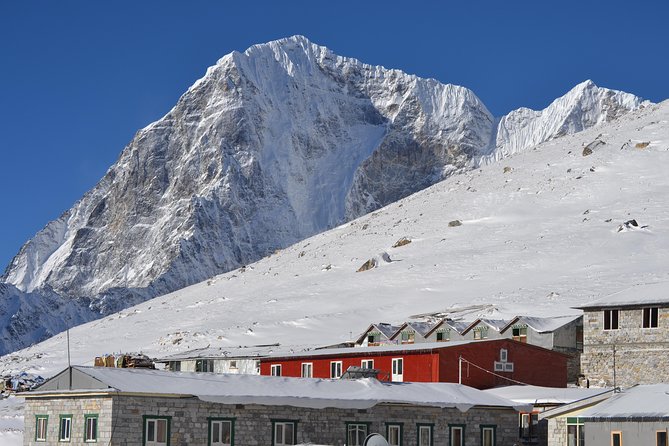
Kongma La is the first and highest of the three passes, at 5,535 meters. The route climbs steeply and can be difficult underfoot. After several hours of uphill walking, you reach the pass and take in views across the Mahalangur Himalayan range, including Everest.
This is the day that defines the trip. You need balance, stamina, and the ability to keep moving when the air feels thin. Snow and rough ground may make the crossing harder, and conditions can change with the weather.
The reward is not just the number on the altitude reading. Kongma La places you in a high, remote part of the Khumbu, away from the more familiar lower trail. The pass gives the circuit its serious character.
Days 8 and 9: Gorakshep and the Kala Patthar sunrise
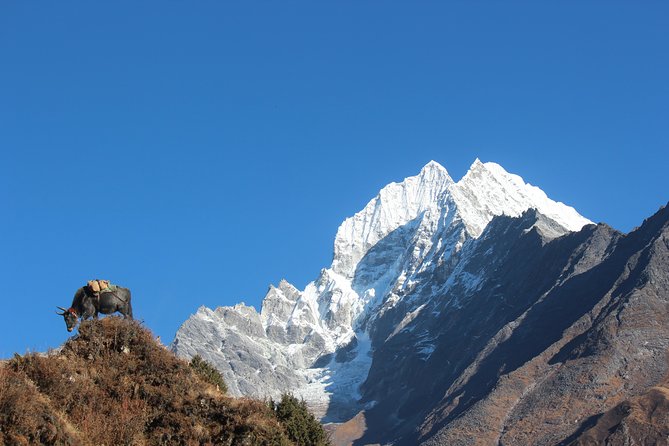
After the first pass, the route continues toward Gorakshep. The walk is rewarding but stony, with views of snow-covered peaks and glaciers. Gorakshep is a key high-altitude stop, and the rough trail is a reminder that this trek is not a standard village-to-village hike.
The next morning starts early with the climb to Kala Patthar at 5,550 meters. From the top, you watch the first sunlight reach Everest and the surrounding valleys. This is one of the strongest viewpoints in the Everest region, especially for a close look at Everest’s summit and the neighboring peaks.
The itinerary indicates that the route continues after Kala Patthar, leading into the next section toward Cho La. Exact overnight details for this part are not fully stated, so you should confirm the sleeping stop and walking times with Base Camp Adventure before departure.
The early start is worth understanding. You will be walking before sunrise in cold conditions, and the climb is steep. Still, the view from Kala Patthar is a major reason many people choose an Everest route at all.
Day 10: Cho La and the approach to Gokyo
Cho La reaches 5,420 meters and is the second major pass. The approach is steep, with an ice-covered trail in some sections. This is another demanding day, so the guide’s pace and your own foot placement matter.
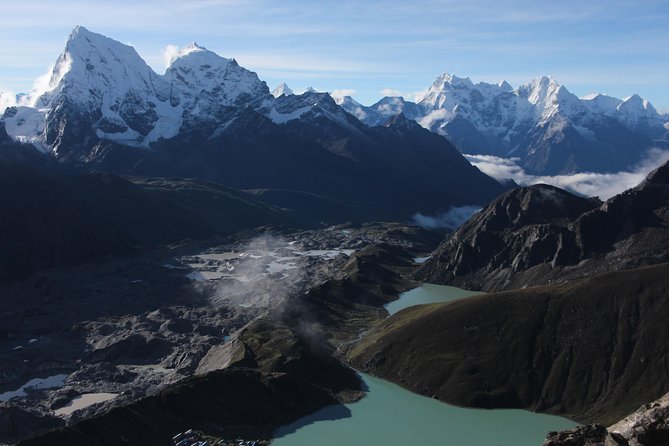
After crossing the pass, the route heads toward the Gokyo Lakes. Gokyo changes the mood of the trek. Instead of focusing only on Everest and the high trail, you get a chain of mountain lakes, glacier views, and a broad valley setting.
Cho La can be more technically awkward than a simple uphill climb because icy ground requires care. Your personal trekking equipment is not included, so bring suitable footwear and clothing rather than assuming the supplied down jacket and sleeping bag cover every need.
Day 11: Gokyo Lakes and Gokyo Ri
The schedule uses Gokyo as another rest and acclimatization point, but the planned morning hike to Gokyo Ri is still a serious walk. Gokyo Ri rises to 5,360 meters and gives views across the Gokyo Valley, its small lakes, and the surrounding peaks.
This is one of my favorite features of the circuit in practical terms. You get a full day focused on a different mountain basin rather than simply retracing the Everest Base Camp approach. The lake views also give the route a visual change after the stony ground around Gorakshep.
Do not mistake rest day for no-effort day. Gokyo Ri adds substantial uphill walking, and you are already carrying fatigue from Cho La. The advantage is that the climb prepares you for the final pass while giving you time in one of the route’s most scenic areas.
Day 12: Renjo La, the final pass
The final crossing begins early. The trail climbs gradually along a snow-filled path toward Renjo La at 5,360 meters.
From the top, the itinerary promises wide views toward Cho Oyu and other Himalayan peaks. Reaching Renjo La completes the three-pass challenge, but you still need to descend carefully. Tired legs can make the downhill sections just as awkward as the climb.
The early start helps with the day’s walking and may offer clearer mountain views. It also means another cold morning, so warm layers should be easy to reach in your duffel.
Days 13 and 14: Returning through Namche to Lukla
After Renjo La, the walk to Namche is described as more relaxed, following an easier trail through mountain scenery. You can enjoy distant views of Everest and other peaks without the same pressure as the pass days.
The following day takes you from Namche to Lukla through villages, forests, rivers, and suspension bridges. It is the final trekking day, though it may feel long after nearly two weeks on foot.
Lukla offers a chance to rest and explore the market before the flight back to Kathmandu. The return walk is useful because it brings you back through familiar country at a different pace. It also gives you a final night near the airstrip in the plan, rather than combining a long trek with an immediate flight.
Day 15: Flying back to Kathmandu
The final morning flight returns you from Lukla to Kathmandu over green hills and snow-covered peaks. The activity ends back at the Kathmandu meeting point.
The stated meeting point is Base Camp Adventure Pvt. Ltd. on Tridevi Sadak, with a 6:15 a.m. start. Pickup is offered, and the tour includes necessary land transport. Confirm the exact pickup arrangement and flight timing before you set your alarm, since mountain flight schedules can change.
What the $1,800 price really covers
At $1,800 per person, this is not a bare-bones guided walk. The price includes 14 breakfasts, 14 lunches, and 14 dinners, plus guesthouse accommodation, mainly in twin-sharing rooms.
It also covers a local government licensed English-speaking guide, porters, porter and staff wages, insurance and equipment for the trekking team, the Sagarmatha National Park entry permit, and the TIMS permit. A down jacket, sleeping bag, and duffel or kit bag are supplied for the trek and must be returned afterward.
The domestic airfare between Kathmandu and Lukla is a meaningful part of the value. So are the permits and staff costs, which can be easy to underestimate when comparing prices.
You still pay for international flights, airport departure tax, alcoholic drinks, hot and cold drinks, laundry, hot showers, personal trekking equipment, tips, and expenses not listed as included. Budget extra for these items. The package is good value if you need a managed trek with food, staff, permits, flights, and basic mountain gear arranged in one price.
Guides, group format, and the level of service
This is a private activity, so only your group participates. That gives you more control than a large group departure, though the pass days still depend on weather, trail conditions, and the guide’s judgment.
The company’s Everest trips have used guides including Shiva, Jwala, and Nabracht, with Sherpa staff such as Bhim and Ram. Shiva is specifically associated with a highly organized Everest trek, while Jwala and Nabracht are also named in the company’s recent Everest operations.
The available rating information shows five stars from 11 ratings, with 100 percent recommending the experience. The strongest pattern is organization and helpful guiding. That matters on a route where the difference between a calm day and a confused day can come down to clear decisions about pace, weather, and route conditions.
Who should book this trek?
Book it if you have strong fitness, enjoy long mountain walks, and want more than the standard Everest route. It suits someone who sees the three passes as the main prize and is willing to accept basic guesthouses, cold conditions, rough trails, and a packed schedule.
Think twice if you have little high-altitude experience, dislike steep or icy ground, or want a relaxed holiday. The itinerary includes acclimatization days, but the route remains hard. It does not promise an easy way to see Everest.
You should also be ready for changing plans. Lukla flights depend on weather, and the experience itself requires good weather. Free cancellation is available up to 24 hours before the start time for a full refund. Cancellations or changes made within 24 hours are not accepted for a refund, based on local time.
Should you book the Everest Three Pass Trek?
I would book this trek if you want the Everest region’s most demanding classic circuit and value having the major practical pieces arranged for you. The three passes, Kala Patthar, and Gokyo create a far broader trip than a single out-and-back route.
I would not book it simply because the price looks reasonable or because you want a quick Everest photo. The high points are serious, the walking is strenuous, and weather can interfere with the plan. If you are fit, patient, and prepared with proper personal gear, the $1,800 package offers strong value for a private 15-day Himalayan trek.
FAQ
Where does the Everest Three Pass Trek start and end?
It starts in Kathmandu at Base Camp Adventure Pvt. Ltd. on Tridevi Sadak and ends back at the Kathmandu meeting point after the return flight from Lukla.
How long is the trek?
The planned duration is approximately 15 days, including the flights from Kathmandu to Lukla and back.
What altitude do the three passes reach?
Kongma La reaches 5,535 meters, Cho La reaches 5,420 meters, and Renjo La reaches 5,360 meters.
Is the trek suitable for all fitness levels?
No. The tour information states that you should have a strong physical fitness level. The route includes steep, rough, snow-filled, and sometimes ice-covered sections.
Are meals and accommodation included?
Yes. The package includes guesthouse accommodation, mainly in twin-sharing rooms, plus 14 breakfasts, 14 lunches, and 14 dinners.
Are the Lukla flights included?
Yes. Domestic airfare between Kathmandu and Lukla in both directions, along with airport tax, is included.
What happens if bad weather cancels the experience?
If poor weather causes the experience to be canceled, you are offered a different date or a full refund. Free cancellation by you is available up to 24 hours before the start time.
Recently added around Kathmandu
- Kathmandu Airport Pickup and Drop-off Services★ 5.0 · 3 reviews
- Kathmandu Paragliding★ 5.0 · 3 reviews
- Explore The Beauty Of Langtang Valley In 8-Days Trek★ 5.0 · 3 reviews
- Kathmandu Chandragiri Cable Car and Swayambhunath Private Tour★ 5.0 · 3 reviews
- Kathmandu: Nightlife and Pub Crawl Tour★ 5.0 · 3 reviews
- Kathmandu: Momo Making Class with a Local Chef★ 5.0 · 3 reviews
- Mountain Flight Experience in Nepal★ 4.5 · 3 reviews
- Everest Base Camp Trek★ 5.0 · 3 reviews
Other Kathmandu Tours worth a look


Private Kathmandu Sightseeing Tour | UNESCO World Heritage sites
Read our review →
Everest Base Camp Helicopter Tour landing at Everest View Hotel
Read our review →


Nagarkot Sunrise View and Day Hiking from Kathmandu
Read our review →
Full Day 7 UNESCO Tour with Lunch – Private/Group
Read our review →
This tour also appears in