
REVIEW · KATHMANDU TOURS
Experiential Career Break trip to Nepal for Gap year and Sabbatical travelers
Nepal reveals itself here through daily life rather than a checklist of famous sights. You move from Kathmandu’s crowded lanes and incense-scented shrines to terrace paths, village homes, monasteries, and hill towns. The most unusual part is time at Namo Buddha, where you learn about monastic routines and walk with monks.
I like the mix of well-known heritage sites and lesser-visited places, especially Bajrayogini, Panauti, and the small settlements around Nagarkot. I also like the private format, with transport, most meals, and a local guide built into the $980 price.
The main caution is pace. Nine days are packed with walking, sightseeing, village visits, and transfers. You should also confirm who your English-speaking guide will be before booking, since communication quality has not been consistent for every person.
Key points to know before booking
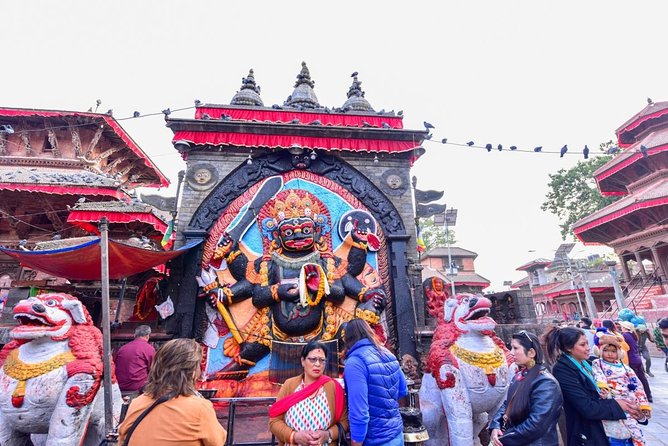
- Kathmandu is only the beginning: Swayambhunath, Asan, Kumari Chowk, and Kathmandu Durbar Square give you a strong first look at religion, trade, royal power, and Newari culture.
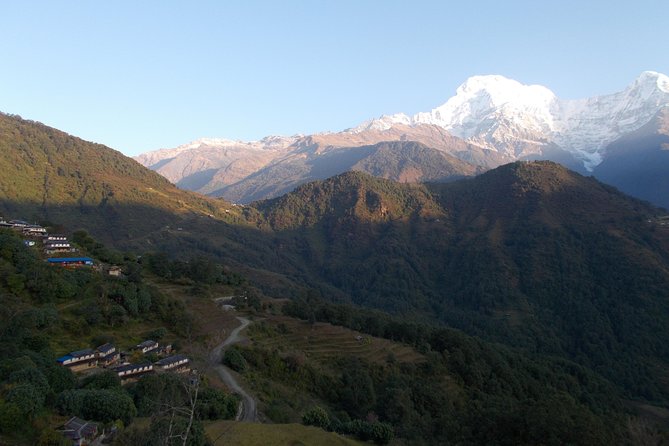
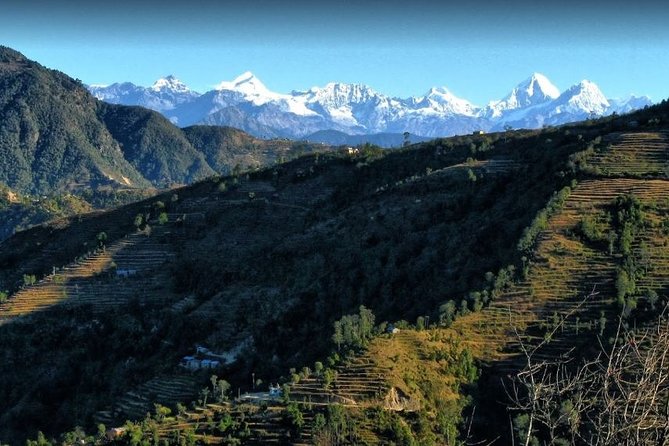
- Bajrayogini adds a rare local stop: This temple visit is paired with a hike to Jarsing Pauwa, where clear weather can bring Himalayan views.
- The middle of the trip is built around walking: Nagarkot, Ghimire village, Dhulikhel, and Namo Buddha are connected by hikes and rural paths.
- Monastery time is a major feature: At Namo Buddha, you spend time learning about meditation and the daily life of monks.
- Panauti and Bhaktapur bring Newari culture into focus: Both towns offer old temples, traditional streets, and distinctive wood and stone work.
- The price covers more than sightseeing: Private transport, taxes, seven breakfasts, six lunches, and six dinners are included, but personal costs, insurance, and some entrance fees are extra.
Why this Nepal trip feels different
Many first visits to Nepal focus on Kathmandu, Pokhara, and mountain trekking. This experience takes another route. It is designed for people on a career break, gap year, or sabbatical who want time to understand how Nepal works at street level, not simply collect photographs of monuments.
That means you spend real time in places such as Ghimire village and Panauti. You also get repeated contact with religious life, from Hindu shrines and Buddhist stupas to a working monastery. The result is less about one huge highlight and more about the change in rhythm from day to day.
The schedule begins in the city, moves into the hills, then returns to cultural centers near Kathmandu. You will not spend nine days at high altitude, and no mountaineering is listed. Still, this is an active trip. Several days include one to six hours of hiking or walking, often alongside sightseeing.
For a person taking time away from work, that balance can be useful. You get structure without spending every day in a vehicle. You also get a chance to slow down at the monastery and in the village, where conversations and observation matter as much as formal attractions.
A few more Kathmandu days to weigh up
- Everest Base Camp Trek – 14 Days
★ 5.0 · 1,499 reviews - Private Kathmandu Sightseeing Tour | UNESCO World Heritage sites
★ 5.0 · 756 reviews - Everest Base Camp Helicopter Tour landing at Everest View Hotel
★ 5.0 · 668 reviews
Day 1: From Swayambhunath to Asan market
Your first morning starts at Swayambhunath, often called the Monkey Temple. The hilltop stupa dates back to around the fifth century and remains an important pilgrimage site. From the top, you get a broad view across Kathmandu Valley, while the shrine itself introduces the Buddhist and Hindu traditions that overlap throughout Nepal.
The visit is listed at about 45 minutes. That is enough for a first look, though you may want more time if you enjoy religious art, prayer wheels, or watching pilgrims make their way around the stupa.
The day then shifts into less formal places. Shobha Bhagawati is a Hindu shrine dedicated to the goddess Bhagawati and built in the Nepali pagoda style. Bijayashwari offers another local religious stop before you head toward Kathmandu Durbar Square.
One especially distinctive walk passes through Nardevi. Ayurveda shops line the street, and their natural medicines give the lane a strong smell. You can step inside a shop to look around or ask questions, but purchases are personal expenses.
Kathmandu Durbar Square was once the palace center of the old Kathmandu kingdom. Its temples and shrines were damaged by the 2015 earthquake, but the area remains one of the valley’s key historic places. The tour also includes Hanuman Dhoka, a former royal complex now functioning as a historical museum.
Kumari Chowk adds one of Nepal’s most unusual religious traditions. The Kumari is a living goddess, traditionally a young girl, and you may see her if you arrive at the right time. She does not speak with visitors, so treat the stop as a brief cultural encounter, not a performance.
The afternoon finishes around Asan, one of Kathmandu’s best local markets. You will find fruit, vegetables, dried goods, meat, fish, pickles, household items, and traditional clothing. This is the place to watch ordinary commerce in action. Keep your belongings close in crowded lanes and leave room for the group to move.
Day 2: Boudhha, Bajrayogini, and Jarsing Pauwa
Boudhha is one of the great Buddhist centers of Kathmandu. The huge white stupa is surrounded by monasteries and a school producing silk thangka paintings. You can walk around the stupa while prayer flags move overhead and the repeated Buddhist chant Om Mani Padme Hum sets the tone.
The visit lasts about 30 minutes, so it is fairly short for such an important site. If you are interested in Tibetan Buddhist practice, ask your guide how much free time you will have around the stupa and monasteries.
The day becomes more unusual at Bajrayogini. The name combines Bajra, meaning strong, with Yogini, referring to a female yogi. Local stories and evidence around the temple give the guide a chance to explain a tradition that many standard Kathmandu tours skip.
After the temple, you hike toward Jarsing Pauwa viewpoint. The hill station is known for views of the Himalayas and nearby countryside. Clear weather matters here. On a cloudy day, the walk and village scenery still provide a rural break from Kathmandu, but do not count on a perfect mountain panorama.
Day 3: Nagarkot and a night in Ghimire village
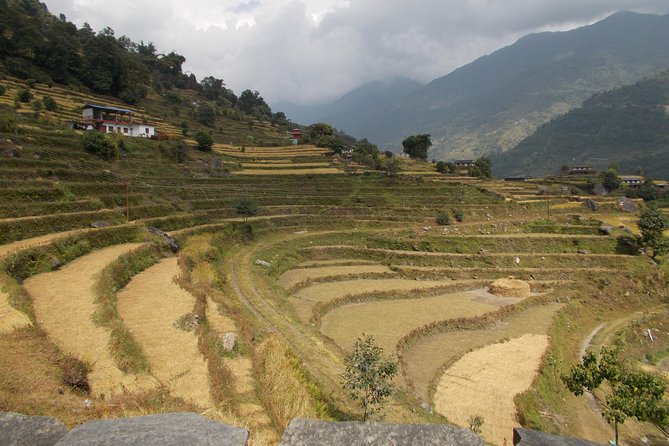
The Nagarkot Panoramic Hiking Trail takes you through villages, wooded sections, hills, and terrace fields. Nagarkot is one of the valley’s best-known hill stations, and the attraction is the combination of open mountain views and a slower rural setting.
The listed walking portion is about one hour, but the day may feel longer once you include transport, stops, and the village stay. If you have been sitting at a desk for months, start the trip with sensible footwear and be ready for uneven paths.
After sunset in Nagarkot, you hike to Ghimire village. The schedule gives you about three hours for local life, including a friendly welcome and time with the community. This is one of the more valuable parts of the trip because it moves beyond temples and viewpoints. You see how a village evening feels, rather than simply driving through one.
The exact sleeping arrangement is not stated in the trip details, so confirm whether the village visit includes an overnight stay, a homestay, or a hosted evening before you pay. That distinction matters, especially for anyone expecting a specific level of comfort.
A different kind of day from the same base:
- Half day cooking class in Thamel kathmandu
★ 5.0 · 607 reviews - Everest Base Camp Trekking
★ 5.0 · 485 reviews - Nagarkot Sunrise View and Day Hiking from Kathmandu
★ 5.0 · 471 reviews - Kathmandu: Full Day 7 UNESCO Tour with Lunch – Private/Group
★ 5.0 · 415 reviews
Day 4: Tukucha Nala and the route to Dhulikhel
Day four begins around Tukucha Nala, where local people guide you to a monastery and several historic temples. You then walk through quieter places near the village. The visit lasts about five hours, making it one of the longer cultural days.
This is the kind of morning where a local guide adds real value. The temples are not presented as isolated monuments. Instead, you learn how they fit into the community and hear local explanations that are unlikely to appear on a roadside sign.
Later, you hike from the Nagarkot area toward Dhulikhel through villages and green countryside. The walk is listed at three hours, with mountain views possible in clear weather. Dhulikhel is another popular hill town, so the route gives you a second chance to see Nepal’s upland scenery without committing to a long Himalayan trek.
The drawback is the amount of movement. A five-hour local visit followed by a three-hour hike could feel demanding. Ask how much luggage you will carry and how the evening transfer works. Private transport helps, but it does not remove the need for a good level of stamina.
Days 5 and 6: The quiet center at Namo Buddha
Namo Buddha is the emotional center of the trip. From Dhulikhel, you hike to Thrangu Tashi Yangtse Monastery, an important Buddhist site set in the hills. The walk is listed at about four hours and leads into two days focused on monastic life.
You spend time with monks and learn about their routine. The next morning includes a hike with monks to a nearby village, followed by a return to the monastery to learn about meditation and daily practice. The second day is listed at six hours, so this is not simply a quick temple photo stop.
I like the two-day design. A short visit can make a monastery feel like another attraction. Staying with the subject for a full day gives you time to watch, ask questions, and adjust to a quieter pace. For a sabbatical or gap year, that pause may be more meaningful than adding another crowded sightseeing stop.
At the same time, your role should be respectful and flexible. This is a religious community, not a staged cultural show. Specific arrangements, such as where you sleep and which activities are open to you, are not detailed, so get those points clear before departure.
Day 7: Panauti and its 15th-century temples
Panauti is a historic Newari town with temples dating to the 15th century. About 40 temples are associated with the town, and the appeal lies in the whole setting: old houses, narrow streets, shrines, and a community that still uses its traditional spaces.
The three-hour town exploration is followed by two hours at the Panauti Museum. The museum sits inside Indreshwor Temple, where you can see examples of local stone and wood craftsmanship. This is useful context for the rest of the trip. After seeing carved doors, temple beams, and brick buildings across the valley, you have a place where those skills are explained more directly.
Panauti is a good counterpoint to Bhaktapur. It is smaller and less grand in scale, so you can pay attention to details rather than simply moving from one major monument to the next. Wear shoes suited to old paved lanes and allow the walk to unfold at a calm pace.
Day 8: Bhaktapur’s temples and Newari streets
Bhaktapur, known as the City of Devotees, gives you one of the trip’s strongest heritage visits. The wider town is full of Newari food, customs, architecture, and daily activity. You have three hours to explore the city, followed by two hours in Bhaktapur Durbar Square.
The square is a UNESCO World Heritage Site and includes the five-story Nyatapola Temple, one of Nepal’s most recognizable buildings. Its stepped design and guardian figures make it easy to understand why Bhaktapur is a highlight even for people who have already seen Kathmandu’s royal square.
Entrance to Bhaktapur Durbar Square is included, while Kathmandu Durbar Square has an admission charge listed separately. Budget for the Kathmandu fee and for personal purchases, drinks, and souvenirs.
Because Bhaktapur is a major cultural stop, the city can feel much busier than Panauti or Ghimire. That contrast is useful. You see both the polished heritage center and the quieter town life that makes the earlier days feel personal.
Day 9: Free time in Kathmandu
The final day is intentionally open. You have about two hours to choose what suits you, from visiting another local place to shopping for souvenirs. Since the suggested options are not fixed, you can use this time to return to a favorite market, buy traditional clothing, or simply rest after the walking schedule.
Do not treat this as a full sightseeing day. It is better viewed as breathing room at the end of a busy program. If you have a late departure, confirm how the private transport and airport timing will be handled.
What the $980 price really covers
At $980, the trip offers solid value if you want a private experience with meals and transport arranged. The price includes private transportation, taxes and fees, seven breakfasts, six lunches, and six dinners. That removes several daily decisions and allows the guide to concentrate on the route and local encounters.
The value is strongest for someone who would otherwise need to arrange multiple transfers between Kathmandu, Nagarkot, Dhulikhel, Namo Buddha, Panauti, and Bhaktapur. It is also useful if you want a private group rather than a fixed large departure.
Read the inclusions carefully. Travel insurance and personal expenses are not covered, and at least some entrance fees are separate. Accommodation is not clearly listed among the inclusions, even though one trip account described first-class hotels on a different Nepal and Bhutan journey. Do not assume those hotel arrangements apply here. Ask about every night before booking.
Who should book this experience
I would recommend this trip to you if you want Nepal through religion, community life, and walking, rather than a trek or a luxury holiday. It suits people on a gap year or sabbatical who have enough time to adjust to a slower pace and who enjoy listening, observing, and asking questions.
It is also a good match for couples, families, or small private groups that want control over the pace. Most people can participate, but the repeated hikes mean you should be comfortable walking for several hours on some days.
I would be more cautious if you want a relaxed resort schedule, a tightly timed English-language program, or a single base in Kathmandu. One serious complaint concerned a guide’s English communication and a mismatch over expectations. The operator responded that there had been contact during the trip, but the disagreement still points to a practical step: confirm the guide’s language ability, role, and availability in writing.
The operator name is Sabbatical Explore Nepal, also called Social Tourism Nepal. Dinesh Karki is named in trip arrangements connected with the company, while Suman Panta is associated with another Nepal and Bhutan agency experience. If either person is your contact, confirm exactly who will guide you and who will handle transport.
Final call: a strong cultural trip with a few details to confirm
Book this if you want a personal, active introduction to the Kathmandu Valley, with time for village life and Buddhist practice. The combination of Bajrayogini, Ghimire, Namo Buddha, and Panauti gives the trip a more human scale than a standard monument tour.
Before paying, confirm accommodation, the English-speaking guide, entrance fees, luggage handling, and the precise level of hiking required. If those details are clear, the $980 price is reasonable for private transport, extensive guiding, and most meals across nine days.
The free cancellation rule allows a full refund when you cancel at least 24 hours before the start time. After that point, cancellations and changes are not accepted. Use that window to settle the unanswered practical details.
FAQ
How long is the Nepal career-break experience?
The experience lasts approximately nine days, with activities scheduled from day one through day nine.
Where does the experience take place?
It is based in Kathmandu and visits Swayambhunath, Kathmandu Durbar Square, Boudhha, Bajrayogini, Jarsing Pauwa, Nagarkot, Ghimire village, Dhulikhel, Namo Buddha, Panauti, and Bhaktapur.
Is private transportation included?
Yes. Private transportation is included in the price.
Are meals included?
Seven breakfasts, six lunches, and six dinners are included.
Are entrance fees included?
Some are included, while others are separate. The listed admission to Kathmandu Durbar Square is not included, while Hanuman Dhoka, Jarsing Pauwa, Nagarkot, Panauti Museum, and Bhaktapur Durbar Square are listed as included.
Is this a private experience?
Yes. Only your group participates.
Can most people take part?
The additional information says most people can participate. The program includes several walks and hikes, including outings lasting up to six hours.
Is travel insurance included?
No. Travel insurance is not included.
What is the cancellation policy?
You can cancel at least 24 hours before the local start time for a full refund. Cancellations or changes made less than 24 hours before the start time are not accepted.
Recently added around Kathmandu
- Kathmandu Airport Pickup and Drop-off Services★ 5.0 · 3 reviews
- Kathmandu Paragliding★ 5.0 · 3 reviews
- Kathmandu Chandragiri Cable Car and Swayambhunath Private Tour★ 5.0 · 3 reviews
- Explore The Beauty Of Langtang Valley In 8-Days Trek★ 5.0 · 3 reviews
- Kathmandu: Nightlife and Pub Crawl Tour★ 5.0 · 3 reviews
- Kathmandu: Momo Making Class with a Local Chef★ 5.0 · 3 reviews
- Mountain Flight Experience in Nepal★ 4.5 · 3 reviews
- Everest Base Camp Trek★ 5.0 · 3 reviews
Other Kathmandu Tours worth a look


Private Kathmandu Sightseeing Tour | UNESCO World Heritage sites
Read our review →
Everest Base Camp Helicopter Tour landing at Everest View Hotel
Read our review →


Nagarkot Sunrise View and Day Hiking from Kathmandu
Read our review →
Full Day 7 UNESCO Tour with Lunch – Private/Group
Read our review →