
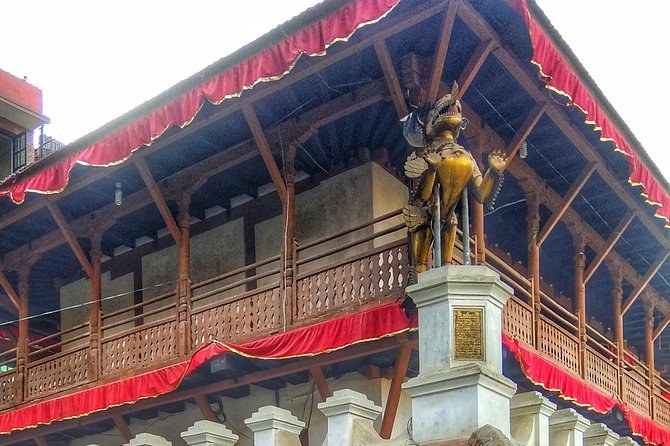
REVIEW · KATHMANDU TOURS
Walking tour of real Kathmandu through back streets.
Kathmandu reveals itself best on foot, away from the main roads. This private walk takes you through Ason bazaar, where vegetable sellers, grocery stalls, temples, and local shoppers share the same narrow space, then continues to Kathmandu Durbar Square and its royal courtyards. You get both daily city life and major sights in one outing.
I like the small private format, with up to 10 people, and the fact that guide Anil Manandhar has decades of guiding experience. I also like the route’s variety: you are not simply moving from monument to monument, but passing through markets, Buddhist and Hindu religious sites, public courtyards, and old lanes. The main consideration is that entrance fees are extra, and the walk requires good weather.
Key points at a glance
- Ason market is the heart of the walk: See Kathmandu’s old open-air shopping district, with vegetable and grocery stalls woven into the city streets.
- Anil Manandhar leads the tour: You receive a licensed guide service, and Anil has been guiding in Nepal for 32 years.
- Major sights fit into one route: Visit Kathmandu Durbar Square, Kumari Temple, Hanuman Dhoka Palace, Indra Chowk, and Freak Street.
- It is a private outing: Your group alone takes part, with a maximum group size of 10.
- The walk lasts about three hours: Allow three to four hours overall, including time at the sights and along the streets.
- Entrance costs are separate: The $68 price covers the private guide, not admission fees.
Starting at Garden of Dreams and entering old Kathmandu
The tour begins at Garden of Dreams on Tridevi Sadak. That gives you a clear meeting point in central Kathmandu before the route turns into the older streets and market lanes.
You should expect a walking tour rather than a sightseeing trip by vehicle. That matters here. Kathmandu’s character is found in the small spaces between the headline sights: a shrine beside a shop, a courtyard opening off a lane, or a market stall set up where several streets meet.
The advertised route runs about three hours, while the overall duration is listed as three to four hours. I would keep the longer time window free. Market stops and religious sites can take longer than planned, especially if you want explanations from Anil rather than a quick pass through.
The activity is available daily, with listed start times between 9:15 AM and 2:15 PM. You should confirm the exact start time when booking, since those hours describe the operating window rather than one fixed departure.
More Walking Tours in Kathmandu
- Kathmandu Food and Drink Walking Tour
★ 5.0 · 266 reviews - Kathmandu: Food and Drink Walking Tour
★ 4.9 · 119 reviews - Walking Street Food Tour in Kathmandu
★ 5.0 · 111 reviews
Ason bazaar, Kathmandu’s old open supermarket
Ason is the most distinctive part of this walk. The market is described as an ancient open supermarket, and that is a useful way to picture it. Instead of one enclosed food hall, you find everyday shopping spread through the streets, with vegetables, groceries, and other goods sold from busy local stalls.
This is where the tour moves beyond the usual monument checklist. You see a working part of Kathmandu, not a district arranged only for sightseeing. The value of having a guide is that Anil can help explain what you are seeing and place the market within the city’s daily routine.
Expect close quarters and a lot to look at. A market walk is less polished than a museum visit, which is part of its appeal. You may need to pay attention to people and activity around you, and you should be ready for an active street setting rather than a quiet, carefully ordered attraction.
Ason also gives the tour a useful rhythm. After seeing religious buildings and historic courtyards, you return to ordinary life: shopping, selling, passing through, and conducting business. That contrast helps you understand Kathmandu as a lived-in city.
Indra Chowk and the old street network
From Ason, the route includes Indra Chowk, another important part of central Kathmandu. The tour does not treat the city as a series of isolated monuments. Instead, it connects the market areas and public spaces so you can see how the older center works as a whole.
Indra Chowk is valuable because it keeps the focus on movement and local life. You are walking through the same kind of urban setting that links the market to the palace square. The walk’s appeal lies in these transitions, not only in the arrival at a famous building.
Anil’s role is especially useful in places like this. The supplied information describes him as a professional guide with 32 years of experience, and his other guiding work includes Pashupatinath Temple. You can expect the tour to lean on explanation and local context, rather than simply pointing out buildings.
The private format should make it easier to ask questions. If you want to know why a courtyard matters, how a shrine is used, or what you are seeing in the market, you can raise the question without holding up a large group.
Kathmandu Durbar Square and the royal center
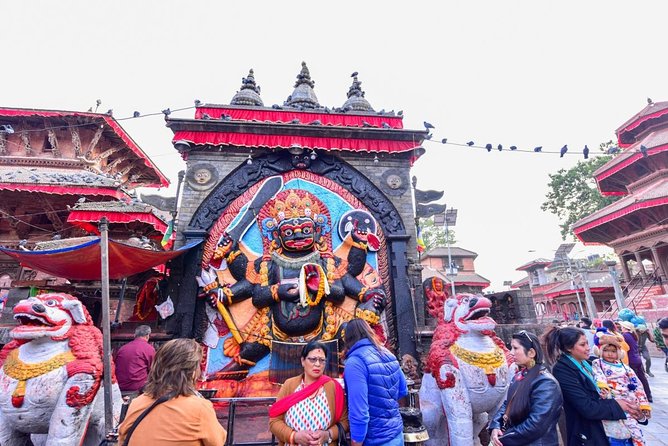
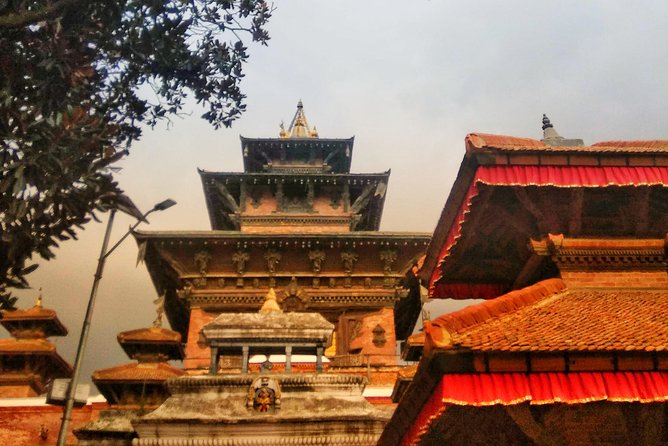
Kathmandu Durbar Square is the main historic sight on the route. The square brings together palaces, temples, courtyards, and religious traditions in one compact area.
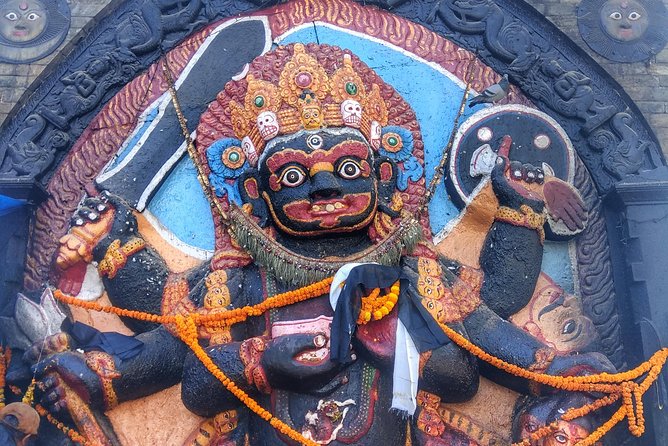
The walk includes the Kumari Temple and Hanuman Dhoka Palace. The Kumari Temple is associated with Kathmandu’s living religious traditions, while Hanuman Dhoka connects the square with Nepal’s former royal center. You are not simply looking at old architecture. These places help explain the political and religious importance of the city center.
The route also includes a Buddhist stupa and a Hindu temple, along with public courtyards. That combination is one of the strongest reasons to choose this experience. In a short period, you see several kinds of sacred and civic space rather than focusing on one monument type.
Admission is not included, so budget separately for entrance fees. The exact cost is not provided, and the tour details do not state that every stop requires paid entry. Ask for the current fee information before setting out, particularly if you are watching your spending.
One unusual detail from the guide’s past work is a reference to seeing a Pachali Bhairav dance at the palace. That is not presented as a guaranteed part of this tour, so you should not book expecting a performance. It does show the kind of cultural moment that can occur when a walk coincides with a local event or ceremony.
A different kind of day from the same base:
- Everest Base Camp Trek – 14 Days
★ 5.0 · 1,499 reviews - Private Kathmandu Sightseeing Tour | UNESCO World Heritage sites
★ 5.0 · 756 reviews - Everest Base Camp Helicopter Tour landing at Everest View Hotel
★ 5.0 · 668 reviews - Half day cooking class in Thamel kathmandu
★ 5.0 · 607 reviews
Kumari Temple and living tradition
The Kumari Temple is one of the route’s most memorable named stops because it represents a continuing religious tradition, not only a historic structure. The information provided does not promise a sighting of the Kumari or describe an interior visit, so keep your expectations measured.
What you can count on is a stop at the temple and an explanation from the guide. The private setting is useful here, since you can ask about the temple’s role and the customs connected with it.
As with any religious site, follow the guide’s instructions about where to walk, what to photograph, and how to behave. The supplied details do not specify photography rules or access arrangements, so do not assume every area is open.
Hanuman Dhoka Palace and public courtyards
Hanuman Dhoka Palace adds a royal dimension to the walk. Together with the temples and courtyards around Durbar Square, it shows how Kathmandu’s old center brought public life, worship, and political power into close contact.
I like that the route includes courtyards as well as headline buildings. Courtyards can be easy to miss when you are rushing between major sights, yet they often make the old city easier to read. They give you a sense of how people use shared spaces and how the historic center is arranged.
You should allow time for uneven walking and frequent pauses. The details do not provide a difficulty rating or promise step-free access, so anyone with mobility concerns should ask the provider before booking. Most people can participate, according to the activity information, but that is not the same as a guarantee of easy walking for every visitor.
Freak Street and Kathmandu’s changing identity
The walk also visits Freak Street, one of Kathmandu’s best-known historic streets. Its inclusion broadens the route beyond temples, markets, and palaces.
The name points to a different chapter in the city’s modern visitor culture. The tour does not provide detailed claims about current businesses or nightlife there, so I would treat this as a street with historical and cultural interest rather than expect a specific type of entertainment.
Freak Street works well near the end of the route because it gives you another view of central Kathmandu. Ason shows daily commerce, Durbar Square shows royal and religious importance, and Freak Street adds a more recent layer to the city’s identity.
What the $68 private price really buys you
The price is $68 per group, for up to 10 people. That is not a per-person price. For a full group, the cost works out to less than $7 per person before entrance fees, which is strong value if your party is large.
For two people, the calculation is different, but the private arrangement still has value. You are paying for a licensed guide dedicated to your group rather than joining a larger shared walk. That can make a short tour more useful because the pace and questions are not shaped by strangers.
The fee includes guide service only. Entrance fees are excluded, and transport is not listed as included. Since the tour begins and ends at Garden of Dreams, plan your own way to the meeting point and back to your hotel or next stop.
The price makes the most sense if you want interpretation. If you only need directions to Durbar Square, you can walk there independently. If you want the market, religious sites, palace, courtyards, and street history connected by a local guide, the private cost is easier to justify.
Anil Manandhar’s guiding style and experience
The named guide is Anil Manandhar. The supplied information describes him as a licensed guide with 32 years of experience, and comments about his work emphasize detailed sharing, professional service, and strong familiarity with Kathmandu’s cultural sites.
One useful detail is that Anil has guided visitors at Pashupatinath during Mahashivratri and has taken people through Ason bazaar and Kathmandu Durbar Square. That suggests his strength is not just route management. He has experience explaining major religious and historic places during both ordinary visits and important local occasions.
You should still remember that a guide’s exact approach can vary by group. Tell Anil what interests you most at the start. You might want market life, architecture, Hindu and Buddhist traditions, palace history, or photography opportunities. A private tour gives you a good chance to shape the emphasis.
Who should book this Kathmandu walk?
This experience suits a first visit to Kathmandu when you want orientation and major sights in one outing. It is also useful if you have only half a day and want to see more than one historic district without arranging a complicated route yourself.
I would recommend it for people who enjoy walking through working city streets. The attraction is not only the monuments. It is the shift from market lanes to temples, from public courtyards to palace grounds, and from old commerce to Freak Street.
Families and small groups may like the private format, provided everyone is comfortable with several hours on foot. Most people can participate, but the information does not give detailed accessibility notes. Ask before booking if stairs, uneven streets, or long periods of walking could be a concern.
This may be less suitable if you want a quiet, slow architectural tour or if you dislike crowded market areas. Ason and Indra Chowk are included precisely because they are active parts of the city, not calm museum settings.
Practical details before you book
You receive confirmation at booking, and the tour is private for your group alone. The maximum group size is 10 people.
The experience requires good weather. If poor weather causes cancellation, you are offered another date or a full refund. You can cancel for a full refund up to 24 hours before the start time. Changes or cancellations made less than 24 hours before the start are not accepted for a refund.
Wear footwear suitable for a three-hour city walk and leave room in your schedule for the longer four-hour estimate. Since admission is not included, ask about current entrance charges before the day begins.
Should you book it?
Book this walk if you want Kathmandu explained through its streets, not just viewed from a vehicle. The combination of Ason market, Indra Chowk, Durbar Square, Kumari Temple, Hanuman Dhoka Palace, and Freak Street gives you a broad first look at the city in a manageable three to four hours.
The strongest reasons to choose it are the private format, Anil Manandhar’s long guiding experience, and the mix of ordinary market life with major historic sights. Skip it if you want transportation, included admissions, or a short monument-only visit.
For most first-time visitors who want local context and a practical introduction to central Kathmandu, this is a well-priced way to get oriented.
FAQ
How much does the walking tour cost?
The tour costs $68 per group, with up to 10 people included in that price.
How long does the Kathmandu walking tour last?
The experience lasts approximately three to four hours. The itinerary describes the walking portion as three hours.
Where does the tour start?
The meeting point is Garden of Dreams, Tridevi Sadak, Kathmandu 44600, Nepal.
Where does the tour end?
The tour ends back at the meeting point at Garden of Dreams.
Is this a private tour?
Yes. Only your group participates, and the group can include up to 10 people.
Are entrance fees included?
No. Entrance fees are not included in the tour price.
Who provides the guide service?
The experience provider is Anil Manandhar, and the included service is provided by a licensed guide.
Can I cancel for a full refund?
Yes. You can cancel at least 24 hours before the start time for a full refund. If poor weather cancels the experience, you are offered another date or a full refund.
Recently added around Kathmandu
- Kathmandu Paragliding★ 5.0 · 3 reviews
- Kathmandu Airport Pickup and Drop-off Services★ 5.0 · 3 reviews
- Explore The Beauty Of Langtang Valley In 8-Days Trek★ 5.0 · 3 reviews
- Kathmandu Chandragiri Cable Car and Swayambhunath Private Tour★ 5.0 · 3 reviews
- Kathmandu: Nightlife and Pub Crawl Tour★ 5.0 · 3 reviews
- Mountain Flight Experience in Nepal★ 4.5 · 3 reviews
- Kathmandu: Momo Making Class with a Local Chef★ 5.0 · 3 reviews
- Everest Base Camp Trek★ 5.0 · 3 reviews
Other Kathmandu Tours worth a look


Private Kathmandu Sightseeing Tour | UNESCO World Heritage sites
Read our review →
Everest Base Camp Helicopter Tour landing at Everest View Hotel
Read our review →


Nagarkot Sunrise View and Day Hiking from Kathmandu
Read our review →
Full Day 7 UNESCO Tour with Lunch – Private/Group
Read our review →
This tour also appears in