
REVIEW · KATHMANDU TOURS
Kathmandu to Pokhara Premium sofa bus ticket
The best part of this Kathmandu to Pokhara bus ride is that it turns a necessary transfer into a proper Nepal road trip. You pass small towns, river valleys, mountain views, and stretches where white-water rafting plays out below the road. Two riverside food stops add a welcome break from the bus.
I like the reclining sofa seats, which matter on Nepal’s rough highway, and the low price compared with a flight or private car. I also like the clear departure pattern: 7:00 am from Kathmandu and 7:30 am from Pokhara, with complimentary water and a local newspaper.
The catch is the road. Construction, traffic near Kalanki and Naubise, and unscheduled passenger drop-offs can stretch the ride well beyond six hours. One journey took about 9 hours and 45 minutes, and air conditioning was not consistent throughout.
Key Points Before You Book
- Riverbank breakfast and lunch stops: The bus pauses for about 25 minutes for breakfast and 30 minutes for lunch, with food available to buy separately.
- Early departure near Thamel: The Kathmandu stop at Shorakhutte is about a five-minute walk from Thamel, with a 6:30 am meeting time and a 7:00 am departure.
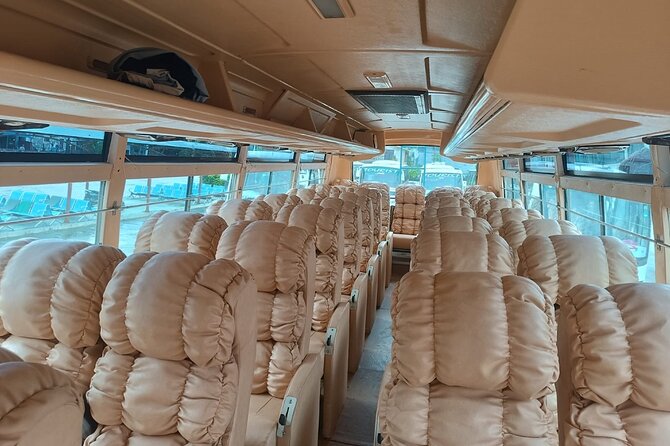
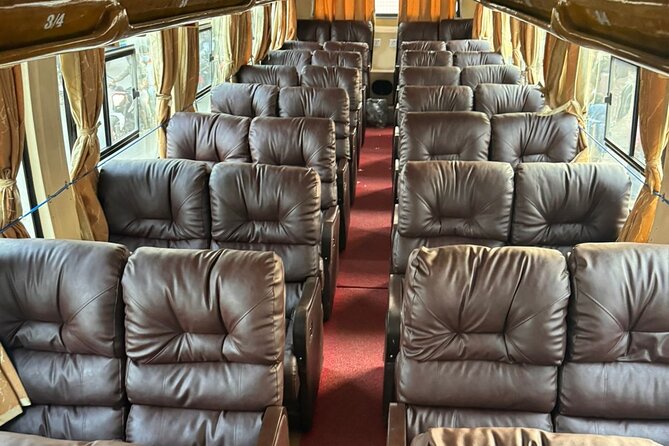
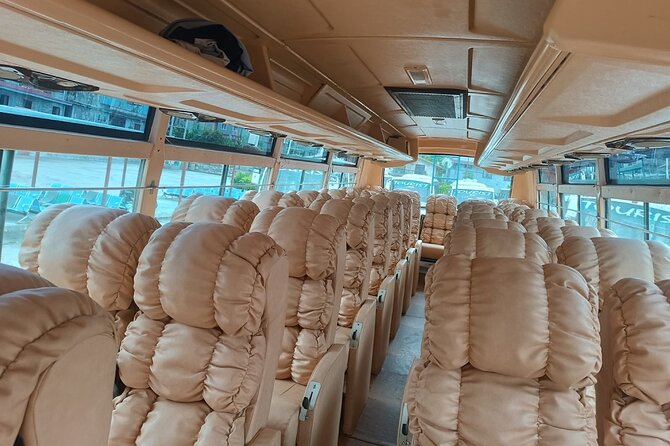
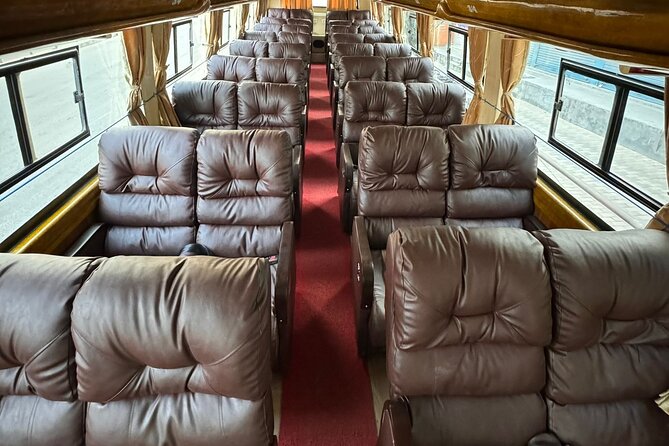
- Comfort-focused seating: Reclining seats, suspension, air conditioning, mineral water, and a maximum group size of 30 make this more comfortable than a basic local bus.
- Views from the highway: Look for river scenery, small towns, mountain ranges, and white-water rafting activity along the route.
- Road conditions can change the schedule: Six hours is possible when traffic and construction cooperate, but you should allow much longer.
- Simple cancellation terms: You can cancel for a full refund up to 24 hours before departure.
Why This Bus Route Is More Than a Transfer
Kathmandu and Pokhara are linked by one of Nepal’s most useful road journeys. The bus follows a busy highway through changing scenery, and the road itself becomes part of the day. You leave the capital’s dense streets, pass through smaller settlements, and run alongside rivers for long stretches.
That makes this a good choice if you want to see more of Nepal without paying for a flight. From your window, you may spot mountain ranges in the distance, roadside towns, and sections of river used for white-water rafting. The views are not constant, and the road can be rough, but the ride gives you a better sense of how the country fits together.
The advertised price is about $11.50 per person, which is strong value for a journey of this length. The fare information also lists Rs 800 for Kathmandu to Pokhara, so I would confirm the final amount and payment method when booking. Either way, the bus costs far less than a flight or private vehicle hire.
You are paying for transport rather than a guided sightseeing tour. No guide is named, and the main service is the bus, its stops, and the road experience. That is fine if you want an efficient connection with a few useful comforts.
A few more Kathmandu days to weigh up
- Everest Base Camp Trek – 14 Days
★ 5.0 · 1,499 reviews - Private Kathmandu Sightseeing Tour | UNESCO World Heritage sites
★ 5.0 · 756 reviews - Everest Base Camp Helicopter Tour landing at Everest View Hotel
★ 5.0 · 668 reviews
Starting Near Thamel at Shorakhutte
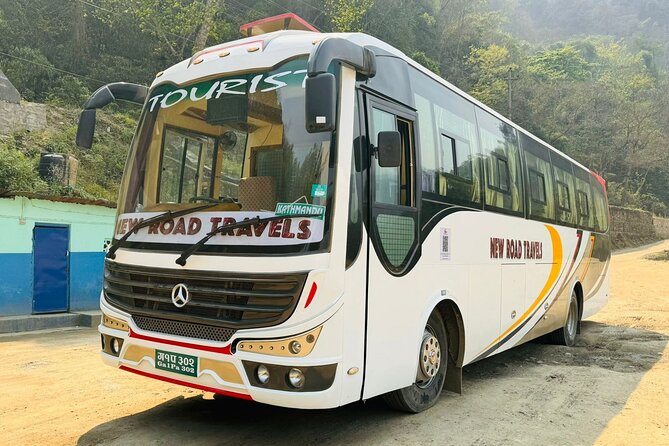
The Kathmandu departure point is the tourist bus stop at Shorakhutte, operated by New Road Travels and Tours. It is close to Thamel, about a five-minute walk, which makes the location convenient if you are staying in that part of the city.
The stated meeting time is 6:30 am, while the bus is scheduled to leave sharply at 7:00 am. I would treat the earlier time seriously. The route through Kathmandu includes Nayabazar, Balaju, Swayambhu, and Kalanki, so some passengers board farther along the way.
If you are staying near one of these points, the route may save you a trip across town. If you are meeting at Shorakhutte, arrive with enough time to identify the bus and settle your luggage before departure.
This is a mobile-ticket service, so keep your booking confirmation easy to show on your phone. Confirmation is provided at booking. The operator also accepts several booking and payment methods, including office booking, bank transfer, eSewa, and phone booking with payment on the bus, according to the available service information.
What the Premium Sofa Seats Feel Like
The main reason to choose this service over a basic public bus is comfort. The seats recline, and the vehicle is described as having strong suspension to reduce the worst of the bumps. That matters on a highway affected by road construction.
You should still expect movement. A reclining seat cannot turn a rough road into a smooth one, but it gives you more room to rest, especially during a five to six-hour journey. The bus carries a maximum of 30 people, which is a more manageable size than a packed local service.
Air conditioning is listed as part of the service. In practice, it may not run consistently for the entire ride. One reported journey had no air conditioning for most of the trip, so I would dress in light layers and keep water nearby rather than rely completely on a cool cabin.
The bus provides one complimentary bottle of mineral water per person. A local English and Nepali newspaper is also available, a small touch that helps pass the quieter stretches. Wi-Fi is offered too, but signal strength is weak in parts of the route because of the geography. Consider it a bonus, not a reason to plan work or streaming around the journey.
Smoking is not allowed inside the bus. You are also asked to keep rubbish in the provided bin or carton rather than throw it from the window.
The First Stretch Through Kathmandu and Kalanki
The opening section is less scenic and more practical. The bus works its way through Kathmandu’s outer districts before reaching Kalanki, one of the places where traffic can cause serious delays.
The route continues toward Naubise, and this is another point where congestion may slow the bus. Road work adds a second risk. The journey can be close to six hours when conditions are kind, but a longer day is entirely possible.
This is why I would avoid booking a tight flight, trek connection, or important appointment in Pokhara on the same day. The bus has a fixed departure, but the arrival time is not fully predictable.
You may also see the bus pause to set down people along the highway. The service information says it does not stop for local passengers waving from the roadside, yet one account describes frequent passenger drop-offs. The practical lesson is simple: expect a tourist bus with a planned route, but do not assume it will run like a nonstop airport coach.
A different kind of day from the same base:
- Half day cooking class in Thamel kathmandu
★ 5.0 · 607 reviews - Everest Base Camp Trekking
★ 5.0 · 485 reviews - Nagarkot Sunrise View and Day Hiking from Kathmandu
★ 5.0 · 471 reviews - Kathmandu: Full Day 7 UNESCO Tour with Lunch – Private/Group
★ 5.0 · 415 reviews
The Riverside Food Stops
The ride includes two planned breaks, one for breakfast and one for lunch. Each stop is beside a river, giving you a chance to stretch your legs and look at the water while you eat.
The breakfast stop lasts about 25 minutes. The lunch stop lasts about 30 minutes. Food is not included in the ticket, so carry some Nepalese rupees or be ready to pay separately. The stops are described as offering hygienic food, but this is still a roadside meal break rather than a long restaurant visit.
The river setting is the real appeal. You can step away from the seat, breathe fresh air, and watch the road traffic from a different angle. Depending on conditions, the water and surrounding hills may be more memorable than the meal itself.
Watch the clock. A half-hour disappears quickly when the bus is waiting. I would take the opportunity to use the restroom, buy food, refill your water if possible, and return before departure. These breaks are useful, but they do not turn into open-ended sightseeing stops.
The route also offers views of white-water rafting from the bus window. You may not see rafting at every point, but the river sections show how the highway connects transport, food stops, and outdoor adventure in the same corridor.
How Long the Kathmandu to Pokhara Ride Really Takes
The official estimate is five to six hours, with six hours described as possible when everything goes smoothly. That is the best-case figure, not a guarantee.
Road reconstruction is the largest variable. Traffic near Kalanki and Naubise can also add time, and the account of a 9-hour-45-minute journey gives you a useful warning about the range. A separate trip had plenty of breaks but rough roads throughout.
I would plan for a full day of transport, even though the scheduled journey is shorter. Leave Kathmandu early, keep your afternoon flexible, and do not schedule an essential activity immediately after the expected arrival.
The rough surface is not just an inconvenience. It changes how the ride feels. The sofa seats and suspension help, but you may still want to keep fragile items protected and place anything you need during the journey within easy reach.
Arriving Near Lakeside in Pokhara
The final stop is the Tourist Bus Park in Pokhara, near Lakeside and about a five-minute walk from the lakeside area. This is a useful arrival point if your hotel, restaurant, or tour base is nearby.
The bus route into the departure area includes Rastra Bank Chowk, Mustang Chowk, and Prithvi Chowk. For the return journey, the bus leaves from Lakeside at 7:30 am, with the same general highway route back to Kathmandu and a final stop at Shorakhutte.
The location is practical, but you should check your accommodation’s exact position before arrival. Lakeside is a long area, and a five-minute walk applies to the bus park’s nearby section, not necessarily to every hotel in the neighborhood.
Arriving by bus also gives you a useful first look at Pokhara before you start exploring. The town feels different from Kathmandu, and the road approach helps you see the change rather than simply appearing at the airport.
Luggage, Seats, and Booking Details
The bus has a large luggage compartment and no strict hard limit is given. The operator suggests keeping your load to no more than two pieces per person. I would follow that advice, particularly if the storage area is shared and you want quick access at the stops.
Seat assignment follows a first-paid, first-confirmed approach. Paying early improves your chance of getting the seat you want. A seat chart is available, and you can request a position if it remains open.
For a long road ride, seat choice can affect your day. A front position may give you a clearer view, while a seat farther back may feel less desirable to some people despite the stated suspension. Since exact availability changes, request your preference early rather than expecting it on the morning of departure.
Service animals are allowed, and the bus is near public transportation. Most people can take part, though the information does not provide detailed accessibility specifications for boarding or storage. If you need a particular arrangement, ask the operator before paying.
Price, Value, and the Main Trade-Off
At about $11.50, this is one of the cheaper practical ways to connect Kathmandu and Pokhara. The value improves because you receive a reclining seat, water, a newspaper, air conditioning as a listed feature, and two organized breaks.
A flight is faster, but it costs more and removes the road views. A private vehicle gives you more control over stops, but costs much more. This bus sits between the two: affordable and more comfortable than a basic local bus, but less flexible and less predictable than a private car.
The key trade-off is time. You save money, but you must accept construction delays, rough roads, and possible unscheduled stops. If your priority is the lowest reasonable price and a chance to see Nepal from the highway, I think the value is sound.
The overall rating is 3.9 from 17 ratings, which fits the service’s profile. The strongest points are the comfortable seats and useful breaks. The weaker points are inconsistent air conditioning and journey times far longer than the estimate when road conditions turn bad.
Who Should Take This Bus?
I would recommend it to people who:
- Want an affordable connection between Kathmandu and Pokhara
- Prefer a reclining seat to a basic public bus
- Enjoy seeing towns, rivers, rafting, and mountain views from the road
- Have a flexible schedule after arrival
- Are staying near Thamel in Kathmandu or Lakeside in Pokhara
- Do not mind buying breakfast and lunch separately
I would think twice if you need a guaranteed arrival time, dislike rough roads, or expect a nonstop trip. I would also compare flight prices if you have limited time in Nepal and want to preserve most of a day for sightseeing.
The bus works best when you treat the journey as part of the Nepal experience, not as a perfectly timed transfer. Bring patience, keep your plans loose, and use the meal stops as a chance to reset.
Should You Book the Kathmandu to Pokhara Sofa Bus?
Book it if you want low-cost, reasonably comfortable transport and you are willing to accept highway delays. The riverbank stops, road views, complimentary water, and reclining seats give the journey more value than the price suggests.
Do not book it for a strict schedule. Six hours is possible, but construction and traffic can push the ride toward ten hours. Confirm the current fare, request your preferred seat early, arrive at Shorakhutte by 6:30 am, and keep your afternoon in Pokhara free.
Free cancellation is available up to 24 hours before departure. That gives you some flexibility while finalizing your plans, but changes or cancellations inside that 24-hour window are not accepted for a refund.
FAQ
Where does the bus leave from in Kathmandu?
The bus leaves from the tourist bus stop at Shorakhutte, near Thamel. The meeting time is 6:30 am, and the scheduled departure is 7:00 am.
Where does the bus arrive in Pokhara?
The final stop is the Tourist Bus Park near Lakeside in Pokhara. It is described as about a five-minute walk from the Lakeside area.
How long does the journey take?
The scheduled journey takes about five to six hours when conditions are good. Traffic, road construction, and other delays can make it much longer, with one journey taking about 9 hours and 45 minutes.
Are breakfast and lunch included?
No. Breakfast and lunch cost extra. The bus stops for about 25 minutes for breakfast and 30 minutes for lunch.
What is included in the ticket?
The ticket includes the bus journey, a reclining seat, one complimentary bottle of mineral water, and a local English and Nepali newspaper. Wi-Fi is offered, but the signal may be weak.
Can I choose my seat?
You can request a seat from the available seat chart. Seat allocation follows a first-paid, first-confirmed system, so early payment improves your chance of getting your preferred seat.
Is luggage allowed?
The bus has a large luggage storage area and no strict luggage barrier is stated. The operator recommends taking no more than two pieces per person.
Can I cancel the booking?
Yes. You can cancel for a full refund if you cancel at least 24 hours before the experience start time. Cancellations or changes made less than 24 hours before departure are not accepted for a refund.
Recently added around Kathmandu
- Kathmandu Airport Pickup and Drop-off Services★ 5.0 · 3 reviews
- Kathmandu Paragliding★ 5.0 · 3 reviews
- Kathmandu Chandragiri Cable Car and Swayambhunath Private Tour★ 5.0 · 3 reviews
- Explore The Beauty Of Langtang Valley In 8-Days Trek★ 5.0 · 3 reviews
- Kathmandu: Nightlife and Pub Crawl Tour★ 5.0 · 3 reviews
- Mountain Flight Experience in Nepal★ 4.5 · 3 reviews
- Kathmandu: Momo Making Class with a Local Chef★ 5.0 · 3 reviews
- Everest Base Camp Trek★ 5.0 · 3 reviews
Other Kathmandu Tours worth a look


Private Kathmandu Sightseeing Tour | UNESCO World Heritage sites
Read our review →
Everest Base Camp Helicopter Tour landing at Everest View Hotel
Read our review →


Nagarkot Sunrise View and Day Hiking from Kathmandu
Read our review →
Full Day 7 UNESCO Tour with Lunch – Private/Group
Read our review →