
REVIEW · KATHMANDU TOURS
Island Peak Climbing | Summit 6,189m with Expert Guides
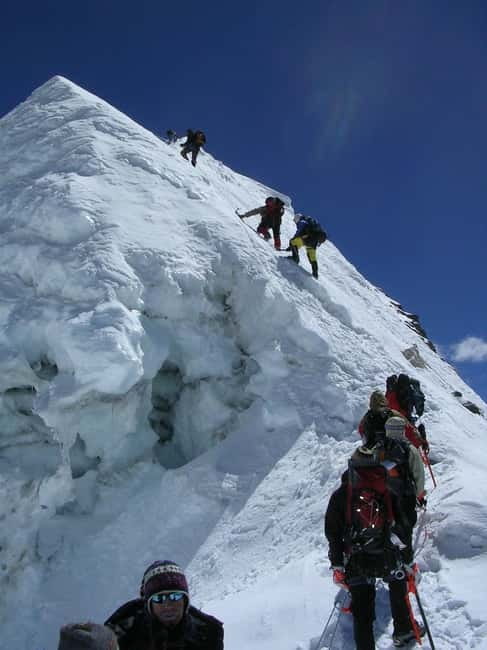
Island Peak is a serious Himalayan climb wrapped inside a classic Everest-region trek. At 6,189 meters, you get suspension bridges, Sherpa villages, Tengboche Monastery, and huge views of Everest, Lhotse, Ama Dablam, and Makalu before the summit push.
I like the careful altitude plan, with an acclimatization day in Namche, time in Dingboche, and training at base camp. I also like the practical support: a guide with at least 20 Island Peak summits, one porter for every two clients, meals, tents, permits, and a duffle bag are part of the package.
The main catch is cost clarity. The advertised price is $1,699, but flights to Lukla, the Island Peak permit, guide insurance, tips, and personal expenses come extra. You also need strong fitness, suitable insurance, and patience for weather delays.
Key points before you commit
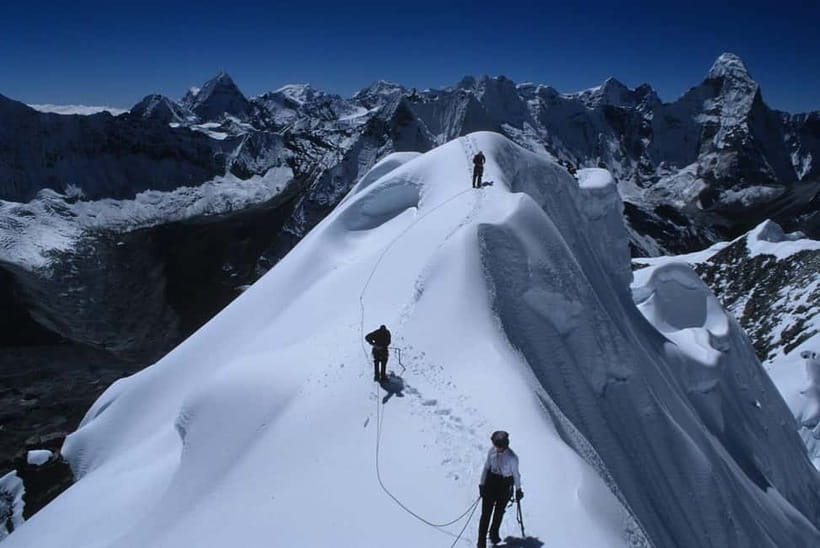
- Island Peak reaches 6,189 meters: The summit is high enough to demand proper acclimatization, pacing, and weather judgment.
- The route follows the Everest trail: You pass through Phakding, Namche Bazaar, Tengboche, Dingboche, and Chhukung.
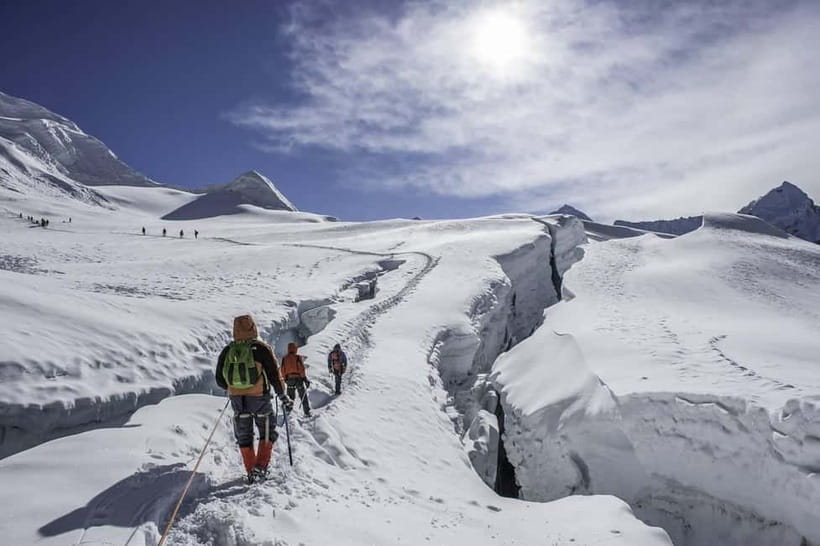
- Base camp includes climbing preparation: Glacier walking practice and pre-climb training help you understand the equipment before summit day.
- The climbing team is built for support: You receive an English-speaking guide, a climbing guide with at least 20 Island Peak summits, and porter support.
- The price is not all-inclusive: Lukla flights, the climbing permit, guide insurance, tips, and personal spending must be added to your budget.
- A buffer day matters: Day 10 is held open for a second summit attempt if weather or conditions disrupt Day 9.
What Island Peak offers beyond a standard Everest trek
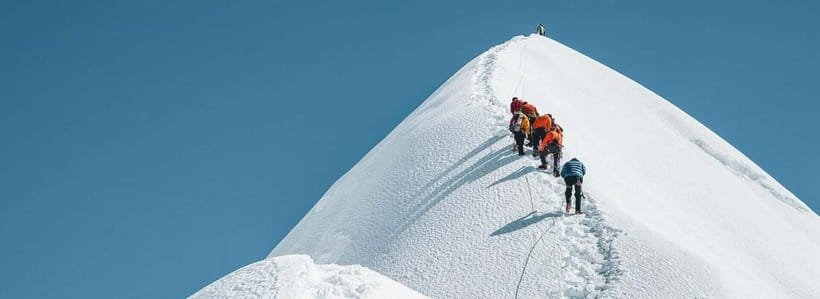
Island Peak is a good choice if you want more than a walk to Everest Base Camp but are not yet looking for an expedition of several weeks. The route gives you a full introduction to high-altitude mountaineering while using villages and lodges for much of the approach.
The mountain is not simply a viewpoint with a short walk to the top. You will reach 5,200 meters at base camp, train on glacier terrain, then face a long summit day with about 989 meters of ascent and descent. The listed summit schedule lasts eight to ten hours, so you need stamina as well as enthusiasm.
The scenery changes steadily. Lower sections bring rivers, suspension bridges, and settled villages. Higher up, trees give way to alpine pastures, bare slopes, glaciers, and sharp Himalayan peaks. The views of Everest, Lhotse, and Ama Dablam are not a side note. They are one of the strongest reasons to take this route.
You also spend time in Sherpa communities rather than moving straight through a remote climbing camp. Namche Bazaar has the most services, while Tengboche, Dingboche, and Chhukung feel much more focused on mountain life and trekking support.
A few more Kathmandu days to weigh up
- Everest Base Camp Trek – 14 Days
★ 5.0 · 1,499 reviews - Private Kathmandu Sightseeing Tour | UNESCO World Heritage sites
★ 5.0 · 756 reviews - Everest Base Camp Helicopter Tour landing at Everest View Hotel
★ 5.0 · 668 reviews
Days 1 to 4: Kathmandu, Lukla, Phakding, and Namche
Your first day is in Kathmandu at 1,338 meters. The plan allows time for arrival, transfers, and cultural exploration before the mountain schedule begins. Two nights in a deluxe Kathmandu Suite Home or a similar hotel are included, which gives you a useful place to settle in and organize your kit.
Day 2 starts with the flight to Lukla, listed at about 35 minutes. From Lukla, you walk for three to four hours to Phakding, covering roughly 8 kilometers and ending at 2,800 meters. This is a sensible first walking day, though the flight schedule can be affected by weather.
The route to Namche Bazaar on Day 3 is longer and more demanding. You walk about 10 kilometers in five to six hours, gaining around 600 meters to reach 3,438 meters. Suspension bridges add character to the day, and Thamserku and Everest begin to appear.
Namche is the key early stop because your body needs time to adjust. Day 4 includes an optional two to three-hour acclimatization hike, with a small amount of ascent and descent rather than another long march. I would treat this as essential preparation, not spare time to skip.
At 3,438 meters, altitude can affect sleep, appetite, and energy even if you are fit at home. The schedule uses the right idea: go higher during the day, then return to Namche to sleep. Keep your pace easy, drink regularly, and tell the guide quickly if you feel unwell.
Days 5 to 7: Tengboche, Dingboche, and Chhukung
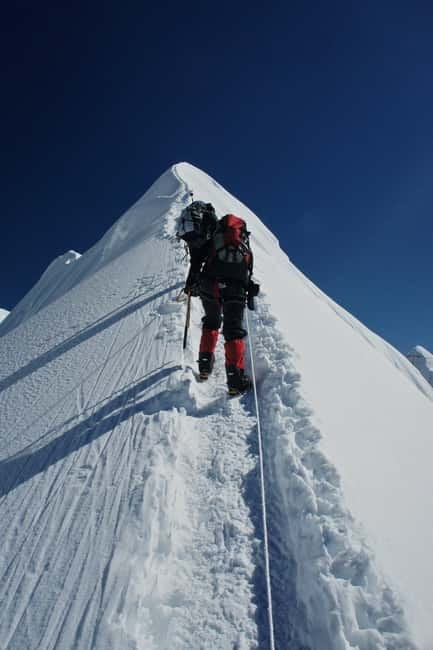
The five to six-hour walk to Tengboche gains about 430 meters and ends at 3,870 meters. The monastery is the cultural highlight, while the views open toward Everest, Lhotse, and Ama Dablam. This is one of the days when the route feels like more than a training ground for the climb.
The next day takes you to Dingboche at 4,360 meters. The walk is around 10 kilometers and five to six hours, with Lhotse and Ama Dablam nearby. The climb in height is steady, but the thinner air makes a normal walking day feel harder than the figures suggest.
Day 7 is shorter, at three to four hours and about 6 kilometers, but Chhukung sits at 4,730 meters. You walk through high alpine pasture toward Island Peak, with Lhotse and the mountain itself in view.
Chhukung is where the trip changes from a high-altitude trek into a climbing trip. You have gained height gradually, but you should still expect cold nights, less appetite, and slower movement. This is a good place to check your layers, gloves, headlamp, boots, and personal climbing gear before base camp.
Day 8: Island Peak base camp and glacier training
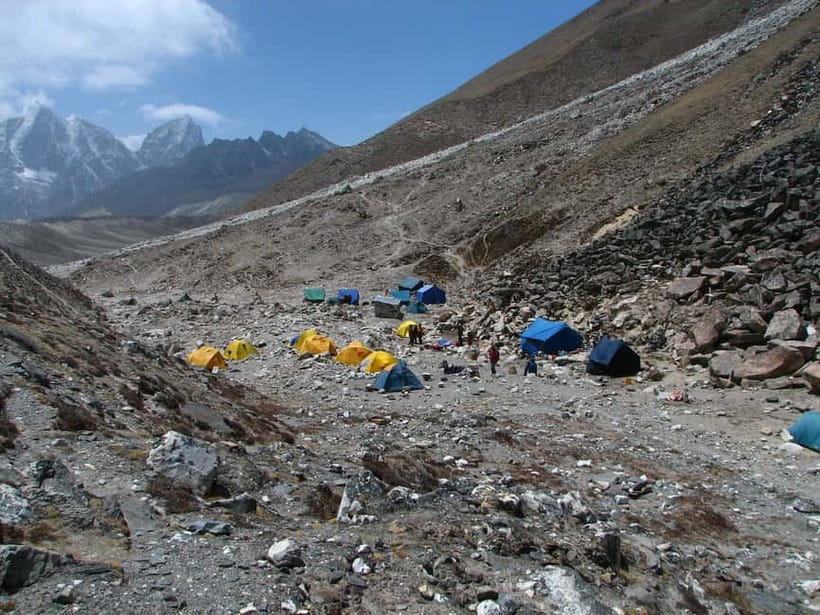
The walk to Island Peak Base Camp takes three to four hours and covers about 5 kilometers. You gain another 470 meters, reaching 5,200 meters, with Island Peak and Lhotse nearby.
This day is valuable because the package includes pre-climb training at base camp. The listed focus is glacier walking, supported by group equipment such as ropes, ice screws, snow bars, ice hammers, tents, and kitchen equipment.
You should use this session to become comfortable with the equipment and to understand the guide’s instructions before summit day. A strong trekking background helps, but it does not replace practice with climbing systems at altitude.
Accommodation shifts to tents at this point. Lodges are used during the trek, while tented accommodation is part of the base-camp setup. That change brings a more basic night and can make the summit attempt feel like a real mountaineering day rather than another lodge walk.
A different kind of day from the same base:
- Half day cooking class in Thamel kathmandu
★ 5.0 · 607 reviews - Everest Base Camp Trekking
★ 5.0 · 485 reviews - Nagarkot Sunrise View and Day Hiking from Kathmandu
★ 5.0 · 471 reviews - Kathmandu: Full Day 7 UNESCO Tour with Lunch – Private/Group
★ 5.0 · 415 reviews
Day 9: the 6,189-meter summit attempt
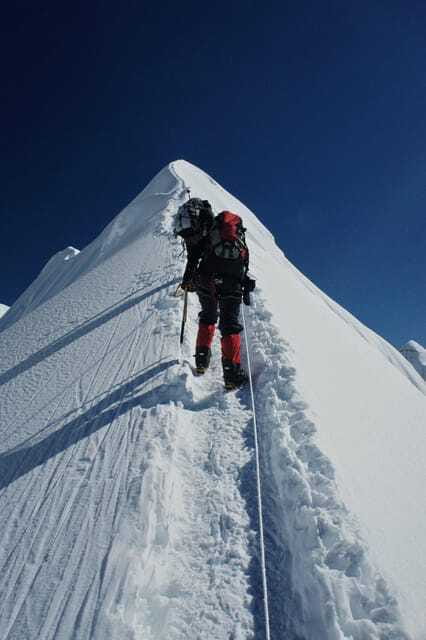
Summit day is the heart of the trip. The schedule allows eight to ten hours for the climb and return to base camp, with roughly 989 meters of ascent and the same amount of descent.
The day begins high above the normal trekking villages, so there is no shortcut around the effort. You need to move at a steady pace, conserve energy, follow the guide’s directions, and accept that the mountain controls the timetable.
The reward is the summit at 6,189 meters, with views listed toward Island Peak, Everest, and Makalu. Even if clouds limit the view, reaching the top is a major physical achievement. If conditions are unsafe or your health deteriorates, turning around is the correct decision, not a failure.
The climbing guide is required to have at least 20 Island Peak summits of experience. That matters most on a day when weather, snow, fatigue, and altitude can change the plan. The support also includes a heli rescue assistant to contact your insurance, but you must carry valid insurance that covers high-altitude trekking and climbing.
Day 10 is a contingency day. This is one of the better features of the schedule because Himalayan weather does not follow a booking calendar. The buffer can give you another summit chance, though the program does not promise that a second attempt will be possible in every situation.
Days 11 to 14: a fast descent and the return to Kathmandu
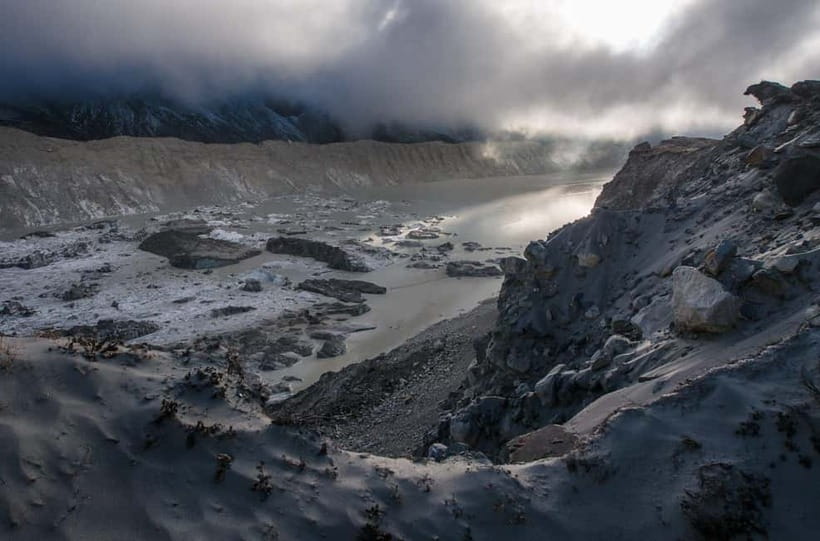
After the climb, Day 11 takes you from Chhukung back to Namche Bazaar. The listed distance is about 18 kilometers over five to six hours, with a descent of roughly 1,292 meters.
That is a big day after the summit. Going downhill is easier on breathing, but tired legs and sore feet still matter. The benefit is that you return to the livelier Namche area, where the lower altitude should help recovery.
Day 12 continues to Lukla, covering about 19 kilometers in six to seven hours. You descend to 2,800 meters and get a final stretch through the route’s villages and bridges. The schedule is efficient, but not leisurely, so do not plan on a relaxed final mountain day.
The flight back to Kathmandu is listed at 35 minutes. Weather can affect Lukla operations, and in peak season flights may operate from Ramechhap Airport instead. That can change the ground arrangements and timing, so leave flexibility in any onward travel plans.
Day 14 is departure. Airport and hotel transfers in a private vehicle are included according to the schedule, which is useful after two weeks of early starts, long walks, and high-altitude nights.
The guides, porters, and support system
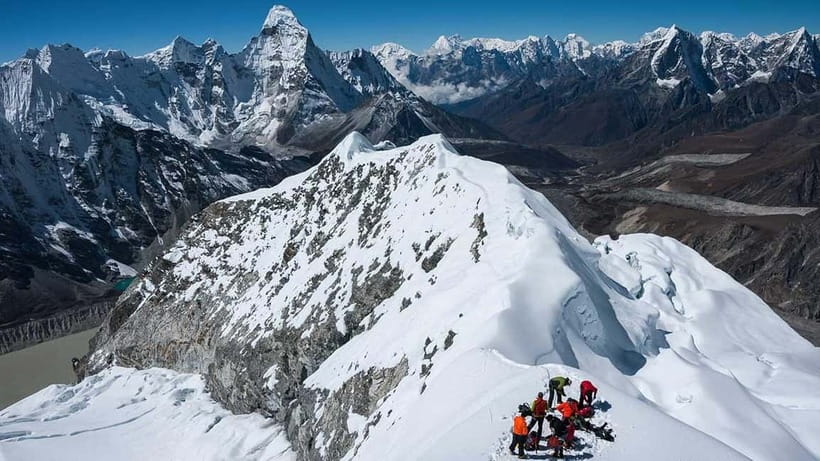
The program provides a government-licensed English-speaking guide and a climbing guide for the Island Peak ascent. The climbing guide must have at least 20 Island Peak summits, a meaningful qualification for a technical high-altitude day.
One porter is assigned for every two clients, with the porter’s food, accommodation, salary, equipment, and insurance included. A free duffle bag is also supplied, along with a sleeping bag and down jacket according to the practical information provided.
If you are traveling alone, check the added porter charge before booking. The package specifically excludes a porter for a solo traveler, and that cost appears twice in the conditions, so it is worth getting the exact figure in writing.
The strongest personal detail available from the trip is the mention of Mijan, a porter praised for helping beyond his formal duties. That tells you what kind of local support can make a difference on a difficult route: not just carrying a load, but helping you adapt when plans become complicated.
The company also provides 24-hour support. That proved useful during airport problems in Lukla for one climber, who valued the organizer’s ability to handle local details quickly. Flights, permits, and mountain weather can create awkward moments, so local problem-solving has real value here.
What the $1,699 price really covers
At $1,699 per person, the package covers a large portion of the ground operation. You receive Kathmandu accommodation, airport and hotel transfers, three meals per day during the trek, local lodges, tents, guide and porter services, national park and local municipality fees, the NMA service charge, the SPCC fee, and a $500 garbage deposit.
Climbing equipment is provided for the group, including ropes, ice screws, snow bars, ice hammers, tents, and kitchen equipment. Training at base camp and a duffle bag are also included. These details reduce the amount of specialist equipment the group needs to buy or rent.
The biggest extra is the round-trip Kathmandu to Lukla flight, listed at $440 per person. The Island Peak climbing permit is shown as $350, with another figure of $175 also listed, so you should ask which amount applies to your nationality, season, or booking arrangement.
Guide insurance is listed at $100. You also pay for Wi-Fi, charging, hot water, showers, drinks, laundry, phone calls, alcohol, tips, and any service not named in the inclusions. Build in a cash budget for the mountains, since small comforts cost more as the route climbs.
The value is strongest if you want a supported climb rather than arranging every permit, porter, meal, transfer, and piece of group equipment yourself. The advertised rate is not the final trip cost, but it does cover many of the hard-to-arrange parts.
Fitness, equipment, and practical preparation
You need a good level of physical fitness. The program includes several five to seven-hour trekking days, a rapid descent after the summit, and an eight to ten-hour climb on Day 9.
Train for long uphill walks and back-to-back days rather than only short bursts of speed. You also need to be comfortable carrying your personal day pack while porters handle the agreed load.
Bring your passport, personal climbing gear, cash, and a flashlight. A headlamp is the practical choice for an early summit start, although the supplied information specifically says flashlight.
The company provides some major items, including a duffle bag, sleeping bag, and down jacket. Confirm the exact equipment, sizes, and condition before departure, and bring personal trekking layers suited to changing weather.
A valid insurance policy covering high-altitude trekking and climbing is required. Standard travel insurance may not cover a 6,189-meter ascent or helicopter rescue, so check the wording carefully before you leave home.
Drones are not allowed. You should also expect extra charges for Wi-Fi and charging at mountain lodges, along with paid hot water and showers.
The trip is not suitable for children under 14, pregnant women, wheelchair users, or people over 95. The age limit is not the main issue here. The larger question is your health, altitude experience, and ability to manage a demanding summit day.
Who should book this Island Peak trip?
I would recommend it to fit hikers who want a first major Himalayan climbing goal, especially if you value a private group and English-speaking support. The trek itself is a major part of the experience, so you should enjoy long mountain walks, village lodges, and simple conditions.
It also suits people who want a structured plan. The acclimatization day, gradual height gain, base-camp training, experienced climbing guide, and contingency day give the program a sensible shape.
I would be cautious if you mainly want a comfortable Everest-region holiday. This is not a relaxed sightseeing trip. You spend nights at high altitude, sleep in tents at base camp, and may face flight delays or a summit attempt that must be canceled.
The three verified ratings are all five out of five, with particular praise for organization, professional Sherpa and porter support, airport help, acclimatization, and climbing preparation. One climber singled out Mijan for going well beyond his porter duties, while another praised the climbing guide’s experience on demanding peaks such as Ama Dablam. Those are useful signs, though the small number of ratings means you should still ask direct questions before paying.
Should you book it?
Book this Island Peak trip if you want a serious but organized introduction to Himalayan climbing, and if you are ready to budget beyond the headline price. The best parts are the classic Everest-region route, the patient altitude schedule, the summit-day backup, and strong local support.
Before booking, confirm the climbing permit price, solo porter charge, Lukla or Ramechhap flight plan, exact personal equipment, and insurance requirements. If you accept that weather may change the plan and that the summit is never guaranteed, the 14-day program offers a well-supported path to one of Nepal’s most appealing trekking peaks.
FAQ
How high is Island Peak?
Island Peak reaches 6,189 meters, or 20,306 feet.
How long is the trip?
The full program lasts 14 days, from arrival in Kathmandu through departure.
Is the Kathmandu to Lukla flight included?
No. The round-trip flight is listed separately at $440 per person.
Is the Island Peak climbing permit included?
No. The permit is listed as an extra cost. The supplied price information shows both USD 350 and USD 175, so confirm the applicable amount before booking.
Are meals included during the trek?
Yes. Breakfast, lunch, and dinner are included during the trekking portion.
What climbing equipment is provided?
Group equipment includes ropes, ice screws, snow bars, ice hammers, tents, and kitchen equipment. A duffle bag, sleeping bag, and down jacket are also provided according to the trip information.
Is there climbing training before the summit?
Yes. Pre-climb training and glacier walking practice take place at Island Peak Base Camp on Day 8.
Do I need special travel insurance?
Yes. You must have travel insurance covering high-altitude trekking and climbing. The program also provides helicopter rescue assistance to contact your insurer.
Recently added around Kathmandu
- Kathmandu Airport Pickup and Drop-off Services★ 5.0 · 3 reviews
- Kathmandu Paragliding★ 5.0 · 3 reviews
- Kathmandu Chandragiri Cable Car and Swayambhunath Private Tour★ 5.0 · 3 reviews
- Explore The Beauty Of Langtang Valley In 8-Days Trek★ 5.0 · 3 reviews
- Kathmandu: Nightlife and Pub Crawl Tour★ 5.0 · 3 reviews
- Mountain Flight Experience in Nepal★ 4.5 · 3 reviews
- Kathmandu: Momo Making Class with a Local Chef★ 5.0 · 3 reviews
- Everest Base Camp Trek★ 5.0 · 3 reviews
Other Kathmandu Tours worth a look


Private Kathmandu Sightseeing Tour | UNESCO World Heritage sites
Read our review →
Everest Base Camp Helicopter Tour landing at Everest View Hotel
Read our review →


Nagarkot Sunrise View and Day Hiking from Kathmandu
Read our review →
Full Day 7 UNESCO Tour with Lunch – Private/Group
Read our review →