
REVIEW · KATHMANDU TOURS
Live like Monk: Stay in the Nomobuddha Monastry
The most striking part of this three-day outing is the three-hour walk from Dhulikhel to Namobuddha, through hill country and small local villages before you reach one of Nepal’s important Buddhist sites. I like the quiet pace, the vegetarian meals, and the chance to attend prayers rather than simply snap a picture and leave.
I also like the small-group format, limited to 10 people, and the care provided by guide Anoj, who explains Buddhist customs, Nepalese culture, and the monastery grounds. The main thing to know is that you may sleep in a guesthouse near the monastery, not inside the monastery itself, and meditation or prayer sessions can change without much notice.
Key points to know before booking
- Three-hour hill walk: The approach from Dhulikhel passes through nature and local villages, so this is more than a simple monastery visit.
- Guesthouse lodging: Rooms are described as monastery accommodation, but actual beds may be in the Old Guest House about 100 meters away or the New Guest House about 400 meters away.
- Prayer is more reliable than meditation: You may watch puja and chanting with the monks, but direct, guided meditation with them is not guaranteed.
- Simple vegetarian food: Breakfast, lunch, and dinner are provided, with fresh, uncomplicated meals served in a monastery setting.
- Anoj makes the difference: The English-speaking guide is praised for his care, explanations, and help when plans or health problems get in the way.
- Peace comes with rules: Alcohol and drugs are not allowed, and respectful clothing, quiet behavior, and an open attitude toward Buddhist practice are expected.
From Kathmandu to the Dhulikhel trailhead
Your day begins with pickup in Kathmandu, Bhaktapur, or Lalitpur. A private vehicle takes you toward Dhulikhel, a hill town about 30 kilometers from Kathmandu. The private ride is useful here because it keeps the morning simple and avoids the fuss of arranging a separate local bus connection.
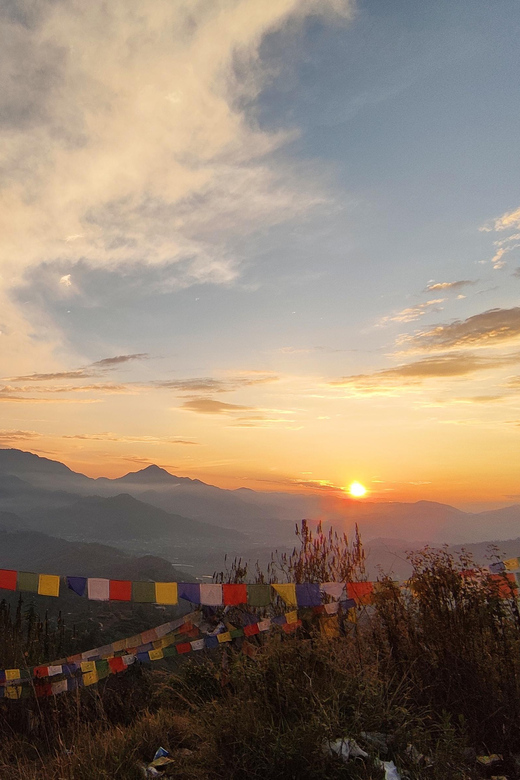
Dhulikhel is the starting point for the walk to Namobuddha. The hike takes about three hours, depending on the group and the pace. You pass through wooded hills and small villages, with broad views along the way. The walk gives the visit a proper sense of arrival. Instead of being delivered straight to a religious site, you gradually leave behind the traffic and noise of the Kathmandu Valley.
You should be comfortable walking uphill and downhill for several hours. This is not described as a technical trek, but it is still a real hike, not a paved stroll. Wear sturdy shoes, carry water, and keep your daypack light. The tour includes private transportation, but it does not remove the walking requirement.
The route is one of the strongest parts of the experience. It connects the monastery with the surrounding communities and countryside, rather than treating Namobuddha as an isolated attraction. If you want a completely effortless spiritual retreat, this may feel like work. If you enjoy earning your destination, the walk adds a lot.
A few more Kathmandu days to weigh up
- Everest Base Camp Trek – 14 Days
★ 5.0 · 1,499 reviews - Private Kathmandu Sightseeing Tour | UNESCO World Heritage sites
★ 5.0 · 756 reviews - Everest Base Camp Helicopter Tour landing at Everest View Hotel
★ 5.0 · 668 reviews
Arriving at Namobuddha Monastery
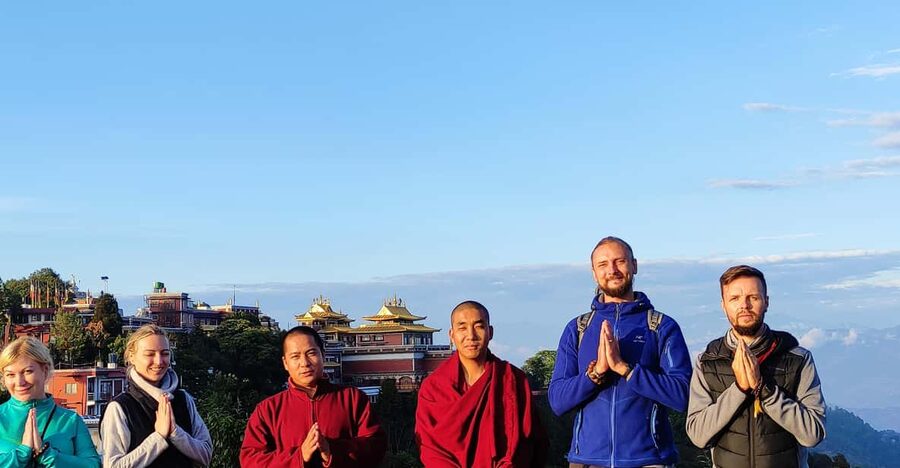
Namobuddha is a major Buddhist pilgrimage site in Nepal, and the setting is calm and quiet compared with Kathmandu. Once you arrive, you have time to rest, look around the grounds, and get oriented before the religious activities begin.
The name of the program suggests that you will stay inside the monastery and follow the daily life of the monks. In practice, accommodation has been in a guesthouse close to the complex. The Old Guest House is roughly 100 meters away, while the New Guest House may be about 400 meters away. That difference matters, especially if you are expecting to wake up directly inside the monastery buildings.
Rooms are shared on a twin basis, and facilities are simple. This is not a hotel with a long list of comforts. The basic setting is part of the point, but you should be ready for shared facilities and a room partner. I would not choose this program if private rooms, polished amenities, or a predictable hotel routine are central to your trip.
The guide normally gives an introduction to the monastery, Buddhist practice, and the plan for your stay. Anoj has been especially valuable in this role. He is described as kind, attentive, and willing to explain the religious and cultural details that you would otherwise miss.
What the Buddhist schedule is really like
The daily rhythm is built around morning and evening religious practice. The advertised program includes meditation, chanting, and participation in monastery rituals. The actual experience can be less direct.
You may attend a puja, a Buddhist prayer service, and listen to chanting with the monks. Prayer sessions have been scheduled in the morning, sometimes around 6 a.m., and again later in the morning, around 11 a.m. Exact timing depends on monastery activity. A ceremony may be postponed, changed, or unavailable during your stay.
This is the most important practical warning. Some stays have included ceremonies and meals with monks, while others have had little contact beyond eating near them at breakfast or dinner. Direct meditation with resident monks is not assured. You may observe a session rather than join a guided practice.
That does not make the experience worthless, but it changes what you are buying. This is better understood as a chance to visit a working Buddhist monastery and follow parts of its rhythm, not as a guaranteed retreat taught by monks. The difference between those two ideas is large.
I would ask for the current prayer schedule before you leave Kathmandu, and I would have Anoj confirm what is actually happening when you arrive. The monastery may be preparing for another event or dealing with its own calendar. The guide can try to keep you informed, but he cannot control the monastery’s schedule.
Eating simply with the monastic community
Food is one of the more dependable parts of the program. Vegetarian breakfast, lunch, and dinner are included, and meals are served in the monastery dining setting. The food is described as tasty and uncomplicated, with the sort of plain routine that suits a short stay focused on quiet and attention.
Sharing a dining room with monks can be the most memorable human part of the visit. You should not expect long conversations or a staged cultural show. The value lies in seeing a small piece of the daily routine and eating in the same setting.
If you have a sensitive stomach, bring any personal remedies you normally use. One guide took special care of a participant who became unwell, which is reassuring, but the tour does not promise special medical support. Personal snacks and extra food are not included, so budget for anything beyond the provided meals.
The food also helps keep the cost in perspective. You are not paying for restaurant variety or luxury lodging. You are paying for transport, a private guide, two nights of basic accommodation, meals, a hill walk, and access to a setting that would be harder to arrange independently.
A different kind of day from the same base:
- Half day cooking class in Thamel kathmandu
★ 5.0 · 607 reviews - Everest Base Camp Trekking
★ 5.0 · 485 reviews - Nagarkot Sunrise View and Day Hiking from Kathmandu
★ 5.0 · 471 reviews - Kathmandu: Full Day 7 UNESCO Tour with Lunch – Private/Group
★ 5.0 · 415 reviews
Day two: prayer, monastery grounds, and quiet time
The second day begins early. If the morning prayer takes place, you can join the monks or watch the session, followed by meditation if it is available. An early start is part of the monastic rhythm, so this is not the time for a lazy breakfast.
After breakfast, the guide takes you around the monastery grounds. This tour covers the site’s history, architecture, and role in Buddhist life. The walk is not only about looking at buildings. With a good explanation, details of the layout and religious practices begin to make sense.
The guide may also explain Buddhist ideas connected with mindfulness, compassion, and non-violence. You do not need to be Buddhist to take part. The program welcomes people from different backgrounds, but you do need to approach the setting with respect and a willingness to sit quietly, listen, and follow local rules.
The afternoon is intentionally open. You may spend time in personal reflection, walk around the grounds, garden, or study scripture if those activities are available. This loose schedule is either a strength or a weakness, depending on your style.
I like having unplanned time in a place designed for quiet. You can let the setting work on you without rushing from one attraction to another. But if you expect a full timetable of classes and structured activities, the afternoon may feel thin.
The evening may bring another prayer or chanting session, followed by meditation. Again, treat these as possible parts of the rhythm, not fixed appointments. A visit during a major ceremony or when senior religious figures are present could feel more active, while another date may be much quieter.
Day three: one last look before Kathmandu
The final morning follows the same pattern: prayer or chanting if scheduled, meditation if offered, and breakfast in the monastery dining area. You then have another guided walk around the grounds before lunch.
Repeating the grounds tour may sound unnecessary, but the second look can be useful. The first visit is often spent getting your bearings. On the last morning, you can notice the small details and ask better questions. Still, the duplicate schedule suggests that this program is built around a slow visit, not a packed list of sights.
After lunch, private transportation takes you back to Kathmandu, Bhaktapur, or Lalitpur. The return transfer is included, which makes the trip easier to combine with a hotel stay in the valley. The program is valid for three days from its first activation, and pickup and drop-off locations give you some flexibility.
Is $294 a fair price?
The cost is $294 per person. That is a serious price for three days in Nepal, especially when the accommodation is basic. The value depends on what you expect.
The price includes private transportation in both directions, the three-hour hike, two nights of twin-share lodging, an English-speaking guide, monastery tours, meals, and the attempt to arrange access to religious activities. For someone who wants a simple package without handling transport and local arrangements, that can be worthwhile.
The value drops sharply if the main reason for booking is guaranteed meditation with monks or a room inside the monastery walls. Those parts are not dependable. If no prayer or meditation takes place, you could feel that you paid a premium for a nearby guesthouse, meals, a guide, and a monastery visit.
A private trip arranged independently might cost less, but it would not necessarily provide the same guide support or access. The guide is an important part of the package, particularly when the monastery schedule is unclear. Anoj’s explanations and personal care have been a major strength.
For me, the fair way to view the price is as a guided cultural and spiritual stay near Namobuddha, not as a formal monk-training retreat. That framing makes the cost easier to understand.
Who will enjoy this stay most?
I would recommend it to you if you want a quiet change from Kathmandu, enjoy walking, and are curious about Buddhist customs without needing a formal religious commitment. It suits people who can accept simple rooms, shared facilities, vegetarian food, early mornings, and open time.
It is also a good fit if you value a thoughtful local guide. Anoj can help explain what you are seeing and adjust when plans shift. That matters because the monastery itself does not always provide clear advance information about ceremonies.
You may want to skip it if you need certainty. The title suggests a full monastic experience, but the reality can be more like a cultural stay beside a monastery. You may observe prayers rather than meditate with monks, and you may sleep several hundred meters from the main buildings.
Dress modestly and behave quietly around religious spaces. Alcohol and drugs are not allowed. Buddhist practice here is based on mindfulness, compassion, and non-violence, so you should be ready to follow local customs even if you are visiting from a different religious tradition.
The group is capped at 10 participants, which keeps the walking and guiding manageable. The tour is conducted in English. Cancellation is free up to 24 hours before the start, and you can reserve now and pay later, useful if your Nepal plans are still moving around.
FAQ
How long does the Namobuddha monastery experience last?
The program lasts three days and includes two nights of accommodation near the monastery.
Where does the tour begin?
Pickup is available in Bhaktapur, Kathmandu, or Lalitpur. The tour then travels by private transportation to Dhulikhel.
How long is the hike from Dhulikhel to Namobuddha?
The walk takes about three hours through hill country and small local villages.
Do I sleep inside Namobuddha Monastery?
Accommodation is described as being at the monastery, but rooms may be in the Old Guest House about 100 meters away or the New Guest House about 400 meters away. Rooms are shared on a twin basis.
Are meditation and chanting with monks guaranteed?
No. The program includes daily meditation and chanting in its description, but the actual schedule can change. You may attend puja and prayer sessions, while direct guided meditation with monks is not guaranteed.
Are meals included?
Yes. Three vegetarian meals per day, breakfast, lunch, and dinner, are included during the stay. Personal snacks, extra food, and souvenirs are not included.
Should you book this Namobuddha stay?
Book it if you want a guided, quiet visit with a meaningful walk, vegetarian meals, simple lodging, and a chance to observe Buddhist prayer. The setting, the hill route, and Anoj’s care can make this a memorable break from Nepal’s busy cities.
Before paying, make sure you understand two points: you may sleep in a nearby guesthouse, and monastery-led meditation or chanting may not happen during your dates. If you can accept those limits, this is a worthwhile cultural experience. If the promise of living like a monk is the main reason you are booking, ask for a current confirmation of the prayer schedule first.
Recently added around Kathmandu
- Kathmandu Airport Pickup and Drop-off Services★ 5.0 · 3 reviews
- Kathmandu Paragliding★ 5.0 · 3 reviews
- Kathmandu Chandragiri Cable Car and Swayambhunath Private Tour★ 5.0 · 3 reviews
- Explore The Beauty Of Langtang Valley In 8-Days Trek★ 5.0 · 3 reviews
- Kathmandu: Nightlife and Pub Crawl Tour★ 5.0 · 3 reviews
- Kathmandu: Momo Making Class with a Local Chef★ 5.0 · 3 reviews
- Mountain Flight Experience in Nepal★ 4.5 · 3 reviews
- Everest Base Camp Trek★ 5.0 · 3 reviews
Other Kathmandu Tours worth a look


Private Kathmandu Sightseeing Tour | UNESCO World Heritage sites
Read our review →
Everest Base Camp Helicopter Tour landing at Everest View Hotel
Read our review →


Nagarkot Sunrise View and Day Hiking from Kathmandu
Read our review →
Full Day 7 UNESCO Tour with Lunch – Private/Group
Read our review →