
REVIEW · KATHMANDU TOURS
Oldest Local Market Walking Tour With Living Goddess Kumari
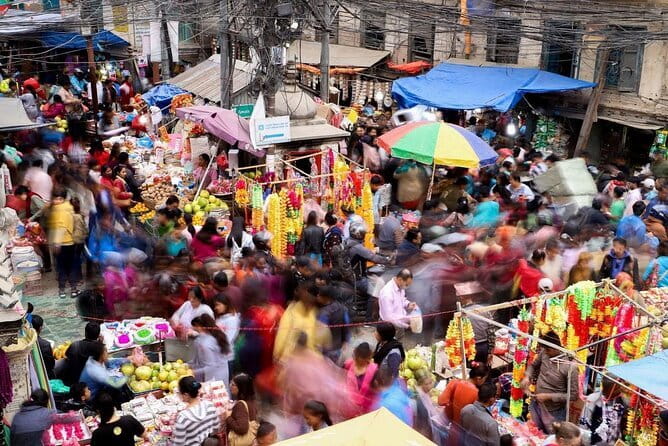
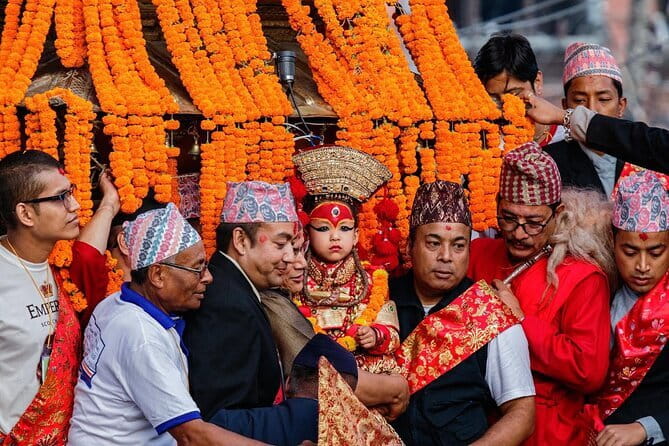
The most unusual part of this walk is the chance to see Kumari, a young girl honored as the living form of the goddess Taleju. The visit takes place alongside two very different Kathmandu sights: Ason, the city’s oldest local market, and Kathmandu Durbar Square, a royal and religious center filled with temples, courtyards, and palaces.
I like the way this tour links ordinary city life with major cultural landmarks. Ason gives you spices, textiles, shops, and daily commerce, while Kumari Ghar offers a window into a tradition that is still part of Kathmandu’s religious life. I also like the compact two-hour format and the included bottled water.
The main consideration is the extra entrance fee for Kathmandu Durbar Square, which is 1,000 Nepalese rupees and is not included in the $39 price. The walk also covers serious religious subjects in a short time, so you’ll get a useful introduction rather than a full study of Nepalese history.
Key points at a glance
- See Kathmandu’s oldest local market: Ason is packed with shops, stalls, spices, textiles, and traditional buildings.
- Meet the Kumari tradition: The tour introduces Kathmandu’s Living Goddess and the role of Kumari Ghar.
- Visit a major historic square: Kathmandu Durbar Square brings palaces, temples, and courtyards into one compact area.
- Connect Hinduism and Buddhism: Your English-speaking guide explains how both faiths shape Kathmandu’s culture.
- Keep the schedule short: The experience lasts two hours and begins and ends near Thamel.
- Pay attention to the fee: The 1,000 Nepalese rupee Durbar Square entry ticket is extra.
From Chhaya Center into old Kathmandu
Your meeting point is at the main gate side of Chhaya Devi Complex in Thamel, a practical place to begin if you are staying in Kathmandu’s best-known visitor district. You meet your English-speaking guide there, then set out on foot toward the older parts of the city.
The tour is designed as a walking experience, not a sightseeing trip by vehicle. That matters in Kathmandu, where the pleasure often comes from seeing the change in pace and surroundings as you move from a modern commercial area toward older market streets.
At $39 per person, the price pays for a guide, government taxes, VAT, and bottled mineral water. It does not cover meals, drinks, personal purchases, or the Durbar Square entrance fee. You should budget for that additional 1,000 rupees before you set out.
The short duration makes this easy to fit into a first day in Kathmandu or a spare morning between longer excursions. You will not need to give up a full day, but you should also set your expectations correctly. This is a brisk cultural introduction, not an all-day study of the valley.
More Walking Tours in Kathmandu
- Kathmandu Food and Drink Walking Tour
★ 5.0 · 266 reviews - Kathmandu: Food and Drink Walking Tour
★ 4.9 · 119 reviews - Walking Street Food Tour in Kathmandu
★ 5.0 · 111 reviews
Ason market and the daily rhythm of Kathmandu
Ason is the first major reason to choose this walk. Known as the oldest local market in Kathmandu, it gives you a close look at the city’s everyday trade rather than a polished attraction built only for sightseeing.
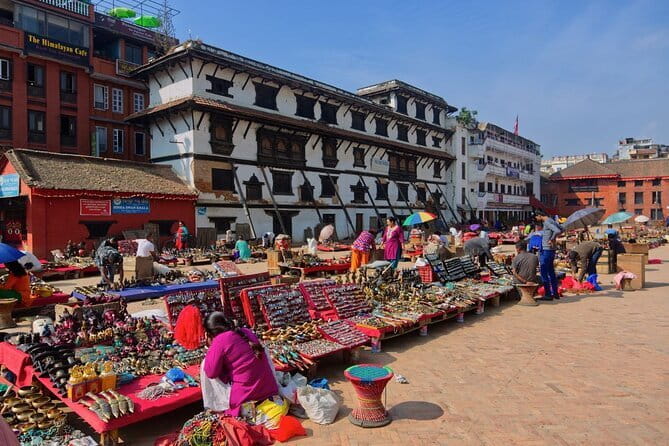
You can expect streets lined with shops and stalls selling spices, textiles, souvenirs, and other goods. The setting combines commercial activity with traditional architecture, so you are looking at both the products and the older urban pattern around them.
I like markets because they explain a city faster than a list of monuments can. In Ason, you see what people buy, how goods are displayed, and how a historic neighborhood still functions as part of daily life. Your guide helps turn those details into context, especially if you are not familiar with Nepalese customs or the way Hindu and Buddhist traditions overlap in Kathmandu.
Give yourself room to look without treating the market like a stage set. This is a working shopping area, and the best approach is to watch where you walk, keep your belongings secure, and ask before photographing people or individual stalls. Those are sensible habits in any crowded market, and they show respect here.
The market portion also gives you a useful contrast with Kathmandu Durbar Square. Ason is about movement, trade, and ordinary purchases. The square is about royal power, worship, architecture, and public memory. Seeing both in one walk helps you understand that Kathmandu’s culture is not confined to its grand monuments.
Kathmandu Durbar Square and its layered past
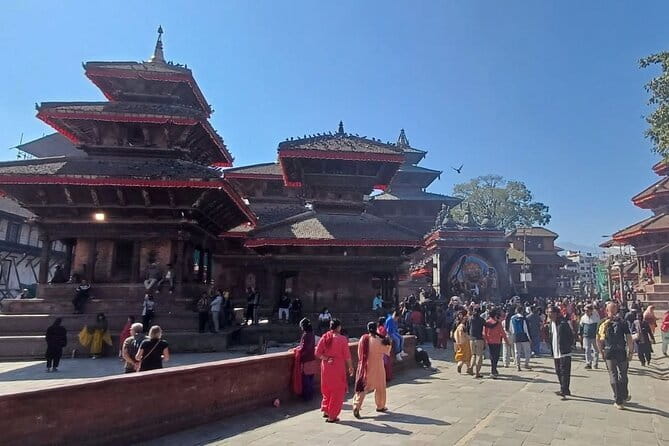
The route continues to Kathmandu Durbar Square, one of the city’s main historic areas. The square is home to palaces, temples, and courtyards, with architecture that reflects the long development of the Kathmandu Valley.
This is where the tour shifts from local commerce to formal history. You can expect your guide to explain the role of the square and point out features that might otherwise blur together. Without guidance, a row of temples or an enclosed courtyard can seem like a collection of attractive buildings. With explanation, the space becomes easier to read.
The square is also an important place to discuss Nepal’s religious life. Hindu and Buddhist practices are both part of the cultural setting, and the tour specifically introduces those connections. That makes the visit more useful than a quick walk around for photographs.
The entry fee is a real part of the cost. Kathmandu Durbar Square admission is 1,000 Nepalese rupees, payable separately from the tour price. If you are comparing this walk with other Kathmandu activities, add that amount before deciding what the $39 represents for you.
The supplied schedule describes the Durbar Square portion as a guided two-hour visit, while the full experience is also advertised as two hours from Chhaya Center and back. Because the timing description is not perfectly clear, check the available start time and exact schedule when booking. The central point is that this is a short walking tour centered on the square, not a long excursion outside Kathmandu.
Meeting Kathmandu’s Living Goddess
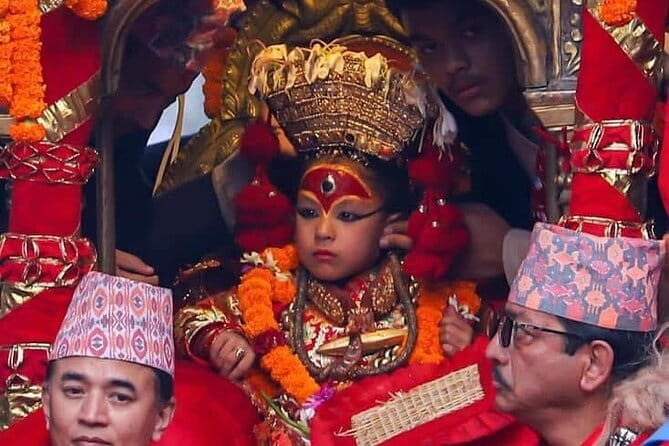
The Kumari visit is the tour’s defining feature. In Nepalese tradition, the Kumari is a prepubescent girl regarded as the living embodiment of Taleju, a goddess with an important place in Kathmandu’s religious beliefs.
She resides in the Kumari Ghar, associated with Kathmandu Durbar Square. The tour gives you the chance to see this remarkable tradition in its historic setting, rather than discussing it only in a museum or on a guidebook page.
The experience calls for quiet attention and respect. Kumari is not a performer, and this is not a show arranged for visitors. The value comes from understanding why the role exists and how it fits into Nepalese religious culture. Your guide can provide the background that makes the encounter meaningful.
One detail to keep in mind is that the experience description promises the opportunity to witness the Living Goddess, but it does not spell out the exact viewing conditions or guarantee how long you will see her. Treat the visit as a chance to observe a sacred tradition, not as a scheduled photo opportunity.
A previous participant singled out Kumari’s gaze as especially striking. That comment points to the unusual emotional force of the encounter, but you should not expect a staged interaction. The respectful response is to follow the guide’s instructions and keep the focus on the cultural meaning of the visit.
A few more Kathmandu days to weigh up
- Kathmandu Secret Food Crawl & Local Market Tour
★ 4.7 · 54 reviews - Best Nepali Cooking Class in Thamel with Local Market Trip
★ 5.0 · 26 reviews - Kathmandu Food Crawl & Market Tour
★ 5.0 · 26 reviews - Kathmandu Food Crawl & Market Tour
★ 5.0 · 8 reviews
Hindu and Buddhist traditions in one walk
Kathmandu can be confusing at first because religious sites and daily life often occupy the same streets. A shrine may appear beside a shop, and a historic courtyard may still serve a living community. This tour is built around that close contact between belief, architecture, and ordinary life.
The guide discusses both Hinduism and Buddhism, giving you a basic framework for understanding the places you see. That is especially useful if this is your first visit to Nepal or if you want more than a series of disconnected facts.
The subject is broad, and two hours cannot cover every belief, festival, symbol, or historical period. Still, the compact route makes sense. Ason shows a working neighborhood, Durbar Square supplies the major monuments, and Kumari Ghar brings the discussion to a living religious institution.
I would treat this as a foundation for later exploration. Once you understand the role of the square and the Kumari, you can return with better questions. The tour does not need to explain all of Nepal to be worthwhile. It needs to help you see what is in front of you.
The guide can make or break the experience
Only English-language guiding is specified, so this is best for you if you are comfortable listening and asking questions in English. The guide is included in the price, along with taxes, VAT, and bottled water.
Santos is one guide connected with the experience. If he is leading your walk, expect an emphasis on clear communication and detailed explanations based on the feedback provided about his tours. Other guide assignments are not stated, so you should not book with the assumption that Santos will be available on your date.
The strongest praise centers on explanation and communication. That matters here because the sights are not self-explanatory. A market can look like a market, and a temple can look like a temple, unless someone explains its place in local life.
You should ask questions as you go. Useful topics include the role of Kumari, the meaning of the surrounding buildings, and the relationship between Hindu and Buddhist practice. A good guide can also help you understand which details deserve your attention when the streets are full of visual distractions.
What the $39 price really covers
The $39 fee is reasonable if you value a private layer of explanation around places you could otherwise visit on your own. You are paying for an English-speaking guide, the planned walking route, bottled water, and the convenience of linking Ason, Durbar Square, and Kumari Ghar in one short outing.
The value is less clear if you only want to photograph the square. You will still pay the separate 1,000 rupee entrance charge, and food, drinks, souvenirs, and other personal costs are yours to handle.
The tour makes the most financial sense for a first-time visitor who wants a focused introduction without spending half a day. It also suits someone who prefers to learn while walking rather than read a long explanation before arriving.
Remember that Ason is a market, not a shopping package. The tour does not include meals or beverages, and no purchases are included. If you want to buy spices, textiles, or souvenirs, consider that an optional part of your own visit and keep extra spending separate from the tour price.
Timing, cancellations, and practical planning
The advertised duration is two hours, with the walk starting and ending at Chhaya Center in Thamel. Since the schedule also describes a two-hour guided visit at Kathmandu Durbar Square, confirm the exact meeting time and route details when you check availability.
The activity allows you to reserve now and pay later, which can help if your Kathmandu plans are still shifting. You can cancel up to 24 hours in advance for a full refund, according to the stated booking terms.
No meals or drinks are provided, but bottled mineral water is included. Wear comfortable shoes suitable for a city walk and plan for an active route through market streets and historic areas. The supplied information does not give details about group size, vehicle use, step-free access, or hotel pickup, so ask the provider directly if any of those points matter to you.
The starting point is clear: the main gate side of Chhaya Devi Complex at Thamel. The return point is also Chhaya Center. That makes the tour easy to combine with other plans in central Kathmandu, as long as you leave enough time for the walk back and any delay in the market or square.
Who should book this Kathmandu walk?
I would recommend this experience to first-time visitors who want three things in a short period: a local market, a major historic site, and an introduction to the Kumari tradition.
It is also a good match for you if religious culture interests you more than a standard monument checklist. The Hindu and Buddhist context gives the walk a clear purpose, while Ason keeps it connected to present-day Kathmandu.
Families with older children may find the Kumari tradition especially memorable, though the activity description gives no age guidance. Anyone who prefers a slower pace, extended photography time, or long visits inside several monuments may find two hours too tight.
You should also be comfortable with the limits of the experience. The tour does not include meals, drinks, personal expenses, or the Durbar Square entry ticket. It offers an introduction, not a full historical course, and the details of the Kumari viewing are not explained in advance.
Should you book it?
Book this walk if you want a compact, guided introduction to Kathmandu’s old center and the chance to learn about Kumari in her traditional setting. The strongest reasons are the unusual subject, the useful contrast between Ason market and Durbar Square, and the English-language guidance that ties Hindu and Buddhist traditions together.
Skip it if you want a private, slow-paced architectural tour with every cost included. Before paying, add the 1,000 rupee square entrance fee and confirm the exact timing and guide assignment.
For many first visits, though, this is a smart way to get your bearings. You leave with more than pictures of temples. You gain a clearer sense of how trade, royal history, worship, and living tradition share the same streets.
FAQ
Where does the tour begin?
The tour begins at the main gate side of Chhaya Devi Complex at Thamel, Kathmandu, also referred to as Chhaya Center.
Where does the tour end?
The experience returns to Chhaya Center.
How long does the tour last?
The advertised duration is two hours. The schedule also describes a two-hour guided visit at Kathmandu Durbar Square, so confirm the exact timing when checking availability.
Is an English-speaking guide included?
Yes. An English-speaking live guide is included, and English is the stated tour language.
Is the Kathmandu Durbar Square entrance fee included?
No. The Kathmandu Durbar Square entry fee is listed separately at 1,000 Nepalese rupees.
Is food included?
No. Meals and beverages are not included. A bottle of mineral water is provided.
Can I see the Living Goddess Kumari?
The experience includes witnessing the Living Goddess Kumari at Kumari Ghar. The supplied details do not specify the viewing conditions or length of the visit.
Can I cancel the booking?
Yes. You can cancel up to 24 hours in advance for a full refund. The activity also offers reserve now and pay later booking.
More Shopping Tours in Kathmandu
- Kathmandu Food & Drink and Shopping Rickshaw Tour
★ 5.0 · 48 reviews - Oldest Local Market Walking Tour with Living Goddess Kumari
★ 5.0 · 8 reviews - Kathmandu: Food, Drink and Shopping Rickshaw Tour
★ 4.7 · 7 reviews - Half Day Cooking Class in Thamel with Local Market Visit
★ 4.5 · 6 reviews
Recently added around Kathmandu
- Kathmandu Airport Pickup and Drop-off Services★ 5.0 · 3 reviews
- Kathmandu Paragliding★ 5.0 · 3 reviews
- Kathmandu Chandragiri Cable Car and Swayambhunath Private Tour★ 5.0 · 3 reviews
- Explore The Beauty Of Langtang Valley In 8-Days Trek★ 5.0 · 3 reviews
- Kathmandu: Nightlife and Pub Crawl Tour★ 5.0 · 3 reviews
- Kathmandu: Momo Making Class with a Local Chef★ 5.0 · 3 reviews
- Mountain Flight Experience in Nepal★ 4.5 · 3 reviews
- Thangka Painting Workshop★ 5.0 · 3 reviews
Other Kathmandu Tours worth a look


Private Kathmandu Sightseeing Tour | UNESCO World Heritage sites
Read our review →
Everest Base Camp Helicopter Tour landing at Everest View Hotel
Read our review →


Nagarkot Sunrise View and Day Hiking from Kathmandu
Read our review →
Full Day 7 UNESCO Tour with Lunch – Private/Group
Read our review →
This tour also appears in