
REVIEW · UNESCO HERITAGE SITE TOURS
Full Day Kathmandu Tour – 5 UNESCO World Heritage Sites
Kathmandu packs an astonishing amount into a small valley, and this tour gives you a fast look at five UNESCO World Heritage Sites in one day. You move from the hilltop eyes of Swayambhunath to the courtyards of Patan, the great Buddhist dome at Boudhanath, the Hindu rituals of Pashupatinath, and the old royal center at Kathmandu Durbar Square.
I like the private transportation, which saves you from sorting out Kathmandu traffic on your own. I also like the chance to learn from a local guide, with guides such as Ram, Shiva, Ramesh, Ajit, and Ganesh named in past tour experiences. The main drawback is pace: four to six hours is tight for five major sites, and entrance fees add about $30 to the $40 tour price.
Key points to know before booking
- Five major sites in one compact outing: You visit Swayambhunath, Patan Durbar Square, Boudhanath, Pashupatinath, and Kathmandu Durbar Square.
- Private transport is included: This matters in Kathmandu, where road traffic can make independent sightseeing slow and tiring.
- The guide adds cultural context: Past guides named for this experience include Ram, Shiva, Ramesh, Ajit, and Ganesh.
- The advertised price is not the full cost: The $40 tour price excludes about $30 in monument entrance fees and does not include lunch.
- The schedule favors coverage over lingering: The listed stops allow roughly 30 minutes each, so you will see the highlights rather than explore every courtyard.
- A small group keeps the day manageable: The maximum group size is 15 people, and group discounts are offered.
Five UNESCO sites in one Kathmandu day
This is a greatest-hits tour, not a slow cultural walk. You get a broad view of Kathmandu’s religious life, royal architecture, Buddhist traditions, and Newari design, all with transport between the sites.
The schedule lists a start time of 9:15 am and an estimated duration of four to six hours. That makes this useful if you have only one free day in the valley, a long stop between larger trips, or an extra day after a trek. It also means you should set your expectations correctly. You will not have unlimited time at each monument.
The tour is capped at 15 people and includes an experienced guide plus private transportation. Those two features make the $40 base price reasonable, especially if you are not comfortable arranging taxis and negotiating routes yourself. The additional $30 in entrance fees is important, though. Count on roughly $70 before lunch, and confirm the exact fee handling when you book.
More UNESCO Heritage Site Tours in Kathmandu:
- Private Kathmandu Sightseeing Tour | UNESCO World Heritage sites
★ 5.0 · 756 reviews - Kathmandu: Full Day 7 UNESCO Tour with Lunch – Private/Group
★ 5.0 · 415 reviews - Kathmandu: Full Day Top 4 UNESCO Tour with Lunch – Private/Group
★ 5.0 · 269 reviews
Swayambhunath, the hilltop Monkey Temple
Swayambhunath, also called Swoyambhu Mahachaitya, is usually the most dramatic first stop. The stupa sits above Kathmandu and is famously known as the Monkey Temple. Its setting gives you a quick sense of the valley before the tour heads into the city streets.
The site is important to both Buddhists and Hindus, and that shared religious character helps explain Kathmandu’s distinctive feel. You will see chaityas, stupas, and other sacred structures in a compact hilltop setting. The local legend says the stupa appeared spontaneously when Kathmandu Valley was formed from a primordial lake more than 2,000 years ago.
Allow about 30 minutes here according to the planned schedule. That is enough to see the main stupa and absorb the setting, but not enough for a leisurely circuit of every shrine. I would pay attention to the guide’s explanation rather than trying to photograph everything at once. The hilltop location is one of the strongest parts of the stop, but the tour does not provide a long period for quiet contemplation.
Swayambhunath is also a useful opening chapter. It introduces the blend of Buddhist and Hindu practice that you will see again at other points in the day. If you want extended time here, ask about the timing before departure, since the overall itinerary is already full.
Patan Durbar Square and Newari temple design
Patan Durbar Square gives you the clearest concentrated look at Newari architecture on this route. The former royal palace is surrounded by a dense collection of temples, courtyards, and carved structures. Instead of one isolated monument, you get an entire historic center arranged around royal and religious buildings.
The square is visually powerful because so much detail is packed into a relatively small area. Brick walls, tiered temples, carved wood, and traditional forms create plenty for the guide to explain. The palace museum is another worthwhile part of the stop, though the listed schedule gives you only about 30 minutes.
This is one place where the short timetable may feel restrictive. The site rewards a slower look, especially if you enjoy architecture or photography. Reconstruction work has taken place in the square, so you may see signs of repair rather than a perfectly untouched historic setting. That is not a reason to skip it, but it is worth knowing that the appearance of some buildings can change over time.
One especially pleasant detail from the tour experiences is the connection between Patan and local food. A guide named Shiva took one visitor through Patan and helped introduce local momo, Nepal’s popular dumpling. Lunch is not included, so you will need to pay separately, but the guide may help you make better choices than a rushed stop on your own.
Boudhanath, the great Buddhist dome
Boudhanath brings the day back to Buddhist Kathmandu. The stupa is a huge white dome topped by a Buddhist pyramid, and its scale is very different from the more enclosed courtyards of Patan. The monument is traditionally dated to around the 14th century.
The listed stop lasts about 30 minutes, with admission not included. That is enough to take in the broad design and hear the main explanation, but the experience will be brief. The stupa is the kind of place where you may want to linger, watch the movement around the monument, and look closely at the painted eyes and layered structure.
Your guide can help connect Boudhanath to the wider religious story of the valley. The tour’s route is valuable here because you are not seeing Buddhist sites in isolation. Swayambhunath, Boudhanath, and Pashupatinath together show how several traditions shape Kathmandu’s public life.
If you are particularly interested in Buddhist architecture, note that this tour gives you an introduction rather than a full visit. You will see the main monument, learn its basic story, and move on to the next site. The benefit is range. The cost is limited time.
More Historical Tours in Kathmandu:
- UNESCO Seven World Heritage Tour in Kathmandu
★ 5.0 · 253 reviews - Kathmandu Private Sightseeing Tour | UNESCO World Heritage Sites
★ 5.0 · 109 reviews - Kathmandu: Full Day Private Top 4 UNESCO Heritage Tour W/Lunch.
★ 5.0 · 86 reviews - Kathmandu World Heritage Tour
★ 5.0 · 74 reviews
Pashupatinath and the Bagmati River
Pashupatinath is one of the day’s most important stops. It is Nepal’s largest Hindu temple complex and sits beside the Bagmati River. The temple is known as the seat of Nepal’s national deity, making it a major pilgrimage center rather than simply another historic building.
The complex is sprawling, so the full significance of the place can be hard to grasp in a short visit. A guide is especially useful here because religious customs and temple access may not be obvious to a first-time visitor. The itinerary description identifies Pashupatinath as a major place to explore, but it does not give a separate time allowance. The total tour length remains four to six hours.
Keep in mind that Pashupatinath is an active religious site. Treat it with care, follow your guide’s instructions, and remember that this is not a museum display. The Bagmati River adds another layer to the visit, and the stop may feel more serious and ceremonial than the palace squares.
One guide named Ganesh was specifically praised for explaining the city in detail, including the experience at Pashupatinath. That gives you a sense of what a strong guiding day can offer: not just a list of dates, but an explanation of why the place matters now.
Kathmandu Durbar Square and the Kumari Temple
Kathmandu Durbar Square completes the royal side of the tour. The stop includes a visit to Kumari Temple, associated with the living goddess tradition. The square is the old royal center of Kathmandu and a fitting place to finish the route’s historical story.
The visit is planned for about 30 minutes, and entrance is extra. That is enough to see the main area and Kumari Temple, but you will need to keep moving. The square can also be a good place to ask your guide about the relationship between palace life, temple worship, and the city’s Newari traditions.
A guide named Ajit previously took a visitor to Basantapur, the area around Kathmandu Durbar Square, then continued to Freak Street and Indra Chowk for local food. That kind of added local direction is useful, but do not assume those extra stops are part of the standard tour. Ask before booking if you want time for lassi, momo, or a short walk beyond the main monument area.
Kathmandu Durbar Square and Patan Durbar Square can blur together if you rush. The guide’s comparisons matter here. Patan is especially concentrated in its Newari temple architecture, while Kathmandu gives you the former royal center and Kumari Temple. Seeing both helps you notice the differences instead of treating every square as another collection of pagodas.
What the $40 price really covers
The $40 price covers private transportation and an experienced tour guide. That is a useful package for a compact city tour, particularly if you are sharing the cost with friends or family. Group discounts are available, and the maximum group size is 15.
The price does not include lunch or monument entrance fees, which are listed as worth $30. That makes the likely pre-lunch total about $70 per person, although you should confirm current fees before setting your budget. The added cost is substantial compared with the headline rate, but the tour still offers value if you want five major sites without arranging separate rides and guides.
The strongest value comes from convenience and orientation. You can use the tour to understand Kathmandu’s main historic areas, then return later to the place that interested you most. It is less good value if you want long, quiet visits at one or two monuments, since the schedule is built around coverage.
Guides, group size, and the feel of the day
The experience includes a guide, but no single guide is guaranteed in the information provided. Names connected with past tours include Ram, Shiva, Ramesh, Ajit, and Ganesh. Their roles appear to go beyond transport coordination, with attention to architecture, religious sites, local food, and Kathmandu’s history.
That matters because the monuments are not self-explanatory. A stupa, palace courtyard, or Hindu temple can look impressive while leaving you unsure what you are seeing. A good guide gives the buildings a frame and helps you understand how Buddhism, Hinduism, royal power, and Newari culture overlap.
The group limit of 15 is sensible for this route. A larger group would make short stops harder, especially in courtyards and religious compounds. Private transportation also reduces the need to handle Kathmandu’s traffic yourself, though no city tour can remove road delays entirely.
Timing, lunch, and practical planning
Start time is 9:15 am, and the tour lasts approximately four to six hours. Wear shoes suited to walking around historic compounds, and keep your day flexible because the order and exact pace may depend on traffic and site conditions.
Plan to buy lunch separately. Momo and lassi are two local food options associated with the tour experiences, with Indra Chowk and Freak Street mentioned as places a guide may recommend. These food stops are not listed as included parts of the standard itinerary, so treat them as possible local suggestions rather than guaranteed activities.
Entrance tickets are also separate. The tour description gives a combined value of $30 for monument fees, so include that amount when comparing this experience with a private custom tour. A mobile ticket is offered, and booking confirmation is received at the time of booking.
The tour requires good weather. If poor weather forces cancellation, you are offered another date or a full refund. Otherwise, the booking is non-refundable and cannot be changed, so choose your date carefully.
Who should book this Kathmandu tour
I would choose this tour if you want a broad first look at Kathmandu and have limited time. It suits first-time visitors, people with an extra day before or after a Nepal trek, and anyone who wants transport and a guide handled in one booking.
It also works well for people who enjoy cultural variety. In one outing, you see Buddhist stupas, Hindu pilgrimage grounds, royal squares, Newari temples, and the Kumari Temple. That range is the main reason to book.
I would hesitate if you dislike fast sightseeing or want time for museums, photography, meals, and quiet observation. Five heritage sites in four to six hours is ambitious. Patan, Boudhanath, and Pashupatinath could each support a longer visit on their own.
Should you book it?
Book this tour if your priority is efficient coverage and cultural orientation. The guide, private transport, and five-site route make it a practical introduction to Kathmandu, especially at $40 before the separate entrance fees.
Skip it if you want a slow day centered on one neighborhood or monument. For the best experience, accept the brisk pace, budget about $30 extra for admissions plus lunch, and ask which guide will lead your group. If you do that, this tour can give you a useful map of Kathmandu’s sacred and royal heart in a single morning and afternoon.
FAQ
How long does the Kathmandu UNESCO sites tour last?
The tour lasts approximately four to six hours.
What time does the tour start?
The listed start time is 9:15 am.
Which UNESCO World Heritage Sites are visited?
The route includes Swayambhunath Stupa, Boudhanath Stupa, Pashupatinath Temple, Patan Durbar Square, and Kathmandu Durbar Square.
Is transportation included?
Yes. Private transportation is included.
Is a tour guide included?
Yes. The experience includes an experienced tour guide.
Are monument entrance fees included?
No. Monument entrance fees are not included and are listed as worth about $30.
Is lunch included?
No. Lunch is not included in the tour price.
More Full-Day in Kathmandu
- Kathmandu: Full-Day 7 UNESCO Tour with Lunch – Private/Group
★ 4.9 · 247 reviews - Kathmandu: Full Day 7 UNESCO Tour with Lunch – Private/Group
★ 5.0 · 101 reviews - Kathmandu: Full Day Top 4 UNESCO Tour with Lunch – Private/Group
★ 5.0 · 67 reviews - Kathmandu Heritage Tour (Full Day)
★ 5.0 · 63 reviews
Recently added around Kathmandu
- Kathmandu Paragliding★ 5.0 · 3 reviews
- Kathmandu Airport Pickup and Drop-off Services★ 5.0 · 3 reviews
- Explore The Beauty Of Langtang Valley In 8-Days Trek★ 5.0 · 3 reviews
- Kathmandu Chandragiri Cable Car and Swayambhunath Private Tour★ 5.0 · 3 reviews
- Kathmandu: Nightlife and Pub Crawl Tour★ 5.0 · 3 reviews
- Mountain Flight Experience in Nepal★ 4.5 · 3 reviews
- Kathmandu: Momo Making Class with a Local Chef★ 5.0 · 3 reviews
- Everest Base Camp Trek★ 5.0 · 3 reviews
Other UNESCO Heritage Site Tours worth a look

Private Kathmandu Sightseeing Tour | UNESCO World Heritage sites
Read our review →
Full Day 7 UNESCO Tour with Lunch – Private/Group
Read our review →
Full Day Top 4 UNESCO Tour with Lunch – Private/Group
Read our review →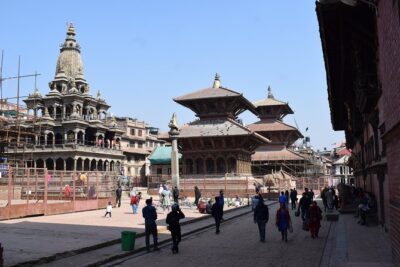
Full-Day 7 UNESCO Tour with Lunch – Private/Group
Read our review →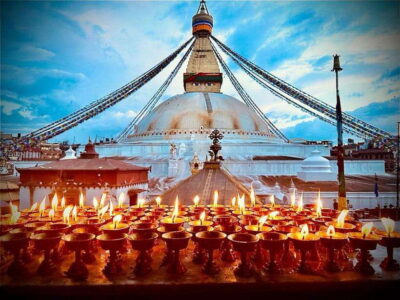
Kathmandu Private Sightseeing Tour | UNESCO World Heritage Sites
Read our review →This tour also appears in