

REVIEW · KATHMANDU TOURS
1 day with our women empowerment and children development project
The best part of this Kathmandu experience is its change of pace. You begin by cooking with Nepali women, make bead jewelry after lunch, then walk together to the Human Welfare Committee’s main center for games, art, music, and dinner with children. It is a day built around participation, not sightseeing from a distance.
I like the hands-on cooking class because dal bhat and momo are everyday Nepali foods, not a staged restaurant lesson. I also like the easy mix of craft and conversation: you can make jewelry to keep as a souvenir, then spend the afternoon with children through simple activities such as sports, painting, singing, and walking.
The main consideration is the long schedule. From roughly 11 AM until 8 PM, this is a full day with a fairly late finish, and the 30-minute walk between locations may be tiring if you prefer a short city activity.
Key points to know before booking
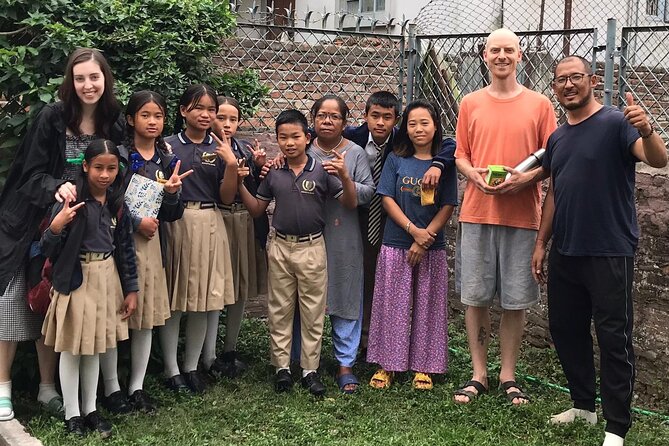
- Cook dal bhat or momo with Nepali women: You learn through a shared meal rather than a formal demonstration.
- Make your own bead jewelry: The two-hour workshop gives you time to create a personal souvenir.
- Meet at We handicraft in Paknajol: The day starts at 11 AM, with the walk to the main center planned for 4 PM.
- Spend the evening with children: Games, painting, sports, singing, dancing, and a walk are all possible activities.
- Private format for your group: Only your group participates, which can make conversation and activities feel more natural.
- Plan for nine hours and a late dinner: The program ends around 8 PM at the Human Welfare Committee.
A day built around people, not a checklist
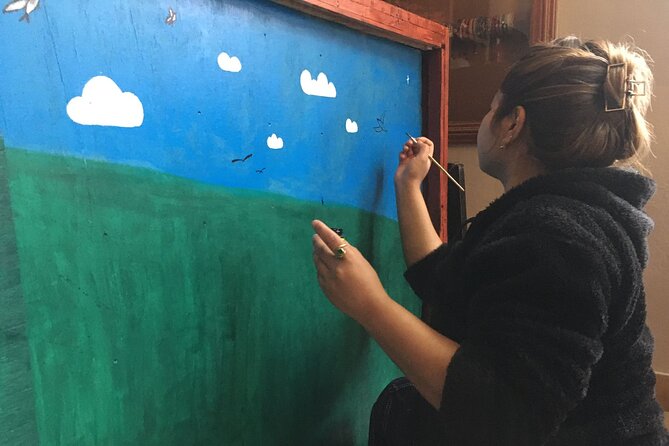
Kathmandu offers temples, markets, mountain views, and food tours by the dozen. This experience takes a different route. Its focus is the Human Welfare Committee, a nonprofit organization working with women and children from underprivileged communities.
You are not simply shown a project and sent away with a quick photograph. The schedule asks you to sit down, cook, make something with your hands, walk with the group, and spend time with children after school. That makes the day feel closer to a community visit than a standard attraction.
The program begins at 11 AM at We handicraft in Paknajol, Kathmandu. From there, the women’s program fills the first half of your day. At 4 PM, you walk together for about 30 minutes to the organization’s main center on Manjushree Galli.
The experience is listed at about nine hours, although the stated duration is eight to ten hours. That range makes sense for a people-focused program, where conversations and activities may not move with the precision of a museum timetable. Still, you should keep the evening open.
A few more Kathmandu days to weigh up
- Kathmandu: 7 UNESCO Sites Tour in 1 Day (Private Tour)
★ 4.9 · 204 reviews - Day Trip to Bhaktapur and Panauti from Kathmandu
★ 5.0 · 184 reviews - The Most Beautiful 1 Day Experience in Kathmandu Nepal
★ 5.0 · 84 reviews
11 AM: Cooking Nepali food with the women’s group
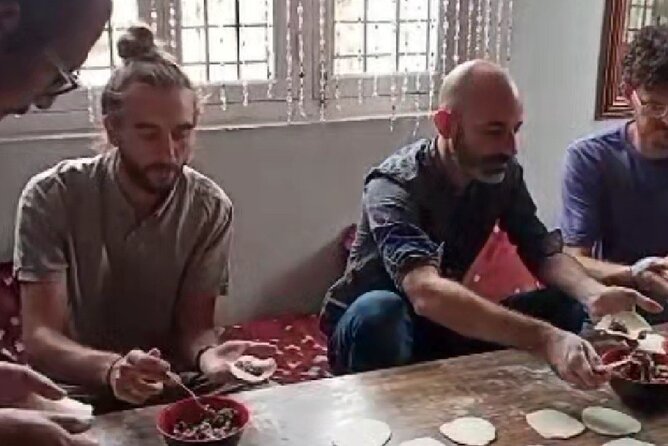
The first activity runs from 11 AM to 1 PM. You learn to prepare either dal bhat or momo, two dishes that give you a useful introduction to Nepali home cooking.
Dal bhat is the familiar rice-and-lentil combination that forms a daily meal for many people in Nepal. Momo are filled dumplings, usually prepared as a group activity because the folding and filling take time. The exact dish may depend on the day, so ask when you arrive if you have a strong preference.
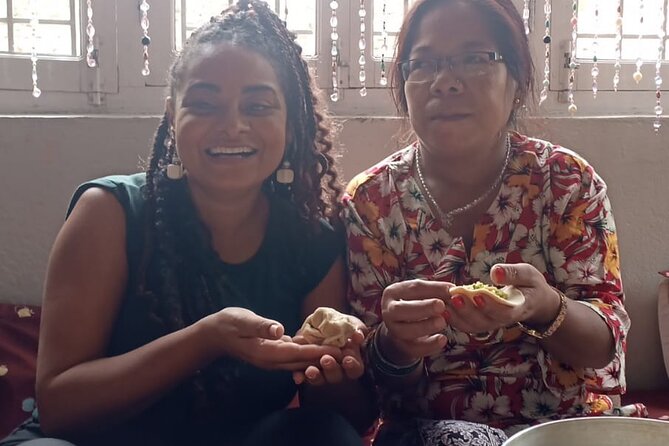
I like this part because cooking creates an easy reason to talk. You do not need to force a conversation across cultural or language gaps when everyone is busy mixing, shaping, folding, or waiting for food to cook. The women lead the class, putting their skills and daily knowledge at the center of the activity.
Do not expect a polished cooking school with a commercial kitchen and a carefully timed recipe card. The value is the shared process. You are there to learn from people connected with the organization and to help prepare a meal you will eat together.
If you have food allergies or dietary restrictions, raise them before the class begins. The supplied details do not promise specific alternatives, so you should not assume that every ingredient can be changed.
1 PM: Lunch gives the cooking class its point
Lunch is scheduled for one hour, from 1 PM to 2 PM. Since you have helped prepare the food, this meal is more than a break between activities. It is the moment when the morning’s work becomes a shared table.
That communal element is important. Food can turn an organized visit into a more personal exchange, and it gives you time to talk with the women without rushing into the next workshop. One account of the day also describes a long conversation with Tenzing, the man running the organization, along with a visit to a Buddhist temple. The published schedule does not list a temple visit as a guaranteed stop, so treat that detail as something that may depend on the day rather than a promise.
The lunch hour may feel short if conversation flows. At the same time, the schedule is long enough that you should not expect every part to run exactly on time. This is a community program, not a machine-operated tour.
2 PM: A bead-jewelry workshop with a personal souvenir
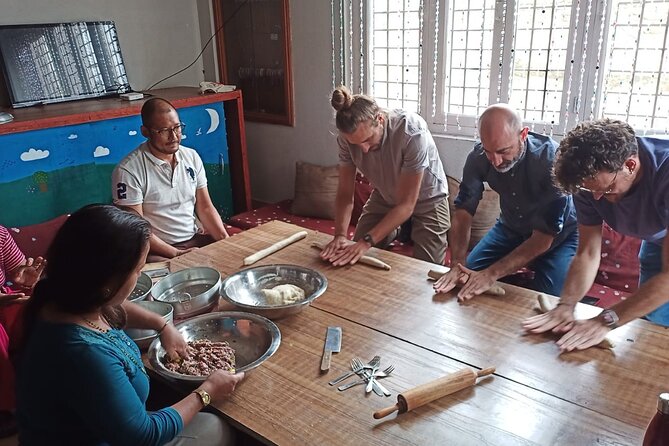
From 2 PM to 4 PM, the focus shifts from food to craft. The women guide you through making jewelry from colorful beads. You can create something for yourself or take it home as a souvenir.
This is one of the more practical parts of the program. A souvenir you make yourself carries a stronger memory than a trinket picked up in a shop, and the workshop gives you a quiet period after lunch. It also offers another way to connect with the women through shared work.
The two-hour slot allows room to learn, make mistakes, and finish a piece without feeling hurried. The information does not specify exactly what types of jewelry you will make, so keep your expectations flexible. The focus is on the activity and the exchange, not on producing a professional piece.
I would bring a little patience. Beadwork can be fiddly, especially if you are trying to create a neat pattern. That is part of the charm, but this is not the place to measure the day by perfect craftsmanship.
A different kind of day from the same base:
- Everest Base Camp Trek – 14 Days
★ 5.0 · 1,499 reviews - Private Kathmandu Sightseeing Tour | UNESCO World Heritage sites
★ 5.0 · 756 reviews - Everest Base Camp Helicopter Tour landing at Everest View Hotel
★ 5.0 · 668 reviews - Half day cooking class in Thamel kathmandu
★ 5.0 · 607 reviews
4 PM: A 30-minute walk to the main center
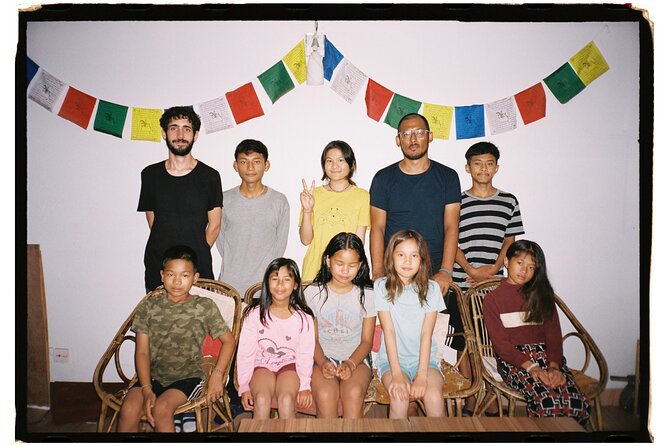
At 4 PM, you walk with the group to the Human Welfare Committee’s main center at Manjushree Galli. The walk is listed as taking about 30 minutes.
This transfer matters because it links the women’s program with the children’s program. Instead of being driven from one anonymous stop to another, you move through Kathmandu with the people who have hosted you. The walk may also give you a natural pause before the afternoon becomes more energetic.
The meeting point is We handicraft, Paknajol, Kathmandu 44600. The end point is Human Welfare Committee, Manjushree Galli, Kathmandu 44600. Both places are in Kathmandu, and the experience is near public transportation, but you should still check the exact meeting instructions after booking.
A 30-minute city walk is manageable for most people, but it is worth considering if you have mobility concerns or if a long day on your feet does not suit you. The activity states that most people can participate, but it does not provide a detailed accessibility plan.
5 PM: Time with children after school
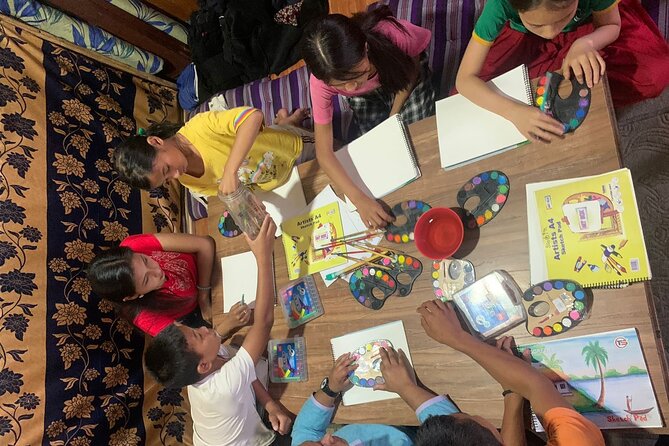
The children return from school at about 4 PM, with organized activities scheduled from 5 PM to 7 PM. This two-hour block is the emotional center of the day.
The possible activities include games, sports, walking, painting, dancing, and singing. The mix is deliberately broad. You do not need to arrive with a special talent or a prepared lesson. A willingness to join in is more useful than a perfect plan.
The flexible format is a strength. Children do not always want to follow an adult-made schedule, and simple games can work better than an elaborate activity. You might spend part of the time running around, then switch to painting or music. The exact combination can change.
At the same time, you should keep your role modest. This is a short visit, not a professional teaching placement. The useful contribution is your attention, energy, and respectful participation. You are joining an existing community program rather than taking charge of it.
The organization’s work focuses on children’s development, so the afternoon is not just entertainment. Games and creative activities give children time to interact, express themselves, and welcome people from outside their normal routine. You also get a closer look at the organization’s daily work.
7 PM: Dinner and a simple farewell
Dinner with the children is scheduled from 7 PM to 8 PM. Like lunch, it gives the day a shared ending rather than a quick goodbye after an activity.
By this point, you will have spent hours with the women, walked to the main center, and joined the children after school. Dinner gives everyone a chance to settle down and talk. The program ends with a farewell at about 8 PM.
That late finish is the biggest scheduling issue. If you have an evening flight, a timed dinner reservation, or a long transfer afterward, this experience may not fit. The opening-hours information lists the organization as open from 10 AM to 6 PM, but the actual program extends to 8 PM, so follow the activity’s stated schedule and confirm the meeting details rather than relying on general opening hours.
What the $120.13 price means
At $120.13 per person, this is not a bargain-priced cooking lesson. Its value comes from the length and range of the day: a cooking class, lunch, a jewelry workshop, an afternoon with children, dinner, and a private format for your group.
The private setup matters. Only your group participates, so you are not placed in a large busload of people moving through a fixed presentation. A smaller group can make it easier to speak with the women, ask questions, and join children’s activities without standing at the edge.
You should also think about where the money goes and what kind of experience you want to support. This is offered by the Human Welfare Committee, a nonprofit working with women and children from disadvantaged communities. The day is designed to support the organization’s work while giving you direct contact with the people involved.
The price makes the most sense if you want a full cultural and community experience, not just a single activity. If you only want to learn momo for two hours, a cooking class elsewhere in Kathmandu may be a better match. If you want a day that combines food, craft, conversation, and time with children, the longer schedule gives you more for the fee.
Who will get the most from this experience
I would recommend this day to you if you value personal contact over a packed sightseeing list. It suits solo visitors, couples, families, and small private groups who are comfortable joining ordinary activities rather than watching a formal show.
It is also a good choice if you want to support a local nonprofit in a direct way. You will have several hours to speak with the women, learn about their work through the program itself, and meet the children in a relaxed setting.
Families may appreciate the games and creative activities, though the long duration and late dinner are worth considering. The experience could also suit visitors who have already seen Kathmandu’s main sights and want a different kind of day.
I would hesitate to book it if you dislike unstructured social time, need a tightly controlled schedule, or want a tour centered on monuments and historic sites. The day’s success depends on your willingness to participate and adapt.
Practical details that affect your day
Confirmation arrives when you book, and the activity uses a mobile ticket. The starting point is We handicraft in Paknajol. The destination is the Human Welfare Committee on Manjushree Galli.
The program is listed as available Monday through Sunday, with operating dates shown from January 15, 2020 through December 15, 2026. The schedule begins at 11 AM and ends around 8 PM.
Most people can participate, and the experience is near public transportation. No transport between the two locations is included in the timetable. Instead, the group walks for about 30 minutes at 4 PM.
Cancellation is free if you cancel at least 24 hours before the local start time. A cancellation within 24 hours is not refundable, and changes within that period are not accepted.
My call: book it for connection, not sightseeing
You should book this experience if you want to spend a full day cooking, crafting, talking, and playing with members of a local organization. The strongest elements are the women-led activities, the handmade jewelry, the private group format, and the chance to meet children after school in a natural setting.
You should skip it if your Kathmandu plans are already packed or if the late finish and walking do not suit you. This is not a quick stop, but that is also its reason to book. At its best, the day replaces a standard tourist performance with shared work, shared food, and time spent together.
FAQ
Where does the experience begin?
The day begins at We handicraft in Paknajol, Kathmandu 44600, Nepal.
Where does the experience end?
The program ends at the Human Welfare Committee on Manjushree Galli, Kathmandu 44600, Nepal.
How long does the experience last?
The scheduled program lasts about nine hours, from around 11 AM until 8 PM. The listed duration is approximately eight to ten hours.
What food do I learn to cook?
You learn to cook a traditional Nepali dish, either dal bhat or momo.
Is lunch included?
Yes. Lunch is scheduled from 1 PM to 2 PM after the cooking class.
What happens during the jewelry workshop?
From 2 PM to 4 PM, Nepali women guide you in making jewelry with colorful beads. You can keep the finished item for yourself or take it home as a souvenir.
How do I reach the Human Welfare Committee main center?
At about 4 PM, you walk with the group for approximately 30 minutes from the first location to the main center.
What activities can I do with the children?
The activities may include games, sports, walking, painting, dancing, and singing. The children return from school at about 4 PM, and organized activities run from 5 PM to 7 PM.
Can I cancel for a refund?
You can receive a full refund if you cancel at least 24 hours before the experience’s start time. Cancellations or changes made within 24 hours are not accepted for a refund.
Recently added around Kathmandu
- Kathmandu Airport Pickup and Drop-off Services★ 5.0 · 3 reviews
- Kathmandu Paragliding★ 5.0 · 3 reviews
- Kathmandu Chandragiri Cable Car and Swayambhunath Private Tour★ 5.0 · 3 reviews
- Explore The Beauty Of Langtang Valley In 8-Days Trek★ 5.0 · 3 reviews
- Kathmandu: Nightlife and Pub Crawl Tour★ 5.0 · 3 reviews
- Mountain Flight Experience in Nepal★ 4.5 · 3 reviews
- Kathmandu: Momo Making Class with a Local Chef★ 5.0 · 3 reviews
- Everest Base Camp Trek★ 5.0 · 3 reviews
Other Kathmandu Tours worth a look


Private Kathmandu Sightseeing Tour | UNESCO World Heritage sites
Read our review →
Everest Base Camp Helicopter Tour landing at Everest View Hotel
Read our review →


Nagarkot Sunrise View and Day Hiking from Kathmandu
Read our review →
Full Day 7 UNESCO Tour with Lunch – Private/Group
Read our review →
This tour also appears in