
REVIEW · KATHMANDU TOURS
Fixed Departure Tibet Overland Group Joining Tours.
Tibet’s high plateau is the real star here. In eight days, you cross from Kathmandu through Kerung, pass beneath Himalayan peaks, visit major monasteries, and reach Lhasa by road. The route includes views of Mount Everest, the Brahmaputra River, and Yamdrok Tso, Tibet’s famous turquoise lake.
I like the way this trip combines major sights with long scenic drives. I also like the practical setup: transport, breakfast, accommodation, monastery admission, an English-speaking Tibetan guide, and the Tibet Travel Permit are included. The main drawback is the pace. You spend many hours in a van or bus, and the schedule gives you only two sightseeing days in Lhasa.
Key points to know
- Everest views from the Tibetan plateau: The route passes near Tengri, with chances to see spectacular Himalayan peaks.
- A high mountain crossing: Gyatchu La reaches 5,220 meters, the highest pass on the journey.
- Lhasa’s essential sights: Potala Palace, Jokhang Temple, Barkhor Bazaar, Sera Monastery, and Drepung Monastery are all included.
- A useful group-tour price: At $1,300 per person, the package covers transport, twin-share rooms, breakfast, permits, a guide, and monastery fees.
- Advance paperwork matters: Your original passport is needed at least three working days ahead for the Tibet visa process, and booking confirmation is required at least 15 working days before departure.
- A maximum of 30 people: This keeps the price down, but the group may feel large during border crossings and sightseeing.
From Kathmandu to Kerung at 5:15 in the morning
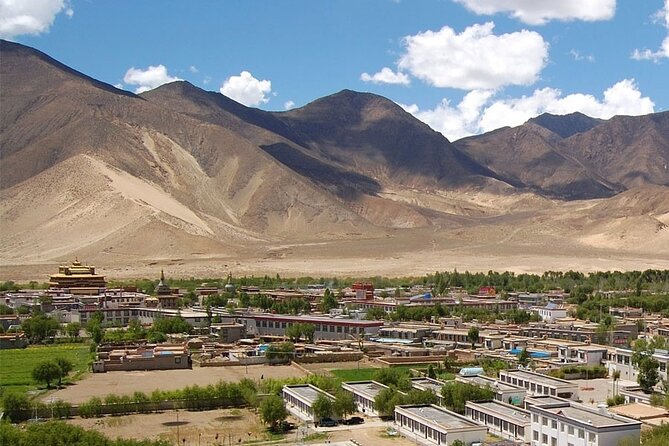
The journey begins early, with a 5:15 am meeting time in Kathmandu. That early start is necessary for the drive to the Kerung border, where you complete border formalities before continuing uphill into Tibet.
The first day is less about sightseeing than getting from one country to the next. Still, the road passes through attractive countryside before the scenery changes dramatically near the border. You should treat this as a long transport day, not a gentle introduction.
The route is by van or bus, and the exact vehicle depends on the group. Pickup is offered, which is useful if you are staying in Kathmandu and do not want to arrange a separate transfer to the starting point. Since the group can reach 30 people, expect some waiting while everyone is accounted for and border procedures are completed.
The Tibet Travel Permit is included, but your paperwork needs careful timing. The company asks for your original passport at least three working days in advance for the Tibet visa process, while booking confirmation must be made at least 15 working days before the tour. Do not leave either task until the last minute.
A few more Kathmandu days to weigh up
- Everest Base Camp Trek – 14 Days
★ 5.0 · 1,499 reviews - Private Kathmandu Sightseeing Tour | UNESCO World Heritage sites
★ 5.0 · 756 reviews - Everest Base Camp Helicopter Tour landing at Everest View Hotel
★ 5.0 · 668 reviews
Day two, the high plateau and Himalayan views
After crossing into Tibet, the road rises toward the highest plateau in the world. This is where the trip changes character. Nepal’s greener foothills give way to broad, open Tibetan scenery, with large skies, dry mountain slopes, and distant Himalayan peaks.
The schedule highlights Tengri, where you can see spectacular mountain views. The route is one of the strongest parts of the trip for anyone who enjoys scenery more than packed sightseeing. You are not simply being driven from one city to another. The road itself is the attraction.
At the same time, this is a demanding day. The itinerary gives no exact driving hours, and road conditions, border delays, and group movement can affect the schedule. Bring patience, water, warm clothing, and something to occupy you during long stretches on the road.
Shigatse and the 5,220-meter Gyatchu La
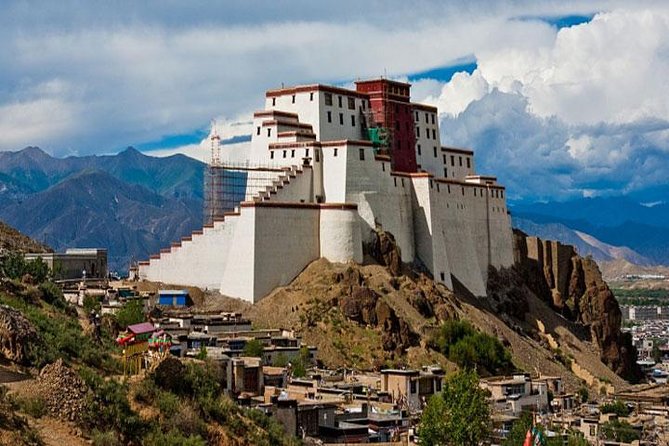
On the third day, you continue to Shigatse, Tibet’s second-largest city, after crossing Gyatchu La at 5,220 meters. This is the highest pass on the trip and one of its most memorable points.
The pass provides the kind of huge mountain scenery that makes an overland route worthwhile. The road crosses open Tibetan terrain, and the views can feel far removed from ordinary city life. You should keep your expectations practical, though. A high pass is a viewpoint and a road crossing, not a developed attraction with many facilities.
Altitude is an important consideration here. The tour reaches very high elevations quickly, so you should pay attention to how you feel and follow the guide’s instructions. The package is suited to most people according to the supplied tour information, but the high-altitude setting still makes this a more strenuous holiday than a standard city break.
Tashlhumpu Monastery and the road to Gyantse
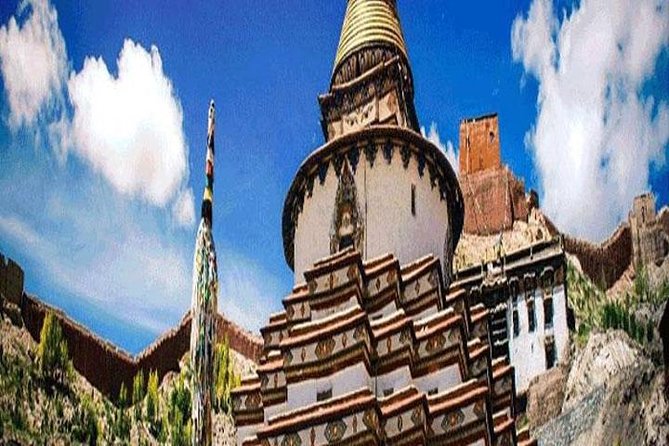
Day four begins with sightseeing at Tashlhumpu Monastery, the traditional seat associated with the Panchen Lama. This is one of the trip’s most meaningful cultural stops, offering a chance to see Tibetan religious life beyond the better-known palaces of Lhasa.
You then drive toward Gyantse through Tibetan villages. The route is as important as the destination here. Village scenery gives you a closer look at everyday life in the countryside, though the visit is not described as a homestay or village activity. You should expect to see the villages from the road unless your guide adds a short stop.
Gyantse is also known for Gyantse Kumbum and Gyantse Dzong, both listed among the attractions covered by the wider program. The supplied day-by-day schedule specifically names the monastery and Gyantse Valley, so confirm the precise order of the Gyantse visits with the operator before departure.
A different kind of day from the same base:
- Half day cooking class in Thamel kathmandu
★ 5.0 · 607 reviews - Everest Base Camp Trekking
★ 5.0 · 485 reviews - Nagarkot Sunrise View and Day Hiking from Kathmandu
★ 5.0 · 471 reviews - Kathmandu: Full Day 7 UNESCO Tour with Lunch – Private/Group
★ 5.0 · 415 reviews
Yamdrok Tso, two high passes, and arrival in Lhasa
Day five is one of the scenic highlights. The road to Lhasa crosses Karo La at 5,010 meters and Kamba La at 4,794 meters. Between these mountain passes, you see Yamdrok Tso, often called the Turquoise Lake, as well as the Brahmaputra River.
This is the kind of day that rewards a window seat and a camera. The lake, river, mountain roads, and wide Tibetan scenery give the drive a strong sense of place. I like that the route does not rush straight to Lhasa. You get a feel for the scale of Tibet before arriving in its cultural center.
The downside is that scenic roads can also mean long road days. You may spend much of the day seated, with sightseeing shaped by traffic, weather, border rules, and the group schedule. If you prefer slow travel with time for quiet walks, this tour may feel too structured.
Potala Palace and the heart of Lhasa
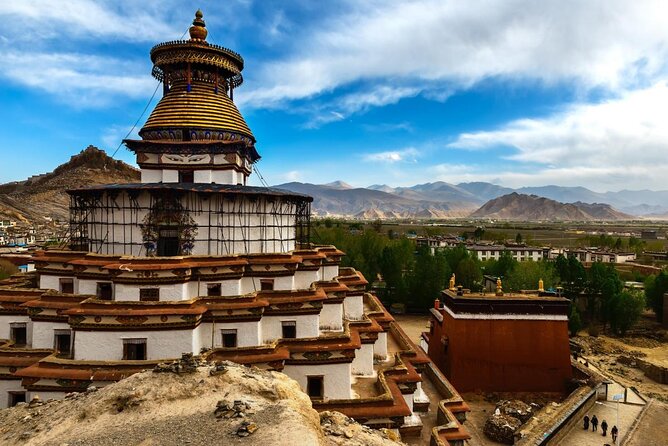
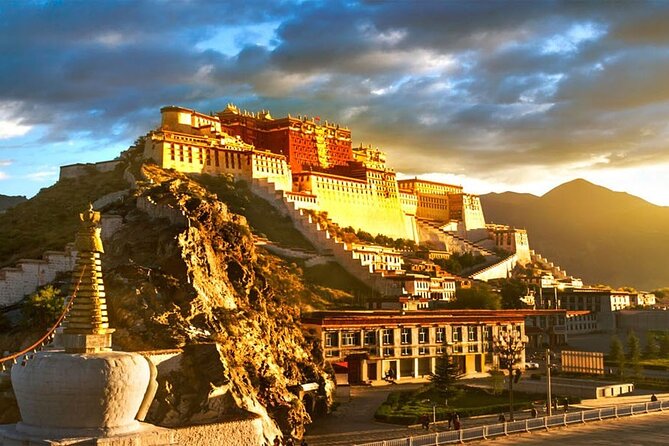
The first full sightseeing day in Lhasa centers on Potala Palace, the former winter palace of the Dalai Lama. It is the most recognizable building on the trip and a major reason many people choose this route.
The palace also gives you a broad view over Lhasa. After several days on the road, reaching the city and seeing its central landmark helps place the earlier mountain journey in context. The visit is guided, and admission to monasteries is included in the package.
The program also includes Norbulingka Palace, Jokhang Temple, Barkhor Bazaar, and the Tibet Museum. Each offers a different angle on Lhasa. Potala Palace represents political and religious authority, Jokhang Temple is central to Tibetan Buddhist devotion, Barkhor Bazaar shows the busy public side of the old city, and the museum provides historical and cultural background.
You should check how many of these places are covered on the first Lhasa day, since the supplied schedule summarizes some stops rather than giving exact visit times. The important point is that the program is not limited to one palace. It gives you a broad introduction to Lhasa’s major sites.
Drepung and Sera on the second Lhasa day
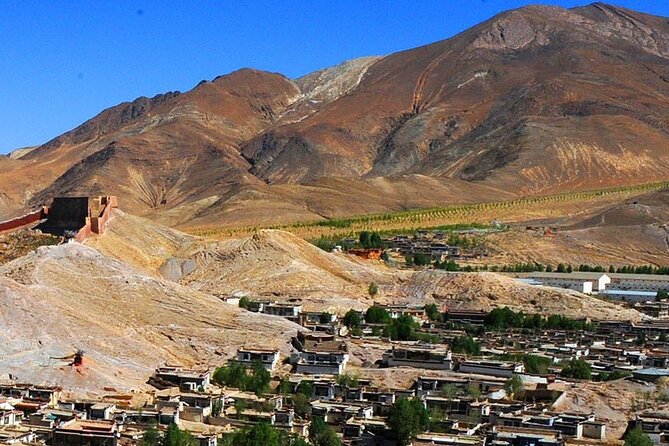
The next day visits Drepung Monastery and Sera Monastery. Drepung was built in the 14th century and was once home to as many as 10,000 monks. That scale helps explain why the monastery is such an important part of the route.
Sera provides another major monastery experience, giving you a useful comparison with Drepung. Seeing both in one day works well if you want a clear introduction to Lhasa’s religious institutions, though the pace may leave little time for lingering.
The broader sightseeing program also names Shalu Monastery and Sakya Monastery. These are important cultural sites, but the eight-day schedule does not clearly assign them to specific days. Ask for the final site list before paying if visiting every named monastery is essential to you.
The same point applies to the Tibet Museum and Norbulingka Palace. They appear in the overall attractions, while the daily schedule provides only a shorter outline. A good booking conversation should clarify which sights are guaranteed and which may depend on timing or road conditions.
What the $1,300 price covers
At $1,300 per person, this is not a bare transport service. The price includes twin-sharing rooms on a bed-and-breakfast basis, seven breakfasts, an English-speaking Tibetan guide, transport by van or bus, monastery entrance fees, and the Tibet Travel Permit.
That package offers solid value for a cross-border trip with several days of road transport and a substantial amount of official paperwork. The permit alone is an important part of the arrangement, since entering Tibet requires advance approval and cannot be treated like an ordinary independent border crossing.
The price does not include lunch or dinner, drinks, tips, personal spending, visa fees, flights, train tickets, or a single supplement. It also excludes costs linked to natural or political disruption beyond the operator’s control.
You should budget separately for all meals except breakfast and for the route you take before or after the overland section. On day eight, the group drives either toward Kathmandu or mainland China, so your onward transport plan needs to be clear.
Twin-sharing is the standard room arrangement. If you want a private room, ask about the single supplement before booking. The supplied information does not specify hotel names or room categories, so do not assume luxury accommodation.
The group setup and support team
The maximum group size is 30 people. That is large enough to reduce the per-person price, but it can slow down border checks, hotel check-ins, meals, and sightseeing. If you value low cost and shared company, the arrangement makes sense. If you want flexible stops and a quiet guide experience, a smaller private trip would be better.
The company’s Kathmandu support team is part of the appeal. Asmita is repeatedly singled out for preparing people before departure and organizing the practical details in a simple way. Gokul is praised for helping arrange travel within Nepal and Tibet and for speaking English and Spanish.
The available information does not identify which staff members lead the Tibetan sightseeing days, so I would not assume Asmita or Gokul will be your guide throughout the crossing. Ask who will meet you at the border, who leads the Lhasa visits, and which language support is available for your departure.
The strongest operational theme is organization. Permits, transport, accommodation, and border preparation matter greatly on this route. The trip is not the place for a casual, last-minute approach.
Who will enjoy this Tibet overland route
I would recommend this tour to you if you want a first look at Tibet without arranging permits, vehicles, hotels, and monastery entries on your own. It suits people who value famous landmarks but also want the road from Nepal to be part of the experience.
It is a good fit for:
- People starting in Kathmandu who want an overland entry into Tibet
- Visitors interested in Tibetan culture, religion, history, and daily life
- Anyone who wants Everest and high-pass scenery without planning a private expedition
- Budget-conscious people comfortable with twin-share rooms and group transport
- English-speaking customers who want a guide included
I would hesitate to recommend it if you dislike long drives, high elevations, fixed schedules, or shared transport. It may also disappoint you if you want extended time at every monastery, because the route covers a great deal in only eight days.
The cancellation terms are worth noting before you commit. You can receive a full refund if you cancel at least six full days before the start time. Cancellation two to six days ahead receives 50 percent, while cancellation less than two days before departure is nonrefundable. Changes follow the same cutoffs.
Should you book this tour?
Book it if you want a practical, reasonably priced introduction to Tibet from Nepal, and if the combination of mountain roads, major monasteries, and Lhasa’s headline sights appeals to you. The inclusion of the permit, guide, transport, breakfasts, and entrance fees makes the $1,300 price easier to justify.
Before booking, confirm the exact monastery schedule, hotel details, single-room cost, border meeting arrangements, and your onward route after day eight. If you accept the early start, long drives, high passes, and group pace, this trip gives you a strong sweep of Tibetan scenery and culture in a short time.
FAQ
How long is the Tibet overland tour?
The tour lasts approximately eight days, beginning in Kathmandu and ending with a drive toward either Kathmandu or mainland China.
What time does the tour start?
The listed start time is 5:15 am.
Is pickup available in Kathmandu?
Yes. Pickup is offered.
Is the Tibet Travel Permit included?
Yes. The Tibet Travel Permit is included in the tour price.
What meals are included?
Seven breakfasts are included. Lunch, dinner, drinks, and personal food expenses are not included.
How many people can join the group?
The group can have a maximum of 30 people.
Recently added around Kathmandu
- Kathmandu Airport Pickup and Drop-off Services★ 5.0 · 3 reviews
- Kathmandu Paragliding★ 5.0 · 3 reviews
- Kathmandu Chandragiri Cable Car and Swayambhunath Private Tour★ 5.0 · 3 reviews
- Explore The Beauty Of Langtang Valley In 8-Days Trek★ 5.0 · 3 reviews
- Kathmandu: Nightlife and Pub Crawl Tour★ 5.0 · 3 reviews
- Kathmandu: Momo Making Class with a Local Chef★ 5.0 · 3 reviews
- Mountain Flight Experience in Nepal★ 4.5 · 3 reviews
- Thangka Painting Workshop★ 5.0 · 3 reviews
Other Kathmandu Tours worth a look


Private Kathmandu Sightseeing Tour | UNESCO World Heritage sites
Read our review →
Everest Base Camp Helicopter Tour landing at Everest View Hotel
Read our review →


Nagarkot Sunrise View and Day Hiking from Kathmandu
Read our review →
Full Day 7 UNESCO Tour with Lunch – Private/Group
Read our review →