
REVIEW · KATHMANDU TOURS
Kathmandu 2 days tour private car and guide, cover major highlights
The best thing about this two-day Kathmandu tour is its range. In a short span, you move from royal courtyards and Buddhist prayer circles to Hindu cremation ghats, living religious traditions, and the medieval streets of Patan and Bhaktapur. It gives you a useful first map of the Kathmandu Valley without asking you to arrange several separate day trips.
I like the private vehicle and guide, especially because Kathmandu traffic can make a simple route take much longer than expected. I also like the flexible timing. You can choose a departure time by phone after booking, although 9:45 am is listed as the normal start.
The main consideration is pace. Six major places in two days means this is a highlights tour, not a slow architectural study. Monument entry fees and meals are extra, and the busiest sections may feel hurried if you want long visits at every temple.
The six places that define the two days
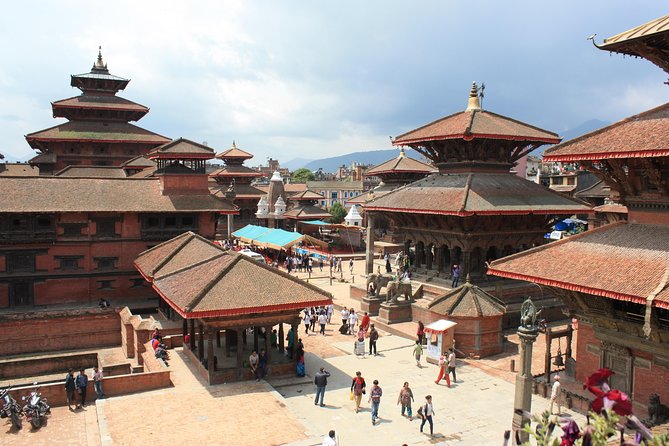
- Kathmandu Durbar Square: See palace courtyards, temples, old sculptures, and the Kumari Bahal, home of Nepal’s living goddess.
- Swayambhunath: Climb or drive up to the Monkey Temple for Buddhist shrines and broad views over Kathmandu.
- Pashupatinath: Visit Nepal’s most important Hindu temple complex and the Bagmati River cremation ghats.
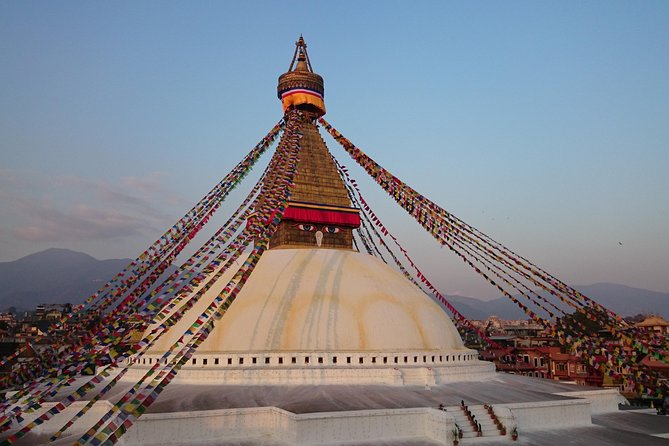
- Boudhanath: Walk around the great white stupa in an area often called Little Tibet.
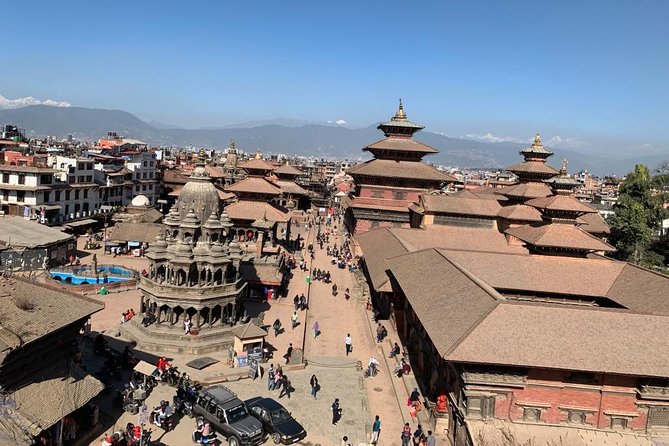
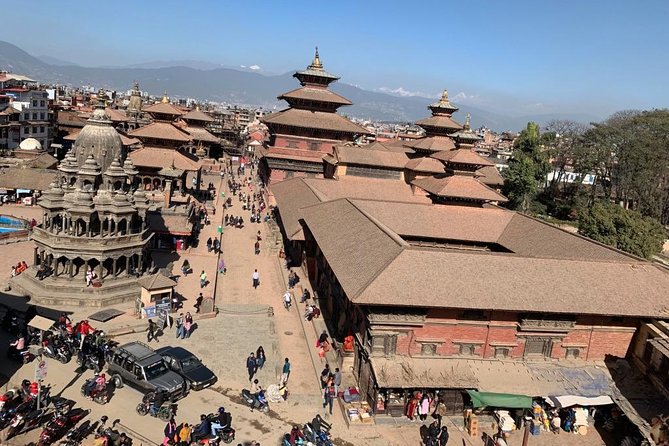
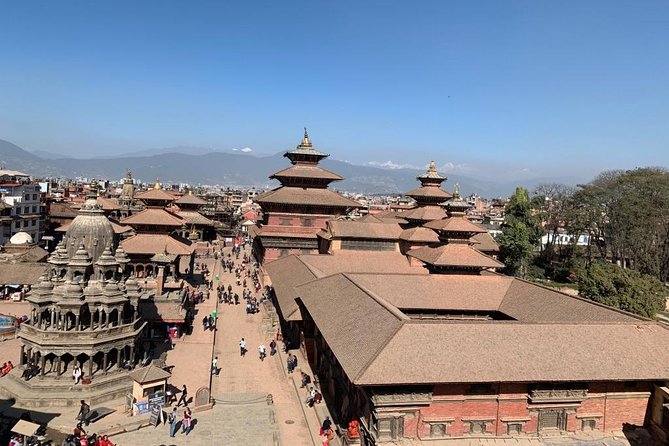
- Patan Durbar Square: Explore a refined medieval palace and temple complex known for fine Newar craftsmanship.
- Bhaktapur Durbar Square: See another historic royal center, along with traditional streets, courtyards, and nearby village scenery.
Why this private format works in Kathmandu
At $95 per person, the price needs to be judged against what is included. You receive a private guide, a private car, van, or bus, plus hotel pickup and drop-off. For a small group, that can be good value because you are not paying for a seat on a fixed group coach and you can discuss the pace with your guide.
The price does not include food, drinks, or monument entry fees. That matters because several sites charge admission, so your final cost will be higher than the advertised amount. Still, having transport and guiding arranged removes much of the day-to-day work, which is useful when you have only two full days in the city.
The private setup also gives you room to shape the experience. The timing can be arranged after confirmation, and you can choose a departure time by phone. I would use that flexibility to avoid starting both days at exactly the same time, though the listed meeting time is 9:45 am.
The tour is for your group only. That means you can ask for more explanation at a place that interests you, or move on when a site has given you enough. The tradeoff is that the quality of the day depends partly on the guide assigned to you.
Several guides are associated with this experience. Paras is praised for clear explanations and for making the sightseeing both educational and spiritually thoughtful. Gyan, who also guides in Japanese, is noted for sharing stories beyond a standard guidebook and for helping visitors see local cultural details. The owner, Buddhi Bhatta, handles arrangements and is listed with a Nepal WhatsApp number for contact.
A few more Kathmandu days to weigh up
- Airport Pickup By Private Car.
★ 4.5 · 25 reviews - Nagarkot Sunrise By Private Car
★ 5.0 · 21 reviews - Private Car Service from Kathmandu to Pokhara
★ 5.0 · 10 reviews
Day one: royal Kathmandu, hilltop Buddhism, and the Bagmati River
The first day covers Kathmandu Durbar Square, Swayambhunath, Pashupatinath, and Boudhanath. The order can be adjusted, but the route works well because it brings together four very different sides of the city.
Kathmandu Durbar Square and the Kumari Bahal
Begin in the old royal center of Kathmandu. The square is a collection of palace buildings, temple platforms, courtyards, shrines, carved wooden details, and stone sculpture rather than one single monument. Plan on about an hour in the square area according to the suggested schedule, though the full day itinerary allows more time for the wider complex.
The Kumari Bahal is one of the most distinctive stops. Kumari means a virgin girl, and the Kumari is revered as a living goddess. Her residence is a monastery-like courtyard in the Durbar Square area, and the building gives you a direct link between Nepal’s royal past and its continuing religious customs.
You will also see old palace wings and a gallery connected with the rulers of the Shah Dynasty and the Gurkhas. The value of a guide is clear here. Without context, the square can look like a dense collection of temples. With explanation, you can begin to understand the roles of the palace, monasteries, shrines, and courtyards.
The drawback is that this area can be visually and culturally busy. If you want to photograph every carving or pause at each courtyard, the suggested one-hour visit may feel short. Tell your guide early if architecture matters more to you than checking off all four day-one sites.
Swayambhunath, the Monkey Temple
A roughly 30-minute drive brings you to Swayambhunath, widely known as the Monkey Temple. It is a Buddhist site on a hill above Kathmandu, with shrines, prayer features, and a setting that gives you a different view of the city from the low-lying palace district.
The name used by English speakers points to the monkeys found around the site, but the religious importance is the real reason to visit. This is a place for watching ritual and taking in the layered relationship between Buddhism and the wider Kathmandu Valley.
The drive time is worth noting. Kathmandu routes can be slow, so a 30-minute estimate may not feel long on paper, but traffic can affect the actual rhythm of the day. A private car helps because you are not waiting for a larger group to gather before moving on.
You may want to keep this stop focused. Enjoy the hilltop setting, listen to the guide’s explanation, and leave enough energy for Pashupatinath and Boudhanath. The tour aims for broad coverage rather than a long meditation at one location.
A different kind of day from the same base:
- Everest Base Camp Trek – 14 Days
★ 5.0 · 1,499 reviews - Private Kathmandu Sightseeing Tour | UNESCO World Heritage sites
★ 5.0 · 756 reviews - Everest Base Camp Helicopter Tour landing at Everest View Hotel
★ 5.0 · 668 reviews - Half day cooking class in Thamel kathmandu
★ 5.0 · 607 reviews
Pashupatinath and the open cremation ghats
Pashupatinath is one of the most important Hindu temple sites in the region. It sits beside the Bagmati River, which flows toward the Ganges, and the complex is tied closely to death, funeral rites, pilgrimage, and the god Shiva.
The most difficult and important part of the visit is the public cremation area. Open cremations take place along the river, and you may see funeral rites being carried out. This is not a staged cultural display. It is an active religious site, so you should follow your guide’s advice about respectful behavior and photography.
You may also see holy men with painted faces, dreadlocked hair, and ash on their bodies. The setting can feel intense, especially if you have not visited a cremation site before. I would approach this stop with patience and restraint. Listen first, observe quietly, and remember that families are carrying out private rites in a public religious setting.
The suggested visit is about an hour, while another timing in the schedule lists 30 minutes. That difference tells you something useful: the day can be adjusted, but time at each stop is not fixed in a detailed way. Ask for clarity before departure if Pashupatinath is a priority.
Boudhanath, Kathmandu’s Little Tibet
A short drive takes you to Boudhanath, one of the city’s most recognizable Buddhist sites. The huge white stupa is surrounded by a circular area often called Little Tibet, with monasteries, shops, and a strong Tibetan Buddhist presence.
This is a good place to slow the pace after Pashupatinath. Walk around the stupa, watch the movement of worshippers, and notice how the circular route creates a steady rhythm. The site is visually striking, but its appeal is not just the size or shape of the monument. It remains an active place of prayer.
Boudhanath also helps balance the first day. Kathmandu Durbar Square shows royal and Newar traditions, Pashupatinath brings you into Hindu funeral culture, and Boudhanath offers a major Buddhist center. That mix is the strongest reason to choose this tour over a simple city sightseeing drive.
The route then returns you to your hotel. Since the day includes four major sites, you should expect a full sightseeing day, with driving time between districts. Wear practical shoes and avoid planning an important evening appointment too close to the tour’s expected finish.
Day two: two medieval cities in five to seven hours
The second day visits Patan Durbar Square and Bhaktapur Square. It is described as lasting about five to seven hours, making it shorter and more focused than day one.
Patan Durbar Square and Newar artistry
Patan, also known as Lalitpur, gives you another royal square, but it has a different mood from central Kathmandu. The attraction is the concentration of medieval palaces, temples, courtyards, and carved details associated with Newar artistic traditions.
This is a place where a guide can help you notice small things. Look at the proportions of the courtyards, the woodwork, the metal images, and the way religious buildings share space with palace structures. The square is not simply a backdrop for photographs. It shows how political power, skilled craft, and daily worship were linked in the old city.
If you enjoy architecture, you may want to ask for extra time here. The overall second-day schedule allows several hours for two locations, so you will need to balance Patan against Bhaktapur. The private format gives you a better chance of making that choice than a rigid group outing.
Bhaktapur Square and village surroundings
Bhaktapur offers another medieval royal center, with palaces, temples, and traditional urban spaces. The description of the day also includes villages, so the route is not limited to formal monuments. You get a sense of how the old city connects with the surrounding communities.
Bhaktapur is useful after Patan because comparison becomes part of the experience. You can look at how the two palace squares differ in layout, scale, and detail, then ask your guide about the local traditions behind them.
Do not expect to cover every lane in Bhaktapur during a half-day visit. The five to seven-hour limit makes this a practical introduction, not a complete study of the city. If you want a relaxed lunch, extensive shopping, or long museum visits, those choices may reduce the time available at the second square.
What the guide adds to the monuments
The sites are impressive on their own, but the guiding is what turns the route into a connected story. You are not just moving from one landmark to another. You are seeing royal power at Kathmandu and Patan, living religious practice at Pashupatinath and Boudhanath, and the old urban world around Bhaktapur.
Paras is associated with detailed explanations and a calm style. Gyan is especially relevant if you need Japanese-language guiding, and his approach includes stories that are not always found in a standard guidebook. The specific guide assigned to your booking may vary, so treat these names as useful points of contact rather than a guarantee.
I would send your interests when arranging the start time. Tell the company if you care most about Hindu rituals, Buddhist sites, architecture, photography, or the old palace cities. That gives the guide a clearer basis for using the flexible schedule well.
The practical tradeoffs before you book
This tour suits you best if you have two days in Kathmandu and want the major cultural sites handled by one local operator. It also works for families and small groups that prefer a private car, though children must be accompanied by an adult.
You should be comfortable with a busy program. Day one combines four major places and several drives, while day two puts two historic cities into five to seven hours. The experience is not designed as a slow, unstructured stroll.
The listed start time is 9:45 am, but the timing can be arranged after booking confirmation. Pickup and drop-off at your hotel are included. The vehicle may be a car, van, or bus, depending on the private group arrangement.
Confirmation is provided at booking. Free cancellation is available if you cancel at least 24 hours before the start time. Changes or cancellations inside that 24-hour window are not accepted for a refund.
Who should choose this two-day tour
I would choose this tour if you want a strong first look at Kathmandu without spending time comparing transport options or hiring separate guides at each site. The route covers the valley’s best-known cultural landmarks and adds a useful mix of Hindu, Buddhist, royal, and village settings.
It is a good fit for:
- First-time visitors with only two full days
- Small groups that want a private vehicle
- Families who need hotel pickup and a flexible departure
- People interested in religious sites and historic architecture
- Visitors who want help understanding local customs, not just taking photographs
I would think twice if you prefer to spend an entire morning at one square, avoid driving between several districts, or want meals and entrance tickets included in one price. You can still request a slower pace, but the number of stops means some compromise is necessary.
Should you book it?
Book this Kathmandu private tour if your goal is efficient coverage with personal guiding. At $95 per person, the combination of transport, hotel service, and two days of private attention can make sense, especially for a small group. Budget separately for admission fees and meals, and confirm your preferred timing before the first morning.
The best way to get value is to arrive with priorities. Ask for more time at Patan if you love architecture, protect the Pashupatinath visit if religious traditions matter most, or use Boudhanath and Swayambhunath as your main Buddhist stops. You will see a great deal in two days, but the experience will be better if you choose where to linger.
FAQ
How long is the Kathmandu private tour?
The experience lasts two days. The second day, covering Patan Durbar Square and Bhaktapur Square, is described as lasting about five to seven hours.
What time does the tour start?
The listed start time is 9:45 am. The departure time can also be arranged by phone after booking confirmation.
Which places are included on the first day?
The first day includes Kathmandu Durbar Square, Swayambhunath, Pashupatinath, and Boudhanath.
Which places are included on the second day?
The second day includes Patan Durbar Square and Bhaktapur Square, with medieval palaces, temples, and village areas.
Is hotel pickup included?
Yes. Hotel pickup and drop-off are included.
Is this a private tour?
Yes. Only your group participates, and transport is provided by private car, van, or bus.
Are entrance fees included in the price?
No. Monument entry fees are not included. Food and drinks are also excluded.
What happens if I need to cancel?
You can receive a full refund if you cancel at least 24 hours before the experience starts. Cancellations or changes made less than 24 hours before the start time are not accepted for a refund.
Recently added around Kathmandu
- Kathmandu Airport Pickup and Drop-off Services★ 5.0 · 3 reviews
- Kathmandu Paragliding★ 5.0 · 3 reviews
- Kathmandu Chandragiri Cable Car and Swayambhunath Private Tour★ 5.0 · 3 reviews
- Explore The Beauty Of Langtang Valley In 8-Days Trek★ 5.0 · 3 reviews
- Kathmandu: Nightlife and Pub Crawl Tour★ 5.0 · 3 reviews
- Kathmandu: Momo Making Class with a Local Chef★ 5.0 · 3 reviews
- Mountain Flight Experience in Nepal★ 4.5 · 3 reviews
- Everest Base Camp Trek★ 5.0 · 3 reviews
Other Kathmandu Tours worth a look


Private Kathmandu Sightseeing Tour | UNESCO World Heritage sites
Read our review →
Everest Base Camp Helicopter Tour landing at Everest View Hotel
Read our review →


Nagarkot Sunrise View and Day Hiking from Kathmandu
Read our review →
Full Day 7 UNESCO Tour with Lunch – Private/Group
Read our review →
This tour also appears in