
REVIEW · KATHMANDU TOURS
Private Half Day Budhanilkantha Tour
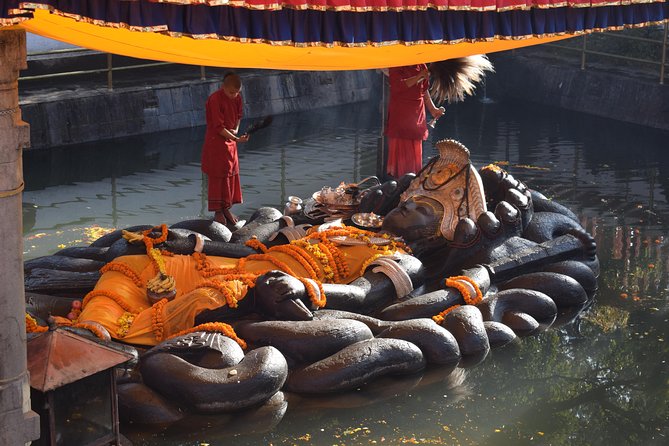
The heart of this tour is a five-meter black-stone statue of Lord Vishnu reclining on the coils of the serpent Shesha. It appears to float in a sacred pool, a striking sight made even more intriguing by the mystery of how such a huge stone reached Kathmandu more than 1,000 years ago.
I like the private format, which gives you room to ask questions about Hindu symbols and local worship instead of keeping pace with a large group. I also like the short timing and hotel transfer, since you can fit Budhanilkantha into a busy Kathmandu day without spending part of it bargaining for a taxi.
The main consideration is simple: this is a focused temple visit, not a full-day sightseeing trip. If you want grand architecture, many monuments, or a long cultural program, you may find the experience limited. Dress respectfully and expect an active place of worship rather than a polished museum.
Key points at a glance
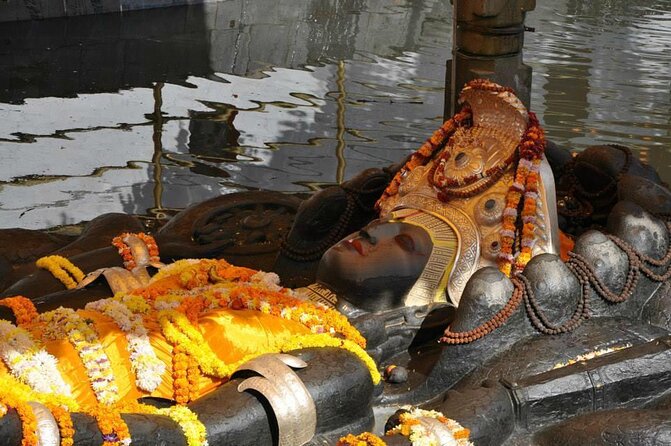
- The Sleeping Vishnu statue is carved from one block of black basalt and measures about 5 meters long.
- The statue appears to float in a sacred pond, symbolizing the cosmic ocean in Hindu belief.
- A private guide explains the legends and religious meaning, with personalized attention throughout.
- Hotel pickup and drop-off are included within Kathmandu’s Ring Road area, including Boudha.
- The 2 to 3 hour schedule leaves time for other plans, making this easy to add to a Kathmandu itinerary.
- The temple remains a living Hindu pilgrimage site, where you may see daily puja rituals rather than only sightseeing.
Why Budhanilkantha is worth your morning
Kathmandu has famous temples that fill guidebooks and day plans. Budhanilkantha is different. It sits at the foothills of the Shivapuri hills, at the edge of the city, where the setting feels quieter and less tied to the usual sightseeing circuit.
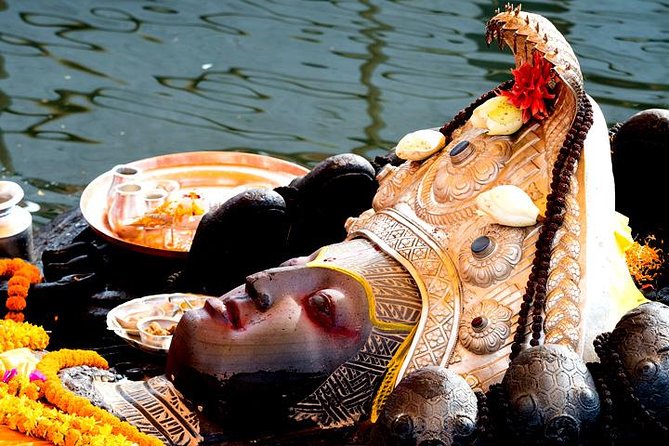
The temple’s main attraction is not a tall tower or a grand courtyard. It is a single horizontal figure lying in a rectangular pool. Lord Vishnu rests on the many coils of Shesha, the cosmic serpent, with his head supported above the water. The sculpture’s dark stone, calm expression, and unusual position make it memorable even if you know little about Hindu worship.
I find the site especially useful for understanding how religion works in everyday Nepal. You are not simply looking at an old object behind glass. People come to pray, make offerings, and perform puja. Your guide can help explain what you are seeing and point out details that are easy to miss when you visit alone.
The setting also gives the tour a useful change of pace. Kathmandu can be noisy and crowded, so a short ride toward the hills and a visit to a peaceful village can feel like a welcome reset. Do not expect complete silence, though. This is a working religious site, and activity can vary with the time and day of your visit.
A few more Kathmandu days to weigh up
- Everest Base Camp Trek – 14 Days
★ 5.0 · 1,499 reviews - Private Kathmandu Sightseeing Tour | UNESCO World Heritage sites
★ 5.0 · 756 reviews - Everest Base Camp Helicopter Tour landing at Everest View Hotel
★ 5.0 · 668 reviews
Seeing the five-meter Sleeping Vishnu
The central statue is the reason to book this experience. It is carved from one block of black basalt and measures about 5 meters, or 16.4 feet, in length. The craftsmanship is impressive, but the pose is what catches your eye first. Vishnu is reclining, not standing or seated, and the serpent beneath him turns the pool into a picture of the cosmic ocean.
That symbolism gives your guide plenty to explain. Vishnu is associated with preservation in Hindu belief, while Shesha represents the cosmic serpent. The water is not just a practical setting for the carving. It carries religious meaning, presenting the statue as if it rests on the primordial sea.
You will also hear about the statue’s uncertain origin. How was a massive stone block transported into the Kathmandu Valley more than a thousand years ago? The answer remains unknown, which adds a human puzzle to the religious story. A good guide will keep this mystery in proportion: it is an interesting part of the site, but the temple’s importance comes from worship as much as from engineering.
The pool creates a visual effect that is easy to remember. From the edge, the statue seems to float. You may find yourself focusing first on its size, then on smaller details such as the serpent coils, the face, and the ornaments carved into the stone.
This is not a place where you should rush in, take one photograph, and leave. Give yourself time to watch the rhythm of the site. Your guide can help you understand when to pause, where to stand, and which actions are part of worship rather than staged presentation.
A living temple, not a museum display
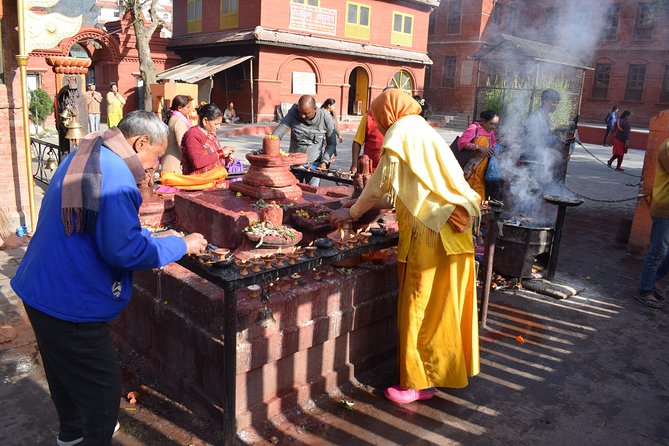
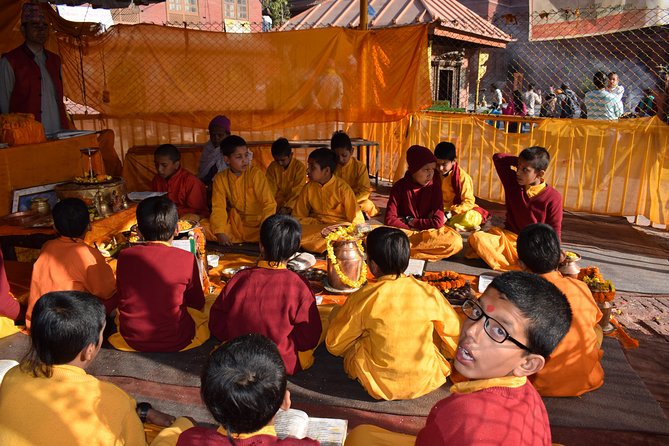
The strongest part of the visit is the contrast between the ancient sculpture and present-day devotion. Hindu pilgrims still come to Budhanilkantha for prayer and ritual. You may see puja taking place, as one visitor did during a visit to a nearby Krishna temple connected with the broader cultural experience around the site.
That distinction matters. Some historic places in Kathmandu feel like monuments arranged for sightseeing. Budhanilkantha is still used for religious purposes, so you need to act with care. Keep your voice low, dress in smart casual clothing, and follow your guide’s instructions about where you may stand or walk.
The temple may not offer the visual variety of Kathmandu’s larger and more ornate squares. You are coming for one remarkable sculpture and the meaning around it. If your main goal is a long list of buildings and photo stops, this may feel modest. If you want to see worship in an ordinary setting, the visit has more value.
I also appreciate that the guide can explain the difference between looking and participating. You are there as an observer, but you can still approach the place with respect. That makes the experience more rewarding than treating the statue as an unusual photo subject.
What the private guide adds
A private tour is useful here because the statue raises questions that are not always obvious. Why is Vishnu lying down? Why is the water important? What is the serpent doing beneath him? How does this place fit into Hindu belief and local pilgrimage?
A professional guide can answer those questions in real time. You are not tied to a group’s fixed pace, so you can ask for more detail about the sculpture, local legends, or the rituals taking place. If you are traveling with family or friends who have different levels of interest, a private guide also lets you keep the explanation focused.
Ananta is one guide associated with this experience. He has been described as arriving early for pickup and explaining temple symbols in clear English. If he is assigned to your group, that combination of promptness and clear communication should make the short outing easier to manage. Guide assignments can vary, so treat his name as a useful possibility rather than a guarantee.
The guide is also valuable before and after the temple visit. A little context can help you see Budhanilkantha as more than an isolated statue. The village setting, the foothills, the religious activity, and the legends all make more sense when someone connects them.
Still, the quality of a private tour depends partly on the questions you bring. I would ask about Vishnu, Shesha, the pond, the statue’s origin, and the rituals you see. This is the sort of place where a curious visitor gets more from the guide than someone who simply follows along.
A different kind of day from the same base:
- Half day cooking class in Thamel kathmandu
★ 5.0 · 607 reviews - Everest Base Camp Trekking
★ 5.0 · 485 reviews - Nagarkot Sunrise View and Day Hiking from Kathmandu
★ 5.0 · 471 reviews - Kathmandu: Full Day 7 UNESCO Tour with Lunch – Private/Group
★ 5.0 · 415 reviews
How the 2 to 3 hours are used
The tour lasts about 2 to 3 hours, including the private vehicle transfer from your hotel and the temple visit. The formal stop is listed as roughly 30 minutes in one part of the schedule and one hour in another, so you should think of the timing as flexible rather than exact.
That flexibility is helpful. You can spend enough time at the pool to understand the sculpture without turning a single temple into an all-day outing. The remaining time in your schedule could be used for another Kathmandu activity, a meal, or rest at your hotel.
Hotel pickup and drop-off are included inside Kathmandu’s Ring Road area, including Boudha. This boundary is important. If your accommodation is outside that zone, confirm the arrangement before booking rather than assuming the transfer covers the whole valley.
The private vehicle removes one common Kathmandu hassle: finding transport and negotiating the price for a short ride. It also makes the experience practical for a small group that wants a direct morning or afternoon plan.
The activity is listed as suitable for most people, and it is described as an easy half-day visit. Even so, a temple is not a controlled indoor attraction. You may encounter uneven surfaces, crowds during worship, or areas where access is limited. The provided information does not promise a detailed accessibility setup, so contact the operator if you have specific mobility needs.
Is $45 a fair price?
At $45 per person, the cost is easiest to judge by what it replaces. You are paying for a private vehicle, hotel pickup and drop-off within the stated area, a professional guide, local taxes, and admission. Food and drinks are not included.
For a solo visitor, the price may feel less economical than joining a group or using local transport. The private format becomes more attractive for two or more people who value a direct transfer and personal explanation. Group discounts may also improve the price for a larger party, though the exact reduction is not provided.
The real value lies in time and interpretation. You could reach Budhanilkantha on your own, but you would need to arrange transport and learn the religious context separately. Since the statue’s meaning and legends are central to the experience, the guide is not an extra decoration. The explanation is part of what you are buying.
I would compare this tour with the cost of a private taxi plus a guidebook or independent research. If you already have transport and a strong interest in Hindu art, you may prefer to visit alone. If you want a simple plan with someone who can explain what you see, $45 is a reasonable price for a short private outing.
The best time and attitude for the visit
The tour does not specify a fixed departure time, so you will need to confirm the schedule when booking. Since the site is a functioning temple, the atmosphere may change according to worship times and local activity.
An early pickup can be useful. It gives you more room for the rest of the day, and an early start may also make the transfer less stressful. One guide, Ananta, has been praised for arriving ahead of schedule, which is exactly the sort of small detail that helps when you have other plans.
Wear smart casual clothing. Religious sites in Nepal call for modest presentation, and you should be ready to behave respectfully around people at prayer. The supplied information does not set out a detailed clothing list, so smart casual is the safest clear direction.
Bring questions, patience, and a willingness to observe. The statue is unusual enough to hold your attention, but the visit works best when you notice the people using the temple. You are seeing a place of faith, not just a historical curiosity.
Who should book this Budhanilkantha tour?
I would recommend it to you if you have already seen some of central Kathmandu and want something quieter and less predictable. It also suits first-time visitors who want a short introduction to Hindu symbolism without committing to a long religious or cultural program.
The tour is a good fit for:
- Couples or small groups who want their own guide and vehicle
- People interested in Nepali culture, religion, and art
- Visitors with a busy Kathmandu schedule
- Anyone curious about unusual sites outside the main sightseeing route
- Visitors who prefer a planned hotel transfer to arranging a taxi
I would be more cautious if your priority is architectural variety. Budhanilkantha is centered on one main statue, and it may not satisfy you if you want several major temples in one morning. You should also consider the $45 price carefully if you are traveling alone and are comfortable arranging local transport yourself.
Should you book the private Budhanilkantha visit?
Book this tour if the idea of seeing a mysterious, floating Vishnu statue in an active Hindu temple appeals to you. The private guide, included transport, and short schedule make it an easy addition to a Kathmandu stay, especially when you want a quieter cultural stop beyond the standard route.
Skip it if you need a large collection of monuments or a full-day tour packed with stops. Budhanilkantha offers depth at one place rather than variety across many places. For the right visitor, that focus is exactly its strength: one memorable statue, clear cultural context, and a close look at worship that is still part of daily life.
Free cancellation is available if you cancel at least 24 hours before the start time. Changes or cancellations inside that period are not refunded.
FAQ
How long does the Budhanilkantha tour take?
The experience lasts approximately 2 to 3 hours, including the visit and transport.
What is the main attraction at Budhanilkantha Temple?
The main attraction is a five-meter statue of Lord Vishnu reclining on the coils of the cosmic serpent Shesha in a sacred pool.
Is the statue carved from one piece of stone?
Yes. The statue is carved from a single block of black basalt stone.
Does the statue really appear to float?
Yes. The statue appears to float in the pool, which represents the cosmic ocean in Hindu symbolism.
Is hotel pickup included?
Yes. Pickup and drop-off are included for hotels inside Kathmandu’s Ring Road area, including Boudha.
Is transportation private?
Yes. Transport is provided by private vehicle, and only your group participates in the activity.
Is a guide included?
Yes. A professional guide is included. Ananta is one guide associated with the experience, but guide assignments may vary.
Are admission fees included?
Yes. Admission to the temple is included in the tour price.
What happens if I cancel?
You receive a full refund if you cancel at least 24 hours before the experience starts. Cancellations or changes made less than 24 hours before the start time are not accepted or refunded.
Recently added around Kathmandu
- Kathmandu Airport Pickup and Drop-off Services★ 5.0 · 3 reviews
- Kathmandu Paragliding★ 5.0 · 3 reviews
- Kathmandu Chandragiri Cable Car and Swayambhunath Private Tour★ 5.0 · 3 reviews
- Explore The Beauty Of Langtang Valley In 8-Days Trek★ 5.0 · 3 reviews
- Kathmandu: Nightlife and Pub Crawl Tour★ 5.0 · 3 reviews
- Mountain Flight Experience in Nepal★ 4.5 · 3 reviews
- Kathmandu: Momo Making Class with a Local Chef★ 5.0 · 3 reviews
- Everest Base Camp Trek★ 5.0 · 3 reviews
Other Kathmandu Tours worth a look


Private Kathmandu Sightseeing Tour | UNESCO World Heritage sites
Read our review →
Everest Base Camp Helicopter Tour landing at Everest View Hotel
Read our review →


Nagarkot Sunrise View and Day Hiking from Kathmandu
Read our review →
Full Day 7 UNESCO Tour with Lunch – Private/Group
Read our review →