REVIEW · KATHMANDU TOURS
Rainbow Mo:Mo
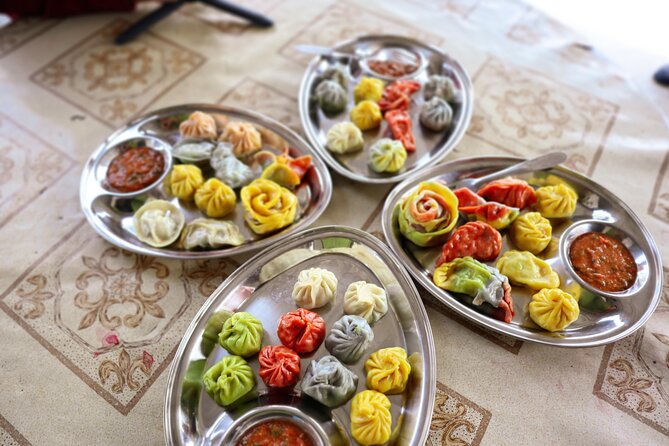
The best part of Rainbow Mo:Mo is that it turns a familiar Nepali dish into edible artwork. You make momos in shades from beetroot pink to butterfly-pea blue, while the queer-forward setting gives the class a clear sense of welcome, humor, and identity.
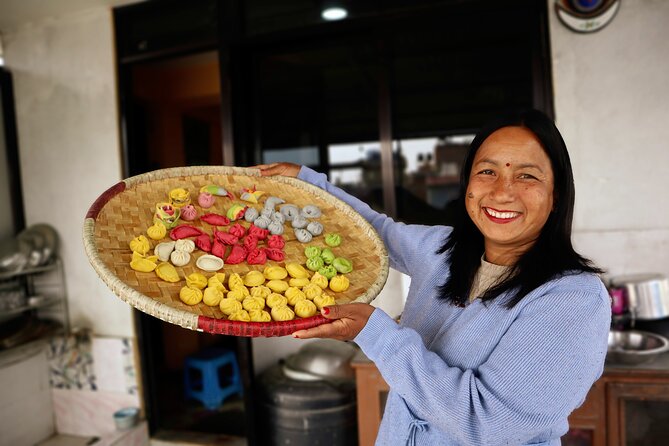
I like the natural food colors, which make the cooking feel creative without relying on artificial dye. I also like the personal touch: Prajeet has handled hotel pickup, while Aayam leads the hands-on momo lesson. The main consideration is that the two-hour class is about one focused activity, not a broad Kathmandu food tour.
The 4.9 rating and 100 percent recommendation rate fit the experience’s simple appeal: you learn a local staple, make something unusual, and eat what you create. Just keep in mind that group numbers can vary. One participant had the session alone and still received a full lesson, so the class may feel either social or quite personal.
Key points at a glance
- Color your dough naturally: Use beetroot, spinach, carrot, and butterfly pea to create different shades for your momos.
- Learn the pinch by hand: Aayam teaches the shaping process, including the careful folds that give momos their familiar look.
- Try two cooking styles: Your finished momos are served steamed and fried, giving you a useful taste comparison.
- Meet at Garden of Dreams: The class starts at Tridevi Sadak in central Kathmandu and ends back at the same meeting point.
- Expect a small group: The maximum is 15 people, though the class can also run with only one participant.
- Book with some flexibility: The activity lasts about two hours, costs $44 per person, and offers free cancellation up to 24 hours before the start.
Making Kathmandu’s favorite dumpling in full color
Momos are one of Nepal’s most loved everyday foods. They are dumplings, usually filled and folded by hand, then steamed or fried. Rainbow Mo:Mo keeps the basic pleasure of the dish but adds color and a social message through a queer-led cooking experience.
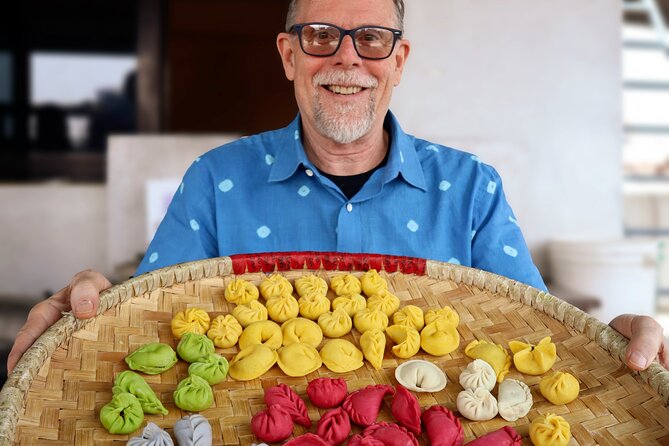
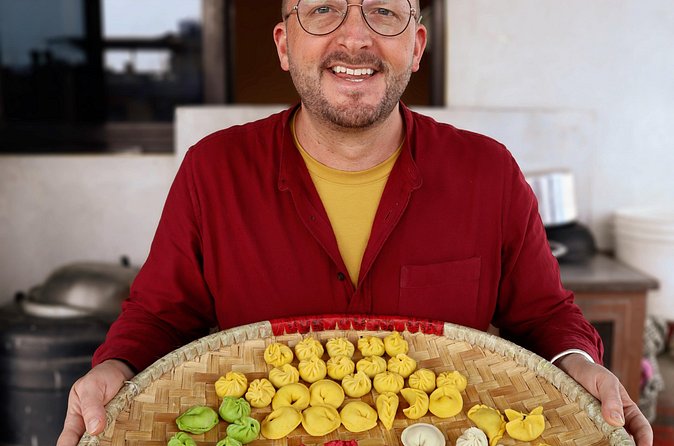
The color comes from ingredients rather than a decorative gimmick. Beetroot can bring a strong pink tone, spinach adds green, carrot gives orange, and butterfly pea provides blue. You are not simply watching a cook prepare a plate. You are handling the dough, choosing how to work with the colors, and shaping each dumpling yourself.
That makes this a good pick if you want a Kathmandu activity with more participation than a standard food tasting. You will spend your time making one dish well, rather than rushing from stall to stall. I find that kind of focus useful: you leave with a better sense of the work behind a food you may order many times during a Nepal trip.
The queer-forward approach matters, too. The class presents cooking as a place for inclusion and self-expression, not just a technical lesson. Its playful language compares the final pinch of a momo to cosmetic artistry, with the joke about putting the Botox in the face before pinching the dough. It is silly, memorable, and well suited to a class built around creativity.
A few more Kathmandu days to weigh up
- Everest Base Camp Trek – 14 Days
★ 5.0 · 1,499 reviews - Private Kathmandu Sightseeing Tour | UNESCO World Heritage sites
★ 5.0 · 756 reviews - Everest Base Camp Helicopter Tour landing at Everest View Hotel
★ 5.0 · 668 reviews
Starting at Garden of Dreams
Your listed meeting point is Garden of Dreams, on Tridevi Sadak, Kathmandu 44600. The activity ends at that same point, so you do not need to arrange a second pickup after class.
Garden of Dreams is a practical central meeting place, and the location is near public transportation. Pickup is also offered, which can help if you are staying elsewhere in Kathmandu or would rather not navigate the streets before a timed activity. If you use hotel pickup, confirm the details at booking and allow enough time for city traffic.
The operating hours shown for this activity are Monday through Sunday, from 9:15 AM to 4:15 PM, for dates from November 3, 2024, through November 25, 2026. The class itself lasts about two hours. That gives you several possible planning slots, but you should still check the exact start time before arranging another tour or meal.
Do not book Rainbow Mo:Mo expecting a walking tour of Garden of Dreams or nearby sights. The garden is the meeting point, not a stated sightseeing stop. The value is in the class itself, so arrive ready to cook rather than expecting a guided visit around Kathmandu.
Meeting Aayam and learning the momo basics
Aayam is the cooking instructor named for the experience, and the lesson centers on making the dough, adding color, filling the dumplings, and shaping them. The available details do not give a full recipe or a precise filling list, so you should not assume that every ingredient or cooking technique will be covered in the same way as a formal culinary school course.
What is clear is that this is a hands-on session. You take part in the pinching and shaping, rather than simply watching a demonstration. The shaping is the skill that makes the class worthwhile. Momos look simple on the plate, but getting a neat seal takes practice, and different folds can change both appearance and texture.
The humorous cosmetic comparison gives you a useful mental picture. First comes the face, or the dough and filling. Then comes the repeated pinch, pinch, pinch that closes the dumpling. It is a light way to explain a precise action, especially for first-time momo makers who may otherwise press too hard or leave gaps.
I would approach the class with patience. Your early dumplings may look less polished than the later ones. That is not a problem. The point is to learn the hand movement and enjoy the process, not to produce a restaurant-perfect plate on your first try.
Four natural colors and what they add
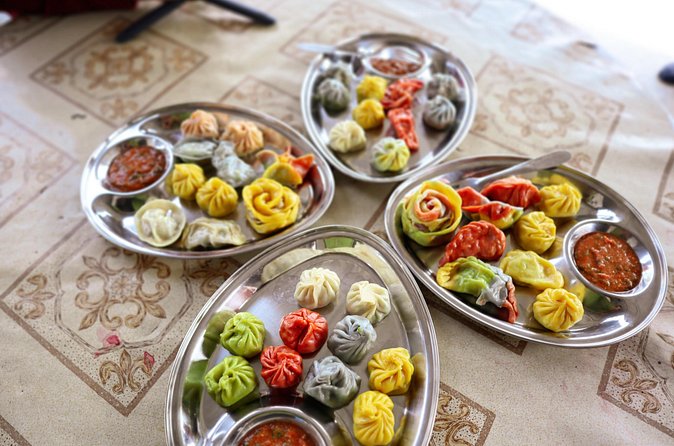
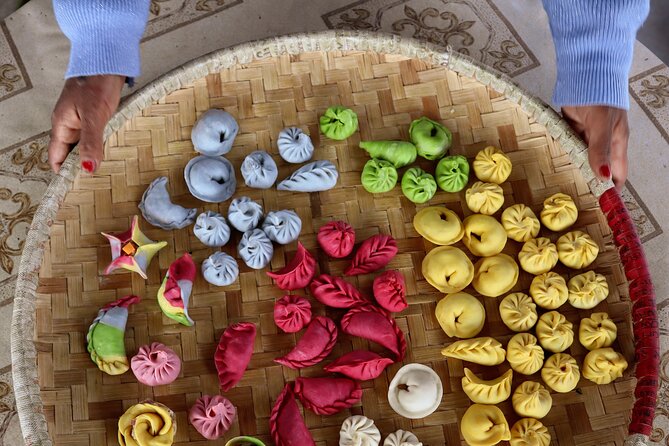
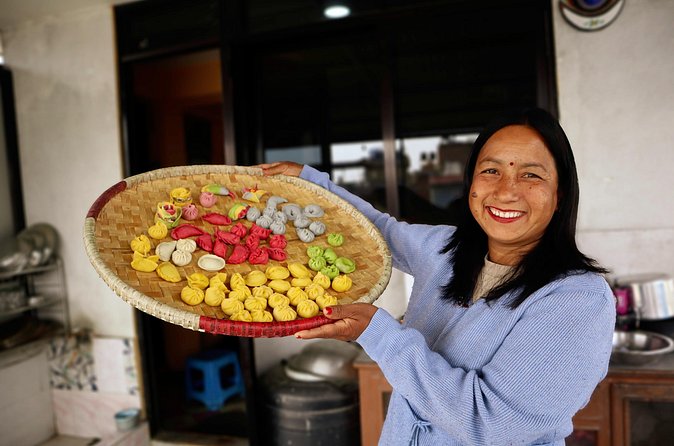
The food colors are the most distinctive feature of Rainbow Mo:Mo. Beetroot, spinach, carrot, and butterfly pea each bring a different look, so the finished plate becomes a collection of small, hand-shaped pieces rather than a row of identical dumplings.
Beetroot is associated with pink, spinach with green, carrot with orange, and butterfly pea with blue. The colors give you a clear reason to pay attention to the dough itself. You can see how a familiar food changes when simple plant ingredients become part of the preparation.
This is also where the class connects food with inclusion. The different shades are not just there for photographs. They support the idea that variety belongs on the same plate, which fits the experience’s queer-forward purpose without requiring a separate lecture or formal presentation.
I like this approach because it keeps the message connected to the activity. You are making food, not attending a detached discussion about identity. The colors, the group setting, and the humor do the work together.
One practical point: naturally colored dough may not produce perfectly uniform shades every time. That is part of the handmade character. If you want identical, highly finished dumplings, this may feel loose. If you enjoy making something personal and slightly irregular, it should suit you well.
A different kind of day from the same base:
- Half day cooking class in Thamel kathmandu
★ 5.0 · 607 reviews - Everest Base Camp Trekking
★ 5.0 · 485 reviews - Nagarkot Sunrise View and Day Hiking from Kathmandu
★ 5.0 · 471 reviews - Kathmandu: Full Day 7 UNESCO Tour with Lunch – Private/Group
★ 5.0 · 415 reviews
Pinching, laughing, and shaping the final dumplings
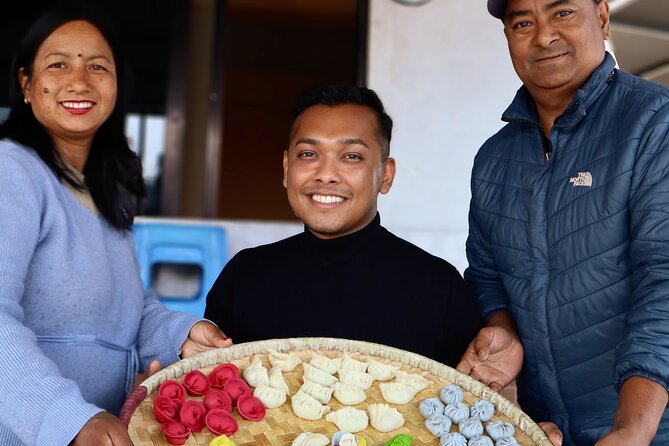
The central task is shaping. You add the filling, fold the dough around it, and pinch the edges closed. A momo’s appearance depends on this final step, and the class puts enough attention on it for you to understand why handmade dumplings have character.
The activity description uses humor to describe the process, but the technique still matters. A weak seal can open during cooking. An overly full dumpling can be hard to fold. You will likely make a few that look different from the example, especially if this is your first time.
That is why I see the class as a good fit for couples, friends, solo visitors, and anyone who enjoys practical activities. You have something to do with your hands, and the work creates easy conversation. At the same time, the class does not depend on having a large group. One participant joined alone and still had a fun, personal session.
A maximum of 15 people keeps the stated capacity modest. A group of that size can still feel lively, but it is not an enormous cooking workshop. If the booking is quiet, you may get more direct attention. If the class fills, you will have more people to meet but possibly less individual time with the instructor.
Steamed and fried: two ways to eat your work
The finished momos are served both steamed and fried. This is a smart part of the experience because cooking method changes the eating experience without changing the basic dumpling.
Steamed momos keep the dough soft and let the filling remain central. Fried momos bring a firmer, crispier exterior. Tasting both gives you a better idea of why momo menus often offer more than one preparation.
The meal is also the payoff for the handwork. You do not simply make decorative pieces and leave them behind. You eat what you shaped, which gives the class a satisfying finish. The exact filling, sauces, and side dishes are not specified, so I would avoid booking this as a way to sample a complete survey of Nepali cuisine.
Instead, think of it as a focused introduction to one important food. If you already enjoy momos, the colored versions add novelty. If you have never made them, the two cooking styles help you understand the dish from dough to plate.
What $44 means in practical value
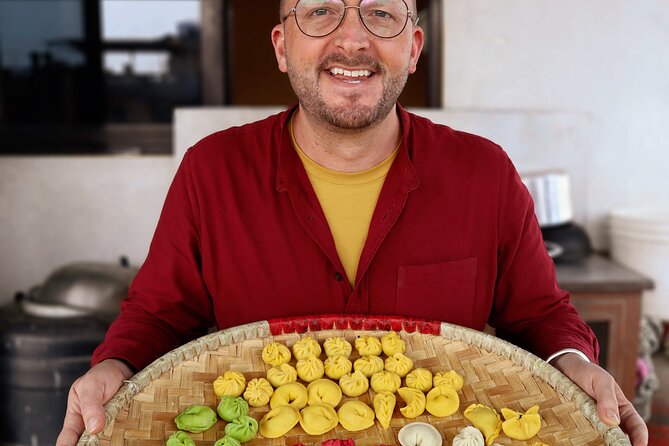
At $44 per person, Rainbow Mo:Mo is not the cheapest way to eat momos in Kathmandu. You can buy prepared dumplings for far less. The price needs to be judged against the full activity: a roughly two-hour lesson, ingredients, instruction, the chance to make your own food, and the social purpose of a Queermandu experience.
I think the price makes sense if you value participation and a small-group setting. You are paying for time with an instructor and for an activity you cannot recreate by simply ordering a plate at a restaurant. The naturally colored dough also gives this class something beyond a basic momo workshop.
The value is weaker if your main goal is quantity or a broad food itinerary. This is one dish, one class, and one meeting point. You are not paying for transport between several neighborhoods or a long list of tastings.
Pickup can improve the value if it saves you the hassle of finding the meeting point. It is offered, but the available information does not state the exact pickup area or vehicle arrangement. Ask for the pickup details before you commit, especially if your hotel is outside central Kathmandu.
The activity is often booked about 31 days in advance. That suggests planning ahead is sensible, particularly if you want a particular day or are visiting during a busy period. The maximum group size is 15, so booking early may also help if you prefer a scheduled slot that fits your plans.
Who should book Rainbow Mo:Mo
I would recommend this class to you if you meet several of these conditions:
- You want a hands-on activity in Kathmandu, not only sightseeing.
- You enjoy dumplings and would like to understand how momos are shaped.
- You appreciate food with a clear visual element.
- You prefer an inclusive, queer-forward experience.
- You are comfortable spending two hours on one cooking project.
- You are traveling solo and like the option of a personal lesson.
- You want a light, social activity with room for humor.
It is especially useful for a day when you need a break from temples, markets, and long walks. The class gives you a different way to connect with Kathmandu through an everyday food rather than a major monument.
You may want another option if you are looking for a full cooking course, a market visit, detailed culinary theory, or a long restaurant crawl. Those features are not part of the stated experience. You should also think twice if you do not enjoy hands-on food preparation, since the making and pinching are the heart of the class.
Service animals are allowed, and the activity is near public transportation. The supplied details do not explain other accessibility features, so contact the provider if you have specific mobility, dietary, or assistance needs.
Booking, timing, and cancellation details
Queermandu, also known as Gay Tours Nepal, provides Rainbow Mo:Mo. Confirmation is received at the time of booking, and mobile tickets are supported, which makes it easy to keep the details on your phone.
Free cancellation is available if you cancel at least 24 hours before the experience starts. If you cancel later, the amount paid is not refunded, and changes made within that 24-hour window are not accepted. The cut-off uses Kathmandu local time.
The activity requires a minimum number of participants. If that minimum is not reached and the class is canceled, you are offered another date or experience, or a full refund. This is worth remembering if you are building a tightly timed itinerary around the class.
Because pickup is available and the class begins at a set point, confirm the meeting instructions rather than relying only on a map pin. I would also leave a little space after the class. The official duration is about two hours, but a cooking activity can finish with a final tasting and goodbyes rather than an exact minute.
Should you book this colorful momo class?
Book Rainbow Mo:Mo if you want a cheerful, practical Kathmandu experience with a clear queer identity and a strong food focus. The combination of beetroot pink, spinach green, carrot orange, and butterfly-pea blue makes the class different from a standard dumpling lesson, while the steamed and fried tasting gives you a satisfying finish.
The $44 price is fair for instruction and participation, but not for a simple meal. You should book it for the making, the humor, and the chance to learn a local staple from Aayam, not just for the plate of momos.
If you are solo, do not worry that the experience will feel pointless. A solo booking has worked as a personal session, with Prajeet providing timely hotel pickup and Aayam guiding the cooking. If you prefer a busy group, check the expected booking size before reserving.
With a 4.9 rating from 19 reviews and a 100 percent recommendation rate, it has a strong record so far. The sensible call is simple: choose it when you want an inclusive, hands-on food activity. Skip it when you need a broad Kathmandu tour or a full culinary course.
FAQ
Where does Rainbow Mo:Mo begin?
The activity begins at Garden of Dreams, Tridevi Sadak, Kathmandu 44600, Nepal.
Where does the activity end?
It ends back at the Garden of Dreams meeting point.
How long does the momo-making class last?
The activity lasts approximately two hours.
What are the operating hours?
The listed hours are Monday through Sunday, from 9:15 AM to 4:15 PM.
What ingredients provide the momo colors?
The class uses beetroot, spinach, carrot, and butterfly pea for natural colors.
Are the momos only steamed?
No. The finished momos are served both steamed and fried.
Who provides the experience?
The experience provider is Queermandu, also known as Gay Tours Nepal.
Is hotel pickup available?
Pickup is offered. The available details do not specify the exact pickup area, so confirm the arrangement when booking.
How many people can join?
The maximum group size is 15 travelers.
Can I cancel for a full refund?
Yes. You can cancel for a full refund if you cancel at least 24 hours before the experience start time. Cancellations or changes made less than 24 hours before the start are not refunded or accepted.
Recently added around Kathmandu
- Kathmandu Paragliding★ 5.0 · 3 reviews
- Kathmandu Airport Pickup and Drop-off Services★ 5.0 · 3 reviews
- Explore The Beauty Of Langtang Valley In 8-Days Trek★ 5.0 · 3 reviews
- Kathmandu Chandragiri Cable Car and Swayambhunath Private Tour★ 5.0 · 3 reviews
- Kathmandu: Nightlife and Pub Crawl Tour★ 5.0 · 3 reviews
- Mountain Flight Experience in Nepal★ 4.5 · 3 reviews
- Kathmandu: Momo Making Class with a Local Chef★ 5.0 · 3 reviews
- Everest Base Camp Trek★ 5.0 · 3 reviews
Other Kathmandu Tours worth a look

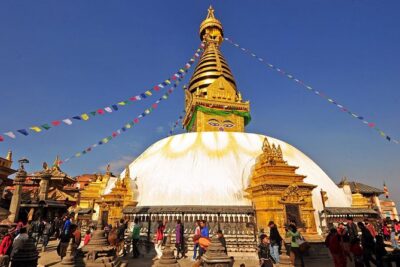
Private Kathmandu Sightseeing Tour | UNESCO World Heritage sites
Read our review →
Everest Base Camp Helicopter Tour landing at Everest View Hotel
Read our review →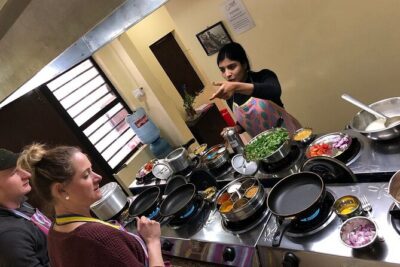


Nagarkot Sunrise View and Day Hiking from Kathmandu
Read our review →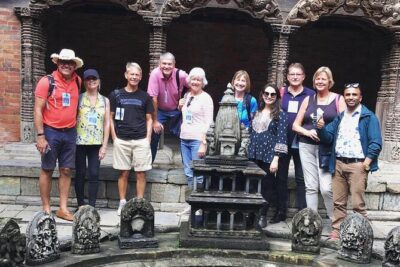
Full Day 7 UNESCO Tour with Lunch – Private/Group
Read our review →