REVIEW · KATHMANDU TOURS
Shamanism Tour in Nepal – One-to-one Consultation with Sharmans
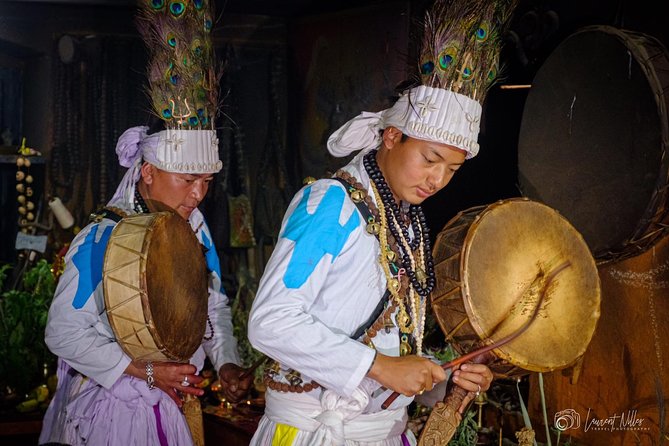
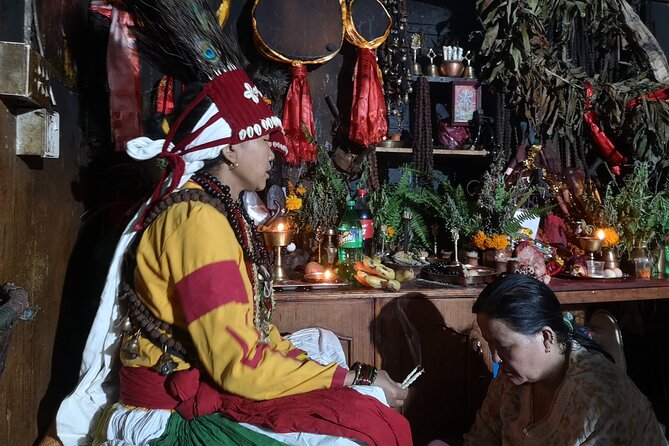
A short walk from Thamel takes you to a working Himalayan Bon Shaman temple, not a staged cultural show. You may watch local ceremonies, learn how Shamanic healing is practiced, and then meet a Shaman privately. I like the direct access to a living Nepalese tradition, and I like having Siddhartha or another guide explain the rituals in clear English before the consultation begins.
The main caution is expectation. This is not a guaranteed fortune-telling session or medical diagnosis, and the consultation may be brief if no negative energy is sensed. At $40 per person, the value depends on your interest in spirituality and culture. If you expect a long healing ceremony or detailed predictions about your health, you may find the experience too limited.
What makes this Kathmandu Shamanism visit different
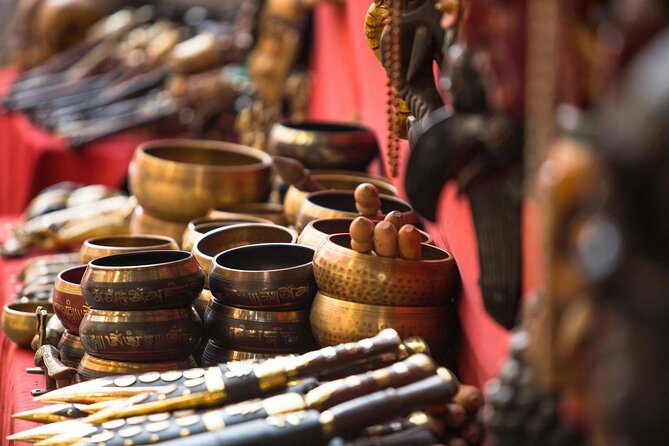
- A real temple and training center: The center serves local people as well as visitors, and it is also used to train Shamans.
- A private one-to-one consultation: Your group receives personal time with a Shaman rather than sitting through a large public presentation.
- Siddhartha’s cultural briefing: The guide explains the background, the role of energy and spirits, and what the Shaman can and cannot do.
- A chance to observe ceremonies: You may see local rituals before your own consultation, which helps make the visit easier to understand.
- A short, walkable activity: The temple is within walking distance of Thamel, and the full visit takes about one to one and a half hours.
- A practice with limits: The Shaman may not discuss every part of your past, present, or future, especially if the consultation detects no harmful energy.
Walking from Thamel to a working Shaman center
The meeting point is in Kathmandu at P8F3+WX, Kathmandu 44600. From there, the Shaman temple and healing center are within walking distance of Thamel. The activity returns to the same meeting point, so you do not need to arrange a taxi between the consultation and your next stop.
That simple setup is useful on a busy Kathmandu day. You can fit the visit around a meal, hotel check-in, or sightseeing in Thamel. It is also a good choice for your first day in Nepal, when you may want something close by rather than a long drive across the valley.
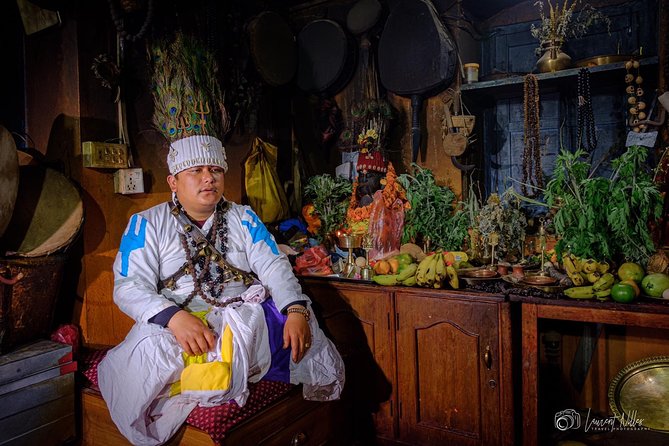
The center is described as both a treatment center and a training place. That matters. You are not simply entering a room prepared for tourists. You might see local people receiving ceremonies or healing, and the setting can feel more serious and less polished than a standard sightseeing attraction.
I suggest arriving with patience and respect. The center may be active when you arrive, and the first part of the visit can involve watching what is already taking place. This is not wasted time. It gives you a chance to see how the Shaman works with local people before becoming the focus of the session yourself.
The setting may also challenge your expectations. Promotional images can suggest Shamans in full traditional clothing, but the Shaman you meet may wear ordinary clothes. One past participant found this disappointing, even though the ritual and blessing were clearly explained. Clothing does not tell you everything about the practice, but it is worth knowing that the appearance may be informal.
A few more Kathmandu days to weigh up
- Everest Base Camp Trek – 14 Days
★ 5.0 · 1,499 reviews - Private Kathmandu Sightseeing Tour | UNESCO World Heritage sites
★ 5.0 · 756 reviews - Everest Base Camp Helicopter Tour landing at Everest View Hotel
★ 5.0 · 668 reviews
What Siddhartha explains before the consultation
The guide is an important part of this activity. Siddhartha is named as the operator and guide in several accounts, and his role is more than simply showing you the way. He explains Shamanism, the meaning of energy and spirits, and what is likely to happen during your private session.
That introduction helps if you are new to the subject. Without it, a ritual involving chanting, objects, gestures, or blessings could seem confusing. You may also be unsure when to speak, where to sit, or how seriously to take what is being said. A translator gives you a bridge between the Shaman’s words and your own understanding.
The guide also helps set boundaries. The Shaman is not presented as a doctor, and this should not replace medical or mental-health care. The experience is framed as a spiritual and psychological form of healing, with Shamans sometimes described as early psychologists or psychotherapists within this tradition.
The strongest part of the briefing is its honesty. You are told that a Shaman can offer divination and spiritual counseling, but that the consultation may not cover every promised topic. If no negative spirit or harmful energy is detected, the Shaman may avoid disturbing what is already considered positive energy.
That point can affect your experience. You may hope for a detailed account of past health problems, current worries, and future events. Instead, the session may focus on a more limited reading, a blessing, or a ritual. Go in with an open mind, but also with realistic expectations.
Watching ceremonies before your private session
The first stage may involve observing other ceremonies at the center. This can be one of the most valuable parts of the visit because it places your consultation in a wider local setting.
You may see several ceremonies taking place on the same day. The exact activity can vary, so you should not expect a fixed performance with identical steps every time. The point is to observe how the center functions and to see that Shamanic practice is connected to local life.
For some people, watching first makes the private session less intimidating. You can see the pace of the ritual and notice how the guide translates or explains what is happening. It also gives you time to decide how involved you wish to be.
For others, this part may feel too passive or too short. If you want the entire visit devoted to your own consultation, you may consider the observation period a delay. I see it differently: the temple is not a theater, and waiting while local ceremonies take place is part of respecting the setting.
The center can also feel spiritually intense. This is a personal experience, and the effect will depend on your beliefs and comfort level. You do not need to share the Shaman’s beliefs to pay attention and learn from the ceremony.
The one-to-one consultation and healing ritual
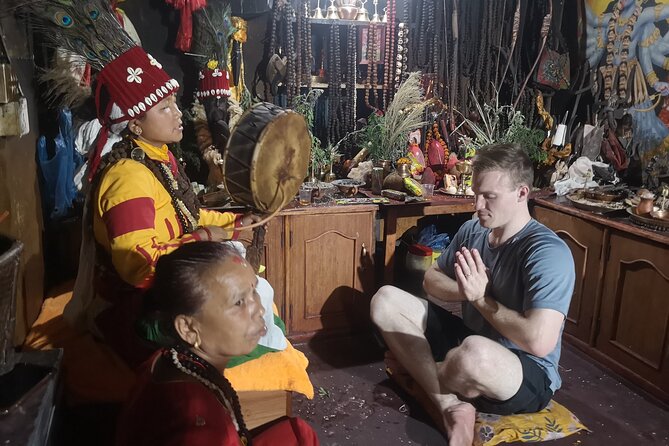
After the introduction and any observation, you meet the Shaman for a private consultation. This is the core of the activity, and your group is the only group participating in the private tour.
The consultation may include spiritual divination, counseling, a blessing, meditation, or a healing ritual. Some people receive a ceremony intended to remove negative spirits or harmful energy. Others may receive less visible intervention if the Shaman senses that no negative energy is present.
You should not assume that the Shaman will provide a complete prediction about your life. The description refers to information about health in the past, present, and future, but the practical experience may be more selective. A Shaman may discuss these matters only if the consultation indicates a reason to do so.
This is where the activity can feel powerful for one person and underwhelming for another. A visitor who wants reflection and self-knowledge may find the session useful. Someone looking for a long ritual with dramatic costume, precise predictions, or a full account of past illnesses may feel that the visit does not deliver enough for the price.
The role of the guide remains important during this part. Translation allows you to follow the Shaman’s words and ask for clarification. A strong guide also keeps the exchange respectful and prevents simple cultural differences from turning into confusion.
You may find the process soothing, thought-provoking, or simply unfamiliar. The healing language can be understood as part of a religious and cultural system, rather than as a promise of medical results. I would approach it as a chance to reflect on your worries and to learn how another tradition understands the mind, body, energy, and spirit.
A different kind of day from the same base:
- Half day cooking class in Thamel kathmandu
★ 5.0 · 607 reviews - Everest Base Camp Trekking
★ 5.0 · 485 reviews - Nagarkot Sunrise View and Day Hiking from Kathmandu
★ 5.0 · 471 reviews - Kathmandu: Full Day 7 UNESCO Tour with Lunch – Private/Group
★ 5.0 · 415 reviews
Why the cultural setting matters
Himalayan Bon Shamanism is presented here as one of the oldest Shamanic practices in the world. In Nepal, Shamanism remains tied to culture and daily life, rather than existing only as a historical subject in a museum.
That makes this short activity more than a fortune-telling appointment. You are entering a place where spiritual consultation is offered as a way to understand problems, restore balance, and deal with forces that may not fit a Western medical explanation.
The visit is especially useful if you want to see a part of Kathmandu beyond temples built for sightseeing. It offers contact with a local practice that many visitors would not encounter by walking through Thamel alone.
Still, authenticity does not guarantee comfort or clarity. The center may not look like the images you have seen, and the Shaman may not be wearing ceremonial clothing. The experience may also be hard to interpret without the guide’s explanation. Those are not necessarily faults, but they are reasons to book this only if you are genuinely curious about the tradition.
Is $40 a fair price in Kathmandu?
The cost is $40 per person. Bottled water, a guide, and translation are included. A donation to the healing center is not included, and you should also budget separately for a tip if you choose to give one.
At first glance, $40 is not a small amount for an activity lasting about 60 to 90 minutes, especially in Nepal. One participant felt the experience was too expensive for what was provided, particularly when the personal ritual lasted closer to 30 minutes.
I think the value comes from the combination of access and explanation. You are paying for a private consultation, an introduction to the practice, help with translation, and entry into a functioning center. If you already know a great deal about Shamanism, the short session may not justify the cost. If this is your first direct contact with Himalayan Shamanism, the guide can make the visit far more useful than simply walking into a temple alone.
The price also reflects the unusual nature of the activity. This is not a large group tour with a low per-person rate. Your group receives private attention, and the guide helps you understand a practice that may be difficult to follow without language support.
Before booking, decide what you want to buy. You are paying for a cultural encounter and personal spiritual consultation, not a guaranteed cure or a full hour of fortune-telling. That distinction is the key to judging the price fairly.
Practical etiquette and personal preparation
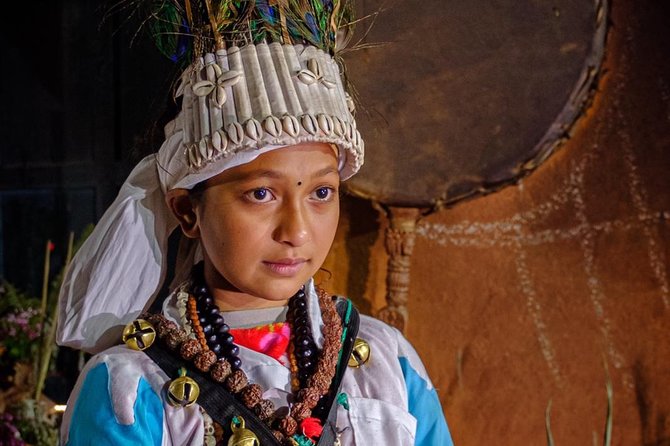
The center suggests taking a bath before visiting the Shaman temple. This is a simple preparation step, but it signals that the visit should be approached with care.
Women are traditionally asked not to visit the Shaman or temple during the first four days of their period. This is part of the stated custom for the activity, so consider it before choosing your date.
Dress and behavior should be respectful. The information provided does not require special clothing, and the Shaman may appear in normal clothes, but the setting is still a religious and healing center. Follow the guide’s instructions about where to stand, sit, and when to speak.
Keep your expectations flexible. The Shaman may perform a ritual and blessing, or the consultation may concentrate on divination and advice. You may see local ceremonies, but the exact sequence can change depending on what is happening at the center that day.
The activity is suitable for most people, and it is near public transportation. Because it involves walking from the Thamel area and ends at the meeting point, it is easy to combine with other Kathmandu plans.
Who will appreciate this experience most?
I would recommend this activity to you if you are curious about Nepalese spiritual life, enjoy talking with local people, and can treat a religious consultation with respect. It is also a good fit if you want a private activity rather than a large group tour.
You may especially like it if you:
- Want to learn how Shamanic healing and divination are understood in Nepal.
- Prefer a working cultural center to a formal stage show.
- Enjoy experiences that raise questions rather than provide simple answers.
- Would like a guide to translate and explain unfamiliar rituals.
- Have an open mind about meditation, energy, spirits, and spiritual counseling.
I would hesitate to recommend it if you need a predictable schedule or a clearly defined result. It may not suit you if you expect traditional costumes, an elaborate ceremony, medical advice, or guaranteed predictions about your past and future.
The strongest praise for this activity centers on the guide’s explanations, the personal consultation, and the sense of encountering something outside the usual sightseeing circuit. The most serious criticism concerns value and the gap between expectations and what happens in the room.
Book it for cultural insight, not a guaranteed answer
I would book this Shamanism tour if you want a thoughtful, unusual introduction to a living Nepalese tradition and you are comfortable with uncertainty. Siddhartha’s explanation and translation can help you understand what you are seeing, while the private session gives you a direct personal connection to the practice.
I would skip it if you are mainly seeking a detailed health reading or a dramatic ceremony in traditional clothing. At $40, the activity asks you to pay for access, context, and reflection. That is fair for the right person, but it is too much if you want a fixed entertainment package.
FAQ
Where does the Shamanism tour take place?
The Shaman temple and healing center is in Kathmandu, within walking distance of Thamel. The meeting point is P8F3+WX, Kathmandu 44600, Nepal.
How long does the experience last?
The activity lasts approximately one hour to one hour and 30 minutes. One part of the visit may be shorter depending on the consultation and what is happening at the center.
What happens during the tour?
You receive an introduction to Himalayan Shamanism, may observe ceremonies involving local visitors, and then meet a Shaman for a private consultation. The visit can include spiritual divination, counseling, a blessing, meditation, or a healing ritual.
Is the consultation private?
Yes. This is a private tour or activity, and only your group participates in the consultation.
Is a guide or translator included?
Yes. A guide and translator are included. Siddhartha is identified as one of the guides who explains the tradition and assists with communication during the visit.
What is included in the price?
The $40 price includes the one-to-one consultation, bottled water, and a guide who provides translation. Meals, tips, donations to the healing center, and other items are not included.
Should I expect information about my health and future?
You may receive spiritual information related to your health, past, present, or future, but this is not guaranteed. If the Shaman senses no negative energy or spirit, the consultation may not address all of these subjects.
Are there any customs I should know before visiting?
The center suggests taking a bath before visiting the temple. In the stated Shamanic tradition, women do not visit the Shaman or temple during the first four days of their period.
Recently added around Kathmandu
- Kathmandu Paragliding★ 5.0 · 3 reviews
- Kathmandu Airport Pickup and Drop-off Services★ 5.0 · 3 reviews
- Explore The Beauty Of Langtang Valley In 8-Days Trek★ 5.0 · 3 reviews
- Kathmandu Chandragiri Cable Car and Swayambhunath Private Tour★ 5.0 · 3 reviews
- Kathmandu: Nightlife and Pub Crawl Tour★ 5.0 · 3 reviews
- Mountain Flight Experience in Nepal★ 4.5 · 3 reviews
- Kathmandu: Momo Making Class with a Local Chef★ 5.0 · 3 reviews
- Everest Base Camp Trek★ 5.0 · 3 reviews
Other Kathmandu Tours worth a look
Private Kathmandu Sightseeing Tour | UNESCO World Heritage sites
Read our review →
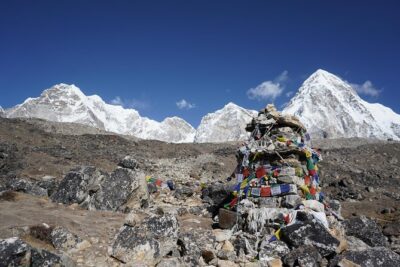
Everest Base Camp Helicopter Tour landing at Everest View Hotel
Read our review →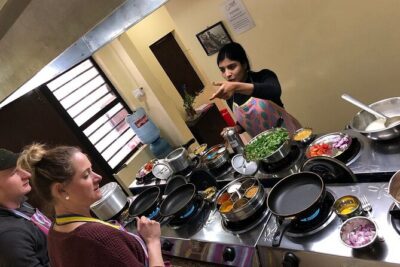
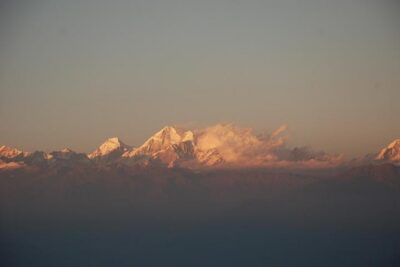
Nagarkot Sunrise View and Day Hiking from Kathmandu
Read our review →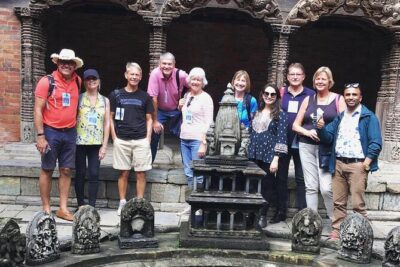
Full Day 7 UNESCO Tour with Lunch – Private/Group
Read our review →