
REVIEW · UNESCO HERITAGE SITE TOURS
TOP 4 UNESCO World Heritage Sites Tour
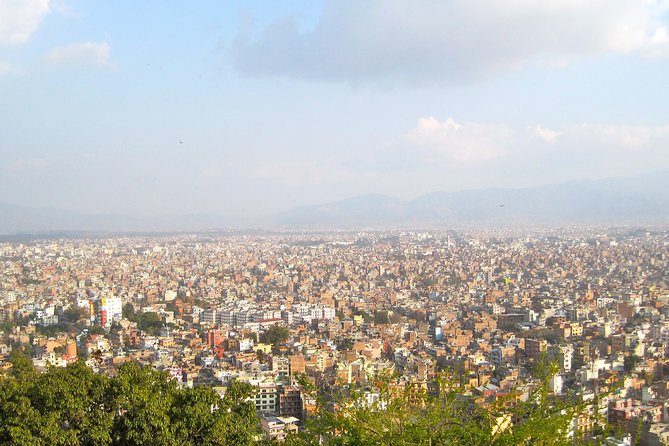
Kathmandu’s best-known sacred sites are spread across the valley, but this private tour links four of them in one well-planned day: Pashupatinath, Boudhanath, Swayambhunath, and Patan Durbar Square. You move by air-conditioned vehicle, with hotel pickup and drop-off, rather than losing time arranging taxis between each stop.
I like the private format, since you can ask questions and set the pace with your own guide. I also like the mix of Hindu and Buddhist places: cremation ghats, prayer wheels, painted Buddha eyes, temple courtyards, and Newari palace architecture all appear in a single outing. The main catch is cost beyond the $50 tour price, since entrance fees add about NPR 2,700 and tipping is expected.
Key points to know before booking
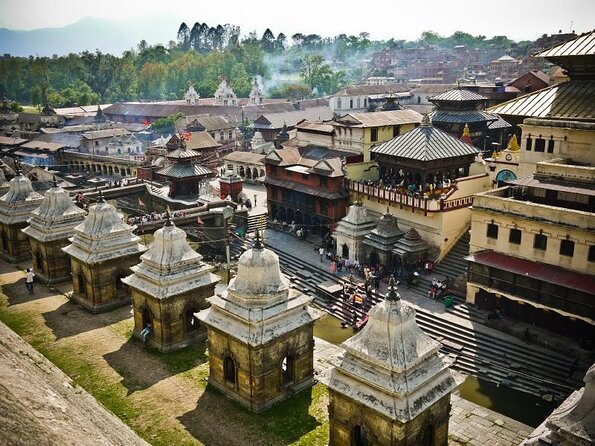
- Four UNESCO World Heritage sites in 6 to 7 hours: A useful first look at Kathmandu Valley’s major religious and royal landmarks.
- Private transport from your hotel: Pickup and drop-off are included anywhere in the capital, which matters in Kathmandu’s difficult traffic.
- A Hindu temple with strict access rules: Only Hindus may enter Pashupatinath Temple, though the surrounding area remains part of the visit.
- Guides with a strong record for clear explanations: Kapil Pandey and Saraswati Ghimire are among the guides praised for history, cultural context, and patient assistance.
- Morning or afternoon departure: You get some control over the day, though traffic and crowds can affect the pace.
- Entrance fees are extra: Budget roughly NPR 2,700 per person in addition to the tour price, plus tips for the guide and driver.
Four major sites without four separate taxi rides
This experience is designed for a first day in Kathmandu, especially if you want the major sights handled in one sitting. The sites are not next door to one another, so private transport is more than a comfort feature. It saves you from haggling over several rides and from figuring out the city’s traffic patterns while trying to protect a tight schedule.
The tour lasts about six to seven hours. That is enough time for the four listed stops, but it is not an in-depth archaeological study of each place. You should think of it as a well-rounded introduction, with about an hour at the two larger complexes, 45 minutes at Swayambhunath, and roughly an hour at Patan Durbar Square.
The private setup is especially useful if you want to ask about religious practice, Nepalese customs, or the changes taking place in modern Kathmandu. Guides such as Kapil Pandey and Saraswati Ghimire are praised for explaining clearly and for making room for conversation, not just reciting dates. Drivers including Ram and Suman are noted for being patient and capable in stressful traffic.
More UNESCO Heritage Site Tours in Kathmandu:
- Private Kathmandu Sightseeing Tour | UNESCO World Heritage sites
★ 5.0 · 756 reviews - Kathmandu: Full Day 7 UNESCO Tour with Lunch – Private/Group
★ 5.0 · 415 reviews - Kathmandu: Full Day Top 4 UNESCO Tour with Lunch – Private/Group
★ 5.0 · 269 reviews
Pashupatinath: Shiva worship beside the Bagmati River
Your first stop is Pashupatinath Temple, about five kilometers east of central Kathmandu beside the Bagmati River. Dedicated to Lord Shiva, the complex is one of Nepal’s most important Hindu pilgrimage sites. The central temple is known for its two golden roofs and four silver doors.
This is the stop where religious etiquette matters most. Non-Hindus cannot enter the main temple, so be realistic about what you will see. You can still observe the wider complex and its setting, but the exact access available to you depends on your religious status and the rules in force that day.
The Bagmati River gives Pashupatinath much of its spiritual importance. Hindu cremation ceremonies take place along the river, and the site can feel solemn, active, and intensely personal. Your guide can help explain what you are seeing, but you should keep your voice low and avoid treating ceremonies as a photo opportunity.
Allow about one hour here. That is enough for an introduction and a careful look around, though special prayer days can bring large crowds. One visitor praised Kapil for helping arrange a chance to pray during a crowded period of special prayers. That points to the value of having a local guide who can explain the rules and help you move through a busy religious setting with respect.
Wear clothing that covers your shoulders and knees. This rule applies to both men and women at places of worship and selected museums. Shorts and sleeveless tops can lead to refused entry, so dressing modestly from the start is the easiest plan.
Boudhanath: Walking the great Buddhist circle
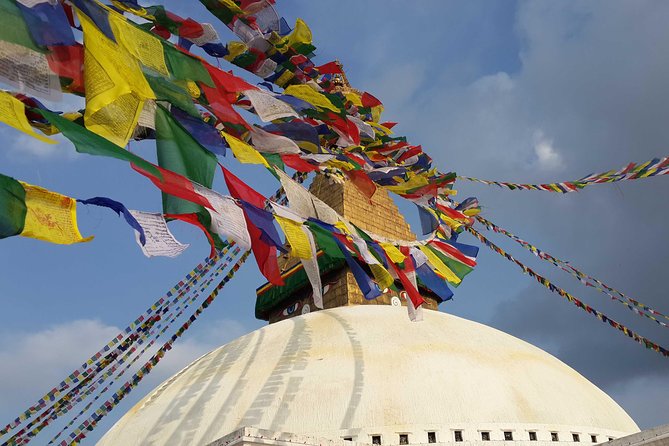
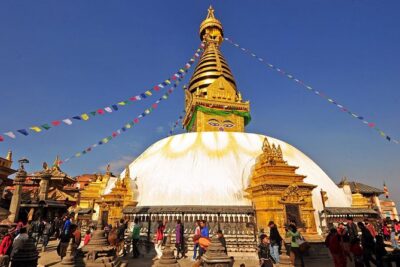
Next comes Boudhanath Stupa, about six kilometers east of Kathmandu. The stupa is believed to date to the fifth century and is described as one of the largest Buddhist stupas in the world. Its white dome, broad circular base, prayer flags, and watchful painted eyes give it a very different mood from Pashupatinath.
Boudhanath is best understood by walking around it in the traditional clockwise direction. Look for Buddhist monks, prayer wheels, devotional movement, and the religious life that gathers around the stupa. The surrounding area is ringed by monasteries and shops, but the central act is simple: people circle the stupa in prayer.
You have about one hour here. That gives you time to walk a circuit, study the details, and listen to your guide. The stop is not only about the building itself. It shows how a sacred place can function as a daily center of worship, with local people and Buddhist practitioners sharing the same space.
Your guide can also help you read the visual details. The painted eyes are not merely decoration, and the structure’s levels carry religious meaning. If you try to absorb every symbol alone, it can become a blur of color and architecture. A clear explanation makes the visit far more useful.
Boudhanath is also one of the easier stops for travelers who want time to move at their own speed. Since the tour is private, you can ask for a slower walk or spend more time on details that interest you, although the overall six to seven hour limit means another stop may need to be shortened.
Swayambhunath: Kathmandu views from the hilltop
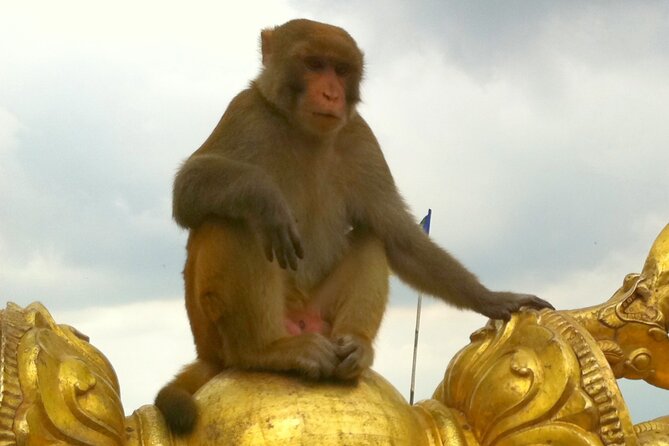
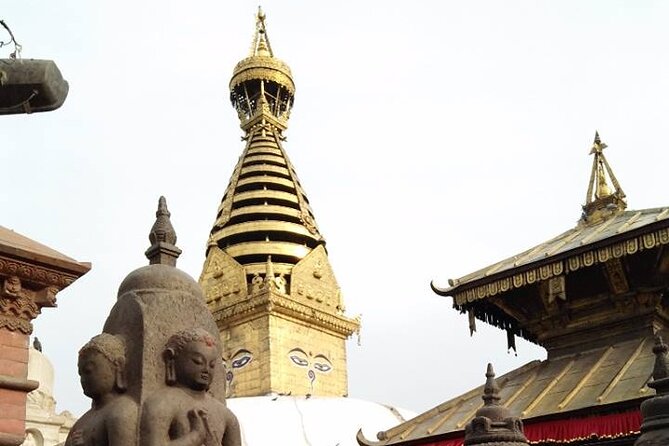
Swayambhunath, also called the Monkey Temple, sits on a hill about 77 meters above the ground. The site is associated with a 2,500-year-old stupa and offers a broad view over Kathmandu Valley from its hilltop position.
The approach and setting give this stop a different feel from Boudhanath. At Swayambhunath, you are looking both at a Buddhist shrine and outward across the city. The dome, painted eyes, and hilltop placement are the main visual features to notice.
The visit lasts about 45 minutes, making this the shortest stop. That is enough for an overview, photos, and a look at the main religious details, but not a long, quiet exploration. The steps and hill setting may also make this portion feel more physical than the flatter sites, though the supplied information does not specify the exact walking route or number of steps.
I would save questions about the relationship between Buddhist and Hindu practice for here. Kathmandu Valley’s religious life often places different traditions close together, and this tour gives you a chance to compare what you saw at Pashupatinath and Boudhanath with Swayambhunath.
The name Monkey Temple is widely used, but the main reason to visit is the stupa, the hilltop setting, and the valley view. Keep your attention on the shrine and on the people using it for worship, not only on the city panorama.
More Historical Tours in Kathmandu:
- UNESCO Seven World Heritage Tour in Kathmandu
★ 5.0 · 253 reviews - Kathmandu Private Sightseeing Tour | UNESCO World Heritage Sites
★ 5.0 · 109 reviews - Kathmandu: Full Day Private Top 4 UNESCO Heritage Tour W/Lunch.
★ 5.0 · 86 reviews - Kathmandu World Heritage Tour
★ 5.0 · 74 reviews
Patan Durbar Square: Newari design and a former royal center
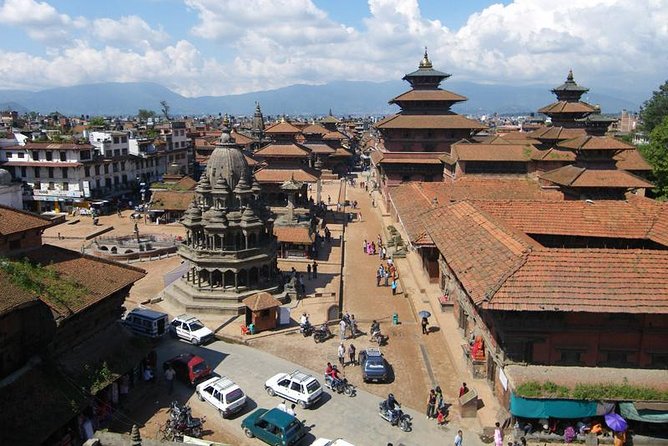
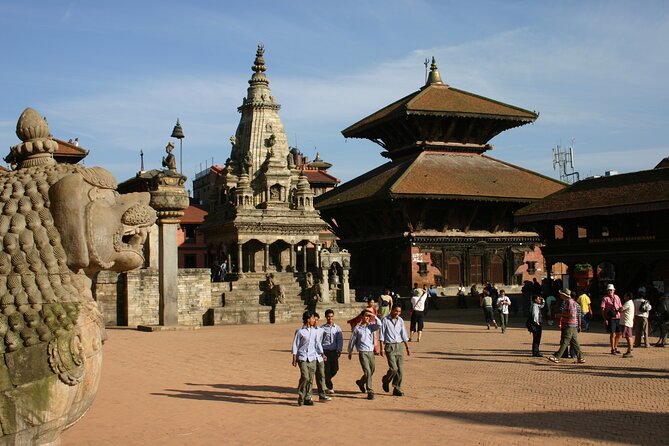
The final stop is Patan Durbar Square, home of the former Patan royal family. Of Kathmandu Valley’s three Durbar Squares, Patan is especially noted for its Newari architecture and is often the most photographed.
This is the tour’s strongest stop for architectural detail. Expect palace courtyards, carved wood and brickwork, temples, and a sense of how royal and religious spaces were once arranged together. The square’s appeal is not one single monument. It is the way the buildings, courtyards, and decorative work form a connected urban setting.
You have about one hour here. Use it to look closely at rooflines, windows, doors, and carved details rather than rushing from one named feature to the next. The itinerary specifically identifies Krishna Mandir among the main attractions, though the exact route through the square can depend on current access and the guide’s approach.
Patan is also a good place to ask about Newari culture. Saraswati Ghimire is praised for combining site explanations with discussion of how Nepalese culture has changed in recent years. That kind of conversation can make Patan feel less like a collection of old buildings and more like a living part of Kathmandu.
The square is a heritage site, not a quiet museum. You may find active local life around the monuments, and your hour will pass quickly. If architecture is your main interest, tell your guide early so the visit can focus on the details you care about.
What the private vehicle adds to the day
The tour includes an air-conditioned private tourist vehicle, hotel pickup, and hotel drop-off anywhere in Kathmandu. That is a practical advantage in a city where the four sites lie in different parts of the valley and road conditions can be unpredictable.
A private car does not make traffic disappear. It does mean you avoid arranging new transport after each stop, and you have a driver who already knows the day’s route. Suman is praised for navigating Kathmandu streets with ease, while Ram is described as friendly and attentive, including offering an unopened bottle of water when needed.
The vehicle also gives you a place to regroup between sites. Bring water, wear comfortable shoes, and keep your clothing suitable for religious sites throughout the day. You do not want to lose time returning to your hotel to change before Pashupatinath or another place of worship.
Morning and afternoon departures are offered. A morning start gives you more protection against delays later in the day, while an afternoon start may suit a slower arrival or a busy morning. Since the tour covers four sites in a limited time, ask about the expected pickup time and route when booking.
The real price: $50 plus about NPR 2,700
At $50 per person, the tour is reasonably priced for a private vehicle, hotel pickup and drop-off, and an English-speaking professional guide. The value is strongest for solo visitors or couples who want their own guide, since a private experience usually costs more than joining a larger group.
The advertised price is not the complete day’s expense. Monument entrance fees are excluded and total about NPR 2,700. Tips for the guide and driver are also not included, and tipping is expected. Set aside that extra money before you go so the final cost does not surprise you.
You also need to decide how much personal freedom you want. This tour handles the transport and basic route, but the schedule remains fairly full. If you want long meals, extended photography, or several hours at each square, arrange a slower private tour instead. If your goal is to cover Kathmandu’s essential UNESCO sites efficiently, the price makes good sense.
Who will get the most from this Kathmandu tour
I would recommend this experience to a first-time visitor with one day available for the valley’s major cultural sites. It also suits solo visitors who want a private guide without arranging every detail themselves, and couples or small groups who value flexibility.
It is a good fit if you want a balance of Hindu and Buddhist sites, rather than a day focused only on temples or only on architecture. The guide can connect the places through explanations of worship, local customs, royal history, and cultural change.
It may be less suitable if Pashupatinath’s inner temple access is essential to you and you are not Hindu. The tour is still worthwhile for the wider complex, but you should understand this restriction before paying. It may also frustrate anyone who prefers a slow, unstructured day.
The experience is private, and the information says most travelers can participate. Still, the hilltop setting at Swayambhunath and the amount of walking around courtyards and stupas mean you should be comfortable on your feet for parts of the day.
Small details that make the day easier
Dress for worship from the moment you leave your hotel. Cover your shoulders and knees, and avoid shorts and sleeveless tops for both men and women.
Keep a little time in hand. The planned stop lengths add up to just under four hours, leaving the rest of the six to seven hour period for driving, traffic, and transitions. Kathmandu traffic can be stressful, so do not schedule a flight, train, or fixed appointment immediately afterward.
Ask for a guide by name if one is available. Kapil Pandey is praised for clear explanations, patience, and help during crowded prayers. Saraswati Ghimire is noted for linking the monuments to current Nepalese culture. Ram and Suman are praised for friendly, careful driving.
The tour offers a mobile ticket and confirmation at booking. It can be booked for one person, and group discounts are available. Free cancellation applies when you cancel at least 24 hours before the start time. Cancellations within 24 hours are not refunded, and changes inside that window are not accepted.
Should you book the four-site tour?
Book it if you want a practical first look at Kathmandu Valley, prefer a private vehicle, and value an English-speaking guide who can explain what you are seeing. The strongest parts are the mix of sacred Hindu and Buddhist places, the easy hotel transport, and the chance to ask questions without a large group setting.
Before booking, budget for about NPR 2,700 in admission fees and an expected tip. Check the clothing rules, understand that only Hindus may enter Pashupatinath Temple, and accept that six to seven hours allows an overview rather than a slow study of every monument.
For a short stay in Kathmandu, this is an efficient and culturally focused choice. Choose it with realistic expectations, dress respectfully, and tell the guide what interests you most. That is how you get the best value from a full day that covers a lot of ground.
FAQ
How long does the tour last?
The tour lasts approximately 6 to 7 hours. The planned visits include about one hour at Pashupatinath, one hour at Boudhanath, 45 minutes at Swayambhunath, and one hour at Patan Durbar Square, with the remaining time used for transport and transitions.
Is hotel pickup and drop-off included?
Yes. Pickup and drop-off by private vehicle are included from anywhere in Kathmandu.
Are entrance fees included in the $50 price?
No. City sightseeing monument entrance fees are not included and cost around NPR 2,700. Tips for the guide and driver are also separate, and tipping is expected.
Can non-Hindus enter Pashupatinath Temple?
No. Customers must be Hindu to enter Pashupatinath Temple. The surrounding religious complex is still part of the visit, subject to access rules in place at the time.
What should I wear?
You must cover your knees and shoulders at places of worship and selected museums. Shorts and sleeveless tops are not allowed, and you may be refused entry if you do not follow the dress requirements.
Is this a private tour?
Yes. Only your group participates in the activity, and transport is provided in a private air-conditioned tourist vehicle with an English-speaking professional guide.
Recently added around Kathmandu
- Kathmandu Airport Pickup and Drop-off Services★ 5.0 · 3 reviews
- Kathmandu Paragliding★ 5.0 · 3 reviews
- Explore The Beauty Of Langtang Valley In 8-Days Trek★ 5.0 · 3 reviews
- Kathmandu Chandragiri Cable Car and Swayambhunath Private Tour★ 5.0 · 3 reviews
- Kathmandu: Nightlife and Pub Crawl Tour★ 5.0 · 3 reviews
- Kathmandu: Momo Making Class with a Local Chef★ 5.0 · 3 reviews
- Mountain Flight Experience in Nepal★ 4.5 · 3 reviews
- Everest Base Camp Trek★ 5.0 · 3 reviews
Other UNESCO Heritage Site Tours worth a look
Private Kathmandu Sightseeing Tour | UNESCO World Heritage sites
Read our review →
Full Day 7 UNESCO Tour with Lunch – Private/Group
Read our review →
Full Day Top 4 UNESCO Tour with Lunch – Private/Group
Read our review →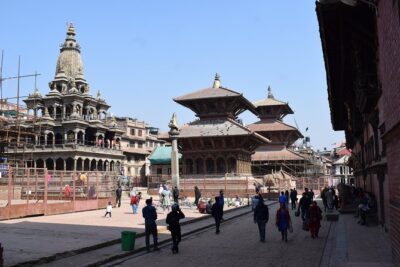
Full-Day 7 UNESCO Tour with Lunch – Private/Group
Read our review →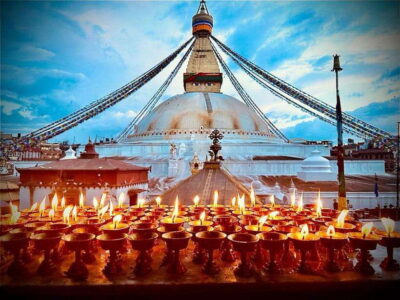
Kathmandu Private Sightseeing Tour | UNESCO World Heritage Sites
Read our review →This tour also appears in