
REVIEW · KATHMANDU TOURS
Upper Mustang Trekking
Upper Mustang feels like Nepal with the volume turned down: dry cliffs, dusty trails, old monasteries, and villages shaped by Tibetan Buddhist life. The prize is Lo Manthang, a walled Himalayan city reached after days of walking through a stark, beautiful world.
I like the route’s small-scale local contact and its unusual mix of trekking and culture. I also like that the package handles the costly restricted-area permit, domestic flights, guide, porter, and tea-house stays in one price. The main catch is the physical demand: you need strong fitness, patience with basic lodging, and a tolerance for wind, dust, and long transport days.
Upper Mustang Trekking at a Glance
- $500 restricted-area permit included: The special permit is one of the largest costs of visiting Upper Mustang, and it covers 10 days inside the restricted zone.
- Lo Manthang gets a full day: You have time to visit monasteries, the old palace, and the walled city rather than simply passing through.
- Jomsom and Pokhara flights are included: The route uses domestic flights between Pokhara and Jomsom, saving several long days on the road.
- A private 18-day journey: Only your own group takes part, with a government-licensed guide and one porter for every two people.
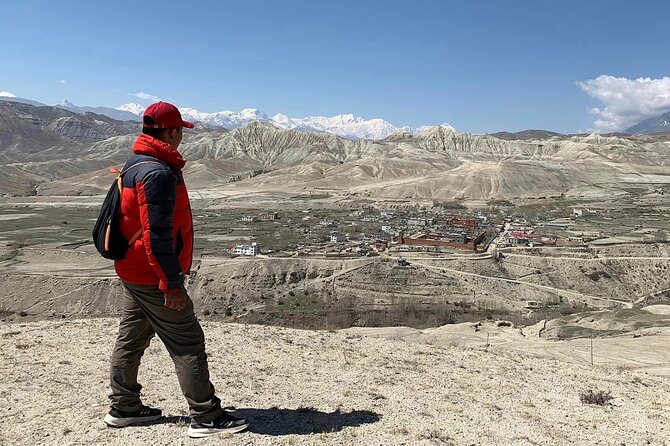
- Dry, high-country scenery: Expect distant views of Dhaulagiri and Annapurna, bare cliffs, apple gardens, farms, rivers, and broad open valleys.
- The return route is not just a repeat: The trek loops through Dhakmar and Ghami before descending toward Chhusang, Kagbeni, and Jomsom.
Why Upper Mustang Feels Different
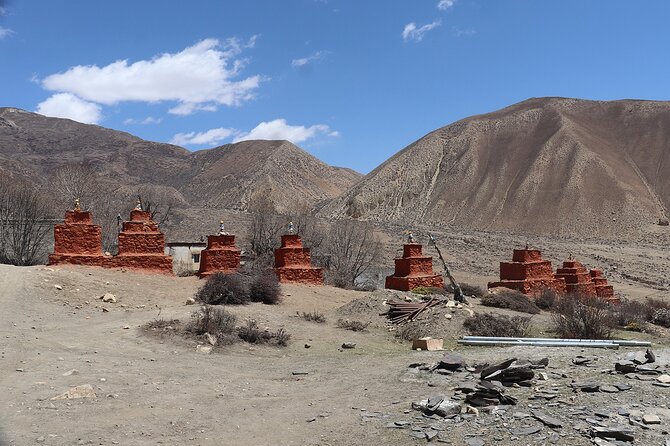
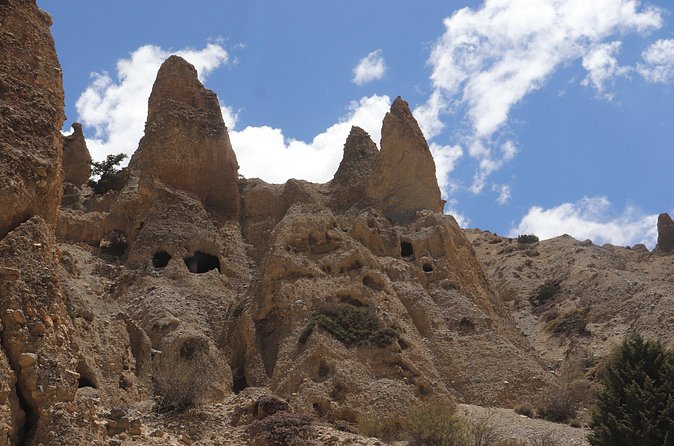
Upper Mustang is not the classic green Himalayan trek. The area is dry, open, and often dusty, with wind sweeping through the Kali Gandaki Valley. The scenery can look almost severe, but that is exactly its appeal. Red and ochre cliffs, pale riverbeds, isolated villages, and snow peaks in the distance create a setting unlike most of Nepal.
The cultural side matters just as much. You pass through settlements with old monasteries, farm plots, apple gardens, and buildings that reflect Tibetan Buddhist traditions. Lo Manthang is the centerpiece, but the smaller villages often provide the quieter moments.
This is also a restricted area, so the route feels less crowded than Nepal’s best-known trekking corridors. That comes with a price. The special permit costs $500 per person for 10 days, and the trail infrastructure is more basic than you may expect for a trek costing $2,400.
More Hiking Tours in Kathmandu
- Everest Base Camp Trek – 14 Days
★ 5.0 · 1,499 reviews - Everest Base Camp Trekking
★ 5.0 · 485 reviews - Nagarkot Sunrise View and Day Hiking from Kathmandu
★ 5.0 · 471 reviews
What the $2,400 Price Covers
At first glance, $2,400 is a serious trekking budget. The value improves when you separate the major expenses. The price includes three nights in a three-star Kathmandu hotel, two nights in Pokhara, tourist bus travel between Kathmandu and Pokhara, domestic flights between Pokhara and Jomsom, trekking accommodation, meals listed as 17 breakfasts plus 16 lunches and dinners, the Annapurna Conservation Area permit, and the Upper Mustang permit.
It also includes airport, hotel, and airport transfers; a government-licensed guide; and porters at a ratio of one for two people. Government taxes and service charges are covered as well.
That package removes several large costs and simplifies a complicated route. Still, budget for personal expenses and tips for your guide, porters, and driver. Extra hotel nights in Kathmandu or Pokhara are not included, which matters if weather or flight changes force you to stay longer.
The price is most reasonable for someone who wants a private, organized trip into a restricted area without arranging permits, flights, lodging, and porters separately. If you already have trekking contacts in Nepal or prefer to travel independently, it may feel expensive.
Days 1 and 2: Kathmandu, Permits, and Preparation
Your first day is simple. A representative from Everest Trekking Routes meets you at Tribhuvan International Airport and transfers you to your hotel. You have three nights of Kathmandu accommodation with breakfast included during the wider trip, giving you time to recover from the journey and prepare.
Day 2 is partly practical and partly flexible. After breakfast, you may visit sightseeing points in the Kathmandu Valley if you wish. The important task is securing the Upper Mustang special permit. You must provide your original passport and a valid Nepal visa.
This permit day is not glamorous, but it is essential. Upper Mustang is not a casual add-on to an Annapurna trip. The paperwork and restricted-area fee are built into the plan, which saves you from handling the process alone.
Use this time to check your bags, confirm your flight and bus arrangements, and ask how porter luggage will be divided. The itinerary requires strong physical fitness, so this is also your last easy chance to sort out footwear, layers, and personal medicines.
Day 3: The Long Road Toward Pokhara
The journey begins with a morning walk of about 10 minutes from the hotel to the tourist bus station. The bus leaves at 7:00 AM and follows the Prithvi Rajmarg highway toward Pokhara.
A breakfast stop comes after roughly two hours, with about 20 minutes to eat. The full day is mainly about transportation, not sightseeing, so keep expectations realistic. The road helps connect Kathmandu with the trekking region, but a long bus ride can be tiring before you even reach the trail.
The benefit is cost and simplicity. Tourist bus transport is included in both directions, and you avoid arranging separate transfers. Pack water and snacks where you can reach them, since the day begins early and the stop is short.
A different kind of day from the same base:
- Private Kathmandu Sightseeing Tour | UNESCO World Heritage sites
★ 5.0 · 756 reviews - Everest Base Camp Helicopter Tour landing at Everest View Hotel
★ 5.0 · 668 reviews - Half day cooking class in Thamel kathmandu
★ 5.0 · 607 reviews - Kathmandu: Full Day 7 UNESCO Tour with Lunch – Private/Group
★ 5.0 · 415 reviews
Day 4: Flying to Jomsom and Walking to Kagbeni
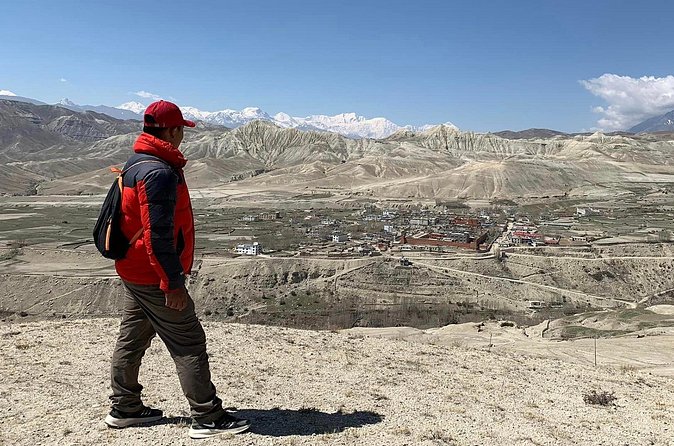
After breakfast, you transfer to the domestic airport and fly to Jomsom, at about 2,715 meters. The flight is only one part of the day, but it changes the mood quickly. You move from city travel to high mountain terrain, then begin a four to five-hour trek to Kagbeni.
The route follows the popular Jomsom to Muktinath corridor and gives you early views of the lower Mustang region. Kagbeni is an important stop, not only because it is scenic, but because it marks the main entry point to restricted Upper Mustang.
This is your first real adjustment to altitude. The walking time is moderate, but you are already above 2,700 meters. Take the pace seriously, drink water, and do not treat the first trekking day as a test of speed.
Days 5 and 6: Entering Restricted Mustang
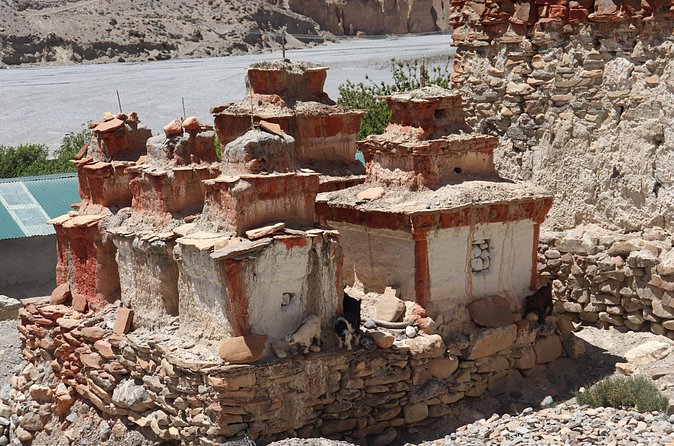
Day 5 takes you from Kagbeni toward Chhusang. The route descends around Kagbeni before entering the Upper Mustang area. Officials check the special permit here, so keep your original passport and documents easy to access.
Chhusang gives you a useful first taste of the region’s dry villages and open valley views. Day 6 continues toward Somare, with mostly firm, fairly level trails before a steeper climb after Chele toward Syangboche. The trek takes about five to six hours.
You pass an apple garden and farm areas, a reminder that this is not an empty wilderness. People still grow food and maintain village life in a demanding climate. The combination of dry terrain and cultivated plots is one of the route’s most interesting contrasts.
The climb toward Syangboche is the first section where fitness becomes more obvious. The route can feel manageable on paper, but uphill walking at altitude is different from a lowland hike. Go slowly and let your guide set the rhythm.
Day 7: Syangboche and Big Himalayan Views
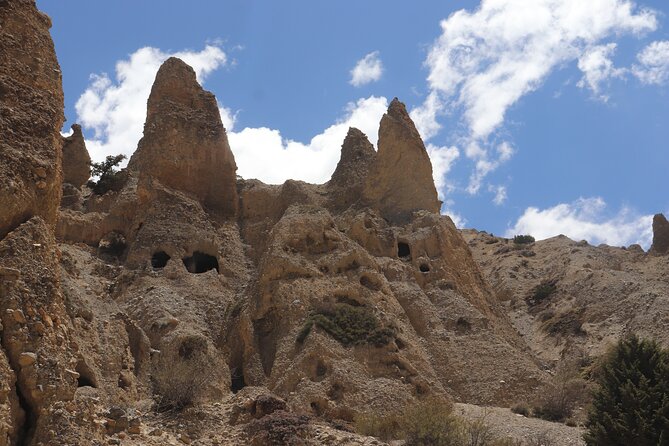
The trail climbs toward Syangboche, with much of the day spent going uphill. Lunch and a rest break provide a natural pause before you continue through the high country.
On a clear day, the views reach toward Dhaulagiri at 8,167 meters and Annapurna I at 8,097 meters. These peaks are not necessarily close, but their distant presence gives the route scale. The foreground is dry and spare, while the snow range sits beyond it.
Weather controls how much you see. Clouds, dust, and wind can soften the views, so do not judge the day only by photographs. The experience is also about moving between small settlements, high trails, and old religious sites.
Day 8: Ghiling, Farms, and the Route to Tsarang
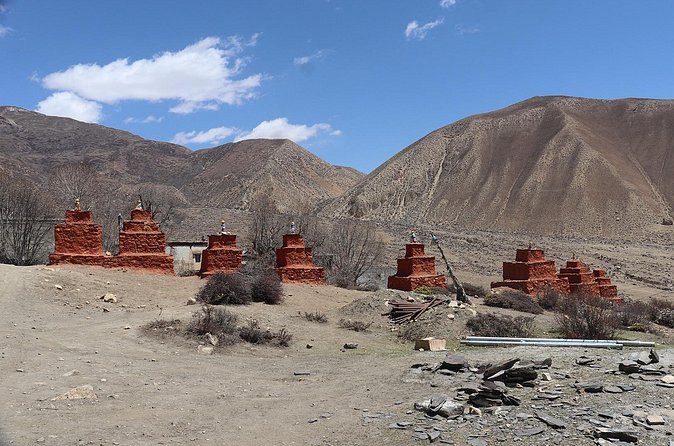
From the Syangboche area, the trail leads toward Ghiling and then onward to Tsarang. The route passes farms and old monasteries, making this one of the better days for seeing how religion and agriculture fit into village life.
Tsarang is described as one of the larger settlements on the route. Its size makes it a useful overnight stop before the push to Lo Manthang, but the village is not simply a place to sleep. It is part of the cultural core of Upper Mustang, with traditional buildings, cultivated land, and religious sites.
The walking day is also a reminder that the trek is not one continuous march through dramatic cliffs. Some stretches are quieter, with farms and village paths. I consider that a strength, because it keeps the area from feeling like a string of viewpoints.
Days 9 and 10: Lo Manthang, the Main Prize
Day 9 takes five to six hours to reach Lo Manthang. You cross rivers and bridges and continue through desert-like scenery before arriving at the walled city, often described as the Himalayan kingdom of Nepal.
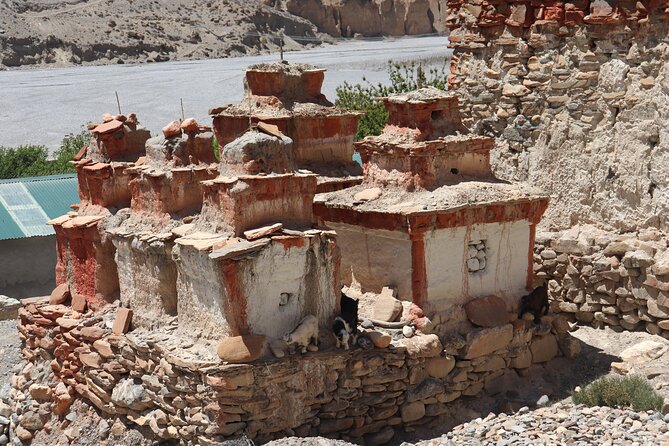
Lo Manthang is the point where the trek’s separate elements come together. The city has old walls, colorful village buildings, monasteries, and a palace. Its importance is not just visual. It represents the historic center of the Upper Mustang region and offers a stronger sense of place than a quick roadside stop can provide.
Day 10 is set aside for exploration. You visit monasteries and the old King’s Palace, with time to walk around the city rather than rushing in and out. That full day is a major advantage of the itinerary. After several days on foot, you can slow down and pay attention to details in the buildings, courtyards, and religious spaces.
Do not expect a polished city tour with constant interpretation. This is a remote high-altitude settlement, and the pleasure comes from looking carefully and letting the guide explain what is available. Keep your clothing respectful around monasteries and follow instructions about photography.
Days 11 and 12: Dhakmar and Ghami
The return route begins with a trek toward Dhakmar. The first part is uphill to a gompa, followed by broad views and more religious sites. The day gives you a different angle on Upper Mustang after the excitement of reaching Lo Manthang.
Day 12 continues from Dhakmar to Ghami. Ghami is another large village with a monastery and farm production. Apple gardens appear again, adding color and human scale to the dry valley.
This section can feel more remote than the approach to Lo Manthang. That is good for people who want the walking itself, not just the destination. It also means basic lodge accommodation and fewer comforts. Tea-house stays are included, but you should not expect three-star conditions once you leave Kathmandu and Pokhara.
Days 13 to 16: Descending Through Chhusang, Kagbeni, and Jomsom
The trail from Syangboche to Chhusang is a major downhill day, passing Samar, Bhena, and Chele. You descend about 1,000 meters toward the Kali Gandaki River. The route becomes increasingly exposed to wind, especially in the valley.
The next morning, leave Chhusang early for Kagbeni. Strong winds often build after noon, so an early breakfast and start are sensible. This is one of the most useful practical details in the plan: timing matters in the Kali Gandaki Valley.
Day 15 is a shorter, easier walk to Jomsom. Once there, you check the next day’s flight schedule and have time to visit the town. Local apple products and apple brandy are part of the area’s character, and this is a good place to make small purchases before returning to the city.
Day 16 depends on the flight timetable. You fly from Jomsom to Pokhara in about 25 minutes, then transfer to your hotel. If the morning flight requires an early airport report, breakfast may be rushed or skipped, so keep a snack close by.
Domestic flights in mountain regions can be schedule-sensitive. The itinerary provides the flights, but you should keep some mental flexibility. An unexpected extra night could create costs because additional Kathmandu or Pokhara hotels are not included.
Days 17 and 18: Returning to Kathmandu
On Day 17, you make a short transfer to the Pokhara tourist bus park and take the tourist bus to Kathmandu. The drive takes about seven hours, so this is another long transport day after the trek.
It is not the most exciting finish, but the bus keeps the package straightforward and avoids another separate booking. Day 18 brings a transfer to Tribhuvan International Airport for your departure.
The ending is efficient rather than leisurely. If your international flight leaves late, you have some room in Kathmandu. If it leaves early, confirm the transfer timing with the local team before the final night.
Guides, Porters, and Group Style
This is a private activity, so only your group participates. That gives you more control over walking pace, rest stops, and requests than a large mixed group would allow.
A government-licensed guide leads the trek, and one porter is provided for every two people. You should pack a day bag with water, valuables, documents, and anything you need during the day while the porter carries the main load.
The experience depends heavily on the guide’s judgment. The route includes altitude, wind, permit checks, domestic flights, and changing trail conditions. A private format also makes it easier to explain if you need a slower day, but you still need to arrive ready for sustained walking.
Who Should Book This Trek?
I would choose this route if you want a culturally focused trek with unusual scenery, fewer people, and a proper stay in Lo Manthang. It suits hikers who can handle long days, uphill sections, a major descent, dry air, dust, and simple tea-house accommodation.
It is less suitable if you want soft beds, reliable road access, a relaxed schedule, or a trek where every day is easy to predict. The route is not described as a technical climb, but strong physical fitness is required.
The elevation rarely exceeds 4,000 meters according to the trip details, which may appeal to people who want a high Himalayan setting without a very extreme altitude itinerary. That does not remove altitude concerns. Jomsom begins at 2,715 meters, and the trail rises from there.
Practical Details Before You Book
Pickup is offered, and the tour operates daily during the stated period from March 19, 2024 through December 31, 2026. Confirmation is received at booking, and the route is near public transportation.
The cancellation terms are worth reading before paying. You receive a full refund if you cancel at least six full days before the local start time. Cancellation two to six days ahead brings a 50 percent refund, while cancellation less than two full days before departure is nonrefundable.
Keep your passport and Nepal visa available for the permit process. Also set aside money for tips, personal purchases, extra hotel nights, and anything not covered by the listed meals.
Should You Book Upper Mustang Trekking?
Book it if you want old Himalayan villages, Tibetan Buddhist culture, and open dry-country scenery more than a polished holiday. The full day in Lo Manthang, the included $500 permit, private group format, and organized flights make this a strong package for a first visit to Upper Mustang.
Think twice if you dislike dust, wind, basic lodges, long bus rides, or fixed transport arrangements. For the right person, the $2,400 price buys access to a difficult-to-arrange region and takes care of the largest practical hurdles. It is a demanding trip, but the combination of remote villages, monasteries, apple gardens, high passes, and Lo Manthang gives it a character few standard Nepal routes can match.
FAQ
How long is the Upper Mustang trekking experience?
The trip lasts approximately 18 days, including time in Kathmandu and Pokhara, transport by tourist bus, domestic flights, and the full trek.
Is the Upper Mustang special permit included?
Yes. The package includes the special Upper Mustang permit listed at USD 500 per person for 10 days, along with the Annapurna Conservation Area permit.
What accommodation is included?
You receive three nights in a three-star hotel in Kathmandu with breakfast and two nights in a Pokhara hotel with breakfast. During the trek, accommodation is provided in lodges or tea houses.
Are flights and bus transportation included?
Yes. The package includes tourist bus travel between Kathmandu and Pokhara and domestic flights between Pokhara and Jomsom in both directions.
Do I need strong physical fitness?
Yes. The tour information states that travelers should have a strong physical fitness level. The route includes uphill walking, long trekking days, high-altitude terrain, and a descent of about 1,000 meters toward the Kali Gandaki River.
What is the cancellation policy?
You can receive a full refund if you cancel at least six full days before the local start time. Cancelling two to six full days ahead gives a 50 percent refund. Cancelling less than two full days before the start time is nonrefundable.
Recently added around Kathmandu
- Kathmandu Paragliding★ 5.0 · 3 reviews
- Kathmandu Airport Pickup and Drop-off Services★ 5.0 · 3 reviews
- Explore The Beauty Of Langtang Valley In 8-Days Trek★ 5.0 · 3 reviews
- Kathmandu Chandragiri Cable Car and Swayambhunath Private Tour★ 5.0 · 3 reviews
- Kathmandu: Nightlife and Pub Crawl Tour★ 5.0 · 3 reviews
- Mountain Flight Experience in Nepal★ 4.5 · 3 reviews
- Kathmandu: Momo Making Class with a Local Chef★ 5.0 · 3 reviews
- Everest Base Camp Trek★ 5.0 · 3 reviews
Other Kathmandu Tours worth a look


Private Kathmandu Sightseeing Tour | UNESCO World Heritage sites
Read our review →
Everest Base Camp Helicopter Tour landing at Everest View Hotel
Read our review →


Nagarkot Sunrise View and Day Hiking from Kathmandu
Read our review →
Full Day 7 UNESCO Tour with Lunch – Private/Group
Read our review →
This tour also appears in