
REVIEW · KATHMANDU TOURS
Walking Food Tour in Hidden Local Eateries of Kathmandu
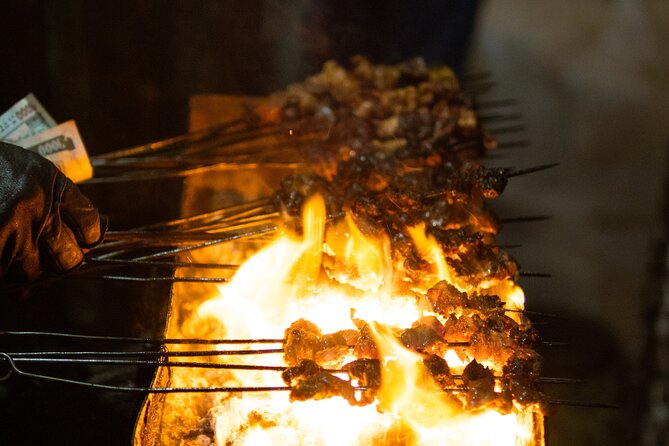
Kathmandu’s best food discoveries may be behind an unmarked door or down a narrow market lane. This two-hour walk takes you from Indrachowk to Kathmandu Durbar Square, stopping at small eateries for Nepali and Indian snacks that you are unlikely to find by simply following a map.
I like the local setting and the useful food context from guides such as Fahid, Shazia, and Dhuksang. I also like that the $36 price includes the tastings, while the small group, capped at 12 people, keeps the outing personal. The main catch is simple: some eating is done standing up, and the food shops are chosen for local character rather than polished surroundings.
Key points to know before you book
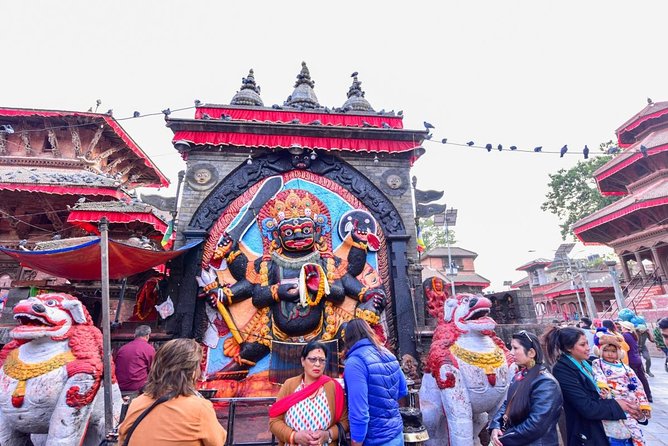
- You begin at Akash Bhairab Temple: The meeting point is in the heart of the old city, at P845+9PQ, Kathmandu 44600.
- Indrachowk supplies the market atmosphere: The first hour centers on walking through the old market while sampling several small bites.
- Kathmandu Durbar Square adds culture to the meal: The route continues into one of the city’s most important historic areas.
- The food is a substantial snack crawl: You may try a mix of sweet and savory Nepali and Indian foods, so arrive with an empty stomach.
- The group never exceeds 12 people: That matters when you are squeezing into compact eateries and asking questions.
- This is a walking and standing experience: Private transportation is not included, and the tour ends where it begins.
Why this short food walk works so well in Kathmandu
A food tour can be a handy way to get oriented in a city, but this one has a sharper focus than a standard sightseeing walk. It uses food to lead you through two central Kathmandu areas: the old market at Indrachowk and the Kathmandu Durbar Square area.
That route gives you two experiences at once. You get to taste local snacks, and you get a closer look at the everyday commercial life of the old city. Instead of spending two hours only admiring monuments, you move through places where people shop, eat, and pass through their daily routines.
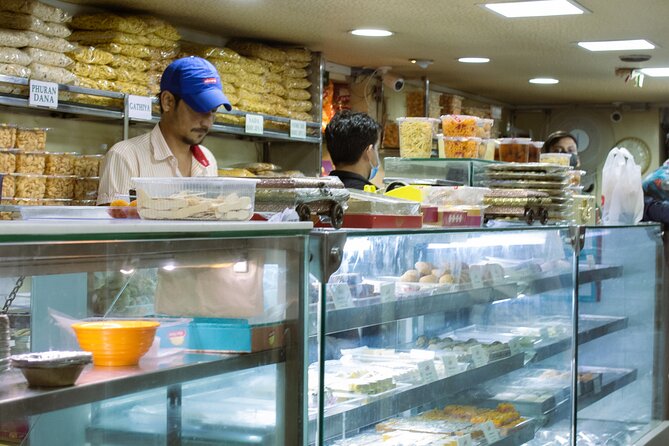
The emphasis is on small eateries and hole-in-the-wall places. That means you should not expect restaurant service, formal seating, or a carefully staged dining room. You might eat standing up, and the surroundings may look basic. For many people, that is the point: you are seeing where ordinary food is served, not being placed in a tourist restaurant built for an international audience.
I especially like the way the guide provides context as you eat. The food is not presented as a series of nameless samples. You can ask what you are eating, how it fits into Nepali food culture, and how Nepali and Indian flavors appear along the route.
More Walking Tours in Kathmandu
- Kathmandu Food and Drink Walking Tour
★ 5.0 · 266 reviews - Kathmandu: Food and Drink Walking Tour
★ 4.9 · 119 reviews - Walking Street Food Tour in Kathmandu
★ 5.0 · 111 reviews
Starting at Akash Bhairab Temple and Indrachowk
The meeting point is Akash Bhairab Temple, a practical location in central Kathmandu. From there, the group begins in Indrachowk, an old market area where the first hour is spent walking and tasting several tidbits.
Indrachowk is a good place to start because the food is part of the setting. You are not simply seated and handed a plate. You move through the market, pause at local food stops, and continue on foot. The surroundings help explain why street food matters here: it is quick, accessible, and closely tied to the city’s daily rhythm.
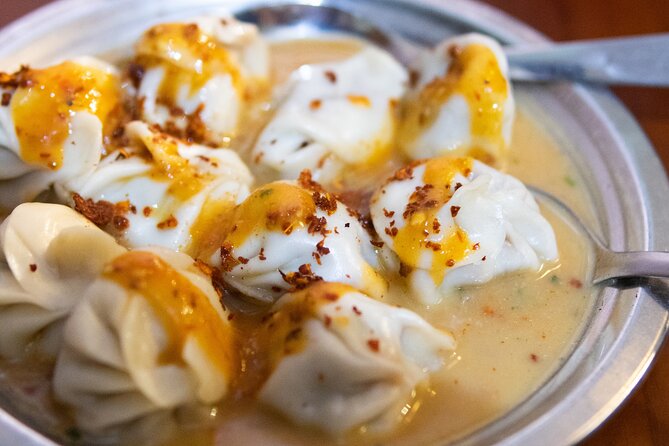
The exact menu is not fixed in the information provided, so you should think of this as a tasting route rather than a guaranteed list of named dishes. The samples include Nepali and Indian snacks, with a mix of sweet and savory bites. The variety is one of the strengths of the outing, particularly if you are unsure what to order on your own.
The first stop may also set your expectations. One person found the opening place less appealing than the later stops, while still enjoying the rest of the tour. I would treat that as a useful reminder that a local food crawl can be uneven. You are not paying for a chain of polished restaurants. You are paying for access, explanation, and a chance to try food you might otherwise miss.
A small group helps here. With a maximum of 12 people, you can hear the guide more easily than you would in a large group, and the guide can keep an eye on the pace. Small shops and narrow lanes are also easier to manage with fewer people.
Walking toward Kathmandu Durbar Square
The second hour moves from Indrachowk toward Kathmandu Durbar Square. This shift gives the tour a stronger sightseeing element without turning it into a standard city tour.
Kathmandu Durbar Square is one of the city’s major cultural areas, and the walk lets you connect local food with the older center of Kathmandu. You are still stopping for snacks, but the surroundings add a sense of place to the meal. The guide’s explanations can help you understand not only what is on your plate, but also how food fits into local life.
This part is especially useful early in a Kathmandu stay. You get a quick orientation to central lanes and market areas, along with suggestions for the kinds of food you may want to seek out later. The guide can also make unfamiliar items less intimidating. If you normally stick to dishes you recognize, a food walk gives you a reason to try something different.
The tour is described as an evening experience, which suits this route. The old market and square area provide a strong backdrop after the day’s heat has eased. Still, timing can affect the feel of the outing, and the activity remains dependent on good weather.
The end point is back at the original meeting point. That is convenient if you are staying or dining in central Kathmandu, but you will need to arrange your own transport afterward if you are headed elsewhere. Private transportation is not included.
What you actually eat, and how much
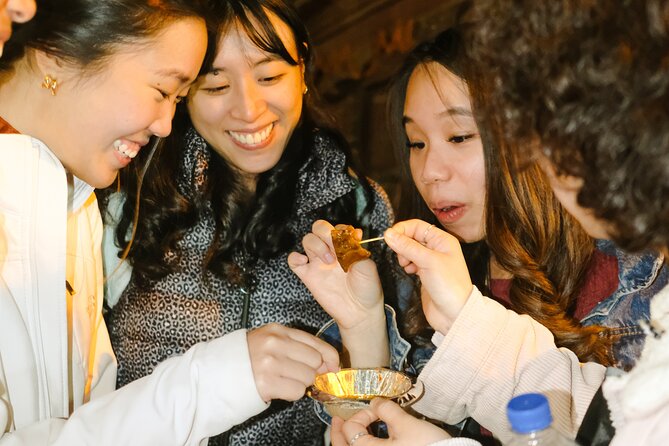
The included food is listed as snacks, but do not interpret that as one or two token samples. The clearest practical advice is to arrive hungry. Several people found the amount of food substantial, with enough tasting to leave them full by the end.
The route includes both Nepali and Indian foods. The mix of sweet and savory samples makes the meal feel varied rather than repetitive. The food can also be a good introduction if you are new to Nepalese cuisine, since you can sample several flavors without ordering full portions at separate restaurants.
Spice levels appear to be manageable. One account described the food as having a good spice level, and vegetarian eating was accommodated without trouble. That does not mean every possible dietary need is covered, so you should explain your requirements when booking or at the start of the walk. The supplied information specifically supports vegetarian suitability, but it does not promise arrangements for allergies or other restrictions.
Food safety is a fair concern when you are eating at small local shops. The tour’s appeal depends partly on accepting less polished surroundings. Some places may not look as clean or comfortable as restaurants aimed at international visitors. I would choose this experience if you value local access and are comfortable using sensible food precautions. I would choose a more formal food tour if you need controlled dining conditions.
More Food Tours in Kathmandu:
- Secret Food Tour – Food Bites and Sights Kathmandu 14+ Testings
★ 5.0 · 82 reviews - Kathmandu Secret Food Crawl & Local Market Tour
★ 4.7 · 54 reviews - Kathmandu Food & Drink and Shopping Rickshaw Tour
★ 5.0 · 48 reviews - Kathmandu Food Crawl & Market Tour
★ 5.0 · 26 reviews
The guides make the difference
The guide is not just there to point out the next snack. The strongest part of the experience is the explanation that connects each food stop with Nepali culture and everyday eating.
Fahid is described as friendly, polite, funny, helpful, and enthusiastic. He has taken people to places that are difficult to locate independently, including eateries not found on Google Maps. That is exactly the kind of help you want in a maze-like old-city area.
Shazia has also led the walk, explaining Nepali food and culture while taking the group through parts of Kathmandu that can be easy to overlook. Dhuksang, also spelled Dakhsung in one account, is described as patient and friendly, with a talent for finding places used by locals.
Guide assignments can change, so you should not book on the assumption that one particular person will lead your departure. The useful point is that the experience depends heavily on the guide’s local judgment. A good guide turns a snack into a lesson, explains what makes a place popular, and helps you order beyond the familiar.
The small group supports that personal approach. With no more than 12 people, you have a reasonable chance to ask questions and keep up as the route moves through narrow spaces. It is not a private tour, but it should feel less anonymous than a large bus-style outing.
The real tradeoff: local character versus comfort
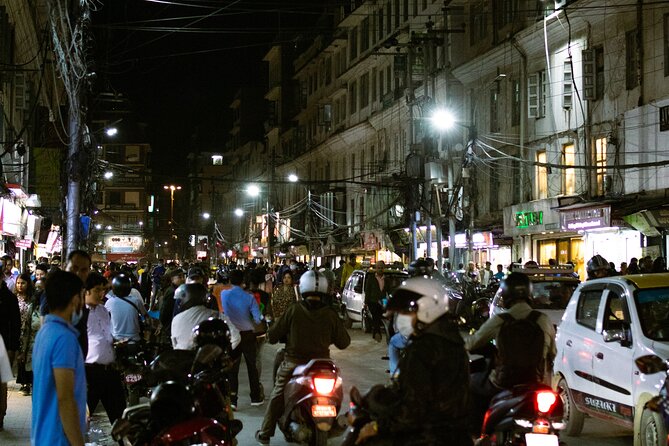
This is not the right choice if your ideal food experience means air conditioning, table service, and a fixed menu. Some tastings take place while standing, and the eateries may be basic. The route also involves walking through central market areas, so comfortable shoes are a smart choice.
The payoff is access. A small doorway or an unmarked shop can be hard to identify if you are unfamiliar with Kathmandu. The guide removes much of that guesswork. You can spend your time trying food instead of wondering if you have walked into the right place.
The lack of private transportation is not a major flaw for this activity. The route is built around walking, and the meeting point is near public transportation. You will need to reach Akash Bhairab Temple yourself, but adding a vehicle would take away from the market walk that gives the tour its character.
Keep your expectations flexible. The food stops are not described as a fixed, published menu, and the quality of individual tastings may vary. One early stop may not suit your taste, while later places may be much more satisfying. That is normal for a local snack route and worth accepting if you want variety.
Is $36 a fair price?
At $36 per person, the value depends on how you use the tour. You are not only buying food. The price covers the guide, access to small local eateries, the walking route, and all listed tastings.
If you tried to reproduce the route alone, the food itself might not cost $36. But locating the shops, deciding what to order, finding places that are open, and understanding what you are eating all take time. The guide is the main part of the value.
The price also compares well with a short guided activity that combines food and sightseeing. In two hours, you cover Indrachowk and the Kathmandu Durbar Square area, taste a range of snacks, and get cultural context. If you are visiting Kathmandu for only a few days, that is an efficient use of an evening.
Group discounts are available, which may make the cost more attractive for families or friends booking together. The tour is generally booked around 14 days ahead, so reserving early is sensible if your schedule is tight.
Practical details that affect your day
The activity lasts about two hours. Because the route includes walking, market lanes, food stops, and time for explanations, it should feel active rather than like a sit-down meal.
Confirmation is provided when you book, and mobile tickets are supported. The meeting point is Akash Bhairab Temple, and the activity returns there at the end. Public transportation is nearby, but private transportation is not included.
Most people can take part, according to the supplied conditions. The key physical point is that some foods must be eaten standing up. If you need to sit for every tasting, this will not be the best match.
The tour requires good weather and a minimum number of people. If poor weather or low enrollment causes cancellation, you are offered another date or experience, or a full refund. You can cancel for a full refund up to 24 hours before the start time. Cancellations or changes made within 24 hours are not refunded or accepted.
Who should book this Kathmandu food tour?
I would recommend it for first-time visitors who want a quick introduction to Kathmandu’s old center. It also suits food-focused people who enjoy trying unfamiliar snacks and prefer local shops to formal restaurants.
Vegetarians should find the tour workable, based on the available information. You should still state your needs clearly before eating. The route is also a good fit for people who like to ask questions, since the guide’s explanations are a central part of the experience.
You may want to skip it if you dislike standing, have strict food requirements that have not been confirmed, or want a guaranteed menu. It is also less suitable for anyone seeking a private vehicle or a quiet, leisurely dinner.
Should you book it?
Book this walking food tour if you want local access more than polished comfort. The best reason to go is not simply the food. It is the combination of Indrachowk’s old market, Kathmandu Durbar Square, small eateries, and a guide who can lead you through places you would probably miss alone.
Arrive hungry, wear comfortable shoes, and keep an open mind about the surroundings. At $36, it is a solid choice for an evening introduction to Nepali and Indian snacks, especially if you want your first taste of Kathmandu to happen in the places where local eating actually takes place.
FAQ
Where does the walking food tour start?
It starts at Akash Bhairab Temple, P845+9PQ, Kathmandu 44600, Nepal.
Where does the activity end?
The tour ends back at the meeting point.
How long does the tour last?
The activity lasts approximately two hours, with about one hour around Indrachowk and one hour in the Kathmandu Durbar Square area.
What food is included?
Snacks and food tastings are included. The route features Nepali and Indian cuisine, with a mix of sweet and savory items.
Is transportation included?
No. Private transportation is not included, although the meeting point is near public transportation.
How large is the group?
The activity has a maximum of 12 participants.
Can I cancel for a refund?
Yes. You can cancel at least 24 hours before the start time for a full refund. Cancellations or changes within 24 hours are not refunded or accepted.
More Food in Kathmandu
- Kathmandu Food Crawl & Market Tour
★ 5.0 · 8 reviews - Kathmandu Food & Drink Walking Tour Taste Local Delicacies
★ 5.0 · 7 reviews - Kathmandu: Food, Drink and Shopping Rickshaw Tour
★ 4.7 · 7 reviews - Private half day Medieval Kirtipur town with Newari food tasting trip
★ 4.0 · 6 reviews
Recently added around Kathmandu
- Kathmandu Paragliding★ 5.0 · 3 reviews
- Kathmandu Airport Pickup and Drop-off Services★ 5.0 · 3 reviews
- Explore The Beauty Of Langtang Valley In 8-Days Trek★ 5.0 · 3 reviews
- Kathmandu Chandragiri Cable Car and Swayambhunath Private Tour★ 5.0 · 3 reviews
- Kathmandu: Nightlife and Pub Crawl Tour★ 5.0 · 3 reviews
- Mountain Flight Experience in Nepal★ 4.5 · 3 reviews
- Kathmandu: Momo Making Class with a Local Chef★ 5.0 · 3 reviews
- Everest Base Camp Trek★ 5.0 · 3 reviews
Other Kathmandu Tours worth a look
Private Kathmandu Sightseeing Tour | UNESCO World Heritage sites
Read our review →
Everest Base Camp Helicopter Tour landing at Everest View Hotel
Read our review →
Nagarkot Sunrise View and Day Hiking from Kathmandu
Read our review →
Full Day 7 UNESCO Tour with Lunch – Private/Group
Read our review →
This tour also appears in