
REVIEW · EVEREST BASE CAMP TREKS
12 Days Everest Base Camp Trek
The big draw is simple: in 12 days, you walk from Lukla through the Khumbu villages to Everest Base Camp, then climb Kala Patthar for one of the finest views of Mount Everest. The route follows the Dudhkoshi River, crosses high suspension bridges, and passes monasteries, rhododendron woods, glaciers, and Sherpa settlements.
I like the careful acclimatization at Namche Bazaar and Dingboche, and I like that the price includes both domestic flights, meals, permits, a guide, and one porter for every two trekkers. The main consideration is altitude. You reach 5,364 meters at Base Camp and 5,545 meters at Kala Patthar, so this is a serious trek despite its welcome for beginners and older walkers.
Key points to know before booking
- Kala Patthar is the high point: At 5,545 meters, the early-morning climb gives you the trip’s defining Everest view.
- Two acclimatization stops matter: You spend time hiking above Namche Bazaar and Dingboche rather than racing straight uphill.
- The price covers major costs: The $605 rate includes Kathmandu to Lukla flights, return flights, meals, lodging, permits, guide service, and porter support.
- The group can reach 20 people: That keeps the cost down, though a larger group may move at a less personal pace.
- Guide support is a strong feature: Guides associated with this company include Rajesh Magar, Narayan Ntc, Gopal, and Bikram, with particular praise for care, mountain knowledge, and adjusting pace.
- Lukla flights are part of the adventure: The flight takes about 45 minutes each way, with airport pickup and drop-off by private or shared vehicle.
Starting at Lukla, where the trail gets serious fast
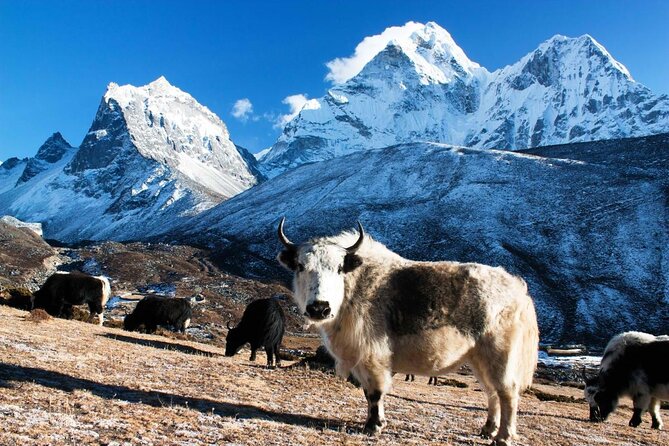
Your trek begins with a roughly 45-minute flight from Kathmandu to Tenzing-Hillary Airport in Lukla. This is not just a transfer. The flight gives you an immediate sense of the mountains and puts you at the trailhead with little wasted time.
From Lukla, you walk downhill toward Phakding for about four hours. The route follows the milky Dudhkoshi River, also called the Milk River, and introduces you to the rhythm of the trek: stone paths, bridges, small settlements, and mountain life. The first day is short by Himalayan standards, which helps you settle into walking with a pack and get used to the basic lodge routine.
You sleep at the lower elevation of Phakding rather than pushing farther. That is a sensible opening. The first day is not about proving how fast you can walk. It is about arriving in good shape for the long climb ahead.
More Hiking Tours in Kathmandu
- Everest Base Camp Trek – 14 Days
★ 5.0 · 1,499 reviews - Everest Base Camp Trekking
★ 5.0 · 485 reviews - Nagarkot Sunrise View and Day Hiking from Kathmandu
★ 5.0 · 471 reviews
Phakding to Namche Bazaar takes seven demanding hours
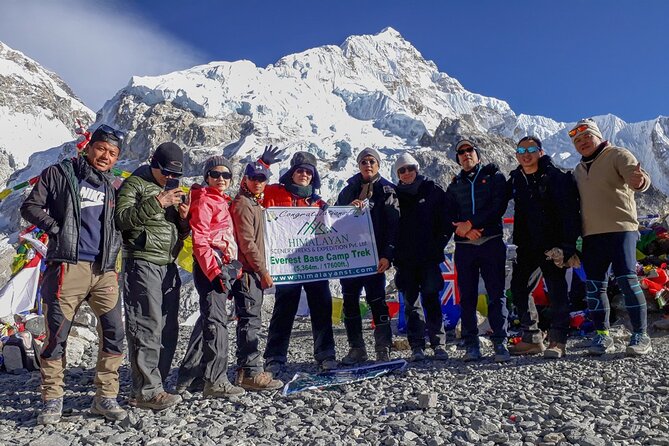
Day two is the first real test. You leave Phakding early and follow the Dudhkoshi, crossing from one side of the river to the other. Several steel suspension bridges add drama to the morning, especially when you look down at the river far below.
The climb to Namche Bazaar takes about seven hours. You gain height steadily, and the trail can feel long even though the distance may not look extreme on a map. Your reward is Namche, the main trading center of the Khumbu and a welcome place to stop for two nights.
The included lodging is the best available twin-sharing room in a lodge. That wording matters. This is practical mountain accommodation, not a hotel stay, and availability can vary. You get a bed, meals, and a place to recover, but you should approach the trek with modest expectations about comfort.
Namche Bazaar gives your body time to adjust
The itinerary uses a full acclimatization day at Namche. You hike toward the Everest View Hotel through Syangboche airstrip, with the outing lasting about two hours. The point is not simply to admire the view. Walking higher during the day and returning to sleep lower gives your body a better chance to adapt.
You may be tempted to rest completely, especially after the climb from Phakding. I would not skip this short hike. At altitude, gentle movement is useful, and the outing gives you a first look at the higher peaks without asking you to complete another long day.
This is also the part of the route where the Sherpa villages become a central part of the experience. The trek is not only a march toward a famous mountain. You pass through communities shaped by trade, tourism, Buddhist practice, and life beside the river and high trails.
Tengboche adds a monastery and a fine sunrise
After about a day and a half in Namche, you continue to Tengboche, also spelled Tyangboche in the schedule. The day lasts around five hours and begins with a steep climb before settling into a more moderate rhythm.
Tengboche is known for its monastery setting and broad mountain views. The suggested early start for sunrise is worth taking seriously. You may be tired, but the morning light around the monastery and peaks can be one of the quieter, more memorable moments of the trek.
From Tengboche, you descend through rhododendron forest to Deboche at about 3,320 meters, then continue toward Dingboche. The changing vegetation gives you a useful visual reminder that you are climbing into a harsher, higher zone.
More Everest Base Camp Treks in Kathmandu:
- Everest Base Camp Helicopter Tour landing at Everest View Hotel
★ 5.0 · 668 reviews - Everest Base Camp Trekking – 13 Day
★ 5.0 · 365 reviews - Everest Base Camp Trek -14 Days
★ 5.0 · 321 reviews - Everest Base Camp Helicopter Tour landing at Hotel Everest View
★ 5.0 · 218 reviews
Dingboche is where acclimatization becomes essential
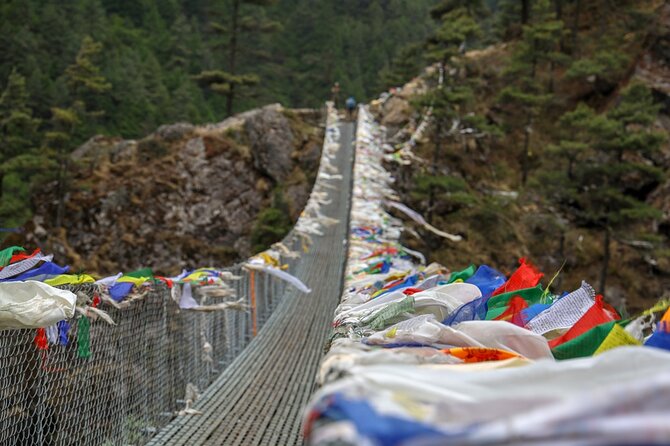
The trek from Tengboche toward Dingboche takes about six hours. The route continues through the Khumbu Valley, and the air begins to feel thinner as the elevation rises.
At Dingboche, you spend another day adjusting. The schedule includes a leisurely hike to Nagarjuna, a nearby hill, for about three hours. This is a smart use of time. By now you are above 4,400 meters, and rest alone is not the whole answer. A short climb gives you a controlled way to gain height while keeping the day manageable.
I like this two-stage approach, first Namche and then Dingboche. It makes the trek more realistic for people who have not spent much time at altitude. Still, acclimatization does not guarantee that everyone will feel well. Your guide carries an oximeter to check pulse, oxygen saturation, and heart rate, and the staff are described as high-altitude trained. That support is useful, but you still need to report symptoms honestly and avoid treating the itinerary as a race.
Dingboche to Lobuche brings glaciers and colder air
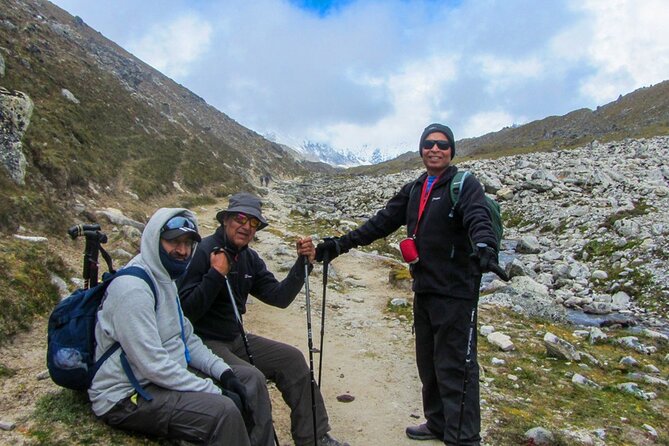
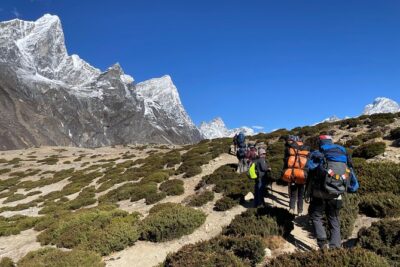
After the acclimatization day, you walk toward Lobuche for about six hours. The trail enters a broad valley below Cholatse and Tawache peaks. The setting becomes more austere, with fewer trees and more open rock, ice, and high ridges.
The route passes the International Pyramid Laboratory area before reaching Lobuche. The mountain scenery is strong here, but this is not an easy scenic stroll. The altitude, cold, wind, and rocky footing make a steady pace more valuable than speed.
Your guide’s role becomes especially important on these days. The company has assigned guides such as Gopal, who is praised for identifying distant mountains and explaining the park, and Bikram, who adjusted start times and pace for a faster walker. Those examples suggest a useful point to discuss before you leave: tell your guide what pace works for you, but accept that the mountain must set the final schedule.
Gorakshep and Everest Base Camp are the emotional center
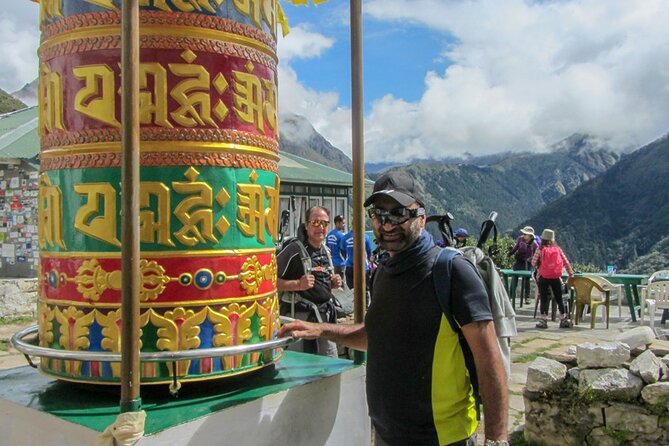
Day eight takes you from Lobuche to Gorakshep in about three hours. You follow a rocky route beside the Khumbu Glacier, with the International Pyramid Laboratory area along the way.
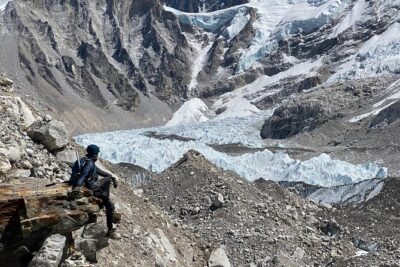
From Gorakshep, you continue for roughly four more hours to Everest Base Camp and back. The trail rises and falls over rough ground beside the glacier, so the time can feel longer than the distance suggests. You should expect a physical day, even if the first section from Lobuche is fairly short.
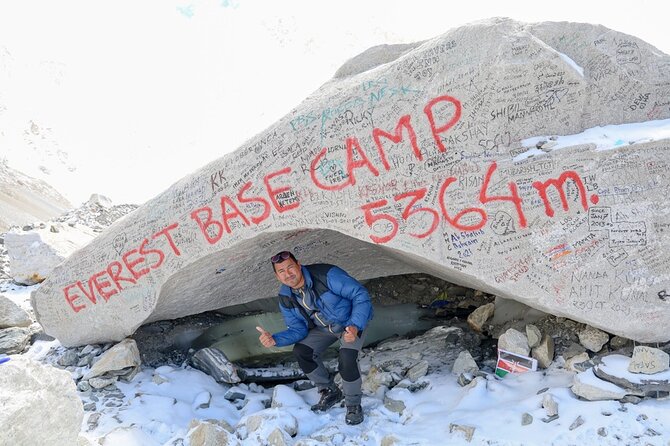
Base Camp sits at 5,364 meters. You can celebrate the achievement and take in the glacier and surrounding peaks, but keep your expectations clear: this is the expedition base on the route, not the summit of Everest and not necessarily the spot with the best view of the mountain itself. The next morning’s climb to Kala Patthar is designed for that.
Kala Patthar offers the view you came for
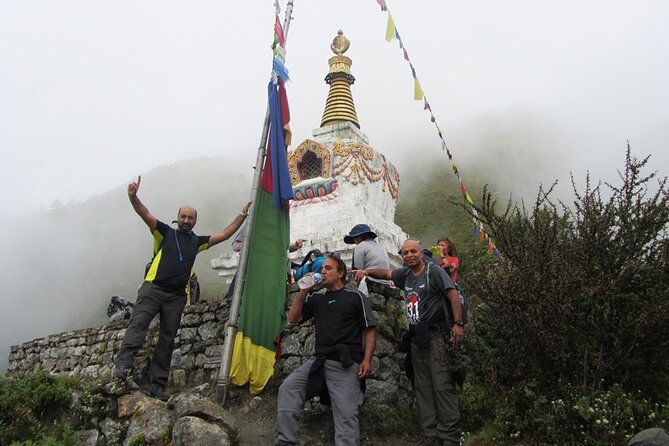
The Kala Patthar day begins very early. The climb is steep and rocky, and the schedule allows up to eight hours for the outing. At 5,545 meters, Kala Patthar is higher than Everest Base Camp and is the trek’s highest point.
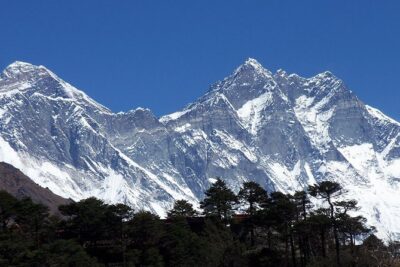
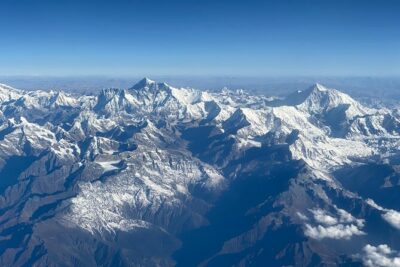
The reward is a sunrise view over Mount Everest. You also gain the perspective that Base Camp cannot always provide. From this high viewpoint, the scale of the Khumbu becomes easier to understand, and the early light can change the appearance of the peaks from minute to minute.
This is the hardest day for many people. You may be cold, short of breath, and tired from the previous day. Bring patience, follow the guide’s pace, and remember that reaching the viewpoint is not worth ignoring signs of altitude trouble.
After Kala Patthar, you return toward Gorakshep and then continue down toward Namche Bazaar. The long descent lasts about six hours overall and feels easier in one sense because the elevation is dropping. It still puts stress on your knees, especially after two high days in a row.
The return to Lukla is familiar but not effortless
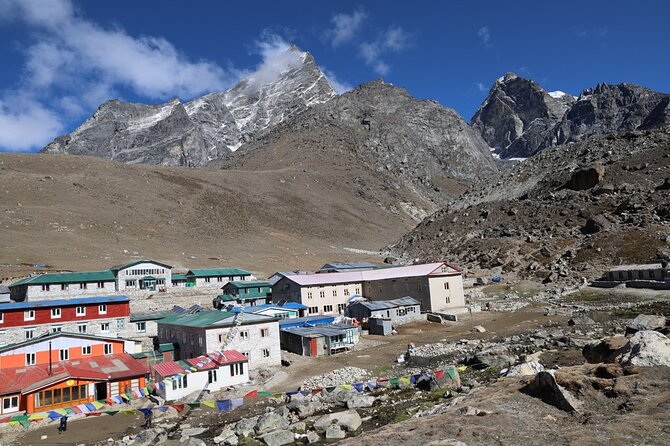
Day ten follows the route back to Namche. You have a heavy breakfast, then walk downhill along the same broad corridor toward lower villages. The trail is comparatively easier because you lose elevation, but six hours of walking remains a full day.
The final trekking day takes you from Namche to Lukla in about seven hours. You pass through forests, remote villages, bridges, streams, Monjo, and Phakding before completing the route to the airport town.
The return is not simply a repeat. You now recognize places that looked unfamiliar on the way up, and the lower air usually feels easier. The last night in Lukla also gives you a little breathing room before the flight back, though the schedule does not describe an extra weather buffer.
The Lukla flight is useful, but timing can matter
On day twelve, you fly back to Kathmandu in about 35 minutes. Airport pickup and drop-off are included by private or shared vehicle, and the remaining day is free after you reach the city.
The flights are a major part of the package value. Arranging Kathmandu to Lukla and Lukla to Kathmandu yourself would add cost and coordination, while this trip includes both domestic flights. The practical caution is that Lukla is a mountain airport, so you should avoid booking an important international connection immediately after the scheduled return unless your wider plans allow some flexibility. The provided schedule does not promise a spare weather day.
What the $605 price really covers
At $605 per person, this is a strong package price for a 12-day Everest Base Camp trek because several expensive and necessary items are included:
- Domestic flights between Kathmandu and Lukla
- Airport pickup and drop-off
- Three meals each trekking day
- Twin-sharing lodge accommodation
- A licensed, high-altitude trained guide
- One porter for every two trekkers
- Sagarmatha National Park entry and TIMS fees
- Trekking map, hat, duffel bag, and trekking pole
- First aid kit and oximeter
- Local government tax
- Trip certificate after completion
The meal allowance is listed as 11 breakfasts, 11 lunches, and 11 dinners, matching the 12-day schedule with food provided during the trekking portion. Snacks, drinks, personal purchases, tips, personal travel insurance, and personal trekking gear are extra.
The porter arrangement is worth understanding. One porter serves two trekkers, so you should pack with that shared load in mind rather than expecting unlimited luggage support. The duffel bag helps, but your clothing and equipment remain your responsibility.
The provider also lists walkie-talkies for group trekkers. The maximum group size is 20, and group discounts are available. A larger group can help keep the price down, while a smaller group may feel more personal. Ask about the expected group size and guide-to-trekker arrangement before paying.
Who will get the most from this trek
This route suits you if you want the classic Everest Base Camp experience without adding the Gokyo Lakes or a high pass. It includes the famous villages and viewpoints, two important acclimatization periods, and support with the major logistics.
You should have a moderate level of physical fitness. The schedule includes repeated days of four to seven hours, steep rocky sections, early starts, and long descents. The description welcomes beginners and seniors, but that should not be read as a promise that the trek will feel easy. Your health, pace, preparation, and response to altitude will matter.
The route is also suited to people who value guide support. Guide names connected with past trips include Rajesh Magar, Narayan Ntc, Gopal, and Bikram. The strongest praise centers on friendly care, mountain explanations, sensible pacing, and the ability to adjust plans when someone struggles at higher altitude. That is exactly the sort of support I would want on a trek where conditions can change quickly.
The Khumbu is described as suitable for trekking across roughly eight months of the year, but the best timing still depends on the season you choose. Ask about expected conditions, flight operations, and group size for your dates.
Small practical details that make a big difference
Confirmation is provided when you book, and the meeting point is Tribhuvan Airport in Kathmandu. The tour is near public transportation, but the included airport transfer is the easier choice after an international flight.
You need personal travel insurance, personal trekking clothing and equipment, drinks, snacks, and money for tips. The package includes a first aid kit and basic support equipment, but it does not replace insurance or your own responsibility for medical preparation.
Cancellation is free up to 24 hours before the experience starts. Inside that 24-hour window, the payment is not refunded, and late changes are not accepted. The local time cutoff applies.
Should you book the 12 Days Everest Base Camp Trek?
I would consider this trek a good-value choice if you want a supported, classic route with the major costs bundled into one price. The two acclimatization stops, porter support, meals, permits, flights, and high-altitude guide are more important than flashy extras, and they are the parts that make the package useful.
Book it if you can handle repeated long walking days and understand that Everest Base Camp is a high-altitude trek, not a casual holiday. Before booking, confirm the likely guide, group size, room arrangements, flight contingency, and what personal gear you need to bring.
Skip it if you want private rooms, a slow luxury pace, guaranteed flight timing, or a route with no strenuous days. For the right trekker, though, the combination of Sherpa villages, Dudhkoshi crossings, Tengboche, Base Camp, and sunrise from Kala Patthar gives you the classic Everest story in a compact 12-day plan.
FAQ
How long does the Everest Base Camp trek last?
The experience lasts approximately 12 days, including flights from Kathmandu to Lukla and back.
Where does the trek begin?
The trek begins in Lukla after a flight from Kathmandu to Tenzing-Hillary Airport. The meeting point is Tribhuvan Airport in Kathmandu.
How high is Everest Base Camp?
Everest Base Camp sits at 5,364 meters.
How high is Kala Patthar?
Kala Patthar reaches 5,545 meters and is the highest point listed on the route.
Are flights between Kathmandu and Lukla included?
Yes. The package includes domestic flights from Kathmandu to Lukla and from Lukla back to Kathmandu.
Are meals included during the trek?
Yes. Breakfast, lunch, and dinner are included during the trekking period, with 11 of each listed in the package.
Is accommodation included?
Yes. The package includes the best available twin-sharing lodge room during the trek.
Is a guide included?
Yes. One Government Licensed, highly experienced, and high-altitude trained guide is included.
Is porter support included?
Yes. The package includes one porter for every two trekkers.
What fitness level is required?
The activity states that you should have a moderate level of physical fitness. The itinerary includes trekking days of roughly four to seven hours, steep rocky sections, and high-altitude climbs.
Recently added around Kathmandu
- Kathmandu Airport Pickup and Drop-off Services★ 5.0 · 3 reviews
- Kathmandu Paragliding★ 5.0 · 3 reviews
- Explore The Beauty Of Langtang Valley In 8-Days Trek★ 5.0 · 3 reviews
- Kathmandu Chandragiri Cable Car and Swayambhunath Private Tour★ 5.0 · 3 reviews
- Kathmandu: Nightlife and Pub Crawl Tour★ 5.0 · 3 reviews
- Kathmandu: Momo Making Class with a Local Chef★ 5.0 · 3 reviews
- Mountain Flight Experience in Nepal★ 4.5 · 3 reviews
- Everest Base Camp Trek★ 5.0 · 3 reviews
Other Everest Base Camp Treks worth a look
Everest Base Camp Helicopter Tour landing at Everest View Hotel
Read our review →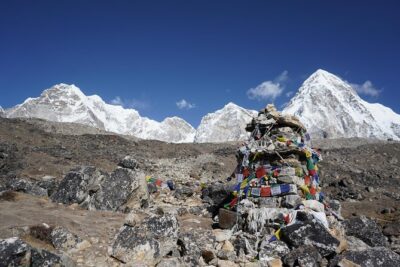
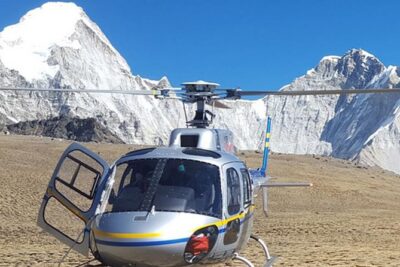
Everest Base Camp Helicopter Tour landing at Hotel Everest View
Read our review →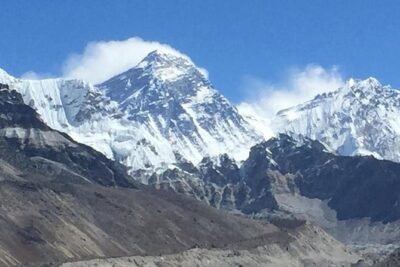
This tour also appears in