
REVIEW · POON HILL TREKS
3-Day Poon Hill Trek from Pokhara.
Poon Hill gives you a quick, satisfying taste of the Himalaya without the high altitude or long schedule of a major trek. The reward is a sunrise viewpoint with broad mountain views, reached by a trail through rhododendron forest, rice fields, and mountain villages.
I like the private format, since your guide can adjust the pace and shape the trek around your group. I also like that meals, teahouse lodging, private transport, a sleeping bag, and a first aid kit are included, which keeps the planning simple.
The catch is the pace. Three days leaves little room for slow mornings or weather delays, and the route is still moderately challenging. You should have some hiking experience and a fair level of fitness.
Key points at a glance
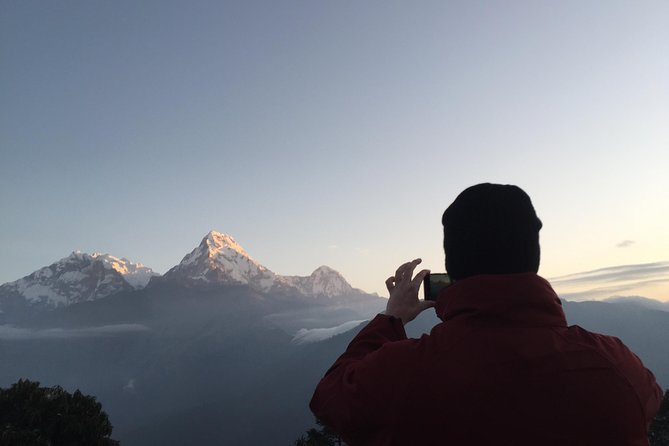
- Poon Hill sunrise: The main prize is an early visit to the famous lookout for Himalayan views and changing morning light.
- Private walking group: Only your party joins the activity, so the guide can respond to your pace and preferences.
- Classic teahouse stay: You sleep in twin-sharing teahouse accommodation rather than a conventional hotel.
- Useful inclusions: Meals, private transport, a sleeping bag, duffel bag, first aid kit, and park or other listed fees are covered.
- Short but active route: You see forests, villages, and rice fields in three days, but the schedule will feel full.
- Guide choice matters: BK, Shiva, Bikram, Sagar, and Sudip are names associated with this operation, though your assigned guide depends on availability.
Why Poon Hill works for a short Nepal trip
Pokhara is a natural starting point for a short Himalayan walk. The city gives you access to mountain country while keeping the trip manageable for someone with limited holiday time. This trek is aimed at the person who wants more than a day hike but cannot spare a week or two for a longer route.
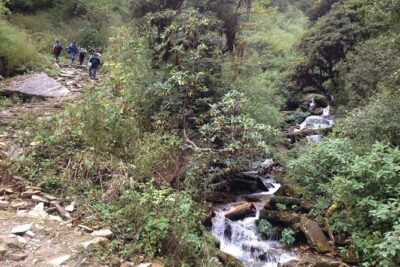
The appeal is not only the viewpoint. You walk through areas where daily life continues at a slower pace, passing mountain villages and cultivated rice fields. Rhododendron forest adds color and shade, especially when flowers are in bloom.
The route does not rise to the extreme altitudes found on longer Himalayan treks. That makes Poon Hill a more approachable choice, but you should not mistake lower altitude for an easy stroll. The trail is described as moderately challenging, and three days compresses the walking.
I would choose this trip if you want a clear goal each day and a strong visual payoff. I would not choose it if you want a relaxed wellness break, dislike uneven trails, or need a flexible schedule with plenty of spare time.
More Hiking Tours in Pokhara
- Poon hill Trek 3 days
★ 5.0 · 176 reviews - Trekking in Annapurna/Langtang/Everest/Upper Mustang regions
★ 5.0 · 161 reviews - Pokhara: 4-Day Ghorepani, Poonhill & Ghandruk Mountain Trek
★ 5.0 · 132 reviews
What the three-day structure really means
The trip is listed as approximately three days, with Poon Hill as the central stop. The supplied plan does not give exact village names, walking distances, elevation gains, or fixed start times, so you should ask the operator for the current day-by-day schedule before paying.
The broad rhythm is easy to understand. You leave Pokhara by private transport, walk into the Annapurna area, spend nights in teahouse accommodation, reach Poon Hill for the sunrise, and return toward Pokhara. Your guide will set the precise order of walking and overnight stops.
That flexibility is useful. Weather, trail conditions, and your group’s pace can affect the plan, and a private guide can make practical adjustments more easily than a large fixed group. It also means you should clarify what the word three-day means in driving time and walking time.
Do not expect three days of nonstop mountain walking. Transport is part of the trip, and the exact balance between road travel and trail time is not stated. Ask about pickup location, the first trailhead, daily walking hours, and the final return to Pokhara.
Day one: leaving Pokhara for villages and forest
The first day moves you out of Pokhara and toward the trail. Private transportation is included, which is a real convenience after arranging hotels, flights, or connections in Nepal. You do not have to work out every transfer yourself, though it is still wise to confirm the pickup time and point.
Once on foot, the setting changes from lakeside city to rural mountain country. The route includes rice fields, villages, and forest, giving you a good first look at how the Annapurna foothills are used and lived in.
Your first walking day is also when you discover how your body handles the trail. Use it to settle into a steady pace. A private guide can help you avoid rushing early, which matters on a short trek where fatigue can build quickly.
Teahouse accommodation and meals are included. Rooms are on a twin-sharing basis, so solo participants should not assume a private room. The sleeping bag and duffel bag are useful additions, especially if you do not want to carry or rent those items yourself.
The details of the first overnight stop are not specified. That is one of the points I would confirm in advance, along with whether your luggage is carried by your own group or needs to be managed by you. Porter service is not included, so pack with that limitation in mind.
Day two: the climb toward Poon Hill
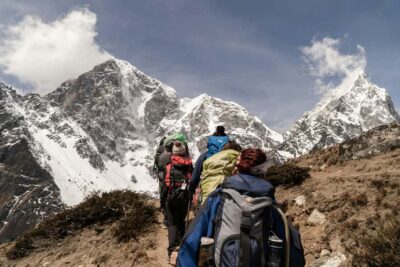
The second day is likely the key walking day, as you make progress toward the Poon Hill area. The route combines forest, villages, and cultivated ground rather than offering a single unchanging trail surface.
That variety is part of the pleasure. Forest sections provide a different feel from open fields, while village stretches bring you closer to local life. You are not simply walking from one photo stop to another. The route itself supplies much of the interest.
The physical demand remains moderate, but you should be ready for sustained uphill and downhill walking. No precise elevation profile is supplied, so you should not plan around a particular number of steps or hours. Ask the company for current route details if knee problems, limited stamina, or a tight schedule are concerns.
The included meals make the day easier to manage. Breakfast, lunch, and dinner are covered, as are tea house stays. Snacks are not included, and bottled water is also excluded, so bring money for food between meals and plan how you will refill or buy drinking water.
WiFi and battery charging are not included either. That does not mean they are unavailable, only that you should expect to pay separately where offered. A portable battery is a sensible addition, especially if you rely on your phone for photos, maps, or contact.
More Poon Hill Treks in Pokhara
- Ghorepani – Poon Hill Trek 3N-4D
★ 5.0 · 125 reviews - From Pokhara: 3-Day Ghorepani Poon Hill Trek with Guide
★ 4.9 · 68 reviews - 4-Day Private Poon Hill Trekking Tour
★ 5.0 · 58 reviews - Pokhara: 3-Day Ghorephani and Poon Hill Private Trek
★ 5.0 · 58 reviews
Day three: sunrise at Poon Hill and the return
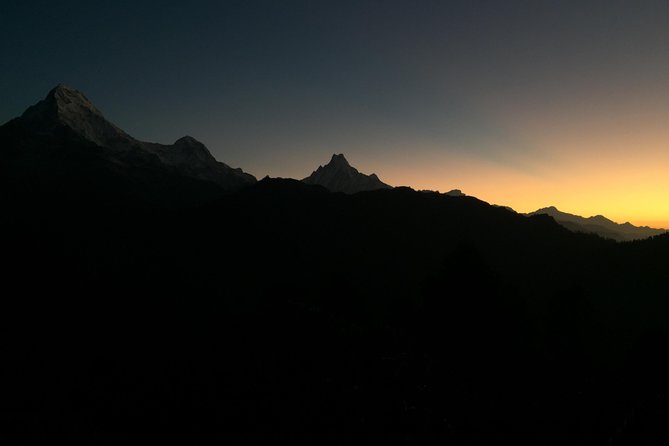
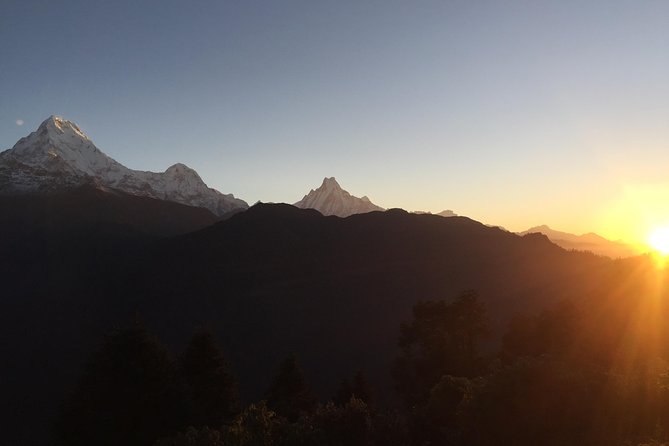
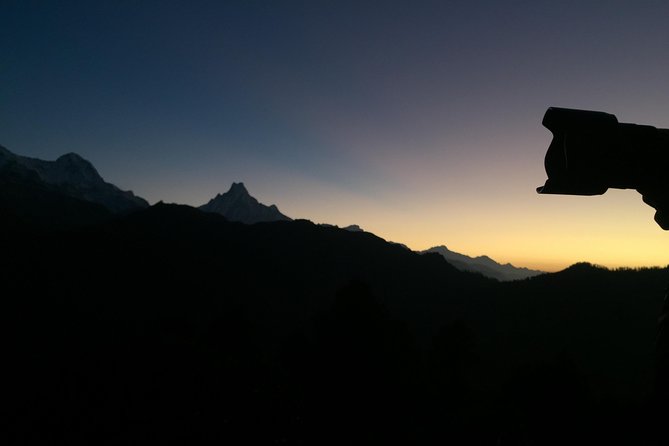
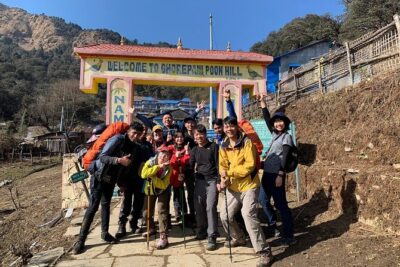
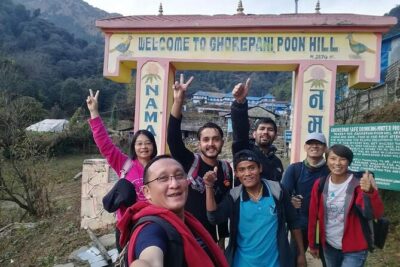
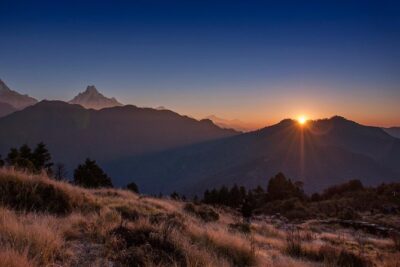
Poon Hill is the reason most people select this trek. The lookout is known for Himalayan panoramic views, and the sunrise gives the mountains a changing range of color and shadow rather than one fixed view.
You should expect an early morning outing to reach the viewpoint for sunrise. Bring warm layers, even if Pokhara feels mild, and keep your camera ready. The best conditions are never guaranteed in the mountains.
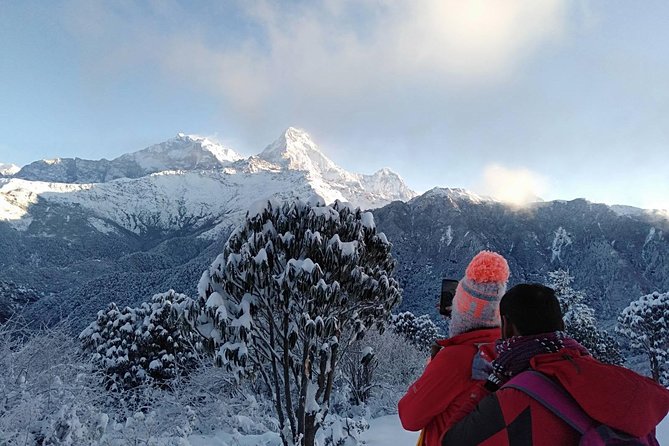
Weather is the trip’s biggest variable. The experience requires good weather, and poor conditions can lead to a different date or a full refund. Even when the trek goes ahead, clouds may block the mountain views. One account specifically noted cloudy mountains but beautiful flowers, a useful reminder that the walk can still have value when the panorama disappears.
After the viewpoint, you continue the route and return toward Pokhara according to the guide’s plan. The exact transport and walking arrangement is not provided, so confirm whether the final day includes a long road transfer after the sunrise walk.
This is also the day when the compressed schedule can show its limits. A sunrise hike followed by further walking and transport may feel tiring. If you want time to pause, take photographs, and enjoy the villages rather than simply reach the finish, tell the guide at the start.
Teahouses, meals, and what you carry
Teahouse accommodation is part of the classic Nepal trekking experience. It is practical rather than luxurious, and twin-sharing rooms mean you should be comfortable with simple lodging and limited privacy.
The package includes breakfast, lunch, and dinner. That gives the $410 price more weight than a tour that only provides guiding and transport. You are paying for a connected service rather than assembling each element yourself.
A sleeping bag and duffel bag are provided, along with a first aid kit. These inclusions reduce the amount of specialist equipment you need to obtain before leaving home. Ask how the bags are used and what you need to carry during the walking day.
Porter service is not included. This is an important cost and comfort point. If you want someone else to carry your main bag, you will need to arrange and pay for that separately. Otherwise, pack light enough to manage your own equipment on a moderately demanding trail.
Alcohol, snacks, bottled water, personal expenses, tips, WiFi, and battery charging are extra. Keep local cash available for these costs. The package covers the central services, but it is not an all-expenses-paid trip.
Guides and the value of a private group
The strongest part of a private trek is the human guidance. Your guide sets the pace, helps with route decisions, explains the surroundings, and gives you someone to turn to when a small problem appears.
Several guides connected with this trip are named in the supplied information: BK, Shiva, Bikram, Sagar, and Sudip Shrestha. BK is described as experienced in the Himalaya, while Shiva is noted for kindness and practical help. Bikram is associated with route knowledge, useful stopping points, and photography help. Sagar is praised for supporting the group throughout the walk, and Sudip is described as professional, friendly, and highly informed.
Those details are helpful when choosing a company, but they do not guarantee that you will receive one particular guide. If you have a preference, ask whether you can request a specific person and whether that request is confirmed.
The private format also suits mixed-ability groups better than a fixed departure. You can discuss rest stops and pace with one guide rather than trying to match a larger party. Still, the trail and the three-day schedule impose limits. Private does not mean effortless.
Is $410 a fair price?
At $410 per person, this is not the cheapest way to reach Poon Hill, especially because porter service, drinks, snacks, charging, tips, and personal spending are excluded. Yet the price includes several items that can add up quickly: private transport, meals, twin-sharing teahouse lodging, listed fees and taxes, a sleeping bag, a duffel bag, a first aid kit, and a private guide.
The value is strongest if you are short on time or uncomfortable arranging Nepal transport and trekking logistics yourself. You also gain the convenience of one company handling the trip from Pokhara, rather than negotiating separate vehicles, lodging, food, and guide services.
The value is weaker if you already have transport, trekking equipment, and a strong understanding of the route. In that case, you may prefer a simpler guiding arrangement. You should also price any desired porter service before booking, since carrying your own luggage can change how enjoyable the trek feels.
Ask for a full breakdown of the current schedule and any extra local charges. The listed inclusions are clear, but the exact route and transportation details are not.
Who should book this trek?
I would recommend it to a moderately fit person with some hiking experience who wants a classic Himalayan teahouse route in a compact package. It also suits couples, friends, and families who prefer a private group and want the option to adjust the pace.
It can work for a first trek if you prepare properly. One first-time participant described the trip as an inspiring introduction to mountain walking, but first time does not mean no preparation. Practice with hills, wear broken-in footwear, and be realistic about three active days.
Older hikers may also consider it, provided they are fit and discuss the pace honestly. The account of two 70-year-old hikers points to the value of wraparound support, but age alone does not determine suitability. Your mobility, stamina, and comfort with uneven trails matter more.
I would skip it if you want a luxury hotel trip, dislike shared teahouse rooms, or need guaranteed clear mountain views. Clouds can cover Poon Hill, and the weather policy confirms that conditions can affect the experience.
Practical details before you book
Confirmation is received at booking. Pickup is offered, private transportation is included, and the activity is near public transportation. Service animals are allowed, and the operator states that most people can participate.
The cancellation terms are friendly if your plans change early. You can cancel at least 24 hours before the local start time for a full refund. Cancellations or changes inside that window are not accepted for a refund, except that bad weather may lead to a new date or full refund.
Because the trip is private, tell the operator about your group’s fitness, hiking background, preferred pace, and any need for a porter. Also confirm the pickup point, exact walking schedule, overnight villages, luggage arrangements, and expected return time to Pokhara.
Should you book the 3-Day Poon Hill Trek?
Book it if you want a focused Himalayan introduction with a famous sunrise, simple teahouse lodging, meals, private transport, and a guide handling the practical work. The package makes good sense for a short stay in Nepal, especially when you value personal attention over the lowest possible price.
Think twice if you need a slow itinerary or want every cost included. The $410 fee does not cover a porter, water, snacks, alcohol, charging, WiFi, tips, or personal expenses, and the three-day schedule leaves little space for weather delays.
My call: this is a strong short trek for a fit, prepared hiker who understands that Poon Hill is a real mountain walk, not a sightseeing transfer. Confirm the route details and guide availability first, then book with confidence if the pace suits you.
FAQ
How long is the Poon Hill trek?
The experience lasts approximately three days.
Where does the trek begin?
The trek starts from Pokhara, Nepal, with pickup offered and private transportation included.
Is this a private trek?
Yes. Only your group participates in the activity.
What accommodation is included?
You stay in twin-sharing teahouse accommodation. A sleeping bag is provided.
Are meals included?
Breakfast, lunch, and dinner are included. Snacks, bottled water, and alcoholic drinks are not included.
Can I cancel for a full refund?
You can cancel at least 24 hours before the local start time for a full refund. If poor weather causes the operator to cancel the experience, you will be offered another date or a full refund.
More 3-Day Experiences in Pokhara
- From Kathmandu/Pokhara: Private 3-Day Chitwan Safari Tour
★ 4.7 · 34 reviews - From Pokhara: Budget 2 Night 3 days Poon hill trek
★ 5.0 · 20 reviews - 3 Days 2 Nights Poon Hill Trekking
★ 5.0 · 17 reviews - 3 Day Lower Mustang Tour with 4WD Jeep from Pokhara
★ 5.0 · 12 reviews
Recently added around Pokhara
- Paragliding in Pokhara★ 5.0 · 3 reviews
- Pokhara: 5-Day Annapurna Base Camp Trek with Hot Spring★ 5.0 · 3 reviews
- Pokhara:4-Day Ghorepani Poon Hill Guided Trek via Ghandruk★ 5.0 · 3 reviews
- Pokhara: 7-Day Annapurna Base Camp Trek via Ghandruk★ 4.3 · 3 reviews
- Peace & Panorama: Stupa and Pumdikot Scenic Drive Tour★ 3.6 · 3 reviews
- Beautiful Sarankot Sunrise with Full Day Sightseeing in Pokhara★ 4.5 · 3 reviews
- 3 Day Australian Camp Dhampus Ghandruk Easy Trek in Pokhara★ 3.5 · 3 reviews
- Overnight Dhampus Australian Camp Easy Hiking from Pokhara★ 5.0 · 3 reviews
Other Poon Hill Treks worth a look
4-Day Ghorepani, Poonhill & Ghandruk Mountain Trek
Read our review →
This tour also appears in