REVIEW · ANNAPURNA BASE CAMP TREKS
Pokhara: 5-Day Annapurna Base Camp Trek with Hot Spring
Reaching Annapurna Base Camp at 4,130 meters is the heart of this trip. You walk through villages, forests, rhododendrons, glaciers, and a huge mountain amphitheater, then return to Pokhara by way of the Jhinu Dada hot springs. It is a big Himalayan experience packed into five days.
I like the private format, which gives you a guide focused on your group, and I like the practical inclusions: permits, paperwork, trekking poles, sleeping bag, duffle bag, accommodation, and transport. The catch is the pace. Five days is intense, especially on the long descent, and winter or poor snow conditions can make the route much harder.
Key points
- Annapurna Base Camp at 4,130 meters: Reach the famous high mountain bowl after a demanding ascent from Deurali.
- A fast five-day schedule: The plan includes up to eight hours of walking in one day, so fitness matters.
- Jhinu Dada hot springs: Finish the trek with a warm soak before taking a Jeep back to Pokhara.
- Private English, Hindi, or Nepali-speaking guide: Guides such as Jeet and Kaji have provided attentive support on this route.
- Useful gear included: Trekking poles, a sleeping bag, and a duffle bag reduce the amount of equipment you need to arrange.
- Two package choices: You can buy meals along the trail or choose the full package with breakfast, lunch, and dinner included.
Five days from Lakeside Pokhara to the Annapurna sanctuary
This is not a casual mountain walk. The route gains height quickly, includes several long trekking days, and places your overnight stay at Annapurna Base Camp itself. You begin and end in Lakeside Pokhara, with road transfers at both ends.
The advertised price is $150 per person, which can be good value if the quoted package covers the items you need. Permits, government taxes, private accommodation, guide costs, staff expenses, equipment, and transport are included. The full meal package also covers breakfast, lunch, and dinner during the trek.
Read the meal wording carefully before booking. The standard option lets you purchase food along the way, while the all-inclusive option includes meals. Soft drinks, bottled or boiled water, showers, battery charging, laundry, bar bills, and other personal costs remain extra.
You also need to budget for insurance and possibly a porter. A porter can be arranged for an additional charge, but is not included. For a five-day trek with long climbs and descents, a porter may be worth considering if you want to keep your daypack light.
More Annapurna Base Camp Treks in Pokhara
- Kathmandu/Pokhara: 5-Day Annapurna Base Camp (ABC) Trek
★ 4.9 · 72 reviews - Private 7 – Day Annapurna Base Camp Trekking
★ 5.0 · 50 reviews - Annapurna Base Camp Trek (8 days)
★ 5.0 · 45 reviews
Day 1: Seti River views, a Jeep ride, and Sinuwa at 2,200 meters
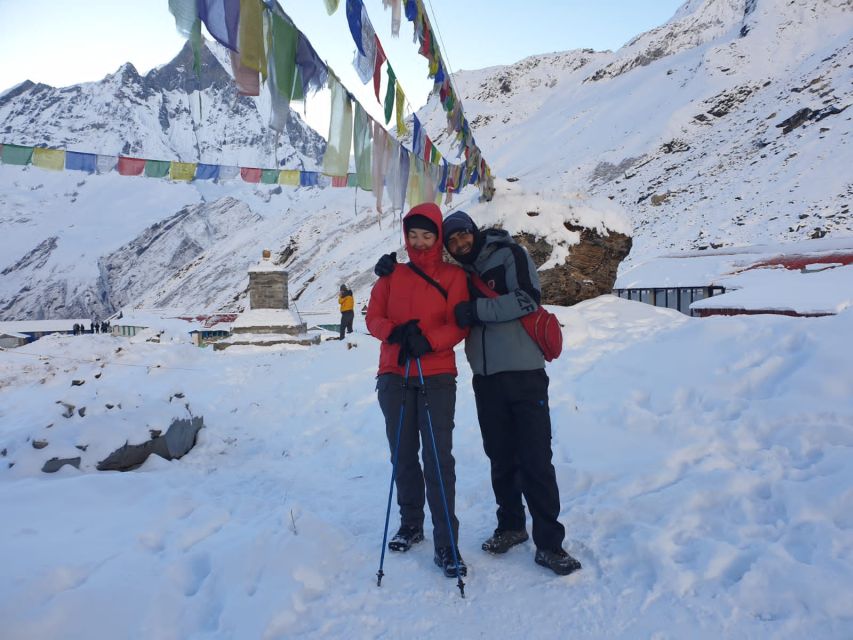
Your first day starts early in Lakeside Pokhara. Hotel pickup is included, so wait in your lobby about ten minutes before the scheduled departure. The road journey takes you toward Samrung and offers views of the Seti River, mountains, and green paddy fields.
The transfer takes about three hours by Jeep, followed by roughly four hours of walking to Sinuwa. That makes this a full opening day, even though the trekking distance is shorter than on later stages.
Sinuwa is a useful first overnight stop because it puts you into the mountain route without sending you too high on the first night. You stay in private accommodation and have a chance to meet local residents and settle into the rhythm of the trail.
The road portion is not just wasted transfer time. It gives you an early look at rural Nepal and the foothills around Pokhara. Still, expect a long day of sitting followed by several hours on foot. Wear your hiking shoes from the start and keep water, sunscreen, a jacket, and a change of clothes in your daypack.
Day 2: Rhododendron forest and the climb to Deurali
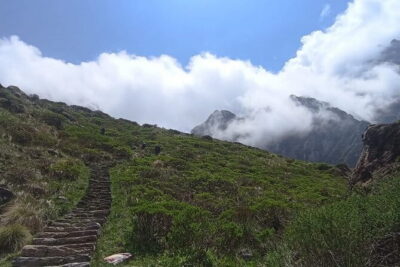
From Sinuwa, you walk for about seven hours to Deurali at 3,200 meters. This is where the trip begins to feel like a serious high-altitude trek. The route passes through forest and rhododendron country, with the air getting cooler as you gain height.
Rhododendrons are one of the area’s signature features, and seasonal blooms add color to the trail. The forest also gives the route a pleasant change from the open mountain views you will seek later. You should still expect a steady uphill effort, with rest stops set by your guide and your group’s condition.
Deurali is an important night because you are now much higher than Sinuwa. The next morning takes you toward 4,130 meters, so a sensible pace matters. Your guide should monitor how you are feeling and help you decide when to rest, drink, or adjust your pace.
This day may be the least dramatic in photographs, but it is valuable preparation for the base camp push. You walk through changing vegetation and gradually trade lower foothill scenery for a more exposed alpine setting.
Day 3: The final climb to Annapurna Base Camp
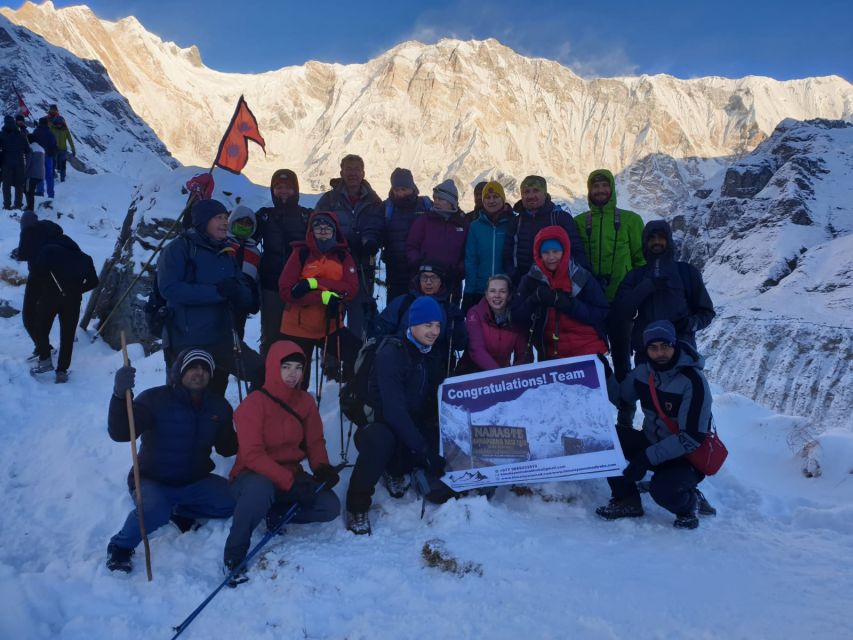
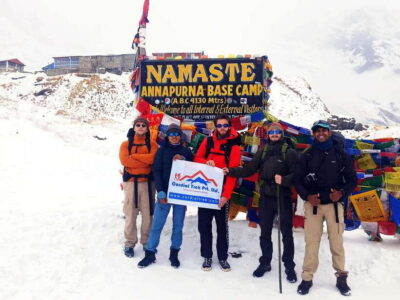
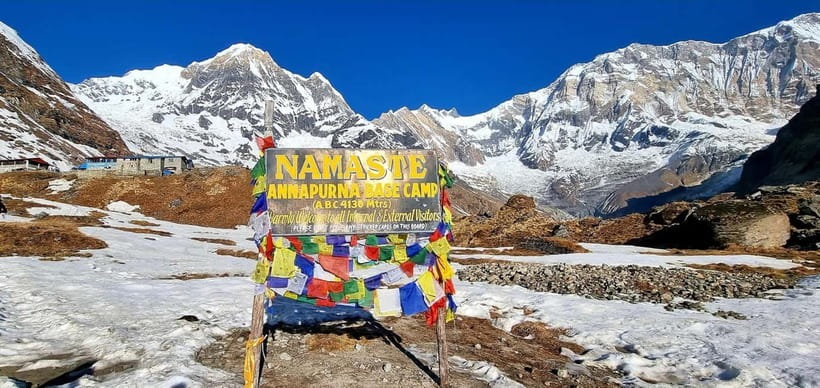
The walk from Deurali to Annapurna Base Camp takes about five hours, but the altitude makes those hours count. You reach 4,130 meters, where towering peaks, glaciers, and a broad natural mountain amphitheater surround the overnight lodges.
The base camp is the trip’s main reward, but do not treat arrival as the end of the effort. At this height, even ordinary walking can feel slow. Keep your pace controlled and let your guide set a rhythm that allows regular breaks.
The setting is the reason this trek is so well known. You are not simply looking at one mountain from a distant viewpoint. You are inside a ring of high peaks, with the sense of being enclosed by the Annapurna range. Weather can change the view quickly, so carry your camera, but do not measure the day only by how many clear photographs you get.
You spend the night at Annapurna Base Camp. That is a special feature of this schedule. Many routes treat base camp as a short stop before turning back, but here you have the chance to remain in the mountain bowl and see the early light over the peaks.
The altitude and cold can make the night demanding. A sleeping bag is included, but bring suitable warm clothing, socks, a jacket, and comfortable layers. The supplied information recommends a sleeping bag, and although one is provided, confirm the equipment arrangement before departure so you know what you are receiving.
More Hiking Tours in Pokhara
- Poon hill Trek 3 days
★ 5.0 · 176 reviews - Trekking in Annapurna/Langtang/Everest/Upper Mustang regions
★ 5.0 · 161 reviews - Pokhara: 4-Day Ghorepani, Poonhill & Ghandruk Mountain Trek
★ 5.0 · 132 reviews - Ghorepani – Poon Hill Trek 3N-4D
★ 5.0 · 125 reviews
Sunrise at base camp, then an eight-hour descent
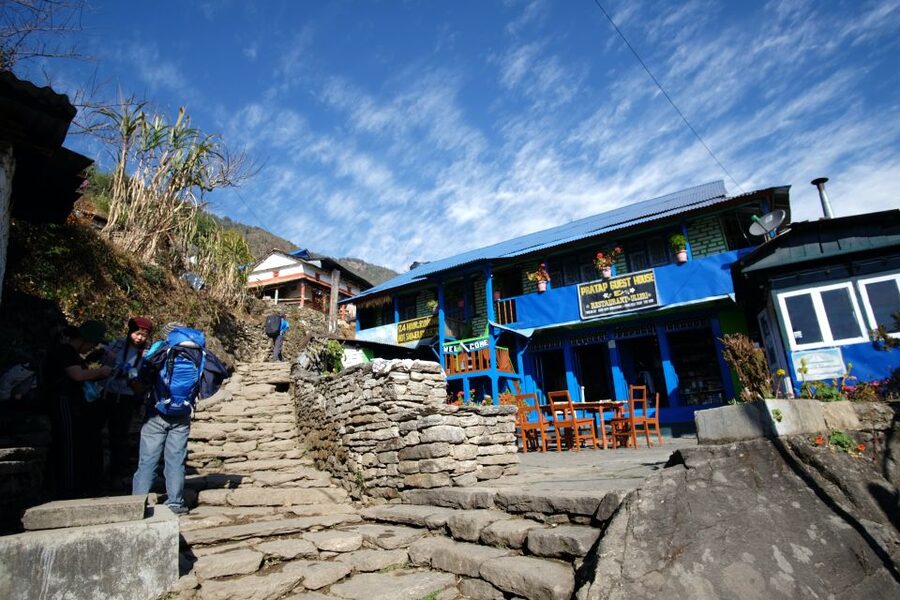
Day 4 begins with sunrise over the mountains before you retrace the route toward Lower Sinuwa. The walking time is about eight hours, making this the hardest day for many people.
The descent sounds easier than the climb, but long downhill walking can be rough on knees, ankles, and tired feet. Trekking poles are included, and this is exactly the kind of day when they earn their place in your pack. Use them to steady yourself on uneven sections and to reduce some strain during the long drop in altitude.
You pass back through forests and familiar sections of trail. The return gives you a different view of places you may have rushed through on the way up. It also lets you notice how quickly the vegetation changes as you lose height.
This is the main argument for choosing a longer version of the trek if you have flexibility. One verified booking experience described five days as intense and suggested seven days for more time with the mountain views and hikes. That is useful advice, not a criticism of the route itself. The five-day plan works best for people who already know they can handle long walking days and who prefer a compact schedule.
Day 5: Jhinu Dada hot springs and the ride back to Pokhara
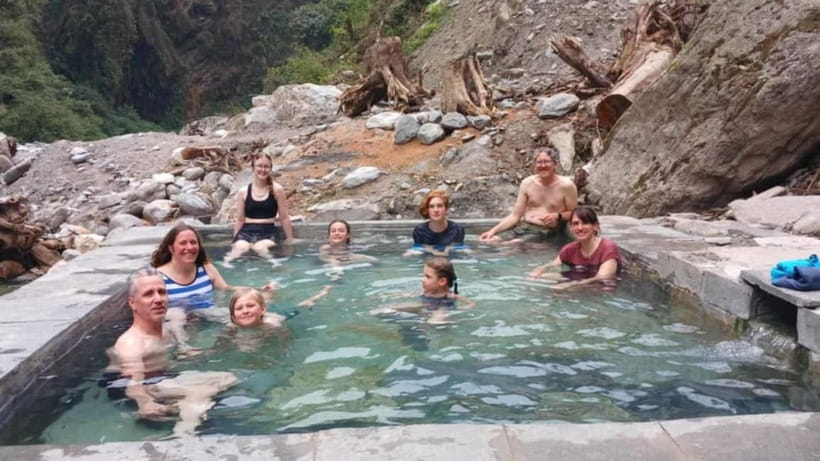
The final day combines about four hours of trekking with a three-hour Jeep ride. You descend from Lower Sinuwa toward Jhinu Dada, where natural hot springs provide a welcome break.
The hot springs are a smart ending. After repeated climbs and one especially long descent, a warm soak gives your legs a chance to relax before the road journey. Bring swimwear or suitable clothing, and keep a towel arrangement in mind since personal items such as showers and other extras are not included.
After Jhinu Dada, you continue by Jeep to Lakeside Pokhara. The return transfer allows you to finish the route without adding another full day of walking. It also brings the trip back to the familiar lakeside setting after several nights in mountain accommodation.
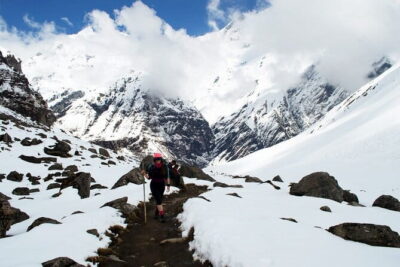
The schedule can be affected by conditions in the mountains. A February booking encountered poor weather, snow, ice, and avalanche crossings on the descent. The guide helped the group through those conditions, but this is a useful warning: the five-day plan is not equally easy in every season. If snow or unstable trail conditions are possible, ask about current conditions and consider adding days.
Guides matter on a compact Himalayan trek
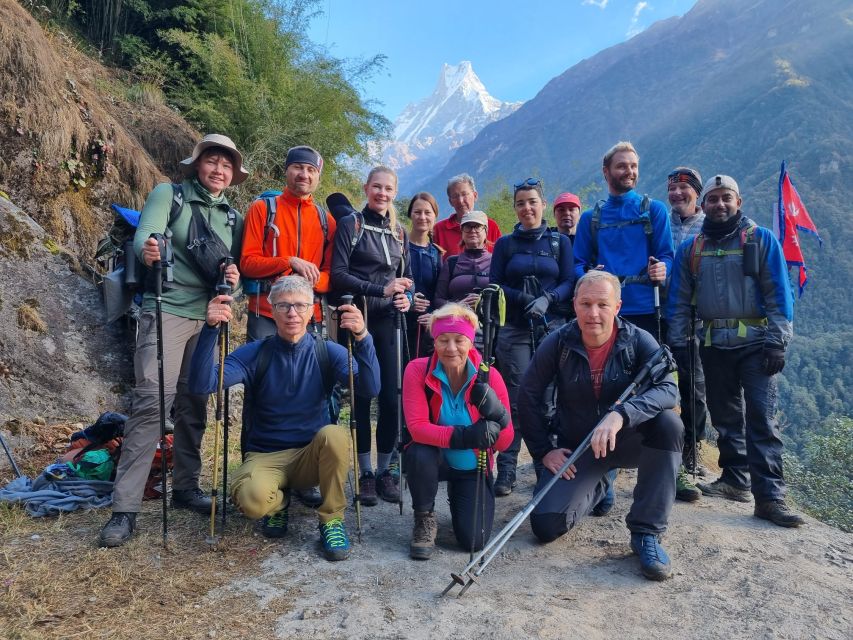
The guide is one of the most important parts of this experience. The service includes an authorized, licensed guide who speaks English, Hindi, or Nepali, and the group is private rather than shared.
That arrangement is valuable because the schedule leaves little room for delays. A private guide can focus on your walking speed, rest needs, and general condition. You can also ask questions about the villages, forest, mountains, and local customs as you go.
Two guide names connected with this route are Jeet and Kaji. Jeet was praised for being funny, attentive, respectful, and careful about rest. Kaji provided strong help during difficult snow and avalanche conditions. Your assigned guide may be different, so treat these names as examples rather than a guarantee.
Good guiding becomes especially important above Deurali and on the return from base camp. The guide does not remove the physical work, but can help you manage it. You should still speak up if you feel unwell, cold, unusually tired, or unsure about a section of trail.
What the $150 price really covers
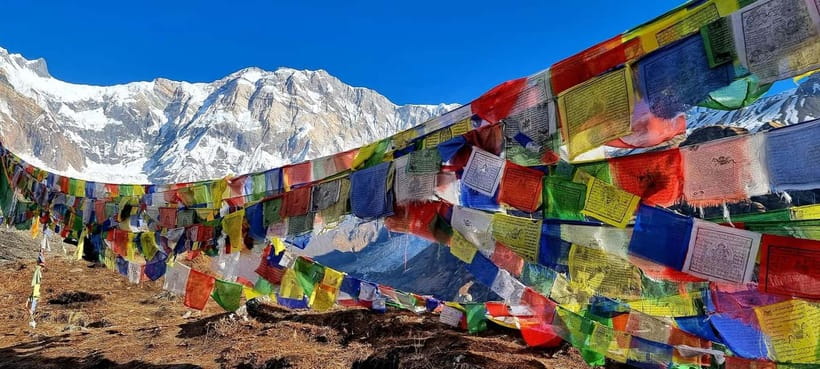
At $150 per person, this trip appears aimed at keeping the trek affordable while including the basic structure you need. Hotel pickup and drop-off, private transport, permits, government taxes, private accommodation, guide expenses, luggage storage, and several pieces of trekking equipment are included.
The staff costs are also covered, including meals, accommodation, salary, equipment, insurance, and transport for the trek staff. That removes several expenses that can otherwise appear one by one during a mountain trip.
The biggest price question is food. Choose the full package if you want your main meals arranged each day. Choose the standard option only if you prefer to buy meals as you go and are comfortable carrying enough cash for that purpose.
You still pay for personal extras. The list includes drinks, water, showers, phone calls, laundry, bar bills, battery recharging, and extra porters. Travel and rescue insurance is not included, and it is strongly sensible to arrange it before leaving Pokhara.
A separate Pokhara night may also be needed if your arrival, departure, or return does not fit the scheduled plan. This is worth checking before booking flights or other activities around the trek.
Packing for altitude, cold, and changing trail conditions
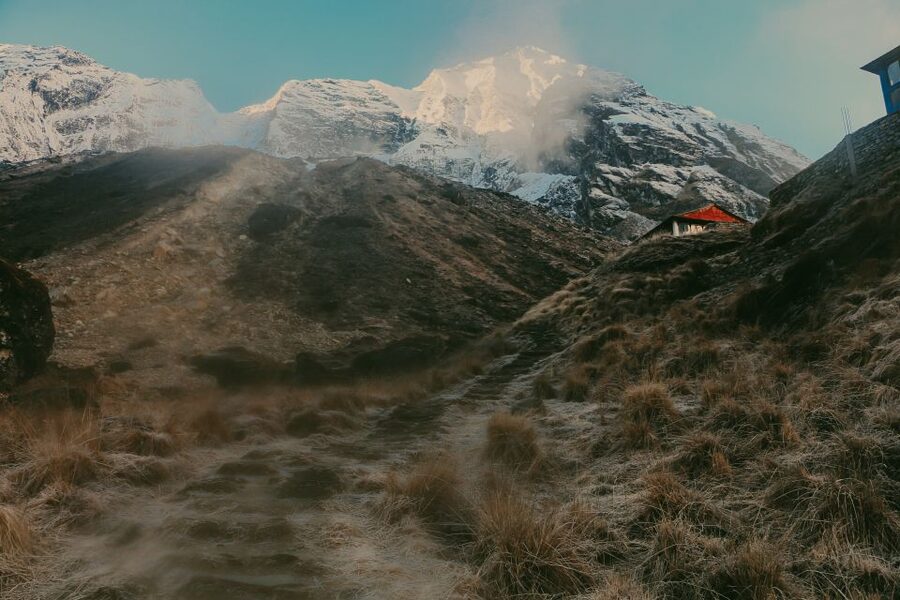
The supplied packing guidance is practical. Bring your passport or ID card, camera, sunscreen, cash, hiking shoes, daypack, jacket, warm and comfortable clothes, hat, socks, sunglasses, and a change of clothes.
The included duffle bag can hold trek items, while your daypack should carry what you need during the day. Keep rain or cold-weather layers accessible rather than buried at the bottom.
Cash matters because personal purchases are not covered. Plan for drinks, water, charging, laundry, showers, and other small costs. The route has accommodation and meal services, but the package does not make every mountain expense disappear.
A porter is optional and costs extra. If you are not used to carrying gear for seven or eight hours, ask about adding one. The guide can help with the arrangement, but you should make that request before departure.
Who should choose this trek?
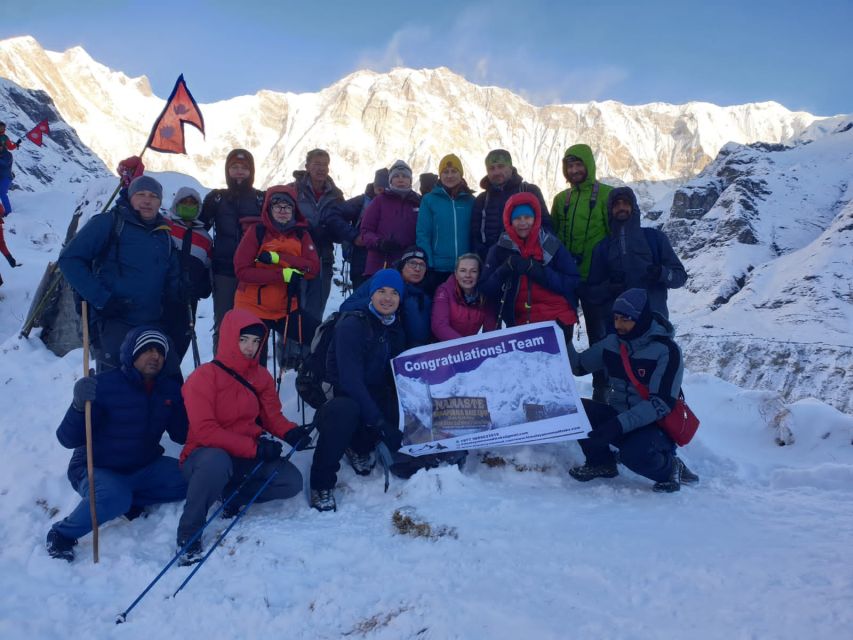
I would recommend the five-day version to a fit hiker with limited time who wants the full Annapurna Base Camp route and accepts long days. The private group format is especially useful for couples, friends, or families who want the pace to fit their own ability.
It is less suitable if you want relaxed mornings, long photo stops, or plenty of spare time for weather delays. The itinerary reaches base camp quickly and then descends in one long push. A seven-day schedule would be the better choice for anyone concerned about endurance, snow, or simply wanting more time in the mountains.
The trek also suits someone who values practical support over luxury. You receive transport, permits, a guide, basic gear, and mountain accommodation, but personal extras remain your responsibility. The hot springs add comfort at the end, but this is still a real trek, not a soft adventure.
Should you book the Annapurna Base Camp trek?
Book it if reaching Annapurna Base Camp is your priority, you have only five days, and you are ready for a demanding schedule. The combination of a private guide, included permits and gear, a base camp overnight, and the Jhinu Dada hot springs gives the trip a strong range of experiences for the price.
Take more time if you can. Five days is efficient but intense, and winter conditions can make the route far tougher than the timetable suggests. Ask about current snow, ice, and trail conditions, decide in advance about meals and a porter, and arrange travel and rescue insurance.
With those points handled, this is a direct, practical way to reach one of Nepal’s best-known mountain destinations from Pokhara.
FAQ
How long is the Annapurna Base Camp trek?
The activity lasts five days. Day 1 includes about three hours by Jeep and four hours of trekking. The trekking times on Days 2, 3, and 4 are about seven, five, and eight hours. Day 5 includes four hours of trekking and three hours by Jeep.
What altitude does Annapurna Base Camp reach?
Annapurna Base Camp is listed at 4,130 meters. The itinerary also includes Deurali at 3,200 meters and Sinuwa at 2,200 meters.
Are meals included?
Meals are included only with the all-inclusive full package. The standard option allows you to purchase meals along the way. Soft drinks, bottled or boiled water, and other personal purchases are not included.
Is a porter included?
No. Porters are not included, but one can be arranged for an additional cost.
Is transportation from Pokhara included?
Yes. Hotel pickup and drop-off are included, along with Jeep transportation specified in the itinerary. The trek begins in Lakeside Pokhara and returns there after the Jhinu Dada hot springs stop.
What languages does the guide speak?
The guide service is available in English, Hindi, and Nepali. The activity is operated as a private group.
More 5-Day Experiences in Pokhara
- Mardi Himal Trek 5 Days
★ 5.0 · 23 reviews - Ghorepani Poonhill Trek 5 Days from Pokhara
★ 5.0 · 14 reviews - 5 Days Adventures Lower Mustang Trip by 4WD Jeep
★ 5.0 · 12 reviews - From Pokhara: 5-Day Mardi Himal Base Camp Trek
★ 5.0 · 10 reviews
More Spas and Hot Springs in Pokhara
- From Pokhara: 5-Day Annapurna Basecamp Trek with Hot Springs
★ 4.9 · 26 reviews - Pokhara: 7-Day Annapurna Base Camp Trek & Natural Hot Spring
★ 5.0 · 11 reviews - Pkr/Kathmandu: 5-Day Annapurna Base Camp & Hot spring Trek
★ 5.0 · 6 reviews - Pokhara: 7-Day Annapurna Base Camp Via PoonHill & Hot Spring
★ 5.0 · 6 reviews
Recently added around Pokhara
- Paragliding in Pokhara★ 5.0 · 3 reviews
- Pokhara:4-Day Ghorepani Poon Hill Guided Trek via Ghandruk★ 5.0 · 3 reviews
- Pokhara: 7-Day Annapurna Base Camp Trek via Ghandruk★ 4.3 · 3 reviews
- Peace & Panorama: Stupa and Pumdikot Scenic Drive Tour★ 3.6 · 3 reviews
- Beautiful Sarankot Sunrise with Full Day Sightseeing in Pokhara★ 4.5 · 3 reviews
- 3 Day Australian Camp Dhampus Ghandruk Easy Trek in Pokhara★ 3.5 · 3 reviews
- Overnight Dhampus Australian Camp Easy Hiking from Pokhara★ 5.0 · 3 reviews
- Kathmandu: 4 Days Pokhara Tour With Himalaya Easy Day Hiking★ 5.0 · 3 reviews
Other Annapurna Base Camp Treks worth a look
Kathmandu to Annapurna Base Camp (ABC) 5-Day Trek
Read our review →