
REVIEW · ANNAPURNA BASE CAMP TREKS
Annapurna Base Camp Trek
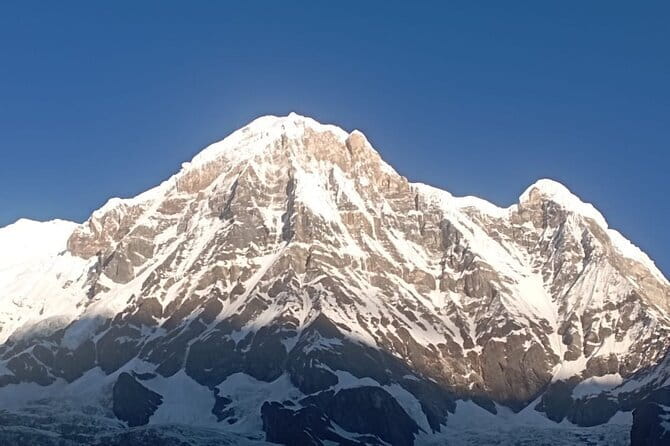
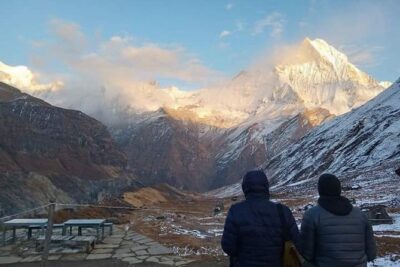
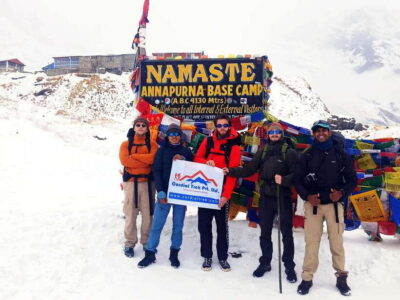
The best part of this seven-day Annapurna Base Camp trek is the steady change in scenery. You begin among terraced farms and Gurung villages, pass through cool rhododendron forest, and finish in a high mountain bowl ringed by Annapurna South, Hiunchuli, and Machhapuchhre, the famous Fish Tail peak.
I like the way the price covers the practical basics: meals, permits, transport, lodging, and a licensed guide. I also like the private format, which gives your group more say in walking pace and daily plans. Guides named Suraj, Laku, Anos, and others have been singled out for careful planning and friendly support.
The main consideration is the pace. This is a serious mountain walk, not a gentle sightseeing tour, and several days involve long climbs or descents. The published schedule also contains some odd time entries, so I would confirm the exact walking hours, pickup point, and number of nights before paying.
Key points at a glance
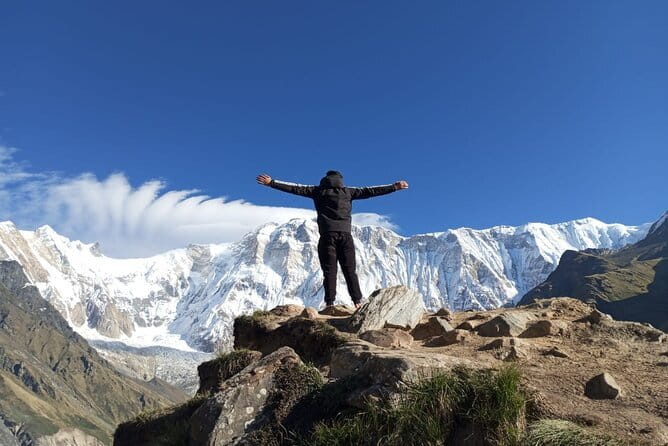
- Reach a 4,130-meter mountain sanctuary: Annapurna Base Camp places you inside a ring of high Himalayan peaks, with sunrise views as the main prize.
- Start among Gurung villages: Ghandruk and Chhomrong bring local settlement, farm paths, and mountain culture into the first days.
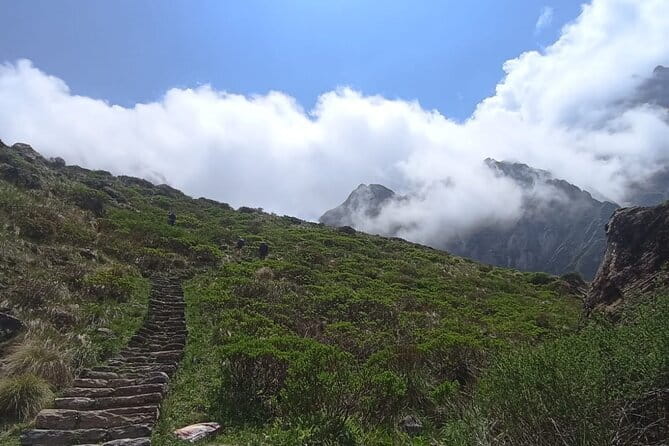
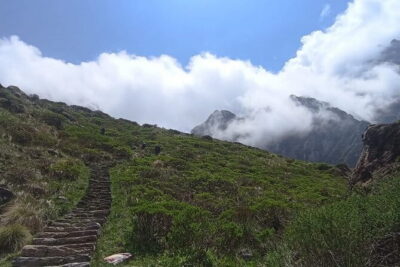
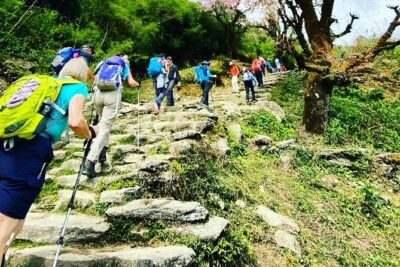
- Walk through changing forest: Terraced fields give way to rhododendron, bamboo, and tall tree cover before the route opens near base camp.
- Return by a different route: Jhinu Danda adds a hot spring stop and breaks up the trip back toward Pokhara.
- Most major costs are included: Seven breakfasts, seven lunches, six dinners, seven nights of lodging, permits, transport, fruit, and a guide are covered.
- Private group format: Only your own group takes part, which can make timing and rest stops easier to manage.
What the Annapurna Base Camp route feels like
This route is attractive because it packs several kinds of Nepal into one short trip. You get a rural start near Pokhara, stone and farm villages, forest trails, river crossings, steep stairways, and then a high alpine finish.
The route begins at Nayapul in the general description, while the day-by-day plan refers to a drive beyond Pokhara toward Ghandruk. That means your actual road approach may be adjusted by the operator. The included transport lists Pokhara to Syauli Bazar and the return from Samrung Khola to Pokhara, so ask for the final vehicle plan before departure.
At the top, Annapurna Base Camp is not simply a viewpoint reached by road. You walk into the sanctuary, with peaks rising around you. Annapurna South, Hiunchuli, and Machhapuchhre are central features of the trip, and the sunrise from base camp is the moment to protect your energy for.
I would describe the difficulty as moderate only in the context of Himalayan trekking. You need good physical fitness, steady footing, and comfort with repeated uphill and downhill walking. The route is private, but private does not mean easy.
More Annapurna Base Camp Treks in Kathmandu
- Annapurna base camp trek 5 Days
★ 5.0 · 252 reviews - Annapurna Base Camp Trek
★ 5.0 · 111 reviews - Kathmandu to Annapurna Base Camp (ABC) 5-Day Trek
★ 5.0 · 102 reviews
Day 1: Pokhara to Ghandruk and the first village trails
After an overnight stay in Pokhara, you have breakfast with views toward the Annapurna range and Machhapuchhre. Then you drive toward the trailhead and begin walking toward Ghandruk, a well-known Gurung village with mountain views and a strong rural setting.
This first day helps you adjust to the rhythm of the trek. The route passes terraced fields and village paths rather than beginning with the most demanding climbs. You get a sense of how people farm these steep hills, and the views are already rewarding.
The listed walking time is about four hours and ten minutes, with no separate admission fee. That makes this a manageable opening day, though road conditions and the actual starting point can affect the schedule.
I like beginning here instead of rushing straight into the high country. You have time to settle into your boots, learn how your guide organizes the day, and see the Annapurna range from a lower elevation.
Day 2: Ghandruk to Chhomrong by ridge and river
From Ghandruk, the trail starts with a gradual section before climbing to Kimrong Danda. This ridge gives you a fine change of angle on the surrounding hills. From there, the route drops through cooler forest toward the Kimrong River and continues through a farm village.
The day finishes at Chhomrong, one of the important settlements on the approach to Annapurna Base Camp. Chhomrong is a useful overnight stop because it marks a clear shift from lower village country toward the sanctuary route.
This is likely one of the more demanding days despite the moderate label. You climb, descend, and climb again, which can tire your knees more than one long uphill stretch. I would keep your pack light and save some energy for the descent.
The published entry shows a very long total duration, so I would not treat that figure as a reliable walking estimate without clarification. The route description itself suggests a full mountain day, not necessarily a 15-hour hike.
Day 3: Chhomrong, Sinuwa, Bamboo, and the forest corridor
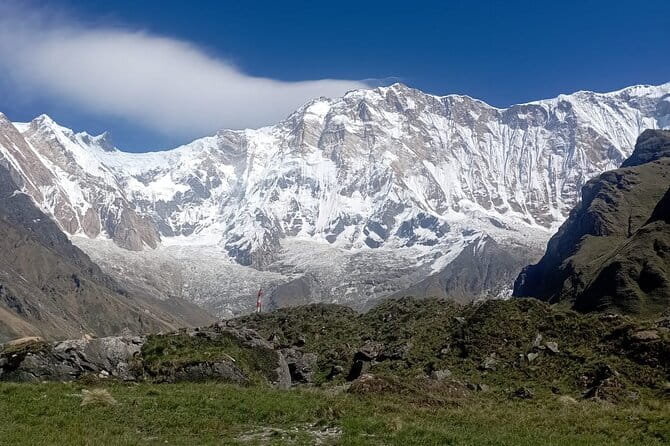
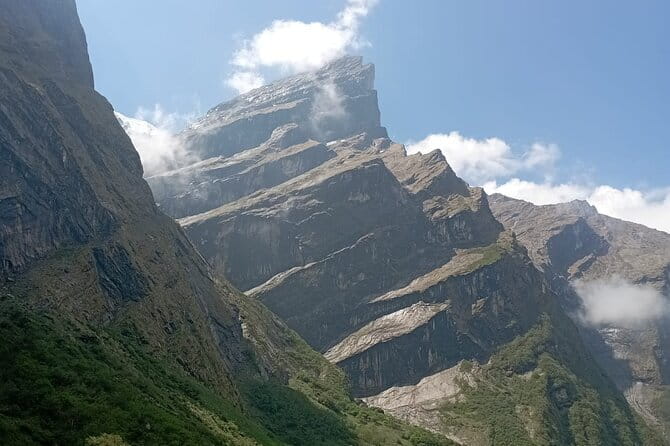
The route leaves Chhomrong by descending to a bridge, then climbs toward Sinuwa Danda. From Sinuwa, the path enters thick forest and follows a winding series of ups and downs toward Bamboo beside the Modi River gorge.
This is one of the most characterful sections of the trek. The forest provides shade and a cooler feel, while the river gorge gives the trail a sense of movement and depth. Bamboo is a practical overnight area on the route, and its position makes it a natural stepping stone toward the higher lodges.
Do not assume this day is easy because it is forested. The trail continues to rise, and the repeated short climbs can add up. You will want water, a snack, and layers that can be adjusted as the temperature changes.
The day is shown with admission included. The more important point is that your permit and TIMS card are already part of the package, so you should not need to arrange those basic route documents yourself.
More Hiking Tours in Kathmandu
- Everest Base Camp Trek – 14 Days
★ 5.0 · 1,499 reviews - Everest Base Camp Trekking
★ 5.0 · 485 reviews - Nagarkot Sunrise View and Day Hiking from Kathmandu
★ 5.0 · 471 reviews - Annapurna Circuit Trek with Tilicho Lake
★ 5.0 · 368 reviews
Day 4: Hinko Cave, Himalaya Hotel, and Annapurna Base Camp
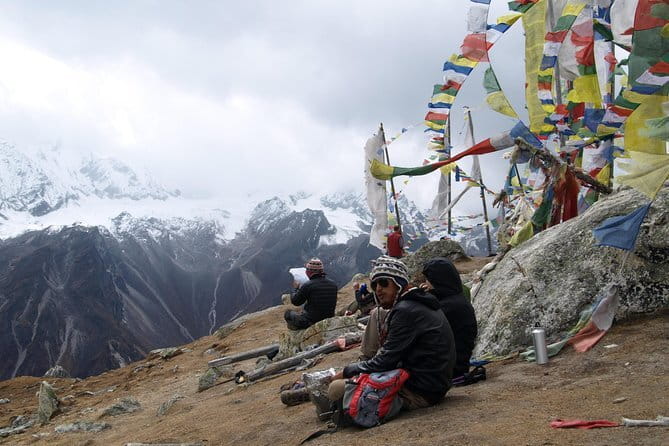
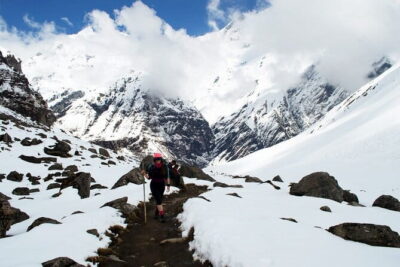
This is the central day of the trip. The trail continues through forest past Himalaya Hotel and the large Hinko Cave, then moves beneath Annapurna South and Hiunchuli toward the base camp area.
The scenery changes sharply here. Tree cover thins, the valley feels more exposed, and the high peaks begin to dominate your view. The route follows the Modi River gorge before reaching the broad mountain setting around Annapurna Base Camp.
This is where the trip earns its name. You are surrounded by high Himalayan walls rather than simply looking at them from a distant valley. The base camp setting gives you time to appreciate the scale of the peaks, glaciers, and surrounding ridges.
The listed duration is about 13 hours, which is another figure I would confirm with the operator. A route day that reaches base camp can be long and tiring, and the exact starting point, weather, trail conditions, and group pace matter greatly.
I would plan to protect the final approach. Walk steadily, eat before you feel weak, and tell your guide early if you are struggling. The guide is there to help with pacing and practical decisions, not just to lead from the front.
Day 5: Sunrise at base camp and the long descent to Bamboo
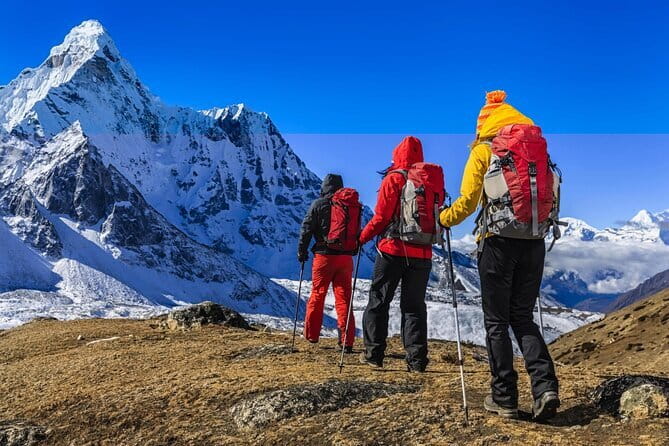
The morning at Annapurna Base Camp is the emotional high point. Sunrise brings light onto the surrounding peaks, and the enclosed mountain setting gives you a memorable final look before the return begins.
Afterward, you descend for roughly six hours, with a few short uphill sections, to Bamboo. The trail returns to taller trees and greener vegetation as you lose height. That change is welcome, but downhill walking can be hard on the legs after the previous day.
The listed stop time says two hours, which does not fit the separate description of a near-six-hour descent. This is exactly the sort of detail I would have confirmed before departure. Ask for the expected start time, overnight location, and walking estimate for this day.
The included meals matter here. After a high-altitude morning and a long descent, having breakfast, lunch, and dinner arranged means you can focus on walking rather than finding food or carrying a full supply.
Day 6: Return to Chhomrong and the Jhinu Danda hot spring

The route heads back toward Chomrong, using a mix of uphill and downhill trail. From the Chomrong hilltop, it turns toward Jhinu Danda, a village on a ridge with broad mountain views.
Jhinu is a smart addition to the return route. The hot spring gives your legs a chance to relax after several hard days, and it adds something different from the mountain scenery. You are not simply retracing every step toward Pokhara.
The exact entry describes the day as about two hours, but the route wording suggests more walking than that may be involved. Treat the time as a rough listing figure rather than a promise. Your guide can explain the actual plan on the trail.
I also like the change in mood here. The base camp days are focused on altitude and peaks. Jhinu brings the trip back toward villages, warmth, and a more relaxed finish.
Day 7: Siwai to Pokhara
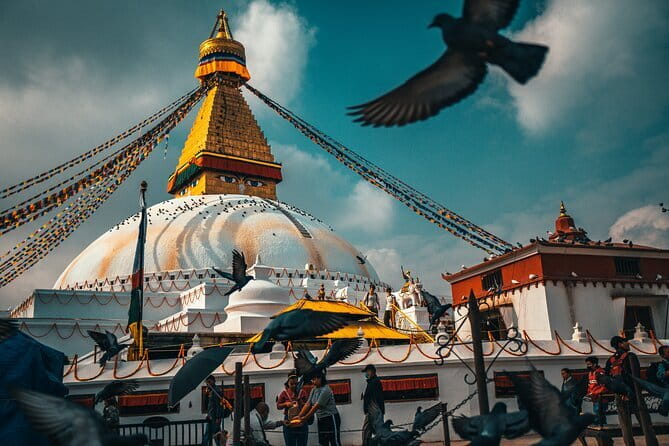
The final walking section leads downhill toward Siwai through lower, warmer farm areas. From Siwai, you take a vehicle for roughly two hours to Pokhara.
This is a pleasant way to finish because the route gradually returns you to farmland and road access. You get one last short walk instead of ending abruptly at a parking area after a long drive.
The Pokhara Museum is listed as the final stop, with about 30 minutes shown. The supplied details do not explain whether a museum visit is a formal part of the schedule or simply a nearby point of interest, so confirm that before counting on entry time.
Transport is included from the return trail area to Pokhara. That is useful value, since arranging a private vehicle after a trek can add cost and delay.
What the $699.67 price covers
At $699.67 per person, the package is priced as a full-service trek rather than a guide-only walk. The included items are substantial:
- A government-licensed mountain guide
- Annapurna Conservation Area Permit and TIMS card
- Transport from Pokhara to Syauli Bazar
- Return ground transport from Samrung Khola to Pokhara
- Seven nights of trekking accommodation
- Seven breakfasts
- Seven lunches
- Six dinners
- Seasonal fruit during the trek
That list gives you a useful way to judge the price. You are paying for the guide, permits, road transfers, food, and lodging in one arrangement. You also avoid the work of coordinating several suppliers in Pokhara.
There are still extra costs. You pay for travel and rescue insurance, bar bills, phone calls, laundry, battery charging, bottled water, hot water, showers, and guide tips. I would budget for these before you arrive, especially if you want regular hot showers or device charging.
One detail deserves clarification: the inclusions say seven nights of accommodation, while the itinerary is presented as seven days. That may reflect a pre-trek or post-trek night, or it may be a simple wording issue. Ask exactly where all seven nights are spent.
Guides, private groups, and the human side
The strongest part of the operation is the guide service. Suraj is repeatedly associated with careful planning, attention to meals and accommodation, steady encouragement, and good companionship. Laku is described as friendly and helpful, with porters named Sonam and Necha supporting one group. Anos is also identified as a considerate and dedicated professional.
You can request a preferred guide or porter in advance, especially during the busy hiking season. That is practical advice, not a guarantee, since availability can change.
The private format means only your own group participates. I like that for a route with changing energy levels. You can discuss a slower morning, extra rest, or a small itinerary adjustment without waiting for a large mixed group.
The operator has also shown flexibility when a group needed a different route. Still, you should agree on changes before departure and ask how any change affects nights, meals, permits, and transport.
Food, lodging, and what you still need to pay for
Three meals a day are included during the trek, along with seasonal fruit. That is a major convenience because the walking days are long and you need regular food. The details do not give a fixed menu, so do not assume particular dishes or dietary arrangements without asking.
Tea-house accommodation is included for seven nights, though the specific properties are not named. Conditions can vary from one stop to another, and the package does not promise private rooms, attached bathrooms, charging, or hot showers. Those services are specifically listed as extra costs where available.
Bring travel and rescue insurance. This is especially important for a high mountain route, even though the trek is described as moderate. The package does not include that protection.
The daily start time is listed as 4:45 a.m. That is an early beginning, and it may suit a long walking day or an effort to reach a viewpoint in good light. Ask which day requires that start and how the time applies to the rest of the schedule.
Who should book this trek
I would choose this trek if you want a compact route to Annapurna Base Camp with the main logistics handled for you. It suits people who value a local guide, included meals, private-group planning, and a return through Jhinu Danda.
You should be comfortable with long days, steep sections, repeated descents, and basic trekking accommodation. Good physical fitness is required, and the operator specifically lists that as an expectation.
I would hesitate if you want a relaxed holiday with short walks, fixed hotel standards, or a highly detailed hour-by-hour plan. The seven-day schedule is efficient, but it leaves less spare time than a slower Annapurna Base Camp itinerary.
The trip is also best for someone who will ask clear questions before departure. Confirm the starting trailhead, daily walking hours, number of nights, guide assignment, porter arrangements, and what the early start time means in practice.
Booking and cancellation details
Pickup is offered, and the meeting time is listed as 4:45 a.m. Confirmation is provided when you book. Service animals are allowed, and the activity is near public transportation.
You can cancel for a full refund up to 24 hours before the local start time. Cancellations or changes made inside that window are not accepted for a refund. The trip may be moved or refunded if poor weather prevents departure or if the minimum number of participants is not met.
Should you book the Annapurna Base Camp Trek?
I would book this trek if reaching Annapurna Base Camp is your main goal and you want permits, food, lodging, transport, and a guide bundled into one price. The route offers a strong mix of village life, forest walking, mountain views, and a hot spring finish.
I would not book it without first resolving the schedule inconsistencies. The listed durations do not always match the route descriptions, and the seven-day itinerary needs clarification alongside the claim of seven nights. Get those details in writing.
Once that is clear, the package looks like a practical value for a fit trekker who prefers a private group and local support. Request a guide such as Suraj, Laku, or Anos if available, keep your expectations realistic about accommodation, and save your best energy for sunrise at base camp.
FAQ
Where does the Annapurna Base Camp Trek begin?
The general route description says the trek starts from Nayapul. The daily plan describes a drive from Pokhara toward Ghandruk, and the included transport lists Pokhara to Syauli Bazar. Confirm the exact trailhead with the operator.
How long does the trek last?
The experience is advertised as approximately seven days. The itinerary has seven listed days, and the inclusions mention seven nights of accommodation.
Is food included?
Yes. Breakfast, lunch, and dinner are included during the trek. The package lists seven breakfasts, seven lunches, six dinners, and seasonal fruit.
Is accommodation included?
Yes. Seven nights of trekking accommodation are included. The specific lodging properties and room arrangements are not provided.
Are permits included?
Yes. The Annapurna Conservation Area Permit and TIMS card are included.
Is transportation included?
Yes. Ground transport from Pokhara to Syauli Bazar and from Samrung Khola back to Pokhara is included.
What happens if bad weather cancels the trek?
If poor weather causes cancellation, you can choose a different date or receive a full refund. A different date, experience, or full refund is also offered if the minimum number of participants is not met.
Recently added around Kathmandu
- Kathmandu Airport Pickup and Drop-off Services★ 5.0 · 3 reviews
- Kathmandu Paragliding★ 5.0 · 3 reviews
- Kathmandu Chandragiri Cable Car and Swayambhunath Private Tour★ 5.0 · 3 reviews
- Explore The Beauty Of Langtang Valley In 8-Days Trek★ 5.0 · 3 reviews
- Kathmandu: Nightlife and Pub Crawl Tour★ 5.0 · 3 reviews
- Mountain Flight Experience in Nepal★ 4.5 · 3 reviews
- Kathmandu: Momo Making Class with a Local Chef★ 5.0 · 3 reviews
- Everest Base Camp Trek★ 5.0 · 3 reviews
Other Annapurna Base Camp Treks worth a look
Kathmandu to Annapurna Base Camp (ABC) 5-Day Trek
Read our review →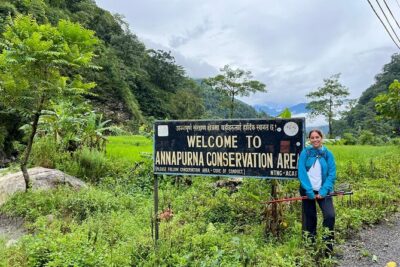
11-Day Hike Tour to Annapurna Base Camp Bliss in Kathmandu
Read our review →This tour also appears in