
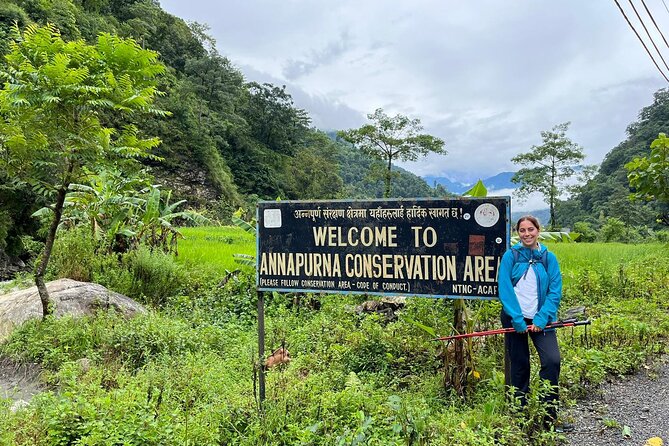
REVIEW · ANNAPURNA BASE CAMP TREKS
Annapurna Base Camp Trek 12 Days
Annapurna Base Camp is the prize here, but the route gives you much more than one famous viewpoint. Over 12 days, you move from Kathmandu to Pokhara, walk through mountain villages and forested hills, rise early for Poon Hill, then reach a high bowl ringed by Himalayan peaks. Poon Hill sunrise and the final approach to Annapurna Base Camp are the two moments I would circle first.
I like that the $800 price covers the practical backbone of the trek: an experienced guide, permits, trail meals, transport, and 11 nights of accommodation. I also like the personal care described by the guides, especially Bhairas Tamang, Prajil, Deepak, Somnath Tripathi, Uttar, and Buddha. Guides are said to adjust their pace, stop when people tire, arrange snacks and tea-house stays, and deal with problems as they arise.
The main consideration is the physical demand. This is rated for moderate fitness, and the route includes steep climbs, rough descents, early starts, and high-altitude walking. A porter costs extra, as do insurance, drinks, Wi-Fi, and personal purchases, so the advertised price is not your total trip budget.
Key points before you book
- Sunrise at Poon Hill: A pre-dawn climb from Ghorepani leads to views of up to 18 Himalayan peaks when the weather is clear.
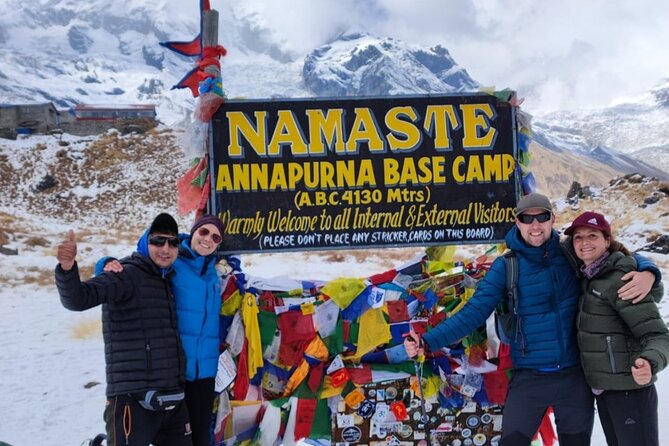
- Annapurna Base Camp at the center: The trek reaches the base camp after passing Machhapuchhre Base Camp, with mountains surrounding the final destination.
- Private group format: Only your group participates, allowing more flexibility than a large scheduled departure.
- Strong guide support: Named guides such as Bhairas Tamang and Prajil are praised for sensible pacing, good organization, humor, and attention to tired hikers.
- Useful inclusions: ACAP, TIMS, and local permits are included, along with trek meals, water purification tablets or drops, and transport between Kathmandu, Pokhara, and the trail.
- Moderate fitness is essential: You need to be ready for repeated uphill and downhill walking, chilly mornings, rugged sections, and an early summit-style day.
What the 12-day route really gives you
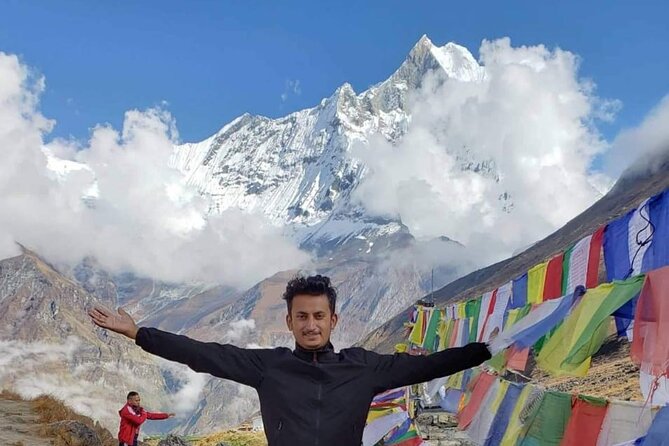
This is a classic short Annapurna Base Camp program with a useful scenic detour to Poon Hill. You do not simply rush toward base camp. The route first gives you time in Pokhara, then introduces you to the hills through villages such as Ghorepani, Tadapani, Chhomrong, and Sinuwa.
That pacing has two benefits. You get a gradual start before the highest days, and you see a range of Himalayan scenery rather than one long climb through the same type of terrain. The tradeoff is that several days involve long transfers or substantial walking, so this is an active holiday from the moment you leave Kathmandu.
The tour is private, which matters. Your group can walk at its own pace, ask questions, and stop when needed. You are still following a set route, but you are not trying to keep up with a bus full of strangers.
More Annapurna Base Camp Treks in Kathmandu
- Annapurna base camp trek 5 Days
★ 5.0 · 252 reviews - Annapurna Base Camp Trek
★ 5.0 · 111 reviews - Kathmandu to Annapurna Base Camp (ABC) 5-Day Trek
★ 5.0 · 102 reviews
Day 1: Airport arrival and a sensible first pause
Your guide meets you at Tribhuvan International Airport and escorts you to the hotel. The first day is deliberately light, with time to rest and prepare for the trek.
That is exactly what you want after an international flight. Use the time to check your clothing, organize your day pack, confirm the next morning’s departure, and recover from the journey. The arrival and departure airport transfers are included, which removes one small but useful worry in Kathmandu.
The provided schedule gives a 6:15 am start time, while the next morning’s guide pickup is listed as 6:30 am. Confirm the exact meeting time with the company before setting your alarm.
Day 2: The long road from Kathmandu toward Pokhara
The guide meets you at your hotel or hostel early in the morning. You walk to the Sorakhutte tourist bus station, with the bus scheduled to leave Kathmandu at 7:00 am. The route passes through Malekhu before continuing toward Pokhara.
This is a road day, not a trekking day. That distinction matters because the bus ride can feel long after an international arrival and an early start. Still, it places you directly into Nepal’s everyday travel rhythm and avoids the cost of a separate domestic flight.
Ground transport from Kathmandu to Pokhara and back is included by tourist bus. If you prefer a faster or more private road journey, this package may feel basic, but the inclusion keeps the overall price down.
Day 3: Pokhara to Nayapul and the trailhead
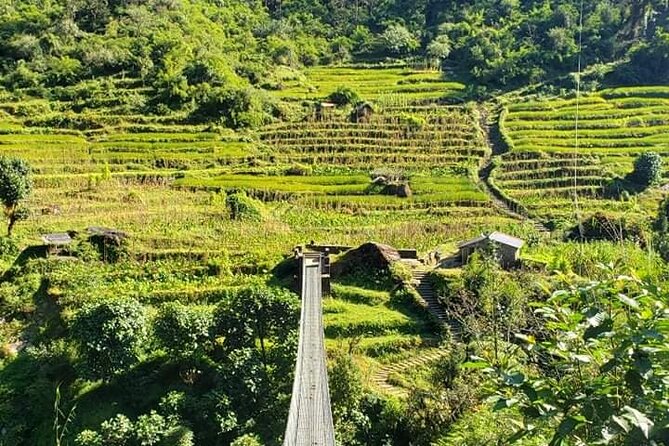
You have breakfast in Pokhara, then continue by car or taxi to the bus park. From there, a shared local bus or jeep takes you toward Nayapul, the trekking starting point. The road journey to Nayapul is described as about one and a half hours.
This is where the trip changes character. You leave the city behind and begin moving through the foothills on foot. The local transport is practical rather than polished, and that is part of the experience. It also means you should keep your day pack organized and your expectations flexible.
Transport from Pokhara to the trek start point is included by private vehicle service, although the route description also refers to a shared local bus or jeep. Ask the operator which arrangement applies to your departure.
More Hiking Tours in Kathmandu
- Everest Base Camp Trek – 14 Days
★ 5.0 · 1,499 reviews - Everest Base Camp Trekking
★ 5.0 · 485 reviews - Nagarkot Sunrise View and Day Hiking from Kathmandu
★ 5.0 · 471 reviews - Annapurna Circuit Trek with Tilicho Lake
★ 5.0 · 368 reviews
Day 4: Your first mountain morning
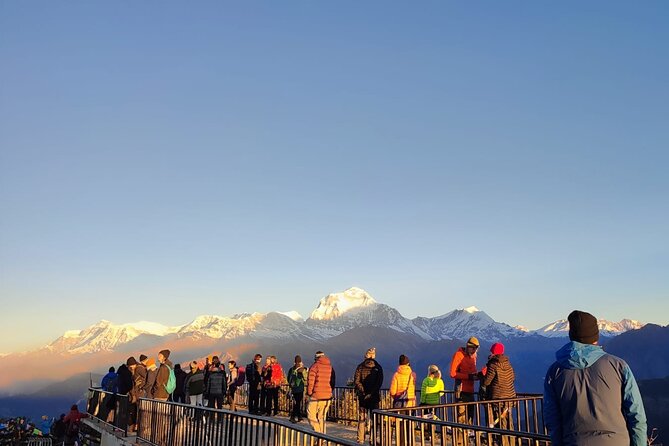
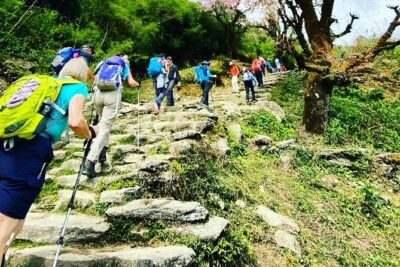
The first fresh morning on the trail brings the sounds of village life: donkeys, goats, hens, and dogs. Breakfast comes with mountain views, including scenery connected with Annapurna.
This is a good reminder that the Annapurna route is not a wilderness-only trek. You walk through inhabited communities where animals, farms, guesthouses, and local routines are part of the day. The noise may wake you earlier than planned, but it also gives the trek a more genuine feel.
The schedule does not give a precise village, distance, or walking time for this day. That makes it difficult to judge the workload from the published outline alone. Ask for the overnight stop and approximate hours before you depart.
Day 5: Poon Hill sunrise from Ghorepani
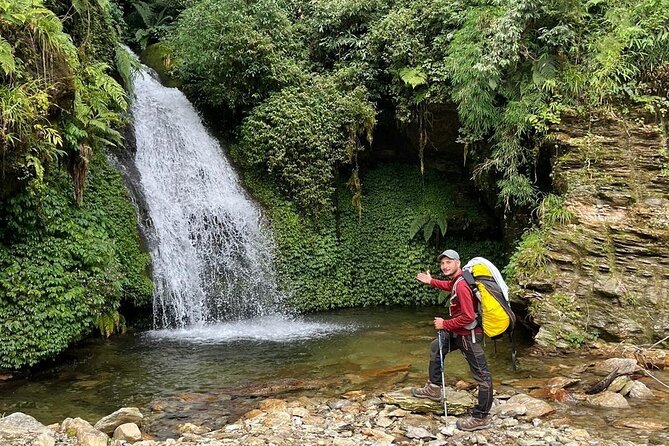
This is one of the defining days. You wake early in the cold and walk for roughly 45 minutes to an hour from Ghorepani to Poon Hill Viewpoint.
The reward is a wide Himalayan panorama at sunrise. In clear conditions, you may count as many as 18 peaks. The exact view depends on cloud and weather, but the early start is worthwhile because morning often gives the best chance of sharp mountain views.
Poon Hill also gives you a strong scenic payoff before the trek reaches its highest point. It is not just a warm-up stop. For some people, this sunrise may be the most immediately memorable view of the trip.
Bring warm layers where you can reach them quickly. The viewpoint is reached before breakfast, and standing still in the cold feels very different from walking uphill.
Day 6: Tadapani, Chhomrong, and the descent to Sinuwa
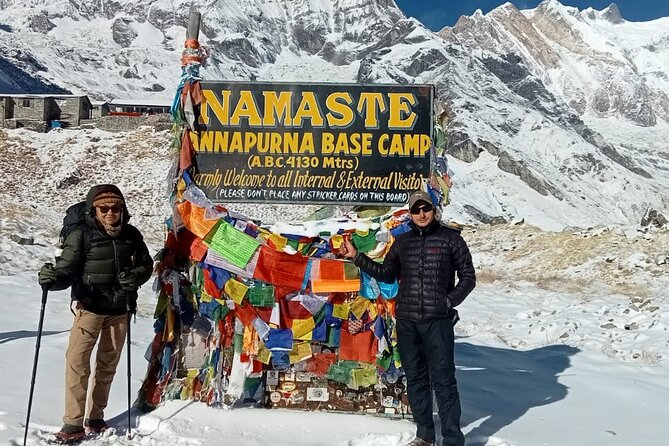
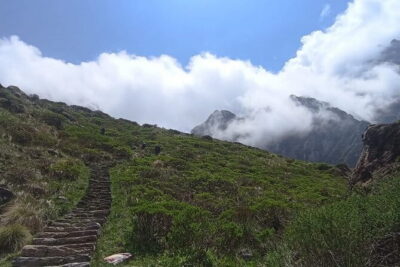
After Tadapani, the trail heads downhill toward Sinuwa. The route passes through Chhomrong, a mountain village with views toward Modi Khola and Chhomrong Khola.
The description calls this hike enjoyable and easy because much of it is downhill. I would still treat that wording carefully. Downhill walking is kinder to your breathing, but it can be hard on knees and thighs, especially after several days on foot.
Chhomrong is an important point in the route because the scenery shifts toward the valleys that lead to Annapurna Base Camp. You pass mountains, waterfalls, and farmland rather than walking through one continuous high-altitude zone. The village setting also gives your guide a chance to check how everyone is handling the route before the harder ascent.
Day 7: Sinuwa to Bamboo and Deurali
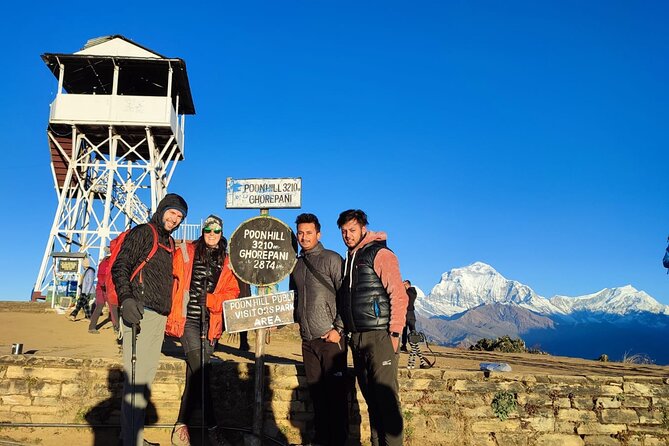
Sinuwa provides another sunrise view over the Himalayas. After breakfast, you begin climbing toward Deurali, with the walk to Bamboo taking about an hour and a half.
From there, you continue closer to Deurali through more rugged mountain terrain. This is a day when steady pacing matters more than speed. You are moving higher, and the next stage of the trek is the approach to the base camp.
The route notes use several place names but do not provide a total walking time or overnight elevation. That missing information is worth clarifying, especially if you have never trekked at altitude. Ask your guide how long the day should take and what symptoms should prompt a slower pace or rest.
Day 8: Machhapuchhre Base Camp to Annapurna Base Camp
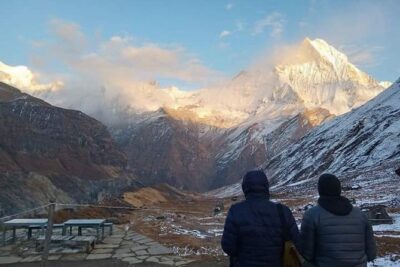
This is the main event. You walk toward Machhapuchhre Base Camp, then continue to Annapurna Base Camp, surrounded by dramatic mountain peaks.
The final destination is not simply a sign or a quick photo stop. The setting is a broad mountain bowl with peaks rising around you, giving the base camp its sense of arrival. The scenery changes as you gain height, and the approach feels more exposed and rugged than the lower village sections.
The route description does not give the exact walking distance or elevation gain for this day. Expect it to feel demanding. Start with enough food and water for the trail, use the purification drops or tablets provided, and let your guide control the pace.
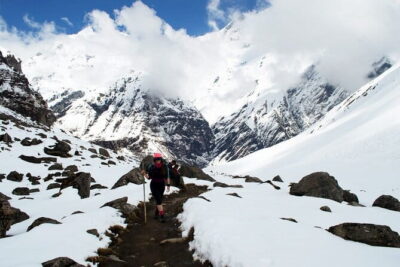
Weather will shape this day more than any other. Cloud can hide the peaks, snow can alter trail conditions, and cold can make a short stop uncomfortable. The company’s stated focus on safety is important here, but no guide can guarantee clear skies or remove mountain risks.
Day 9: Sunrise at base camp and the return to Sinuwa
If the weather is clear, you watch sunrise from Annapurna Base Camp. After breakfast, you retrace the route toward Sinuwa through rough trails and sparsely wooded sections.
The return can be surprisingly tiring. Reversing a route does not make it easy, especially after a high point and an early morning. Rocky sections and repeated descents require care, so this is a day to protect your knees and avoid rushing.
The advantage is that you already know the general direction of the trail. Your guide can focus on safe footing, group pace, and signs of fatigue. Guides associated with this company are repeatedly described as stopping when someone is tired and checking that everyone is all right, which is the kind of practical attention you want on a long return day.
Day 10: Sinuwa to Siwai and back toward Pokhara
The final trekking day takes about two hours to reach Siwai from Sinuwa. The route climbs toward Chhomrong and passes mountain views, waterfalls, and farmland before continuing to the road and transport connection.
It is a short walking day compared with the base camp approach, but do not think of it as an empty formality. The last trail section gives you a final look at the villages and valleys that shaped the route. It also marks the return from foot travel to vehicle travel.
Private transport from the trek ending point to Pokhara is included. Once in Pokhara, you can rest, wash, eat, and enjoy the city’s lake setting. Lunch and dinner in Pokhara are not included, so budget separately for those meals.
Day 11: Pokhara to Kathmandu and a free afternoon
After breakfast, you return from Pokhara to Kathmandu by tourist bus. The rest of the day is free for resting or shopping, followed by a farewell dinner in the evening.
The return road trip can again be lengthy, so keep this day flexible. Do not schedule a tight international connection after it. The free time is useful for buying small gifts, organizing luggage, or simply doing very little after the trek.
Breakfast is included on this day. Lunch and dinner in Kathmandu are not included except for the stated farewell dinner, so check exactly what the farewell meal covers.
Day 12: Airport transfer and departure
The trek ends in Kathmandu, with the team taking you to the airport for your onward flight. Airport departure transfer is included.
Because the schedule ends on departure day, you should avoid booking a flight that requires a long cross-city transfer or complicated same-day plans without confirming timings. The company provides the drop-off, but your airline schedule and airport requirements remain your responsibility.
What the $800 price covers
At $800 per person, this is a solid package price if you would otherwise need to arrange the trip piece by piece. The fee includes:
- Airport transfers on arrival and departure
- Tourist bus transport between Kathmandu and Pokhara
- Transport between Pokhara and the trail
- 11 nights of accommodation
- An experienced guide
- Breakfast, lunch, and dinner during the trek
- Tea and coffee during the trekking portion
- ACAP, TIMS, and local permits
- Trekking map
- Water purification drops or tablets
- Government taxes and applicable official fees
The inclusions are strongest in the areas that can become expensive or confusing: permits, transfers, and trail meals. Having one guide coordinate the road connections and village stays also makes the trip easier for a first Himalayan trek.
Several costs remain outside the package. International flights, a Nepal entry visa, emergency rescue and evacuation insurance, drinks, snacks, bottled water, beer, juice, Wi-Fi, and personal purchases are extra. A porter is also optional and costs more, while tips for the guide are expected.
I would not book this trek without insurance that covers emergency rescue and evacuation. The tour provider specifically excludes that protection, and Himalayan conditions can change quickly.
Guide support and the private-group advantage
The human side of this trek matters as much as the route. The named guides include Bhairas Tamang, Prajil, Deepak, Somnath Tripathi, Uttar, and Buddha. Specific strengths associated with the guiding team include clear organization, humor, good pacing, help with problems, and attention to personal well-being.
That does not mean every departure will have the same guide. Ask who will lead your group before you confirm, and ask about guide-to-group arrangements if you are bringing a larger party.
A private tour is useful for mixed-ability groups. A guide can stop when one person needs a break instead of forcing everyone to follow a fixed large-group pace. You still need to be honest about your fitness, since private guiding does not make the trail flat.
Food, lodging, and practical comfort
The package includes 11 nights of accommodation, but the exact hotels and tea houses are not specified. On the trail, you should expect basic mountain lodging rather than city-hotel comfort, though the company places importance on arranging good tea-house stays.
Breakfast, lunch, and dinner are included during the trek, along with tea and coffee. Drinks, snacks, beer, juice, bottled water, and Wi-Fi are not included, so carry some cash for personal purchases.
Water purification drops or tablets are supplied. That is useful, but you still need a refill plan and should ask your guide where water will be available each day.
Who should choose this trek?
I would recommend this route to someone who wants a guided first Himalayan trek with a famous destination, a private group, and most major trail costs bundled together. It suits hikers who can manage repeated uphill and downhill walking and who are comfortable with early mornings, basic lodging, and changing mountain conditions.
It may be less suitable if you want a leisurely holiday, private luxury transport throughout, or a detailed published breakdown of every walking hour and overnight elevation. The itinerary provides the main route but leaves some daily distances and accommodation details open.
The best preparation is simple: build walking fitness before arrival, practice carrying a day pack, bring layers for cold mornings, and keep your schedule flexible. You will get more from the route if you treat the journey itself as part of the reward, not just a path to the base camp sign.
Should you book the Annapurna Base Camp Trek?
Book it if you want a well-supported, value-focused 12-day route that combines Poon Hill, Pokhara, village walking, and Annapurna Base Camp. The price includes the guide, permits, meals on the trail, accommodation, and key transport, which makes planning much easier.
Before paying, confirm the exact day-by-day walking hours, overnight villages, accommodation standard, transport arrangement from Pokhara to Nayapul, and assigned guide. Also arrange rescue insurance and budget for a porter, drinks, tips, and meals outside the trek.
If you are fit enough for a moderate trek and prefer personal guide support over a large group, this is a sensible Annapurna package. If you need a slow itinerary or higher comfort, ask for a customized version instead.
FAQ
Where does the Annapurna Base Camp Trek start?
The experience begins with airport pickup at Tribhuvan International Airport in Kathmandu, Nepal. The trekking portion starts after transport from Pokhara toward Nayapul.
How long does the trek last?
The full experience lasts approximately 12 days, including arrival in Kathmandu, transport between Kathmandu and Pokhara, the trek, and departure from Kathmandu.
Is airport pickup included?
Yes. Arrival and departure airport transfer services are included.
Is transportation between Kathmandu and Pokhara included?
Yes. Ground transportation between Kathmandu and Pokhara is provided by tourist bus.
Are trekking permits included?
Yes. The price includes ACAP, TIMS, local permits, applicable official expenses, and government tax or VAT.
Are meals included?
Breakfast, lunch, dinner, and tea or coffee are included during the trekking portion. Breakfast is also listed for the wider tour, while lunch and dinner in Kathmandu and Pokhara are not included, apart from the stated farewell dinner.
Is this a private tour?
Yes. Only your group participates in the activity.
What fitness level is required?
A moderate physical fitness level is required. The route includes uphill and downhill walking, early starts, rugged trails, and trekking to Annapurna Base Camp.
Recently added around Kathmandu
- Kathmandu Airport Pickup and Drop-off Services★ 5.0 · 3 reviews
- Kathmandu Paragliding★ 5.0 · 3 reviews
- Explore The Beauty Of Langtang Valley In 8-Days Trek★ 5.0 · 3 reviews
- Kathmandu Chandragiri Cable Car and Swayambhunath Private Tour★ 5.0 · 3 reviews
- Kathmandu: Nightlife and Pub Crawl Tour★ 5.0 · 3 reviews
- Kathmandu: Momo Making Class with a Local Chef★ 5.0 · 3 reviews
- Mountain Flight Experience in Nepal★ 4.5 · 3 reviews
- Everest Base Camp Trek★ 5.0 · 3 reviews
Other Annapurna Base Camp Treks worth a look
Kathmandu to Annapurna Base Camp (ABC) 5-Day Trek
Read our review →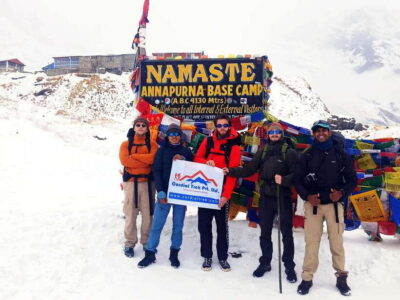
11-Day Hike Tour to Annapurna Base Camp Bliss in Kathmandu
Read our review →This tour also appears in