
REVIEW · ANNAPURNA BASE CAMP TREKS
Annapurna Base Camp Trek
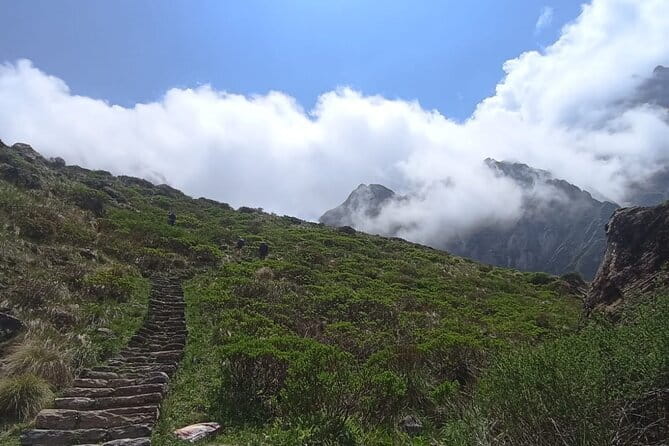
The Annapurna Base Camp trek packs a lot into two weeks: Poon Hill sunrise, rhododendron forests, Gurung villages, suspension bridges, and a high mountain bowl ringed by Annapurna, Machhapuchhre, Gangapurna, and Hiunchuli. You hike for roughly four to seven hours a day, with Green Valley Nepal handling guides, lodging, meals, and transport.
I like the small maximum group of 10, which gives you a better chance of getting useful help on steep steps or when altitude slows you down. I also like the route’s variety, from the bus ride and village trails to the peaceful forest near Himalaya and the natural hot springs at Jhinu Danda.
The main catch is the physical demand. This is a moderate high-altitude trek, not a gentle sightseeing holiday, and some days include long climbs and descents on stone steps. Lunch and dinner in Kathmandu and Pokhara are also at your own expense.
Key points to know before booking
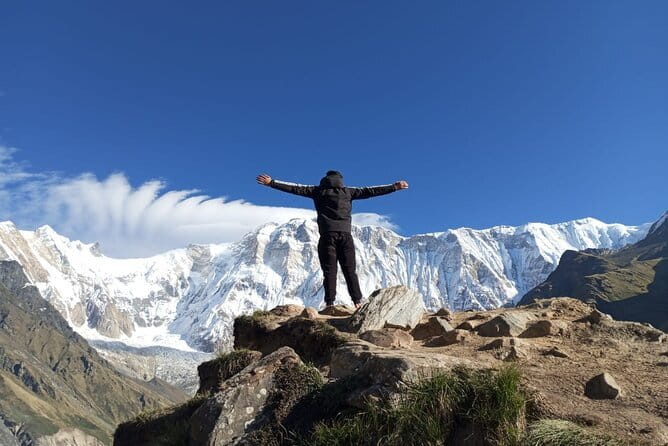
- Poon Hill adds a superb early-morning viewpoint at 3,210 meters, with a short hike of about 45 minutes.
- The group is limited to 10 people, allowing more personal attention than a large trekking departure.
- Trek meals and lodging are included, with 13 breakfasts, 10 lunches, and 10 dinners listed.
- The route reaches Annapurna Base Camp, after a demanding approach through bamboo and rhododendron forests.
- Jhinu Danda offers a natural hot-spring stop, a welcome break after several days on foot.
- Airport pickup and shared transfers are arranged, including the long road journey between Kathmandu and Pokhara.
What the $925 price really covers
At $925 per person, this is not simply a guided walk. The price bundles a 14-day plan with airport pickup, shared transport, a professional guide, hotels in Kathmandu and Pokhara, teahouse accommodation during the trek, listed meals, and taxes and handling charges.
That matters in Nepal. A trek involves more moving parts than a normal multi-day tour. You need road transfers, mountain lodging, food arrangements, route decisions, and a guide who knows where the trail goes. This package takes those tasks off your hands.
The meal allowance is generous during the walking section. You receive 13 breakfasts, 10 lunches, and 10 dinners, though lunch and dinner in Kathmandu and Pokhara are not included. Plan a separate food budget for those city stays.
The shared transfer setup keeps the price reasonable, but it also means you are not paying for a private vehicle at every stage. The Kathmandu to Pokhara road trip is scheduled as a tourist-bus journey, taking about six hours, with lunch along the way. If you value privacy and speed, this may feel basic. If you want a practical package at a controlled price, it makes sense.
Accommodation is described as hotels in Kathmandu and Pokhara, then teahouses along the trail. Teahouses are part of the character of this route, but you should expect functional mountain lodging rather than city-hotel comfort. The available information does not specify room arrangements, bathroom setups, or heating, so ask Green Valley Nepal for those details before paying.
More Annapurna Base Camp Treks in Kathmandu
- Annapurna base camp trek 5 Days
★ 5.0 · 252 reviews - Annapurna Base Camp Trek
★ 5.0 · 111 reviews - Kathmandu to Annapurna Base Camp (ABC) 5-Day Trek
★ 5.0 · 102 reviews
Days 1 and 2: Kathmandu arrival and the road to Pokhara
Your trip begins at Tribhuvan International Airport in Kathmandu. An airport representative meets you and takes you to your hotel by private tourist vehicle. You can rest after your flight or visit the company office for a detailed briefing.
That first meeting is useful. You have a chance to check the schedule, ask about the walking days, and sort out any last questions before leaving the capital. The arrival day is otherwise light, which is sensible after an international flight.
On Day 2, you leave after breakfast for Pokhara. The distance is listed as 200 kilometers, but road travel in Nepal is measured more by conditions than by the number on the map. The journey takes about six hours by tourist bus, with a lunch stop in the middle.
Pokhara is a pleasant staging point, and the overnight guesthouse gives you a break before the trail begins. The drawback is the long bus ride. Do not mistake this day for a quick transfer. It is a full travel day, and motion-sensitive passengers should prepare accordingly.
Days 3 and 4: Nayapool, Ulleri, and Ghorepani
From Pokhara, the drive to Nayapool takes about an hour. This is where the walking starts, first along the Modi River and then toward Birethani, a village with plenty of small teahouses along the route.
The trail gives you an immediate taste of village life. You are not just walking through trees toward a mountain viewpoint. You pass homes, local tea stops, and working communities, with the route gradually changing from road access to foot travel.
The next section begins from Ulleri and climbs more gently through rhododendron and oak forest toward Banthanti and Ghorepani. The word gently deserves a little caution. The route may be less severe than the hardest portions ahead, but the trek still includes steady elevation gain and mountain steps.
Ghorepani is popular because of its access to Poon Hill. It is also a key rest point before the high trail toward Annapurna Base Camp. Teahouse availability is included, so you do not need to search for a bed after arriving, though the exact property is not specified.
Day 5: Sunrise at Poon Hill
Poon Hill is one of the strongest reasons to choose this version of the Annapurna trek. The morning walk takes about 45 minutes and reaches 3,210 meters, making it a manageable outing in distance but a serious one in cold, early conditions.
From the top, you get the route’s best designated viewpoint and a broad mountain panorama. It is especially appealing if you enjoy photography, but the view is not the only point. The early start lets you see the mountains in changing light before returning for breakfast and continuing the route.
You should treat this as part of the trek, not as a free extra. At altitude, even a short uphill walk can feel harder than expected. Bring warm layers, a headlamp if your guide recommends one, and enough patience for a slow ascent.
The available schedule does not spell out every overnight point after Poon Hill, so confirm the exact Day 5 walking plan and lodging before departure. The following day begins at Tadapani, which indicates that the route continues through the mountain villages after the viewpoint.
More Hiking Tours in Kathmandu
- Everest Base Camp Trek – 14 Days
★ 5.0 · 1,499 reviews - Everest Base Camp Trekking
★ 5.0 · 485 reviews - Nagarkot Sunrise View and Day Hiking from Kathmandu
★ 5.0 · 471 reviews - Annapurna Circuit Trek with Tilicho Lake
★ 5.0 · 368 reviews
Days 6 and 7: Tadapani, Chhomrong, and Bamboo
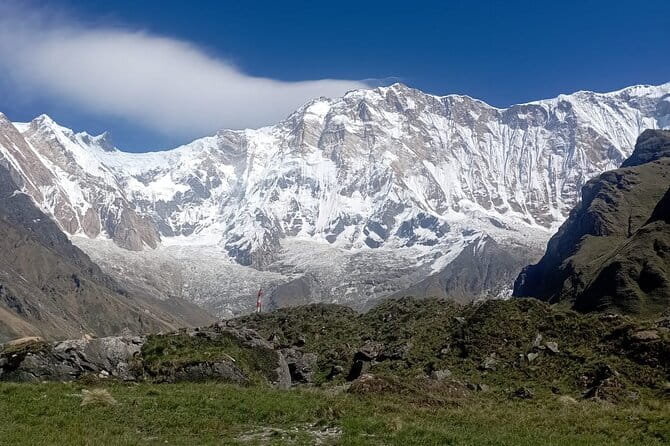
From Tadapani, the trail drops gradually through rhododendron forest. You cross the Kimsung River, climb toward the Gurung village of Gurjung, and then make a direct ascent to Chhomrong.
This is a good example of the route’s rhythm. You lose elevation, cross a river, and then regain it. The map may make the distance look modest, but repeated climbs and descents are what make Himalayan trekking tiring. Take the guide’s pace seriously instead of racing early in the day.
Chhomrong sits across a hillside with views toward the Annapurna peaks and Machhapuchhre. It is a scenic place to pause, but it also introduces one of the route’s more demanding trail features: stone steps.
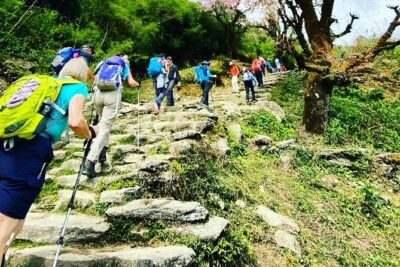
From Chhomrong, the steps descend to Chhomrong Khola. You cross a suspension bridge, then climb steeply to Sinuwa. After forest walking, an easier downhill stretch brings you to Bamboo.
This section can test your knees more than your lungs. Downhill steps are not always easier than uphill ones, especially after several days of walking. Trekking poles would be useful, though they are not listed among the inclusions, so ask what equipment you need to supply yourself.
Days 8 and 9: Quiet forest, Deurali, and the approach to base camp
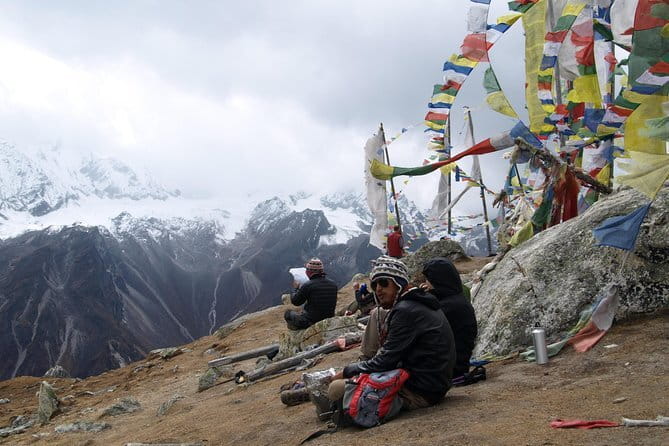
The walk from Dovan toward Himalaya is described as especially quiet. Loud noise is discouraged because of a temple along the way, and the forest changes from bamboo to rhododendron as you continue.
That quiet section is one of the route’s more appealing details. It is a reminder that the Annapurna trek is not just a march between famous viewpoints. The forest, river crossings, village paths, and mountain customs all shape the experience.
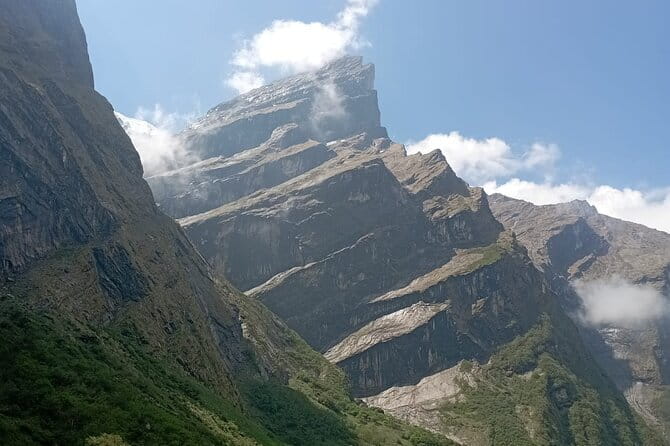
From Deurali, the trail passes through a river bed before a tiring climb to Machhapuchhre Base Camp. The surroundings become more dramatic as the trail enters a high mountain setting, with peaks enclosing the route on several sides.
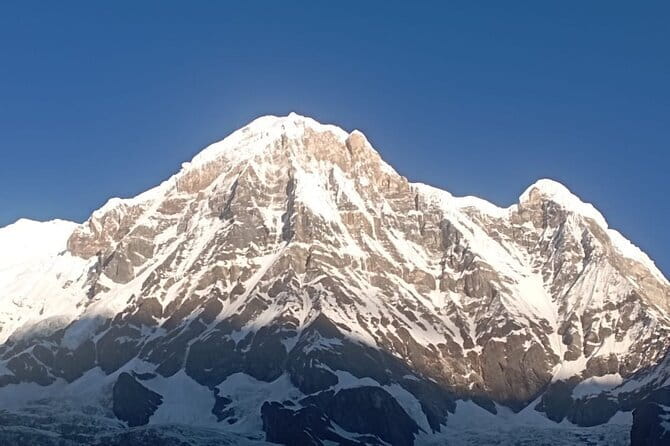
At Machhapuchhre Base Camp, you are surrounded by Annapurna, Machhapuchhre, Gangapurna, Hiunchuli, and other high summits. The itinerary then continues to Annapurna Base Camp, the main goal of the trek.
This is likely the most demanding section. You are higher, the climb is described as tedious, and the weather can affect the experience. The tour requires good weather, and the operator may offer a different date or full refund if poor conditions force cancellation. That policy is useful, but it does not remove the need to prepare for cold, fatigue, and changing mountain conditions.
Day 10: Sunrise at Annapurna Base Camp and the long return
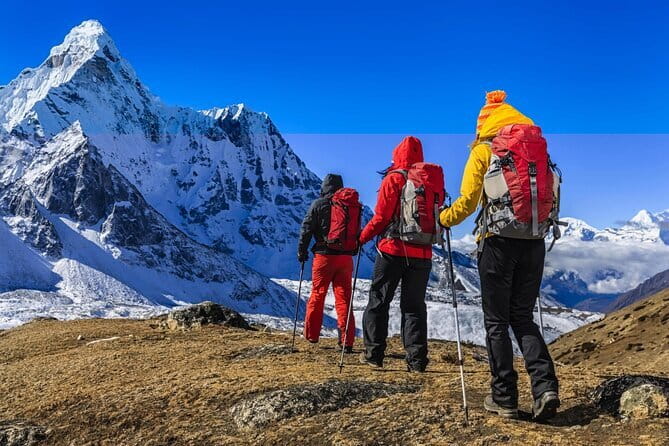
The reward comes with a sunrise view from Annapurna Base Camp. Afterward, you retrace the trail through Machhapuchhre Base Camp, Deurali, Himalaya, and Bamboo, continuing down to Sinuwa.
The return route is mostly downhill, which makes it easier in terms of breathing but not necessarily easy on your legs. A long descent after reaching base camp can be tiring, especially if you lingered for sunrise and started walking early.
Still, retracing the trail has an advantage. You recognize places that looked unfamiliar on the way up, and the change in direction gives you new views of valleys and peaks. It also removes the stress of navigating a new route on the way out.
Days 11 and 12: Chhomrong and the Jhinu Danda hot springs

The route returns toward Chhomrong, a hillside village with views of the Annapurnas and Machhapuchhre. The schedule specifically includes a lunch stop there, giving you time to rest before continuing.
The next listed stop is Jhinu Danda. About 20 minutes from the hotel, natural hot-spring pools sit beside the Modi River. This is a smart addition to the route. After days of climbing and descending, soaking your legs can feel far better than another viewpoint or hurried village visit.
The hot springs are not a luxury spa. They are a natural outdoor bathing stop, and the itinerary says you could take a bath there. Bring suitable swimwear and a small towel if you plan to use the pools. The exact bathing arrangements are not provided, so keep expectations simple.
Days 13 and 14: Malekhu and a brief Kathmandu stop
Day 13 includes a lunch stop at Malekhu, known for fish and fish products. The stop lasts about 30 minutes, so think of it as a practical road break rather than a full culinary visit.
By Day 14, you return toward Kathmandu and pass Pashupatinath Temple. The planned stop is only about five minutes for photographs, and admission is not included. That timing means you should not expect a temple tour or extended visit.
This final day is mainly about getting back to Kathmandu. The itinerary provides a useful connection between the trek and the airport or a later stay, but it is not designed as a full cultural tour of the capital.
Guides, group size, and the human side of the trek
The maximum group size is 10. That is small enough for a guide to notice when you are struggling, feeling unwell, or simply walking at a different pace from the rest of the group.
Green Valley Nepal’s team has included guides named Krishna, Tulsi, Anil, Suvi, and others on different departures. You should not assume a particular guide will lead your trip, but these names are useful when asking how guide assignment works.
The human support is especially important on a high-altitude route. One participant was able to request a porter after arriving and changing their mind the night before. A porter is not listed in the standard inclusions, so treat that as a possible extra arrangement, not something guaranteed in the $925 price.
Guide communication also seems to be a strong part of the service. Arjun has handled itinerary details and questions for some departures. Again, ask who your direct contact will be and what support is included before the trek starts.
Who should book this trek?
You should consider it if you want a structured Himalayan trek without arranging every hotel, meal, transfer, and trail day yourself. It suits active people who are comfortable hiking four to seven hours daily and who accept that high altitude makes moderate routes feel harder.
It is also a good fit if you want more than a single mountain objective. Poon Hill gives you an early scenic highlight, while the trail adds forests, Gurung villages, suspension bridges, river valleys, and the hot springs at Jhinu Danda.
I would hesitate if you dislike long bus rides, shared transport, basic teahouse lodging, or repeated uphill and downhill walking. I would also ask for a precise packing list, altitude plan, room details, and the exact overnight schedule before booking, since those points are not fully specified.
Confirmation is provided at booking. Children must travel with an adult, and the activity calls for moderate physical fitness. Free cancellation is available up to 24 hours before the local start time. Inside that window, there is no refund, and weather-related cancellation brings a choice of another date or a full refund.
Should you book the Annapurna Base Camp trek?
Book this trek if you want a carefully arranged 14-day route with a small group, strong mountain scenery, and a clear focus on walking rather than sightseeing by vehicle. The combination of Poon Hill, Annapurna Base Camp, village trails, and Jhinu’s hot springs gives you a satisfying range of experiences for the price.
Before committing, confirm the guide, porter options, teahouse standards, detailed day-by-day overnight plan, and what happens if altitude affects your pace. If those answers suit you, $925 is a fair package price for the transport, guide, accommodation, meals, and route support included.
FAQ
Where does the Annapurna Base Camp trek start?
The experience starts with pickup at Tribhuvan International Airport in Kathmandu, Nepal.
How long does the trek last?
The full experience lasts approximately 14 days.
How large is the group?
The group has a maximum of 10 participants.
Is airport pickup included?
Yes. An airport representative meets you at Tribhuvan International Airport and arranges transport to the hotel.
Is transportation included?
Yes. Accommodation as listed, round-trip shared transfers, and the professional guide are included.
Are meals included?
Breakfast is included for 13 meals, lunch for 10 meals, and dinner for 10 meals. Lunch and dinner in Kathmandu and Pokhara are not included.
Where do you stay?
Accommodation is in hotels in Kathmandu and Pokhara, and in teahouses during the trek.
Is Poon Hill part of the route?
Yes. The itinerary includes a hike to Poon Hill at 3,210 meters, with the walk taking about 45 minutes.
Does the route include Annapurna Base Camp?
Yes. The trek continues from Machhapuchhre Base Camp to Annapurna Base Camp, followed by a sunrise visit and a return along the same general trail.
Can you cancel for a full refund?
You can cancel at least 24 hours before the experience start time for a full refund. Cancellations or changes made within 24 hours are not accepted for a refund.
Recently added around Kathmandu
- Kathmandu Paragliding★ 5.0 · 3 reviews
- Kathmandu Airport Pickup and Drop-off Services★ 5.0 · 3 reviews
- Explore The Beauty Of Langtang Valley In 8-Days Trek★ 5.0 · 3 reviews
- Kathmandu Chandragiri Cable Car and Swayambhunath Private Tour★ 5.0 · 3 reviews
- Kathmandu: Nightlife and Pub Crawl Tour★ 5.0 · 3 reviews
- Mountain Flight Experience in Nepal★ 4.5 · 3 reviews
- Kathmandu: Momo Making Class with a Local Chef★ 5.0 · 3 reviews
- Everest Base Camp Trek★ 5.0 · 3 reviews
Other Annapurna Base Camp Treks worth a look
Kathmandu to Annapurna Base Camp (ABC) 5-Day Trek
Read our review →
11-Day Hike Tour to Annapurna Base Camp Bliss in Kathmandu
Read our review →This tour also appears in