REVIEW · ANNAPURNA BASE CAMP TREKS
Pokhara: 7-Day Annapurna Base Camp Trek & Natural Hot Spring
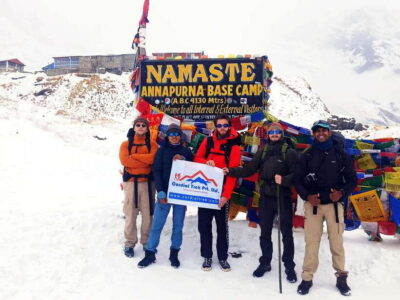
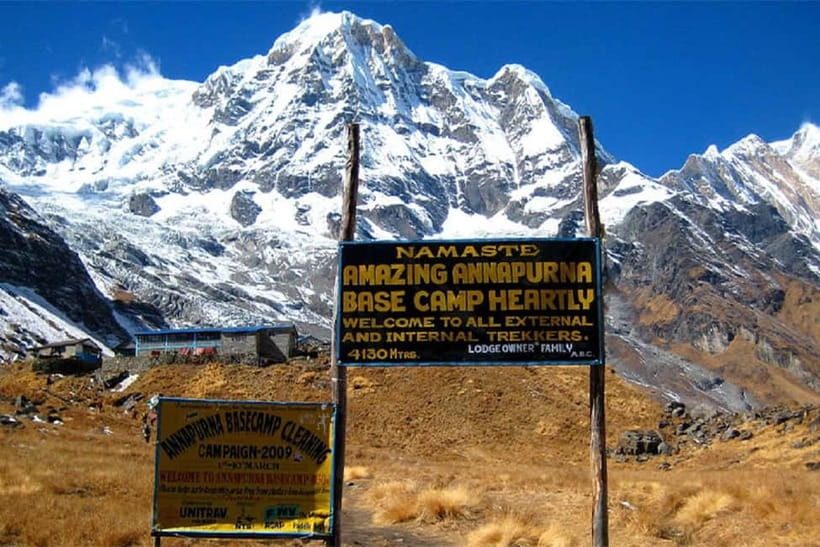
Annapurna Base Camp is the prize here, but the route earns it honestly. In seven days you walk from Pokhara through Gurung villages, terraced hills, rhododendron and bamboo forests, then into the Annapurna Sanctuary, a mountain amphitheater ringed by enormous peaks. At 4,130 meters, base camp feels like a real achievement, not a quick photo stop.
I like the compact route and the way it mixes village life with serious mountain walking. I also like the finish: after the long descent, you can soak in the natural hot springs at Jhinu Danda. The main consideration is effort. Six to seven hours of walking on several days, with plenty of stone steps and altitude gain, is demanding, and the final road sections can be dusty.
Key points before you book
- Base camp at 4,130 meters: You spend a night inside the Annapurna Sanctuary, surrounded by high Himalayan peaks.
- A varied seven-day route: Expect Gurung villages, farmland, forests, waterfalls, river valleys, and alpine scenery.
- Experienced named guides: Chandra, Bishnu Giri, Anil, Sun, Laxman, and Jeet Bahadur have all led this route, with strong praise for care, safety, and local insight.
- Tea house accommodation: Nights are spent in simple lodges, giving you a direct taste of trekking life in Nepal.
- Hot springs at Jhinu Danda: The reward comes after the descent, with time for a natural hot spring bath.
- Good value at $181: Permits, guide costs, basic lodging, transport, and some meals are included, but check the selected option and budget for a porter, snacks, insurance, and emergencies.
Why this seven-day trek works
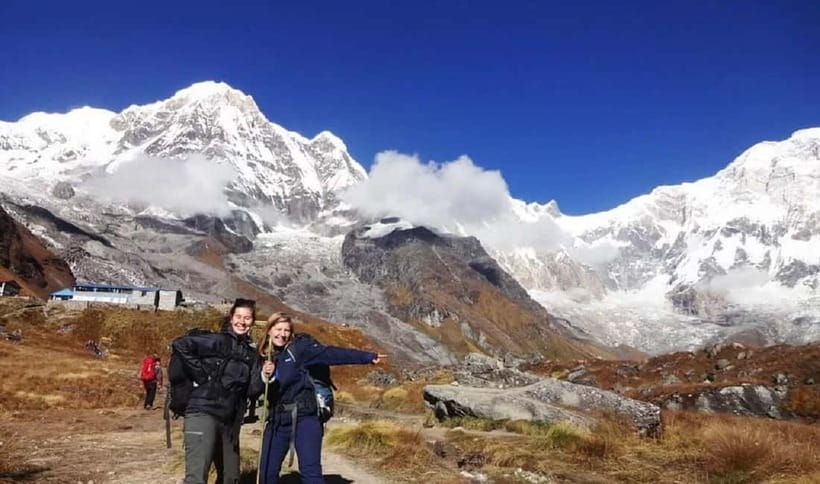
This is one of Nepal’s best short treks for someone who wants a true Himalayan objective without committing to two weeks on the trail. The route is direct: start near Pokhara, climb through the Modi Khola valley, reach the base camp, then retrace part of the route down to Jhinu Danda.
That compact design is both its strength and its limit. You get a great deal of scenery in one week, but the walking days are not gentle. The route gains altitude steadily, and Day 4 takes you from Himalaya to Machhapuchhre Base Camp and then onward to Annapurna Base Camp in six to seven hours.
I would choose this trek if you are reasonably fit, comfortable walking for most of a day, and keen to sleep in basic mountain lodges. It is less suitable if you want short walks, private bathrooms, or a slow schedule with plenty of spare days.
The private-group format is useful. You are not tied to a large party moving at one fixed pace, and the guide can pay closer attention to how you are handling the climb. Chandra, Bishnu Giri, Anil, Sun, Laxman, and Jeet Bahadur are among the guides associated with this trip. The strongest praise centers on their care, encouragement, mountain explanations, and attention to safety.
More Annapurna Base Camp Treks in Pokhara
- Kathmandu/Pokhara: 5-Day Annapurna Base Camp (ABC) Trek
★ 4.9 · 72 reviews - Private 7 – Day Annapurna Base Camp Trekking
★ 5.0 · 50 reviews - Annapurna Base Camp Trek (8 days)
★ 5.0 · 45 reviews
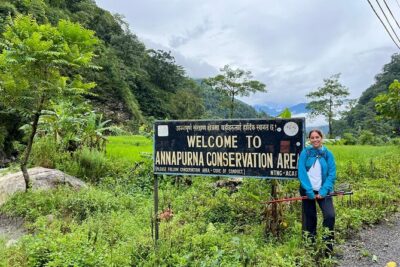
Day 1: Pokhara to Ghandruk through the foothills
The trip begins with roughly a one-hour drive from Pokhara to the Nayapool area. From there, you walk for about five to six hours toward Ghandruk, following village paths, forest sections, and the Modi Khola valley.
Ghandruk, at 1,940 meters, is an excellent first overnight stop. It is a traditional Gurung village and one of the more rewarding places to experience local mountain culture without taking a separate side trip. The route gives you an early look at terraced fields and Himalayan foothills before the trail becomes higher and wilder.
The first day is not only about distance. It sets the rhythm for the week: walk, stop for food, pass through villages, and settle into a tea house by evening. Accommodation is simple, so bring patience along with your sleeping bag. The package includes tea house or lodge accommodation, but comforts can be basic compared with a hotel in Pokhara.
One practical point matters here. Some of the approach and departure sections include roads, and one person specifically wished a car or jeep had been used instead of walking dusty road stretches on the first and last days. If road dust bothers you, ask the operator before departure exactly which sections are covered by vehicle.
Day 2: Stone steps and mountain views from Ghandruk to Chomrong
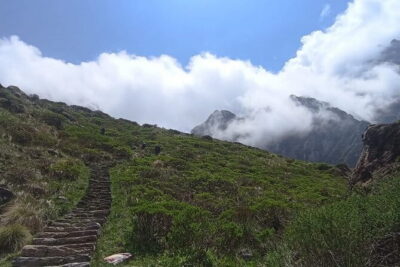
Day 2 takes five to six hours and ends at Chomrong, at 2,170 meters. This is a classic Annapurna trekking day, with stone stairways, forest paths, village homes, and widening views toward Annapurna and Machhapuchhre.
Chomrong is an important stop because it marks the point where the valley route begins to feel more remote. The village sits above the Modi Khola valley, and the change in altitude is noticeable without being extreme. You will likely welcome the chance to rest, eat, and prepare for the longer forest climb ahead.
The stairs are the detail to take seriously. They are scenic, but repeated climbs and descents can work your legs harder than a flat trail. Walk steadily rather than racing the guide, and use the trekking stick if you have one. A stick is available through the gear provision if needed.
This is also a good day to ask your guide about the mountains around you. Guides such as Chandra and Bishnu Giri have been praised for explaining the peaks and sharing stories about Nepali culture along the trail. That local context adds meaning to what might otherwise be a long series of steps.
Day 3: Bamboo forest and the climb to Himalaya
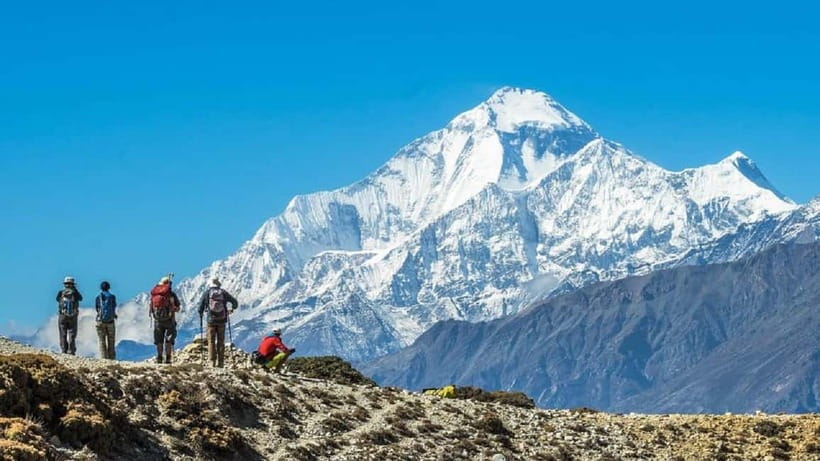
From Chomrong, you walk six to seven hours to Himalaya, at 2,920 meters. The route first drops toward the river, then climbs through bamboo and rhododendron forest.
The scenery changes in a satisfying way. Villages and cultivated slopes give way to thicker woodland, damp paths, and a narrower valley. Waterfalls and river sounds become part of the walk, while the high peaks appear and disappear between the trees.
Himalaya is less a destination for sightseeing than a practical mountain stop. You stay here to break up the climb before the crucial base camp day. The simple tea house setting suits the route, though you should not expect city-style facilities or a broad choice of personal comforts.
Altitude begins to matter more now. You are approaching 3,000 meters, and Day 4 goes much higher. Tell your guide if you feel unwell, unusually tired, or short of breath. The guides are expected to carry a first aid kit and to manage their own insurance, accommodation, meals, equipment, and transport, but your own travel insurance remains mandatory.
More Hiking Tours in Pokhara
- Poon hill Trek 3 days
★ 5.0 · 176 reviews - Trekking in Annapurna/Langtang/Everest/Upper Mustang regions
★ 5.0 · 161 reviews - Pokhara: 4-Day Ghorepani, Poonhill & Ghandruk Mountain Trek
★ 5.0 · 132 reviews - Ghorepani – Poon Hill Trek 3N-4D
★ 5.0 · 125 reviews
Day 4: Into the Annapurna Sanctuary and up to base camp
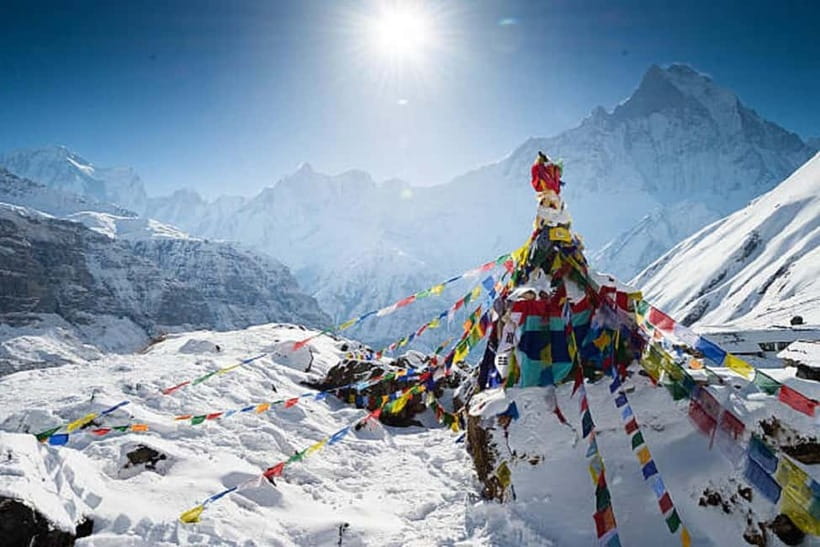
This is the big day. You leave Himalaya and walk six to seven hours toward Machhapuchhre Base Camp, then continue to Annapurna Base Camp at 4,130 meters.
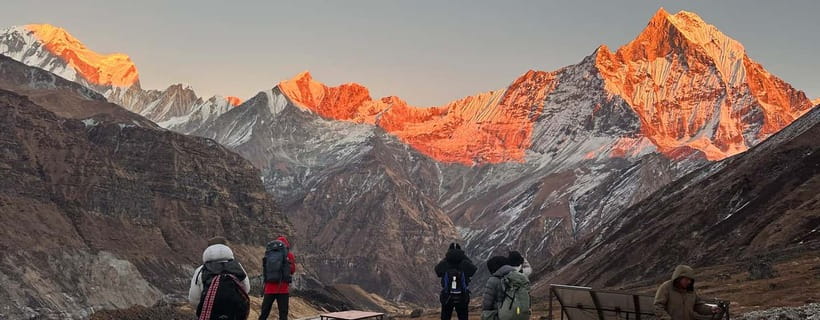
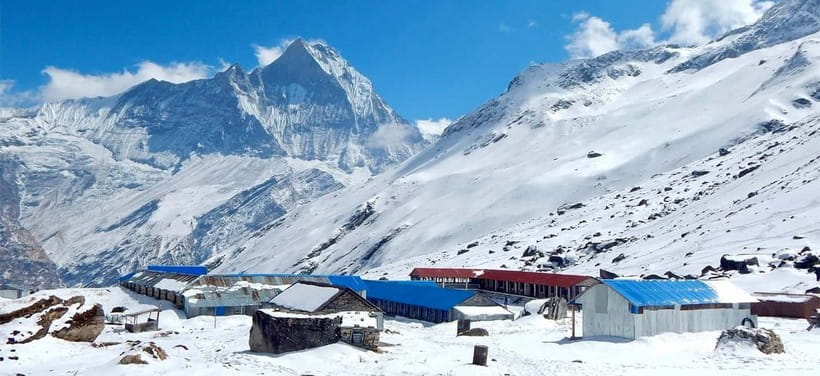
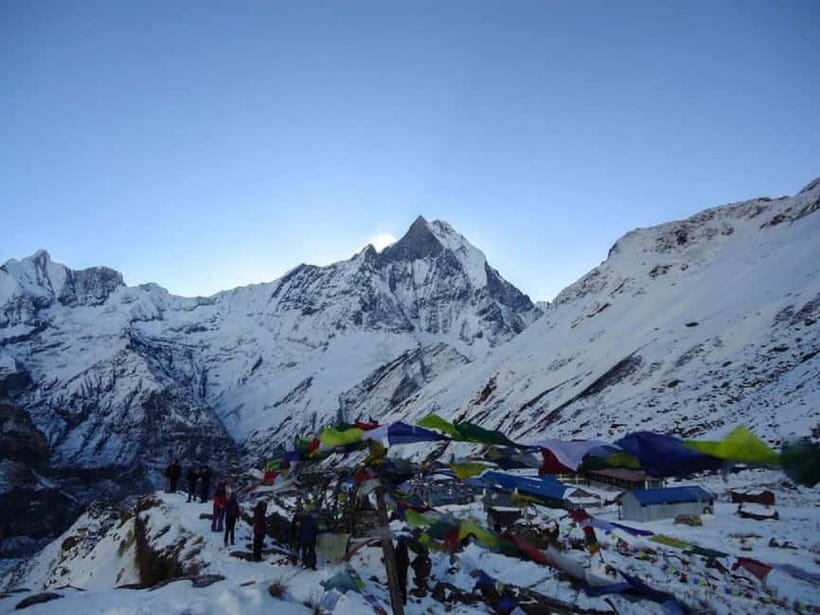
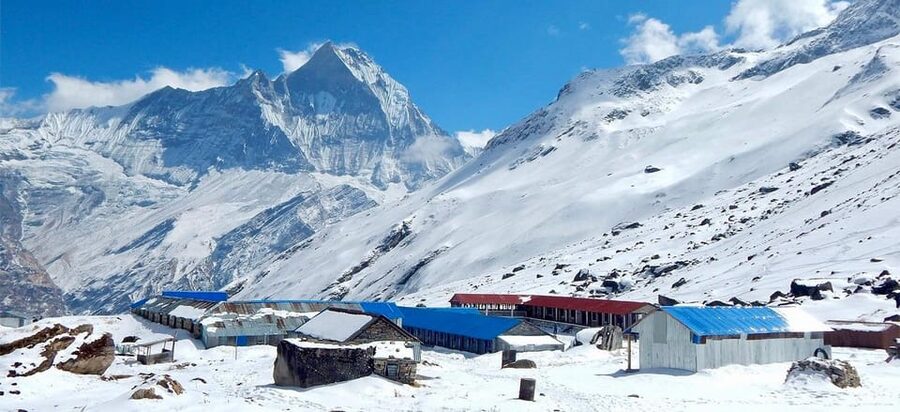
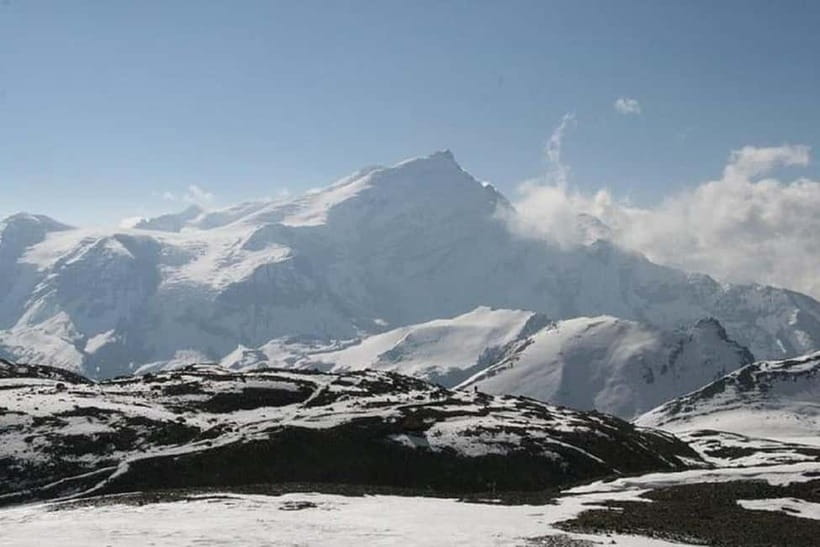
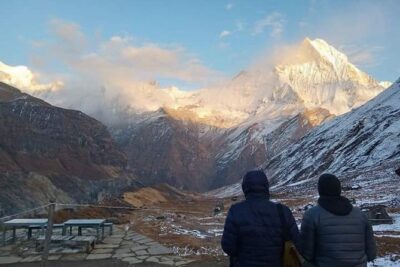
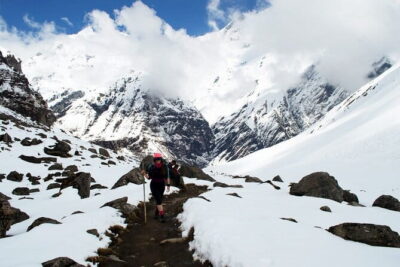
The forest thins as you enter the alpine zone. The valley opens into a glacier-shaped basin, and the high peaks become the main event. Machhapuchhre, also called Fishtail, is one of the most recognizable mountains in the region, while the Annapurna range surrounds the sanctuary with steep snow-covered walls.
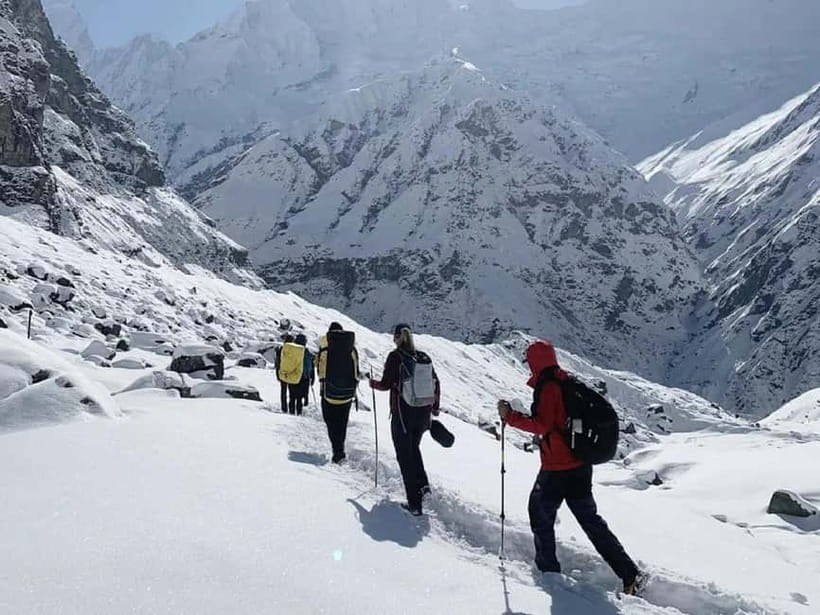
Reaching base camp is physically demanding. You gain a great deal of altitude in a short time, and the air is noticeably thinner at 4,130 meters. The schedule is fixed at seven days, so this is not the kind of trek where you have several spare acclimatization days built in. A good fitness level and sensible pacing are important.
The reward is the setting. You spend the night inside the Annapurna Sanctuary, surrounded by giant peaks rather than simply viewing them from a distant hill. Clear conditions can bring dramatic sunrise and sunset light, though mountain weather is never guaranteed.
Take warm clothing, gloves, a jacket, sunglasses, a sun hat, sunscreen, and a sleeping bag. A flashlight and power bank are also sensible. The supplied information recommends a sleeping bag and says trekking gear can be provided as needed, but confirm what is available before you leave Pokhara.
Day 5: The long descent from Annapurna Base Camp to Bamboo
After the base camp night, you descend for six to seven hours to Bamboo, at 2,335 meters. The route reverses through the mountain valley, but it does not feel like a repeat performance.
Descending gives you a different view of the Annapurna range, waterfalls, cliffs, and valley walls. You also lose altitude at a useful rate after the high overnight stay. Still, the day can be tough on knees and toes, especially after the climb to base camp.
This is where footwear matters. Wear proper hiking shoes, carry rain gear, and keep a change of clothes handy. The route passes through forested areas where weather and trail conditions can change, so waterproof shoes and a lightweight jacket are practical choices.
Bamboo is a functional overnight stop, not a grand finale. You will likely be ready for food and sleep. The value of having accommodation arranged is clear on a trek like this: you do not need to spend the evening searching for a bed after a full day on the trail.
Day 6: Bamboo to Jhinu Danda and the hot springs
The walk from Bamboo to Jhinu Danda takes five to six hours and descends toward the river. Jhinu Danda sits at 1,610 meters, so the lower altitude should feel welcome after Annapurna Base Camp.
The hot springs are the day’s payoff. After arriving and settling in, you can walk to the natural pools and soak tired muscles in warm water. Bring a towel and a change of clothes, both specifically recommended for the trip.
This stop gives the trek a pleasant change of pace. Most of the week is about endurance, weather, altitude, and mountain views. Jhinu Danda lets you slow down and enjoy a simple local pleasure before the return to Pokhara.
The hot spring visit is not a substitute for recovery, though. You have already spent several days walking, and the final day still includes a four to five-hour trek. Treat the soak as rest, not as proof that your legs are ready for anything.
Day 7: Return to Nayapool and Pokhara
The last day involves roughly four to five hours of walking to Nayapool, followed by about an hour by vehicle to Pokhara. Drop-off is available at selected Lakeside hotels, Pokhara International Airport, and several named properties, including Hotel Temple Tree, Hotel Middle Path and Spa, and Hotel Barahi. Sarangkot is also listed among the possible drop-off points.
This final section is more about completing the route than finding a new mountain highlight. Road walking can be dusty in places, and this is the one part of the schedule I would clarify before booking. Ask if a vehicle transfer can replace any road section, especially if you have a flight or another timed connection.
The return to Pokhara is still satisfying. You have gone from village trails to a high mountain sanctuary and back down to a hot spring, all in one week. Allow extra time after arrival if you need a shower, laundry, or a quiet meal before continuing your Nepal trip.
Tea houses, meals, and what the $181 covers
At $181 per person, this trek offers strong value if you want a guide-led route with the major permits and basic logistics handled. The price includes round-trip transport connected with the trek, required trekking permits, paperwork, TIMS fees, tea house or lodge accommodation, a government-certified English-speaking guide, guide expenses, taxes, a first aid kit, and luggage storage in Pokhara.
Meals are included depending on the option you select. Check that detail carefully before paying, since food can become a noticeable expense on a week-long trek. Snacks and beverages are not included, so carry cash for those purchases.
A porter costs an additional $20 per day if you need one. That can be money well spent if you want to walk with a light daypack, especially on the base camp day. The guide is not a porter by default, so do not assume he will carry all your luggage.
The package also includes guide insurance and expenses, which removes a major source of confusion on an organized trek. Your own travel insurance is still required, and emergency rescue is excluded from the tour price. Make sure your policy covers trekking at 4,130 meters and possible helicopter rescue before you start.
What the guide adds to the experience
The guide is central to the value of this trip. The best moments are not only the views. They are the small decisions that keep the week moving: choosing a tea house based on progress, judging your pace, explaining the mountains, and spotting when you need a rest.
Chandra has been especially praised for clear English, flexibility, mountain information, and care. Bishnu Giri has more than 20 years of experience and is noted for cultural stories and careful advice at higher elevations. Anil has been helpful with walking and meals, while Jeet Bahadur has been described as cheerful and good company.
You can request a particular guide, but availability is not guaranteed from the supplied information. It is worth asking for Chandra or Bishnu if their style suits you, especially if you want more cultural explanation and close attention to health and endurance.
The live guiding languages are English, Hindi, and Nepali. The group type is private, which should make it easier to discuss pace, food, rest breaks, and any concerns along the route.
Who should book this trek
I would recommend it to people who want a short, serious Himalayan trek and are prepared for long walking days. It suits you especially well if you value mountain scenery, local villages, simple lodging, and a guide who stays involved from pickup to return.
January can be a good choice if you prefer quieter trails and tea houses. Clear conditions are possible, and one January departure had particularly peaceful walking with fewer people around. Winter also means you must take warm clothing seriously, especially for the night at base camp.
The route is also appealing in spring and autumn, based on the strong experiences reported from April, May, November, and January. July and September can bring different conditions, and the supplied information does not promise specific weather, so pack rain gear and keep your plans flexible.
I would hesitate to recommend it if you have not prepared for sustained walking, if you dislike basic tea houses, or if you need a leisurely acclimatization schedule. Seven days is efficient, but it leaves little room for delays or a slow adjustment to altitude.
The booking terms are flexible: you can cancel up to 24 hours ahead for a full refund and reserve now while paying later. Pickup is available from Pokhara International Airport or hotels in the Lakeside area, which is useful after arriving in Nepal.
Should you book the Annapurna Base Camp trek?
Book it if you want the biggest possible Himalayan reward in one week and accept that the route will test your legs. The combination of Annapurna Base Camp, Gurung villages, forest trails, tea houses, a private guide, and Jhinu Danda’s hot springs gives the trip more range than a simple out-and-back mountain walk.
At $181, it is a sensible package for the included permits, guide, lodging, transport, and basic support. Before committing, confirm whether meals are included in your chosen option, ask about road transfers on Days 1 and 7, arrange travel insurance, and decide if you need the $20-per-day porter.
If those points suit your plans, this is a practical and memorable way to reach the Annapurna Sanctuary without spending two or three weeks on the trail.
FAQ
How high is Annapurna Base Camp on this trek?
Annapurna Base Camp is at 4,130 meters, or 13,550 feet.
How long do I walk each day?
Walking times range from about four to seven hours. The longest stated days are Days 3, 4, and 5, each at roughly six to seven hours.
What accommodation is provided?
You stay in simple tea houses or lodges along the route. Overnight stops are Ghandruk, Chomrong, Himalaya, Annapurna Base Camp, Bamboo, and Jhinu Danda.
Are meals included?
Meals are included depending on the option selected. Snacks and beverages are not included.
Is a porter included?
No. A porter is available if needed for an additional $20 per day.
Is travel insurance required?
Yes. Travel insurance is mandatory, and emergency rescue services are not included in the tour price.
Can I be picked up in Pokhara?
Yes. Pickup is available from Pokhara International Airport or hotels in the Lakeside area. Drop-off options include selected Lakeside hotels, the airport, and Sarangkot.
More 7-Day Experiences in Pokhara
- Pokhara: 7 Day Annapurna Base Camp Trek
★ 4.9 · 38 reviews - Annapurna Base Camp Trek from Pokhara 7 Days
★ 5.0 · 19 reviews - 7-Day Trek to Annapurna Base Camp from Pokhara
★ 5.0 · 12 reviews - Annapurna Base Camp 7 Days Trek from Pokhara
★ 5.0 · 8 reviews
More Spas and Hot Springs in Pokhara
- From Pokhara: 5-Day Annapurna Basecamp Trek with Hot Springs
★ 4.9 · 26 reviews - Pkr/Kathmandu: 5-Day Annapurna Base Camp & Hot spring Trek
★ 5.0 · 6 reviews - Pokhara: 7-Day Annapurna Base Camp Via PoonHill & Hot Spring
★ 5.0 · 6 reviews - Pokhara: Amazing 7-Day ABC Trek with Natural Hot Spring
★ 5.0 · 5 reviews
Recently added around Pokhara
- Paragliding in Pokhara★ 5.0 · 3 reviews
- Pokhara: 5-Day Annapurna Base Camp Trek with Hot Spring★ 5.0 · 3 reviews
- Pokhara: 7-Day Annapurna Base Camp Trek via Ghandruk★ 4.3 · 3 reviews
- Pokhara:4-Day Ghorepani Poon Hill Guided Trek via Ghandruk★ 5.0 · 3 reviews
- Peace & Panorama: Stupa and Pumdikot Scenic Drive Tour★ 3.6 · 3 reviews
- Beautiful Sarankot Sunrise with Full Day Sightseeing in Pokhara★ 4.5 · 3 reviews
- 3 Day Australian Camp Dhampus Ghandruk Easy Trek in Pokhara★ 3.5 · 3 reviews
- Overnight Dhampus Australian Camp Easy Hiking from Pokhara★ 5.0 · 3 reviews
Other Annapurna Base Camp Treks worth a look
Kathmandu to Annapurna Base Camp (ABC) 5-Day Trek
Read our review →