REVIEW · ANNAPURNA BASE CAMP TREKS
Pokhara: 7 Day Annapurna Base Camp Trek
Annapurna Base Camp is one of Nepal’s great mountain walks, and this seven-day route from Pokhara packs a lot into a short schedule. You’ll pass terraced farms, Gurung villages, rhododendron forests, suspension bridges, and high alpine ground before reaching a bowl of peaks at 4,130 meters.
I like the personal feel of a private group, where guides such as Pratiksha, Hari, Sandesh, and Krishna have adjusted the pace for tired walkers and first-time trekkers. I also like the hot-spring stop at Jhinu Danda, a welcome reward after the climb. The main caution is simple: seven days means a brisk uphill schedule, and the steep early sections and altitude should not be underestimated.
Key points to know before you book
- Reach Annapurna Base Camp at 4,130 meters: The final viewpoint sits inside a dramatic amphitheater of Himalayan peaks.
- Walk through several worlds in one week: Rice terraces give way to Gurung villages, oak and rhododendron woods, bamboo forests, cliffs, waterfalls, and alpine meadows.
- Travel privately with a certified guide: Guides including Pratiksha, Hari, Paras, and Sandesh have adapted the pace and route plans to suit individual needs.
- Recover at Jhinu Danda: Natural hot springs beside the river make Day 6 especially appealing after several days of downhill walking.
- Pay $215 for a solid package: Transport, permits, standard lodge rooms, a guide, a first-aid kit, trekking poles, a duffel bag, and luggage storage are included.
- Plan for food and porter costs: Meals and drinks are extra, and a porter can be hired for $15 per day.
What the $215 price really covers
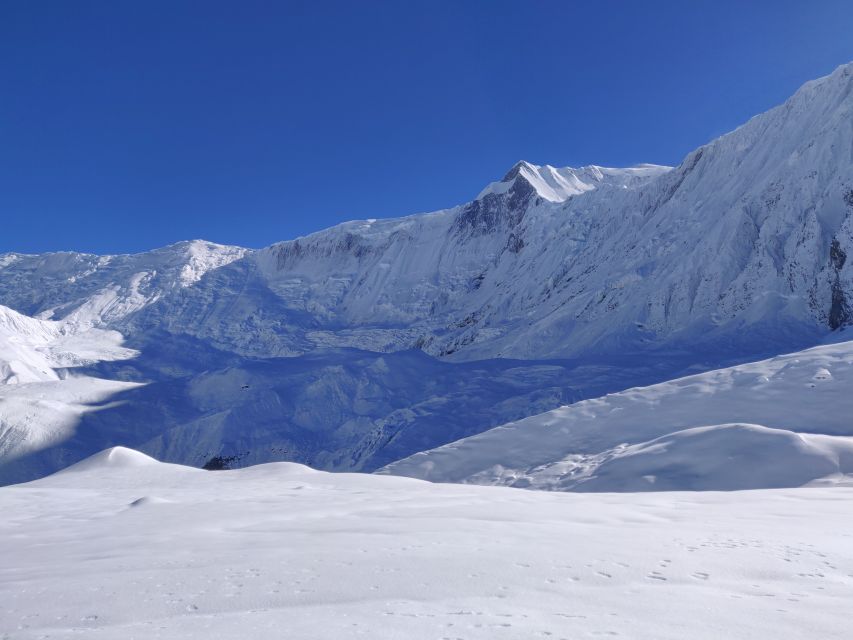
At $215 per person, this is a strong-value trek if you need the main arrangements handled from Pokhara. The price includes pickup and drop-off at a Lakeside hotel, private round-trip transport, the Annapurna Conservation Area Permit, government permits, standard tourist lodge accommodation, and a government-certified guide.
You also get access to a first-aid kit, a duffel bag and trekking poles if needed, plus luggage storage in Pokhara. Those extras matter. You do not need to carry every item you bring from the city, and poles can make the long descents easier on your knees.
Food and drinks are not included. You will buy them along the route, so keep some extra money available. A porter is optional and costs $15 per day. I would consider one if you are not used to carrying a full pack, especially since the route climbs to 4,130 meters and includes repeated uphill and downhill sections.
The private format is another part of the value. You are not locked into the pace of a large group. Guides have slowed down for people who felt sick, allowed stronger walkers to continue farther on some days, and arranged changes when altitude problems made the original plan unsafe.
More Annapurna Base Camp Treks in Pokhara
- Kathmandu/Pokhara: 5-Day Annapurna Base Camp (ABC) Trek
★ 4.9 · 72 reviews - Private 7 – Day Annapurna Base Camp Trekking
★ 5.0 · 50 reviews - Annapurna Base Camp Trek (8 days)
★ 5.0 · 45 reviews
Day 1: Pokhara to Nayapool, then Ghandruk
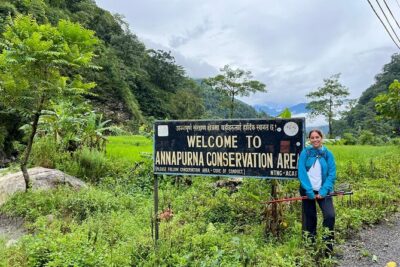
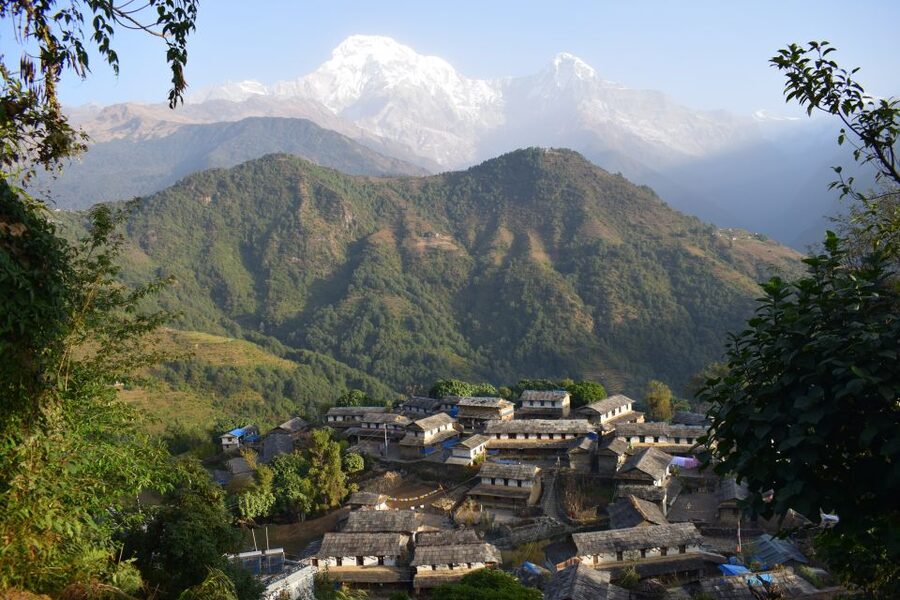
The first day begins with a private drive from Pokhara to Nayapool. From there, you start on foot through villages, farmland, and terraced rice fields before reaching Ghandruk at 1,939 meters.
Ghandruk is one of the cultural highlights of the route. It is a traditional Gurung village, and the mountain setting is already impressive, with views toward Annapurna South and Machhapuchhre, the distinctive peak also called Fishtail.
This opening day gives you an immediate sense of how the trek works. You are not walking through forest from the first minute. Instead, the route begins among working farms and settled villages, where the trail connects everyday rural life with the high mountains beyond.
The catch is that the early climb can feel harder than expected. The route gains height quickly, and the first few days have a mix of inclines and descents. If you arrive in Pokhara expecting a gentle warm-up, you may be surprised by the effort required.
Day 2: Ghandruk to Lower Sinuwa
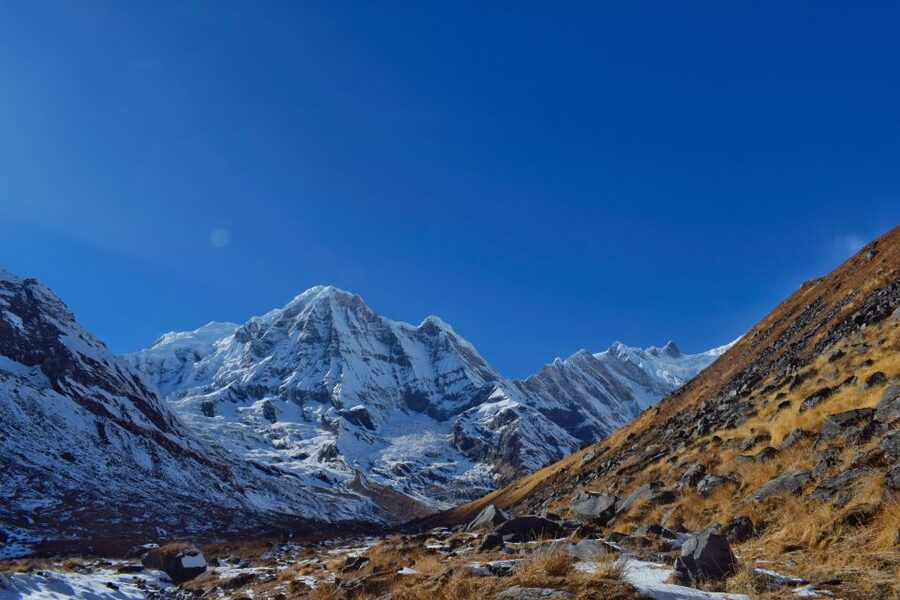
Day 2 takes you through rhododendron forests and small settlements toward Lower Sinuwa at 2,249 meters. The trail goes up and down, with suspension bridges crossing the Modi Khola.
This is a beautiful but active day. The forest provides shade, while the bridges and changing views keep the walk from feeling repetitive. Your guide can help with footing and pace, though you should still expect a full day of mountain walking.
The route’s constant changes are part of its appeal. One moment you are passing cultivated slopes and small homes; later you are under trees, crossing water, or following the river valley. You get a strong sense of moving from the lower foothills toward a much wilder setting.
Lower Sinuwa is also where the altitude begins to matter more. You are still below 2,500 meters, but the cumulative climbing can leave your legs tired. A slower pace is sensible, and this is where guides such as Deepak, Bidur, and Paras have helped people adjust their progress to match their fitness.
Day 3: Sinuwa to Deurali through the Modi Khola gorge
From Sinuwa, the route follows the Modi Khola gorge through dense bamboo and oak forest. You pass Dovan and Himalaya before climbing to Deurali at 3,230 meters.
The setting becomes more dramatic here. Cliffs and waterfalls replace much of the farmland, and the narrow gorge gives the walk a more remote feel. The forest is still thick in places, but the route is clearly heading toward high mountain country.
This is one of the days when good guiding has real value. You are gaining altitude and moving through a long valley, so your guide needs to watch your pace and condition. I would treat Deurali as an important checkpoint, not just a place to sleep.
Altitude sickness is a real consideration on this itinerary. One person had to stop at Deurali and take a jeep after becoming unwell, with the guide rearranging the plan and helping create an alternative route. That is exactly the kind of situation in which flexibility matters more than simply following a printed schedule.
Do not measure success by walking fast. Eat, drink, and tell your guide early if you feel unwell. Reaching base camp is worthwhile, but reaching it safely is the priority.
More Hiking Tours in Pokhara
- Poon hill Trek 3 days
★ 5.0 · 176 reviews - Trekking in Annapurna/Langtang/Everest/Upper Mustang regions
★ 5.0 · 161 reviews - Pokhara: 4-Day Ghorepani, Poonhill & Ghandruk Mountain Trek
★ 5.0 · 132 reviews - Ghorepani – Poon Hill Trek 3N-4D
★ 5.0 · 125 reviews
Day 4: Deurali to Machhapuchhre Base Camp and Annapurna Base Camp
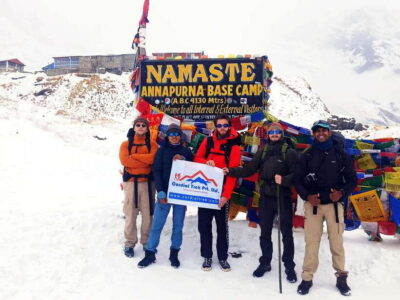
Day 4 is the high point of the trek. You climb from Deurali through alpine meadows toward Machhapuchhre Base Camp, then continue to Annapurna Base Camp at 4,130 meters.
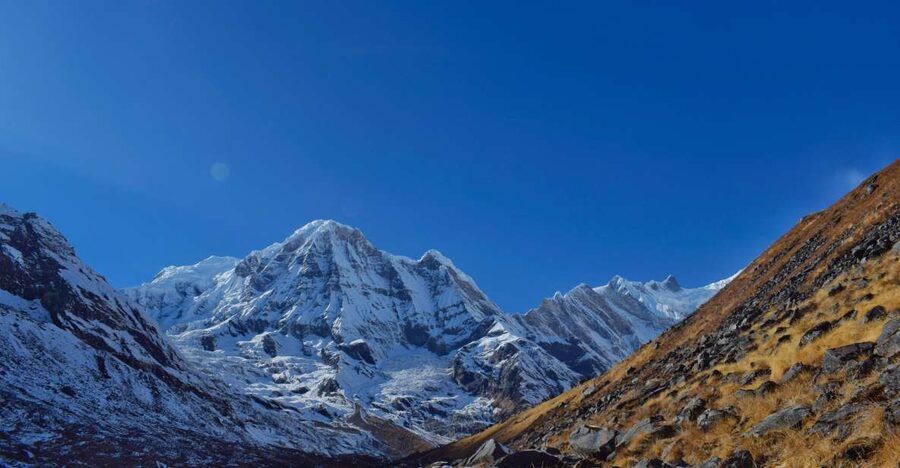
The scenery changes again as the trees thin out. You are surrounded by open high ground and towering peaks, with Machhapuchhre and the Annapurna range dominating the view. The final approach leads into the famous mountain amphitheater, where peaks rise around the base camp on several sides.
This is the moment the whole route has been building toward. The earlier rice fields, bridges, forests, and villages are not separate attractions. They make the arrival feel earned, because you have watched the environment change step by step.
Weather can change quickly at this altitude. One February departure encountered snow near base camp and on the way out, which made the setting feel even more dramatic. Snow is not something to count on, but colder conditions are entirely possible, so your clothing needs to suit the season.
Machhapuchhre Base Camp is an important stop before the final push. It offers a chance to pause and take in Fishtail and the surrounding peaks. The last section to Annapurna Base Camp is not simply a photo stop. At 4,130 meters, even a manageable path can feel demanding.
Once you arrive, give yourself time to look around rather than rushing through photographs. The amphitheater is the reward: close walls of snow and rock, huge peaks, and a sense of being far above the settled valleys.
Sunrise at Annapurna Base Camp
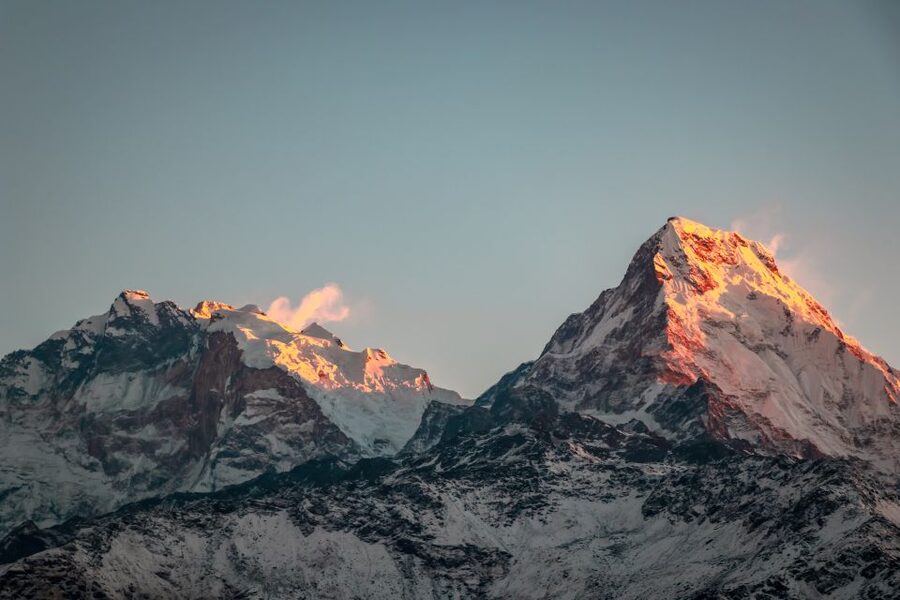
The schedule allows you to wake at base camp for sunrise over Annapurna I. This is one of the best reasons to spend the night rather than visit only during the day.
Morning light changes the peaks quickly. The cold may be sharp, but the view across the range can be the emotional high point of the entire week. You will want warm layers close at hand, since the itinerary does not include a long warm-up before the morning view.
The accommodation is in standard tourist lodges, not luxury mountain hotels. That is the right expectation. The value here is the location and the chance to sleep near the mountains, not polished facilities.
Guides including Hari and Pratiksha have been praised for making lodge arrangements feel comfortable and for maintaining good relationships with tea houses. That can make a difference after a long day, when a calm check-in and a hot meal matter.
Day 5: Return from base camp to Sinuwa
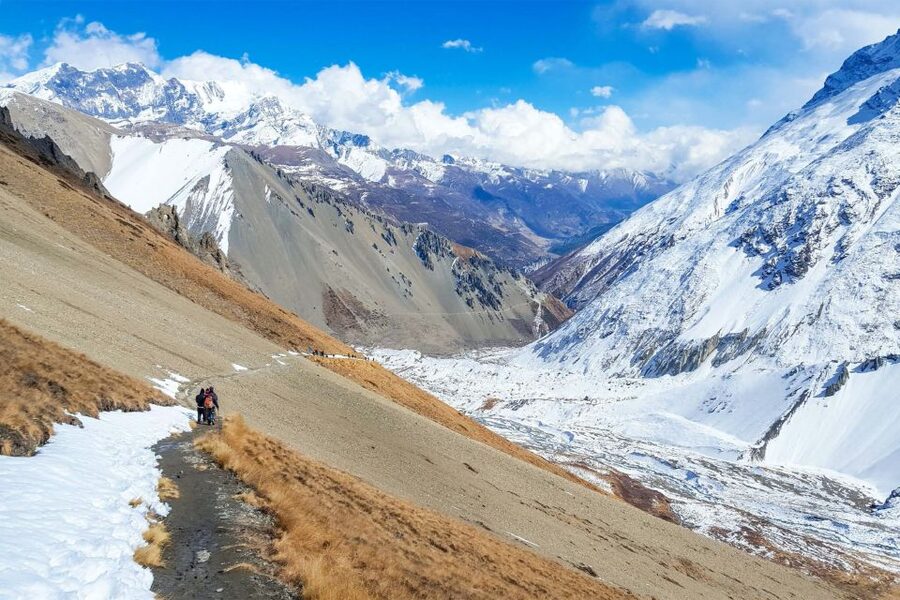
After breakfast, you retrace the route downhill through the alpine section, gorge, bamboo forest, and rhododendron country before reaching Sinuwa at 2,249 meters.
The return is faster in terms of altitude loss, but do not assume it is easy. Downhill walking can be tough on your knees, especially after the climb to base camp. Trekking poles are useful here, and poles are available through the tour if needed.
This day can feel less exciting because you are using familiar ground. Still, the changing light and different perspective make the trail look fresh. You may also find that the lower altitude brings back energy after the night at base camp.
The private setup helps again. If you are moving well, your guide may be able to keep the day flowing. If your legs are tired, the pace can be gentler. That flexibility is one of the clearest advantages of booking privately.
Day 6: Sinuwa to Jhinu Danda and the hot springs
Day 6 descends to Jhinu Danda at 1,760 meters. The major attraction is the natural hot springs beside the river, where you can soak tired muscles after several days on the trail.
This is a smart final overnight stop. It breaks up the descent and gives you a simple, physical reward. Bring swimwear if you want to use the springs. The hot-spring visit has become a favorite part of this route, and in some cases guides have added it as a welcome surprise.
The walk itself passes through forest, villages, and farmland as you lose altitude. The return to greener, warmer surroundings is noticeable after the exposed high country around base camp.
There is one planning point to consider. Some of the route beyond Jhinu involves road travel, so hikers who prefer a longer trail finish may wish to ask about ending in Jhinu. The published plan continues to Nayapool on Day 7, but the road portion means the final day is less purely about walking.
Day 7: Jhinu to Nayapool and back to Pokhara
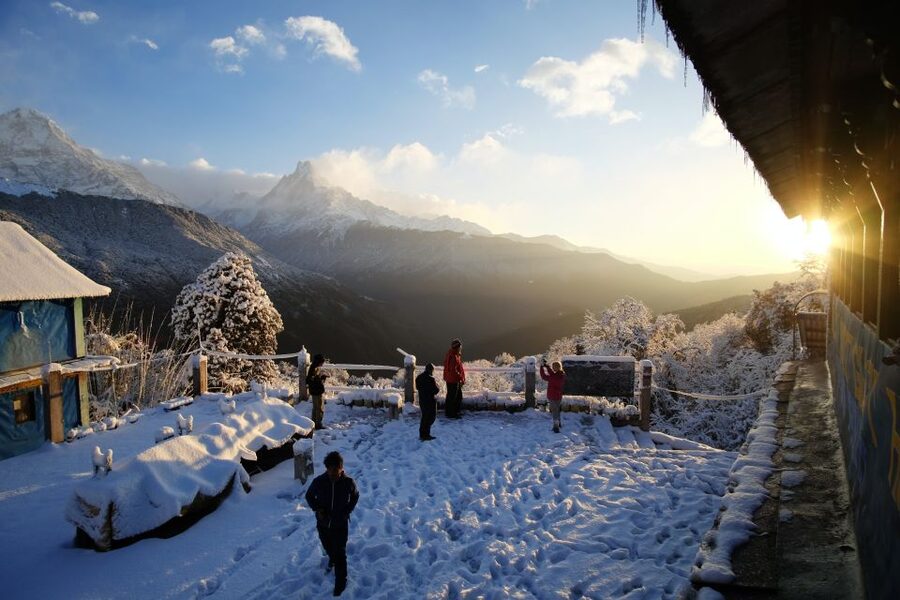
The final morning takes you gradually downhill through farmlands and villages to Nayapool. From there, private transport returns you to Pokhara, with hotel drop-off included.
This is more of a completion day than a major scenic highlight. You are closing the loop and returning to the city, not gaining another high pass or viewpoint. Still, the gradual descent and village scenery offer a gentle finish after the harder mountain days.
Back in Pokhara, the Lakeside area is a pleasant place to celebrate. The contrast is part of the charm: within a week, you move from a city beside the lake to a cold mountain base camp and then back again.
Guides, pace, and personal attention
The guide is central to this trek. The company provides government-certified guides, with English, Hindi, and Nepali available. Named guides who have led this route include Pratiksha, Hari, Sandesh, Krishna, Bidur, Paras, Narayan, Deepchandra, and others.
The strongest pattern in the feedback is not simply friendliness. It is practical care. Guides have slowed down when people were sick, matched the pace to fitness, explained the mountains and local life, helped with lodge arrangements, and adjusted plans when altitude sickness made the original itinerary unsafe.
That matters on a high trek. A guide should do more than point toward the next village. You want someone who notices how you are coping and who can make sensible decisions when weather, health, or fatigue changes the plan.
The private group format also gives you room to enjoy the trail quietly. A guide can explain what you are seeing, then let you walk without constant commentary. That balance is useful on a route where the scenery deserves your full attention.
What to pack and what to arrange
The only stated required document is a passport or ID card. The tour can provide a duffel bag and trekking poles if needed, and your unused luggage can remain in storage in Pokhara.
A suggested packing list is not provided, and that is one area where you should prepare carefully. Your clothing needs to match the season, especially for the cold night at 4,130 meters. Snow was present for one winter trek, while monsoon conditions brought heavy rain for another.
You should also plan for food and drinks, since they are bought separately along the trail. If you want help carrying your belongings, arrange the optional porter at $15 per day.
The route is not a technical climbing trip, but it is still a serious hike. You need to be ready for sustained walking, steep sections, repeated descents, forest paths, suspension bridges, and altitude. First-time trekkers have completed it with patient guides, but you should not book it expecting a casual village stroll.
Who this seven-day trek suits best
I would recommend this itinerary to you if you want a direct route from Pokhara to the Annapurna mountains and prefer a private guide over a large group. It suits people who value scenery, village life, and a clear goal at the end of the trail.
It also works well for first-time trekkers who want support. Several guides have adapted the pace for people who were less fit than expected, and one first-time trekker found the encouragement especially helpful.
You should think twice if you want a slow schedule with many rest days. The seven-day plan is efficient, but it leaves little spare time. You also need to accept that reaching base camp is not guaranteed if altitude sickness or weather creates a safety problem.
Should you book the Annapurna Base Camp trek?
Book it if you want a well-supported private trek at a modest price, with permits, transport, lodges, luggage storage, and a certified guide arranged for you. The combination of Gurung villages, varied forests, high peaks, base-camp sunrise, and Jhinu hot springs gives the week a satisfying rhythm.
Before paying, ask for a season-specific packing list and confirm the plan for the road section after Jhinu. If you are worried about carrying a pack, budget the extra $15 per day for a porter.
For many people, this is a good first Himalayan trek. Just respect the altitude, take the early climbs seriously, and let your guide set a safe pace. The mountain views are the headline, but the village trails, changing forests, and personal support are what make the seven days work.
FAQ
How long is the Annapurna Base Camp trek?
The trek lasts seven days, beginning and ending in Pokhara. The plan includes six nights in standard tourist lodges.
Where does the trek start?
The tour includes pickup from any hotel in Lakeside, Pokhara. Private transport takes you to Nayapool, where the walking portion begins.
How high is Annapurna Base Camp?
Annapurna Base Camp is listed at 4,130 meters, or 13,550 feet.
What permits are included?
The price includes the Annapurna Conservation Area Permit and government permits.
Is accommodation included?
Yes. Private accommodation in standard tourist lodges is included in the tour price.
Are food and drinks included?
No. Food and drinks are available to purchase along the route and are not included in the $215 price.
Can I hire a porter?
Yes. A porter is available for $15 per day. The tour can also provide a duffel bag and trekking poles if needed.
What languages can the guide speak?
Guiding is available in English, Hindi, and Nepali.
What is the cancellation policy?
You can cancel up to 24 hours in advance for a full refund. The reserve-now, pay-later option allows you to book without paying immediately.
More 7-Day Experiences in Pokhara
- Annapurna Base Camp Trek from Pokhara 7 Days
★ 5.0 · 19 reviews - 7-Day Trek to Annapurna Base Camp from Pokhara
★ 5.0 · 12 reviews - Pokhara: 7-Day Annapurna Base Camp Trek & Natural Hot Spring
★ 5.0 · 11 reviews - Annapurna Base Camp 7 Days Trek from Pokhara
★ 5.0 · 8 reviews
Recently added around Pokhara
- Paragliding in Pokhara★ 5.0 · 3 reviews
- Pokhara: 5-Day Annapurna Base Camp Trek with Hot Spring★ 5.0 · 3 reviews
- Pokhara: 7-Day Annapurna Base Camp Trek via Ghandruk★ 4.3 · 3 reviews
- Pokhara:4-Day Ghorepani Poon Hill Guided Trek via Ghandruk★ 5.0 · 3 reviews
- Peace & Panorama: Stupa and Pumdikot Scenic Drive Tour★ 3.6 · 3 reviews
- Beautiful Sarankot Sunrise with Full Day Sightseeing in Pokhara★ 4.5 · 3 reviews
- 3 Day Australian Camp Dhampus Ghandruk Easy Trek in Pokhara★ 3.5 · 3 reviews
- Overnight Dhampus Australian Camp Easy Hiking from Pokhara★ 5.0 · 3 reviews
Other Annapurna Base Camp Treks worth a look
Kathmandu to Annapurna Base Camp (ABC) 5-Day Trek
Read our review →