REVIEW · ANNAPURNA BASE CAMP TREKS
Pokhara: 7-Day Annapurna Base Camp Via PoonHill & Hot Spring
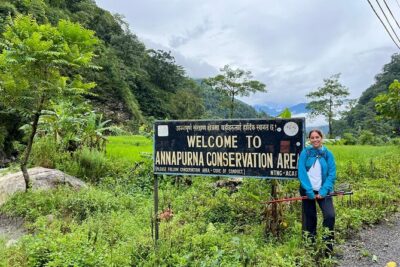
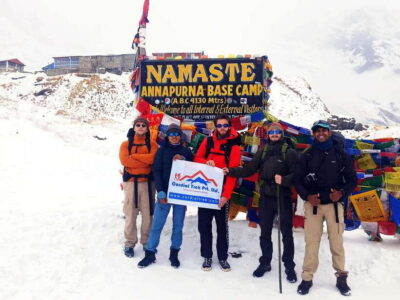
The big draw here is the route itself: in seven days, you climb to Poon Hill at 3,210 meters, continue through the Annapurna sanctuary, and reach Annapurna Base Camp at 4,130 meters. You get sunrise, rhododendron forest, high mountain views, and a hot-spring soak without having to arrange each piece yourself.
I like the smart route design and the private-group format. You see more than you would on a short Poon Hill walk, while the jeep transfers save some road walking. Guides named Mahesh and Prakash have led recent departures, and porters such as Bishal, Avinesh, and Sujal have been praised for their care. The main catch is the pace: seven days to ABC is demanding, with several six-hour trekking days and a rapid climb to high altitude.
Key points to know before booking
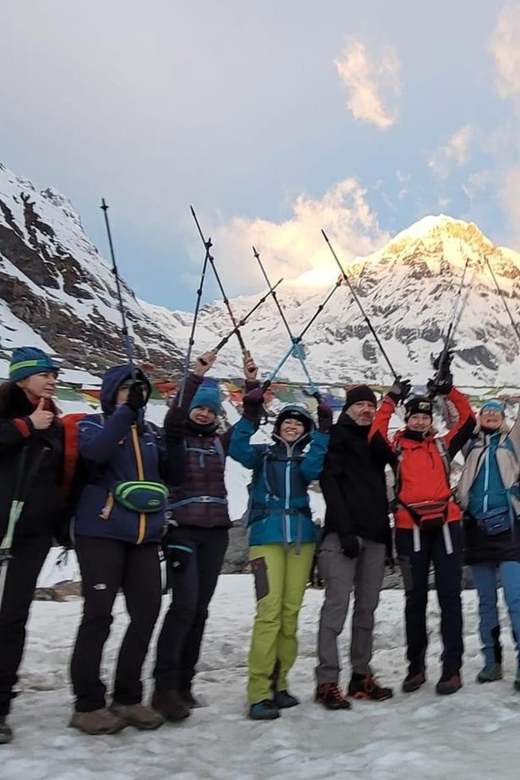
- Sunrise at Poon Hill: Reach 3,210 meters for one of the trek’s best mountain viewpoints.
- Annapurna Base Camp finish: Spend time inside a dramatic mountain amphitheater at 4,130 meters.
- A private seven-day route: The group format gives you a more personal pace than a large coach-style tour.
- Jeep support: Ride from Pokhara toward Ulleri, then use a jeep from Samrung back to Pokhara.
- Tea-house trekking: Accommodation is included during the trek, with meals included on the full package.
- Jhinu hot springs: End the mountain walk with about two hours in natural hot water before returning to Lakeside Pokhara.
Why this Poon Hill and ABC combination works
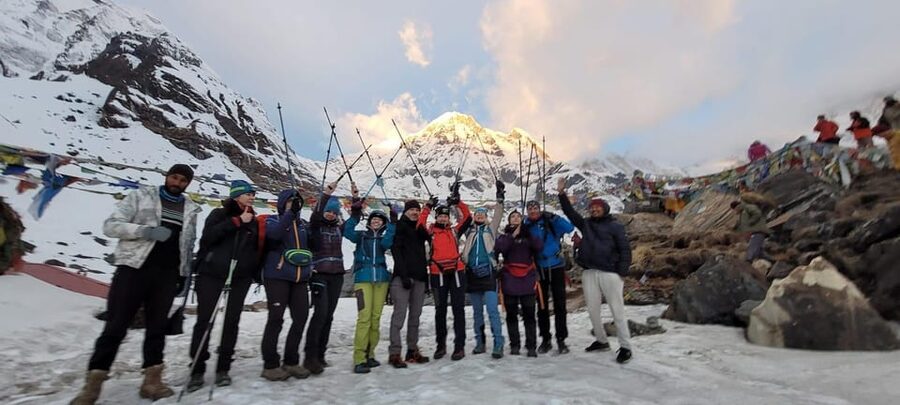
Most short Nepal treks ask you to choose between a lower viewpoint route and a full base-camp experience. This trip tries to give you both. Poon Hill provides an early taste of the high mountains, while the later walk follows the Modi River corridor toward Annapurna Base Camp.
That combination gives the trek a useful rhythm. The first days bring villages, forest, and changing views. The middle section feels wilder as you move toward Deurali and the sanctuary. The final day adds a hot spring, which is a welcome finish after several long descents.
The route is not easy. You gain altitude quickly, and the itinerary includes trekking days of about five to six hours after the opening day. The highest point is 4,130 meters, well above Poon Hill, so you should be comfortable with sustained uphill walking before booking.
The private-group setup helps. Your guide can adjust the route to your ability and expectations, something that mattered to past guests traveling with Mahesh. Still, an adjustable route does not remove the physical demands of the schedule. Ask about pacing before departure if you are new to mountain trekking.
More Annapurna Base Camp Treks in Pokhara
- Kathmandu/Pokhara: 5-Day Annapurna Base Camp (ABC) Trek
★ 4.9 · 72 reviews - Private 7 – Day Annapurna Base Camp Trekking
★ 5.0 · 50 reviews - Annapurna Base Camp Trek (8 days)
★ 5.0 · 45 reviews
Day 1: Pokhara to Ulleri and Ghorepani
Your first day begins with hotel pickup in Pokhara and a scenic jeep ride toward Nayapul. The drive takes about three hours, then continues along streams and through small villages toward Ulleri.
This transfer is practical rather than luxurious. A four-wheel-drive jeep gets you farther into the hills and cuts down the amount of road walking. It also means your first trekking section starts at Ulleri instead of Nayapul, a useful saving when you have only seven days.
From Ulleri, you walk for about four hours through villages and rhododendron forest before reaching Ghorepani at 2,840 meters. Ghorepani is an important overnight stop because it places you close to Poon Hill for the next morning.
You stay in a tea house. That means a basic mountain lodging experience, not a city hotel. Accommodation is included, but personal extras such as showers, phone use, laundry, battery charging, drinks, and bottled or boiled water cost more.
Day 2: Poon Hill sunrise and the forest route to Chuile
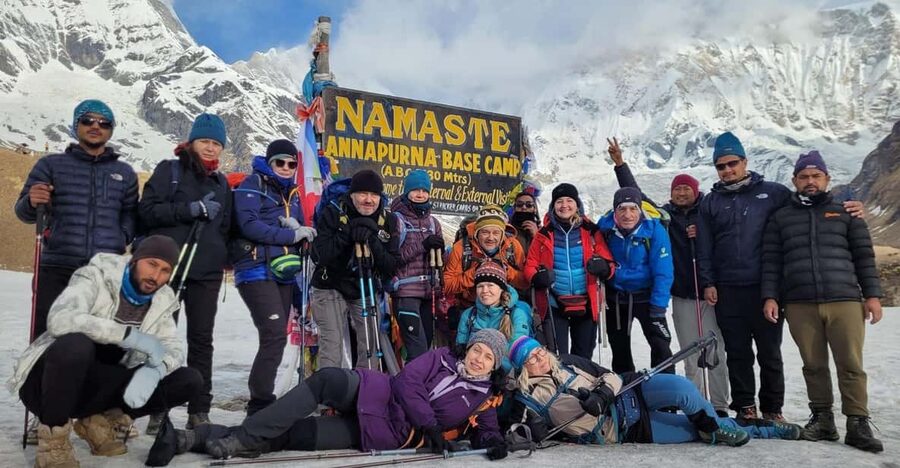
The morning begins early with the climb to Poon Hill. At 3,210 meters, the viewpoint gives you a broad look toward the Annapurna range and surrounding peaks. Sunrise is the point of the stop, so bring warm clothing and keep your camera ready.
Poon Hill is valuable because the reward comes quickly. You do not need to wait until base camp for your first major mountain panorama. The tradeoff is that the viewpoint is reached before breakfast, after an uphill walk in the cold and dark.
You return to Ghorepani for breakfast, then continue toward Tadapani and Chuile. The day takes about six hours of trekking and shifts from viewpoint walking to a longer forest route.
The villages of Tadapani and Chuile give you a more grounded sense of life in the hills. You spend the night at about 2,400 meters, lower than Ghorepani, which makes this a useful recovery point before the route turns toward the base camp valley.
Past departures have had strong support from the guide and porter team on this section. Mahesh has been praised for answering questions and adjusting the route, while Bishal and Avinesh have been credited with carrying loads and helping the group. Your exact team can vary, so treat those names as examples rather than a promise.
Day 3: Chuile to Sinuwa beside the rivers
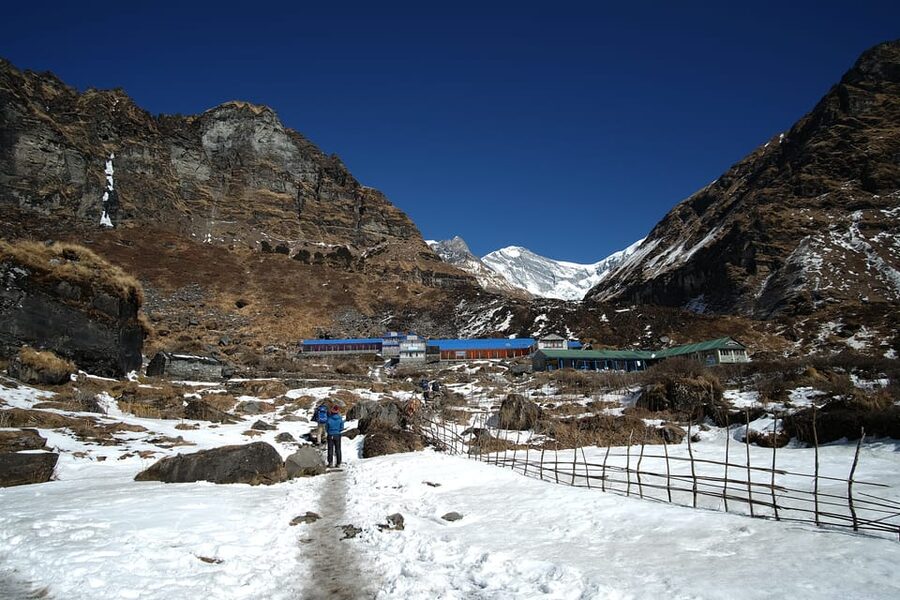
Day three takes you toward Sinuwa, with roughly five hours on foot. The route crosses the meeting point of the Kumrung and Modi Rivers, then follows the river system through the hills.
This is one of the route’s more appealing transitions. The trek begins to feel less like a viewpoint walk and more like a journey into the Annapurna Base Camp approach. Water, forest, and changing valley views keep the walking interesting even when the path itself is tiring.
Sinuwa sits at about 2,170 meters, lower than both Poon Hill and Ghorepani. That lower overnight height gives you a break before the next two days of climbing. It also shows why the route should not be judged by altitude alone. You gain and lose height repeatedly, and the daily effort can be greater than a simple elevation chart suggests.
Your guide’s role matters here. English, Hindi, and Nepali are available, and the private group format lets you ask questions about the route, rivers, villages, and mountain names as you go.
More Spas and Hot Springs in Pokhara
- From Pokhara: 5-Day Annapurna Basecamp Trek with Hot Springs
★ 4.9 · 26 reviews - Pokhara: 7-Day Annapurna Base Camp Trek & Natural Hot Spring
★ 5.0 · 11 reviews - Pkr/Kathmandu: 5-Day Annapurna Base Camp & Hot spring Trek
★ 5.0 · 6 reviews - Pokhara: Amazing 7-Day ABC Trek with Natural Hot Spring
★ 5.0 · 5 reviews
Day 4: Sinuwa to Deurali through bamboo forest
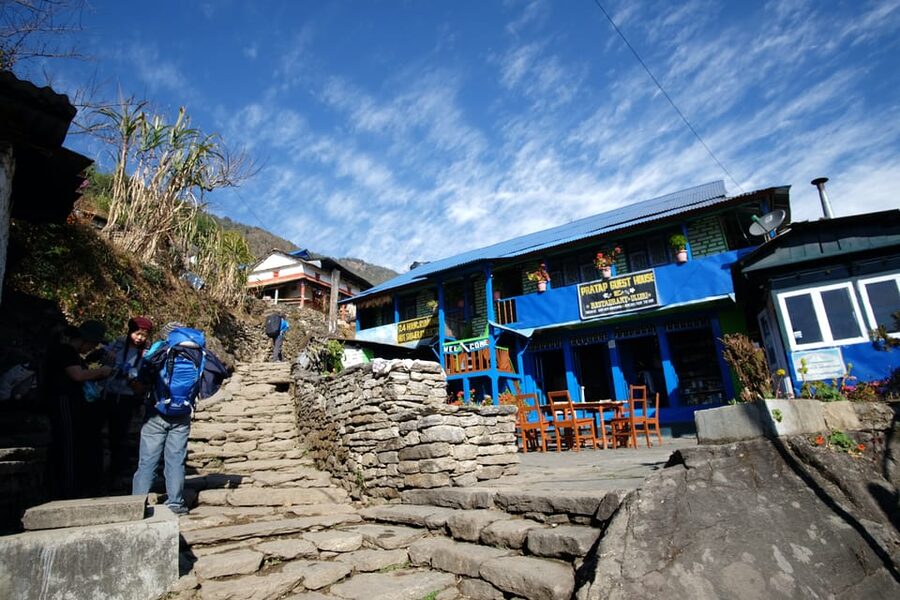
From Sinuwa, you walk for about six hours to Deurali at 3,200 meters. The route passes through bamboo and rhododendron forest, with stops around Dovan before continuing higher.
The scenery changes as you gain height. You leave behind much of the lower village setting and move deeper into a narrow mountain corridor. Views toward Annapurna and Machhapuchhre, also called Fishtail, become a major part of the day.
This is a serious trekking day. The distance may not sound extreme, but the uphill sections, uneven trail, and increasing altitude all add strain. You should keep your pace steady rather than trying to race the group.
Deurali is an important overnight stop because it sets up the base-camp push. At 3,200 meters, it is already higher than Poon Hill. The next morning takes you to 4,130 meters, so tell your guide if you feel unwell, unusually tired, or affected by the altitude.
The itinerary does not include travel or rescue insurance. That is not a small detail on a high-altitude trek. Arrange suitable insurance before you go, and check that it covers trekking at the planned altitude and any required rescue.
Day 5: Deurali to Annapurna Base Camp at 4,130 meters
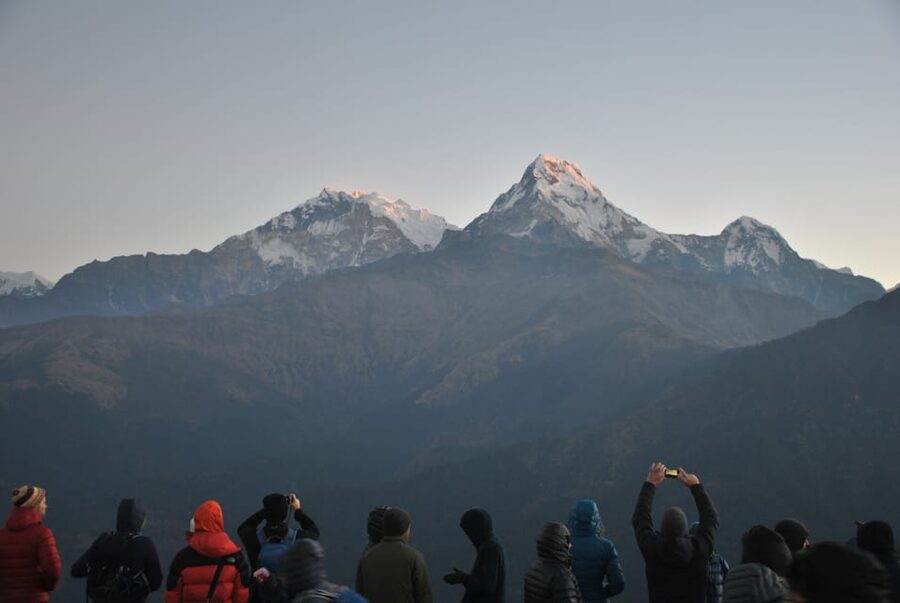
This is the day the route has been building toward. You leave Deurali and walk for about six hours to Annapurna Base Camp, entering the high mountain setting that gives the trek its name.
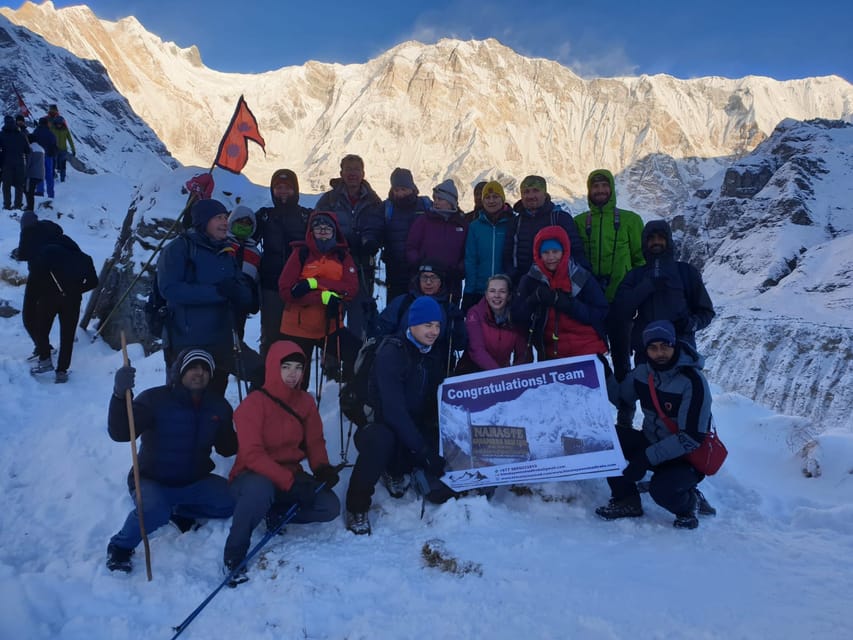
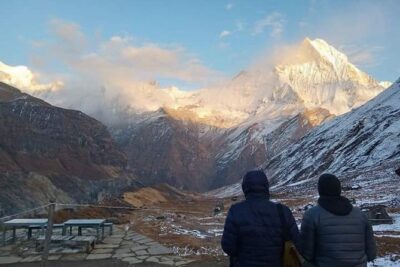
At 4,130 meters, ABC sits inside a broad natural amphitheater of snow-covered peaks and glaciers. The feeling is different from Poon Hill. Poon Hill gives you a distant panorama, while base camp places you among the mountains, with steep walls and dramatic high-altitude scenery around you.
The final approach is physically demanding. The air is thinner, the trail climbs steadily, and weather can affect visibility. Do not judge the day only by the stated six-hour estimate. Your actual time depends on your group’s pace, conditions, and how your body handles the height.
The reward is a strong sense of arrival. You have passed from villages and forest into a high mountain bowl, and the contrast makes the route more satisfying than a direct base-camp schedule. You spend the night in the mountain area, with accommodation included as part of the trek.
Day 6: Descending from ABC to Bamboo
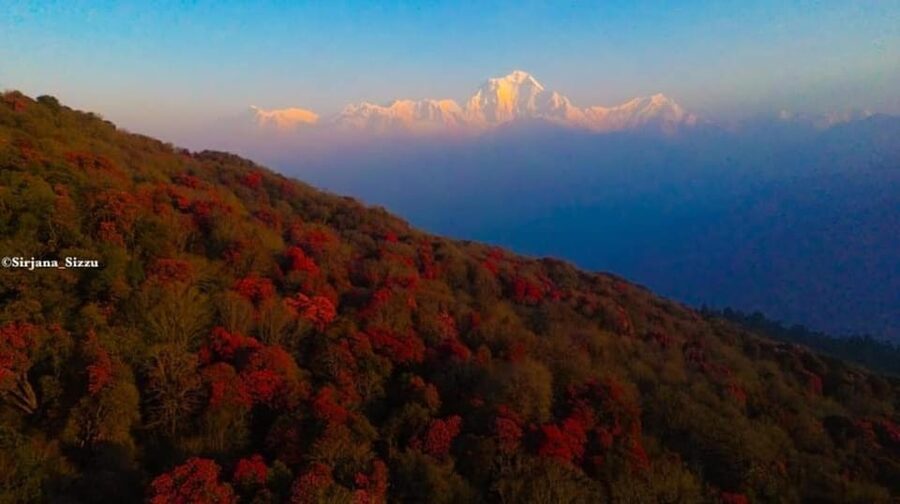
After time at base camp, you retrace the route to Bamboo at about 2,300 meters. The descent takes roughly six hours.
Walking downhill is not automatically easy. Long descents can be hard on knees and feet, especially after the high-altitude day. Trekking poles, comfortable shoes, and a careful pace can make a real difference.
The return through the valley gives you another look at the same scenery, often from a different angle and with less pressure to reach a major destination. Bamboo also brings you back to a lower elevation, which can feel like a relief after the night near base camp.
This is where porters and guides can make the day more manageable. Keep the items you need during the day in your own small pack, and let the porter carry heavier gear if you have arranged porter service. Porter hire is available for an additional cost, but it is not included in the stated price.
Day 7: Bamboo, Jhinu hot spring, and Pokhara
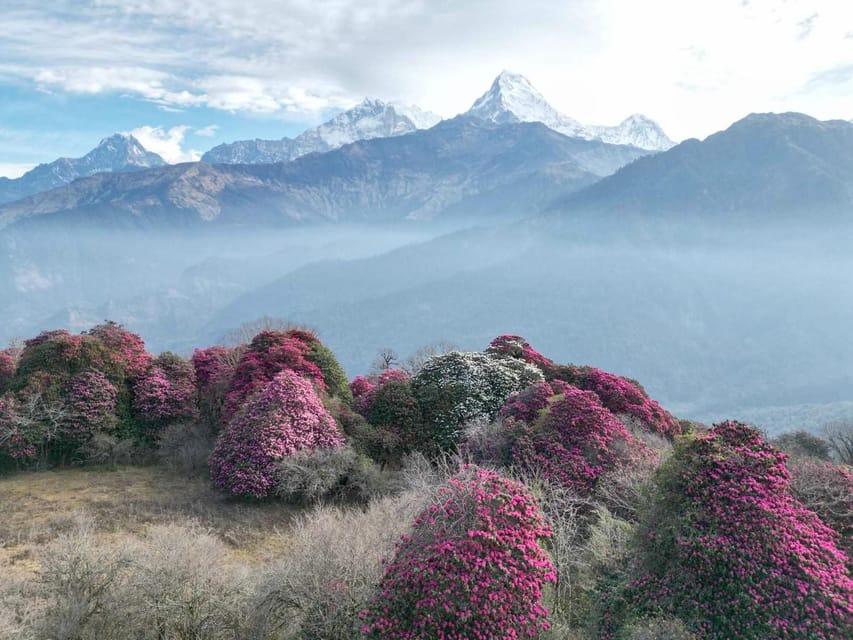
The final day combines a five-hour trek, a hot-spring stop, and a 2.5-hour drive back to Pokhara. You descend from Bamboo toward Jhinu Dada at about 1,600 meters.
The hot springs are the trip’s recovery prize. You have about two hours to soak in the natural hot water and rest tired muscles before the final transfer. Bring swimwear and keep a dry change of clothes accessible, though the listed packing information does not specify a separate towel or swimwear provision.
After Jhinu, you trek for about 30 minutes to Samrung and board a jeep for Lakeside Pokhara. The ride closes the loop neatly, taking you from the mountain trail back to the city without requiring another long road walk.
The return journey is also a useful pause. You can look back on the sunrise at Poon Hill, the river valleys, the high route to ABC, and the hot spring in a single week. That is a lot of Nepal for the time.
What the $267 price really covers
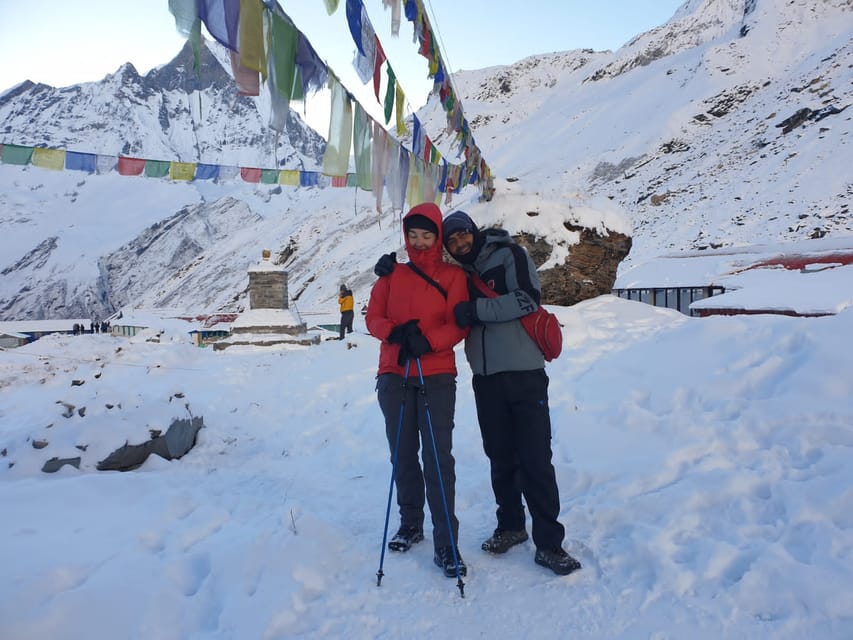
At $267 per person, the trip offers good value if you want a guided, organized route. The price includes hotel pickup and drop-off, trekking permits, required paperwork, the Trekkers’ Information Management System fee, government taxes, trek accommodation, and four-wheel-drive transport described in the schedule.
It also includes the guide’s meals, lodging, salary, equipment, insurance, and transport. That matters because guide costs can otherwise appear later as separate charges.
Meals are included for breakfast, lunch, and dinner on the full package. Confirm that you are booking the full package if meals are important to your budget. Drinks, bottled or boiled water, showers, charging, laundry, phone calls, bar bills, and other personal costs are extra.
The price does not include international flights, a Nepalese visa, travel and rescue insurance, sightseeing entrance fees, or porter service. You also pay for extra nights in Pokhara caused by an early arrival, late departure, or an early return for reasons outside the scheduled plan.
The reserve-now, pay-later option and free cancellation up to 24 hours before departure reduce booking risk. They do not remove the need to plan insurance, gear, and possible personal expenses.
Guides, porters, and the private-group advantage
The strongest part of the service is the human support. Past departures have included guides named Mahesh and Prakash, with Prakash praised for his care and mountain knowledge. Sujal was also singled out as a good companion on the trail, while Bishal and Avinesh handled porter duties well on another trip.
That kind of support is especially useful on a route with several altitude changes. A good guide can explain the day ahead, answer questions, monitor how you are doing, and adjust the pace within reason.
The group is private, and pickup at your hotel is optional. You should wait in the lobby 10 minutes before the scheduled pickup time if you arrange it. Live guiding is available in English, Hindi, or Nepali.
Do not assume that porter service is part of the deal. It is available to purchase, but the listed inclusions cover the guide’s expenses, not your porter’s fee. If you prefer to hike with a lighter daypack, arrange this clearly before departure.
Packing for seven demanding days
The supplied packing advice is sensible: passport or ID card, comfortable shoes, sunglasses, sunscreen, a jacket, comfortable clothing, sleeping bag, and trekking gear.
Your jacket matters at Poon Hill and ABC, where early mornings and high altitude can be cold. Sunglasses and sunscreen are also practical at higher elevations, even when the air feels cool.
A sleeping bag is specifically recommended, so do not assume the tea houses will provide everything you need. Comfortable shoes are more important than fashionable ones. You will face long walking days, forest paths, descents, and uneven mountain trails.
Budget for personal drinks, water, showers, battery charging, and other small costs. These extras are not included, and remote areas can make simple services more expensive or less available.
Pregnant women should not book this activity. The high altitude, long walking days, and limited schedule make this unsuitable.
Who should book this trek?
I would choose this route if you have limited time in Nepal but want more than a single viewpoint walk. It gives you Poon Hill, the Annapurna Base Camp approach, mountain forests, villages, rivers, and Jhinu hot springs in one organized trip.
It suits reasonably fit hikers who are ready for six-hour trekking days and a maximum altitude of 4,130 meters. It is not the best match if you want leisurely mornings, short walks, or a great deal of flexibility.
The trip is also a good fit if you prefer personal attention. A private group and local guide can make the route feel more manageable than joining a large mixed party. Solo visitors and small groups may appreciate the simple pickup, permits, lodging, transport, and guide arrangement.
Final call: book it if the pace fits
Book this trek if you want a compact Annapurna experience with two major rewards: sunrise at Poon Hill and arrival at Annapurna Base Camp. The $267 price is attractive because it covers permits, guide costs, accommodation, meals on the full package, and key jeep transfers.
Think twice if you are not prepared for altitude, long descents, and several demanding days in a row. Before paying, confirm the exact meal package, ask whether porter service is needed, and arrange travel and rescue insurance.
For the right hiker, this is a well-planned route with plenty of variety and a satisfying finish at the Jhinu hot springs.
FAQ
How long is the Annapurna Base Camp via Poon Hill trek?
The trek lasts seven days, beginning and ending in Pokhara.
What is the highest altitude on the route?
The highest point is Annapurna Base Camp at 4,130 meters. Poon Hill reaches 3,210 meters, and Deurali is at about 3,200 meters.
Is transportation included?
Yes. The trip includes hotel pickup and drop-off, a four-wheel-drive jeep according to the itinerary, the opening drive toward Ulleri, and the final jeep from Samrung to Pokhara.
Are meals included?
Breakfast, lunch, and dinner are included during the trek on the full package only. Soft drinks, hard drinks, bottled or boiled water, and other personal purchases are not included.
Is porter service included?
No. Porter service is available for an additional purchase.
What languages can the guide speak?
Live guiding is available in English, Hindi, and Nepali.
Can I cancel the booking?
You can cancel up to 24 hours in advance for a full refund. The activity also offers a reserve-now, pay-later option.
More 7-Day Experiences in Pokhara
- Pokhara: 7 Day Annapurna Base Camp Trek
★ 4.9 · 38 reviews - Annapurna Base Camp Trek from Pokhara 7 Days
★ 5.0 · 19 reviews - 7-Day Trek to Annapurna Base Camp from Pokhara
★ 5.0 · 12 reviews - Annapurna Base Camp 7 Days Trek from Pokhara
★ 5.0 · 8 reviews
Recently added around Pokhara
- Paragliding in Pokhara★ 5.0 · 3 reviews
- Pokhara: 5-Day Annapurna Base Camp Trek with Hot Spring★ 5.0 · 3 reviews
- Pokhara:4-Day Ghorepani Poon Hill Guided Trek via Ghandruk★ 5.0 · 3 reviews
- Pokhara: 7-Day Annapurna Base Camp Trek via Ghandruk★ 4.3 · 3 reviews
- Peace & Panorama: Stupa and Pumdikot Scenic Drive Tour★ 3.6 · 3 reviews
- Beautiful Sarankot Sunrise with Full Day Sightseeing in Pokhara★ 4.5 · 3 reviews
- 3 Day Australian Camp Dhampus Ghandruk Easy Trek in Pokhara★ 3.5 · 3 reviews
- Overnight Dhampus Australian Camp Easy Hiking from Pokhara★ 5.0 · 3 reviews
Other Annapurna Base Camp Treks worth a look
Kathmandu to Annapurna Base Camp (ABC) 5-Day Trek
Read our review →