REVIEW · MARDI HIMAL TREKS
Mardi Himal Trek 5 Days
Mardi Himal gives you a remarkably close look at the Annapurna range in only five days. The trail leaves Pokhara for rhododendron forest, streams, and high alpine views, then climbs toward the rugged country below Mardi Himal and the unmistakable peak of Machapuchare.
I like the trek’s compact length and its quieter feel compared with Nepal’s best-known routes. I also like the practical package: meals, teahouse beds, permits, transport from Pokhara, and porter support are included. The main catch is the climb itself. This is not a casual walk, and the final high sections can feel demanding for anyone with limited hill fitness.
Key points before you book
- Five days from Pokhara: A short route into serious Himalayan scenery, useful if you have limited time.
- Forest to high mountain country: Expect streams, mossy forest, rhododendrons, alpine trees, and open views as you gain height.
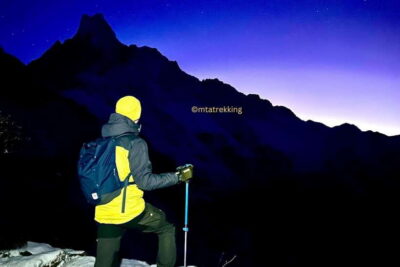
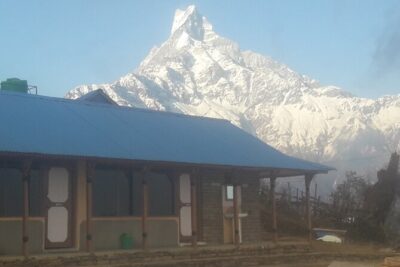
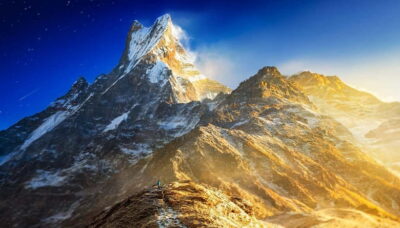
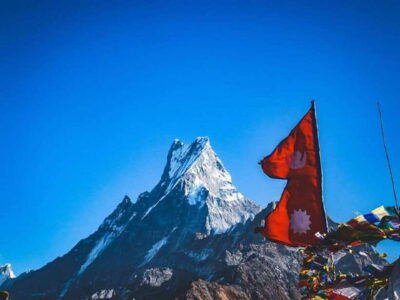
- Machapuchare is the visual prize: The famous fishtail peak forms one of the trek’s most memorable backdrops.
- Teahouse travel: You sleep in simple mountain lodges and receive breakfast, lunch, dinner, tea, or coffee each day.
- Private group format: Only your own group takes part, with guide support and one porter for every two people.
- $500 value: The price is reasonable if you use the included meals, permits, beds, transport, and porter service, but Pokhara and Kathmandu hotels are extra.
Why Mardi Himal works as a five-day trek
The appeal is simple: you reach a high Himalayan viewpoint without committing to a two-week expedition. From Pokhara, the route quickly changes from city roads to mountain paths, and the scenery keeps shifting as you climb.
You pass through parts of the Annapurna region marked by dazzling streams, thick forest, and increasingly open views. The trail is still relatively new compared with some classic Nepal routes, which helps explain its appeal. It feels like a proper mountain journey, yet the time commitment remains manageable.
The route is suitable for people with a moderate level of fitness. That phrase deserves a clear reading. You do not need to be an elite athlete, but you should be comfortable walking uphill for several hours, handling uneven paths, and repeating that effort on successive days.
The height matters too. The route climbs to around 3,300 meters, with the upper viewpoint and Mardi Himal Base Camp area bringing more demanding conditions. At that altitude, a path that looks easy on paper can feel quite different. Move steadily, drink enough water, and follow the guide’s pace rather than treating the trek like a race.
More Hiking Tours in Pokhara
- Poon hill Trek 3 days
★ 5.0 · 176 reviews - Trekking in Annapurna/Langtang/Everest/Upper Mustang regions
★ 5.0 · 161 reviews - Pokhara: 4-Day Ghorepani, Poonhill & Ghandruk Mountain Trek
★ 5.0 · 132 reviews
From Pokhara to Kande, where the trail begins
The trip includes local transport from Pokhara to Kande. That saves you the trouble of arranging the first road transfer and gets you to the walking route without fuss.
Kande is a useful starting point because the trek begins with a clear change in surroundings. You leave Pokhara’s cafés and traffic behind and enter forested mountain country. The first stages are not just a warm-up for the camera. They help you settle into the rhythm of walking, eating, resting, and carrying only what you need for the day.
The forest is one of the route’s strongest features. Rhododendrons, moss, and alpine trees create a shaded setting, with occasional openings toward the peaks. Depending on the season, the forest may feel cool and damp, while the open sections bring stronger sun and wider views.
I like this gradual change. You do not begin with a bare, high-altitude ridge. Instead, the route builds its character through trees and small paths before opening onto tougher mountain country.
Forest paths, streams, and the changing view
The middle part of the trek is where Mardi Himal earns its reputation. The trail winds through ancient rhododendron forest and crosses or follows small streams. This is a more textured experience than simply walking toward a distant mountain.
The sound of water, the moss-covered trees, and the narrow paths give the route a genuine sense of remoteness. You may also notice how quickly the ground changes underfoot. Forest trails can be soft, muddy, or uneven, while higher sections become rockier and more exposed.
The views improve as you climb. At first, trees frame the mountains in pieces. Later, the Annapurna range comes into fuller view, and Machapuchare becomes a dominant presence. The scenery is especially rewarding because it changes with your height rather than appearing all at once.
The route is culturally rich as well as scenic. The supplied information does not give a detailed village-by-village program, so I would not book this expecting a formal cultural tour. Still, teahouse stays and contact with local mountain communities are part of the experience, and the hospitality is an important part of the trek’s character.
Reaching the high country around 3,300 meters
Around 3,300 meters, the forest gives way to a more open alpine setting. This is the point where the trek feels less like a woodland hike and more like a Himalayan route.
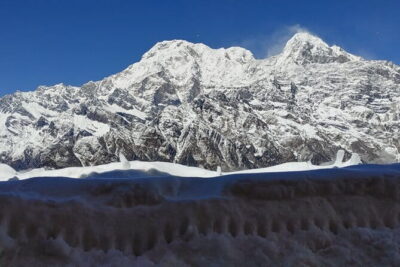
The scenery becomes rugged, with high ridges, exposed slopes, and larger views toward the peaks. Machapuchare is the star, but the wider Annapurna range gives the trip its scale. On a clear day, you can expect the kind of mountain panorama that makes the uphill work worthwhile.
The high sections also bring the trek’s main physical challenge. You may find the air thinner and the walking slower. The tour is private, so your guide can focus on your group rather than forcing you into the speed of a large departure. That is a real advantage, particularly for a first Himalayan trek.
Several people who have taken this route describe it as challenging but rewarding. That is the right expectation. The route is not presented as technical mountaineering, but it is still a serious hike with altitude, uneven ground, and long walking days.
More Mardi Himal Treks in Pokhara:
- Pokhara: 4-Day Mardi Himal Trek
★ 4.9 · 59 reviews - Private Mardi Himal Trek
★ 5.0 · 42 reviews - From Pokhara: 4-Day Mardi Himal Base Camp Trek
★ 4.9 · 31 reviews - Mardi Himal Trek
★ 5.0 · 30 reviews
The Mardi Himal viewpoint and Machapuchare
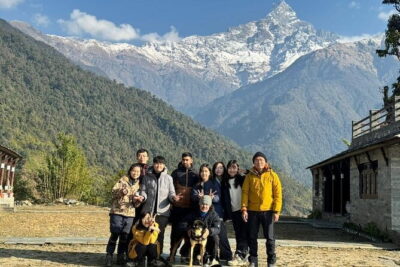
The high viewpoint is the main reason to choose this route. You climb toward the Mardi Himal area for sweeping views of the Annapurna range, with Machapuchare providing the most recognizable profile.
The viewpoint experience depends heavily on weather. Mountains can disappear into cloud, especially in changing conditions, so you should value the walk itself rather than treating one photograph as the entire purpose of the trip. Clear weather can produce spectacular views, while mist can make the forest and ridges feel atmospheric in a different way.
The route has also been described as a learning experience for first-time trekkers. That makes sense. You gain a taste of altitude, teahouse routines, mountain weather, and group walking without signing up for a much longer itinerary.
For experienced hikers, the five-day format may feel brisk. A longer schedule would give you more time to stop, adjust to the height, or add another Annapurna route. The short version is best for someone who wants a concentrated mountain trip from Pokhara.
Teahouses, food, and what $500 covers
The $500 price includes all teahouse accommodation and three meals a day: breakfast, lunch, and dinner, with a cup of tea or coffee. That makes the cost easier to judge. You are not paying only for a guide and a route. The package also covers ACAP and TIMS permits, local transport from Pokhara to Kande, the return from Siddhing to Pokhara, government taxes, and porter support.
One porter is assigned for every two people. Solo hikers do not receive a porter under this arrangement, so that point matters if you are booking alone. You should confirm how much luggage you are expected to carry yourself before departure.
Teahouse accommodation is practical rather than luxurious. The point is a warm bed, a meal, and a place to recover, not hotel-style comfort. Tea and coffee are included with meals, which is welcome after a cold or wet stretch of trail.
Personal spending is not included. You should budget separately for anything outside the stated meal and drink arrangement, as well as tips for your guide, porters, and driver. Hotels in Kathmandu and Pokhara are also excluded, along with transportation between Kathmandu and Pokhara and any domestic flight costs.
Taken as a package, $500 is a fair price for a private five-day trek if you are starting and ending in Pokhara. It becomes less convenient if you still need to arrange a long list of extra services around it. The included permits, transport, food, beds, and porter support remove much of the usual planning work.
The people who shape the experience
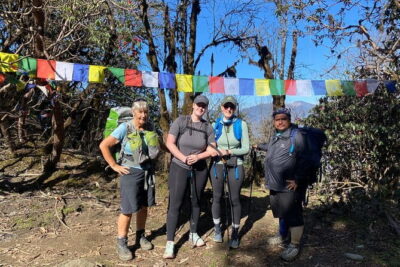
The guide can make a big difference on a short trek. Recent departures have been led by guides including Sushil Gurung, Phul Gurung, Sobit, and Sandesh. Specific groups also praised Sushil and Phul for being responsible, accommodating, and professional.
Phul was particularly noted for his commitment to the group, including finding seasonal vegetables and mushrooms for meals. That detail says something useful about the style of service you may encounter. The experience is not limited to following a route with a stopwatch. Local food, personal care, and practical help can become part of the trip.
Solo hikers also described warm support from Robin and Sobit. Since the tour is private, your group has direct contact with its guide rather than sharing attention with a large crowd.
That said, guide assignments can change. Treat the listed names as examples of guides associated with this experience, not as a guaranteed promise unless the company confirms your guide before departure.
Who should choose this route
I would recommend Mardi Himal to you if you want:
- A five-day Himalayan trek based around Pokhara
- Big mountain scenery without a long expedition
- A private departure rather than a shared group
- Forest walking combined with high alpine views
- Simple teahouse accommodation and included meals
- Guide and porter support arranged in advance
It also suits first-time trekkers who are realistic about the effort. The route has been completed by people on their first Nepal trek, but the experience included real challenges. You should arrive with moderate fitness and a willingness to walk uphill for extended periods.
It may not suit you if you want a relaxed sightseeing holiday, private bathrooms, polished accommodation, or a fully detailed luxury schedule. The route is remote in parts, and the teahouses are basic. You also need to be comfortable with changing weather and the possibility that cloud will limit the views.
Timing, pickup, and small details worth checking
Pickup is offered, and local transport from Pokhara to Kande is included. The return transfer from Siddhing to Pokhara is included too. Transportation between Kathmandu and Pokhara is not included, so you need to arrange that separately if your trip begins in Kathmandu.
The stated start time is 8:15 pm, which is unusual for a daytime mountain departure. I would confirm the exact meeting time and location directly with Everest Trekking Routes Pvt. Ltd. before setting out, since the listed time may relate to a booking or transfer detail rather than the first walking stage.
Confirmation is provided at booking. The activity is private, and only your own group participates. It is also close to public transportation, which may help with getting around Pokhara before or after the trek.
Free cancellation is available up to 24 hours before the local start time for a full refund. Changes or cancellations made inside that 24-hour window are not accepted or refunded.
Should you book the five-day Mardi Himal Trek?
Book it if you want a compact, well-supported introduction to the Annapurna region and care more about mountain scenery than comfort. The combination of forest, streams, alpine country, Machapuchare views, teahouse stays, meals, permits, and transport gives you a lot for five days.
I would be especially comfortable recommending it to a fit first-time trekker, a couple, or a small private group with limited time in Nepal. The main decision is not the scenery. It is whether you are ready for the uphill work and simple mountain lodging.
Before paying, confirm the meeting time, guide assignment, porter arrangement if you are solo, and the exact high viewpoint included. If those details suit your plans, Mardi Himal offers a strong short trek with genuine mountain character and a sensible level of support.
FAQ
How long is the Mardi Himal Trek?
The trek lasts approximately five days.
Where does the trek take place?
It takes place in Nepal’s Annapurna region, with the trip beginning and ending in Pokhara for the included local transfers.
Is transport from Pokhara included?
Yes. Local transport from Pokhara to Kande and from Siddhing back to Pokhara is included.
Are meals included during the trek?
Yes. Breakfast, lunch, and dinner are included each day, along with a cup of tea or coffee.
Is a porter included?
A porter is included at a ratio of one porter for every two people. No porter is provided for solo trekkers under the stated arrangement.
What is not included in the $500 price?
Hotels in Kathmandu and Pokhara, transportation between Kathmandu and Pokhara, domestic flights, personal expenses, and tips for the guide, porters, and driver are not included.
More 5-Day Experiences in Pokhara
- Kathmandu/Pokhara: 5-Day Annapurna Base Camp (ABC) Trek
★ 4.9 · 72 reviews - From Pokhara: 5-Day Annapurna Basecamp Trek with Hot Springs
★ 4.9 · 26 reviews - Ghorepani Poonhill Trek 5 Days from Pokhara
★ 5.0 · 14 reviews - 5 Days Adventures Lower Mustang Trip by 4WD Jeep
★ 5.0 · 12 reviews
Recently added around Pokhara
- Paragliding in Pokhara★ 5.0 · 3 reviews
- Pokhara: 5-Day Annapurna Base Camp Trek with Hot Spring★ 5.0 · 3 reviews
- Pokhara:4-Day Ghorepani Poon Hill Guided Trek via Ghandruk★ 5.0 · 3 reviews
- Pokhara: 7-Day Annapurna Base Camp Trek via Ghandruk★ 4.3 · 3 reviews
- Peace & Panorama: Stupa and Pumdikot Scenic Drive Tour★ 3.6 · 3 reviews
- Beautiful Sarankot Sunrise with Full Day Sightseeing in Pokhara★ 4.5 · 3 reviews
- 3 Day Australian Camp Dhampus Ghandruk Easy Trek in Pokhara★ 3.5 · 3 reviews
- Overnight Dhampus Australian Camp Easy Hiking from Pokhara★ 5.0 · 3 reviews