
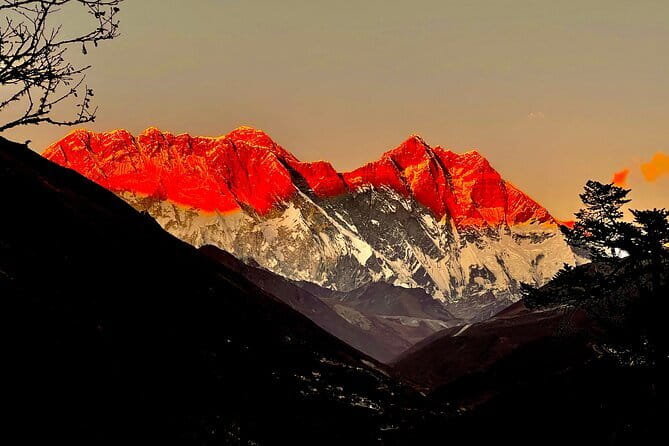
REVIEW · EVEREST BASE CAMP TREKS
14 Days Everest Base Camp Trekking
Everest Base Camp is the headline, but the real reward comes from the slow climb through the Khumbu. You move from Kathmandu to Lukla, then along suspension bridges, Sherpa villages, Buddhist monasteries, rhododendron woods, and finally the cold stone and ice near Gorak Shep.
I like that the price of $1,420 covers the costly pieces that can make a Himalayan trek hard to arrange: round-trip Kathmandu to Lukla flights, permits, a guide, porter support, meals, and tea-house lodging. I also like the two acclimatization days in Namche and Dingboche, plus the early hike to Kala Patthar for one of the finest Everest viewpoints.
The main caution is the pace. Several trekking days are listed at about 10 hours, and the route reaches 5,565 meters at Kala Patthar. This is not a casual walk, and the plan gives you little spare time if flights are delayed or you need an extra rest day.
Key points at a glance
- Lukla starts the real adventure: You fly to a mountain airstrip at 2,850 meters, then walk into the Dudh Koshi Valley.
- Two acclimatization days matter: Rest stops in Namche and Dingboche help you adjust before the highest parts of the route.
- Kala Patthar is a major highlight: The 5,565-meter viewpoint offers broad views of Everest, Nuptse, Ama Dablam, Pumori, and other peaks.
- The price includes useful essentials: Guide, porter support, permits, meals, tea-house accommodation, airport transfers, and domestic flights are covered.
- This is a private trip: Only your own group participates, with an English-speaking guide assigned to the trek.
- Guide care is a strength: Guides named in the supplied feedback include Hari, Kapil, and Namo, with special praise for organization, calm support, and attention to acclimatization.
Kathmandu to Lukla, where the walking begins
Your journey begins with pickup at Tribhuvan International Airport in Kathmandu. The flight into Kathmandu can offer a memorable first look at the Himalayas on a clear day, but the next flight is the one that changes the mood of the trip.
From Kathmandu, you fly to Lukla, landing on a steep mountain runway at about 2,850 meters. This is not simply a transfer. It is the gateway to the Khumbu, and the small airstrip gives you an immediate sense that the road network has ended.
After meeting your guide and support crew, you walk along the Dudh Koshi Valley to Phakding, at roughly 2,656 meters. The first day is useful because it gets your legs moving without sending you straight to high altitude.
You should still take this opening section seriously. The route is not difficult only because of distance. Stone steps, bridges, changing weather, and a loaded daypack can make the first full day feel longer than expected.
More Hiking Tours in Kathmandu
- Everest Base Camp Trek – 14 Days
★ 5.0 · 1,499 reviews - Everest Base Camp Trekking
★ 5.0 · 485 reviews - Nagarkot Sunrise View and Day Hiking from Kathmandu
★ 5.0 · 471 reviews
Phakding to Namche Bazaar across suspension bridges
The path from Phakding to Namche Bazaar follows the river and crosses it several times on high suspension bridges. The bridges are a memorable part of the route, though they can feel exposed if you are not fond of heights.
Beyond Monjo, at about 2,845 meters, you enter Sagarmatha National Park. This protected area matters because the trek is not just a mountain walk. It passes through a fragile environment where forests, rivers, wildlife, villages, and tourist footpaths all share limited space.
Namche Bazaar sits between ridges in the Khumbu and functions as the main service center on the route. You can expect lodges, tea shops, and souvenir shops, giving you a useful chance to buy small supplies or adjust your gear.
The published schedule lists this as a long day, up to about 10 hours. I would treat that time as a ceiling rather than a promise, since walking speed, trail conditions, and group pace affect the finish.
Namche acclimatization and the Everest View Point
Day four is set aside for acclimatization in Namche. This is one of the most important design choices in the trip. At altitude, a rest day does not mean doing nothing. The plan includes a walk toward an Everest viewpoint, allowing you to gain some height before returning to sleep at Namche.
This approach gives your body time to adjust while also giving you an excellent introduction to the high mountains. The area offers views toward the Khumbu peaks, and Namche itself provides more comfort and choice than the smaller villages farther up.
I like having this day placed before Tengboche and Dingboche. A rushed ascent can turn a great trek into a miserable one, so the pause is worth more than squeezing in another short walking day.
Keep in mind that altitude affects people differently. The tour requires a strong level of physical fitness, and the guide’s role is especially important here. Feedback about guides Hari, Kapil, and Namo points to careful pacing and attention to physical and mental well-being, which is exactly what you need at this stage.
Tengboche and the first great mountain views
From Namche, the trail contours along the valley above the Dudh Kosi. This is where the scenery becomes especially rewarding, with views toward Everest, Lhotse, Nuptse, and Ama Dablam.
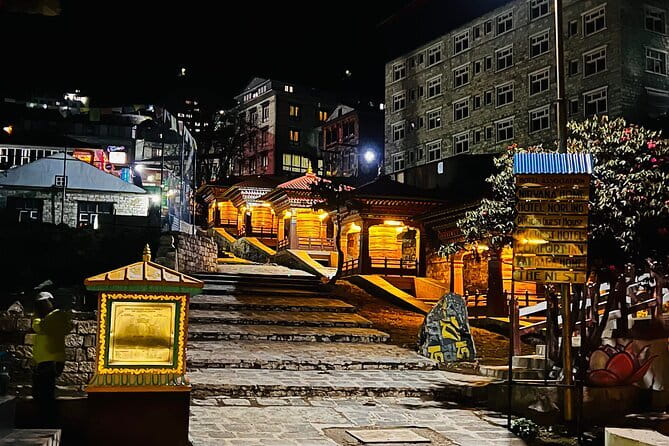
You continue through villages before reaching Tengboche, written as Tyangboche in part of the schedule. The monastery, Mani walls, and surrounding peaks give this section a strong cultural character. It is not just a scenic stop. You are moving through a Sherpa region where Buddhist practice remains part of daily life.
The route then descends through forest, crosses the Imja Khola, and climbs toward Pangboche at about 3,985 meters. Pangboche sits opposite Ama Dablam, one of the most striking mountains in the Khumbu, and the views from the village are described as exceptional.
This day is again listed at about 10 hours. The repeated long days are the largest practical weakness of the program. You should be ready for a demanding schedule, not a relaxed walking holiday.
More Everest Base Camp Treks in Kathmandu:
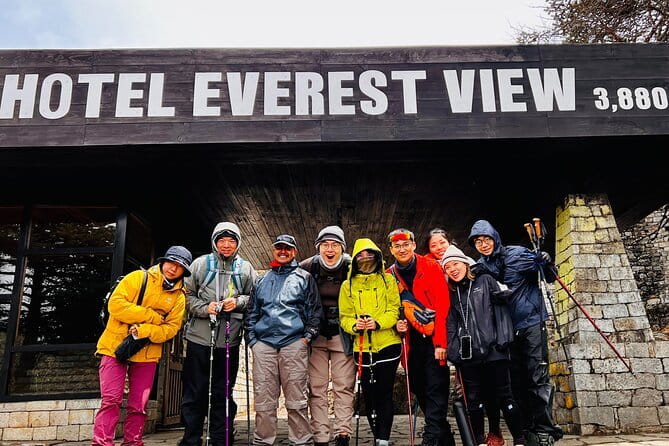
- Everest Base Camp Helicopter Tour landing at Everest View Hotel
★ 5.0 · 668 reviews - Everest Base Camp Trekking – 13 Day
★ 5.0 · 365 reviews - Everest Base Camp Trek -14 Days
★ 5.0 · 321 reviews - Everest Base Camp Helicopter Tour landing at Hotel Everest View
★ 5.0 · 218 reviews
Dingboche and the second acclimatization day
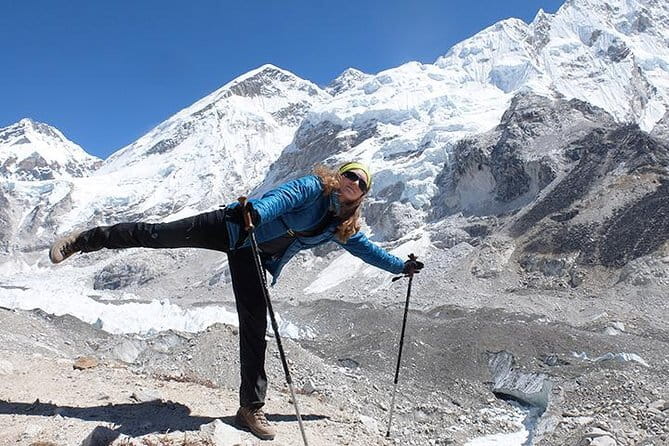
From Pangboche, you continue toward Dingboche. The route moves through increasingly open, rugged country as trees become less common and the air feels thinner.
Day seven is another acclimatization day. The plan allows a walk toward Tshola Tsho lake at about 4,510 meters, with views of the steep walls of Cholatse and Taboche. You may also climb toward Nagarjun, reaching about 5,100 meters, before returning to Dingboche.
This is valuable preparation for Lobuche, Gorak Shep, and Base Camp. You gain height during the day but sleep lower, a pattern that helps your body adjust better than a nonstop climb.
Dingboche is also a useful point to check your clothing, water, snacks, and personal gear. Hot showers cost $5, and drinks, snacks, and other personal expenses are not included. At this altitude, small comforts can matter, but they add to your daily spending.
Lobuche and the approach to the Khumbu Glacier
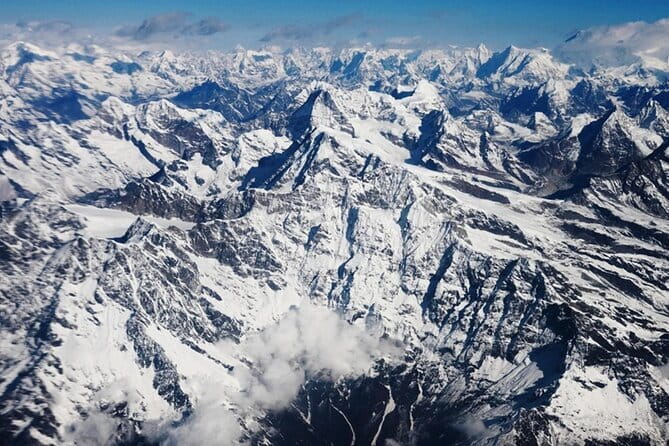
The trail leaves Dingboche and follows the broad valley beneath Cholatse and Tawache. It then turns toward the Khumbu Glacier, with a steep climb near Duglha at about 4,620 meters.
Duglha is listed as a lunch stop, and Lobuche is the overnight destination. This section marks the transition from high mountain villages to the severe terrain near Base Camp. The surroundings become more open and rocky, and the cold can feel sharper.
The schedule again allows about 10 hours. You should keep your pace steady and avoid treating this as a race. Your goal is not to arrive first. Your goal is to reach Gorak Shep with enough energy for the next day’s high point.
Tea-house lodging is included as the best available twin-sharing option. That wording is important: you are receiving practical mountain accommodation, not hotel comfort. Room conditions can vary, and you should expect a basic overnight stay.
Gorak Shep and Everest Base Camp at 5,364 meters
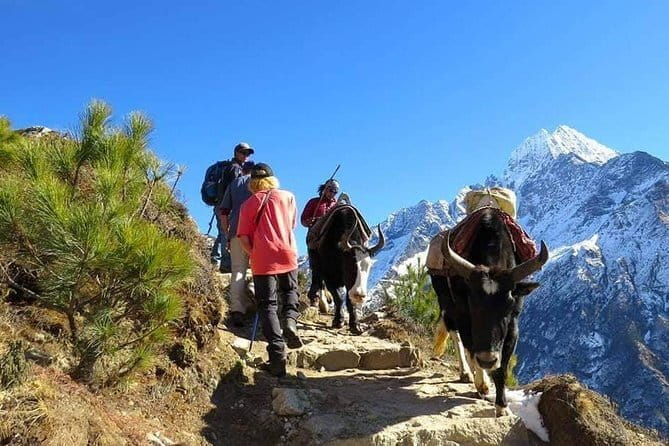
From Lobuche, you follow the Khumbu Glacier toward Gorak Shep, at about 5,164 meters. The route offers views of the surrounding peaks and rises to cross a tributary glacier.
The schedule gives one hour for the approach to Gorak Shep, followed later by a much longer outing to Everest Base Camp. In real mountain conditions, timing can vary considerably, so you should not read those figures as a guaranteed travel time.
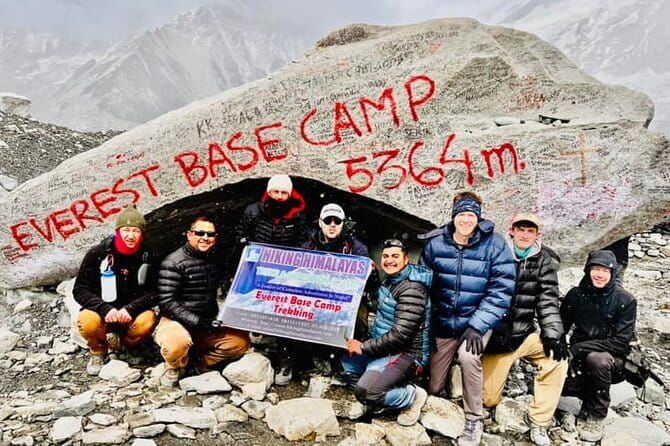
After lunch at Gorak Shep, you continue to Everest Base Camp at approximately 5,364 meters. The route takes you through ice formations and alongside crevasses of the Khumbu Glacier. The schedule allows about five hours for the Base Camp outing and seven hours overall for this stop.
Reaching Base Camp is a major personal achievement, but it is worth setting your expectations correctly. You do not climb Everest from here, and the famous summit is not always best seen from Base Camp itself. The route, glacier, surrounding peaks, and knowledge that expeditions begin from this area are what make the visit meaningful.
Kala Patthar, the best viewpoint on the route
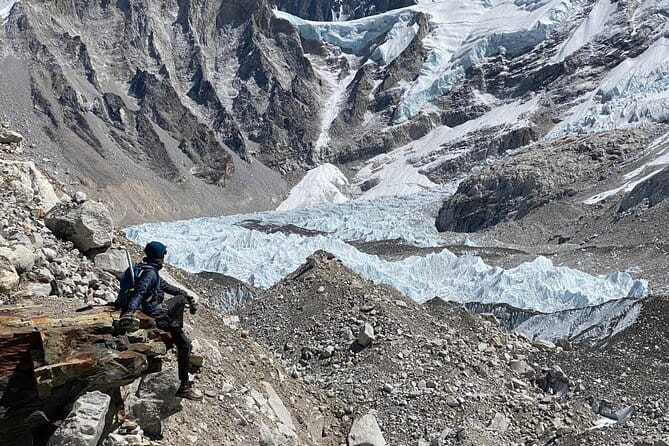
The following morning begins early with a hike to Kala Patthar at 5,565 meters. This is arguably the visual high point of the trek, with views toward Everest, Nuptse, Ama Dablam, Pumori, Lola, and Lhumbute.
The early start is practical because mountain views can change as clouds build later in the day. It also makes the climb physically demanding. You are already high, likely tired from the Base Camp outing, and walking uphill in thin air.
After Kala Patthar, the route is mostly downhill to Pheriche, passing back through Duglha. The descent is welcome, though downhill walking can still be hard on knees and ankles.
I would think of this as a two-part achievement: Base Camp is the destination you came for, while Kala Patthar often provides the clearest mountain panorama. Having both included gives the trip better value than a plan that turns around immediately after Base Camp.
The return through Tengboche and Namche
From Pheriche, the route follows the river and climbs back through birch and rhododendron forest toward Tengboche. The return gives you a different view of the same path and lets you notice details that altitude and excitement may have hidden on the way up.
From Tengboche, you continue toward Namche Bazaar. The mountain list is impressive: Everest, Nuptse, Lhotse, Ama Dablam, Kwangde, Tawache, Kantega, and Thamserku are among the peaks named in the route description.
These return days are still listed at about 10 hours. The downhill sections make progress feel faster, but the cumulative fatigue is real. Your porter support is especially useful here, since carrying only a daypack can preserve energy for the long descents.
The package includes one porter for every two trekkers. That is a practical arrangement, though you should confirm the expected luggage allowance directly with the operator before departure because the supplied information does not state a weight limit.
Lukla celebration and the flight back to Kathmandu
The final trekking day follows the Dudh Kosi downhill to Lukla. The route returns you to about 2,800 meters, where the air feels easier and the village marks the end of the walking portion.
A farewell gathering with the Sherpa guide team is planned for the last evening. This is a fitting close to a trip built around local support, since your guide and porter team have handled the route, accommodation, food arrangements, and day-to-day care.
The flight from Lukla to Kathmandu is scheduled for the next morning. The package includes airport transfers in private vehicles, both domestic flights, and departure taxes.
Because the schedule leaves limited spare time, a delay could affect the following plans. I would avoid booking an important international connection immediately after the scheduled domestic arrival unless you have checked the timing carefully.
Back in Kathmandu, the afternoon is free for shopping, packing, postcards, or further sightseeing. Food and accommodation in Kathmandu are not included, with a stated allowance of $45 per day.
What the $1,420 price really covers
At $1,420, this trek offers solid value for a private 14-day package, especially because domestic flights and permits are included. Those are not minor extras. The Lukla flights alone are essential to this route, and arranging them independently can add both cost and stress.
The package also includes:
- Twin-sharing tea-house accommodation during the trek
- Breakfast for 13 days
- Lunch for 11 days
- Dinner for 11 days
- An English-speaking certified guide
- Porter support at a ratio of one porter for two trekkers
- Guide and porter food, lodging, insurance, and related support
- Trekking permits
- Airport and hotel transfers in private vehicles
- A first-aid medical kit
- Trekking map and achievement certificate
You still need to budget for international flights, Nepal’s entry visa, Kathmandu accommodation and food, drinks, snacks, hot showers, personal equipment, insurance, and tips.
The visa is stated as $40 for 30 days and can be obtained on arrival at the airport. Travel insurance is not included, so you should arrange your own cover before setting out.
Who should choose this trek?
This trip suits you if you want a private Everest Base Camp experience with the main logistics handled for you. It is especially useful if you value having a guide, porter support, included permits, and arranged Lukla flights rather than piecing everything together yourself.
It can also suit families or small groups with a strong fitness level. One family group specifically praised guides Kapil and Namo, along with porters Ram and Mongol, for being friendly and supportive. That does not make the route easy for children, but it does show the value of a caring team when a group has different needs.
The trek is less suitable if you want a flexible schedule, soft accommodation, or short walking days. You should also think carefully if you have no prior high-altitude experience, since the route reaches more than 5,500 meters and includes several days listed at about 10 hours.
The trip has a 4.8 rating from six submitted reviews. The strongest praise centers on organized logistics, comfortable tea houses, good food, calm guidance, and careful acclimatization. Those are the details that matter most on a trek where weather and altitude can quickly upset a plan.
Should you book the Everest Base Camp trek?
I would book this trek if you want a well-organized route with a private group, included flights, two acclimatization days, and a guide-led approach to Everest Base Camp and Kala Patthar. The $1,420 cost is reasonable for what is covered, but your total budget will be higher once you add insurance, Kathmandu costs, equipment, drinks, visa fees, and gratuities.
Before paying, I would confirm the luggage allowance, the exact accommodation standard, the flight schedule, and what happens if weather delays the Lukla flights. If you are fit, prepared for basic tea houses, and willing to accept long mountain days, this plan gives you a strong route to the foot of Everest with useful support along the way.
Free cancellation is available up to 24 hours before the local start time for a full refund. The activity begins with airport pickup at Tribhuvan International Airport at 6:15 a.m., and it is a private experience for your group.
FAQ
Where does the Everest Base Camp trek begin?
The experience begins with pickup at Tribhuvan International Airport in Kathmandu, Nepal. The stated start time is 6:15 a.m.
How long does the trek last?
The full experience lasts approximately 14 days, including the Kathmandu arrival and departure days.
Is the tour private?
Yes. Only your own group participates in this private activity.
Are flights between Kathmandu and Lukla included?
Yes. Round-trip flights between Kathmandu and Lukla, including departure taxes, are included.
Is airport transportation provided?
Yes. Ground transportation in a private vehicle is provided between the hotel and domestic airport, and between the domestic airport and hotel.
What type of accommodation is included?
The trek includes the best available twin-sharing lodge-to-lodge accommodation during the walking portion.
Are meals included?
Breakfast is included for 13 days, lunch for 11 days, and dinner for 11 days. Food and accommodation in Kathmandu are not included.
Is a guide included?
Yes. One professional, English-speaking, certified guide is included, along with the guide’s food, accommodation, and insurance.
Is porter support included?
Yes. Essential porter support is included at a ratio of one porter for every two trekkers. Porter food, accommodation, and insurance are included.
Is travel insurance included?
No. Travel insurance is not included, so you must arrange it separately.
What is not included besides insurance?
International airfare, the Nepal entry visa, Kathmandu food and accommodation, hot and cold drinks, snacks, hot showers, personal trekking equipment, tips, and gratuities are not included.
Can I cancel for a full refund?
Yes, if you cancel at least 24 hours before the experience’s local start time. Cancellations made less than 24 hours before the start time are not refunded.
Recently added around Kathmandu
- Kathmandu Airport Pickup and Drop-off Services★ 5.0 · 3 reviews
- Kathmandu Paragliding★ 5.0 · 3 reviews
- Explore The Beauty Of Langtang Valley In 8-Days Trek★ 5.0 · 3 reviews
- Kathmandu Chandragiri Cable Car and Swayambhunath Private Tour★ 5.0 · 3 reviews
- Kathmandu: Nightlife and Pub Crawl Tour★ 5.0 · 3 reviews
- Kathmandu: Momo Making Class with a Local Chef★ 5.0 · 3 reviews
- Mountain Flight Experience in Nepal★ 4.5 · 3 reviews
- Everest Base Camp Trek★ 5.0 · 3 reviews
Other Everest Base Camp Treks worth a look


Everest Base Camp Helicopter Tour landing at Everest View Hotel
Read our review →


Everest Base Camp Helicopter Tour landing at Hotel Everest View
Read our review →

This tour also appears in