
REVIEW · KATHMANDU TOURS
Kathmandu City in One Day with Bodhnath Stupa
Kathmandu’s great appeal is how quickly one day can carry you from a Hindu cremation site to a Buddhist prayer center, then up to Swayambhunath’s hilltop view over the valley. This tour gives first-time visitors a useful framework for a city that can otherwise feel like a maze of temples, traffic, shrines, and courtyards.
I like the hotel pickup and drop-off, which saves you from arranging transport in Kathmandu’s busy streets. I also like the mix of Patan, Pashupatinath, Boudhanath, and Swayambhunath: you see both Hindu and Buddhist traditions rather than spending the whole day around one monument.
The main drawback is the pace. Seven to eight hours is enough for an introduction, not a slow, detailed look at every site. Some stops are only 15 to 40 minutes, and the 9 a.m. start may leave you wishing for more time at places that deserve a longer visit.
Key points to know before booking
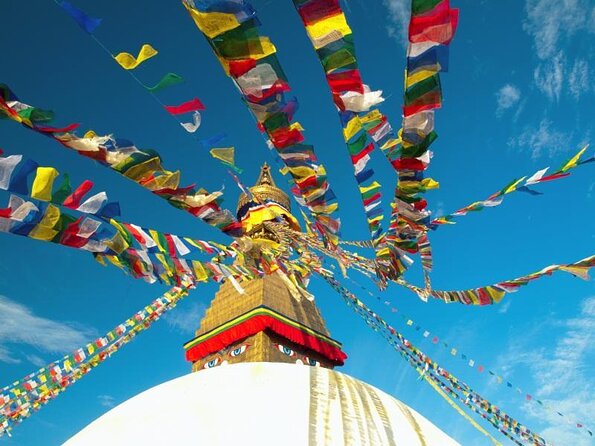
- Four major cultural stops in one day: Visit Patan, Krishna Temple, Pashupatinath, Boudhanath, and Swayambhunath.
- A useful Hindu and Buddhist balance: The route includes an active Hindu temple complex, two important Buddhist sites, and Patan’s historic center.
- Hotel pickup is included: You do not need to find your way to a separate meeting point for the 9 a.m. start.
- Small-group format: The additional tour information sets the maximum at 12 people, though another description says 15, so confirm the exact group size when booking.
- Keshar Jung Thapa is a guide to request: He is repeatedly praised in the supplied feedback for explaining religion, culture, history, politics, and daily life with patience and humor.
- Food is not included: Plan to buy your own meals and drinks during the day.
Why this one-day route works in Kathmandu
Kathmandu Valley is not a single old city with a neat line of sights. It is a group of urban areas, temple squares, shrines, and sacred sites spread across a busy valley. Patan, also called Lalitpur, has its own identity. Boudhanath feels different again, with its large white stupa and Tibetan Buddhist atmosphere. Pashupatinath is one of Nepal’s most important Hindu sites, while Swayambhunath combines religious importance with a wide city view.
That variety is the strongest reason to choose this outing. You are not simply checking off four similar temples. You are moving between different religious settings and getting a first look at how Kathmandu functions as a living center of worship.
I would consider this tour especially useful if you have only one full day in Kathmandu, are passing through before an expedition, or want a guide to explain what you are seeing. The route gives you orientation. Afterward, you can decide which site deserves a return visit at a slower pace.
The day begins at about 9 a.m. and lasts roughly seven to eight hours. Pickup and drop-off at your hotel are included, along with a professional local guide, taxes, fees, and handling charges. Food and drinks are extra.
More City Tours in Kathmandu
- Kathmandu: Private City Guided Tour
★ 4.9 · 174 reviews - Kathmandu Valley City Day Tour
★ 5.0 · 40 reviews - Full Day Kathmandu City Sightseeing Tour of UNESCO Heritage Sites
★ 5.0 · 36 reviews
Patan and Krishna Temple: a compact start in Lalitpur
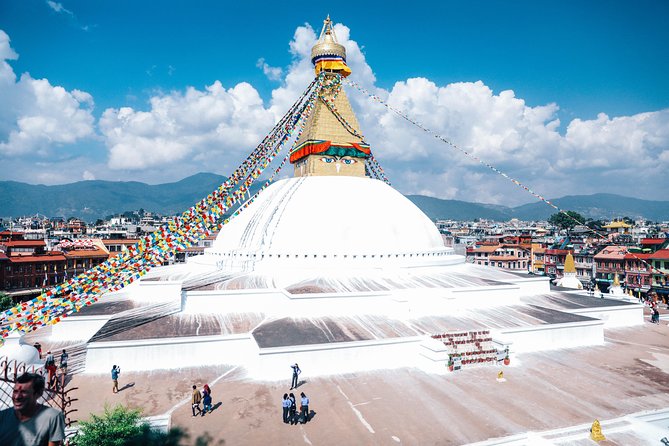
The first stop is Patan, the old royal city now known as Lalitpur. The visit to Patan Durbar Square is listed at about 40 minutes. That is enough to take in the square and its main architectural details, but it is not enough for a leisurely exploration of every courtyard, shrine, and museum in the area.
Patan is a good opening stop because it introduces the valley’s traditional urban design. The important buildings are gathered around a public square, and the setting helps you see how royal power, religious worship, and city life once fit together. Your guide can give the buildings context instead of leaving you to guess which shrine is which.
The route then moves to Krishna Temple for about 15 minutes. This is one of the oldest temples in the Patan area, and the short visit works as a focused look at a single religious building. You will want to listen closely here because 15 minutes passes quickly.
The biggest limitation at Patan is time. If you care about traditional Newari architecture or want to browse the area at length, you may prefer to return independently. This tour gives you the essential introduction, then keeps the day moving toward Kathmandu’s other major sites.
Patan’s admission is listed as free within this experience, while the other named stops include admission. That makes the $95 price easier to assess, since the fee covers more than transport alone.
Pashupatinath: sacred Hindu worship and cremation
Pashupatinath Temple is scheduled for about 40 minutes. It is a Hindu temple complex also associated with cremation, so this stop can feel more serious and confronting than the others. You are not simply looking at a historic structure. You are seeing a place connected to worship, death, and funeral customs.
That setting is valuable because it gives you a clearer view of Hindu practice in Nepal. A good guide matters here. The supplied feedback gives special praise to Keshar Jung Thapa for explaining Hinduism and Buddhism in a clear way and for answering questions about the country’s religious life.
The name and setting can sometimes lead people to expect a standard monument visit. I would approach it with respect and patience. The attraction is not just the temple’s appearance. It is the role the site plays in the spiritual life of the city.
The 40-minute schedule provides an overview, but it may feel brief if the area is crowded or if you have many questions. You should also expect that this is a place where customs and access may not feel as familiar as they do at a museum. Let your guide explain what is appropriate.
Boudhanath Stupa: a short circuit around a Buddhist landmark
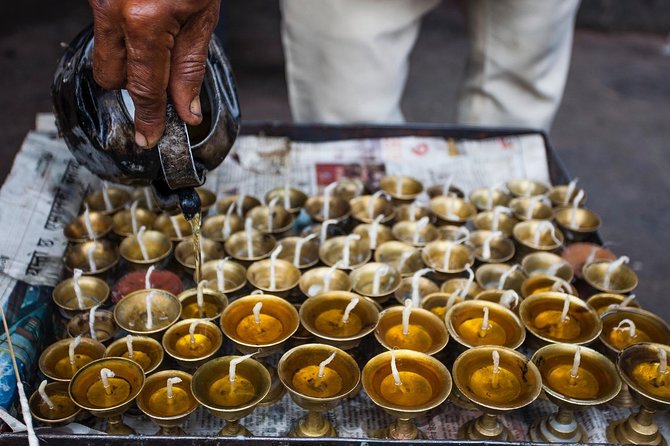
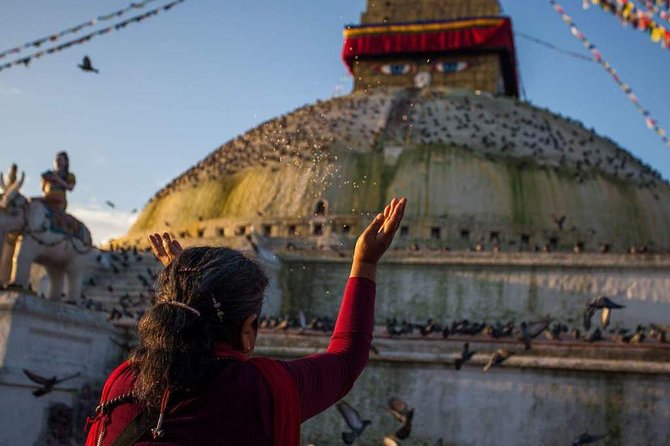
Boudhanath, also written Boudhnath or Bodhnath, is scheduled for about 30 minutes. It is described as the largest Buddhist stupa in Kathmandu, and its size gives the stop a strong visual focus. The white dome, painted eyes, prayer flags, and surrounding Buddhist setting make this one of the easiest places in the city to recognize.
The best way to use a short visit here is to pay attention to the act of worship, not only the building. The stupa is a Buddhist place of prayer, and your guide can help explain the symbols and the meaning of the site. This is where the tour’s mix of sightseeing and cultural explanation earns its keep.
Thirty minutes is enough for a first look and a walk around the main area, but not enough for a relaxed visit. You may want to return later if you prefer to sit quietly, explore nearby shops, or spend more time watching the daily rhythm around the stupa. The tour is designed to show you the key place, not give you an entire afternoon there.
I like the contrast between Boudhanath and Pashupatinath. One stop centers on Buddhist worship, the other on Hindu worship and cremation. That side-by-side comparison helps you understand Kathmandu better than a route made up of monuments from only one tradition.
A few more Kathmandu days to weigh up
- Kathmandu: 7 UNESCO Sites Tour in 1 Day (Private Tour)
★ 4.9 · 204 reviews - Day Trip to Bhaktapur and Panauti from Kathmandu
★ 5.0 · 184 reviews - The Most Beautiful 1 Day Experience in Kathmandu Nepal
★ 5.0 · 84 reviews - Nagarkot Sunrise & Bhaktapur Heritage Tour -Private Full Day Trip
★ 4.0 · 42 reviews
Swayambhunath, the Monkey Temple, and the valley view
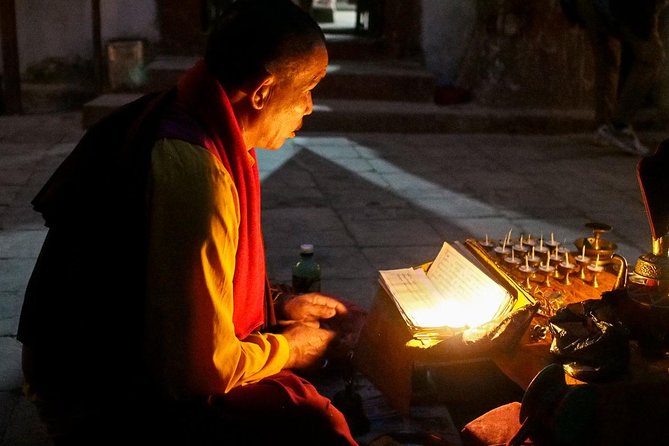
The final listed sightseeing stop is Swayambhunath, also known as the Monkey Temple. The visit lasts about 40 minutes. It is described as the oldest shrine complex in Kathmandu Valley and is valued for its view over Kathmandu.
The hilltop position gives this stop a different reward from the other sites. At Patan and Boudhanath, your attention is mostly on the buildings and sacred spaces. At Swayambhunath, you also get a broad view of the valley and a sense of how tightly the city spreads around its historic centers.
The nickname comes from the monkeys around the shrine complex. That makes the site memorable, but it is still an important religious place, so do not treat it as merely a scenic overlook. The guide’s explanations are useful here, especially if you want to understand how Buddhist symbols, shrines, and local worship fit together.
The schedule allows a solid introduction, though the visit may require walking and possibly steps. The tour information says most people can participate, but it does not give a detailed accessibility description. If stairs or uneven surfaces are a concern, ask Mosaic Adventure for current site conditions before paying.
Swayambhunath is a fitting final stop because you finish with a city view and a clearer sense of Kathmandu’s scale. You have seen royal Patan, Hindu Pashupatinath, Buddhist Boudhanath, and now one of the valley’s oldest shrine complexes.
The guide can make the difference
The most consistently praised part of this experience is the guide, especially Keshar Jung Thapa. The feedback describes him as friendly, patient, professional, and strong on Nepal’s history, religion, culture, politics, and everyday life. It also highlights his humor and ability to turn facts into a conversation about how people live.
That matters on a route like this. Without explanation, you may remember a stupa, a temple, and a hilltop shrine as attractive places but miss the differences between them. A guide who can answer questions about both Hinduism and Buddhism gives the day more meaning.
I would ask Mosaic Adventure if Keshar is available when you book. The supplied information does not promise that he will lead every departure, so you should treat him as a guide to request, not a guaranteed inclusion.
The guide also helps with the practical side of the day. You can ask questions as you go, rather than trying to identify every symbol or ritual on your own. For a first visit, that can be more useful than having extra free time.
What $95 includes, and what it does not
At $95 per person, this is not the cheapest way to see Kathmandu if you are comfortable arranging taxis, entry tickets, and sightseeing on your own. It is also not an unreasonable price for a full day with hotel transport, a local guide, included admission at the listed paid sites, and a small group.
The value depends on what you want. I would pay more readily for this tour if I had limited time, was arriving without local transport plans, or wanted religious and cultural background rather than simple transfers between monuments.
You still need to budget for food and drinks. Those are not included, and the supplied details do not specify a restaurant stop or meal arrangement. Bring a plan for eating, or ask the operator how much time is normally available for lunch.
The group size deserves a quick check. One description says the group is limited to 15, while the additional information gives a maximum of 12. Either way, it is intended to be a small group rather than a large coach outing, but confirm the number if that detail affects your decision.
Timing, pickup, and the pace of the day
The stated start time is 9 a.m. Hotel pickup and drop-off are included, which is a real help in Kathmandu. You do not have to find the Mosaic Adventure office or work out a taxi to a central meeting point before breakfast.
The full experience lasts around seven to eight hours. That is long enough to make the route worthwhile, but the day has a clear checklist feel. The listed visits total about 165 minutes, so a large part of the day is taken up by driving, transfers, and moving through the city.
That is not necessarily a weakness. Kathmandu’s sights are spread across different areas, and private transport lets you cover more ground than walking could. Still, you should choose this tour for range and orientation, not for long periods of quiet at each monument.
The experience is offered with a mobile ticket, and confirmation is received at booking. Free cancellation is available if you cancel at least 24 hours before the start time. Changes or cancellations made less than 24 hours before the start time are not accepted for a refund.
The 2015 earthquake note and setting expectations
The tour information warns that some sites suffered significant damage in the April and May 2015 earthquakes. That note is important because historic areas can contain repaired, altered, or partially damaged structures rather than untouched monuments.
You should not expect every square or temple to look exactly as it did before the earthquake. The value of the day is also in seeing how these sacred and historic places continue to function and recover. Ask your guide about visible repairs if that history interests you.
Because conditions can change, the operator is the best source for the current state of individual sites. The supplied information confirms the earthquake warning but does not provide a current damage report for each stop.
Who should book this Kathmandu day tour?
I would choose this experience if you are in Kathmandu for a short stay and want the major cultural sites handled in one day. It is also a good fit if you want a local guide to explain the difference between Hindu and Buddhist places, rather than simply taking photographs and moving on.
It suits first-time visitors, couples, families, and solo visitors who prefer organized transport. Most people can participate, according to the tour details, but anyone with mobility concerns should ask about walking and steps at Swayambhunath and the other historic sites.
I would skip it if you have several days in Kathmandu and prefer to explore at a slow pace. You could then spend a full morning in Patan, linger around Boudhanath, and return to the places that interest you most.
Should you book it?
Book this tour if you want a well-organized introduction to Kathmandu’s religious and royal heritage, have only one day, and value a guide who can explain what you are seeing. The strongest reasons are the broad route, included hotel transport, small-group design, and the chance to request Keshar Jung Thapa.
Do not book it expecting deep time at each temple or a meal included in the price. At $95, the value is convenience, interpretation, and coverage. For a short stay, that is a fair trade. For a longer stay, use this as your orientation day and return on your own to the sites that catch your interest.
FAQ
How long does the Kathmandu city tour last?
The experience lasts approximately seven to eight hours.
What time does the tour start?
The stated start time is 9 a.m.
Is hotel pickup included?
Yes. Hotel pickup and drop-off are included.
Which places does the tour visit?
The route includes Patan, Krishna Temple, Pashupatinath Temple, Boudhanath Stupa, and Swayambhunath, also called the Monkey Temple.
Is food included?
No. Food and drinks are not included in the tour price.
How many people can join the tour?
The additional tour information gives a maximum of 12 people. Another description states a limit of 15, so confirm the exact group size when booking.
Can I request Keshar Jung Thapa as my guide?
You can ask Mosaic Adventure whether Keshar Jung Thapa is available. The tour information does not guarantee that he will lead every departure.
What is the cancellation policy?
You can cancel at least 24 hours before the experience start time for a full refund. Cancellations or changes made less than 24 hours before the start time are not accepted for a refund.
Recently added around Kathmandu
- Kathmandu Airport Pickup and Drop-off Services★ 5.0 · 3 reviews
- Kathmandu Paragliding★ 5.0 · 3 reviews
- Kathmandu Chandragiri Cable Car and Swayambhunath Private Tour★ 5.0 · 3 reviews
- Explore The Beauty Of Langtang Valley In 8-Days Trek★ 5.0 · 3 reviews
- Kathmandu: Nightlife and Pub Crawl Tour★ 5.0 · 3 reviews
- Mountain Flight Experience in Nepal★ 4.5 · 3 reviews
- Kathmandu: Momo Making Class with a Local Chef★ 5.0 · 3 reviews
- Everest Base Camp Trek★ 5.0 · 3 reviews
Other Kathmandu Tours worth a look


Private Kathmandu Sightseeing Tour | UNESCO World Heritage sites
Read our review →
Everest Base Camp Helicopter Tour landing at Everest View Hotel
Read our review →


Nagarkot Sunrise View and Day Hiking from Kathmandu
Read our review →
Full Day 7 UNESCO Tour with Lunch – Private/Group
Read our review →
This tour also appears in