
REVIEW · UNESCO HERITAGE SITE TOURS
Kathmandu UNESCO Heritage Tour with Local Food Tasting
Kathmandu’s best introduction may be a walk that keeps changing pace: monkey-filled hilltop shrine, royal square, crowded market, then a table full of Nepali food. This private five-hour tour gives you that mix without asking you to sort out Kathmandu’s confusing streets on your own.
I like the way the route joins major sights to ordinary city life. Swayambhunath’s valley view gives you a calm start, while Asan Market shows how Kathmandu shops, cooks, trades, and moves through the day. I also like the generous food tasting, which includes far more than a token snack.
The main consideration is the pace. You cover three important areas in five hours, and the food tasting can be surprisingly substantial. If you prefer long, quiet visits at one monument, this may feel brisk. If you want a strong first look at Kathmandu, the compact route works well.
Key points to know before booking
- See the Kumari’s window: At Kathmandu Durbar Square, you may have the chance to see Nepal’s Living Goddess appear at her window.
- Eat beyond momo: The tasting can include Newari Samaybaji, yomari, bara, chatamari, gwaramari, and Indrachowk lassi.
- Meet Kathmandu at three speeds: Move from the quiet hilltop of Swayambhunath to royal courtyards and then the everyday trade of Asan.
- Private guiding matters: You travel with an English-speaking guide and a private group, so the schedule can be adjusted.
- Rajan has earned strong praise: If Rajan is your guide, expect careful explanations, a warm manner, and flexibility with the timing.
- The price covers the basics: At $64 per person, entrance fees, transport, food, water, taxes, and guiding are included.
Why this five-hour route works in Kathmandu
Kathmandu can feel like several cities pressed together. One minute you are in the tourist shops and trekking stores of Thamel. Soon after, you are looking down over the Kathmandu Valley from Swayambhunath. Later, carved palace courtyards give way to market stalls selling spices, grains, jewelry, and brass goods.
That contrast is the real strength of the tour. You are not simply ticking off monuments. You are seeing how sacred places, old royal power, and present-day commerce fit together.
The route is especially useful if you have limited time in Kathmandu. Five hours is not enough for every temple and lane in the city, but it is enough to introduce three major settings and several local dishes. The private format also gives you a better chance to ask questions than a large group walk would.
Transportation is included, along with pickup and drop-off in Kathmandu or Thamel. That matters here. Kathmandu’s streets can be crowded and confusing, and a short transfer between areas is easier when someone else handles the driving. The driver has also been praised for being warm and skillful, adding a reassuring layer to the day.
More UNESCO Heritage Site Tours in Kathmandu:
- Private Kathmandu Sightseeing Tour | UNESCO World Heritage sites
★ 5.0 · 756 reviews - Kathmandu: Full Day 7 UNESCO Tour with Lunch – Private/Group
★ 5.0 · 415 reviews - Kathmandu: Full Day Top 4 UNESCO Tour with Lunch – Private/Group
★ 5.0 · 269 reviews
Starting in Thamel, then leaving the tourist zone
The day can begin in Thamel, Kathmandu’s main visitor district. Thamel is known for trekking gear shops, local handicrafts, restaurants, and a mix of people from Nepal and abroad.
It is a useful starting point, but it is not the most traditional part of the city. Think of it as your orientation point. From there, the tour moves toward places where daily trade and religious practice are more closely tied to local residents.
Your guide sets the tone early. Rajan has been singled out for making the day flexible and for explaining Nepalese culture in a clear, approachable way. Guide quality matters on this tour because the buildings and shrines are only half the experience. The stories behind them give the streets meaning.
Swayambhunath and the view over Kathmandu Valley
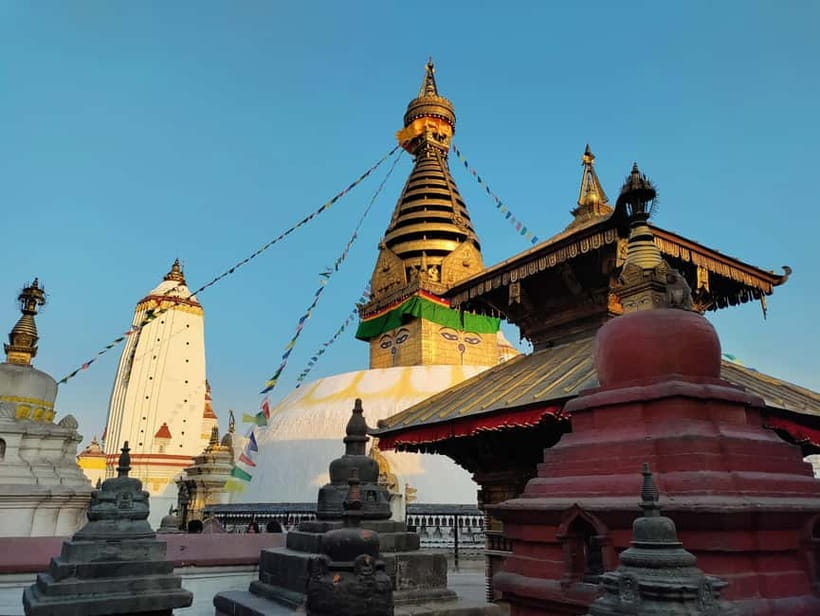
The first major stop is Swayambhunath Stupa, also called the Monkey Temple. The guided visit lasts about an hour.
The hilltop setting gives you an immediate sense of Kathmandu’s size. From here, you can look across the valley, with prayer flags moving in the air and the city spread below. The setting can feel peaceful, especially beside the sound of monks chanting and the white stupa with its watchful painted eyes.
The site is important to Buddhist culture, and your guide explains the religious meaning rather than treating the stupa as a photo stop. You will learn how prayer flags, chanting, and the stupa itself fit into local worship.
The monkeys are part of the character of the place, but you should keep your belongings secure and give them space. The supplied details do not specify the number of steps or the exact walking conditions, so ask the guide if you have concerns about the hilltop approach.
An hour is enough for an introduction, a few photographs, the valley view, and a basic explanation of the site. It is not a long spiritual retreat. The route moves on, which makes sense if your priority is seeing several sides of Kathmandu in one morning or afternoon.
Kathmandu Durbar Square and the Kumari
Next comes Kathmandu Durbar Square, another one-hour guided stop. This is the historic center of the old royal city, filled with temples, palace buildings, carved woodwork, and active religious traditions.
The square is not just an open-air museum. Sacred images and living customs still shape how people use the area. That is why a guide adds real value here. Without context, the carvings can blur into a wall of ornate wood. With explanation, you begin to understand which figures matter and why certain courtyards are treated with care.
Two important figures are Kal Bhairav and Swet Bhairav. Your guide can explain their cultural role and point out the details you might otherwise miss.
The possible sighting of the Kumari, Nepal’s Living Goddess, is one of the most memorable parts of the visit. She may appear at her window, but this is not a scheduled performance. Keep your expectations sensible and follow the guide’s instructions about respectful viewing and photography.
The square is a strong counterpoint to Swayambhunath. The hilltop stupa offers open views and quiet reflection. Durbar Square brings you close to royal architecture, dense carvings, and a continuing religious life. You get both the broad view of Kathmandu and its close-up details.
More Food Tours in Kathmandu:
- Kathmandu Food and Drink Walking Tour
★ 5.0 · 266 reviews - Kathmandu: Food and Drink Walking Tour
★ 4.9 · 119 reviews - Walking Street Food Tour in Kathmandu
★ 5.0 · 111 reviews - Secret Food Tour – Food Bites and Sights Kathmandu 14+ Testings
★ 5.0 · 82 reviews
Asan Market, where Kathmandu gets practical
The route then heads into Asan Street and Market for about an hour of guided walking, free time, shopping, sightseeing, and food tasting.
Asan is the place to watch Kathmandu handle its daily business. Traders sell spices, grains, seasonal produce, saris, handmade jewelry, and brass utensils. The colors, smells, and sounds are part of the attraction, but the market is also useful. It is not arranged for sightseeing. People are buying, selling, carrying, bargaining, and getting on with the day.
That makes Asan one of the most authentic sections of the tour. You can see goods connected to household life and religious practice, not only souvenirs made for visitors.
Your guide helps you read the scene. He can point out what is being sold and explain how the market fits into local life. This is where a private tour is helpful. You can pause at an interesting stall, ask about an unfamiliar ingredient, or spend a little more time looking at brassware and textiles.
The market may feel crowded and fast-moving. Watch your footing, stay close enough to hear the guide, and keep personal items secure. The hour can pass quickly, especially if you want to shop. You should decide beforehand if your priority is buying, tasting, photographing, or listening, because you may not have time to do all four at length.
The Nepali food tasting is a full meal in disguise
Food is not a small add-on here. You may try a long list of dishes, and the description says you can eat as much as you like.
The tasting can include:
- Momo: Nepali dumplings, a familiar favorite with endless regional and household variations.
- Newari Samaybaji: A ceremonial platter with beaten rice, marinated meat, fried eggs, and pickles.
- Yomari: A sweet steamed dumpling filled with jaggery.
- Bara: A savory lentil pancake.
- Chatamari: A rice flour crepe often called Nepali pizza.
- Gwaramari: Crispy fried bread.
- Indrachowk lassi: A cool yogurt drink that balances the savory food.
This spread gives you more than a single taste of Nepali cooking. You get different textures and flavors: soft dumplings, crisp fried bread, fermented or pickled sides, lentils, rice, meat, eggs, and something sweet.
The Newari Samaybaji is especially useful for understanding the food culture of the Kathmandu Valley. It is not simply a plate of unrelated snacks. The combination shows how ceremonial and everyday foods can overlap.
The amount of food is worth considering. One person found the quantity greater than expected, though every bite was delicious. Plan accordingly. You may want a light breakfast before the tour, but do not arrive expecting only a few samples. The food can become one of the main events of the day.
The tasting also makes the $64 price easier to assess. You are paying for an English-speaking private guide, transportation, site entrance fees, food, bottled water, and government taxes. Food prices vary, but the combination of a full tasting and included admissions gives the tour reasonable value for someone who wants both sightseeing and a local meal in one booking.
How the guide changes the experience
The monuments are worth seeing on their own, but this is a guide-led cultural walk, not simply a ride between attractions.
Rajan has received particularly warm praise for being courteous, caring, well informed, and flexible. He has also been credited with bringing the stories of Durbar Square to life and adjusting the schedule when needed. If he leads your tour, you can expect a personal style rather than a fixed speech delivered at every stop.
That flexibility is useful in Kathmandu. A market may hold your attention longer than expected. The Kumari’s appearance cannot be controlled. A food stop may take more time than planned. In a private group, your guide can respond to those changes more easily.
Still, the tour has a set five-hour frame. Flexibility does not mean unlimited time. If you want a long shopping session, extensive photography, or a slow study of every courtyard, ask about priorities at the start.
The English-language guiding is included. If you care about Buddhist practice, Newari food, royal traditions, or the Kumari, tell the guide early. A good question can shape the whole afternoon.
Value, timing, and who should book
At $64 per person, this is not the cheapest way to walk around Kathmandu, but it bundles several costs and services. Entrance fees, transport, a bottle of drinking water, local food, government taxes, and an English-speaking guide are included.
The private group format is the main value point. You are not sharing the day with a large crowd, and you can ask for explanations that fit your interests. The included food also saves you from choosing unfamiliar dishes alone, while still giving you a broad sample of local cooking.
I would recommend it most strongly for:
- First-time visitors with only part of a day available
- People who want major heritage sites plus food
- Visitors who prefer a private guide to independent navigation
- Anyone curious about markets and daily life, not only temples
- Couples, families, or small groups who want a flexible schedule
It may be less suitable if you want a slow, specialized Buddhist tour, a serious shopping trip, or a full-day architectural study. The route is broad by design. You see a lot, but each stop receives about an hour.
The tour is offered with pickup and drop-off in Kathmandu or Thamel. It lasts five hours, with starting times subject to availability. You can cancel up to 24 hours ahead for a full refund, and reserve now while paying later, which helps if your Kathmandu schedule is still taking shape.
Should you book this Kathmandu food and heritage tour?
Book it if you want an efficient, personal introduction to Kathmandu that combines sacred sites, royal architecture, local commerce, and a serious amount of food.
The strongest reasons are the route and the guide-led context. Swayambhunath gives you the valley view and Buddhist atmosphere. Durbar Square brings the Kumari, Kal Bhairav, Swet Bhairav, and carved temples. Asan Market shows the city at work. The food tasting ties the whole day together.
I would book with realistic expectations about pace. You will not master Kathmandu in five hours, and a Kumari sighting is never guaranteed. But you will get a clear first look at the city’s culture, a private English-speaking guide, included transport, and enough local food to count as a proper meal. For a first day in Kathmandu, that is a useful and enjoyable bargain.
FAQ
How long does the Kathmandu UNESCO Heritage Tour with Local Food Tasting last?
The tour lasts five hours. Starting times depend on availability.
Which places does the tour visit?
It visits Swayambhunath Stupa, Kathmandu Durbar Square, and Asan Street and Market. Pickup and drop-off are available in Kathmandu or Thamel.
Is the Kumari guaranteed to appear?
No guarantee is provided. The tour gives you a chance to see the Kumari, Nepal’s Living Goddess, at her window.
What food is included?
The tasting may include momo, Newari Samaybaji, yomari, bara, chatamari, gwaramari, and Indrachowk lassi. The tour information says you can eat as much as you like.
Is transportation included?
Yes. Transportation, entrance fees, local food, an English-speaking guide, a bottle of drinking water, and government taxes are included. Personal expenses are not included.
Is this a private tour?
Yes. The activity is offered for a private group with a live English-speaking guide. Rajan has led the experience for some bookings.
More Historical Tours in Kathmandu
- UNESCO Seven World Heritage Tour in Kathmandu
★ 5.0 · 253 reviews - Kathmandu Private Sightseeing Tour | UNESCO World Heritage Sites
★ 5.0 · 109 reviews - Kathmandu: Full Day Private Top 4 UNESCO Heritage Tour W/Lunch.
★ 5.0 · 86 reviews - Kathmandu World Heritage Tour
★ 5.0 · 74 reviews
More Food in Kathmandu
- Kathmandu Secret Food Crawl & Local Market Tour
★ 4.7 · 54 reviews - Kathmandu Food & Drink and Shopping Rickshaw Tour
★ 5.0 · 48 reviews - Walking Food Tour in Hidden Local Eateries of Kathmandu
★ 5.0 · 40 reviews - Kathmandu Food Crawl & Market Tour
★ 5.0 · 26 reviews
Recently added around Kathmandu
- Kathmandu Airport Pickup and Drop-off Services★ 5.0 · 3 reviews
- Kathmandu Paragliding★ 5.0 · 3 reviews
- Kathmandu Chandragiri Cable Car and Swayambhunath Private Tour★ 5.0 · 3 reviews
- Explore The Beauty Of Langtang Valley In 8-Days Trek★ 5.0 · 3 reviews
- Kathmandu: Nightlife and Pub Crawl Tour★ 5.0 · 3 reviews
- Kathmandu: Momo Making Class with a Local Chef★ 5.0 · 3 reviews
- Mountain Flight Experience in Nepal★ 4.5 · 3 reviews
- Thangka Painting Workshop★ 5.0 · 3 reviews
Other UNESCO Heritage Site Tours worth a look

Private Kathmandu Sightseeing Tour | UNESCO World Heritage sites
Read our review →
Full Day 7 UNESCO Tour with Lunch – Private/Group
Read our review →
Full Day Top 4 UNESCO Tour with Lunch – Private/Group
Read our review →
Full-Day 7 UNESCO Tour with Lunch – Private/Group
Read our review →
Kathmandu Private Sightseeing Tour | UNESCO World Heritage Sites
Read our review →This tour also appears in