
REVIEW · EVEREST BASE CAMP TREKS
12 Days Everest Base Camp Trek
Everest Base Camp is not a quick mountain outing. It is a 12-day high-altitude trek through the Khumbu region, beginning with the famous flight to Lukla and ending beneath the world’s tallest peak. You walk through Sherpa villages, cross suspension bridges, visit monasteries, and climb steadily toward Gorak Shep, Base Camp, and Kala Patthar.
I like two things right away. First, the price includes the costly and fiddly essentials: Lukla flights, permits, meals, teahouse lodging, a guide, and porter service. Second, the schedule gives you two acclimatization days, one in Namche Bazaar and another in Dingboche. The main caution is simple: this is a hard trip, with long walking days and basic facilities at altitude.
Key points to know
- Lukla flights are included: The 30-minute domestic flight saves you several days of road travel and puts you straight into the Khumbu.
- Two acclimatization days matter: You spend time in Namche Bazaar and Dingboche before pushing higher.
- Kala Patthar provides the big mountain view: The 5,555-meter summit is the trip’s highest point and a major photographic highlight.
- Porter service reduces your load: One porter is assigned for every two trekkers, though you still carry a daypack.
- Tengboche adds cultural depth: Its monastery and Buddhist setting make the trek more than a march toward a famous sign.
- The schedule is weather-sensitive: Lukla flights can be delayed or canceled for one or more days, even in good trekking seasons.
What the $1,390 package really covers
At $1,390 per person, this trip offers good value if you want the main arrangements handled in advance. You receive airport pickup and drop-off, domestic flights between Kathmandu and Lukla, teahouse lodging, breakfast, lunch, dinner during the trek, a farewell dinner, permits, an English-speaking government-licensed guide, and porter support.
The package also pays staff salaries, insurance, equipment, food, accommodation, domestic air travel for the crew, government taxes, and local taxes. A medical kit is carried by the trek leader. That list matters in Nepal, where arranging each part separately can take time and create confusion.
Still, all-inclusive has limits here. You pay separately for your Nepalese visa, international flights, travel and rescue insurance, bottled or boiled water, hot showers, charging, laundry, drinks, bar bills, phone calls, extra porters, tips, and some Kathmandu meals. Extra hotel nights are also not covered if your mountain schedule changes.
I would treat the price as a well-organized trekking package, not a complete holiday budget. Bring a cash reserve for personal costs and delays. The published trip information does not give a precise daily allowance, so you should ask the operator how much cash they recommend before departure.
Bishnu is the named contact connected with the trip communication, and the company is Himalayan Sanctuary Adventure Private Limited. The service received strong praise for planning, transfers, permits, staff attention, and communication from the first contact through the farewell dinner. That is useful here because good coordination matters when flights and mountain conditions change.
More Hiking Tours in Kathmandu
- Everest Base Camp Trek – 14 Days
★ 5.0 · 1,499 reviews - Everest Base Camp Trekking
★ 5.0 · 485 reviews - Nagarkot Sunrise View and Day Hiking from Kathmandu
★ 5.0 · 471 reviews
Day 1: Lukla to Phakding beneath Khumbila
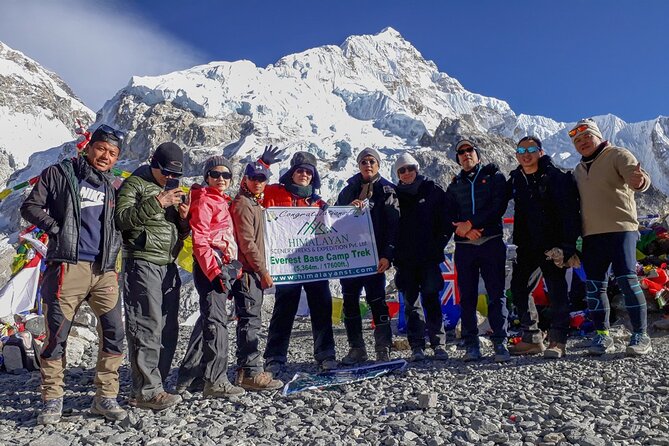
Your day begins early, with a scheduled start around 5:15 a.m. After the flight from Kathmandu to Lukla, you meet the rest of the crew and begin walking toward Phakding.
The flight itself takes about 30 minutes. From Lukla, the trail passes through Cheplung village and offers a view of Mt. Khumbila, a sacred mountain that has never been summited. You walk for roughly three to four hours and sleep at Phakding, at about 2,651 meters.
This is a sensible first day. You gain altitude, but not too much at once. The walking time is manageable, giving you a chance to test your boots, daypack, and pace.
Do not mistake the short distance for a free afternoon. You will have started before sunrise, and mountain flights may involve waiting before boarding. Keep essentials in your hand luggage because checked baggage arrangements can be different from what you expect on an international flight.
Day 2: Suspension bridges and the climb to Namche Bazaar
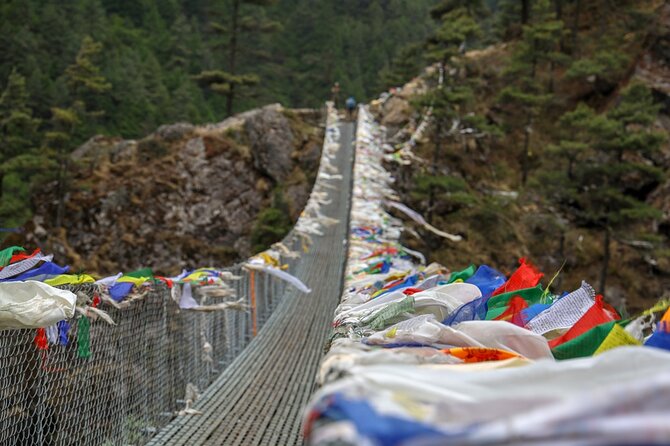
The trail follows the Benkar Valley, crosses the Dudh Koshi River, and passes Chumoa, Monjo, and Jorsale. At Monjo, you enter Sagarmatha National Park, then cross suspension bridges and walk beside the Dudh Koshi and Bhote Koshi rivers.
The final approach to Namche is the first serious test. The trail rises steeply, and you reach the famous market town at around 3,438 meters after four to five hours of walking.
Namche is more than a stopping point. It is the main settlement of the route and the place where you first feel the altitude. The town gives you time to rest, eat, and prepare for thinner air before the trail heads into more remote country.
Day 3: Acclimatization and Himalayan views from Namche
The schedule keeps you in Namche for a second night, which I consider one of the strongest features of the trip. Acclimatization works best when you gain height gradually and include activity rather than simply staying in bed.
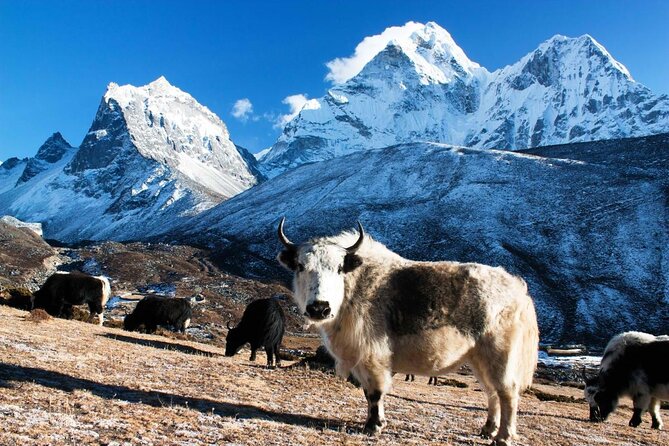
You hike toward Sagarmatha National Park for sunrise views of Everest, Lhotse, Nuptse, Ama Dablam, Thamserku, and Kongde. If you want a longer outing, the plan allows for a hike to Khumjung village.
You should use this day to find your walking rhythm, check your clothing, and drink plenty of fluids. The schedule says the day is for acclimatization, but it does not promise a fixed route or exact hiking time. Your guide may adjust the outing according to weather, group condition, and altitude response.
More Everest Base Camp Treks in Kathmandu:
- Everest Base Camp Helicopter Tour landing at Everest View Hotel
★ 5.0 · 668 reviews - Everest Base Camp Trekking – 13 Day
★ 5.0 · 365 reviews - Everest Base Camp Trek -14 Days
★ 5.0 · 321 reviews - Everest Base Camp Helicopter Tour landing at Hotel Everest View
★ 5.0 · 218 reviews
Day 4: Tengboche and its hilltop monastery
From Namche, the walk toward Phunki is relatively easy. Then the route climbs to Tengboche, a village at about 3,870 meters. The day takes roughly five to six hours.
Tengboche is one of the cultural high points of the trek. Its monastery is described as the largest in the Everest region and sits inside Sagarmatha National Park, a UNESCO World Heritage Site. From here, the mountain views include Everest, Nuptse, Lhotse, Ama Dablam, and Thamserku.
The monastery opens at 3 p.m. If you arrive around 4 p.m., you may be able to observe a Buddhist religious ceremony. That timing is not guaranteed, but it gives you a reason to avoid rushing the morning.
The climb after Phunki can feel tougher than the earlier walking. This is also the point where the cold and altitude begin to shape your day more strongly. A warm layer and patience are worth more than speed.
Day 5: Pangboche, monasteries, and Dingboche
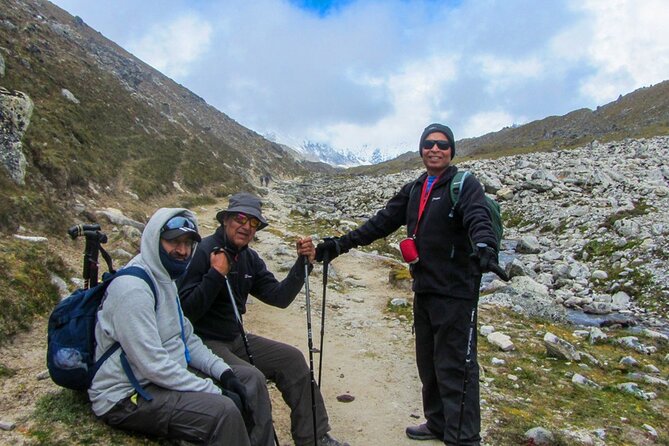
You descend to Debuche, cross the Imja River, and continue to Pangboche. The route uses the upper Pangboche trail, with an opportunity to explore Pangboche Monastery before continuing through the Imja Valley and beside the Lobuche River.
Dingboche sits at about 4,360 meters. The day takes roughly five to six hours, but the gain in elevation is more important than the clock. Your body is now working harder for every step.
Pangboche gives the day a human and cultural focus, while Dingboche marks a shift toward the harsher upper valley. Teahouse lodging remains part of the package, but you should expect simple rooms and paid extras such as showers, charging, drinks, and water.
Day 6: Dingboche acclimatization
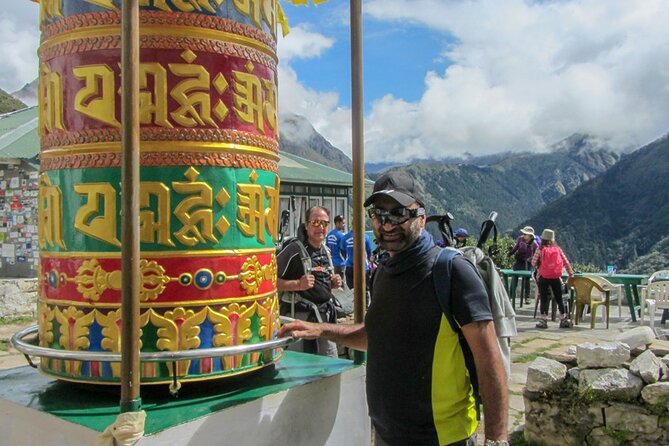
A second rest and acclimatization day in Dingboche is essential. The plan allows a hike of about four hours up the hill behind the village, with views toward Lhotse, Makalu, and Cho Oyu.
The outing is not just sightseeing. Walking higher and sleeping lower can help your body adjust, though no itinerary can remove the risks of altitude. Tell your guide promptly if you feel unwell, and follow the trek leader’s advice rather than trying to prove your toughness.
This day is also a practical reset. Dry clothes, organize your bag, charge devices if possible, and eat well. After Dingboche, the route becomes more demanding and the settlements more basic.
Day 7: The memorials near Dughla and Lobuche
The route from Dingboche to Lobuche covers about nine kilometers and may take around seven hours. You follow the Himalayan trail toward the upper valley and pass through Dughla, also spelled Dughlha in the schedule, before reaching Lobuche at about 4,900 meters.
This is a serious day because the air is thin and the trail rises toward the Khumbu Glacier area. The scenery becomes more stark, with high peaks and rocky ground replacing the greener lower valleys.
The schedule lists about seven hours in its detailed notes, while another itinerary entry gives four hours. Plan for the longer figure. At altitude, a short distance can take a long time, especially if your group is moving carefully.
Day 8: Everest Base Camp from Gorak Shep
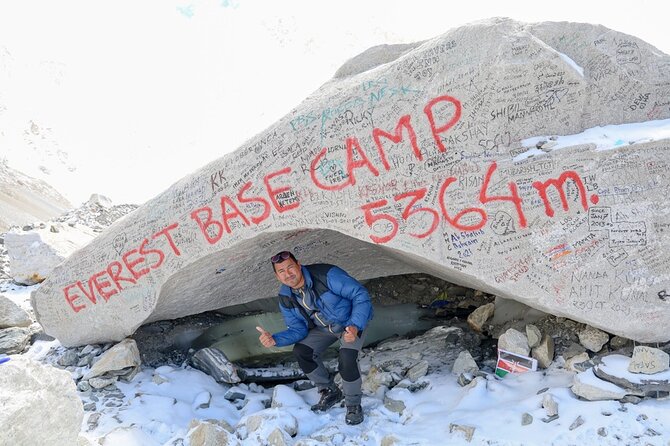
This is the big day, and it is long. You walk from Lobuche to Gorak Shep at about 5,160 meters, check into the lodge, eat lunch, and then continue to Everest Base Camp at about 5,365 meters.
The detailed plan describes nearly 12 hours and 17 kilometers for the full day. Another timing entry gives six hours, so you should trust the longer description when judging difficulty. The route to Base Camp is not a paved approach to a viewpoint. It is a rough high-altitude walk, and the return to Gorak Shep still has to be completed after you reach the goal.
At Base Camp, you can see the area around the Khumbu Glacier and views toward Nuptse, Khumbutse, and Pumori. The famous climbing camp changes with the season, and access details can vary, but the achievement is reaching the base of the route used for Everest expeditions.
Gorak Shep is one of the most basic overnight stops. Keep expectations modest. The package includes the lodge and meals, but not every comfort you may want after a 12-hour day.
Day 9: Kala Patthar and the descent to Pheriche
You rise early for Kala Patthar, the highest point of the trek at 5,555 meters. The climb takes about three hours, followed by a return to Gorak Shep for lunch and a descent to Pheriche at about 4,200 meters.
Kala Patthar is often the finest viewpoint of the trip. From the summit, you look toward Everest, Lingtren, Khumbutse, and Changtse. Base Camp puts you close to Everest, but Kala Patthar gives the broad mountain view that many people picture before coming to Nepal.
The early start is worthwhile for visibility and light, though cold and wind can be severe. After the summit, the descent to Gorak Shep feels easier mechanically, but fatigue remains a factor. Eating lunch before continuing to Pheriche gives the day a needed break.
Days 10 and 11: Retracing the trail to Namche and Lukla
The descent to Namche takes you through Pangboche and Tengboche before returning to the lower market town. The schedule gives about five to seven hours for this section, depending on the exact day plan and group pace.
Going downhill is not automatically easy. Knees and toes may hurt, and tired legs can make uneven rock more troublesome. The good news is that lower altitude usually brings easier breathing and more comfortable nights.
The next day takes you back to Lukla in about five to six hours. This is your last walking day, with time in the afternoon to wander, relax, and take a hot shower. The planned evening celebration with trek mates gives the group a pleasant finish after nearly two weeks of shared effort.
The route is a return over familiar ground, but it rarely feels repetitive. You now recognize villages and bridges that seemed strange on the way up, and the lower air changes your sense of effort.
Day 12: The flight back to Kathmandu
An early flight takes you from Lukla to Kathmandu, followed by a transfer to your hotel. The flight time is about 40 minutes in the day’s schedule, though actual airport time can be much longer.
The package includes a cultural farewell dinner in Kathmandu. Breakfast is listed as included, while lunch and evening meals in Kathmandu are generally your responsibility unless specifically arranged as part of the farewell event.
Do not book an important international connection immediately after the planned return. Lukla flights can be delayed or canceled for one, two, or more days because of weather. This can happen at the start, at the end, or both. Build spare time into your wider Nepal plan and make sure your insurance covers trekking and rescue.
Teahouses, meals, porters, and daily comfort
Teahouse accommodation is the normal style for this route, and it keeps the cost below a fully serviced lodge trek. You receive breakfast, lunch, and dinner during the mountain portion, but drinks, bottled or boiled water, tea, coffee, soft drinks, laundry, showers, charging, and bar bills cost extra.
A porter is provided for every two trekkers. That is a useful ratio, but it does not mean you walk without a pack. Carry your day’s water, warm layers, valuables, medication, and items you may need before the porter arrives.
The guide is English-speaking, government licensed, and experienced in the route. Staff costs include their wages, insurance, equipment, food, lodging, and domestic flights. Tips are not included, so ask the operator for current guidance before you leave.
Who should book this Everest trek?
This trip suits you if you want a private trek for your own group, since only your party participates, and you prefer the main planning handled in advance. It is a good match for someone with moderate physical fitness who accepts early starts, steep climbs, simple lodging, and uncertain flight times.
It is not a relaxed sightseeing holiday. You need to be ready for walking days of up to 12 hours, high altitude above 5,000 meters, and weather that can alter the schedule. The operator does not state a fixed maximum group size, so ask how many people will be in your private party and how porter loads are managed.
The two acclimatization days improve the plan, but they do not guarantee that everyone will adjust well. Travel and rescue insurance is not included, and it is one of the most important items to arrange yourself.
Should you book it?
Book this trek if you want the classic Lukla to Everest Base Camp route with permits, domestic flights, food, lodging, guide support, and porters arranged for $1,390. The strongest features are the two acclimatization days, the cultural stops at Tengboche and Pangboche, and the inclusion of the expensive logistics that can be hard to arrange alone.
Think twice if you need flexible flight timing, private rooms, guaranteed hot showers, or short walking days. Also leave several spare days around the trek, because Lukla weather can upset even a carefully planned schedule.
For a fit walker who wants a clear route and strong logistical support, this is a sensible package. Go in prepared for discomfort, carry proper insurance, budget for extras and tips, and let the mountain set the pace.
FAQ
How long does the Everest Base Camp trek take?
The experience lasts approximately 12 days, including flights from Kathmandu to Lukla and back, the trek to Everest Base Camp, the return to Lukla, and the flight back to Kathmandu.
What is included in the $1,390 price?
The price includes airport pickup and drop-off, teahouse accommodation, breakfast, lunch and dinner during the trek, a farewell dinner, domestic flights between Kathmandu and Lukla, a licensed English-speaking guide, porter service, permits, staff costs, a medical kit, and government and local taxes.
Are international flights included?
No. International airfare is not included.
Are Nepalese visa fees included?
No. You must pay the Nepalese visa fee separately.
How much walking is required?
Walking times vary by day. Most listed trekking days take about four to seven hours, while the Lobuche to Everest Base Camp and Gorak Shep day can take nearly 12 hours. The Kala Patthar climb takes about three hours before descending to Gorak Shep and continuing to Pheriche.
Are there acclimatization days?
Yes. You spend an acclimatization day in Namche Bazaar and another in Dingboche. The Dingboche day can include a roughly four-hour hike behind the village.
Can Lukla flights be delayed or canceled?
Yes. Kathmandu to Lukla and Lukla to Kathmandu flights can be delayed or canceled for one or more days because of unfavorable weather. You should allow extra time in your wider itinerary.
Recently added around Kathmandu
- Kathmandu Airport Pickup and Drop-off Services★ 5.0 · 3 reviews
- Kathmandu Paragliding★ 5.0 · 3 reviews
- Explore The Beauty Of Langtang Valley In 8-Days Trek★ 5.0 · 3 reviews
- Kathmandu Chandragiri Cable Car and Swayambhunath Private Tour★ 5.0 · 3 reviews
- Kathmandu: Nightlife and Pub Crawl Tour★ 5.0 · 3 reviews
- Kathmandu: Momo Making Class with a Local Chef★ 5.0 · 3 reviews
- Mountain Flight Experience in Nepal★ 4.5 · 3 reviews
- Everest Base Camp Trek★ 5.0 · 3 reviews
Other Everest Base Camp Treks worth a look


Everest Base Camp Helicopter Tour landing at Everest View Hotel
Read our review →


Everest Base Camp Helicopter Tour landing at Hotel Everest View
Read our review →

This tour also appears in