
REVIEW · EVEREST BASE CAMP TREKS
12 Days Everest Base Camp Trek from Kathmandu
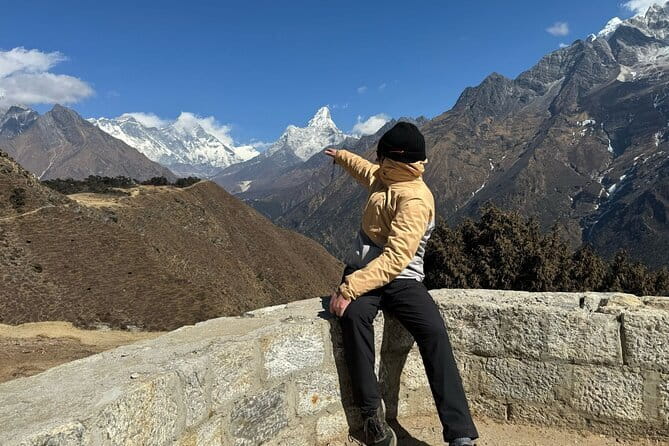
The best part of this Everest Base Camp trek is the steady change in scenery. You begin beside the Dudh Koshi River, walk through rhododendron forest and Sherpa villages, then finish among bare rock, glaciers, prayer flags, and some of the highest peaks on earth. Mount Everest, Lhotse, Nuptse, Ama Dablam, and Pumori provide the backdrop.
I like the two planned acclimatization days, one in Namche Bazaar and one in Dingboche. I also like that the price includes the Lukla flights, permits, guest-house lodging, guide, and hotel transfers, which removes several major costs from the planning. The main consideration is the physical demand. This is a serious high-altitude trek, with walking days of roughly six to eight hours and no promise that mountain flights will run exactly on schedule.
Key points to know before booking
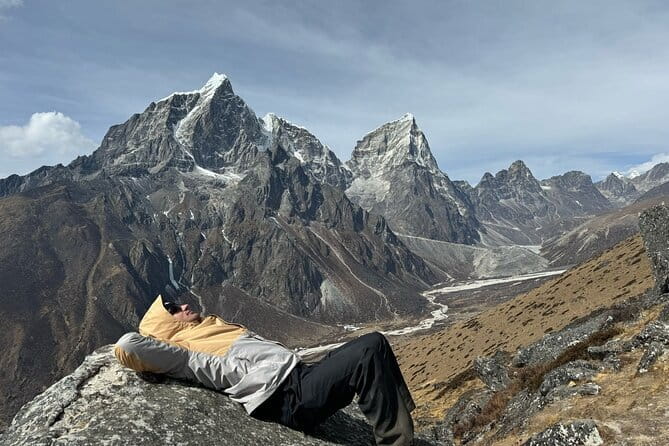
- Two acclimatization days: You pause in Namche Bazaar and Dingboche, with short hikes designed to help your body adjust.
- Everest Base Camp and Kala Patthar: The route reaches Base Camp on Day 8, then adds a sunrise-style climb to the famous viewpoint above it on Day 9.
- Lukla flights included: Return airfare between Kathmandu and Lukla is part of the package, along with hotel pickup and drop-off.
- Private tour format: Only your own group takes part, with a government-licensed English-speaking trekking guide.
- Sherpa culture along the route: Namche Bazaar, Tengboche, Dingboche, monasteries, stupas, prayer wheels, and Buddhist rituals give the trek more depth than mountain scenery alone.
- Food costs extra: Meals and drinks are not included. The stated estimate is about $25 per person per day.
Is $1,380 good value for 12 days?
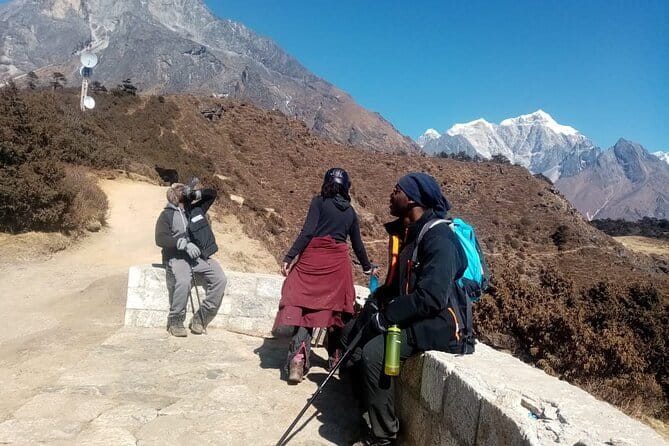
The advertised price is $1,380 per person, and it covers the expensive essentials: Kathmandu to Lukla and back, a licensed guide, trekking permits, official documents, guest-house accommodation, hotel transfers, and a first-aid kit carried by the guide.
That is useful value because the Lukla flights alone are a major part of organizing this route. You are also paying for a private trip rather than joining a large shared group. If you are traveling with family or friends, the group discount option may improve the price further.
Still, the headline price is not the full trip budget. Food and drinks cost extra, with an estimate of about $25 per day. Gratuities are optional and also excluded. You should allow room for those expenses before deciding that the price fits your budget.
Accommodation is in guest houses, not hotels with full city comforts. That is normal for the Everest region and part of the appeal, but it also means you should expect a basic mountain stay. The package makes the trek easier to arrange, not luxurious.
More Hiking Tours in Kathmandu
- Everest Base Camp Trek – 14 Days
★ 5.0 · 1,499 reviews - Everest Base Camp Trekking
★ 5.0 · 485 reviews - Nagarkot Sunrise View and Day Hiking from Kathmandu
★ 5.0 · 471 reviews
Day 1: The short flight to Lukla and walk to Phakding
The adventure begins with a flight from Kathmandu to Lukla. After meeting the crew, you walk from Lukla toward Phakding, following the Dudh Koshi River and passing through the first mountain villages.
The day is listed at about six hours, though the flight and trail conditions affect the actual schedule. This opening walk helps you settle into the pace before the route becomes steeper and higher.
The Lukla flight is part of the appeal, but it is also one of the trip’s practical uncertainties. Mountain weather can affect flight timing, and the final day depends on the return flight operating as planned. Keep your wider Nepal schedule flexible if possible.
Day 2: Entering Sagarmatha National Park on the way to Namche Bazaar
From Phakding, the route continues toward Monjo and then enters Sagarmatha National Park. You cross streams, suspension bridges, and small settlements before reaching Namche Bazaar after about seven hours of walking.
This is one of the most memorable days because the route begins to feel properly Himalayan. The river, forest, villages, and bridges create variety, while Namche gives you your first important stop in the Khumbu region.
The route also begins to test your legs. The distance may not sound extreme, but the ascent and altitude change matter more than the mileage. Walk at a steady pace, drink regularly, and resist the urge to rush simply because the guide is moving comfortably.
Day 3: Namche Bazaar and the first acclimatization hike
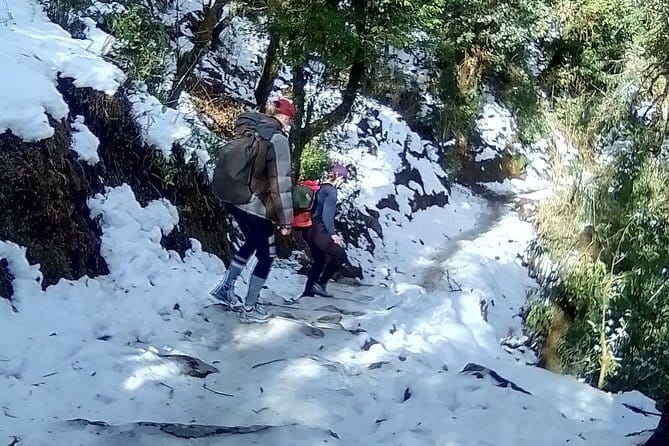
You stay in Namche for a second night rather than pushing straight toward Tengboche. That is a sensible part of the itinerary. Acclimatization days are not wasted days, especially on a route that climbs into very high country.
The planned excursion takes you toward Syangboche Airstrip or the Everest View Hotel. From this area, you can look toward Everest and other major peaks while returning to Namche to sleep at a lower elevation.
I like this day because it adds views without asking you to carry your full trek forward. It also gives you time to explore Namche Bazaar, a key gateway for the Everest region. The schedule still lists about six hours, so this is not necessarily a lazy rest day.
More Everest Base Camp Treks in Kathmandu:
- Everest Base Camp Helicopter Tour landing at Everest View Hotel
★ 5.0 · 668 reviews - Everest Base Camp Trekking – 13 Day
★ 5.0 · 365 reviews - Everest Base Camp Trek -14 Days
★ 5.0 · 321 reviews - Everest Base Camp Helicopter Tour landing at Hotel Everest View
★ 5.0 · 218 reviews
Day 4: Rhododendron forest and Tengboche Monastery
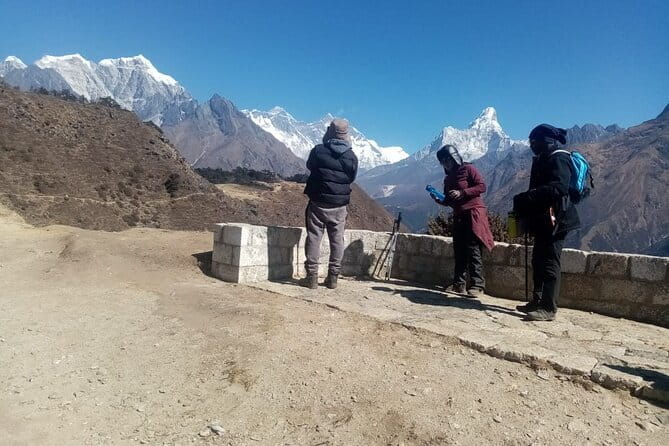
The trail climbs through dense rhododendron forest before crossing the Imja Khola and reaching Tengboche. The village is famous for its monastery, which sits against a dramatic mountain backdrop.
Tengboche Monastery is one of the cultural high points of the trip. You can spin prayer wheels, see Buddhist religious details, and, depending on timing, witness rituals connected with the monastery. The setting helps explain why this is more than a simple walk to a viewpoint.
The day takes about six hours. Forest makes the first part feel sheltered, but the route still involves sustained climbing and descending. If monastery access or ceremonies matter greatly to you, ask the operator how the day’s timing works before departure, since exact ritual schedules are not provided.
Day 5: Pangboche, Orsho, and the climb to Dingboche
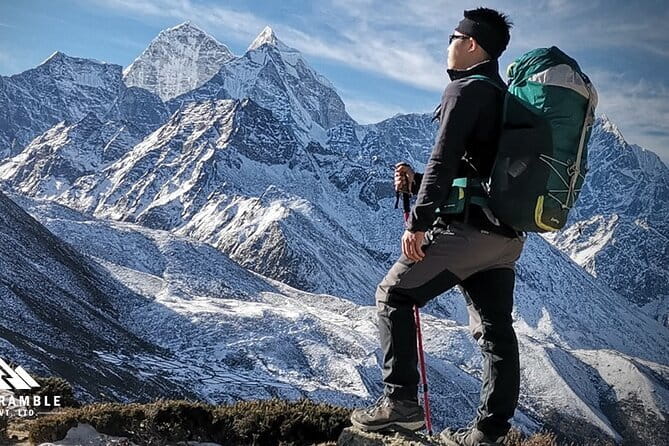
From Tengboche, the trail continues through settlements such as Pangboche and Orsho. You cross more suspension bridges and pass stupas, chortens, and other Buddhist markers before reaching Dingboche.
The scenery begins to change noticeably. Forest becomes less dominant, the air feels thinner, and the mountains appear more exposed. This is where you start to understand that the trek is not only a scenic walk, but also a gradual test of altitude.
The walking time is about six hours. Dingboche is an important overnight stop because the next day is set aside for acclimatization. That pause gives you a better chance to handle the higher section ahead.
Day 6: Acclimatizing with a hike to Nagarjun Hill
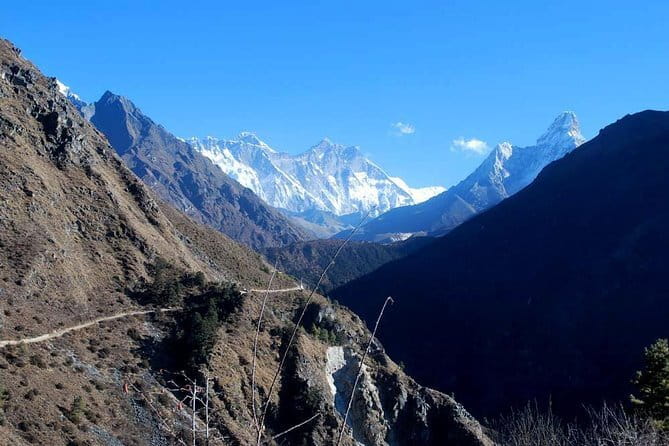
The second planned acclimatization day takes you toward Nagarjun Hill. From there, the route offers views of Everest, Lhotse, Ama Dablam, Nuptse, Thamserku, Pumori, and other peaks.
This is a strong design choice. You gain altitude during the day, see the high mountains, and then return to Dingboche to sleep. The listed walking time is about six hours, so you should not think of this as a full day off.
Your physical condition matters here. The tour information asks for a strong fitness level, and that is reasonable. You need to be comfortable walking for several hours on uneven trails, handling repeated climbs, and continuing at altitude over many days.
Day 7: Dingboche to Lobuche as the terrain turns bare
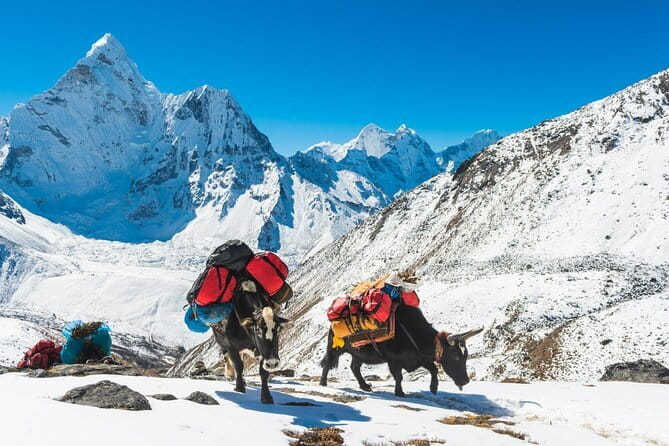
Leaving Dingboche, you pass smaller villages and gradually leave behind much of the greenery. The trail reaches Lobuche, located at the foot of the Khumbu region’s higher mountain country.
This six-hour day marks a clear shift in the trek. The forested sections are largely behind you, replaced by shrubs, rock, and wide mountain views. The surroundings feel more severe, and every climb can seem harder than it would at lower altitude.
Lobuche is an important staging point for Base Camp. You are close enough to feel the goal, but the next day remains long and demanding. Save energy rather than treating this as a victory lap.
Day 8: Lobuche to Everest Base Camp through Gorak Shep
You start early and walk toward Everest Base Camp. The route passes through Gorak Shep, the last settlement on the trail and the site of the original Base Camp area, before continuing to the current Base Camp.
This is the emotional center of the journey. Reaching Everest Base Camp gives you the milestone most people have been walking toward since Lukla. You will see the area where climbers prepare for expeditions, though the view of Mount Everest itself is not always the main feature from Base Camp.
The day is listed at about eight hours, making it the longest walking day in the schedule. At this altitude, the same number of hours feels much harder than it did near Phakding. The trail can be rough, and you need to follow your guide’s pace and altitude advice.
The package includes admission for this stop, while the exact accommodation arrangements for the night are not detailed beyond guest-house lodging during the trek. Confirm the overnight plan if you want a precise room and meal schedule.
Day 9: Kala Patthar, then down to Pheriche
The route adds Kala Patthar, a famous viewpoint above Everest Base Camp. From the summit area, you can see Everest, Lhotse, Nuptse, Ama Dablam, Pumori, and surrounding peaks in a wide mountain panorama.
For many people, Kala Patthar provides a better direct view of Everest than Base Camp itself. That makes this extra climb especially valuable. It is also another early and demanding start, with about seven hours of walking before reaching Pheriche.
The day combines a high point with a descent, which helps you move back toward lower ground. Even so, you should not underestimate it. The morning climb comes after the long Base Camp day, and fatigue can build quickly at altitude.
Day 10: From Pheriche back to Namche Bazaar
You retrace part of the route through Tengboche, descend to Phungki Thanka, and then continue through forest toward Namche Bazaar. The route follows the Imja River before dropping lower.
This day feels different from the climb in. The air becomes easier as you lose altitude, and the return through forest offers a welcome change after the bare high country. The listed walking time is about six hours.
You will still face uphill sections, even on a day described as a descent. Mountain trails rarely run in one direction for long. Keep your poles and good footwear ready, since descending can be hard on knees and ankles.
Day 11: Namche Bazaar to Lukla
The route continues down from Namche through forest, streams, and small villages. You pass through Phakding before reaching Lukla, with about seven hours of walking planned.
This is a satisfying final trail day because you can see how far you have come. The route that felt high and demanding at the start now leads you back toward the airport and the end of the trek.
It is also a tiring day. You have already walked to Base Camp and Kala Patthar, then made the return journey. A private guide can be useful here because the pace can be adjusted to your group rather than to a large public schedule.
Day 12: Flying back to Kathmandu
The final day includes the return flight from Lukla to Kathmandu, hotel transfer, a farewell dinner, and preparation for departure.
The plan is straightforward, but flight timing remains the key variable. The trip includes the flight ticket and hotel pickup and drop-off, yet weather and mountain-airport conditions can affect the timetable. Do not schedule a crucial international connection immediately after the expected arrival unless you have a backup plan.
The farewell dinner gives the group a clear ending after nearly two weeks on the trail. It is a small touch, but useful after a demanding trip.
Guides, group size, and the human side of the trek
This is a private tour, so only your own group participates. That gives you more control over pace and breaks than a large shared departure. It can also make the experience feel more personal in villages and monasteries.
The package provides a government-licensed English-speaking trekking guide. Guides named in the trip’s service record include Prakash, Milan, and Dev. Their praised qualities are practical ones: attention to safety, patience, help with acclimatization, local insight, and a positive attitude during hard walking days.
Those qualities matter more here than a polished speech. You want a guide who notices when you are struggling, explains how to handle the altitude, and keeps the group moving without making you feel pushed. Because the specific guide is not guaranteed in the details provided, ask who will lead your departure before booking.
What the package includes, and what it leaves out
Included items are:
- Hotel pickup and drop-off
- Kathmandu to Lukla and Lukla to Kathmandu flights
- A licensed English-speaking trekking guide
- Trekking permits and official documents
- Guest-house accommodation during the trek
- A normal emergency first-aid kit carried by the guide
- A private tour format
Food and drinks are extra. The stated estimate of $25 per day is a useful starting point, though your actual spending depends on what you purchase along the route. Gratuities are optional and not included.
The package does not list porter service, equipment rental, travel insurance, or medical evacuation coverage. Since those items are not specified, ask about them directly if you need them. Bring your own strong fitness base and suitable trekking gear rather than assuming the operator supplies clothing or equipment.
Who should book this Everest Base Camp trek?
I would recommend this trip to someone who wants the classic Everest route but prefers a private format and a package that handles the main transport and permits. It suits people who value mountain scenery, Sherpa villages, Buddhist sites, and a clear day-by-day plan.
It is also a good match for a small family or group of friends, especially if a group discount applies. The private format can make a major difference when one person needs a slower pace or an extra break.
I would hesitate to recommend it to anyone looking for a relaxed holiday. The schedule includes long walking days, high altitude, early starts, basic guest-house accommodation, and the possibility of flight disruption. A strong fitness level is required, and you should be prepared for discomfort as part of the experience.
My booking advice
At $1,380, this trek offers solid practical value because it includes the Lukla flights, guide, permits, lodging, and transfers. Its strongest features are the two acclimatization days, the combination of Base Camp and Kala Patthar, and the private guide support.
Before paying, confirm the assigned guide, the guest-house arrangements, the food budget, and the plan if a Lukla flight is delayed. If those details are clear and you accept the physical challenge, this is a well-focused way to reach Everest Base Camp without organizing every moving part yourself.
FAQ
How long is the Everest Base Camp trek from Kathmandu?
The experience lasts approximately 12 days, including flights between Kathmandu and Lukla, the trek to Everest Base Camp, the return walk to Lukla, and the flight back to Kathmandu.
Is the Kathmandu to Lukla flight included?
Yes. The package includes a Kathmandu to Lukla flight and a return Lukla to Kathmandu flight.
Is hotel pickup and drop-off included?
Yes. Hotel pickup and drop-off are included in the tour package.
Is accommodation included during the trek?
Yes. Accommodation is provided in guest houses during the trek.
Are meals and drinks included?
No. Food and drinks are available for purchase and are estimated at about $25 per person per day.
Is this a private tour?
Yes. Only your own group participates in the experience.
Is a trekking guide included?
Yes. The tour includes a government-licensed English-speaking trekking guide. Guides associated with the service include Prakash, Milan, and Dev, though the specific guide for your departure is not confirmed in the provided details.
Does the trek include acclimatization days?
Yes. You spend an acclimatization day in Namche Bazaar and another in Dingboche, with planned hikes to nearby viewpoints.
Does the route reach both Everest Base Camp and Kala Patthar?
Yes. The itinerary reaches Everest Base Camp on Day 8 and includes a hike to Kala Patthar on Day 9.
What is the cancellation policy?
You can receive a full refund if you cancel at least three full days before the experience start time. Cancellations or changes made less than three full days before the start are not accepted for a refund.
Recently added around Kathmandu
- Kathmandu Airport Pickup and Drop-off Services★ 5.0 · 3 reviews
- Kathmandu Paragliding★ 5.0 · 3 reviews
- Kathmandu Chandragiri Cable Car and Swayambhunath Private Tour★ 5.0 · 3 reviews
- Explore The Beauty Of Langtang Valley In 8-Days Trek★ 5.0 · 3 reviews
- Kathmandu: Nightlife and Pub Crawl Tour★ 5.0 · 3 reviews
- Mountain Flight Experience in Nepal★ 4.5 · 3 reviews
- Kathmandu: Momo Making Class with a Local Chef★ 5.0 · 3 reviews
- Everest Base Camp Trek★ 5.0 · 3 reviews
Other Everest Base Camp Treks worth a look


Everest Base Camp Helicopter Tour landing at Everest View Hotel
Read our review →


Everest Base Camp Helicopter Tour landing at Hotel Everest View
Read our review →

This tour also appears in