
REVIEW · EVEREST BASE CAMP TREKS
Everest Base Camp Trek 15 days | Local Guide | Flexible Itinerary
Everest Base Camp is not a sightseeing stop you simply check off. It is a demanding high-altitude walk through Sherpa villages, monastery country, glacier valleys, and some of the world’s greatest mountain views. This 15-day private trek gives you time to adjust to the thin air rather than rushing straight uphill.
I like the built-in acclimatization days at Namche Bazaar and Dingboche, and I like the less crowded return through Phortse and Mong Danda. The package also includes a guide, porter support, domestic flights, permits, meals, sleeping bag, down jacket, and hiking poles. The main concern is the altitude: you need strong fitness, suitable insurance, and patience when weather disrupts Lukla flights.
Key Points Before You Book
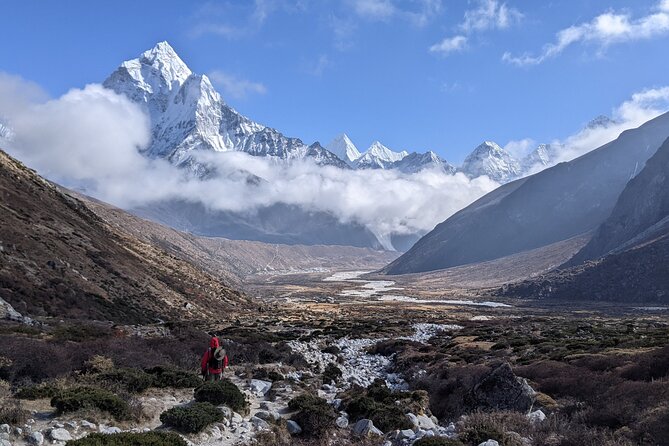
- Everest Base Camp at 5,364 meters: Reach the famous camp after walking from Lukla through Namche, Tengboche, Dingboche, and Lobuche.
- Kala Patthar at 5,545 meters: Start early for the trip’s highest point and broad views of Everest, Lhotse, Nuptse, and other peaks.
- Two acclimatization days: Spend extra time at Namche Bazaar and Dingboche, with short side walks to help your body adjust.
- Private local support: An English-speaking, licensed guide leads your group, while one porter carries up to 20 kilograms for two people.
- A quieter return route: Walk through Pangboche, Phortse, Phortse Thanga, and Mong Danda rather than simply retracing every step.
- $1,890 per person: The price covers major trek costs, but you still need to budget for insurance, tips, showers, charging, snacks, and some Kathmandu meals.
Why This 15-Day Route Works
The best feature here is the pace. You do not fly into Lukla and immediately try to gain huge amounts of height. You spend time at 3,440 meters in Namche Bazaar, then again at Dingboche, before walking toward the highest villages and passes of the route.
That matters because altitude sickness is the chief threat on the Everest Base Camp trail. The itinerary keeps you active on rest days, but it does not treat them as wasted time. At Namche, you can walk toward the Hotel Everest View. At Dingboche, you can take a short excursion while sleeping at the same altitude for a second night.
This is a private activity, so only your group participates. That gives you more room to adjust walking speed and rest stops with your guide. The word flexible in the title is useful, but you should still ask exactly how much flexibility is possible, since fixed flight schedules and tea-house availability limit the plan in busy periods.
The price is $1,890 per person. For a 15-day trek, that is a useful package price because it includes the Kathmandu to Lukla and Lukla to Kathmandu flights, national park and local permits, TIMS, tea-house meals, porters, a guide, gear, airport transfers, and private transport. You are not paying only for a walking guide. You are paying for a support system in a remote region.
Still, the price is not all-inclusive. Travel insurance covering trekking up to 6,000 meters is listed at an additional $200 per person. You also pay for tips, personal snacks and drinks, hot showers, battery charging, extra nights, international travel, visa costs, and lunch and dinner in Kathmandu.
More Hiking Tours in Kathmandu
- Everest Base Camp Trek – 14 Days
★ 5.0 · 1,499 reviews - Everest Base Camp Trekking
★ 5.0 · 485 reviews - Nagarkot Sunrise View and Day Hiking from Kathmandu
★ 5.0 · 471 reviews
Day 1: A Gentle Start in Kathmandu
Your trip begins at Tribhuvan International Airport. A Life Himalaya representative meets you and transfers you to your hotel.
This first day is practical rather than scenic. It gives the operator time to receive you, settle you in, and prepare you for the early flight to Lukla. If your international flight arrives late, the airport pickup is especially useful.
Kathmandu meals are not included except for the farewell dinner, so plan to handle your own food in the capital. The package includes breakfast and dinner during the trek, with lunch included on the walking days specified by the operator.
Day 2: Flying Into Lukla
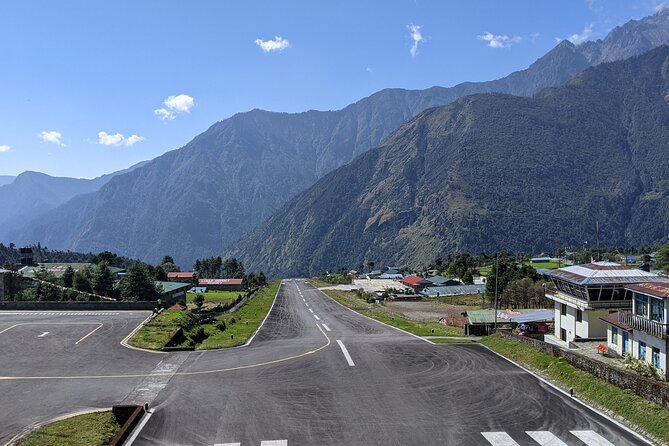
The early flight to Tenzing Hillary Airport takes you to Lukla at 2,810 meters. This small mountain town is the gateway to the Everest region, and landing here changes the feel of the trip at once. You are no longer preparing for the mountains. You are in them.
The flight is included for all group members and staff. The package allows 10 kilograms of main luggage and 5 kilograms of hand luggage per person, for 15 kilograms total on the domestic flight. Pack carefully, because that limit is more restrictive than a normal international allowance.
Weather can affect flights to Lukla. The cancellation terms specifically allow a new date or full refund if poor weather cancels the experience, but you should still keep spare time around the trek if your international schedule permits. The return may operate from Kathmandu or Ramechhap, depending on the flight arrangements.
Day 3: The Trail to Namche Bazaar
After breakfast, you walk toward Namche Bazaar, the Sherpa capital. The day takes about five hours and includes the Hillary Bridge, a memorable suspension bridge on the route.
Namche is more than a place to sleep. It is the first major settlement where the trek begins to feel high and remote, yet you still have a lively mountain hub around you. The approach introduces you to the classic Sherpa trail, with bridges, uphill walking, and increasingly grand Himalayan views.
You should not judge your whole trek by this day. The route is already physically serious, but the real challenge comes later, after Dingboche. Use Namche to learn your pace, drink regularly, and tell your guide early if you develop a headache, nausea, or unusual fatigue.
More Everest Base Camp Treks in Kathmandu:
- Everest Base Camp Helicopter Tour landing at Everest View Hotel
★ 5.0 · 668 reviews - Everest Base Camp Trekking – 13 Day
★ 5.0 · 365 reviews - Everest Base Camp Trek -14 Days
★ 5.0 · 321 reviews - Everest Base Camp Helicopter Tour landing at Hotel Everest View
★ 5.0 · 218 reviews
Day 4: Acclimatizing Above Namche
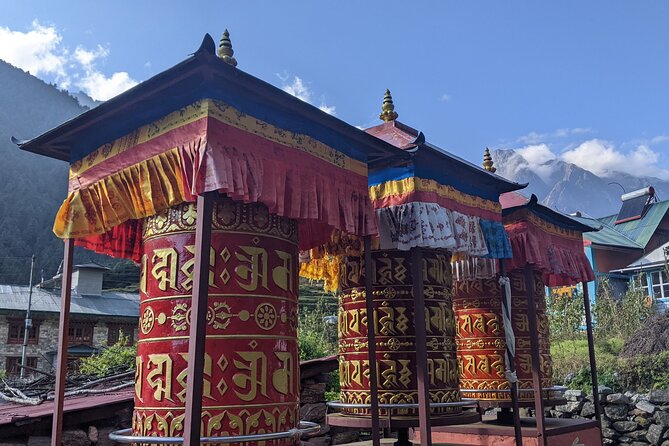
At 3,440 meters, Namche is high enough to require an extra night. The plan includes a side excursion toward Hotel Everest View, which takes about an hour.
This is one of the smartest parts of the itinerary. You gain height during the day, then return to sleep at Namche. That active-rest pattern helps you adjust without adding another overnight stop. It also gives you a fine first look at the surrounding peaks without committing to a long walking day.
The Hotel Everest View admission is not included, so ask your guide what the planned stop involves and what extra costs may apply. The excursion may be short on paper, but the altitude can make even a modest climb feel slow.
Day 5: Monastery Country at Tengboche
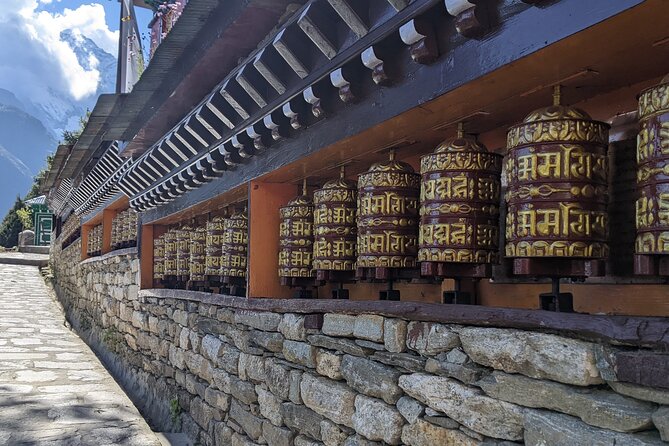
The route continues to Tengboche, about five hours from Namche. The main attraction is Tengboche Gompa, one of the best-known monasteries in the Everest region.
The walk combines forested trail sections with open mountain views, and the monastery gives the day a strong cultural element. This is not just a march toward a famous mountain. You are passing through villages shaped by Sherpa Buddhist traditions and meeting local people along a working mountain route.
Tengboche is also a good reminder that comfort becomes simpler as you climb. Tea-house lodging is included, and the company describes its lodges as clean and comfortable, but you should not expect hotel facilities. Hot showers and battery charging cost extra during the trek.
Day 6: Into the Imja Valley
You walk for roughly four to five hours toward Dingboche. The route follows the Imja Khola and crosses a bridge before reaching Orsho, where the trail separates toward Pheriche and Dingboche.
Dingboche sits at a serious altitude, so this day is less about distance than adjustment. The valley opens to large Himalayan views, but your body may notice the height more than your camera does. Keep your pace steady and avoid treating the shorter walking time as permission to hurry.
The package provides meals from lodge menus, with food chosen for hygiene and practicality. Personal snacks and beverages are not included, so bring or buy the items you know you will want.
Day 7: A Second Acclimatization Day
Dingboche provides the second planned acclimatization stop. You remain active with a side excursion, then sleep another night at altitude.
I like this pause because the itinerary does not force you to gain height every day. The villages above Dingboche are higher and more exposed, and a rest day here gives your guide a chance to assess how you are responding before the route becomes harder.
The supplied information calls for strong physical fitness. That is not a casual warning. You should be ready for repeated uphill and downhill walking, cold conditions, thin air, and long days on uneven trails. The guide’s job is to help with pacing and safety, but no guide can remove the physical demands of the route.
Day 8: Thukla and the Approach to Lobuche
After Dingboche, the trail heads toward Thukla, a natural stopping point on the way to Lobuche. You can expect open views and a more serious high-altitude setting as the route leaves the lower villages behind.
This day prepares you for the main goal on Day 9. The walk is scenic, but the thin air makes progress feel measured. Take small steps, keep your pack light, and let the porter carry the heavier shared load.
The porter arrangement is one porter for every two people, carrying up to 20 kilograms total, or 10 kilograms from each person. That is a helpful allowance, but it does not mean you should pack 10 kilograms of unnecessary gear. Your own hand-carry bag still needs to stay within the domestic flight limit.
Day 9: Reaching Everest Base Camp
The long-awaited objective arrives at Everest Base Camp, at 5,364 meters. The day is the emotional high point of the trek, but it is not necessarily the highest altitude. That comes at Kala Patthar the next morning.
Base Camp is reached after walking through the high valleys toward the foot of the Khumbu Glacier. The setting is stark and dramatic, with ice, rock, and towering peaks around you. If you arrive during a climbing season, the camp can have a more active expedition atmosphere, but the supplied details do not promise specific climbing activity or a particular camp setup.
Give yourself time to enjoy the moment, take photographs, and listen to your body. The return to the lodge is still part of the day, and fatigue can hit quickly at this altitude. Your guide will be central here, watching the group and keeping the schedule sensible.
Day 10: Kala Patthar at 5,545 Meters
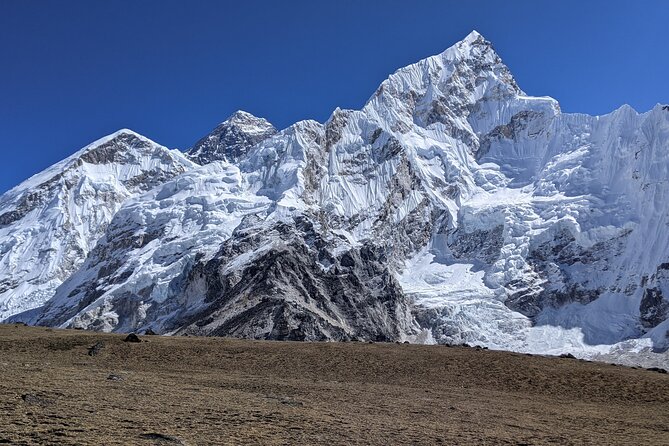
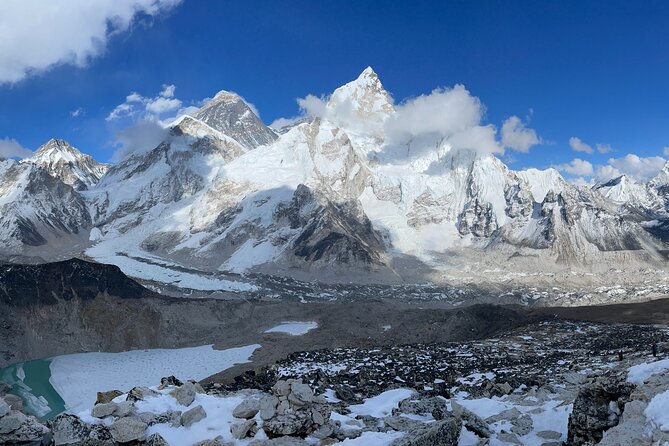
You start very early for Kala Patthar, the highest point of the trip at 5,545 meters. The reward is a broad mountain view, including Everest, Lhotse, Nuptse, and other Himalayan peaks.
The early start is important because mountain visibility is often best in the morning, and the light can make the peaks especially striking. The climb is short in distance compared with the full trek, but altitude makes it strenuous. Move slowly and do not feel pressured to match another person’s pace.
Kala Patthar is also why this route is more than a simple walk to Base Camp. From Base Camp, you reach the destination. From Kala Patthar, you gain the high viewpoint that lets you understand the scale of the surrounding peaks.
Days 11 and 12: A Quieter Return Through Phortse
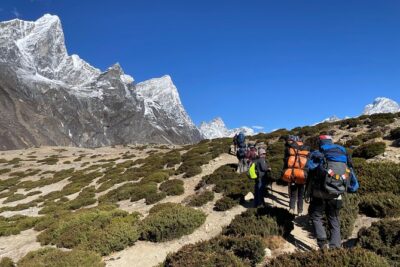
Instead of turning the return into a complete repeat, the route goes down to Pangboche and then takes a less crowded trail toward Phortse. You can see Ama Dablam, Thamserku, and Tengboche Monastery from new angles.
Day 12 continues toward Phortse Thanga, at about 3,680 meters, then climbs to Mong Danda. The trail connects with the route toward Gokyo Lake, adding variety without turning this trip into the longer Gokyo, Cho La, and Renjo La circuit.
I particularly like these two days for anyone who wants more than a standard out-and-back. You still get the famous route, but the return has a different character. The tradeoff is that a less crowded path may feel less straightforward, and you should follow your guide closely at junctions.
Day 13: Back to Lukla
The final walking day follows the route through Toktok, Phakding, Ghat, and Cheplung at 2,650 meters, with the last 200 meters climbing back up to Lukla.
After the high country, the lower altitude can feel easier, but the day still asks for several hours of walking. The evening in Lukla marks the end of the trekking portion. It is a good time to check your bags, settle any tips, and enjoy the sense of having completed the walking route.
A trekking achievement certificate is included, as is a farewell dinner. Those are small touches, but they give the final evening a clear finish.
Day 14: Flying Back to Kathmandu
You take the earliest possible flight toward Kathmandu and have the rest of the day at leisure after checking into your hotel.
This buffer day is valuable. Flights in the Everest region depend on weather and operating conditions, so returning one day before your international departure gives you more protection than ending the trek on the same day as your flight home. The itinerary does not promise a specific number of free hours, since flight timing can change.
Private transport is included, and the airport transfer on Day 15 is arranged around your departure schedule.
Guides, Porters, and Comfort
Life Himalaya supplies an English-speaking, experienced, licensed guide. For groups of five or more, an assistant guide is included. One porter carries the combined 20-kilogram load for two people.
Several guide names appear in the company’s recent trip history, including Raj, Suren, Sonam, Sagar, Ram, Rabin, Jal, Ganesh, Vijay, Teeras, Birsha, and Phurpa. You should confirm who will lead your departure rather than assume a specific name. The strongest pattern is personal support: guide and porter teams are described as attentive, encouraging, and focused on safety.
Tea-house accommodation keeps you close to the local communities along the route. The package promises clean and comfortable lodge accommodation, but facilities become more basic at higher elevations. Hot showers and charging are extra, and the cost of those services is not stated, so carry some local cash.
What the $1,890 Price Really Covers
At $1,890, the package is strongest for someone who wants the main logistics handled in advance. You receive:
- Airport pickup and private transportation
- Flights between Kathmandu or Ramechhap and Lukla
- Sagarmatha National Park, local area, and TIMS permits
- A licensed English-speaking guide
- Porter support
- Tea-house meals during the trek
- Sleeping bag, down jacket, and hiking poles
- A trail map and achievement certificate
- Farewell dinner
The exclusions deserve equal attention. Add about $200 for the listed high-altitude insurance, then allow money for tips, drinks, snacks, charging, hot showers, extra nights, Kathmandu dinners and lunches, visa costs, and international flights.
Free cancellation is available up to 24 hours before the scheduled start time. Changes or cancellations inside that window are not accepted for a refund, and weather-related cancellation offers a different date or full refund.
Who Should Choose This Trek?
I would choose this trip if you want a private group, a local guide, porter support, and a classic Everest route with two proper acclimatization days. It suits fit walkers who value structure but still want some flexibility in pace and side walks.
I would not choose it if you want a soft adventure, fixed luxury hotel comfort, or a route free from weather risk. You must be comfortable with basic tea-house facilities, uncertain mountain flights, and the possibility that altitude changes the day’s plan.
The route also suits people who want the famous Base Camp experience without adding the Gokyo lakes and high passes. The Phortse return gives you a quieter variation while keeping the 15-day schedule focused.
Should You Book the Everest Base Camp Trek?
Book it if reaching both Everest Base Camp and Kala Patthar matters to you, and if you value a support team that handles permits, flights, porters, meals, and gear. The two acclimatization days and private format add real value, while the Phortse return keeps the walk from feeling like a simple repeat.
Before paying, confirm the guide’s name, the exact Kathmandu or Ramechhap flight plan, tea-house arrangements, expected extra costs, and the weather policy for your dates. If you arrive fit, pack within the flight allowance, carry suitable insurance, and respect the altitude, this is a well-structured way to tackle one of Nepal’s great mountain routes.
FAQ
How long is the Everest Base Camp trek?
The experience lasts approximately 15 days, including arrival and departure in Kathmandu, the trek between Lukla and Everest Base Camp, acclimatization days, and return travel.
What is the highest point on the route?
Kala Patthar is the highest point, at 5,545 meters. Everest Base Camp is at 5,364 meters.
Are flights between Kathmandu and Lukla included?
Yes. Flights from Kathmandu or Ramechhap to Lukla and from Lukla back to Kathmandu or Ramechhap are included for all group members and staff.
What luggage allowance applies to the domestic flights?
Each person may take 10 kilograms of main luggage and 5 kilograms of hand luggage, for a total of 15 kilograms.
Is this a private tour?
Yes. Only your group participates in this private activity.
Are permits included?
Yes. The package includes the Sagarmatha National Park Permit, local rural area permit, and TIMS permit.
Are meals included during the trek?
Dinner is included on 13 days, breakfast on 14 days, and lunch on 12 days. Lunch and dinner in Kathmandu are not included.
Is travel insurance included?
No. Insurance is not included. The listed cost is $200 per person for coverage up to 6,000 meters.
Can I cancel for a full refund?
You can cancel at least 24 hours before the experience start time for a full refund. Cancellations or changes made less than 24 hours before the start are not accepted for a refund.
Recently added around Kathmandu
- Kathmandu Airport Pickup and Drop-off Services★ 5.0 · 3 reviews
- Kathmandu Paragliding★ 5.0 · 3 reviews
- Explore The Beauty Of Langtang Valley In 8-Days Trek★ 5.0 · 3 reviews
- Kathmandu Chandragiri Cable Car and Swayambhunath Private Tour★ 5.0 · 3 reviews
- Kathmandu: Nightlife and Pub Crawl Tour★ 5.0 · 3 reviews
- Kathmandu: Momo Making Class with a Local Chef★ 5.0 · 3 reviews
- Mountain Flight Experience in Nepal★ 4.5 · 3 reviews
- Everest Base Camp Trek★ 5.0 · 3 reviews
Other Everest Base Camp Treks worth a look
Everest Base Camp Helicopter Tour landing at Everest View Hotel
Read our review →
Everest Base Camp Helicopter Tour landing at Hotel Everest View
Read our review →
This tour also appears in