
REVIEW · EVEREST BASE CAMP TREKS
Everest Base Camp Trek
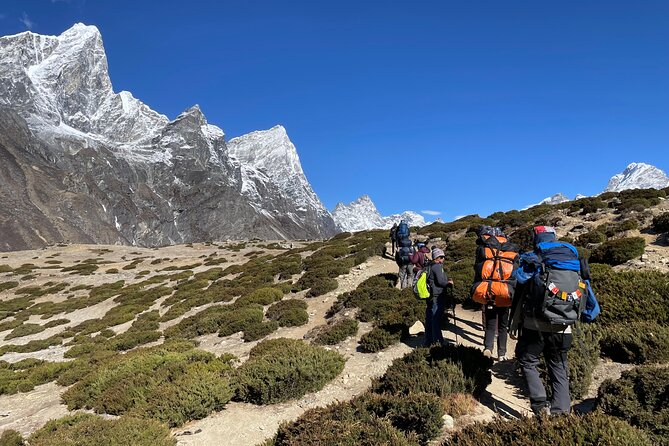
Everest Base Camp is the big one: a high-altitude walk through Sherpa country to the foot of the world’s highest mountain. You’ll fly from Kathmandu to Lukla, pass through Namche Bazaar and Tengboche, then reach Everest Base Camp at 5,364 meters and Kala Patthar at 5,545 meters. The views are huge, but so is the physical demand.
I like the built-in acclimatization days at Namche and Dingboche, which give you time to adjust before the trail climbs higher. I also like the practical setup: airport transfers, tea-house lodging, meals on the trail, a guide, and one porter for every two people are included.
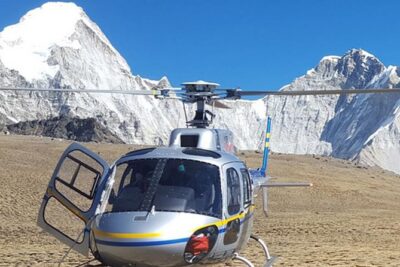
The main catch is that this is not a casual mountain walk. You need strong physical fitness, and the Lukla flights can be delayed or canceled. Helicopter backup may be possible, but it costs at least $500 per person and is your responsibility.
Key points to know before booking
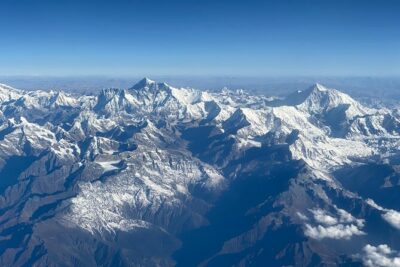
- The route reaches both Everest Base Camp and Kala Patthar, giving you a close look at the Everest range and a high viewpoint above Gorak Shep.
- Two acclimatization days are built in, one at Namche Bazaar and another at Dingboche.
- Pradip, Laxman, and other local guides are part of the company’s strongest reputation, with praise for their mountain experience, humor, safety awareness, and care.
- The $1,500 price covers the major trek basics, including domestic flights, accommodation, meals on trek, guide, porter support, permits, and airport transfers.
- Tea-house accommodation is clean and comfortable but basic, especially at the higher villages.
- Lukla flight delays are a real planning issue, so travel insurance covering at least $500 in flight disruption costs is strongly advised.
Why the Everest Base Camp route still feels special
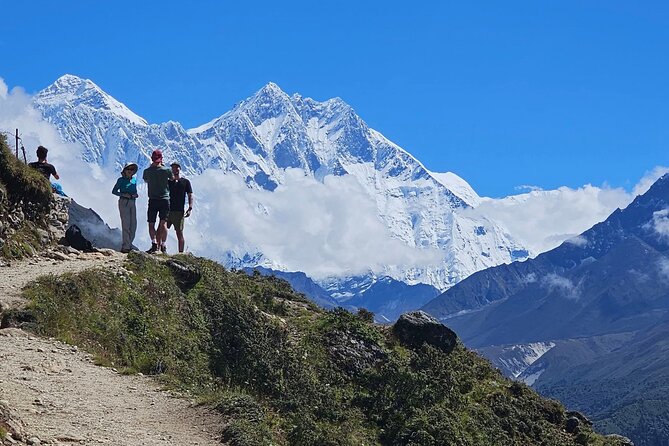
The appeal here is not simply reaching a sign that says Everest Base Camp. The route gives you a gradual change of place and culture, from Kathmandu’s busy streets to small Sherpa settlements, prayer flags, stone walls, monasteries, suspension bridges, and bare Himalayan slopes.
You’ll pass through Namche Bazaar, often called the capital of the Sherpa community. It is more than an overnight stop. Shops, tea houses, and mountain views make it a useful place to rest, organize your gear, and prepare for the harder days ahead.
Tengboche adds a quieter, more reflective pause. Its monastery is one of the cultural highlights of the trek, and the itinerary gives you time to appreciate the setting rather than treating the village as a quick lunch stop. The route then climbs through Dingboche, Lobuche, and Gorak Shep, where the air gets thinner and the walking becomes more serious.
I like that the experience includes local guides instead of leaving you to find your own way through a demanding route. Pradip is repeatedly singled out for his mountain experience, wildlife spotting, humor, and ability to make difficult days feel more manageable. Laxman is also praised for long experience on the mountain and for looking after the group.
That personal support matters here. A guide does not remove the hardship, but a good one can help you judge the pace, understand the villages, and recognize when the altitude is becoming a problem.
More Hiking Tours in Kathmandu
- Everest Base Camp Trek – 14 Days
★ 5.0 · 1,499 reviews - Everest Base Camp Trekking
★ 5.0 · 485 reviews - Nagarkot Sunrise View and Day Hiking from Kathmandu
★ 5.0 · 471 reviews
Days 1 and 2: Kathmandu to Lukla and Phakding
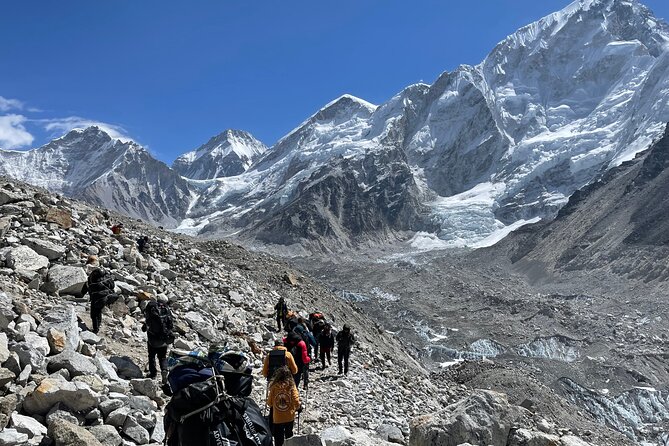
Your arrival day begins at Tribhuvan International Airport in Kathmandu. A representative meets you after customs and transfers you to the hotel. The transfer takes about an hour, and a standard three-star hotel night is included on arrival.
The next morning starts early with the flight to Lukla, at about 2,886 meters. From Lukla, you begin walking toward Phakding, at roughly 2,640 meters, in a trek of about four hours.
This first walking day is helpful because it eases you into the route. You are not immediately asked to climb to a great height, and the short schedule leaves room to settle into the rhythm of walking, eating, and sleeping in mountain lodges.
The flight is also the first logistical uncertainty. If it is canceled or delayed, the operator says it will try to move you to the next available flight. A group helicopter may also be arranged, but the minimum stated cost is $500 per person. Build flexibility into your wider Nepal plans rather than booking a tight connection after the trek.
Days 3 and 4: Namche Bazaar and the first altitude test
From Phakding, you walk for about six hours to Namche Bazaar, at 3,440 meters. This is one of the route’s key stages, with a clear rise in altitude and a longer day on foot.
Namche is a good place to stop and adjust. The following day is set aside for acclimatization, rather than pushing directly toward Tengboche. The schedule describes a rest day, but the listed duration is still about six hours, so you should confirm with your guide how that day will be used.
The value of Namche is practical as much as scenic. You have time to rest, sort your day pack, charge devices if power is available, and buy snacks or small supplies. Electricity is available in some villages, though charging costs extra and power can be limited. Spare batteries are sensible.
Your main luggage is carried by porters, while you carry a day pack with water, a camera, sunscreen, a spare jacket, and other immediate needs. The stated domestic airline allowance is 15 kilograms, including hand luggage, with excess baggage charged separately.
Day 5: Tengboche and its monastery
The trek from Namche to Tengboche, also written as Tyangboche in the itinerary, takes about six hours and reaches approximately 3,867 meters.
This section combines mountain scenery with Sherpa religious culture. Tengboche Monastery is the reason many people remember this stop, and it gives the route a welcome change of pace. You are not only walking toward a famous mountain. You are passing through a living Himalayan community where monasteries, local homes, lodges, and trekking paths share the same narrow world.
The altitude is now high enough that you may notice the pace slowing. Let your guide set a sensible rhythm. The strongest approach is steady walking, plenty of water, and no race to arrive first.
More Everest Base Camp Treks in Kathmandu:
- Everest Base Camp Helicopter Tour landing at Everest View Hotel
★ 5.0 · 668 reviews - Everest Base Camp Trekking – 13 Day
★ 5.0 · 365 reviews - Everest Base Camp Trek -14 Days
★ 5.0 · 321 reviews - Everest Base Camp Helicopter Tour landing at Hotel Everest View
★ 5.0 · 218 reviews
Days 6 and 7: Dingboche and useful acclimatization time
From Tengboche, you continue to Dingboche, at approximately 4,260 meters. The walking day is listed at about six hours, with the trail passing a Dingboche viewpoint.
Dingboche is another important pause before the route climbs above 4,900 meters. The second day is for acclimatization, with a walk along the Chhukhung path and a return to Dingboche for rest. Again, the itinerary lists about six hours, so this is not necessarily a day spent entirely in bed.
I see this as one of the best features of the schedule. A rushed Everest Base Camp plan may cut down rest days to save time, but altitude does not care about your calendar. Two acclimatization stops give your body a better chance to adjust before Lobuche, Gorak Shep, and Base Camp.
Accommodation here is in local tea houses or mountain lodges. They are described as clean and comfortable, but you should expect basic conditions. Rooms are generally twin-share unless you request a single supplement, listed at an additional $200.
Days 8 and 9: Lobuche, Gorak Shep, and Base Camp
The day from Dingboche to Lobuche reaches 4,930 meters and takes about six hours. You stop for lunch at Dugla, around 4,595 meters, before continuing to Lobuche.
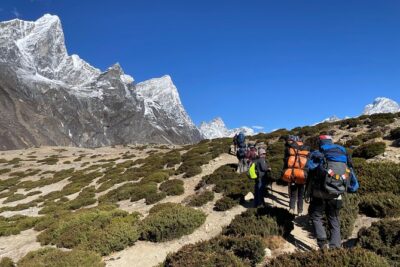
This is where the trek begins to feel properly high and remote. The walking is slower, the air is thinner, and each rise asks more from your legs. The route is not described as technical climbing, but strong fitness is still essential because of the altitude and repeated long days.
The next stage leads from Lobuche through Gorak Shep, at about 5,140 meters, to Everest Base Camp at 5,364 meters. It is listed as another six-hour day and is described as the most rewarding section of the route.
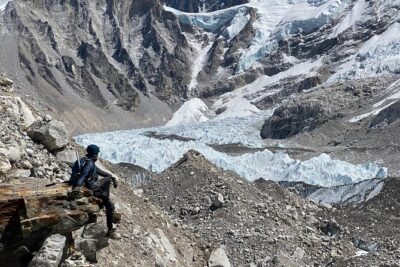
Base Camp itself is a major goal, but the surrounding experience matters just as much. The trail brings you close to the starting point for Everest expeditions, where the stories of sacrifice, danger, and perseverance become more real. The view is not a guarantee of seeing the summit from the Base Camp area, which is one reason Kala Patthar is so important the following morning.
Gorak Shep is a very high overnight stop. Rest, warm layers, hydration, and following your guide’s advice are more important here than comfort or speed.
Day 10: Kala Patthar and the descent to Pheriche
The day begins with the climb from Gorak Shep to Kala Patthar, at approximately 5,545 meters, followed by a descent to Pheriche at 4,243 meters.
Kala Patthar is the trek’s highest point and its classic viewing platform for the Everest range. The early start is designed to reach the viewpoint before descending, although the supplied schedule does not specify an exact departure time. Ask your guide when you should leave and what weather conditions to expect.
This is a demanding day because you gain height after already reaching Base Camp, then walk downhill for several hours. The descent to Pheriche is welcome, but it is not effortless. At least you finish considerably lower than Gorak Shep, which should make the evening easier for many people.
I like the way this route includes Kala Patthar rather than treating Base Camp as the only goal. You get the emotional finish at Base Camp and the high viewpoint that frames the Everest range more clearly.
Days 11 to 14: Returning through Namche and Kathmandu
From Pheriche, the route heads back toward Namche Bazaar, at 3,440 meters. The schedule describes arrival in the late afternoon. It also contains a wording mismatch, referring to Tyangboche before Namche, so you should confirm the exact day-by-day route with the operator before departure.
The next day takes you from Namche to Lukla in about six hours. After the long return walk, you can rest in Lukla before the early flight back to Kathmandu.
Once in Kathmandu, you are transferred to the hotel. A second three-star standard hotel night is included after the trek, giving you a buffer before departure. The final day includes a transfer to Tribhuvan International Airport for your flight out of Nepal.
The return flight is just as important as the flight in. Weather or operational problems can affect Lukla service in either direction. This is why insurance for flight cancellation is not a minor extra. The operator advises coverage of at least $500 per day for this risk and says it can provide documentation for an insurance claim.
What the $1,500 price really covers
At $1,500 per person, the package covers many of the large costs that can make an Everest trek expensive. You get airport pickup and drop-off, two Kathmandu hotel nights, domestic flights between Kathmandu and Lukla, tea-house lodging, a guide, porter support, permits and official fees, a first-aid kit, and meals during the trek.
Breakfast is included for all 14 days listed. Lunch and dinner are included for 11 days, which appears to cover the trekking section rather than your Kathmandu stay. Lunch and dinner in Kathmandu are not included, and neither are alcoholic or non-alcoholic drinks.
The guide and porter costs include their salaries, food, accommodation, transport, and insurance. One porter is provided for every two people. That arrangement reduces the load you carry, but pack carefully and stay within the airline baggage allowance.
You should budget extra for drinks, snacks, hot showers, battery charging, tips, Kathmandu meals, and any sightseeing entrance fees. The operator suggests roughly $12 to $15 per day on the trek if you avoid alcohol and shopping, with tips commonly set at 10 to 15 percent of the tour cost when the service has been good.
A single-room supplement is listed at $200. The package uses twin-share lodging as the default, so solo comfort comes with a clear added cost.
Who will get the most from this trek
This trek suits you if reaching Everest Base Camp is a major personal goal and you want logistical help rather than an independent walk. It is also a good fit if you value local cultural stops, built-in rest days, and a guide who can explain the mountains and communities along the way.
You need strong physical fitness. The schedule includes repeated six-hour walking days, high passes and viewpoints, thin air, and basic accommodation. It is not a sightseeing tour with a little walking added.
The maximum group size is 15 people. That is large enough to offer company but small enough to remain manageable on the trail. If you prefer privacy, ask about a private arrangement and the cost of a single supplement.
Service animals are allowed, and the route is near public transportation in some parts, but the trek itself is a remote mountain journey. You should ask the operator directly about any personal mobility or medical concern before booking.
Smart preparation for the practical details
Keep your main bag light and use the porter service for clothing and equipment you do not need while walking. Your day pack should hold water, sunscreen, a camera, a warm layer, and spare essentials.
Bring water purification tablets. Normal water is available without charge in some places, while bottled and boiled water can be bought along the route. Battery charging is available in some villages, often for a fee, but solar power and local electricity may not be reliable.
The operator provides a duffle bag if needed and says you can leave non-trekking clothes in a hotel locker or safe-deposit room in Kathmandu. Confirm this arrangement when you book, especially if your Kathmandu hotel was arranged independently.
The company also offers airport meeting and greeting. Send your international flight details after booking so a representative can meet you outside the terminal with your name on a sign. If you arrange your own Kathmandu hotel, provide those details so the meeting time and transfer can be organized.
Free cancellation is available up to 24 hours before the local start time. Changes or cancellations inside that window are not accepted for a refund.
Should you book the Everest Base Camp Trek?
I would consider this a strong-value package for a fit person who wants the classic route with transport, meals, lodging, porters, and guides organized in advance. The acclimatization days, Kala Patthar climb, and local support make the schedule more sensible than a stripped-down rush to Base Camp.
I would not book it if you dislike basic tea houses, cannot handle long walking days, or need a fixed timetable around international flights. The Lukla connection can disrupt plans, and helicopter rescue or replacement flights can cost extra.
If you do book, ask for the final route details, confirm the guide assigned to your group, check exactly what your insurance covers, and plan spare days around Lukla. For the right person, this is a demanding but well-supported way to experience the Sherpa villages, Tengboche Monastery, Everest Base Camp, and the high viewpoint of Kala Patthar in one carefully paced trip.
FAQ
How long does the Everest Base Camp Trek take?
The scheduled experience lasts about 14 days, including arrival and departure days in Kathmandu, flights to and from Lukla, the trek, and two Kathmandu hotel nights.
What is the price per person?
The listed price is $1,500 per person.
Are airport transfers included?
Yes. Private car, van, or bus transfers are included for airport pickup and drop-off. An airport representative meets you after customs if you provide your international flight details.
Are meals included?
Breakfast is listed for 14 days. Lunch and dinner are included for 11 days during the trekking program. Lunch and dinner in Kathmandu, along with alcoholic and non-alcoholic drinks, are not included.
What accommodation is provided?
You receive two nights in a standard three-star hotel in Kathmandu. During the trek, you stay in local tea houses or mountain lodges, normally in twin-share rooms. A single supplement is available for an additional $200.
What happens if the Lukla flight is canceled?
The operator says it will try to reschedule the flight for the following day, subject to availability. A group helicopter may also be arranged, with a minimum stated cost of $500 per person paid by you.
Do I need travel insurance?
Yes. Travel insurance is not included, and insurance covering Lukla flight cancellation costs is strongly advised. The operator recommends coverage of at least $500 for a day of flight disruption.
Recently added around Kathmandu
- Kathmandu Paragliding★ 5.0 · 3 reviews
- Kathmandu Airport Pickup and Drop-off Services★ 5.0 · 3 reviews
- Kathmandu Chandragiri Cable Car and Swayambhunath Private Tour★ 5.0 · 3 reviews
- Explore The Beauty Of Langtang Valley In 8-Days Trek★ 5.0 · 3 reviews
- Kathmandu: Nightlife and Pub Crawl Tour★ 5.0 · 3 reviews
- Mountain Flight Experience in Nepal★ 4.5 · 3 reviews
- Kathmandu: Momo Making Class with a Local Chef★ 5.0 · 3 reviews
- Everest Base Camp Trek★ 5.0 · 3 reviews
Other Everest Base Camp Treks worth a look
Everest Base Camp Helicopter Tour landing at Everest View Hotel
Read our review →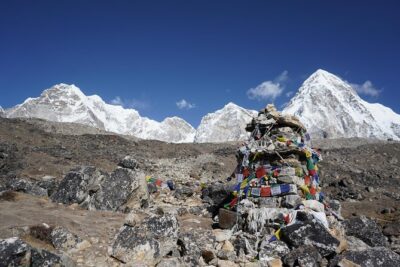
Everest Base Camp Helicopter Tour landing at Hotel Everest View
Read our review →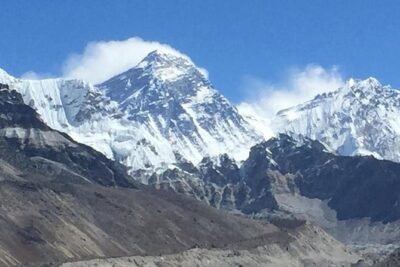
This tour also appears in