
REVIEW · EVEREST BASE CAMP TREKS
Everest Base Camp Trek
The great draw here is not just reaching Everest Base Camp, but walking through the villages, forests, monasteries, and high valleys that lead there. I like the built-in acclimatization day in Namche Bazaar, and I like that the price includes tea house lodging, three daily meals, a guide, and porter support. The trip also reaches Kala Patthar, the best viewpoint on this route for broad views of Everest.
The main caution is the pace. You gain altitude quickly, reaching 5,364 meters at Base Camp and 5,545 meters at Kala Patthar, with several long walking days. The $2,500 price covers many essentials, but you still need to budget for Nepal’s visa, international flights, personal expenses, tips, and your own rescue insurance.
Key points to know before you book
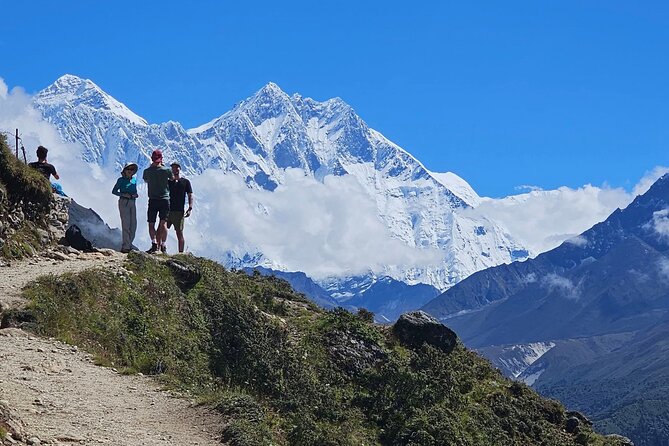
- Kala Patthar is the visual high point: The early climb gives you the route’s clearest views of Mount Everest and nearby peaks.
- Namche provides one acclimatization day: You can explore the market town, visit the Sagarmatha National Park museum, and hike toward the Everest View Point.
- The package includes practical support: A professional guide, porter service at one porter for every two trekkers, meals, tea house lodging, and transport are included.
- The route passes major Khumbu landmarks: You’ll see Lukla, Phakding, Namche Bazaar, Tengboche, Dingboche, Lobuche, Gorakshep, Everest Base Camp, and Kala Patthar.
- The trek is private: Only your own group participates, which gives the schedule a more personal feel.
- The finish depends on a short Lukla flight: The return flight to Kathmandu takes about 25 minutes, with airport transfers included.
What the 12-day Everest Base Camp Trek really involves
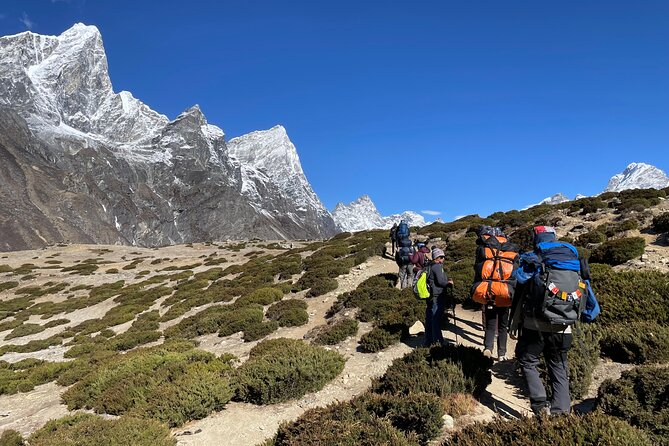
This is a classic high-altitude trek with a clear purpose: start near Kathmandu, reach the foot of Mount Everest, climb Kala Patthar for the finest viewpoint, and return to Lukla. The route covers famous sections of Sagarmatha National Park and follows the Dudh Koshi River through villages, suspension bridges, forests, and increasingly bare mountain country.
You are not signing up for a casual mountain walk. The tour requires a moderate level of physical fitness, and the altitude is the serious part of the challenge. Walking times range from about three to six hours on most days, with the Base Camp day combining a trek from Lobuche to Gorakshep and a hike onward to Base Camp.
The reward is variety. Lower sections bring perennial rivers, waterfalls, rhododendron forests, Buddhist monasteries, and local settlements. Higher sections bring views of Nuptse, Island Peak, Lobuche Peak, Taboche Peak, the Khumbu Glacier, Everest, and Kala Patthar.
More Hiking Tours in Kathmandu
- Everest Base Camp Trek – 14 Days
★ 5.0 · 1,499 reviews - Everest Base Camp Trekking
★ 5.0 · 485 reviews - Nagarkot Sunrise View and Day Hiking from Kathmandu
★ 5.0 · 471 reviews
Day 1: Kathmandu to Lukla, then Phakding
Your day begins early, with a 5:15 am meeting at Tribhuvan Airport in Kathmandu. The flight to Lukla takes about 25 minutes. It is a short flight, but the approach into the mountain airstrip is described as nerve-racking, so expect the first morning to feel like part of the adventure rather than a routine transfer.
After reaching Lukla, you begin walking toward Phakding at 2,650 meters. The trek takes about three hours. Along the route, you pass through forest, Buddhist monasteries, and local settlements. If the weather is clear, you might see Kanguru Peak, which rises to 6,367 meters.
Phakding is a useful first night because the walking day is fairly short and the elevation is still moderate by Himalayan standards. Your accommodation is in a tea house, and dinner is included. Tea houses are simple mountain lodges, so you should value the location and practical shelter more than hotel-style comfort.
Day 2: Phakding to Namche Bazaar
The second walking day is longer, at about six hours. You follow the route through villages, waterfalls, perennial rivers, and suspension bridges before reaching Namche Bazaar at 3,440 meters.
Lunch is planned around Monje or Jorsalle. Near Namche, the route reaches Top Danda, where you may get an early view of Mount Everest. This is an important day because the trail begins to feel more demanding as you gain height.
Namche Bazaar is one of the most memorable settlements on the route. It is a key stop in the Khumbu region, with mountain views, local shops, and a chance to collect souvenirs. After the quiet of Phakding, Namche feels like a proper mountain center.
Day 3: Acclimatization around Namche Bazaar
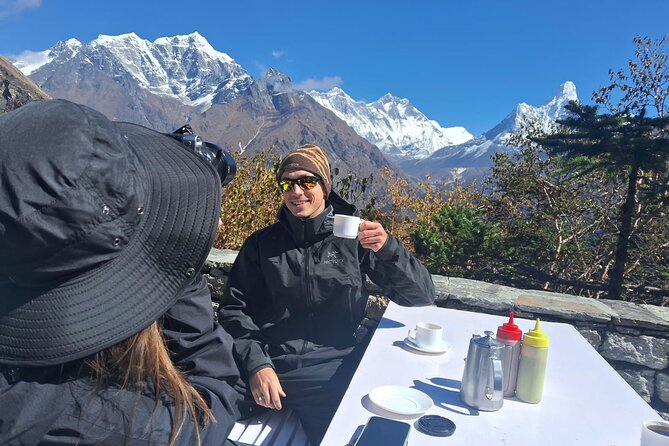
This is one of the most valuable days in the schedule. You do not simply sit around waiting for the next trek. Instead, you explore Namche and nearby viewpoints while giving your body time to adjust to the altitude.
Possible walks include the Everest View Point and nearby areas with views toward Kusum Kanguru, Taboche Peak, and Khonde Peak. The Sagarmatha National Park museum is another worthwhile stop. It offers a useful introduction to the park and the mountains you are walking toward.
I like this day because it gives the itinerary breathing room. A rushed Everest Base Camp schedule can turn into a test of endurance, while a rest and exploration day makes the climb more manageable. Still, you should not treat it as a completely easy day. Walking at altitude can feel harder than the distance suggests.
More Everest Base Camp Treks in Kathmandu:
- Everest Base Camp Helicopter Tour landing at Everest View Hotel
★ 5.0 · 668 reviews - Everest Base Camp Trekking – 13 Day
★ 5.0 · 365 reviews - Everest Base Camp Trek -14 Days
★ 5.0 · 321 reviews - Everest Base Camp Helicopter Tour landing at Hotel Everest View
★ 5.0 · 218 reviews
Day 4: Namche Bazaar to Tengboche
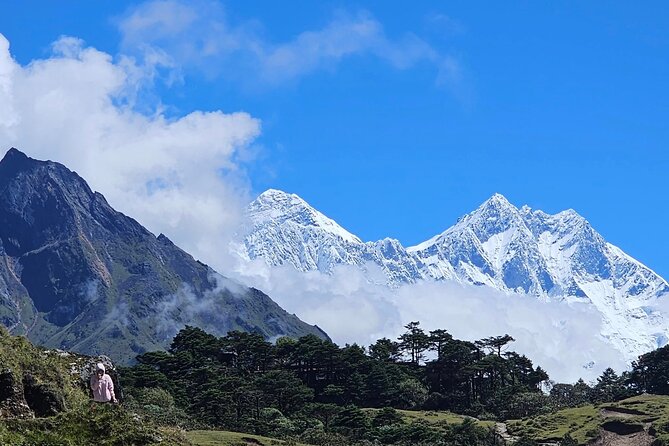
From Namche, the route continues toward Tengboche, at 3,860 meters. The walk takes about five hours and passes through rhododendron forest and along river country.
Tengboche’s main attraction is its monastery. You can visit the monastery and see monks and local people following long-held Buddhist rituals. This is one of the places where the trek becomes more than a mountain-viewing exercise. The cultural setting is part of the experience, and the monastery gives the day a strong sense of place.
Tengboche also offers mountain scenery, but the altitude begins to matter more here. After five hours of walking, you will likely appreciate the tea house stay and included dinner. The accommodation is basic, and you should expect personal expenses for items such as hot showers and battery charging.
Day 5: Tengboche to Dingboche
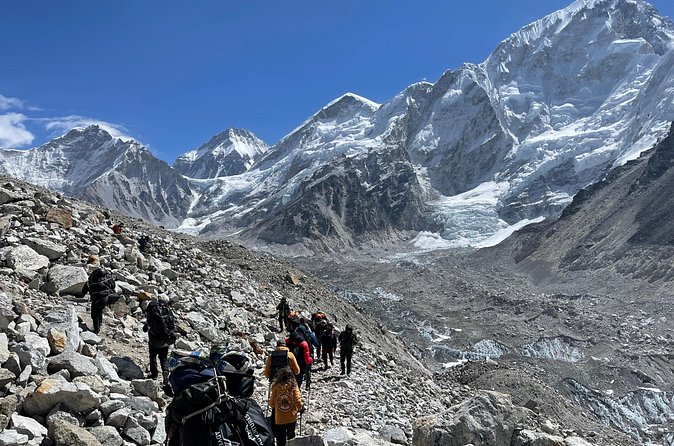
The trail to Dingboche takes about five hours and reaches 4,400 meters. Breakfast is in Tengboche, lunch is planned at Pangboche or Somare, and dinner is in Dingboche.
This section brings you farther into the high Khumbu. The trees begin to thin, and the route feels more exposed than the forested sections near Lukla and Namche. Pangboche and Somare break up the walk and offer useful places for a meal.
Dingboche is an important high-altitude settlement, and reaching it marks a clear change in the trek. The days ahead involve greater elevation and fewer easy comforts. This is a good point to pay close attention to how you feel and to follow your guide’s instructions.
Day 6: Dingboche to Lobuche
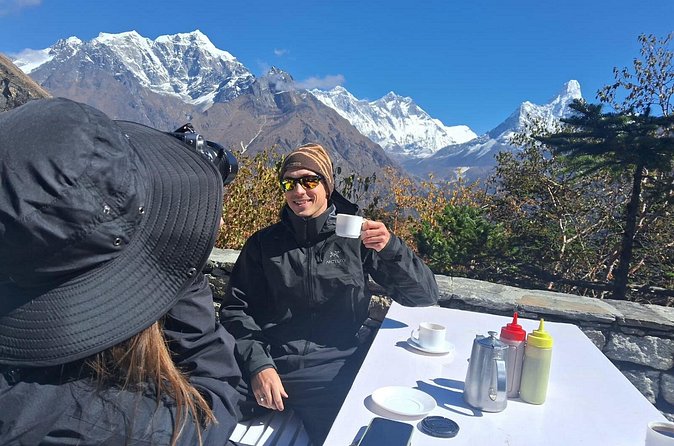
The supplied schedule gives this day as approximately four to five hours, with Lobuche at 4,910 meters. The route brings clear views of Nuptse, Island Peak, Lobuche Peak, and Taboche Peak.
At this height, even a moderate walking time can feel strenuous. The scenery is a strong reward, but this is not a day for rushing. You are preparing for the highest and most demanding part of the trek.
Lobuche is a practical overnight stop before Gorakshep and Base Camp. The tea house accommodation and hot soup in high places are included, which matters here. Warm food and a sheltered place to rest become increasingly valuable as the altitude rises.
Day 7: Lobuche to Gorakshep and Everest Base Camp
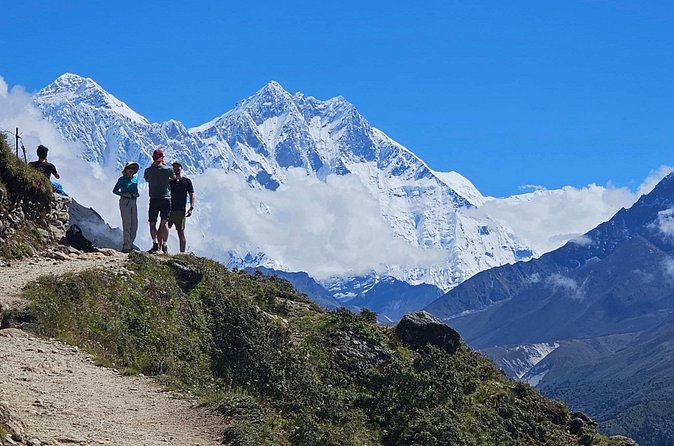
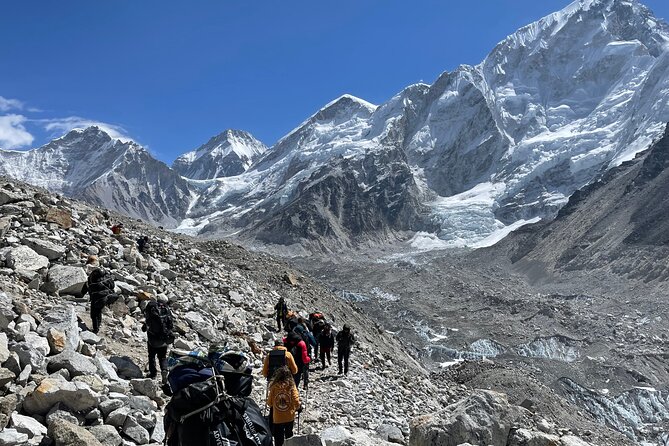
This is the big day. You walk from Lobuche to Gorakshep in about three and a half hours, following a steep trail to 5,150 meters. From the route, you can see the Khumbu Glacier, Kala Patthar, and Everest.
After lunch in Gorakshep, you continue toward Everest Base Camp at 5,364 meters. The route crosses difficult high-altitude ground, including a small glacier and a lake area. The distance is not the only challenge. The thin air makes every climb and descent feel more serious.
Base Camp is the emotional target of the trek. You can stop for photographs and take in the setting beneath Everest and the surrounding peaks. Keep your expectations realistic: the tour takes you to Everest Base Camp, but the most complete broad view of Everest comes from Kala Patthar the next morning.
You return to Gorakshep for the night. This makes for a long and physically demanding day, so conserve energy early. The achievement comes from continuing steadily rather than trying to race.
Day 8: Kala Patthar, Gorakshep, and Lobuche
You begin early for the climb to Kala Patthar, which takes about three hours. At 5,545 meters, it is the highest point on this itinerary and the route’s best viewing platform for Everest.
The early start is important because the mountain views from Kala Patthar are described as exceptionally clear and dramatic. You then descend to Gorakshep for breakfast before continuing to Lobuche, a walk of about two and a half hours.
This day shows why the itinerary includes both Base Camp and Kala Patthar. Base Camp gives you the destination and the sense of reaching Everest’s doorstep. Kala Patthar gives you the more satisfying mountain panorama. The combination is stronger than either stop alone.
The drawback is obvious: you are climbing high after an already demanding Base Camp day, then walking back down to Lobuche. If altitude affects you, this may be the hardest stretch of the tour.
Days 9 and 10: Returning through Tengboche and Namche
Day 9 takes you from Lobuche back to Tengboche in about five and a half hours. You stop around Pangboche and Deboche for lunch and pass monasteries, stupas, bridges, and rivers.
The return route is not simply a repeat of the way up. Descending gives you more time to notice the villages, river crossings, and forest sections that may have passed in a blur during the climb. Your body may feel tired, but the lower altitude usually makes the walking feel less severe.
On Day 10, you walk from Tengboche to Monjo through Namche Bazaar, taking about six hours. The trail passes through rhododendron forest, and lunch is planned in Namche. From there, you continue through Jorsalle to Monjo.
Monjo is at a lower elevation than the high settlements, and it breaks the return journey into a sensible stage. The day is still long, so do not assume that going downhill means effortless walking. Descents can be hard on tired legs.
Day 11: Monjo to Lukla
The final walking day takes about five hours. You pass through Phakding, cross the Dudh Koshi River on a suspension bridge, and continue alongside the river before reaching Lukla.
This is a satisfying finish because the route brings you back to the starting point of the mountain portion. The walk is mostly descending, but the distance and accumulated fatigue still count. You spend the night in Lukla before the flight back.
The inclusion of a Lukla overnight stay is practical. It avoids forcing the final walking section and flight into the same day, leaving a clear end point before returning to Kathmandu.
Day 12: Lukla to Kathmandu
The flight back to Kathmandu takes about 25 minutes. After landing, an agent from Himalayan Holyland Treks and Expedition escorts you to a hotel by private car.
You can refresh and explore Thamel afterward. A farewell dinner in Kathmandu is included, as are airport transfers for both international and domestic flights. A trip completion certificate and company T-shirt are also provided, small extras that mark the end of the journey.
The schedule says 12 days approximately, which is sensible for a route involving mountain flights. The stated plan is clear, but you should keep your wider Nepal schedule flexible around the trek.
What the $2,500 price includes
At $2,500, the value depends on how much support you want. This is not just a guiding fee. The package includes:
- Private airport pickup and drop-off for international and domestic flights
- Transportation listed in the schedule
- Tea house accommodation during the trek
- Three meals a day while trekking
- Hot soup in high places
- A professional trekking and sightseeing guide
- Porter service at one porter for every two trekkers
- Insurance for the guide and porters
- Government and local taxes
- A farewell dinner in Kathmandu
- Trekking map, completion certificate, and company T-shirt
The porter arrangement is especially useful because carrying a full load at altitude can make the route much harder. A ratio of one porter for two trekkers gives you practical support while keeping the arrangement clearly defined.
Several common costs remain yours. You pay for Nepal’s visa, international flights, personal drinks, hot showers, battery charging, laundry, bar bills, water, tips, extra Kathmandu nights, and your own travel and rescue insurance.
That list matters. The package price is easier to judge when you add these items to your budget instead of treating $2,500 as the complete cost of Nepal.
Guides, group format, and practical support
This is a private tour, so only your group participates. That can make the walking rhythm more comfortable than joining a large fixed group. You can still expect the route itself to be shared with other people, since Everest Base Camp is a popular trekking corridor.
The company’s guide team includes people such as Jangbu and Ajay. Jangbu is associated with a 20-day Three Passes Trek, while Ajay guided a parent and daughter on another Himalayan trip. Those names show the company has experience with demanding mountain itineraries, but the guide assigned to your specific departure should be confirmed before you book.
Airport pickup begins at Tribhuvan Airport at 5:15 am. That early start is one of the least glamorous details of the trip, but it is worth planning for. Private transfers are included, which removes some of the usual arrival and departure confusion in Kathmandu.
Who should choose this trek
I would recommend this tour to you if you want the standard Everest Base Camp route with organized logistics, a private group, included meals, and porter assistance. It suits someone who values a clear schedule and wants cultural stops such as Tengboche Monastery alongside the mountain views.
You should be comfortable with five to six-hour walking days, steep trails, basic tea house accommodation, and high altitude. The tour is not presented as suitable for all fitness levels. It specifically calls for moderate physical fitness, and the heights involved deserve respect.
I would not choose it if you want luxury lodging, a relaxed walking schedule, or a trip with no extra costs. I would also avoid treating the itinerary as fixed in every detail, since mountain travel requires patience and the flight days are important parts of the plan.
Cancellation and booking details
Confirmation is received at booking, and free cancellation is available if you cancel at least 24 hours before the local start time. Cancellations made less than 24 hours before the start, along with changes made inside that window, are not accepted for a refund.
You can book with a mobile ticket, and pickup is offered. Ask for the final guide name, the exact domestic flight arrangements, and the current personal-expense expectations before departure.
Should you book the Everest Base Camp Trek?
Book this trek if reaching Everest Base Camp and Kala Patthar is your main goal, and you want the major logistics handled for you. The strong points are the private format, the acclimatization day in Namche, the included porter arrangement, daily meals, and the chance to experience both Sherpa settlements and Buddhist sites.
Think twice if your schedule cannot tolerate a demanding high-altitude route or if you need hotel comforts. At $2,500, it offers a useful package of services, but your real budget must include insurance, visa, international flights, tips, and personal expenses.
For a first organized Everest Base Camp experience, the plan is straightforward and sensibly paced in its broad shape. The most important question is not only whether you can pay for it, but whether you are ready for the walking, altitude, early mornings, and simple mountain accommodation that make the views possible.
FAQ
Where does the Everest Base Camp Trek start?
The trek starts at Tribhuvan Airport in Kathmandu, Nepal. The meeting time is 5:15 am.
How long is the trek?
The scheduled experience lasts approximately 12 days, including flights between Kathmandu and Lukla and the walking route to Everest Base Camp and back.
Is airport pickup included?
Yes. Private airport pickup and drop-off are included for both international and domestic flights.
What accommodation is provided?
Tea house accommodation is included during the trek. Extra nights in Kathmandu outside the stated schedule are not included.
Are meals included?
Yes. Three meals a day during the trek are included, along with hot soup in the high places and a farewell dinner in Kathmandu.
Does the tour include a guide and porter?
Yes. A professional trekking and sightseeing guide is included. Porter service is provided at a ratio of one porter for every two trekkers.
Is travel insurance included?
No. You must arrange your own travel and rescue insurance. Insurance for the guide and porters is included.
What fitness level is required?
The tour states that you should have a moderate level of physical fitness. The route includes walking days of about three to six hours and reaches Everest Base Camp at 5,364 meters and Kala Patthar at 5,545 meters.
Recently added around Kathmandu
- Kathmandu Paragliding★ 5.0 · 3 reviews
- Kathmandu Airport Pickup and Drop-off Services★ 5.0 · 3 reviews
- Kathmandu Chandragiri Cable Car and Swayambhunath Private Tour★ 5.0 · 3 reviews
- Explore The Beauty Of Langtang Valley In 8-Days Trek★ 5.0 · 3 reviews
- Kathmandu: Nightlife and Pub Crawl Tour★ 5.0 · 3 reviews
- Mountain Flight Experience in Nepal★ 4.5 · 3 reviews
- Kathmandu: Momo Making Class with a Local Chef★ 5.0 · 3 reviews
- Everest Base Camp Trek★ 5.0 · 3 reviews
Other Everest Base Camp Treks worth a look


Everest Base Camp Helicopter Tour landing at Everest View Hotel
Read our review →


Everest Base Camp Helicopter Tour landing at Hotel Everest View
Read our review →

This tour also appears in