
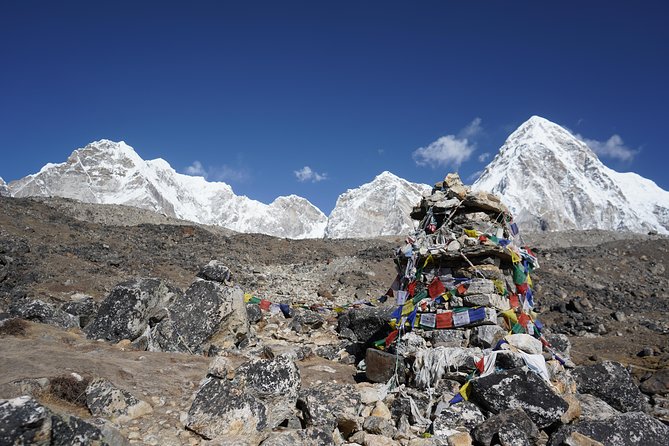
REVIEW · EVEREST BASE CAMP TREKS
Everest Base Camp Trekking
Everest Base Camp is less about technical climbing than walking steadily into a huge mountain world. Over 12 days, you follow the route linked with Edmund Hillary and Tenzing Norgay, pass through Sherpa villages, reach the Khumbu Glacier and Base Camp, then climb Kala Patthar for one of the best views of Everest. It is a serious high-altitude trek, but the logistics are handled for you.
I like that the package includes Lukla flights, permits, meals, tea-house lodging, a guide, and porters. I also like the small maximum group of 15, plus the practical 2-to-1 porter arrangement. Guides named in past feedback include Ram Dhakal and Dillip, while manager Nadin was praised for clear communication.
The main catch is the price of $1,350 does not cover everything. Kathmandu lodging, personal insurance, emergency evacuation, hot showers, Wi-Fi, charging, bottled water, tips, and personal gear remain your responsibility. You need strong physical fitness, and this is not a casual scenic walk.
Key points before you book
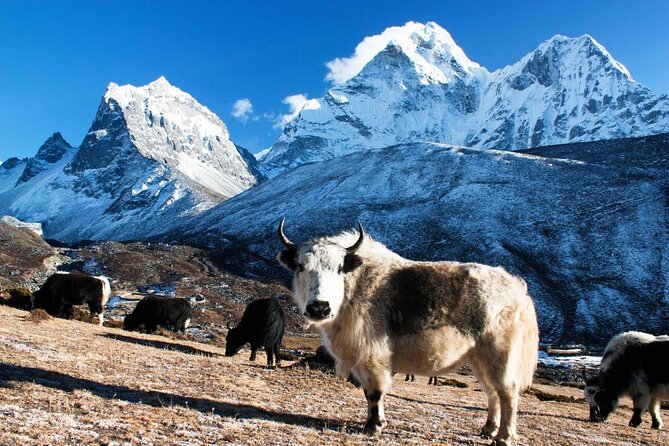
- 12 days on the classic Everest route: Reach Namche Bazaar, Tengboche, Everest Base Camp, Kala Patthar, and the Khumbu Glacier.
- Lukla flights are included: The package covers round-trip flights between Ramechhap and Lukla, with airport pickup and drop-off.
- Tea-house trekking, not hotel comfort: You get 11 nights of basic accommodation during the trek, with breakfast, lunch, and dinner included.
- A guide and porter travel with you: The ratio is one porter for every two trekkers, and the guide is a licensed English speaker.
- Sherpa culture is part of the route: Tengboche Monastery, Namche Bazaar, memorials, and mountain villages add meaning beyond the views.
- Budget extra cash and protection: Personal insurance, rescue costs, Kathmandu hotels, hot water, charging, Wi-Fi, drinks, laundry, and tips are excluded.
Why the Everest Base Camp route still earns its fame
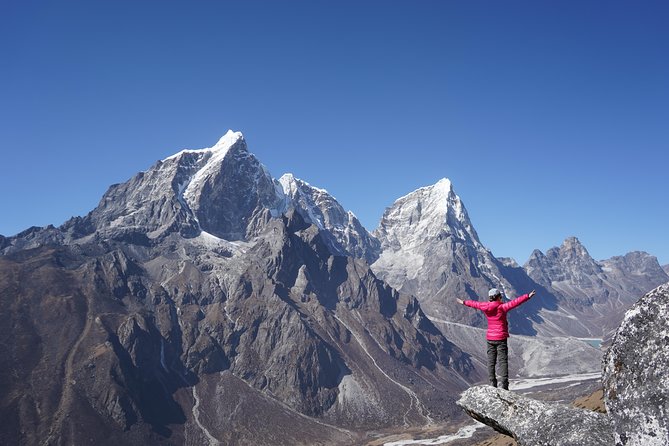
You do not reach Everest Base Camp by simply walking toward a distant peak. The route changes from a busy mountain gateway at Namche Bazaar to high, spare country near the Khumbu Glacier. Along the way, you see how Sherpa communities live in a place shaped by altitude, trade, mountaineering, and Buddhist faith.
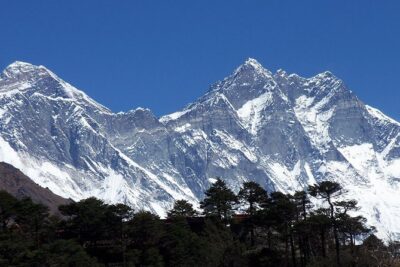
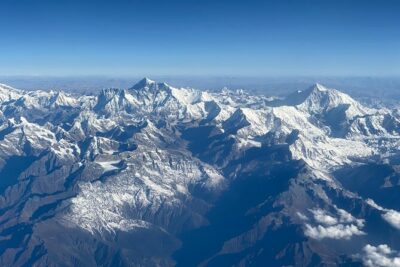
The experience also gives you several different ways to see Everest. Panoramic views of peaks above 8,000 meters appear along the trail, while Kala Patthar provides the famous close mountain viewpoint. Base Camp itself is an important goal, but the view from Kala Patthar may be the visual highlight.
I appreciate that the package takes care of the parts that can bog down independent planning. National Park fees, VDC fees, TIMS fees, other applicable taxes, domestic flights, food, accommodation, a guide, and porters are included. That lets you focus on walking, eating enough, staying warm, and managing your pace.
The word trekking matters here. You are not being taken to the foot of Everest by vehicle, and you are not climbing the mountain itself. You are walking a demanding route to the mountaineering base area. The package requires strong physical fitness, so honest preparation matters more than enthusiasm.
More Hiking Tours in Kathmandu
- Everest Base Camp Trek – 14 Days
★ 5.0 · 1,499 reviews - Everest Base Camp Trekking
★ 5.0 · 485 reviews - Nagarkot Sunrise View and Day Hiking from Kathmandu
★ 5.0 · 471 reviews
Day one begins with an early Kathmandu meeting
The listed meeting point is in Thamel, Kathmandu, with a start time of 6:15 am. Airport pickup and drop-off are included, but you should confirm the exact pickup details and flight arrangements before departure because the package describes the flights as operating between Ramechhap and Lukla.
That airport detail is important. The flight sector is not simply described as Kathmandu to Lukla. You may be routed through Ramechhap, so leave room in your Kathmandu plans for the transfer and early start. The experience provider handles the included domestic airfare, but you should still keep your schedule flexible around the mountain flight portion.
A passport name, passport number, expiry date, and country are required for every person at booking. Vegetarian meals are available if you request them in advance. Those are small details, but they are worth handling early when a trek already has many moving parts.
Namche Bazaar brings the first big change
Namche Bazaar is described as the famous gateway to Everest and a high-altitude market town. It is more than a point on a map. For you, it is the first place where the trek feels properly Himalayan, with mountain commerce, Sherpa culture, and a clear shift away from ordinary road travel.
The town also gives the route a human center. You are not only walking through empty mountain country. You pass a place where supplies, guides, porters, trekkers, and local families meet. The market setting helps explain how life and trade work at altitude.
The practical drawback is that high altitude starts to matter here. The package does not provide a detailed day-by-day schedule with walking hours, elevation gains, or dedicated acclimatization days. Ask the operator for those details before booking, and ask how the guide adjusts the pace if you need more time.
Sherpa culture and Tengboche Monastery
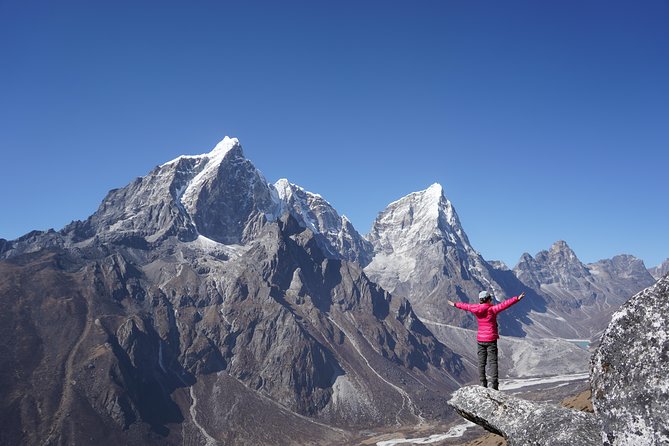
The trek includes the chance to visit Tengboche Monastery and seek blessings from a monk. This is one of the route’s most meaningful stops because it connects the scenery with the spiritual life of the Khumbu region.
You should treat the monastery as more than a photo stop. Take time to notice the setting, the religious purpose of the building, and the role Buddhism plays in the communities along the trail. Your guide is meant to explain the cultural and natural value of the route, so ask questions rather than rushing through.
The package promises the chance to explore the monastery, not a guaranteed private ceremony or a fixed religious program. Conditions, timing, and access can vary. Still, Tengboche gives the trek a sense of place that a mountain viewpoint alone cannot provide.
More Everest Base Camp Treks in Kathmandu:
- Everest Base Camp Helicopter Tour landing at Everest View Hotel
★ 5.0 · 668 reviews - Everest Base Camp Trekking – 13 Day
★ 5.0 · 365 reviews - Everest Base Camp Trek -14 Days
★ 5.0 · 321 reviews - Everest Base Camp Helicopter Tour landing at Hotel Everest View
★ 5.0 · 218 reviews
The route follows mountaineering history
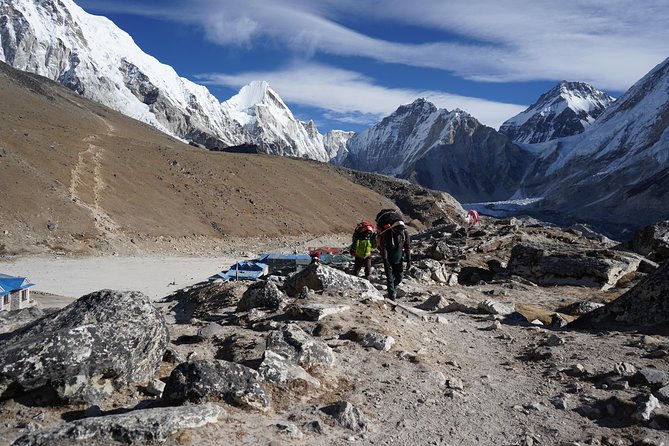
Walking in the footsteps of Hillary and Tenzing gives the route a clear historical thread. Their names are tied to the first successful ascent of Everest, and the trail toward Base Camp has become one of the world’s best-known high-altitude walks.
You also get the chance to see a memorial hill for climbers who died in the mountains. This is a sobering part of the trek. It reminds you that Everest is not simply a backdrop for achievement or a personal bucket-list goal. The mountain has a human cost, and the memorials bring that fact into view.
The guide can add context here, especially if you want to understand the difference between reaching Base Camp and climbing Everest. This package takes you to the base area. It does not include a summit attempt, technical climbing, or expedition support.
Khumbu Glacier and Everest Base Camp
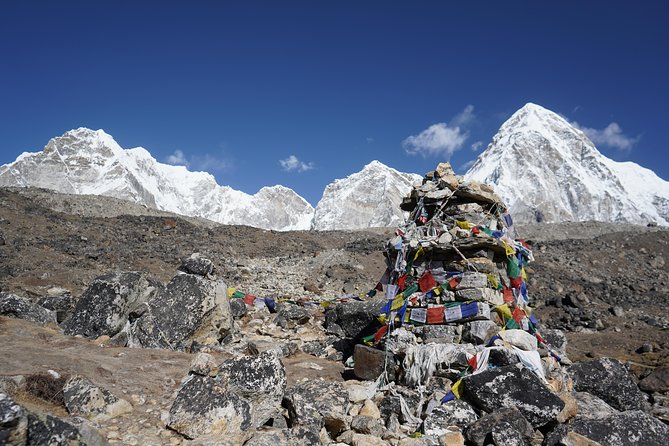
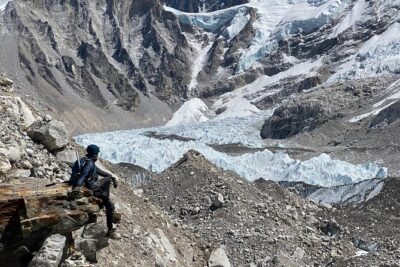
The Khumbu Glacier is one of the route’s major natural features. It is also closely linked with the climbing route above Base Camp. Reaching the glacier area gives you a stronger sense of the scale and roughness of the high Himalaya than a distant mountain panorama does.
Everest Base Camp is the central goal. The included stop is described as about five hours, with an accredited guide accompanying you and explaining the cultural and natural value of the area. That time may include walking and viewing, so ask for the exact timing and route plan if you want a precise schedule.
Conditions at Base Camp can be stark and changeable. Do not expect a polished attraction with facilities and easy access. The value is in reaching a famous point on foot, seeing the surrounding glacier and peaks, and understanding how far people go to attempt the world’s highest mountain.
One useful point to keep clear: Base Camp may not give you the best direct view of Everest itself. The route’s Kala Patthar viewpoint is included as the place for a close view of the mountain, while Base Camp offers the achievement and the mountaineering setting.
Kala Patthar supplies the big view
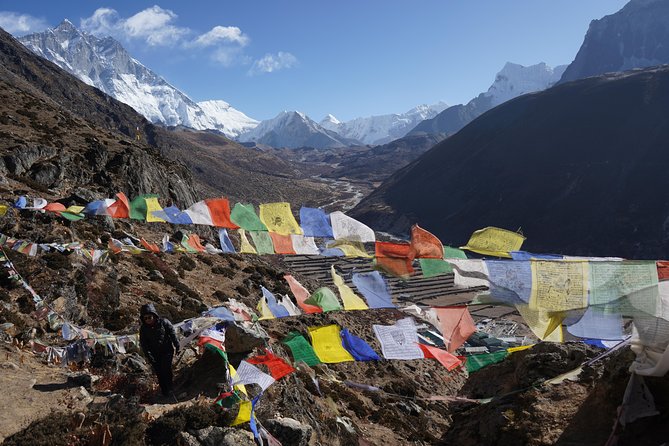
Kala Patthar is the route’s major viewpoint. The experience includes a chance to see Everest up close from here, along with panoramic views of the surrounding high peaks.
This is where the effort of the trek can pay off visually. You have already passed through market towns, monastery country, glacier terrain, and memorial sites. Kala Patthar places the mountain scenery in one broad frame, making it easier to understand the shape and scale of the region.
The wording says you get a chance to see the view, rather than promising perfect conditions. Clouds, wind, visibility, and physical condition all affect what you see. That is another reason to judge the trek by the whole route, not by one photograph.
Tea houses keep the package practical
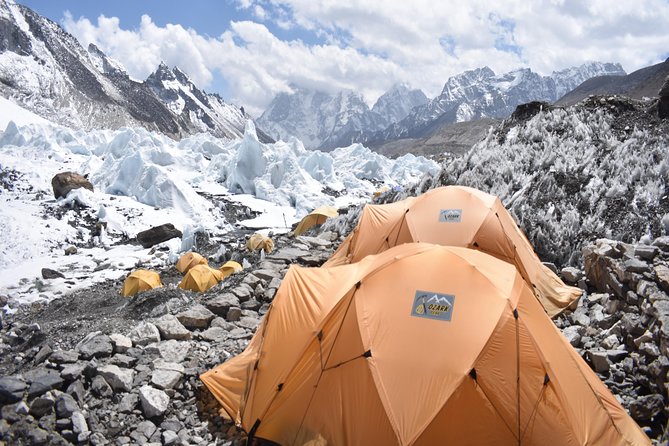
The package includes 11 nights of basic tea-house accommodation during the trek. This is the standard style of lodging for a route like this, but basic means you should set realistic expectations.
You get a bed and a place to rest, not resort comforts. Hot showers, hot water, battery charging, and Wi-Fi are excluded. You also pay for personal items such as laundry, telephone use, bottled drinks, mineral water, and alcoholic beverages.
The good news is that breakfast, lunch, and dinner during the trek are included. That makes the price easier to understand because food costs can build up over 12 days. It also means you do not need to organize every meal while walking.
Kathmandu accommodation is not included, and neither are meals in Kathmandu. Plan for those costs before and after the trek. The airport pickup and drop-off help, but they do not replace a hotel booking.
What the guide and porter arrangement means
A licensed English-speaking trekking guide accompanies the group, and the porter ratio is listed as two trekkers for one porter. Guide and porter insurance, food, salary, and accommodation are included in the package.
That arrangement is useful because a porter can carry part of your load while you walk with a daypack. You should still pack thoughtfully and ask about the allowed baggage weight. The supplied information does not state a baggage limit, so do not assume every personal item will be carried.
Past feedback gives specific names to look for in the company team. Ram Dhakal was praised for looking after a group throughout the trek, and Dillip was described as an excellent guide for a solo trekker. Nadin, the manager, was praised for communication. Those names do not guarantee your assigned team, but they show the sort of personal service you should expect to discuss before departure.
The group maximum is 15 people. That is small enough for the guide to keep an eye on the group, though a 15-person trek is not the same as a private walk. If you want a particular guide, a private departure, or a smaller group, ask before paying.
What $1,350 buys you, and what it does not
At $1,350 per person, this package offers solid value for someone who wants the main trek arranged in one purchase. You receive accommodation for 11 nights, three meals each trekking day, Lukla flights, permits and fees, a guide, a porter arrangement, airport transfers, and several useful items on request.
Sleeping bags, duffel bags, and a down jacket can be provided on request during the trek. Confirm availability and condition before leaving home. A trekking map is included for one group, and trekking certificates are provided after the trip.
The excluded costs deserve equal attention. Your personal medical, accident, and rescue insurance is not included. Emergency evacuation expenses are also excluded, including helicopter rescue. That is not a minor technicality on a high-altitude trek. Arrange suitable insurance that specifically covers trekking at the altitude and route involved.
You also need a budget for Kathmandu accommodation and meals, personal equipment, hot showers, hot water, charging, Wi-Fi, drinks, laundry, phone calls, and tips. If you compare this package with a bare-bones trek, it may look expensive. Once you price flights, permits, food, porters, and tea houses separately, the package becomes easier to justify.
Who should book this trek
You should consider this experience if you want the classic Everest Base Camp route but do not want to manage every permit, flight, porter, meal, and tea-house booking yourself. It also suits solo trekkers who want support, as the package can place you with a small group rather than requiring you to organize a private expedition.
It is a good match for people who value local guiding and cultural context, not just the final photograph. Namche Bazaar, Sherpa life, Tengboche Monastery, the memorial hill, and the historic trail all form part of the experience.
You should think twice if you want luxury lodging, reliable internet, hot showers, or an easy walking holiday. You also need to be comfortable with an early start, basic accommodation, uncertain mountain flights, and a physically demanding route.
The provider has a 99 percent recommendation rate and a 5 out of 5 rating from 146 published ratings. The strongest praise focuses on guide care, communication, safety, planning, and flexibility. That is exactly what matters on a trek where conditions may require the schedule to change.
Free cancellation is available if you cancel at least 24 hours before the local start time. Cancellations or changes made inside that window are not accepted for a refund.
My call on the Everest Base Camp package
I would book this trek if I wanted a supported, value-minded route to Base Camp and was prepared for basic conditions. The included flights, permits, meals, tea houses, porters, and guide remove a large amount of planning, while the small group limit keeps the experience from feeling like a mass tour.
Before paying, I would confirm the detailed day-by-day route, the Ramechhap flight transfer, baggage rules, guide assignment, gear availability, and the exact insurance I need to buy myself. If you arrive fit, pack for a simple tea-house trip, and understand that Base Camp is a demanding walk rather than a sightseeing stop, this is a practical way to take on one of Nepal’s great treks.
FAQ
Where does the Everest Base Camp trek start?
The listed meeting point is in Thamel, Kathmandu 44600, Nepal. The start time is 6:15 am.
How long does the trek last?
The experience lasts approximately 12 days and includes 11 nights of tea-house accommodation during the trek.
Are flights to Lukla included?
Yes. The package includes airfare between Kathmandu or Ramechhap and Lukla in both directions. Confirm the exact airport transfer plan before departure.
Are meals included?
Breakfast, lunch, and dinner are included during the trek. Meals in Kathmandu are not included.
Is accommodation in Kathmandu included?
No. The package includes 11 nights of basic tea-house accommodation during the trek, but accommodation in Kathmandu is excluded.
Are a guide and porter included?
Yes. A licensed English-speaking trekking guide and porters are included. The stated arrangement is one porter for every two trekkers.
What trekking equipment is provided?
A sleeping bag, duffel bag, and down jacket can be provided upon request during the trek. Personal trekking equipment is not included.
Does the price include permits and park fees?
Yes. National Park fees, VDC fees, TIMS fees, and other applicable taxes are included.
Do I need travel insurance?
Yes. Personal medical, accident, rescue, and helicopter evacuation insurance are not included. Emergency evacuation expenses are also your responsibility.
Is a vegetarian option available?
Yes. Request vegetarian meals when booking.
What is the maximum group size?
The maximum group size is 15 people.
Can I cancel for a full refund?
Yes, if you cancel at least 24 hours before the experience start time. Cancellations or changes made less than 24 hours before the start are not refunded or accepted.
Recently added around Kathmandu
- Kathmandu Paragliding★ 5.0 · 3 reviews
- Kathmandu Airport Pickup and Drop-off Services★ 5.0 · 3 reviews
- Kathmandu Chandragiri Cable Car and Swayambhunath Private Tour★ 5.0 · 3 reviews
- Explore The Beauty Of Langtang Valley In 8-Days Trek★ 5.0 · 3 reviews
- Kathmandu: Nightlife and Pub Crawl Tour★ 5.0 · 3 reviews
- Mountain Flight Experience in Nepal★ 4.5 · 3 reviews
- Kathmandu: Momo Making Class with a Local Chef★ 5.0 · 3 reviews
- Everest Base Camp Trek★ 5.0 · 3 reviews
Other Everest Base Camp Treks worth a look
Everest Base Camp Helicopter Tour landing at Everest View Hotel
Read our review →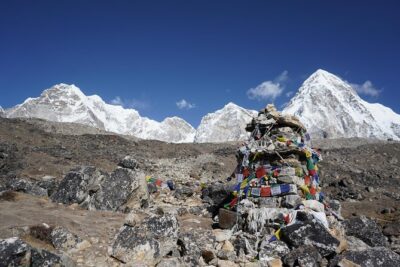
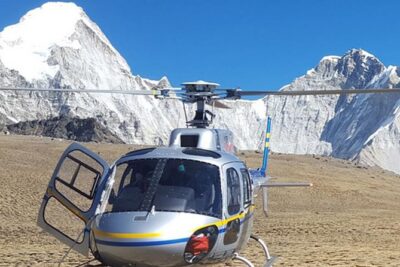
Everest Base Camp Helicopter Tour landing at Hotel Everest View
Read our review →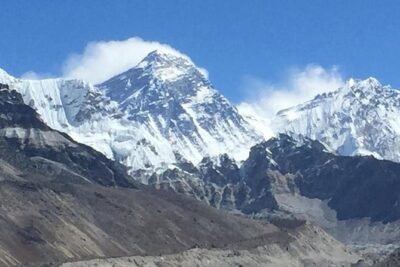
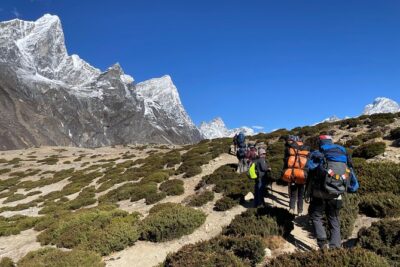
This tour also appears in